Hairy Grey Heather
Erica canaliculata
The Gardening Year
Best months in UK gardens · full planting calendar →
🖨 Printable care card (PDF)At a Glance
| Botanical name | Erica canaliculata |
|---|---|
| Common name(s) | Hairy Grey Heather |
| Family | Ericaceae |
| Plant type | shrub |
| Height × Spread | 2–4 m × 100–150 cm |
| Position | Full sun, Partial shade |
| Soil | fertile but well-drained; moist but well-drained; acid or alkaline or neutral pH |
| Flowering | January, February, March, April, May, December |
| Toxicity | — |
| Native range | East and West Capes of South Africa |
Erica canaliculata, or channelled heath, is a large evergreen tree heath from South Africa. Its fine foliage, grooved mature stems and clouds of small pink or whitish flowers make it an impressive specimen for a cool conservatory, glasshouse or movable container in the UK.
Overview
Erica canaliculata belongs to the Ericaceae, the family that includes heathers, rhododendrons and blueberries. It is native to the southern coastal plains of South Africa, where it grows on moist flats, lower slopes, forest margins and valleys in the Western and Eastern Cape. Open, sunny plants tend to remain dense shrubs, while specimens at woodland edges may develop into small trees.
The specific name comes from the Latin for channelled or grooved, referring to the furrowed bark on older stems. This feature distinguishes a mature plant even when it is not flowering. It has a long history in European collections and is best regarded in Britain as a specialist conservatory or container shrub rather than an ordinary outdoor heather.
Its architectural form suits an ericaceous collection, cool glasshouse or bright conservatory. A large pot also allows it to spend summer on a sunny patio before returning to protection in autumn. Outdoor planting is realistic only in a warm, sheltered coastal garden with freely draining soil and a favourable microclimate. The profuse flowers provide nectar and pollen for bees and other small insects when they can reach the plant.
Appearance
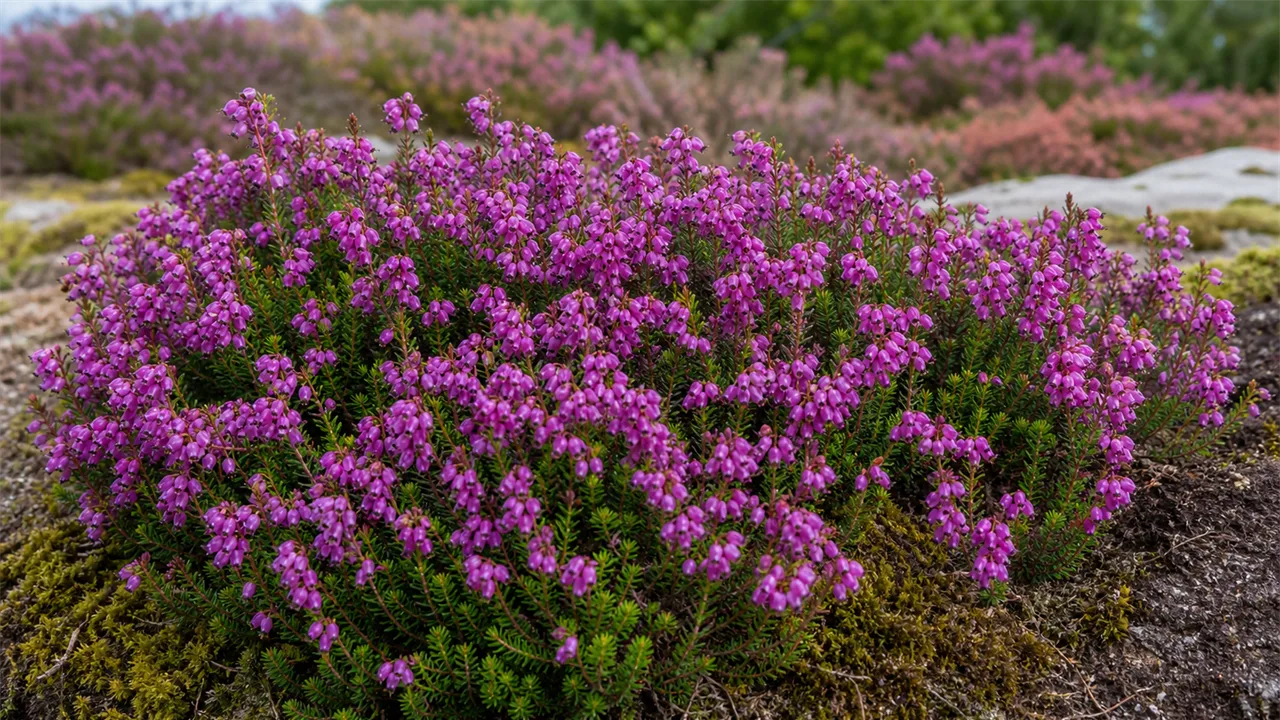
This is an upright, densely branched tree heath with a fine-textured outline. In cultivation it commonly reaches 2.5–4 m in height while remaining much narrower, although old plants in its native habitat can grow larger. Young growth carries numerous tiny, dark green, linear leaves. The leaves remain on the plant throughout the year, giving useful structure and colour in a protected collection.
Older stems gradually thicken and develop grey-brown bark marked by conspicuous longitudinal grooves. A well-grown specimen may therefore resemble a miniature tree, with a defined trunk and a rounded or lightly clipped head. The combination of delicate foliage and rugged bark is especially effective when the plant is raised in a large container.
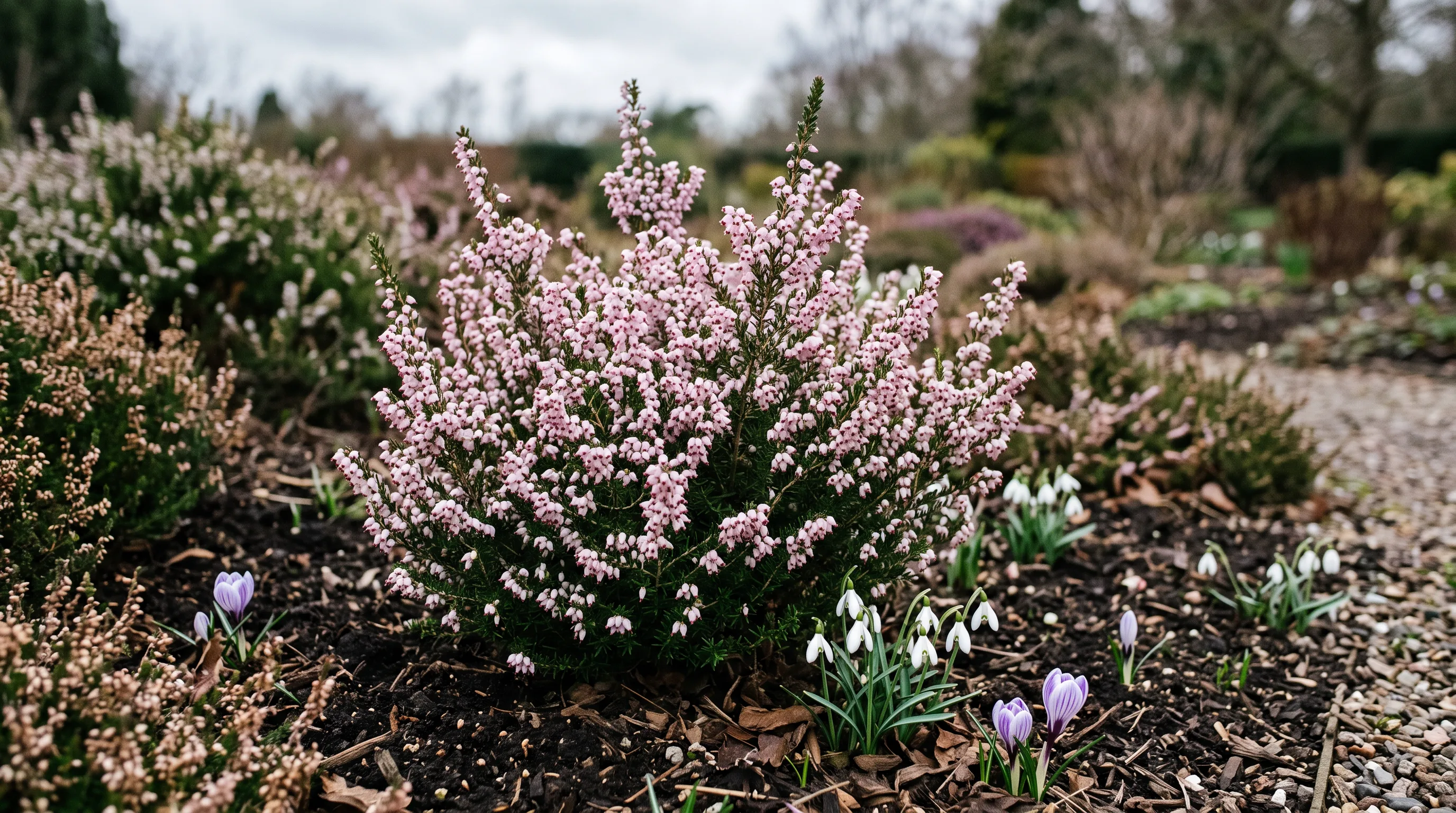
The flowers are small, cup-shaped to bell-like and crowded in large, branched clusters near the shoot tips. Individual blooms are generally pink, pink-tinged or white and have conspicuous projecting styles and anthers. Their small size is offset by abundance: a mature plant may carry thousands at once. Fresh flowers can have a strong, sweetly soapy or slightly musty fragrance. In South Africa the principal display occurs from November to February; under UK glass, flowering often falls in winter or spring, but light, temperature and the plant's growing cycle can shift the timing.
Growing Conditions
Choose the brightest position available, ideally full sun with some shelter from cold or drying winds. A south- or west-facing glasshouse position is suitable, while bright filtered light can prevent excessive heat behind glass in summer. Light shade is tolerated, but deep shade encourages loose growth and fewer flowers. Ventilate a conservatory or glasshouse on warm days without placing the plant in a persistent draught.
Drainage is critical. Use a peat-free, loam-based ericaceous compost opened with fine composted bark and horticultural grit or perlite. The root medium should hold some moisture yet release surplus water promptly. Plants in the ground prefer humus-rich, well-drained soil; acidic conditions are the safest choice, particularly where the local soil or irrigation water is strongly alkaline. A raised bed can improve drainage, but a container is usually more practical in most UK districts.
Keep the root ball evenly moist during active growth. Never leave the pot standing in water, and do not allow repeated cycles of saturation and complete drought. Rainwater is preferable in hard-water areas because frequent use of alkaline tap water can raise the compost pH and restrict nutrient uptake. A mulch of composted bark helps moderate moisture around an outdoor specimen without burying the stem base.
UK success depends on winter protection. Move container plants into a bright, cool, frost-free place before damaging weather arrives, generally during autumn according to local conditions. Reduce watering as growth slows, but do not let the fine roots dry out. In exceptionally mild coastal gardens, place an outdoor plant against a warm wall or among sheltering shrubs and avoid frost pockets.
Planting and Care
Pot or plant in spring, once severe cold has passed, so roots have a full growing season to establish. Early autumn is also possible where immediate winter protection is available. Select a stable container with generous drainage holes, because a mature plant becomes tall and top-heavy. Set the root ball at its previous depth, firm gently and water thoroughly; the fine ericaceous roots resent deep planting and rough disturbance.
Water newly planted specimens regularly through their first growing season and check containers frequently from April to September. Water slowly until the entire root ball is moistened, then empty saucers or outer pots. Established plants tolerate brief dry periods better than waterlogging, but drought at flowering time may cause buds and shoot tips to fail. Water more sparingly in winter while maintaining slight, even moisture.
Feed lightly rather than trying to force rapid growth. Apply a dilute ericaceous or low-phosphorus liquid feed during active growth, following the product rate for container shrubs. One or two modest applications may be sufficient in fresh compost. Stop feeding as autumn approaches so new shoots can mature. Repot in spring when roots fill the container, moving up by only one pot size and preserving as much of the root ball as possible.
Prune lightly after flowering, shortening the current season's flowered tips to encourage a dense framework. Tip-pruning young shoots can promote branching. Avoid cutting indiscriminately into old, leafless wood, from which many ericas recover poorly. Remove dead, damaged or crossing twigs with clean secateurs. Old container specimens can be trained as standards, but shaping should be gradual over several seasons.
Propagation is possible from seed, cuttings or layering. Sow fresh seed in late summer or autumn on the surface of a fine, acidic, sharply drained medium; seedlings are minute and need gentle watering, good light and protection. Seed-raised plants may vary, so use cuttings to preserve a named form. Take short tip or heel cuttings from healthy, non-flowering growth in spring or autumn, insert them into a bark-and-perlite medium and maintain humidity with bottom warmth. Layering a flexible lower shoot in spring is slower but requires less specialist equipment.
Seasonal care centres on balancing light, ventilation and moisture. Increase watering as growth resumes in spring, move protected pots outdoors only after local frost risk has eased, and watch for rapid drying in summer. Inspect foliage before bringing plants under cover in autumn so pests are not carried inside. Through winter, maximise light, maintain airflow and remove fallen flowers and leaves from the compost surface.
Common Problems
Root rot is the most serious risk. A plant that wilts despite wet compost, loses vigour or develops dark roots may be suffering from Phytophthora or another fungal root disease. Prevention is more reliable than rescue: use clean, free-draining compost, disinfect reused pots, avoid waterlogged saucers and maintain airflow. Severely affected plants and contaminated compost should be discarded rather than reused.
Yellowing between the leaf veins, weak growth and poor flowering can indicate chlorosis caused by an unsuitable root pH rather than simple hunger. Check drainage and irrigation water before adding fertiliser. Repotting into fresh ericaceous compost and switching to rainwater may correct the underlying problem. Excessive feeding can damage the fine roots and produce soft, vulnerable growth.
Vine weevil larvae may eat roots in containers, while adults notch foliage. Check poorly anchored or suddenly collapsing plants and use an appropriate biological control at the recommended season. Under glass, glasshouse red spider mite can cause pale speckling, fine webbing and leaf drop, especially in hot, dry air. Aphids sometimes gather on tender shoot tips. Regular inspection, good ventilation and prompt use of suitable biological controls help prevent large infestations.
Cold wind, frost and drought may all scorch shoot tips. Move pots under protection early enough, and keep outdoor specimens sheltered without enclosing them in stagnant, humid air. Sparse, leggy growth usually reflects insufficient light or delayed pruning; improve light gradually and trim only green, leafy shoots.
Popular Varieties
Named selections of Erica canaliculata are scarce, and fewer than three are reliably documented. Plants should not be sold under unverified cultivar names simply to imply a wider choice.
- The species, Erica canaliculata is the principal cultivated form. It carries abundant pink or pink-tinged to white flowers and is the best-documented choice for a large container or protected ericaceous collection.
- Erica canaliculata 'Alba' is a recorded white-flowered selection. It offers a paler display while retaining the species' upright habit, fine evergreen foliage and need for protected UK cultivation.
- Erica canaliculata 'Boscawen's Variety' appears in horticultural records, but its name status is unresolved and dependable descriptive information is limited. Obtain it only from a specialist supplier able to confirm its identity.
Where a nursery lists an unnamed white form, it should not automatically be assumed to be 'Alba'. Flower colour can vary within the species, and correct labelling is important when building a botanical collection.
Pests and Diseases
| Problem | Symptoms | Management |
|---|---|---|
| Bud and shoot blight | New shoots turn brown, die back, and fail to produce flowers. | Prune out affected growth and ensure good air circulation around the plant. |
| Root rot | Leaves yellow and drop while the soil remains persistently wet. | Plant in sharp, acidic, free-draining compost and avoid overwatering. |
| Powdery mildew | A white, dusty fungal growth appears on leaves and stems. | Improve ventilation and spray with a suitable fungicide if severe. |
| Vine weevil | Notched edges on leaves and wilting due to root damage in pots. | Use nematode treatments or biological controls in the growing medium. |
| Nutrient deficiency | Leaves turn pale green or yellow, indicating a lack of iron or nitrogen. | Apply an ericaceous fertiliser suitable for acid-loving plants. |
For step-by-step help, read Treating Powdery Mildew. Or browse the full plant problem solver to diagnose an issue by symptom.
Recommended Products
GardenWizz earns a commission from qualifying purchases made through affiliate links on this page (including links within the article) — as an Amazon Associate, and from Thompson & Morgan via the Awin network. This does not affect the price you pay. See our disclaimer for details.