Fire Heath
Erica cerinthoides
The Gardening Year
Best months in UK gardens · full planting calendar →
🖨 Printable care card (PDF)At a Glance
| Botanical name | Erica cerinthoides |
|---|---|
| Common name(s) | Fire Heath |
| Family | Ericaceae |
| Plant type | shrub |
| Height × Spread | 100–150 cm × 50–120 cm |
| Position | Full sun, Partial shade |
| Soil | moist but well-drained, acidic or neutral |
| Flowering | January–December |
| Toxicity | — |
| Native range | South Africa (Cape Provinces, Free State, KwaZulu-Natal, Northern Provinces), Lesotho, Eswatini |
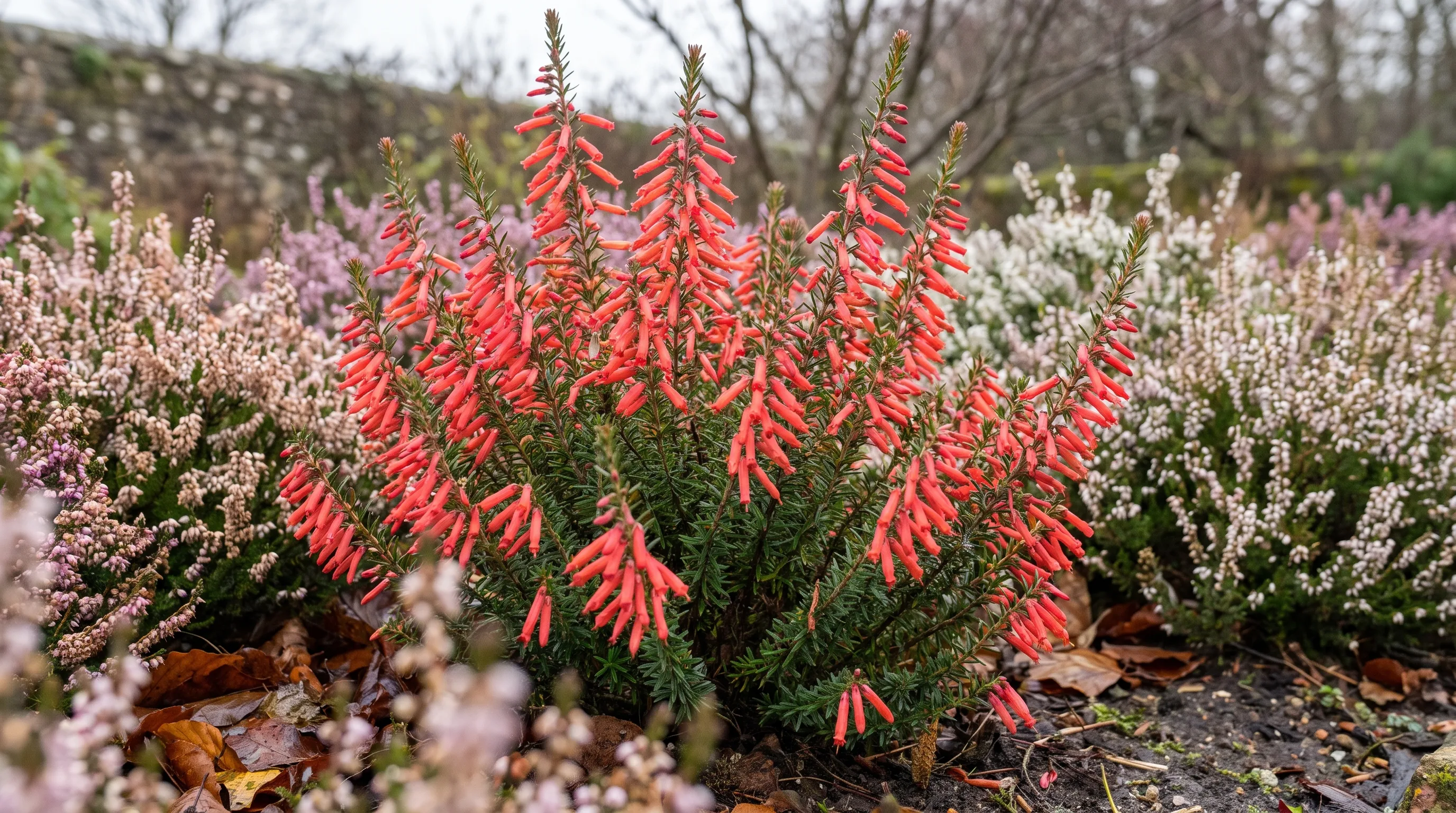
Erica cerinthoides is a tender evergreen shrub from the fynbos of South Africa's Western and Eastern Cape, grown in the UK chiefly for its showy winter display of tubular orange-scarlet flowers. It belongs to the heather family (Ericaceae) and sits within the large Cape-centred genus Erica, most of whose roughly 800 species are South African rather than European. In British cultivation it is treated as a half-hardy container or cold-glasshouse plant, brought into flower when little else is performing and standing out for the intensity of its colour in midwinter.
Although it has been grown in British collections on and off since the nineteenth century, E. cerinthoides never became a common garden shrub here because it cannot tolerate anything more than light frost. Its appeal lies squarely in winter: a well-grown plant in a frost-free conservatory will carry its curiously hairy, almost luminous tubular blooms from December through to March or April, providing one of the strongest shows of warm colour available to British gardeners in the depths of winter.
Overview
Erica cerinthoides is a Cape heath, an upright evergreen shrub of typically loose, slightly wispy habit reaching 30–90 cm tall in UK cultivation and occasionally approaching a metre under glass. It is grown for its flowers, but the fine ericoid foliage is attractive in its own right and the whole plant keeps a tidy presence year-round in a container. The species name "cerinthoides" alludes to a perceived resemblance to Cerinthe (honeywort), reflecting the bristly-hairy texture of the young growth and calyces rather than any close botanical affinity.
The plant is sometimes sold under the vernacular names fire heath and hairy heath; "scarlet heath" also appears in older catalogues. It is not widely available in mainstream UK garden centres and is mostly sought from specialist ericaceous and South African plant nurseries, or grown from cuttings shared among enthusiasts. Because it is tender, it is best understood as a collector's or conservatory plant rather than a mainstay of the open garden, although in very mild coastal or urban microclimates it can be grown outside with overhead protection in winter.
Its natural home is the nutrient-poor, acidic, well-drained soils of fynbos, where it grows among other Ericaceae, Proteaceae and Restionaceae in a Mediterranean-type climate of wet winters and dry summers. Recreating those conditions in pots under glass is the key to keeping it happy in the UK.
Appearance
In overall form, E. cerinthoides is an upright to slightly spreading evergreen shrub with slender stems clothed in whorls of small needle-like leaves. The leaves are arranged in groups of four to six along the shoots, mid- to dark green, and typically bristly or slightly hairy — a feature more obvious on younger growth. Stems are wiry and the plant as a whole looks finer-textured than the hardy European heathers (Calluna and Daboecia) commonly seen in British gardens.
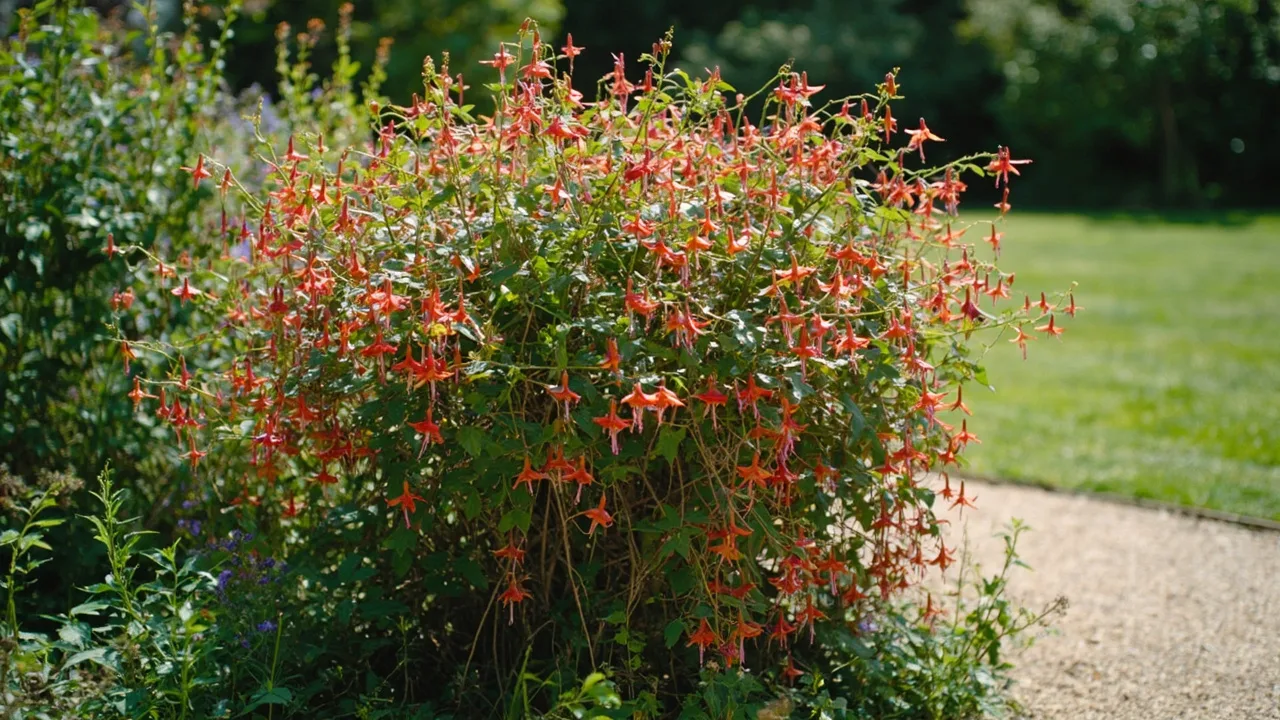
The flowers are the main event. They are tubular, slightly curved, and produced in clusters at the tips of the current season's shoots. Each bloom is roughly 2–3 cm long, with a noticeably hairy or downy tube and dark anthers just protruding from the mouth. The colour is most often a vivid orange to scarlet, sometimes shading toward crimson; less commonly, forms with paler, pinker or near-white flowers occur in the wild and occasionally in cultivation. The hairy calyx gives the inflorescence a slightly fluffy outline that softens the brilliance of the colour.
Flowering in UK cultivation runs from late autumn or early winter into early spring, most often December to March or April under glass. In a cool, bright conservatory the display can last for many weeks, with successive waves of buds opening along the stems. The small dry seed capsules that follow are not ornamental.
Growing Conditions
Erica cerinthoides is a sun-loving, acid-soil plant that resents both alkalinity and stagnant moisture. In the UK it should be treated as tender: foliage is damaged by even a light frost and the plant is killed by anything more than a brief cold snap. The Royal Horticultural Society has not assigned it a settled hardiness rating for UK conditions, and GardenWizz therefore displays it without a fixed H-number — site selection should assume it needs protection anywhere outside the mildest coastal or urban microclimates.
Light should be as bright as possible. Full sun outdoors in summer and the brightest available position under glass in winter give the strongest flower colour and the most compact growth. Light shade is tolerated but produces leggier plants and fewer flowers.
Soil must be acidic, humus-rich and sharply drained yet moisture-retentive. A peat-free ericaceous potting mix is ideal for containers; in any rare in-ground planting, use a lime-free loam improved with leaf mould and grit. The plant will not tolerate alkaline compost or tap-water residues over time, and yellowing foliage (lime-induced chlorosis) is a reliable sign that the pH has crept up.
Watering should keep the compost evenly moist through the growing season without waterlogging. Rainwater is strongly preferred where tap water is hard. In winter, watering is reduced but the rootball should never be allowed to dry out completely.
Good air movement under glass is important. Still, damp winter air encourages grey mould, while a ventilated, cool but frost-free environment keeps the foliage clean and the flowers in good condition.
Planting and Care
Container culture is the realistic option for almost all UK gardeners. Plant in a breathable pot (terracotta is ideal) with generous drainage holes, using a peat-free ericaceous compost mixed with a little extra grit for sharp drainage. Repot every two to three years in spring, immediately after flowering finishes, moving up one pot size and refreshing as much of the compost as can be teased from the rootball without damaging it.
Watering through the growing season should be regular and generous enough to keep the compost moist but never sodden. A light mulch of leaf mould or fine pine bark on the surface helps retain moisture and maintain acidity. Feeding is modest: a low-rate ericaceous or acid-loving liquid fertiliser applied in spring and again in early summer is sufficient. Avoid general-purpose or lime-containing feeds, which quickly lock out micronutrients at the high pH this plant cannot tolerate.
Pruning is light. After flowering, trim or pinch out the spent flower tips to keep the plant compact and bushy. Avoid cutting back hard into old bare wood, which rarely reshoots in Cape heaths and is a common way to lose a plant. A light annual tip-trim is the rule; a hard renovation prune is not.
Propagation is straightforward from semi-ripe cuttings taken in summer. Trim short pieces of non-flowering side growth, wound lightly at the base, and root them in a freedraining, acidic cutting mix under a propagator with gentle bottom heat. Seed is slow and rarely offered; named cultivars are usually maintained by cuttings to keep them true.
Overwintering is the key seasonal task. Move containers into a frost-free greenhouse, cold frame or unheated conservatory from late autumn. The aim is to keep the temperature above freezing, the compost just moist, the light as bright as possible, and the air moving. In the very mildest parts of the UK — sheltered coastal or central-London gardens — plants may be tried outside in a sunny, sheltered spot with winter fleece during cold snaps, accepting that hard winters will damage or kill them.
Indoor plants benefit from being stood outside in a sheltered, shaded position for summer once danger of frost has passed, which encourages strong new growth and improves winter flowering.
Common Problems
Grey mould (Botrytis cinerea) is the chief winter problem under glass, encouraged by damp, stagnant air and by faded flowers left on the plant. Improve ventilation, remove affected growth promptly, and tidy spent flowers as part of the post-flower trim.
Root rot caused by Phytophthora species is the most serious threat. It typically follows cold, wet, poorly drained compost and is much easier to prevent than to cure: use sharp drainage, fresh acidic compost, and pots that drain freely. A plant that suddenly wilts while the compost is damp should be unpotted and inspected.
Vine weevil is a classic ericaceous-pest issue in containers. Adult beetles notch the leaf edges in summer and their grubs chew roots through autumn and winter, sometimes killing a plant outright. Biological control with parasitic nematodes is effective; inspect pot-grown plants routinely and knock out the rootball of suspect specimens.
Aphids colonise soft new growth under glass from time to time and are easily dealt with by washing off or, in severe cases, a suitable treatment. Routine vigilance is usually enough.
Lime-induced chlorosis shows as yellowing foliage with green veins, particularly on younger growth, and indicates either alkaline compost or build-up of hard tap-water salts. Switch to rainwater and ericaceous compost and the plant will recover.
Frost damage appears as blackened foliage and die-back after exposure to anything more than a very light frost outdoors. Affected growth should be cut back into healthy wood once the risk of further cold has passed; badly damaged plants may not recover, which is the principal reason this species is grown under glass in most of the UK.
Popular Varieties
True cultivars of E. cerinthoides are few, and the trade often offers seedling-raised plants rather than clonal selections. The brief for this article does not name a verified list, so the following are the forms most reliably reported in cultivation in South Africa and the UK; availability in British nurseries varies year to year and named clones should be checked before ordering.
Erica cerinthoides itself is most often seen in its typical orange-scarlet form, and unnamed seedlings of this type make up the bulk of what is sold. A paler pink or near-white form is occasionally offered by specialist nurseries and is sometimes listed as Erica cerinthoides var. or simply as a "white form"; it shares the hairy tubes and winter timing of the type.
In South African collections a number of regional forms with slightly different flower colour or habit are grown, including selections from specific Cape populations, but these rarely circulate under stable cultivar names in the UK.
For British gardeners, the practical approach is to buy the strongest available plant from a reputable ericaceous or South African plant specialist in spring, grow it on in ericaceous compost in a breathable pot, and overwinter it frost-free. Plants raised from cuttings under a known name are preferable to seed-raised stock where the parentage and flower colour can be confirmed.
Pests and Diseases
| Problem | Symptoms | Management |
|---|---|---|
| Phytophthora root rot | The plant wilts and declines rapidly, often with yellowing foliage, due to waterlogged soil conditions. | Ensure excellent drainage by planting in gritty, acid compost and avoid overwatering. |
| Honey fungus | General decline of the shrub with possible white fungal growth at the base or on roots. | Improve soil aeration and drainage; remove infected plants to prevent spread. |
| Slugs and snails | Irregular holes chewed in new shoots and leaves, particularly during damp weather. | Use physical barriers like copper tape or apply iron phosphate-based pellets. |
| Vine weevil | Notched edges on leaves above ground and root damage causing wilting below ground. | Apply biological nematodes to the soil in autumn and spring to control larvae. |
| Powdery mildew | A white, dusty fungal growth appears on leaves and stems, often in humid conditions. | Improve air circulation around the plant and avoid wetting foliage when watering. |
For step-by-step help, read Dealing with Slugs and Snails and Treating Powdery Mildew. Or browse the full plant problem solver to diagnose an issue by symptom.
Recommended Products
GardenWizz earns a commission from qualifying purchases made through affiliate links on this page (including links within the article) — as an Amazon Associate, and from Thompson & Morgan via the Awin network. This does not affect the price you pay. See our disclaimer for details.