Margalida Spurge
Euphorbia margalidiana
The Gardening Year
Best months in UK gardens · full planting calendar →
🖨 Printable care card (PDF)At a Glance
| Botanical name | Euphorbia margalidiana |
|---|---|
| Common name(s) | Margalida spurge |
| Family | Euphorbiaceae |
| Plant type | perennial (evergreen perennial or subshrub) |
| Height × Spread | 120 cm × 120 cm |
| Position | Full sun |
| Soil | well-drained, light soil |
| Flowering | June–August |
| Toxicity | All parts of the plant are toxic when ingested; produces an irritant milky sap |
| Native range | Balearic Islands |
Margalida spurge (Euphorbia margalidiana) is a rare, compact Mediterranean spurge valued chiefly by specialist growers and conservation-minded collections. Native only to rocky islets off Ibiza, it needs bright light, exceptionally free drainage and protection from prolonged winter wet in UK cultivation.
Overview
Euphorbia margalidiana belongs to the spurge family, Euphorbiaceae. Kew recognises it as an accepted species and describes its natural habit as a subshrub or shrub. Its entire native distribution lies within the Balearic Islands, and the best-known wild populations occupy the Ses Margalides islets off the north-west coast of Ibiza. There it grows in crevices and fissures in exposed maritime rock, with intense sun, salt-laden winds and little soil. That restricted range makes it a microendemic rather than an ordinary Mediterranean garden plant.
Conservation is central to any account of this species. It is internationally recognised as threatened, and wild populations must be left entirely undisturbed. Obtain plants, seed or cuttings only from a reputable specialist source able to demonstrate lawful cultivated provenance. Garden cultivation is not a substitute for habitat protection, although well-recorded ex-situ collections can have educational and conservation value.
In Britain, Margalida spurge is best regarded as a specialist pot plant for a sunny alpine house, cool greenhouse or other bright, well-ventilated protected space. Its native climate does not prepare it for the combination of low light, cold compost and persistent winter rain common in the UK. Container culture allows moisture and shelter to be controlled closely. A pot may stand outdoors in a sunny, airy place during settled warm weather, but it should be returned under cover before autumn rain becomes persistent.
Appearance
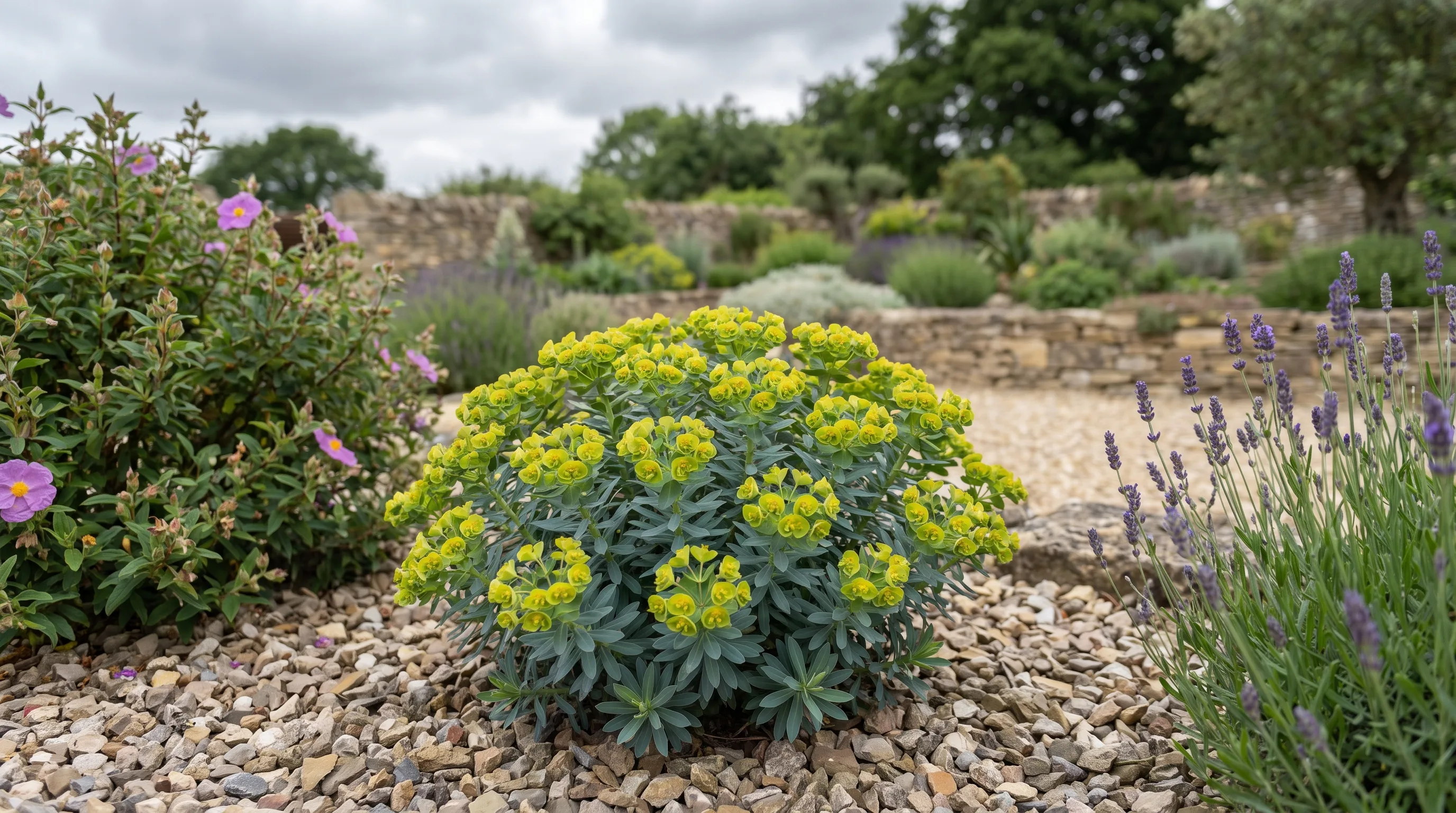
Margalida spurge develops a low, much-branched, woody framework with thickened, drought-adapted shoots. The overall effect is of a compact mound rather than an upright succulent column. Simple grey-green to green leaves are concentrated towards the ends of the shoots. Their muted colour and the plant's close branching suit the bright, exposed coastal habitat from which it comes.
Like other spurges, it does not produce a conventional flower with obvious petals. The true flowers are greatly reduced and grouped within a small cup-like structure called a cyathium. Yellow-green bracts surrounding clusters of cyathia create the visible floral display. In the wild, flowering is recorded mainly from February to April, although a plant under glass in Britain may respond differently to winter light, temperature and watering. The floral structures should be observed without handling them unnecessarily.
All cut parts can exude the milky white latex characteristic of Euphorbia. This sap can irritate skin and eyes and is harmful if swallowed. Wear impermeable gloves and eye protection when repotting, taking cuttings or removing damaged growth. Wash exposed skin promptly, clean tools after use and position the pot where children and pets cannot reach it.
Growing Conditions
Give Margalida spurge the brightest practical position, ideally full sun in an alpine house or greenhouse with clear glazing and good ventilation. Introduce stronger spring sunlight gradually after a winter in lower light, as a sudden change can scorch soft growth.
Drainage is more important than rich soil. Use a loam-based potting compost opened substantially with clean horticultural grit, pumice or another porous mineral material. Avoid fine composts that collapse around the roots and decorative outer pots that trap drainage water.
Water moderately during active growth. Soak the compost evenly, let surplus water escape completely, then wait until it has dried appreciably before watering again. Do not maintain a rigid weekly routine: pot size, ventilation, sunlight and weather alter drying time. Reduce watering sharply as light levels fall in autumn and keep the root zone much drier through winter, without allowing an actively leafy plant to remain shrivelled for prolonged periods. Never leave the pot standing in a saucer of water.
Air movement helps foliage and cut surfaces dry and discourages fungal disease. Ventilate under glass on suitable days. During a British winter, shelter from rain is essential. Move an outdoor summer plant under cover before repeated autumn downpours chill and saturate the root ball.
Planting and Care
Repot in spring as root activity resumes. Choose a pot only slightly larger than the root system, keep drainage holes clear and set the plant at its previous depth without burying the woody stem bases. Label it with its botanical name, source and acquisition date so its provenance remains attached.
After repotting, delay heavy watering if roots were damaged, then resume cautiously as growth appears. Water established plants thoroughly but intermittently through spring and summer, testing the compost rather than relying on a fixed schedule.
Feed sparingly from spring into summer. An occasional dilute balanced or low-nitrogen liquid fertiliser applied to moist compost is sufficient. Stop as growth slows; excess nitrogen produces weak shoots vulnerable to pests and rot.
Pruning should be minimal. Remove only dead, diseased or damaged stems during active growth, using a sharp, clean blade and protecting skin and eyes from latex. Regular clipping is inappropriate and creates entry points for disease.
Propagation is possible from seed or stem cuttings, but material must come from legally held cultivated plants. Sow fresh seed in a sterile, sharply drained medium; species-specific germination guidance is limited. For cuttings, take a modest piece during active growth, stop the latex safely and let the wound callus in a dry, ventilated place before inserting it into barely moist mineral-rich compost. Keep records linking propagated plants to their parent stock. Never collect from the wild.
Seasonal care follows the plant's response to light. In March and April, inspect roots, repot if necessary and increase watering gradually. Through late spring and summer, provide maximum light, regular ventilation and measured water; a sheltered outdoor spell is possible in settled conditions. From September, reduce feeding and watering, inspect for pests, and bring outdoor pots under cover. During winter, prioritise light, airflow and a dry root zone. This succulent is not assigned an outdoor Gardening Year strip because its useful UK care timings concern protected cultivation rather than routine outdoor sowing, planting or pruning.
Common Problems
Root and stem rot are the greatest risks. Warning signs include a dark or soft stem base, sudden collapse and compost that remains wet for days. Move the plant out of wet conditions, inspect the roots and remove affected tissue only where clean material can be preserved. Disinfect tools between cuts. Porous compost, free drainage and restrained winter watering are the best prevention.
Mealybugs hide at shoot junctions or around roots; scale insects resemble fixed bumps on stems; glasshouse red spider mites cause mottling and webbing in hot, dry conditions. Inspect regularly and isolate new acquisitions. Remove small infestations carefully or choose a control approved for ornamentals under glass and follow its label.
Grey mould is favoured by dead material, wounds, poor ventilation and prolonged moisture. Remove decaying tissue and improve airflow. Scorch can follow an abrupt move into strong sun, while stretched, pale growth indicates inadequate light.
Latex exposure is a handling hazard rather than a disease. Do not touch the face while working, and seek prompt medical advice after significant eye exposure or ingestion.
Popular Varieties
No named cultivars or horticultural varieties of Euphorbia margalidiana are reliably documented in mainstream botanical or nursery references. It would therefore be misleading to supply a list of three supposedly popular forms. Plants should be sold under the species name, with a provenance or accession reference where available, rather than under unverified marketing names.
Variation between seedlings is possible, but an individual with slightly different leaf colour, branching or vigour is not automatically a cultivar. A cultivar name requires deliberate selection, stable distinguishing characteristics and valid publication or established horticultural use. Until such selections are documented, growers should treat Margalida spurge as a single botanical species and value genetic diversity within responsibly maintained cultivated material.
When buying, prioritise a correctly identified, healthy plant with traceable cultivated origin over size or novelty. Avoid specimens labelled only “rare Euphorbia”, plants whose source cannot be explained, and any suggestion of wild collection. For this microendemic species, responsible provenance is more meaningful than a variety name.
Pests and Diseases
| Problem | Symptoms | Management |
|---|---|---|
| Root and stem rots | Stems become soft, mushy, or discoloured, often leading to sudden collapse of the plant. | Ensure excellent drainage by planting in gritty compost and avoid overwatering, especially in winter. |
| Aphids | Clusters of small green or black insects on new growth, often accompanied by sticky honeydew. | Squash infestations by hand or use a strong jet of water to dislodge them; introduce ladybirds if severe. |
| Powdery mildew | A white, dusty fungal growth appears on leaves and stems, potentially causing distortion. | Improve air circulation around the plant and avoid wetting foliage when watering. |
| Slugs and snails | Irregular holes chewed in young shoots and leaves, often with silky trails visible. | Use physical barriers like copper tape or apply iron phosphate-based pellets around the base. |
| Vine weevil | — | Apply systemic insecticide drenches in spring and autumn or use nematodes for biological control. |
For step-by-step help, read Controlling Aphids Naturally, Dealing with Slugs and Snails and Treating Powdery Mildew. Or browse the full plant problem solver to diagnose an issue by symptom.
Recommended Products
GardenWizz earns a commission from qualifying purchases made through affiliate links on this page (including links within the article) — as an Amazon Associate, and from Thompson & Morgan via the Awin network. This does not affect the price you pay. See our disclaimer for details.