Druce's Cranesbill
Geranium × oxonianum
The Gardening Year
Best months in UK gardens · full planting calendar →
🖨 Printable care card (PDF)At a Glance
| Botanical name | Geranium × oxonianum |
|---|---|
| Common name(s) | Druce's cranesbill |
| Family | Geraniaceae |
| Plant type | perennial (hybrid variety of flowering plant... a 1932 cross of garden origin between Geranium endressii and Geranium versicolor) |
| Height × Spread | 50 cm × 100 cm |
| Position | Full sun, Partial shade |
| Soil | well-draining but moisture retentive soils, rich in humus |
| Flowering | May–September |
| Toxicity | — |
| Native range | — |
Geranium × oxonianum brings months of veined pink flowers to UK borders, where its spreading foliage makes dependable ground cover beneath roses and shrubs. Give it sun or light shade, ordinary moisture-retentive soil and enough room to form a broad clump.
Overview
Geranium × oxonianum is a fertile, variable garden hybrid between Geranium endressii and Geranium versicolor. The multiplication sign is important: this is a hybrid rather than a naturally occurring species, although retailers often shorten the name to Geranium oxonianum. It belongs to the true hardy geraniums, not the tender bedding pelargoniums commonly called geraniums.
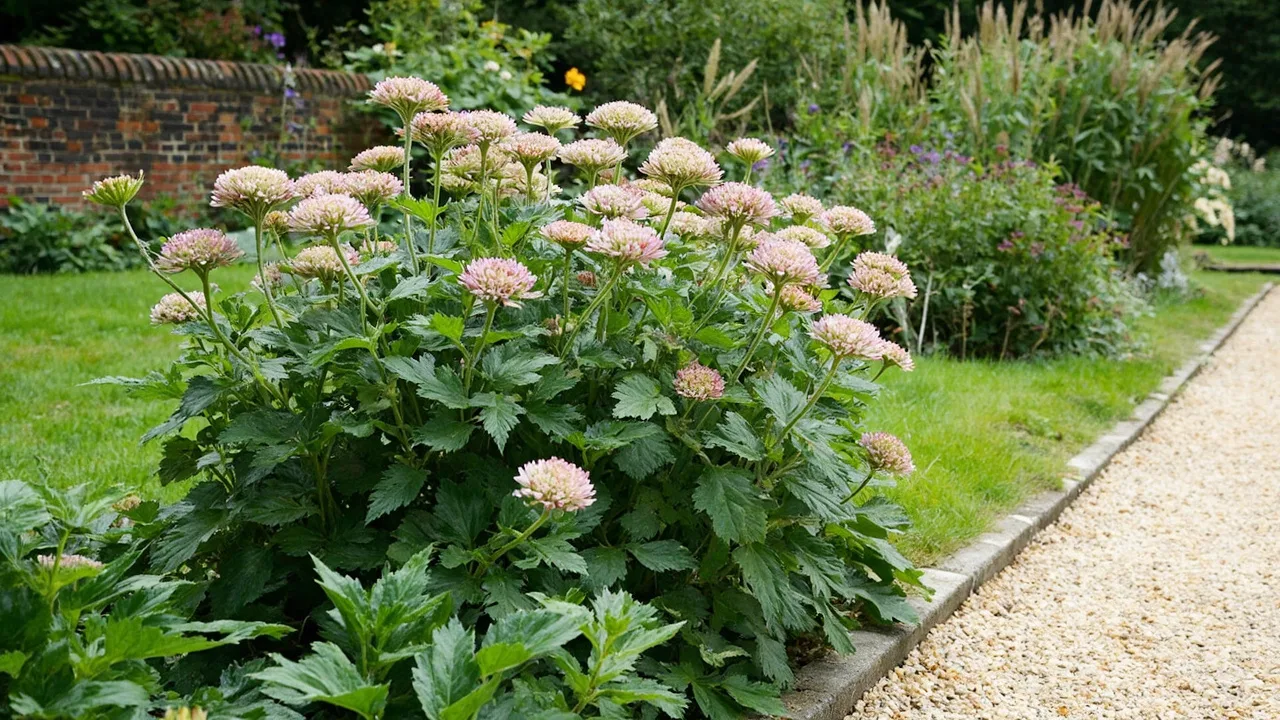
The plant forms a widening mound from short rhizomes and is particularly useful as ground cover at the front of a mixed border, beneath open shrubs or around roses. Its foliage helps shade bare soil, while the open flowers are accessible to bees and other pollinating insects. Established clumps can spread 60-90cm, so this is better placed beside robust perennials than delicate alpines or very small bulbs.
Its combination of a long flowering period, broad soil tolerance and reliable recovery after cutting back suits gardens throughout Britain. It copes with exposed positions and cold winters once established, though foliage may become untidy in windy or frosty sites. In mild districts some leaves persist through winter; elsewhere the plant behaves more like a fully deciduous perennial and renews itself in spring.
The hybrid is fertile and seedlings can vary considerably. It may also cross with nearby hardy geraniums, so self-sown plants should not automatically be regarded as identical to the parent. Named cultivars are maintained by division or basal cuttings rather than seed.
Appearance
The foliage makes a loose, rounded mound of mid- to grey-green leaves. Each leaf is palmately divided into five to seven lobes, with shallow teeth and a slightly hairy surface. Some forms show purple-bronze blotches or veining around the bases of the lobes when growth is young, reflecting the influence of G. versicolor. Stems spread outwards as a clump matures, creating a soft-edged rather than rigidly upright outline.
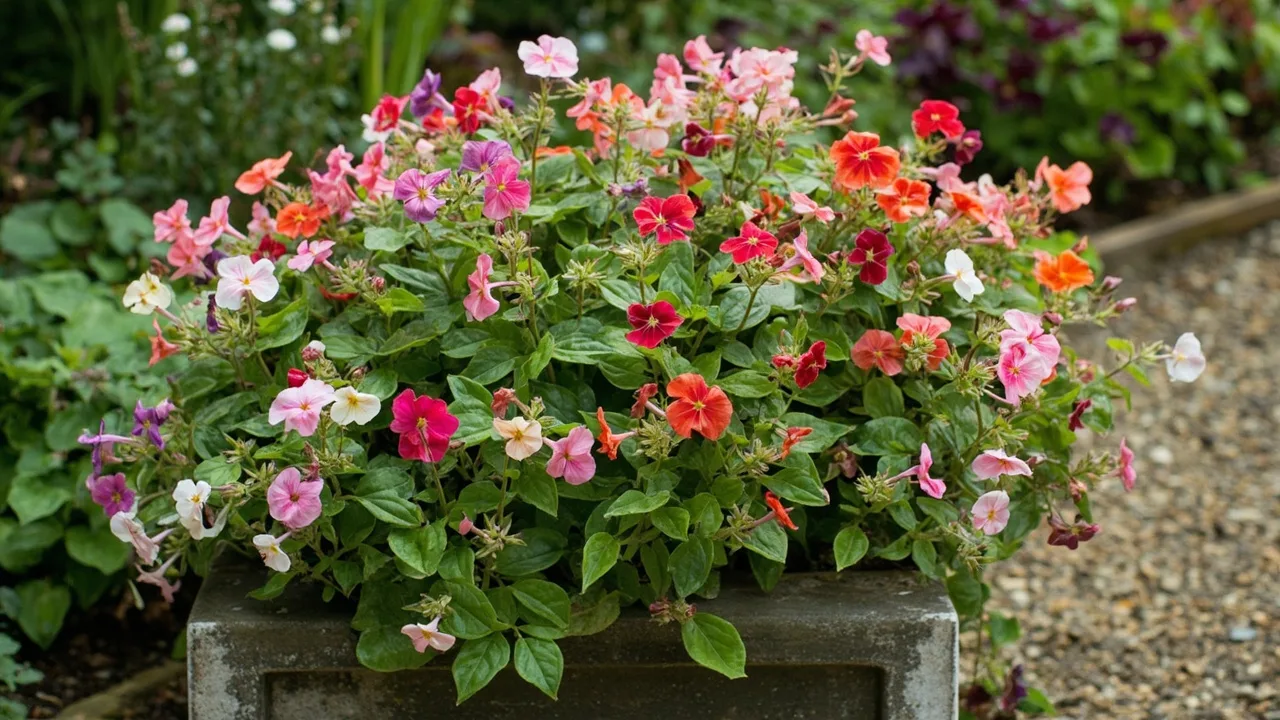
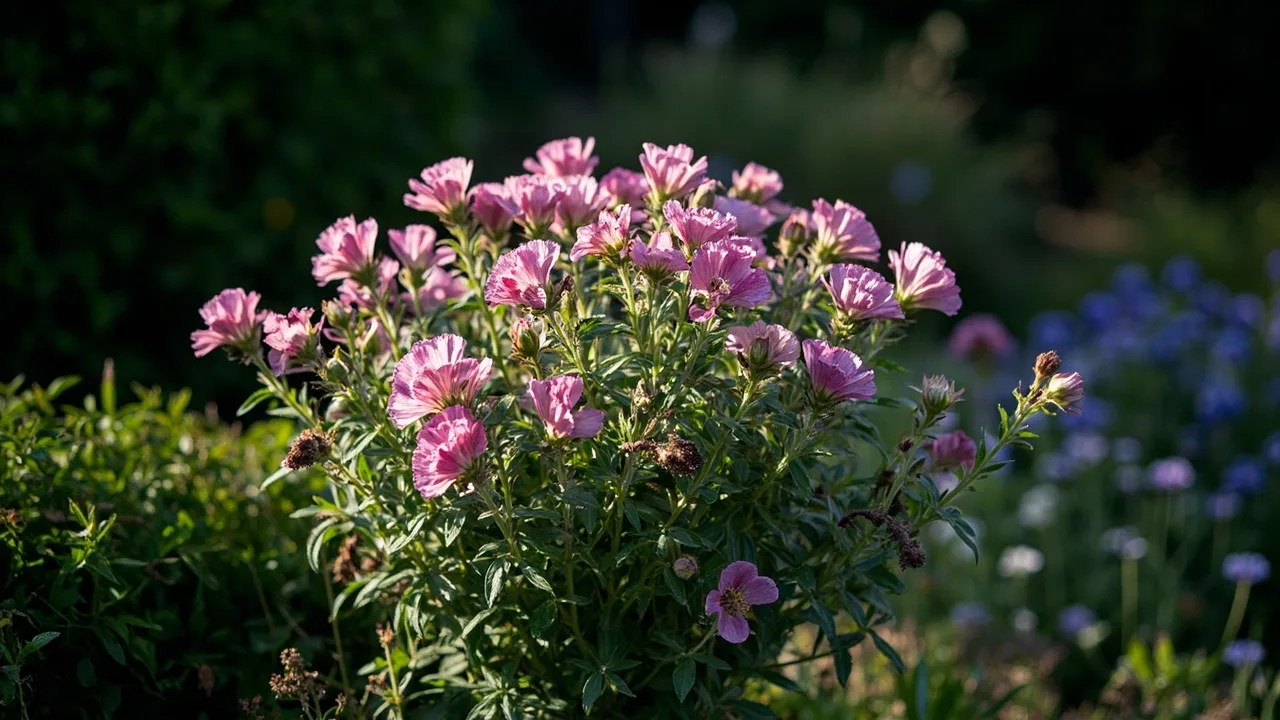
Flowers are borne freely above and among the leaves. They are generally 2.5-4cm across, saucer- or shallow funnel-shaped, with five petals that may be slightly notched at their tips. Colour varies from almost white or pale blush through rose and mauve-pink to salmon-pink. Darker pink or purplish veins radiating from a pale centre are a characteristic feature, although their strength differs between cultivars.
The main display begins in late May or June and commonly continues into August or September. Cutting the first flush back can produce fresh leaves within a few weeks and encourage lighter flowering from late summer into early autumn. Flowers are followed by elongated, beak-like fruits, the feature behind the common name cranesbill. When ripe, the drying fruit structure releases seeds mechanically.
Typical plants reach 30-60cm in flower, but cultivar choice matters. Compact 'Wageningen' is around 35cm high, while RHS descriptions place 'Hollywood' at up to 70cm and vigorous 'Claridge Druce' at up to 75cm. Width also varies with age and growing conditions; an established clump can become considerably broader than its first-season footprint.
Growing Conditions
Full sun produces abundant flowers where the soil retains reasonable moisture, while partial shade is valuable in dry gardens and beneath lightly canopied shrubs. Morning sun or dappled shade is particularly suitable. Deep shade reduces flowering and can encourage lax growth, whereas a hot, dry position may lead to scorched or mildewed foliage in summer.
A moderately fertile, moist but freely drained soil gives the best balance of growth and flowering. Geranium × oxonianum is adaptable to clay, chalk, loam and improved sandy ground, and is not restricted to a narrow pH range. Heavy clay is acceptable if water can drain away in winter; persistent waterlogging is much more damaging than ordinary winter wet. Sandy soil benefits from garden compost or leaf mould to improve moisture retention.
Established plants tolerate short dry spells, but prolonged summer drought reduces flowering and makes powdery mildew more likely. Water newly planted specimens regularly during their first growing season, especially during April-to-August dry periods. In later years, soak the root zone during sustained drought rather than applying frequent shallow sprinkles.
Allow 45-60cm between plants in a border. For relatively quick ground cover, roughly five to seven plants per square metre can be used, but closer spacing creates early congestion and more work later. The rhizomes expand gradually, and vigorous forms may overwhelm small neighbours if their spread is not checked.
This cranesbill works well in cottage-garden and informal planting. Suitable companions include shrub roses, foxgloves, lady's mantle and ornamental grasses, provided each receives enough light and root space. A large container is also possible for a compact cultivar, but potting compost dries faster than border soil and container plants need closer monitoring for vine weevil.
Planting and Care
Plant in early spring, usually March or April, or in autumn from September to November while the soil is workable. Container-grown plants may be planted at other times, but summer planting requires reliable watering. Dig a hole no deeper than the root ball and somewhat wider, loosen circling roots, set the crown at soil level, firm gently and water thoroughly. Avoid burying the crown beneath a deep mulch.
Apply a modest mulch of well-rotted garden compost in spring, keeping it clear of the crown. On ordinary garden soil, this is normally sufficient feeding. A light application of balanced slow-release fertiliser can help on poor ground, but excessive nitrogen encourages soft, sprawling leaves at the expense of flowers. After the first cut-back, a liquid feed is useful only where soil fertility is genuinely low.
Water during the first season whenever the upper soil begins to dry. Established border plants generally need additional water only in prolonged dry weather. Container plants require regular checks throughout spring and summer: water thoroughly, let surplus drain, and never leave the pot standing continuously in water.
After the main early-summer flush, cut all stems and tired foliage down to about 5-7cm. This can look drastic, but fresh leaves normally emerge within two to three weeks and flowering may resume in late August or September. Clear the cut material to improve air movement. In late February or early March, remove any remaining frost-damaged foliage before new shoots extend. This plant should be cut back rather than given woody-plant pruning.
Lift and divide congested clumps every three to five years in March, April, September or early October. Split the rootstock into substantial pieces, discard weak or dead central material, replant healthy outer sections at their original depth and water them in. Division both rejuvenates the plant and preserves named cultivars. Soft basal shoots may also be detached in early spring and rooted in gritty propagation compost.
Do not rely on seed to reproduce a cultivar. Because this is a fertile hybrid, seedlings vary and may lean towards either parent; volunteers can be moved, evaluated or removed before they compete with border plants. Seasonal care is otherwise simple: mulch in spring, cut back after the main flower flush, divide when crowded and tidy old foliage before spring growth.
Common Problems
Geranium × oxonianum is generally robust, but stress, crowding and container culture can expose several familiar UK problems.
Powdery mildew appears as a white, dusty coating on leaves, often during hot, dry weather when roots are short of moisture. Water the soil deeply, improve airflow and remove badly affected foliage. Dividing an overcrowded clump and mulching to conserve moisture usually addresses the conditions that favour repeated attacks.
Downy mildew causes yellow patches on the upper leaf surface and greyish or purplish growth beneath, especially in cool, damp conditions. Remove affected leaves promptly and bin them rather than adding them to a home compost heap. Space plants well, water at soil level and avoid keeping foliage wet unnecessarily.
Vine weevil is chiefly a concern in pots. Adults leave irregular notches around leaf edges, while cream-coloured larvae with brown heads feed on roots and can cause sudden wilting. Inspect pots and root balls, pick off adults found at night and use a biological nematode control at the appropriate soil temperature if larvae are present.
Slugs, snails and leaf-eating larvae may damage soft spring shoots or make holes in leaves. Established clumps usually grow through minor injury. Check plants after dark, reduce damp hiding places around crowns and remove pests by hand where damage is concentrated rather than treating an entire border unnecessarily.
Excessive spread or self-seeding is a management issue rather than a disease. Remove unwanted seedlings before they establish and cut back before seed ripens if volunteers are troublesome. Use a less vigorous cultivar in a small bed, and divide or edge an expanding clump before it engulfs low-growing neighbours.
Sparse flowers usually indicate too much shade, drought, overfeeding or an overdue division. Move the plant to brighter conditions if practical, water during long dry periods, avoid high-nitrogen feeds and rejuvenate old clumps. Waterlogged soil may cause weak growth or crown loss; improve drainage or replant on slightly raised ground.
Popular Varieties
The following cultivars are documented by the RHS and are also encountered in UK horticulture. Availability changes, so check specialist hardy-perennial nurseries if a particular selection is difficult to find.
- 'Claridge Druce' is vigorous and spreading, with slightly grey-green, lobed foliage and mauve-pink flowers marked by deeper purple veins. Its broad habit makes it effective for weed-suppressing ground cover where there is room for a clump to expand.
- 'Wargrave Pink' reaches about 60cm high and carries freely produced, light salmon-pink flowers around 3.5cm across above five-lobed green leaves. It is a robust choice for informal borders and performs in sun or partial shade, provided the soil is not waterlogged.
- 'Wageningen' is a more compact, relatively upright selection, around 35cm high. Its green-eyed salmon-pink flowers appear in succession from late spring into early autumn, making it useful where a lower, neater plant is preferred.
- 'Hollywood' forms an evergreen or semi-evergreen clump up to about 70cm high. Mid-green leaves may show faint bronze markings near the lobe bases, while the comparatively large flowers provide a strong display.
Cultivar names should remain attached only to vegetatively propagated stock. A seedling beneath 'Wargrave Pink', for example, may be attractive but is not automatically another plant of 'Wargrave Pink'. Buying a correctly labelled nursery plant and increasing it by division is the reliable way to retain the expected height, colour and habit.
Sources & Further Reading
- RHS: Geranium × oxonianum, accessed 2026-07-23.
- Royal Botanic Gardens, Kew: Geranium × oxonianum, accessed 2026-07-23.
- RHS: How to grow geraniums, accessed 2026-07-23.
- RHS: Geranium × oxonianum 'Claridge Druce', accessed 2026-07-23.
- RHS: Geranium × oxonianum 'Wargrave Pink', accessed 2026-07-23.
- RHS: Geranium × oxonianum 'Wageningen', accessed 2026-07-23.
Pests and Diseases
| Problem | Symptoms | Management |
|---|---|---|
| Vine weevil | Notches on leaf margins and wilting plants caused by larvae feeding on roots. | Apply nematodes to the soil in autumn or use a systemic insecticide drench. |
| Slugs and snails | Irregular holes chewed into leaves and stems, often accompanied by slime trails. | Use iron phosphate pellets or beer traps to reduce populations around the base of plants. |
| Powdery mildew | A white, dusty fungal growth appears on leaves and stems, potentially causing distortion. | Improve air circulation and spray with a fungicide or milk solution at first sign of infection. |
| Geranium sawfly | Leaves are skeletonised or completely eaten by green caterpillar-like larvae. | Hand-pick larvae or apply an insecticidal soap spray to infested foliage. |
| Downy mildew | Yellowing leaves with fuzzy grey-purple growth on the undersides in damp conditions. | Remove affected foliage and avoid overhead watering to keep leaves dry. |
For step-by-step help, read Dealing with Slugs and Snails and Treating Powdery Mildew. Or browse the full plant problem solver to diagnose an issue by symptom.
Recommended Products
GardenWizz earns a commission from qualifying purchases made through affiliate links on this page (including links within the article) — as an Amazon Associate, and from Thompson & Morgan via the Awin network. This does not affect the price you pay. See our disclaimer for details.