Angular Jasmine
Jasminum angulare
The Gardening Year
Best months in UK gardens · full planting calendar →
🖨 Printable care card (PDF)At a Glance
| Botanical name | Jasminum angulare |
|---|---|
| Common name(s) | Angular jasmine |
| Family | Oleaceae |
| Plant type | shrub |
| Height × Spread | 3–6 m × — |
| Position | Full sun, Partial shade |
| Soil | fertile, well-drained |
| Flowering | June–August |
| Toxicity | — |
| Native range | South Africa |
Quick answer: Jasminum angulare (angular jasmine) is a tender, twining evergreen climber from South Africa, grown in the UK mainly in a conservatory or unheated greenhouse, or outdoors only against a very sunny, sheltered wall in the mildest counties. Give it fertile free-draining soil, full sun to light shade, steady summer moisture and a sturdy support to climb.
Overview
A warm, sheltered wall or a bright conservatory can turn Jasminum angulare into one of the most rewarding scented climbers for UK gardeners. It is an evergreen twining species from the eastern Cape of South Africa, grown here mainly for its sprays of starry, very fragrant white flowers in summer and autumn. Unlike the better-known winter jasmine (Jasminum nudiflorum), it is not a hardy shrub for cold gardens, and in most of the country it needs the protection of glass for at least part of the year.
The name "angular jasmine" refers to the four-angled young stems, a detail that helps separate it from the many other jasmines in cultivation. The species was first described from material collected in the Cape and has been grown in British glasshouses for well over a century, originally as a cool-conservatory plant and later as a wall subject in mild coastal gardens.
Appearance
Jasminum angulare is a vigorous, scrambling or twining shrub that climbs by winding its flexible stems around any suitable support rather than clinging with adhesive pads or aerial roots. The evergreen leaves sit in opposite pairs and are usually divided into three leaflets, occasionally five, with a slightly leathery texture and a faintly hairy underside on young growth. They remain useful through winter where temperatures and shelter allow, although a cold snap can scorch or shed foliage.
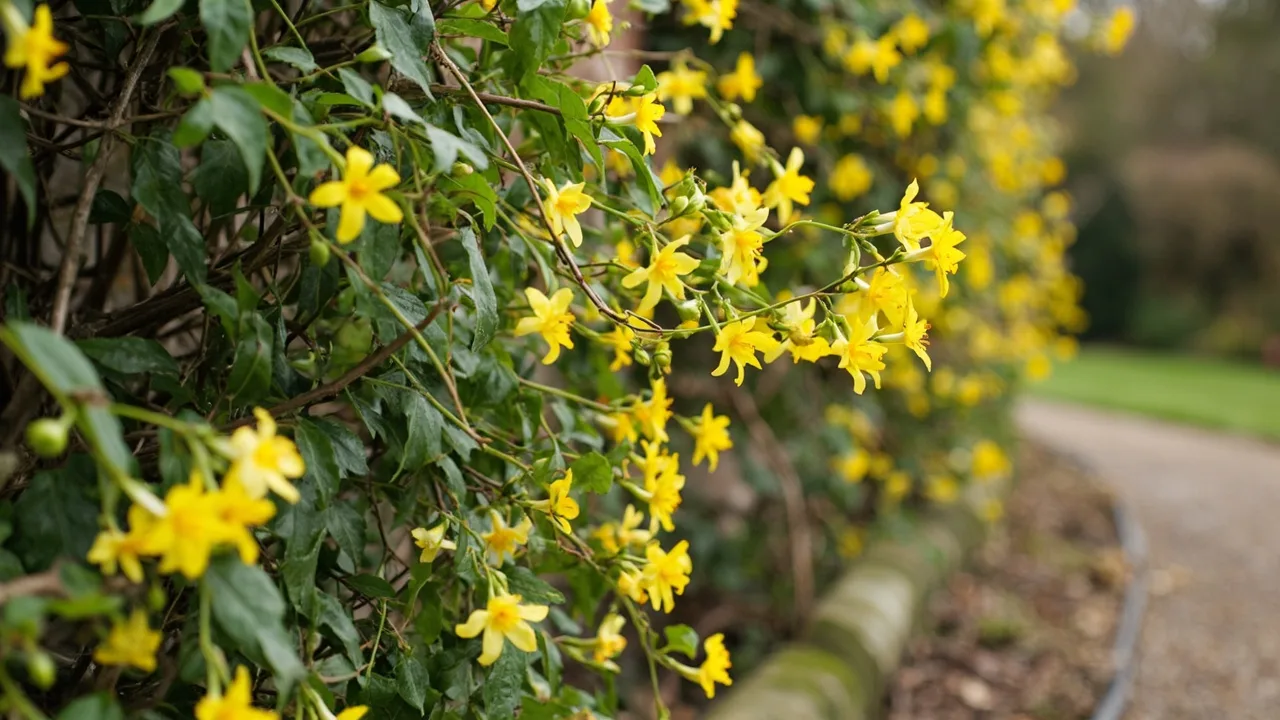
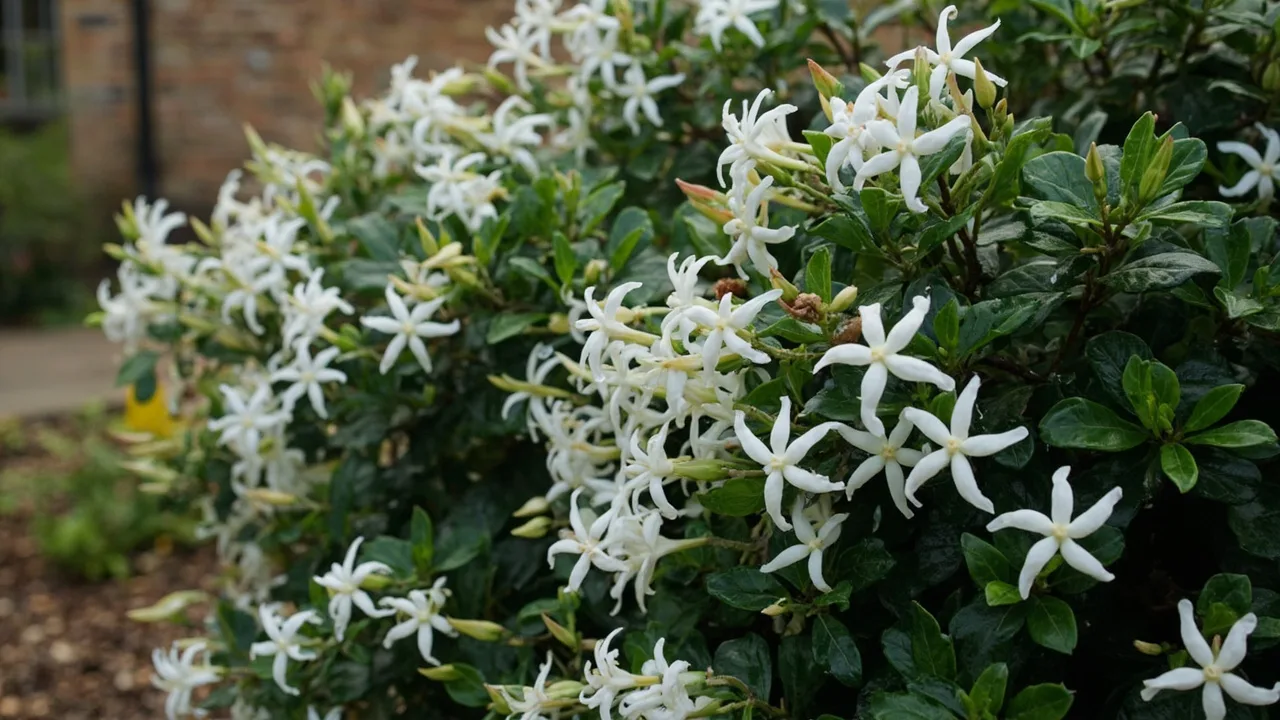
The flowers appear in clusters at the tips of the current season's growth and are white, star-shaped and roughly 3 cm across, with a strong, sweet fragrance that is most noticeable on warm evenings. Each spray carries several blooms that open in succession over a long period, so a healthy plant can be in flower for several weeks from midsummer into early autumn.
A mature, well-grown specimen covers several metres of trellis, but the practical size in the UK is controlled more by available wall or greenhouse height, container size, and pruning than by any inherent limit on the plant. In a large unheated greenhouse it can reach the ridge; in a small pot on a patio it can be kept to little more than a metre.
Growing Conditions
Across southern and western Britain, Jasminum angulare can succeed outdoors against a sunny, sheltered wall, particularly in coastal or urban microclimates where winter cold is brief. Inland gardens, frost pockets and exposed northern sites are much more challenging, and in those places the plant is best treated as a conservatory or unheated greenhouse specimen that can stand outside for the warmer months.
Light is the single most important factor. Several hours of direct sun a day produces the strongest flowering, although a little midday shade is welcome in the hottest spots and inside a greenhouse. Deep shade gives leafy, thin growth with few flowers, so avoid north-facing walls and overhung courtyards. A south- or west-facing aspect is generally ideal, provided the roots are not trapped in a permanently wet pocket at the base of the wall.
The soil should be fertile, humus-rich and free draining, with plenty of organic matter but no standing water in winter. Heavy clay is improved by digging in well-rotted garden compost and, where drainage is slow, coarse grit or another drainage improver. In a container, use a loam-based potting compost such as John Innes No. 3 blended with extra grit or fine bark, and make sure the pot has generous drainage holes that do not sit in a saucer of water.
Moisture should be steady during active growth. Water newly planted specimens whenever the surface begins to dry, and water deeply rather than little and often so roots follow moisture downwards. Established plants in the ground tolerate short dry spells but flower less well if repeatedly droughted. Container plants dry faster and need closer attention, particularly when grown against a sunny wall.
Planting and Care
Plant outdoors in late spring, after the last hard frost, when the soil has warmed. Harden off a greenhouse-grown plant gradually over a week or two before leaving it out. Set it at the same depth as in its pot, firm the soil gently and water thoroughly. Keep the stem base a short distance from a wall so rain can reach the roots, then mulch around the root area with compost or bark without burying the crown.
Provide a trellis, horizontal wires or a sturdy obelisk before growth accelerates, because twining stems wrap themselves around anything within reach and are difficult to redirect later. Tie new stems in loosely with soft garden twine, leaving room for thickening, and guide young shoots sideways and upwards to fill gaps evenly. A fan-shaped framework usually gives better coverage than letting every stem race to the top.
Water regularly from spring to early autumn, easing off as growth slows in late summer. Feed container plants with a balanced liquid fertiliser every couple of weeks during active growth, following the product instructions. For plants in the ground, a spring mulch of garden compost is usually enough; an overly nitrogen-rich feed tends to produce vigorous leaves at the expense of flowers.
Prune after the main flush of flowering, removing dead, damaged or congested growth first. Shorten long stems to a suitable pair of leaves or side shoot and retain a few strong framework stems for the following year. Avoid severe pruning in late autumn, when fresh regrowth may be damaged by winter cold. If winter dieback occurs, wait until spring growth shows which stems are alive before cutting back.
Propagate from semi-ripe cuttings taken in summer. Choose healthy non-flowering shoots, trim them below a leaf joint, remove the lower leaves and place them in a free-draining rooting medium under gentle humidity. Rooting can be slow and variable, so take several cuttings rather than relying on one. Layering a flexible low stem into a neighbouring pot of compost is another reliable option where a suitable shoot can be pegged down without breaking.
Container plants need seasonal protection in most of the UK. Move them into a bright, frost-free place before severe cold arrives, reduce watering through the winter months and ventilate freely on mild days so the air does not go stagnant. Do not keep the compost permanently wet while growth is slow. Return plants outdoors gradually in spring, and inspect the underside of leaves before moving them to avoid carrying pests into the greenhouse.
Common Problems
Frost and cold damage
Leaves turn brown or black and shoots die back after frost or an icy east wind. The cause is exposure beyond the plant's tolerance, particularly in a pot where roots cool quickly. Move containers to shelter, wrap the pot in bubble plastic during cold snaps and protect outdoor plants with horticultural fleece when severe weather is forecast. Delay pruning until spring growth shows which stems are still alive.
Red spider mite
Fine speckling on leaves, dull foliage and delicate webbing in a hot, dry greenhouse are typical signs of red spider mite. The pest thrives where air is dry and the plant is under water stress, especially on specimens stood close to glass. Improve ventilation, keep watering consistent and syringe foliage in the evening during summer; biological control with a predatory mite is a sound option under glass. Check regularly rather than waiting for widespread bronzing.
Aphids
Clusters of small green or black insects on soft shoot tips, with curled leaves and sticky honeydew, are usually aphids. They favour lush spring growth and are often worst on overfed plants. Rub small colonies away, wash them off with a strong jet of water or encourage natural predators such as ladybirds and hoverfly larvae. Avoid routine insecticide use that would harm beneficial insects.
Root problems from wet compost
Yellowing leaves, wilting despite wet soil and a sour smell from the container point to poor drainage or root damage. Winter waterlogging is the usual cause, particularly in a heavy border or a pot without adequate holes. Improve drainage, allow the surface to dry slightly between waterings and repot affected container plants into fresh, open compost, removing only clearly dead roots. Do not over-pot: a snug container dries out more evenly than a large one.
Poor flowering
A healthy plant that produces long green shoots but few flowers is usually short of light, overfed or pruned at the wrong time. Move a container to brighter conditions, avoid high-nitrogen feeds and prune after flowering rather than before it. Cold summers can also delay or reduce flowering, so do not assume every season will give the same display; a plant settled into a warm microclimate will flower more reliably than one moved around.
Popular Varieties
The species Jasminum angulare is the principal plant sold under the common name angular jasmine. Verified named cultivars are limited in the UK, and online listings can confuse this species with several others, so always check the botanical name on the label rather than buying on common name alone.
Jasminum angulare 'Anne Shelton' is a selected form listed in the RHS Plant Finder, generally similar to the species but selected for particularly free flowering. Jasminum polyanthum is a different, strongly scented species frequently sold as a conservatory or houseplant and is often confused with angular jasmine in garden-centre searches; it is not a variety of J. angulare. Jasminum officinale, the common or poet's jasmine, is another distinct species with a different habit and greater cold tolerance, sometimes offered as a "jasmine climber" for UK walls.
For an authentic J. angulare, choose a healthy, well-rooted plant with several stems, clean foliage and a clear botanical label. A named cultivar should only be accepted when the nursery supplies a verifiable name and the plant is correctly identified. Where a retailer lists an unsubstantiated cultivar or an RHS rating, treat that claim cautiously rather than repeating it.
Sources and Further Reading
- Royal Horticultural Society: Jasminum angulare plant profile, https://www.rhs.org.uk/plants/9443/jasminum-angulare/details, accessed 2026-07-21.
- Royal Horticultural Society: How to grow jasmine, https://www.rhs.org.uk/plants/jasmine/growing-guide, accessed 2026-07-21.
- BBC Gardeners' World: Jasminum angulare profile, https://www.gardenersworld.com/plants/jasminum-angulare/, accessed 2026-07-21.
- Kew Science: Plants of the World Online, Jasminum angulare, https://powo.science.kew.org/, accessed 2026-07-21.
- Roseland House Garden & Nursery: Jasminum angulare, https://www.roselandhouse.co.uk/climbers/jasminum%20angulare.htm, accessed 2026-07-21.
Pests and Diseases
| Problem | Symptoms | Management |
|---|---|---|
| Aphids | Clusters of small green or black insects on new growth causing distorted leaves and sticky honeydew. | Squash by hand or spray with a strong jet of water; use insecticidal soap if infestation is severe. |
| Red spider mites | Fine webbing on leaves and stems with stippled, yellowing foliage, especially in dry indoor conditions. | Increase humidity around the plant and spray with water or horticultural oil to dislodge mites. |
| Powdery mildew | White, powdery fungal growth on leaves and stems, often leading to leaf distortion and drop. | Improve air circulation and avoid wetting foliage; treat with a sulphur-based fungicide if necessary. |
| Scale insects | Small, immobile, bump-like pests attached to stems and leaves, often accompanied by sooty mould. | Scrape off visible scales with a soft brush or cotton bud dipped in methylated spirit. |
| Root rot | Yellowing, wilting leaves despite moist soil, indicating waterlogged roots and potential fungal infection. | Ensure pots have drainage holes and allow the compost to dry slightly between waterings. |
For step-by-step help, read Controlling Aphids Naturally and Treating Powdery Mildew. Or browse the full plant problem solver to diagnose an issue by symptom.
Recommended Products
GardenWizz earns a commission from qualifying purchases made through affiliate links on this page (including links within the article) — as an Amazon Associate, and from Thompson & Morgan via the Awin network. This does not affect the price you pay. See our disclaimer for details.