Oven Wattle
Acacia pravissima
The Gardening Year
Best months in UK gardens · full planting calendar →
🖨 Printable care card (PDF)At a Glance
| Botanical name | Acacia pravissima |
|---|---|
| Common name(s) | Oven Wattle |
| Family | Fabaceae |
| Plant type | shrub (Evergreen) |
| Height × Spread | 0.5–8 m × 1.5–2.5 m |
| Position | Full sun, Partial shade |
| Soil | neutral to acid, well-drained soil |
| Flowering | January, February, March, April, May, December |
| Toxicity | — |
| Native range | southeastern Australia |
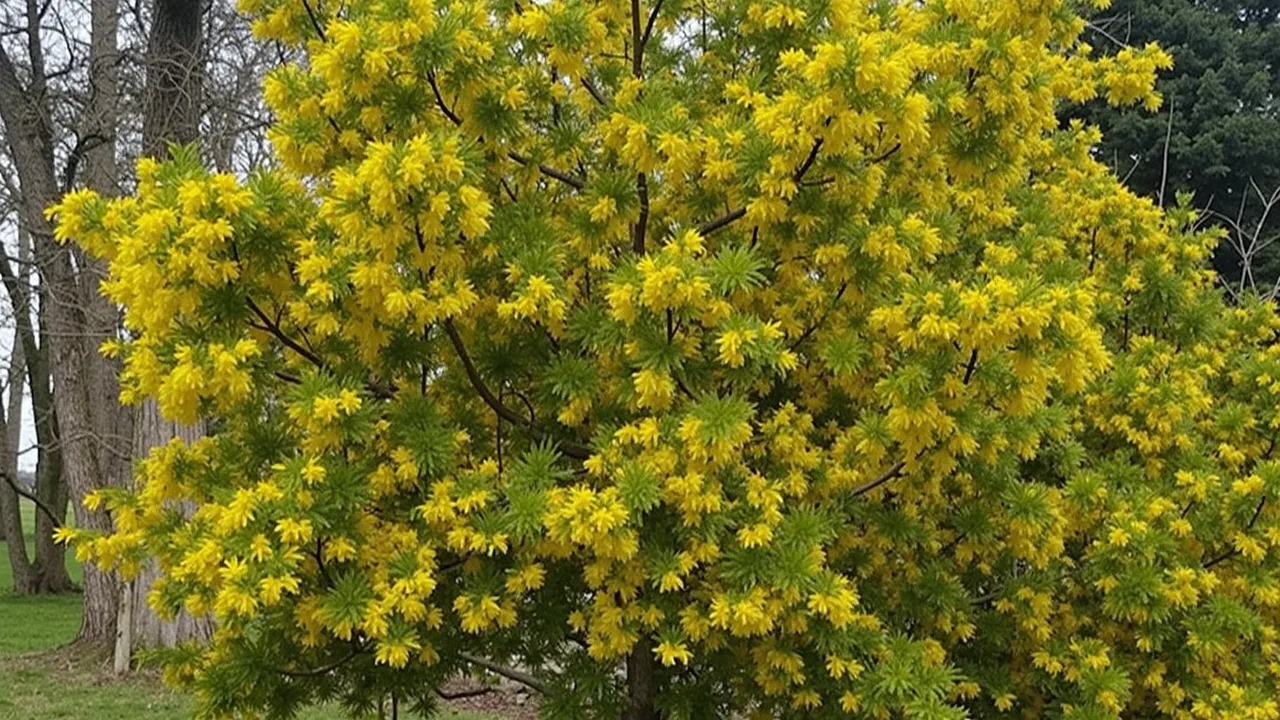
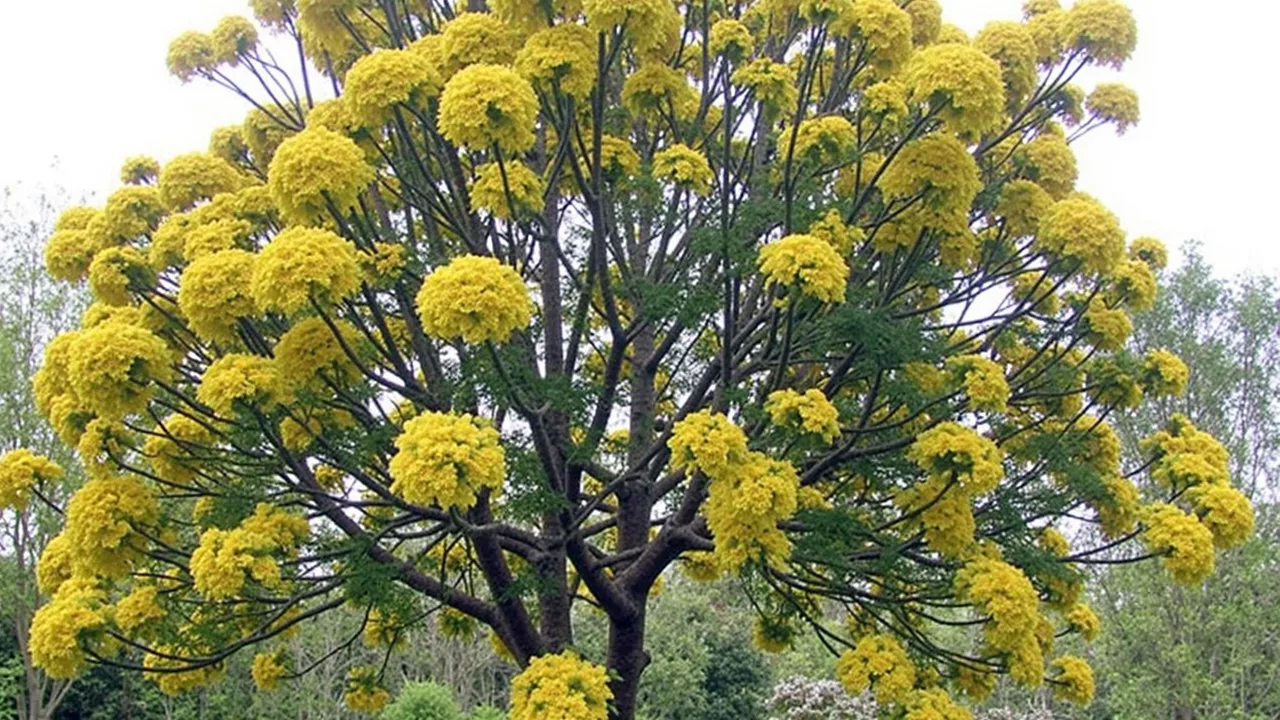
Acacia pravissima, the Oven Wattle, is an evergreen tree or large shrub from south-eastern Australia that has become a fixture of mild, sheltered British gardens, valued chiefly for its lavish, scented display of golden-yellow flowers in late winter and early spring. Its asymmetric, sickle-shaped phyllodes — flattened leaf-stalks that take over from true leaves — give the plant a graceful, slightly weeping outline that is unlike most other wattles in cultivation. The species holds the Royal Horticultural Society's Award of Garden Merit, a mark of outstanding excellence for garden use in the United Kingdom.
Overview
Acacia pravissima belongs to the legume family, Fabaceae, and was described by the Victorian-era botanist Ferdinand von Mueller from material collected on the rocky hillsides and watercourses of New South Wales and Victoria. In its native range it grows in well-drained, often skeletal soils in subalpine and tableland country, enduring cool winters and dry summers. In British cultivation it has been grown since the late nineteenth century and is now a familiar feature of the mildest corners of the country — coastal Cornwall, Devon, south and west Wales, the west of Scotland in favoured pockets, lowland Ireland, the Channel Islands, and inner London gardens with their moderating urban microclimate.
The species has three principal ornamental virtues: a graceful, almost willowy habit; unusual, blue-grey to glaucous phyllodes that remain attractive in every season; and a flamboyant, early-season flower display that begins when little else in the garden is in bloom. Its chief limitation in Britain is sensitivity to hard frost, which restricts reliable outdoor cultivation to sheltered, free-draining sites. Sited with care, it can thrive for decades, flower reliably every year, and provide valuable early forage for bees and other pollinating insects.
Appearance
The Oven Wattle develops an open, spreading crown on arching branches, with the foliage carried in a pendulous, slightly weeping manner. In British gardens it is most commonly seen as a large shrub or small tree of 4–8 m in height, with a spread of 3–5 m; on poor soils or in cold inland districts it may stay considerably smaller. The bark is grey-brown, smooth on young stems and only faintly fissured with age.
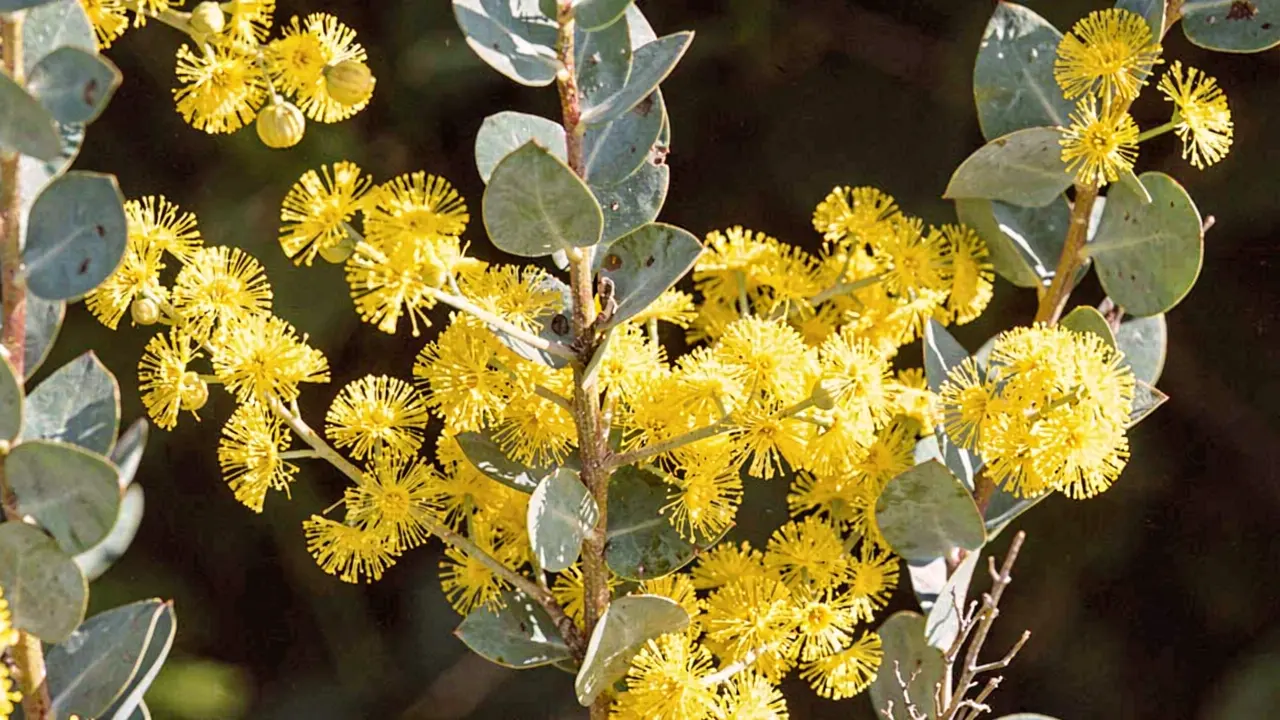
The foliage is the defining feature. Like most mature wattles, Acacia pravissima bears no true leaves; instead, the leaf-stalks (petioles) are flattened and expanded into phyllodes, which perform the photosynthetic role of leaves. The phyllodes are markedly asymmetric, narrowly triangular to sickle-shaped, 5–12 cm long and 3–8 mm wide, leathery in texture and a soft, grey-green to distinctly glaucous blue-green. They are arranged spirally along the stems and hang pendulously, giving the whole plant a delicate, almost willowy appearance quite unlike the broader-leaved look of many other acacias in cultivation.
The flowers appear in great profusion from late February into April, depending on district and season, the peak often coinciding with Easter. They are borne in small, globular heads roughly 2–4 mm across, bright golden-yellow, and carry a sweet, honeyed fragrance. The heads are carried in short axillary racemes or panicles along the previous year's wood, smothering the plant in colour. After pollination, flattened seed pods 5–10 cm long develop; they are brown at maturity and characteristically constricted between the individual seeds, giving them a beaded outline.
Growing Conditions
Acacia pravissima is a sun-loving plant and demands an open, unshaded position to flower well and to develop a balanced, compact habit. In shade the phyllodes become sparse, growth is leggy, and flowering is markedly reduced.
Drainage is the single most important soil requirement. The species has evolved on free-draining, often gravelly substrates and is acutely intolerant of winter waterlogging, which quickly leads to root death. Light to medium loams, sandy soils and even stony ground are all suitable, provided surplus water can escape freely. Soil pH is not critical: the plant accepts acidic, neutral, and mildly alkaline substrates, although very chalky conditions can occasionally cause mild chlorosis of the phyllodes, in which case an annual acidifying mulch of leafmould or ericaceous compost is helpful.
The species sits in the RHS hardiness range H3 to H4, corresponding to a tolerance of roughly -5 to -10 °C once established, provided cold exposure is not prolonged. This makes it best suited to the milder parts of the British Isles: coastal Cornwall, Devon and south Wales, the west of Scotland in favoured pockets, much of lowland Ireland, and the London microclimate. In colder inland districts reliable success depends on planting against a warm, south- or west-facing wall and giving some winter protection in the first few years. Strong, desiccating winds damage both phyllodes and young shoots, so a sheltered position — ideally a walled garden, courtyard or against a building — is essential.
Planting and Care
Container-grown plants from garden centres or specialist nurseries can be planted at almost any time of year, but the most reliable windows are mid-spring (March to May), once the worst of the winter frosts are over, or early autumn (September to early October) in milder areas, when the soil is still warm and rainfall is reliable. Prepare the planting hole at least twice the width of the rootball and, on heavy ground, work a generous forkful of grit into the base of the hole to guarantee drainage. Set the plant at the same depth it sat in its pot, backfill, firm gently, and water in thoroughly.
Watering should be generous during the first two growing seasons to encourage a deep, resilient root system, after which the plant becomes markedly drought tolerant and only needs supplementary irrigation in prolonged dry spells. Established specimens resent having wet feet, so it is better to water deeply but infrequently than to give a little and often.
Feeding is generally unnecessary. Acacias are legumes and fix atmospheric nitrogen through root nodules in association with specialised bacteria, so a fertile soil actually encourages soft, leafy growth that flowers poorly and is more susceptible to frost damage. A light spring top-dressing of a low-nitrogen, high-potash fertiliser, such as a tomato feed or a granular rose fertiliser, is sufficient for young plants in poor soils; mature specimens need none at all.
Pruning should be kept to a minimum. The wood is brittle and the plant regenerates poorly from cuts into old, bare wood, so hard pruning is to be avoided. Each spring, after the risk of hard frost has passed, examine the plant and cut out any frosted, damaged or crossing branches, pruning back to a healthy outward-facing bud. Light shaping immediately after flowering is acceptable and helps maintain a tidy framework, but limit the work to shortening the current season's growth rather than cutting back into the older framework. Remove any vigorous upright water shoots that spoil the plant's open, spreading habit.
Propagation is most reliably carried out by seed. The hard seed coat benefits from scarification — either a brief pour of just-boiled water, allowed to cool and soak for 12–24 hours, or a small nick with a file — before sowing in spring in a free-draining seed compost at around 18–21 °C. Germination is usually rapid and prolific. Semi-hardwood cuttings can be taken in late summer and treated with a hormone rooting compound, but success rates are noticeably lower than with seed.
Seasonal care in the UK is straightforward. In spring, plant out, lightly feed young specimens and tidy any frost damage. In summer, water young plants during dry spells and enjoy the foliage and the remains of the flower display. In autumn, apply a loose mulch of bark or leafmould around the root zone of young plants in borderline areas. In winter, in the most exposed sites, drape horticultural fleece or hessian over the framework during severe cold snaps, removing it during milder weather to keep air moving around the plant.
Common Problems
Frost damage is by far the most frequent issue, particularly in the first three or four years after planting and on plants in cold, exposed sites. Affected phyllodes and shoot tips turn brown and black, and the most badly damaged growth should be pruned out in late spring once it is clear where regrowth will emerge. Plants will often sprout again from lower, undamaged wood or from the base.
Waterlogging is the next most common cause of failure. Acacia pravissima will not survive prolonged saturation of the root zone; symptoms are sudden wilting, yellowing of the phyllodes and a general collapse of the plant during winter or early spring. Improve drainage at the planting site, or grow the plant in a large container, to avoid this.
Honey fungus (Armillaria species) is occasionally recorded on stressed specimens, particularly in gardens with a history of the disease. Healthy, well-sited plants are rarely affected, and the best defence is good drainage, adequate summer moisture while establishing, and the avoidance of fresh sawdust mulches around the base.
Aphids may colonise the soft young shoots in late spring but rarely cause lasting damage; a strong jet of water, or encouragement of natural predators such as ladybirds and hoverflies, is usually sufficient. Persistent mild chlorosis on very chalky soils is best addressed with annual applications of an ericaceous or sequestered-iron feed and by using rainwater for irrigation where possible.
When grown well — in full sun, in a free-draining soil, and in a position sheltered from hard frost and biting winds — Acacia pravissima is otherwise a notably pest- and disease-free plant in British cultivation, which is one of the qualities recognised by its Award of Garden Merit.
Popular Varieties
Acacia pravissima is grown chiefly as the species, and well-selected seed-raised plants show relatively little variation. A small number of named selections have entered cultivation, though availability in British nurseries is limited and they are best sought from specialist Australian-plant growers. 'Golden Carpet' is a low, spreading form reaching little more than 1–1.5 m in height with a wider spread, valued for its use as a flowering groundcover in mild coastal gardens. Plants sold in the UK as Acacia pravissima 'Prostrata' describe a similar low-growing habit. Where a particular clone has been singled out for flower quality or habit it may be propagated by cuttings, but seed-raised plants of a known, AGM-recognised parent line remain the most reliable choice for general garden use. Gardeners seeking a particular size or habit should verify the provenance of the plant at the point of purchase, as cultivar names in this group are not always applied consistently in the trade.
Pests and Diseases
| Problem | Symptoms | Management |
|---|---|---|
| Glasshouse red spider mite | Fine webbing and stippled, yellowing leaves caused by tiny mites feeding on foliage. | Increase humidity around the plant and treat with a suitable horticultural oil or miticide. |
| Fluted scale | Small, raised, fluted bumps on stems and leaves that may cause yellowing and leaf drop. | Scrape off visible scales and apply a systemic insecticide or white oil spray in spring. |
| Mealybugs | White, cottony wax secretions found in leaf axils and on stems, often accompanied by sticky honeydew. | Wipe away infestations with a damp cloth dipped in methylated spirit and apply insecticidal soap. |
| Honey fungus | General decline, wilting foliage, and white fungal growth under the bark at the base of the stem. | Improve drainage and remove infected roots; severe cases may require removing the plant to prevent spread. |
| Winter cold damage | Blackened or shrivelled shoots and leaf drop following hard frosts, as the plant is only marginally hardy. | Plant in a sheltered, south-facing microclimate and mulch roots with compost to insulate against frost. |
Or browse the full plant problem solver to diagnose an issue by symptom.
Recommended Products
GardenWizz earns a commission from qualifying purchases made through affiliate links on this page (including links within the article) — as an Amazon Associate, and from Thompson & Morgan via the Awin network. This does not affect the price you pay. See our disclaimer for details.