Upright Rhododendron
Rhododendron fastigiatum
The Gardening Year
Best months in UK gardens · full planting calendar →
🖨 Printable care card (PDF)At a Glance
| Botanical name | Rhododendron fastigiatum |
|---|---|
| Common name(s) | Upright Rhododendron |
| Family | Ericaceae |
| Plant type | shrub (evergreen) |
| Height × Spread | 50–100 cm × 50–100 cm |
| Position | Partial shade |
| Soil | moist but well-drained, acid soil |
| Flowering | March–May |
| Toxicity | Harmful if eaten |
| Native range | Yunnan, China |
Overview
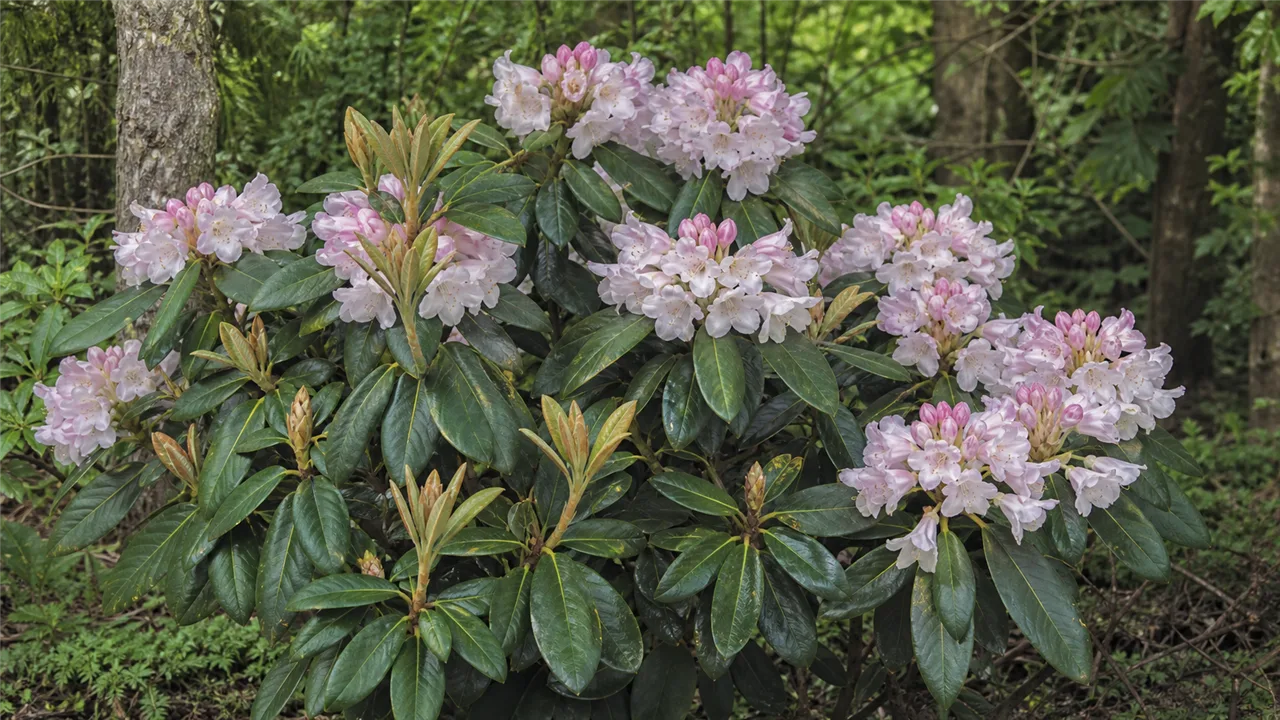
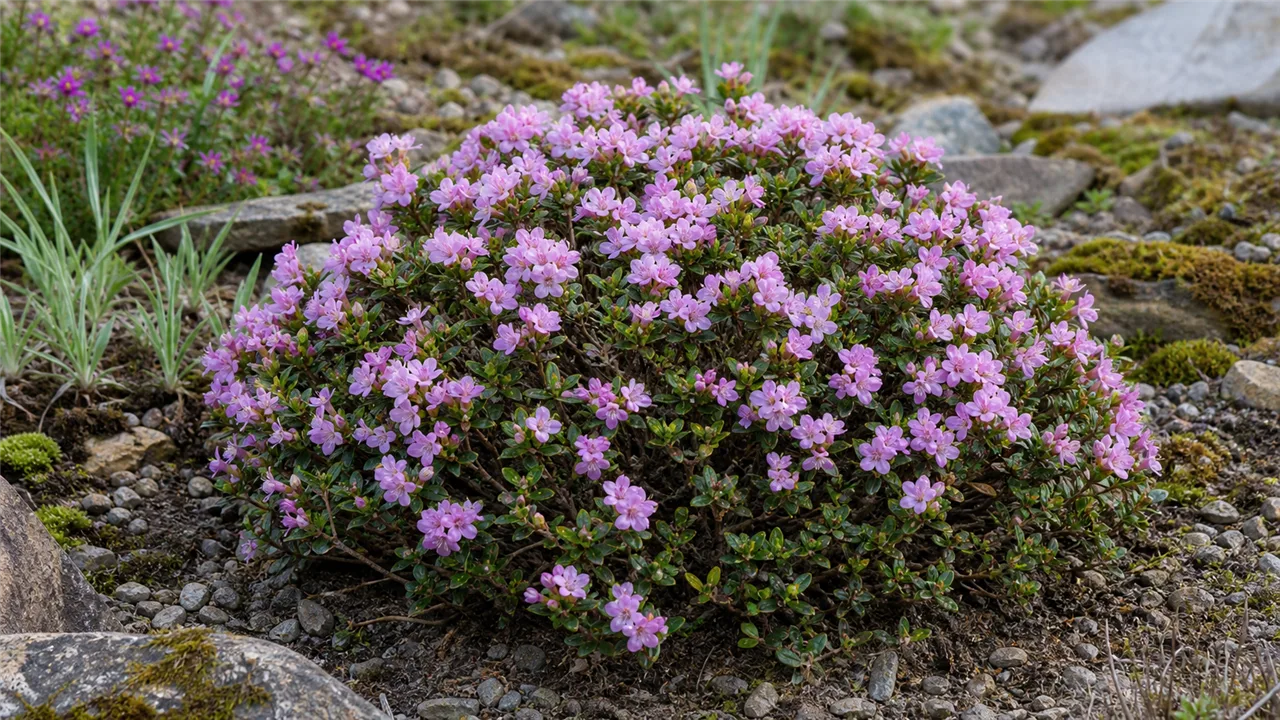
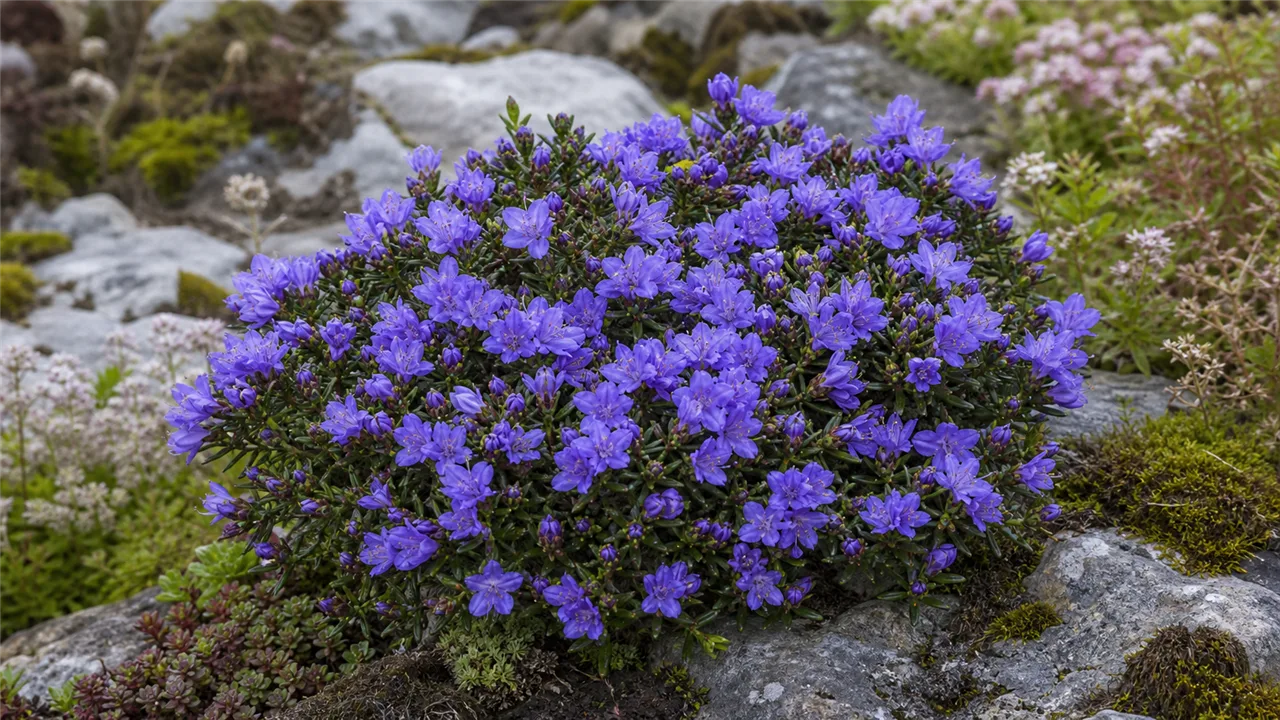
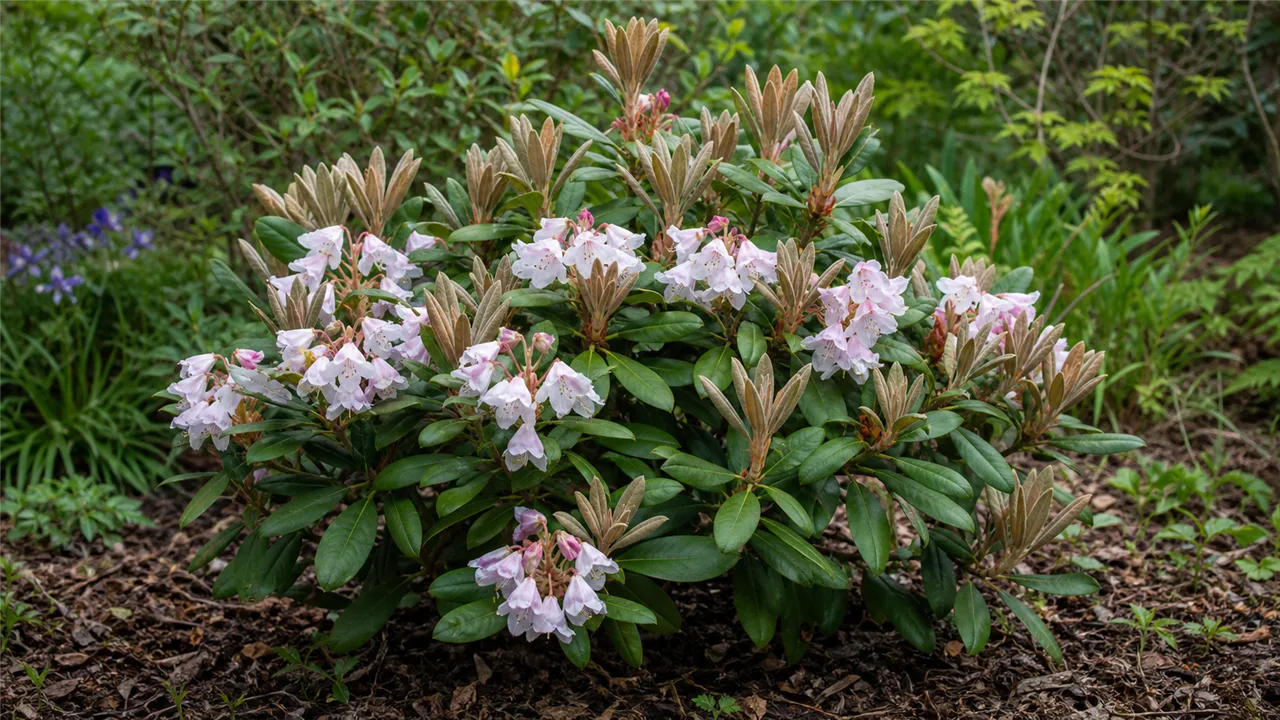
Rhododendron fastigiatum is a compact, evergreen dwarf rhododendron from the Lapponica subsection, grown in British gardens for its dense habit and its small violet-blue flowers in mid-spring. Introduced from the high-altitude screes and open woodlands of western Yunnan, China, where it grows at 2,500–4,000 m on acidic substrates, it tolerates cold, exposed sites well and suits the cooler, damper parts of the United Kingdom. In cultivation it forms a low, spreading mound roughly 30–90 cm tall and 60–120 cm wide after ten years, considerably wider than it is tall, with small leathery leaves that stay glossy and dark through the year. The flowers, in trusses of three to seven, are broadly funnel-shaped, 1.5–2.5 cm across, and vary in blue intensity between clones. The Royal Horticultural Society has awarded the species the Award of Garden Merit, and it remains a standard dwarf rhododendron for rock gardens, peat beds and the front of acidic borders. The plant is strongly calcifuge — it will not tolerate lime in soil or irrigation water — and is best treated as a specialist subject for the acidic end of the garden.
Appearance
Rhododendron fastigiatum is a slow-growing, dense, spreading evergreen shrub that builds a low mound rather than a vertical shape. After a decade a typical plant is around 30–60 cm tall in its centre and 60–120 cm across, with the longest branches arching gently outwards and occasionally rooting where they touch the ground in ideal conditions. The leaves are small, leathery and elliptic to narrowly ovate, 1–3 cm long, with a glossy dark-green upper surface and a paler, slightly scaly underside typical of the Lapponica subsection. Young growth in late spring is brighter green than the older foliage and darkens slowly as the season progresses. Bark on established stems is smooth and grey-brown, becoming slightly rough with age but never ornamental enough to be a feature in itself.
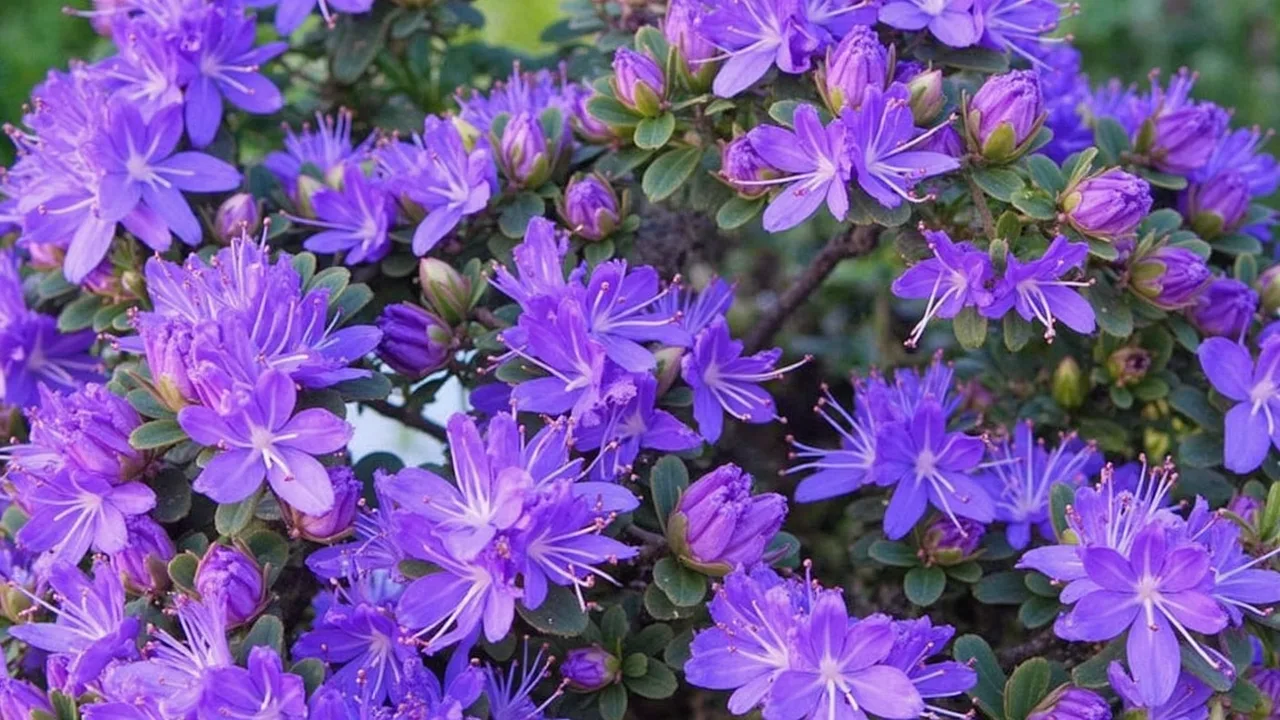
The flowers appear from April into May and are borne in small terminal trusses of three to seven blooms held just above the foliage. Each flower is broadly funnel-shaped, 1.5–2.5 cm across, with five lobes that open flat to display the colour. In the typical AGM clone the colour is a clear violet-blue to purple-blue, occasionally shading to softer lavender-blue in forms raised from wild seed. The intensity of blue varies noticeably between seedlings, which is why most garden-worthy plants are propagated vegetatively from selected stock. After flowering the spent blooms develop into small dry seed capsules that turn brown by late summer and are best removed for tidiness, though this is cosmetic rather than essential.
Growing Conditions
Rhododendron fastigiatum needs acidic soil. The acceptable range is roughly pH 4.5 to 6.0, in a moist but well-drained, humus-rich substrate — a loam enriched with leaf mould, well-rotted pine bark or ericaceous compost, ideally over a free-draining underlying soil. The plant will not tolerate chalk or limestone, and quickly becomes chlorotic in alkaline ground; yellowing between the leaf veins is almost always a pH problem rather than a feeding problem. Where native soil is unsuitable, the plant is most easily grown in a raised bed of ericaceous loam, in a large container with ericaceous compost, or as part of a peat bed alongside other acid-loving subjects.
The best aspect in UK gardens is dappled shade under deciduous trees, or a north- or east-facing border that does not receive strong afternoon sun. Lapponica rhododendrons come from high-altitude sites where summer radiation is intense but buffered by cloud and cool nights, and in lowland Britain strong midday and afternoon sun bleaches the foliage and scorches the flowers. Shelter from cold east winds in spring helps protect opening buds, but the plant is otherwise notably cold-tolerant once established.
Watering should be with rainwater wherever possible. In hard-water areas — broadly the chalk and limestone regions of southern and eastern England — tap water gradually raises the soil pH and causes the same chlorosis and stunting that alkaline soil produces. Collected rainwater, or greywater that has not passed through a water softener, is preferable. Good drainage is non-negotiable: waterlogged roots die quickly, especially through the dormant winter months. On heavy clay, plant on a shallow mound or in a raised bed rather than in a depression.
The plant holds a UK hardiness rating recorded in the structured field on the page; the prose does not restate it. As a guide for siting, it is reliably grown throughout lowland England and Wales, in most of lowland Scotland, and along the milder Irish coast, provided drainage and acidity are right.
Planting and Care
Plant container-grown stock from October through April, when the ground is workable and not frozen or waterlogged; autumn planting is preferable because it allows roots to establish before summer drought stress. Container-grown plants can go in at any time provided they are kept irrigated through the first growing season. Dig the hole wider than the root ball but no deeper — the root-ball surface should sit just below the surrounding soil, never buried. Backfill with a mix of the existing topsoil and ericaceous compost or pine bark, water in well, and apply a 5–7 cm mulch of pine bark or leaf mould over the root area, clear of the stem. Avoid mushroom compost, farmyard manure or any lime-based conditioner.
Watering through the first two growing seasons is the biggest determinant of success. Keep the soil just moist, not saturated, and always use rainwater in hard-water areas. Established plants tolerate ordinary rainfall but appreciate soakings during prolonged summer drought, especially on lighter soils. Feeding is light: a monthly drench of ericaceous liquid fertiliser from March to August, or a single spring application of a slow-release fertiliser for acid-loving plants. Avoid phosphate-rich feeds and any general-purpose product that contains lime.
Pruning is rarely needed. Remove dead, damaged or crossing stems in late spring, immediately after flowering, and remove any suckers below the graft union if the plant is grafted rather than own-root. Light shaping to keep the mound tidy is acceptable but should not cut into leafless old wood, which does not readily regenerate. Dead-heading spent trusses improves appearance and, on young plants, encourages stronger shoot growth next year. Propagation is from semi-ripe cuttings in late summer — 6–10 cm heel cuttings root in a gritty ericaceous compost under a cold frame — or by layering low branches, which usually root within twelve months.
Common Problems
Chlorosis — yellowing leaves with green veins — is the most common complaint and is almost always a soil-pH or irrigation-water problem. Treat with chelated (sequestered) iron applied as a drench, and address the underlying cause by switching to rainwater and improving the organic content of the soil.
Powdery mildew can coat the leaves with a white fungal film in still, humid summers. Improve air movement by thinning neighbouring growth, avoid overhead watering, and apply a suitable fungicide if the infection is persistent.
Bud blast causes flower buds to turn brown and remain closed on the plant through winter and into spring. Remove and destroy affected buds; the underlying cause is usually a fungal infection (most commonly Pycnostysanus azaleae in the UK) combined with plant stress, and good hygiene plus adequate watering through bud-set in late summer reduces the problem in following years.
Aphids colonise soft young growth and flower buds in late spring. Treat with insecticidal soap, or encourage natural predators such as ladybirds, hoverflies and lacewings.
Root rot caused by Phytophthora species is the most damaging problem and is almost always a consequence of poor drainage or deep planting. The plant wilts despite moist soil, the foliage turns dull grey-green and the root ball is blackened and soft. There is no reliable cure; affected plants should be removed and the site improved with sharp grit and organic matter before replanting.
Leaf spot from various fungi produces small discoloured marks on the foliage and is generally cosmetic, requiring no treatment unless severe.
Popular Varieties
In UK horticulture, Rhododendron fastigiatum is overwhelmingly grown as the species itself, and the AGM-awarded type clone is the default plant sold by specialist rhododendron nurseries. Named clonal selections exist in specialist collections but are not widely standardised in the UK trade and are usually sold under collector numbers rather than cultivar names.
The plants most often grown alongside R. fastigiatum are its close relatives within the Lapponica subsection. Rhododendron impeditum is a near-identical dwarf with similar violet-blue flowers and a slightly tighter, bun-shaped habit, frequently used as a substitute where named forms of R. fastigiatum are not available. The hybrid 'Blue Tit' (R. impeditum × R. augustinii) carries the same dwarf habit with larger, more open flowers of a brighter blue and is widely available in UK garden centres. The dwarf white-flowered Lapponica hybrid 'Ptarmigan' provides a contrasting colour in the same niche, with a similar low, spreading mound suited to rock gardens and peat beds. All three want the same acidic, humus-rich, well-drained soil in dappled shade and flower in April and May; R. fastigiatum is the choice where the true species is wanted, 'Blue Tit' where the brightest blue matters, and 'Ptarmigan' for a white-flowered counterpart.
Cultivars and Varieties
| Cultivar | Height | Flower | Notes | AGM |
|---|---|---|---|---|
| 'Blue Steel' | — | — | RHS AGM (H6) | ✓ |
Pests and Diseases
| Problem | Symptoms | Management |
|---|---|---|
| Powdery mildew | White powdery fungal growth appears on leaves, buds, and shoots, potentially causing distortion. | Improve air circulation and avoid overhead watering; tolerate mild infections or apply fungicides if severe. |
| Vine weevil | Notched edges on leaves above ground and root damage below, leading to wilting and plant collapse. | Use nematode treatments in autumn for larvae or apply systemic insecticides to control adult beetles. |
| Rhododendron bud blast | Flower buds turn brown, shrivel, and fail to open due to fungal infection. | Remove and destroy infected buds promptly; ensure good drainage and avoid wetting foliage. |
| Silver leaf fungus | Leaves develop a silvery sheen underneath and stems may show white fruiting bodies at the base. | Prune out infected branches well below the visible symptoms and burn them to prevent spread. |
| Phytophthora root rot | General decline, yellowing leaves, and wilting caused by waterlogged soil conditions. | Plant in well-drained acidic soil and avoid overwatering to prevent fungal establishment. |
For step-by-step help, read Treating Powdery Mildew. Or browse the full plant problem solver to diagnose an issue by symptom.
Recommended Products
GardenWizz earns a commission from qualifying purchases made through affiliate links on this page (including links within the article) — as an Amazon Associate, and from Thompson & Morgan via the Awin network. This does not affect the price you pay. See our disclaimer for details.