Keisk's Rhododendron
Rhododendron keiskei
The Gardening Year
Best months in UK gardens · full planting calendar →
🖨 Printable care card (PDF)At a Glance
| Botanical name | Rhododendron keiskei |
|---|---|
| Common name(s) | Keisk's Rhododendron |
| Family | Ericaceae |
| Plant type | shrub |
| Height × Spread | 60 cm × 185 cm |
| Position | Partial shade |
| Soil | moist acidic soil |
| Flowering | March–May |
| Toxicity | — |
| Native range | Honshu, Kyushu and Shikoku in Japan |
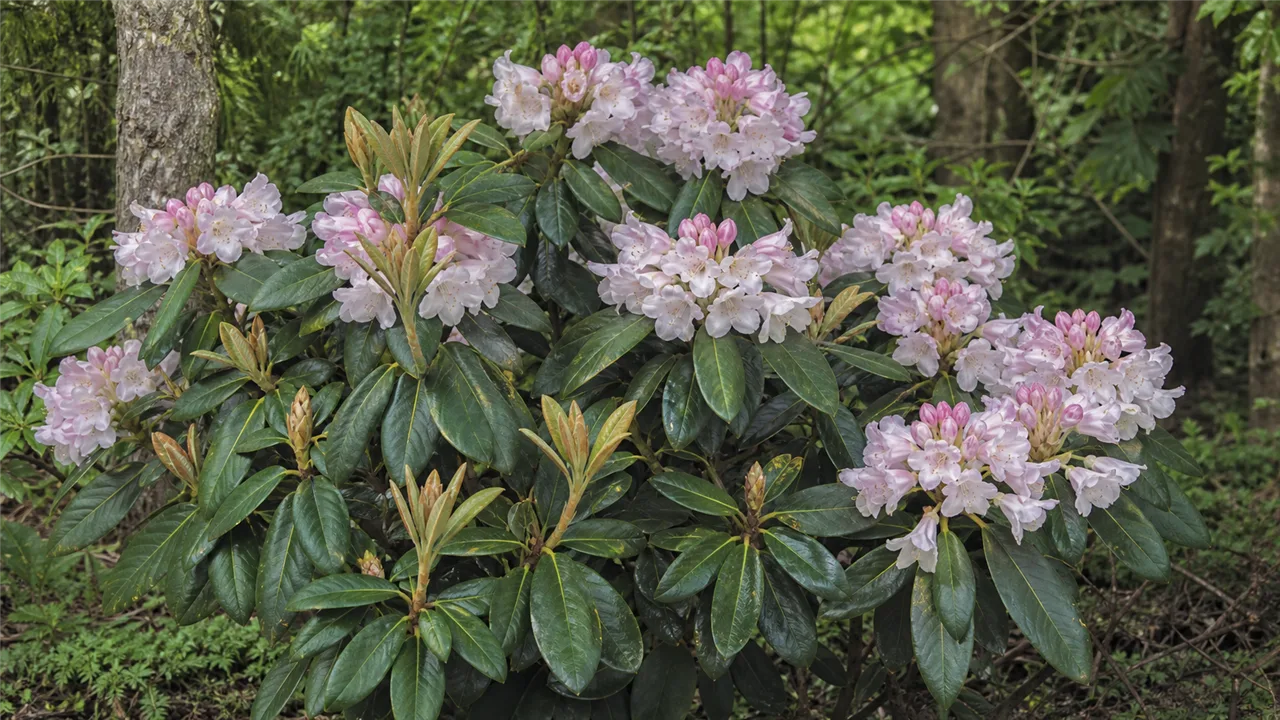
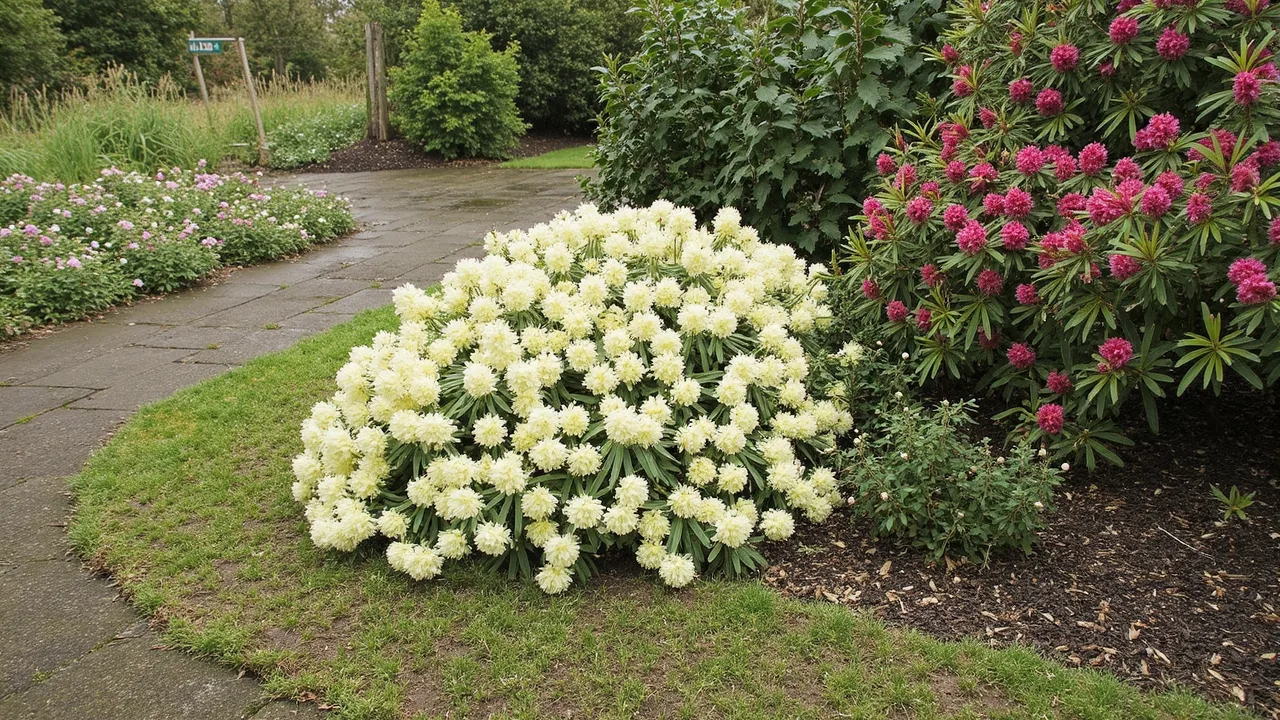
Rhododendron keiskei is a compact, evergreen flowering shrub native to the mountains of Japan, prized in British gardens for its profusion of pale yellow spring flowers and its small, manageable size. Unlike many of the larger, leggier rhododendrons that demand considerable space, R. keiskei rarely exceeds a metre in height and width, making it one of the most useful species for rock gardens, raised beds, container planting, and the front of an ericaceous border. It is also one of very few truly yellow-flowered rhododendrons in general cultivation, which gives it a distinct seasonal role in the UK garden.
The species sits firmly within the lepidote (scaly) rhododendrons and tolerates the cooler, damper conditions of much of Britain better than many of its larger relatives. Its compact habit, evergreen foliage, and reliable flowering from an early age have earned it a long-standing place in the catalogues of specialist rhododendron nurseries.
Quick Care
Overview
Rhododendron keiskei belongs to the family Ericaceae and the genus Rhododendron, which contains over a thousand species distributed across the Northern Hemisphere. Within the genus, R. keiskei is placed in subsection Triflora, a group that includes several other small-leaved, scaly rhododendrons of Asian origin. The species was named in honour of Keisuke Ito, a nineteenth-century Japanese botanist, and was introduced to Western horticulture in the early 1900s.
In the wild it grows on rocky slopes and in thin woodland on the mountains of Honshu and Hokkaido, where it forms low, mounded shrubs often no more than half a metre tall. This dwarf stature is preserved in cultivation, and British gardeners can expect a slow-growing but eventually dense, dome-shaped plant rather than an open, leggy shrub. Its combination of hardiness, modest size, and clear yellow flowers — unusual in the genus — has made it a staple for UK enthusiasts of dwarf and alpine rhododendrons.
The species is suitable for gardens throughout most of the UK, performing best where summers are not excessively hot and dry and where the underlying soil is naturally acidic. Where these conditions are met, it is a long-lived and largely trouble-free shrub.
Appearance
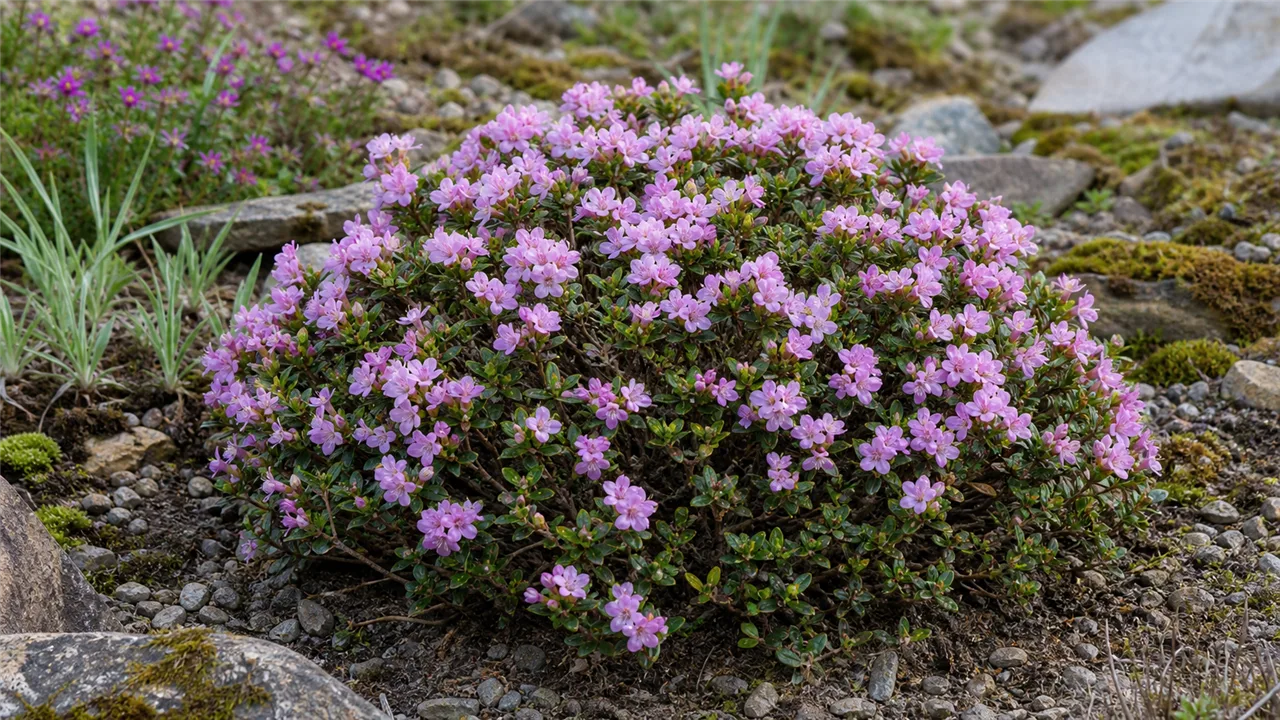
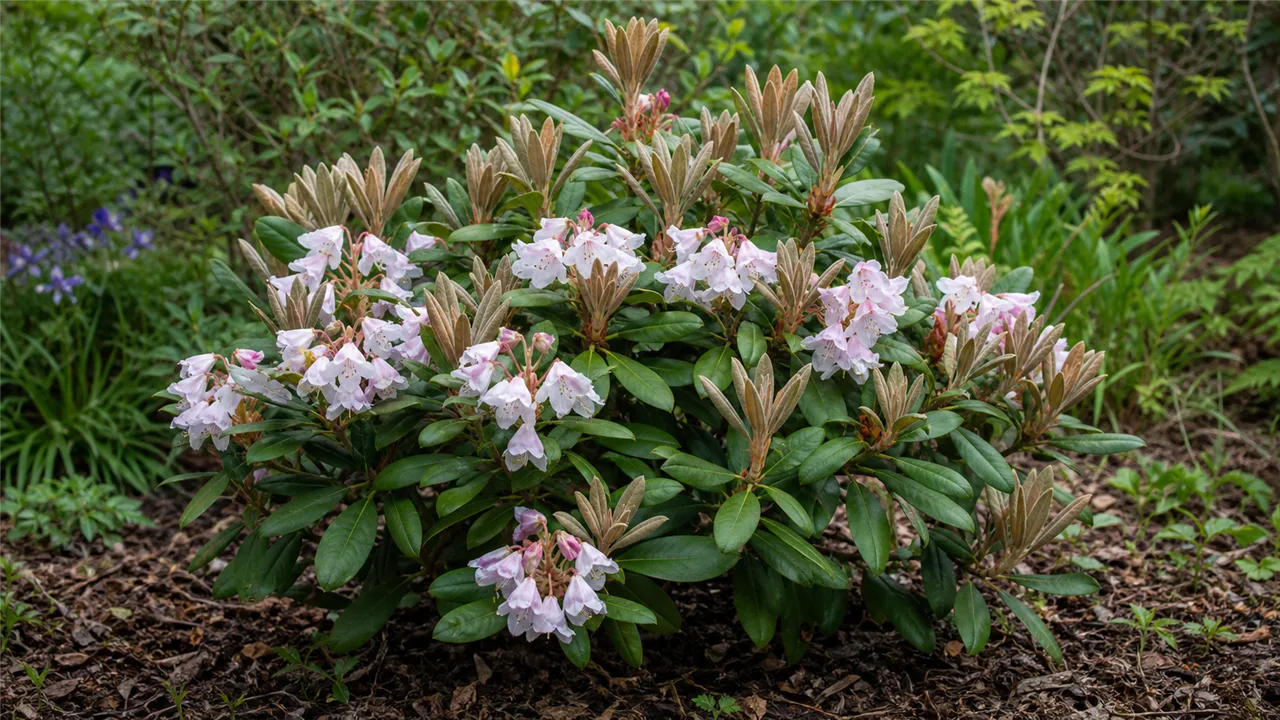
Rhododendron keiskei forms a low, mounded, evergreen shrub typically reaching 0.3–1 m in height and a similar spread after many years. Growth is slow but steady, and well-established plants develop a dense framework of fine branches that give the shrub a tidy, slightly bun-shaped silhouette.
The leaves are elliptic to oblong, 2–5 cm long, and slightly leathery. Upper leaf surfaces are a glossy, dark, slightly bronze-tinged green in summer, deepening to a purplish-bronze in winter cold; the undersides are paler, often with a scattering of small brown scales that are characteristic of the scaly rhododendrons. New growth emerges in late spring and is frequently flushed with a soft bronze tint.
Flowers are produced from mid to late spring, generally in May and into early June. Each truss carries two to six funnel-shaped blooms, each 2–3 cm across, in shades of pale to clear lemon yellow, occasionally deepening to a warmer tone at the centre. The flowers sit neatly above the foliage and have a delicate, slightly waxy texture. In common with other rhododendrons in subsection Triflora, R. keiskei is free-flowering from a young age, and even small nursery plants of 15–20 cm in a pot can carry a respectable truss.
Growing Conditions
Soil. Rhododendron keiskei requires moist but well-drained, humus-rich, acidic soil, ideally with a pH between 4.5 and 6.0. It will not thrive on chalk or other alkaline substrates, where iron and manganese become locked up and the foliage quickly turns yellow. Where the native soil is unsuitable, plants can be grown successfully in raised beds or large containers filled with ericaceous compost, provided drainage is good and the compost does not dry out completely.
Light. Partial shade produces the best results: dappled light beneath deciduous trees, morning sun with afternoon shade, or the cooler east or north side of a building. Full sun is tolerated where the soil remains reliably moist, but in dry, sunny positions the leaves scorch and flowering is reduced. Deep, dry shade under evergreens also suppresses flowering.
Shelter. A site sheltered from cold, drying east winds in spring protects both the evergreen foliage and the opening flower trusses. Woodland edges, the lee side of a hedge, or a courtyard setting all work well.
Hardiness. This species carries a hardiness rating, indicated on the GardenWizz plant record by the standard rating badge. It is generally considered one of the hardier dwarf rhododendrons and is suitable for gardens across the UK, including cooler northern and upland districts.
Companion planting. R. keiskei associates naturally with other acid-loving plants such as camellias, pieris, kalmias, callunas and ericas, dwarf conifers, and woodland bulbs including snowdrops, crocuses, and narcissi. Its yellow flowers combine particularly well with blue forget-me-nots and with the purples and pinks of small early rhododendrons and azaleas.
Planting and Care
Planting. Container-grown plants can be planted at any time of year when the ground is workable and the soil is moist, but autumn and spring are the most reliable seasons. The planting hole should be roughly twice the width of the rootball and only as deep; rhododendrons are surface-rooting and should never be buried deeply. If drainage is at all suspect, plant on a slight mound or on a raised bed. Work ericaceous compost, leaf mould, or well-rotted bark into the backfill, and water in thoroughly.
Watering. During the first two summers after planting, water deeply during dry spells rather than little and often. Rainwater is preferable in hard-water areas, as calcium in tap water gradually raises soil pH around the root zone; tap water is tolerated where the underlying soil is already acidic. Established plants in the ground are reasonably drought-tolerant but will flower better if summer droughts are not prolonged.
Mulching. Apply an annual mulch of acidic organic matter — pine bark, bracken compost, or leaf mould — in spring, keeping it clear of the stem. A 5–8 cm layer conserves moisture, suppresses weeds, and slowly acidifies the upper soil.
Feeding. A slow-release ericaceous fertiliser applied in late spring is generally sufficient on reasonable soils. Overfeeding produces lush, soft growth that is more vulnerable to winter damage and to rhododendron leafhopper. Where growth is weak or leaves pale, a chelated iron drench addresses the commonest deficiency on the edge of acid tolerance.
Pruning. Routine pruning is unnecessary. Spent flower trusses can be deadheaded carefully immediately after flowering by snapping them off at the base, taking care not to damage the new growth buds beneath. Any corrective work — removal of dead, damaged, or crossing wood — is best done in early summer after flowering has finished. Rhododendron keiskei does not regenerate from old wood, so hard pruning into bare stems is not recommended and usually kills the plant.
Propagation. Propagation is by semi-ripe cuttings taken in mid to late summer, wounded at the base and rooted under mist in a free-draining, slightly acidic cutting compost. Layering of low branches is reliable but slow. Seed is viable and germinates readily after cold stratification, but named cultivars do not come true from seed.
Seasonal care. Little routine work is needed beyond mulching in spring, deadheading in early summer, and watering in extended drought. Container-grown plants benefit from being moved to a sheltered corner or against a wall if a particularly hard winter is forecast, as their roots are more vulnerable to freezing than those of plants in open ground.
Common Problems
Chlorosis (yellowing leaves with green veins). Almost always a sign of iron or manganese lock-out caused by soil that is insufficiently acidic, or by compost that has been allowed to dry out repeatedly. Treatment is twofold: acidify the soil with ericaceous compost and sulphur chips, and apply a chelated iron drench in spring, repeating as directed.
Bud blast. Flower buds turn brown and fail to open, typically in late winter. The cause is the fungus Pycnostysanus azaleae, vectored by the rhododendron leafhopper. Controlling the leafhopper (by hand-removal in June and July, by encouraging natural predators, or by approved insecticides where severe) reduces but rarely eliminates the disease; affected buds should be picked off and disposed of, not composted.
Powdery mildew. A dusty white coating on leaves in still, dry summers, especially on plants in close, sheltered positions. Improve air circulation by light pruning of surrounding vegetation, avoid overhead watering, and remove badly affected leaves.
Phytophthora root rot. Sudden wilting, poor new growth, and die-back, especially after wet winters on heavy or poorly drained soils. There is no cure once plants are badly affected; prevention by improving drainage and avoiding waterlogged planting sites is the only reliable response.
Leaf spot. Various fungal pathogens cause brown or purple spots on leaves. Remove and dispose of affected leaves, water at the base rather than overhead, and improve air movement around the plant.
Rhododendron leafhopper. A pale, wedge-shaped insect seen in summer; it does little direct damage but transmits bud blast. Tolerate light populations; remove by hand or treat in June and July where the previous season showed significant bud blast.
Popular Varieties
In practice, named cultivars of Rhododendron keiskei are few and uncommon in general cultivation; the species itself is what is usually grown.
The species itself is the form most often grown, and a well-grown R. keiskei is a handsome plant in its own right. A small number of more clearly distinct selections exist for gardeners seeking something slightly different.
- Rhododendron keiskei var. cordifolia — sometimes sold as R. keiskei var. cordifolium or loosely as the "smaller-leaved keiskei". It is a tighter, even more dwarf selection than the type, with rounder, slightly heart-based leaves and a particularly low, mounded habit. It is excellent in a trough or small rock garden where space is at the absolute premium.
- 'Yaku Fairy' — a very dwarf, creeping selection raised from related Yakushima material in the keiskei group, typically reaching only 10–15 cm in height and spreading slowly to form a low mat. The flowers are pale creamy yellow, slightly smaller than those of the type, and the plant is valued more for its habit than for individual flower size. It performs well in a peat bed, an alpine trough, or as an edging plant beside a path.
Beyond these, the species is most often grown simply as the type, and a well-sourced, grafted or cutting-raised plant from a specialist nursery is usually all that is needed. Buyers should be cautious of any cultivar name offered for R. keiskei that is not listed in a recognised rhododendron register, as names in this part of the genus are sometimes applied loosely; when in doubt, the straight species is the safest and most rewarding choice.
Cultivars and Varieties
| Cultivar | Height | Flower | Notes | AGM |
|---|---|---|---|---|
| 'Yaku Fairy' | — | — | RHS AGM (H5) | ✓ |
Pests and Diseases
| Problem | Symptoms | Management |
|---|---|---|
| Vine weevil | Irregular notches on leaf margins and root damage causing wilting in potted plants. | Use biological nematodes or chemical controls on larvae in the soil during warm months. |
| Powdery mildew | White, dusty fungal growth on leaves and shoots, potentially causing distortion. | Improve air circulation and apply approved fungicides if infection is severe. |
| Rhododendron bud blast | Flower buds turn brown, shrivel, and fail to open due to fungal infection. | Avoid overhead watering and remove infected debris to reduce spore spread. |
| Pieris lacebug | Small white speckling on upper leaf surfaces with black tar-like spots underneath. | Apply horticultural oil or insecticidal soap during the growing season. |
| Rhododendron petal blight | Flowers become water-soaked, turn brown, and collapse before opening. | Rake up fallen petals immediately after flowering to break the disease cycle. |
For step-by-step help, read Treating Powdery Mildew. Or browse the full plant problem solver to diagnose an issue by symptom.
Recommended Products
GardenWizz earns a commission from qualifying purchases made through affiliate links on this page (including links within the article) — as an Amazon Associate, and from Thompson & Morgan via the Awin network. This does not affect the price you pay. See our disclaimer for details.