Early Azalea
Rhododendron lutescens
The Gardening Year
Best months in UK gardens · full planting calendar →
🖨 Printable care card (PDF)At a Glance
| Botanical name | Rhododendron lutescens |
|---|---|
| Common name(s) | early azalea |
| Family | Ericaceae |
| Plant type | shrub |
| Height × Spread | 1–3 m × 2.5–4 m |
| Position | Full sun, Partial shade |
| Soil | moist but well-drained, humus rich, acidic soil |
| Flowering | March–May |
| Toxicity | Harmful if eaten |
| Native range | Guizhou, Sichuan, and Yunnan, China |
Rhododendron lutescens is an elegant, early-flowering evergreen Chinese shrub whose clear-yellow flowers in early spring earn it a place in any acidic-soil border or woodland garden. The quick reference below summarises its core requirements at a glance; the sections that follow set these out in detail.
Overview
Rhododendron lutescens is an elegant, early-flowering evergreen (or semi-evergreen in colder UK winters) shrub from the heather family, Ericaceae. Introduced to Western horticulture from south-western China in the early years of the twentieth century, it has earned a quiet but devoted following among British gardeners who value its vigour, its tolerance of tougher woodland conditions than many of its relatives, and its unusual clear-yellow flowers at a season when most other rhododendrons are still resolutely budded up. It is one of the first rhododendrons to bloom in the British garden, often opening in March in the milder south and west, and is a useful counterpoint to the dominant pinks, purples and crimsons of the genus.
The species is hardy across most of the UK and grows well in acidic soil that is reliably moist but well-drained. It makes a substantial, upright shrub of around three to five metres in height and spread at maturity, and its reddish-bronze young shoots and bold elliptic foliage give it year-round presence even when not in flower. Because it tolerates a little more sun and wind than many rhododendrons, it is a sensible choice for a wider range of British gardens than its more tender relatives.
Appearance
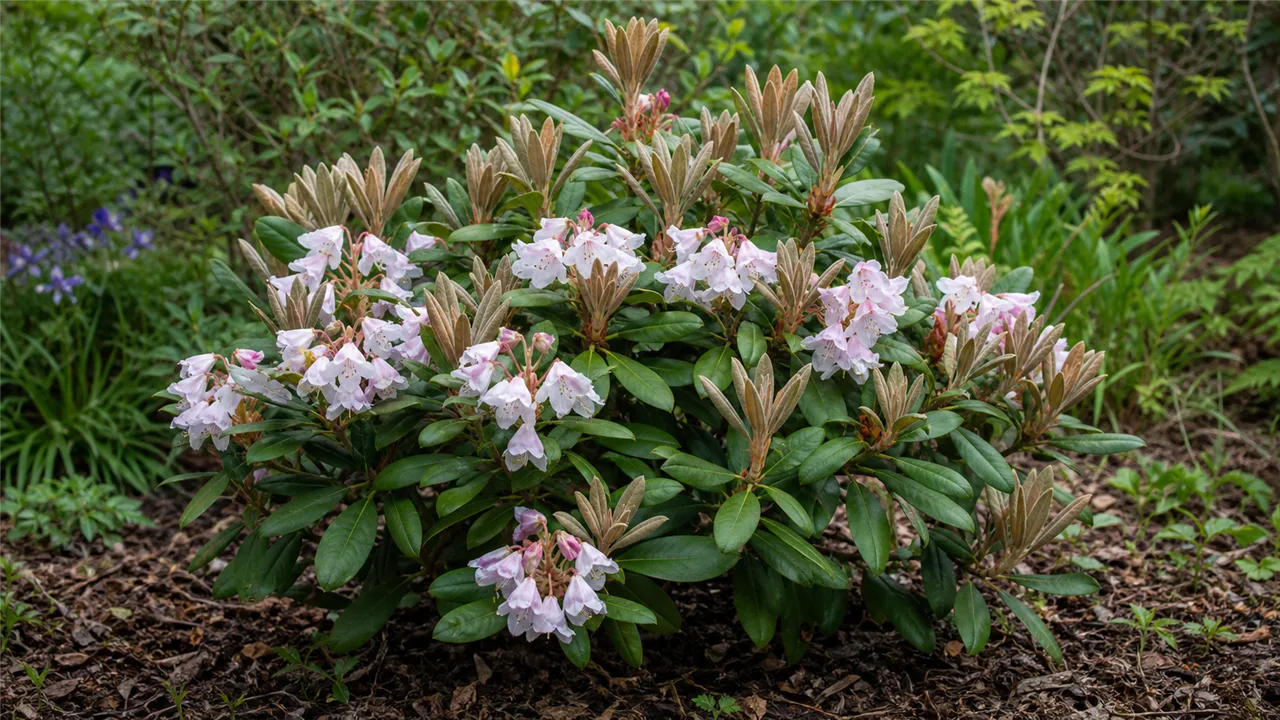
Rhododendron lutescens has a naturally upright, somewhat open habit when young, filling out into a more rounded, vigorous shrub as it matures. Mature specimens in good British conditions typically reach three to five metres tall with a similar spread over many years, though it can be kept more compact by careful siting and by restricting competition from neighbouring tree roots.
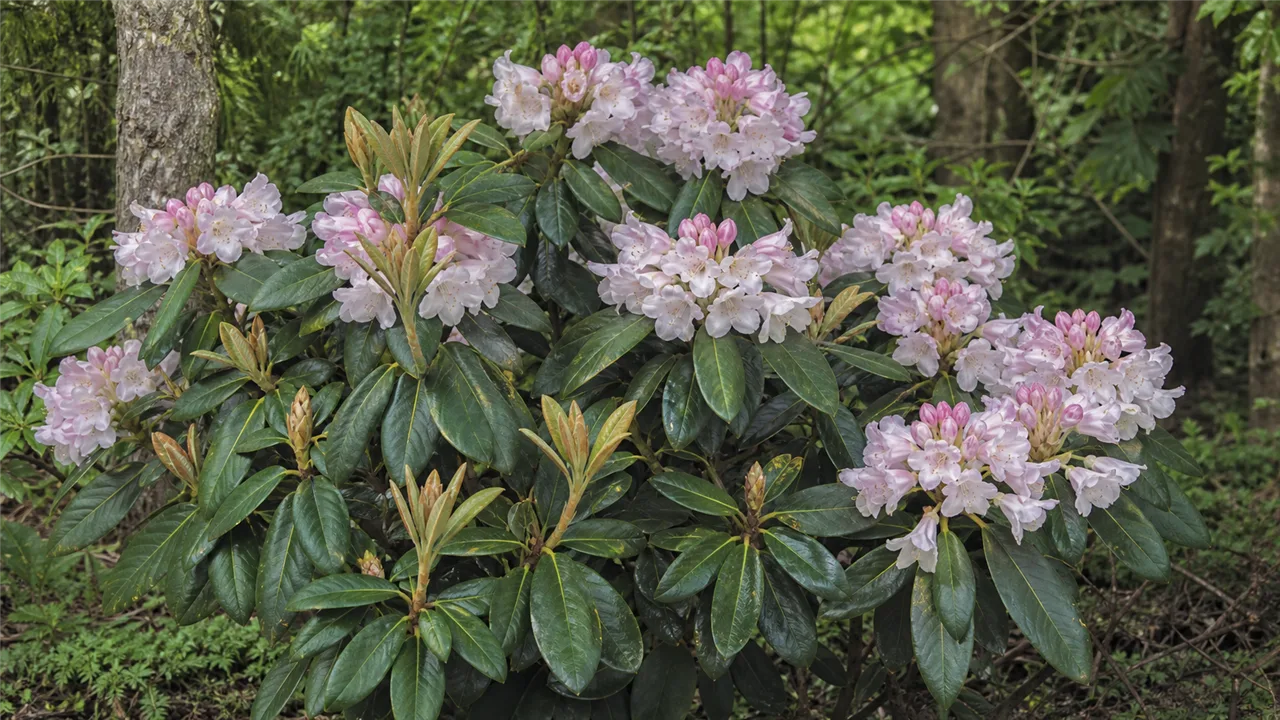
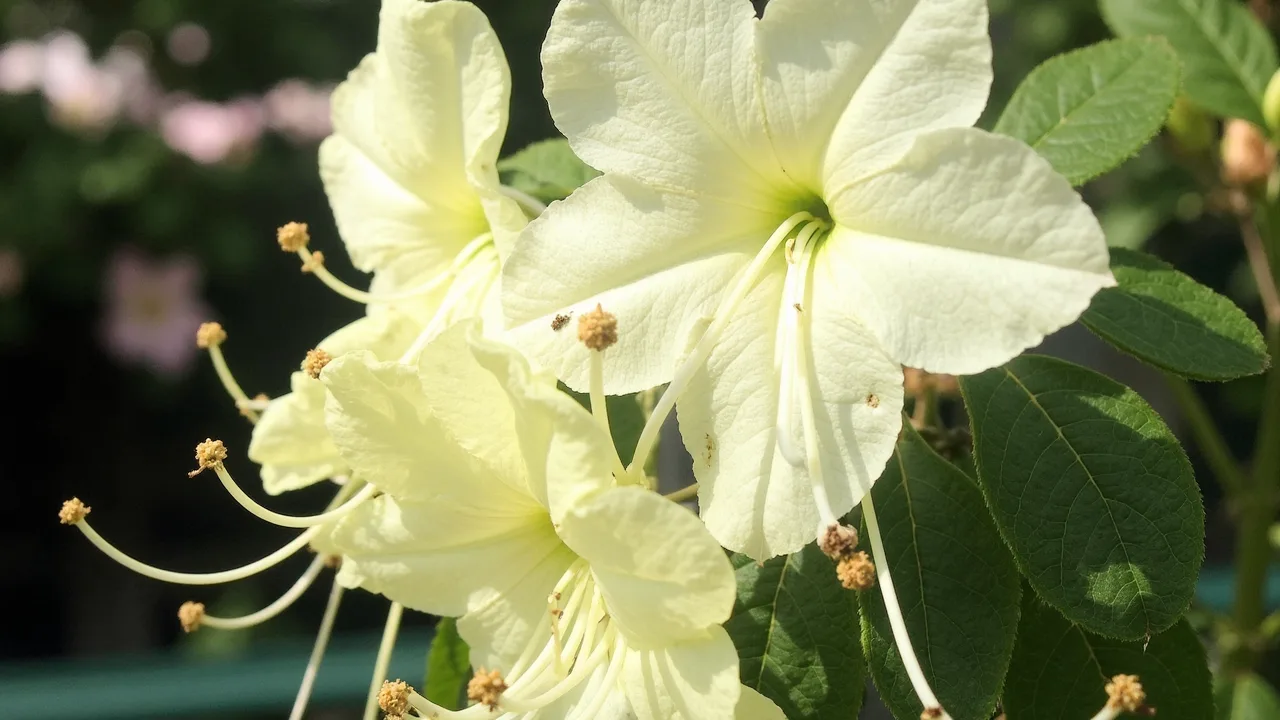
The most distinctive feature of the species is its flowers. They are a clear, pale to bright buttery yellow — unusual in a genus so dominated by pinks and purples — and are carried in loose trusses of three to seven blooms at the tips of the previous year's shoots. Individual flowers are widely funnel-shaped, around three to four centimetres across, with a slightly darker throat and, frequently, a faint reddish or tawny flush on the outside of the buds that contrasts with the open petals. Flowering is early by rhododendron standards: in most of the UK the main display runs from late February or March into April, often before the new leaves have fully expanded, which makes the blooms especially conspicuous against bare branches.
The leaves are elliptic to lanceolate, six to twelve centimetres long, a deep glossy green with a slightly leathery texture. In mild winters they are retained through to the next spring; in colder districts or in exposed positions the plant may shed some or all of its foliage, behaving as a semi-evergreen. Young growth in spring and early summer is conspicuously flushed reddish-bronze, providing a useful secondary season of colour. The bark is smooth and grey-brown on mature stems.
Growing Conditions
Rhododendron lutescens shares the cultural demands of the wider genus but is, in practice, a little more forgiving than many of its relatives.
Soil is the most important factor. The plant requires moist but well-drained, humus-rich, acidic soil, ideally in the pH range 4.5 to 6.0. It will not tolerate chalk or limy ground, and in alkaline conditions it develops classic lime-induced chlorosis — yellowing foliage with darker veins — and slowly declines. Where the native soil is unsuitable, container cultivation in ericaceous compost is a practical alternative.
Light should be partial shade or dappled shade, ideally with shelter from the strongest midday sun. The species tolerates a little more sun than many rhododendrons provided its roots remain cool and moist, but deep shade reduces flowering and a hot, exposed south-facing wall will scorch the foliage.
Aspect and shelter matter: a position out of cold, drying east winds protects both the early flowers and the overwintering foliage. Woodland edges, north- and east-facing borders, walled gardens and sheltered courtyards all suit it well.
Hardiness is good across most of the UK; the species is reliably hardy in all but the coldest inland gardens and is particularly successful in the South West, Wales, Northern Ireland and the western fringes of Scotland. (The GardenWizz hardiness badge on this page indicates the rating for the climate range in which it can be expected to thrive.)
The plant is moderately vigorous, putting on a respectable amount of growth each year in suitable soil and light. It is not a fast shrub in the sense of Leyland cypress or buddleia, but it is far from slow, and a young plant will usually begin flowering within three to five years of planting.
Planting and Care
When to plant. Autumn or early spring is ideal, when the soil is moist and workable and the plant is not under heat or drought stress. Container-grown specimens from garden centres can be planted at almost any time the ground is not frozen or waterlogged, provided they are kept watered through their first summer.
Planting technique. Dig a hole two to three times the width of the root ball and no deeper, so that the plant sits at the same depth it was growing in its pot — rhododendrons are surface-rooters and resent being buried too deeply, which encourages root rots. Backfill with a mix of the excavated soil and generous amounts of ericaceous compost, leaf mould or well-rotted pine bark. Water thoroughly before and after planting, and apply a deep acidic mulch of pine bark, leaf mould or bracken, keeping it clear of the stem.
Watering. Generous and regular watering during the first two to three years after planting is the single most useful thing a gardener can do. In subsequent years, water deeply during any extended dry spell, particularly in late summer when the next year's flower buds are forming — drought at this stage is a common cause of bud blast the following spring.
Feeding. Apply an ericaceous liquid feed in spring if growth appears weak or the foliage is pale. Slow-release fertilisers formulated for acid-loving plants are also acceptable. Avoid any lime-containing fertiliser, including most general-purpose feeds, and avoid fresh manure in direct contact with the roots.
Pruning and deadheading. Rhododendron lutescens does not require routine hard pruning and is best treated as a deadhead-only shrub. As the flowers fade in April or May, snap or cut off the spent trusses cleanly just above the new growth bud immediately below the old flower head; taking care not to damage that bud, which carries next year's display. Any dead, damaged or crossing branches can be removed in late spring after flowering has finished.
Propagation. Semi-ripe cuttings taken in mid- to late summer and rooted in a free-draining, acidic cutting compost under mist or in a closed propagator are the usual home-garden method. Layering of low branches in autumn is also reliable but slower. Seed is viable but produces variable offspring and is mainly used by specialist growers and collectors.
Seasonal care. A yearly spring mulch refresh, occasional spring feeding, watering in drought and careful deadheading are essentially all that is required. The plant is also worth checking in late winter for any flower buds that have gone brown (bud blast) and for damage from cold, drying winds, but it is otherwise undemanding.
Common Problems
Powdery mildew can affect the foliage in dry summers or where air circulation is poor. It is usually cosmetic on established plants; improve airflow, avoid overhead watering and clear up fallen leaves at the base.
Rhododendron leaf spot is a fungal disease that produces dark spots on the leaves, again usually cosmetic. Good hygiene and avoiding overhead watering reduce the pressure.
Azalea gall (caused by the fungus Exobasidium) produces pale, distorted, swollen growths on leaves and shoots. It is rarely serious; pick off and dispose of affected parts (do not compost them) and the plant usually grows away normally.
Root rot (Phytophthora) is the most serious disease and is essentially preventable rather than curable. It causes wilting, yellowing and dieback, particularly in waterlogged or deeply planted specimens. Site the plant in well-drained, acidic soil at the correct depth, and avoid compaction around the root zone.
Lime-induced chlorosis shows as yellowing leaves with darker green veins, indicating that the soil is too alkaline. Long-term correction requires lowering soil pH with sulphur applications, switching to ericaceous compost, or relocating the plant to a suitable spot or a large container of ericaceous compost.
Flower bud blast — buds that dry, brown and fail to open in spring — is most often the consequence of drought stress the previous summer or of cold, drying winter winds. Mulching, watering during dry spells and providing a sheltered site largely prevent it.
The brief note that has sometimes appeared in older reference works listing "azalea lace bug" as a rhododendron problem refers in practice to that pest's effect on evergreen azaleas rather than on R. lutescens specifically, and is not normally a concern for this species in the UK.
Popular Varieties
Named clonal selections of Rhododendron lutescens are relatively few compared with those of more widely hybridised rhododendrons, and gardeners should be wary of cultivars they cannot trace to a reputable nursery. The most reliable choices in British cultivation are:
- Rhododendron lutescens (species) — the wild-collected type itself, vigorous and floriferous, with clear yellow flowers. Plants have been reintroduced under a number of historically important collection numbers from early twentieth-century plant hunters, and these wild-source forms remain the most widely grown.
- Rhododendron lutescens 'Bagshot Sands' — a well-known selected form with particularly clear, warm-yellow flowers and good upright habit, propagated and distributed by major UK collections.
- Rhododendron lutescens (white-flowered form) — a less common, paler form occasionally offered by specialist nurseries, in which the usual yellow is replaced by a cream or near-white; availability is limited and plants should be sourced from a specialist.
A small number of yellow-flowered hybrids in which R. lutescens is one parent — for example crosses within the Subsection Triflora — are sometimes sold under confusingly similar names and can be used in similar garden roles, but they are distinct plants and not selections of the species itself. Where information about a particular clonal selection is uncertain, specialist rhododendron nursery catalogues or the RHS Plant Finder remain the most reliable sources.
Cultivars and Varieties
| Cultivar | Height | Flower | Notes | AGM |
|---|---|---|---|---|
| 'Bagshot Sands' | — | — | RHS AGM (H4) | ✓ |
Pests and Diseases
| Problem | Symptoms | Management |
|---|---|---|
| Phytophthora root rot | Leaves turn brown and shrivel, often on one side of the plant, while stems may show dark lesions. | Ensure excellent drainage in acidic soil and avoid waterlogging to prevent fungal infection. |
| Vine weevil | Notches appear on leaf margins above ground, while larvae feed on roots underground causing wilting. | Apply nematodes or systemic insecticides to the soil in autumn and spring to control larvae. |
| Powdery mildew | A white, dusty fungal growth appears on leaves and shoots, potentially causing distortion. | Improve air circulation around the plant and apply a suitable fungicide if infection is severe. |
| Pieris lacebug | Leaves become stippled with white spots and covered in black tar-like excrement on the undersides. | Spray with insecticidal soap or horticultural oil during early summer when nymphs are active. |
| Honey fungus | General decline, dieback of branches, and white fungal growth under the bark at the base. | Remove infected plants completely and avoid replanting ericaceous species in the same spot. |
For step-by-step help, read Treating Powdery Mildew. Or browse the full plant problem solver to diagnose an issue by symptom.
Recommended Products
GardenWizz earns a commission from qualifying purchases made through affiliate links on this page (including links within the article) — as an Amazon Associate, and from Thompson & Morgan via the Awin network. This does not affect the price you pay. See our disclaimer for details.