McCabe's Rhododendron
Rhododendron macabeanum
The Gardening Year
Best months in UK gardens · full planting calendar →
🖨 Printable care card (PDF)At a Glance
| Botanical name | Rhododendron macabeanum |
|---|---|
| Common name(s) | McCabe's Rhododendron |
| Family | Ericaceae |
| Plant type | shrub |
| Height × Spread | 12 m × 8 m |
| Position | Partial shade |
| Soil | moist but well-drained, leafy, humus-rich acid soil |
| Flowering | March–May |
| Toxicity | Harmful if eaten |
| Native range | Assam and Manipur in northeastern India |
Rhododendron macabeanum is one of the most striking large-leaved rhododendrons in cultivation, prized for its bold, year-round foliage and showy late-spring trusses. Native to the high-rainfall forests of Manipur and Nagaland in north-east India, it has earned a devoted following among UK gardeners who can offer it the damp, acidic conditions it needs. This entry summarises how to grow it well, where it thrives in Britain, and what to watch out for.
Overview
Rhododendron macabeanum belongs to subsection Macabeana within the genus Rhododendron, a small group of large-leaved, big-flowered species from the eastern Himalayan foothills. It was introduced to British horticulture in the early twentieth century and quickly became a collector's plant for its enormous, deeply textured leaves and its tolerance of cool, damp summers. Mature specimens in Cornish, Welsh, Scottish and Irish gardens can reach the size of a small tree, with a stout trunk and a broad, rounded crown.
It is well suited to the milder, wetter parts of the United Kingdom. Gardeners in the south-east and the Midlands can grow it, but expect slower growth and a need for careful siting. In Scotland, the west country, Northern Ireland and most of Wales it thrives outdoors in ordinary garden soil provided the pH is acidic.
Appearance
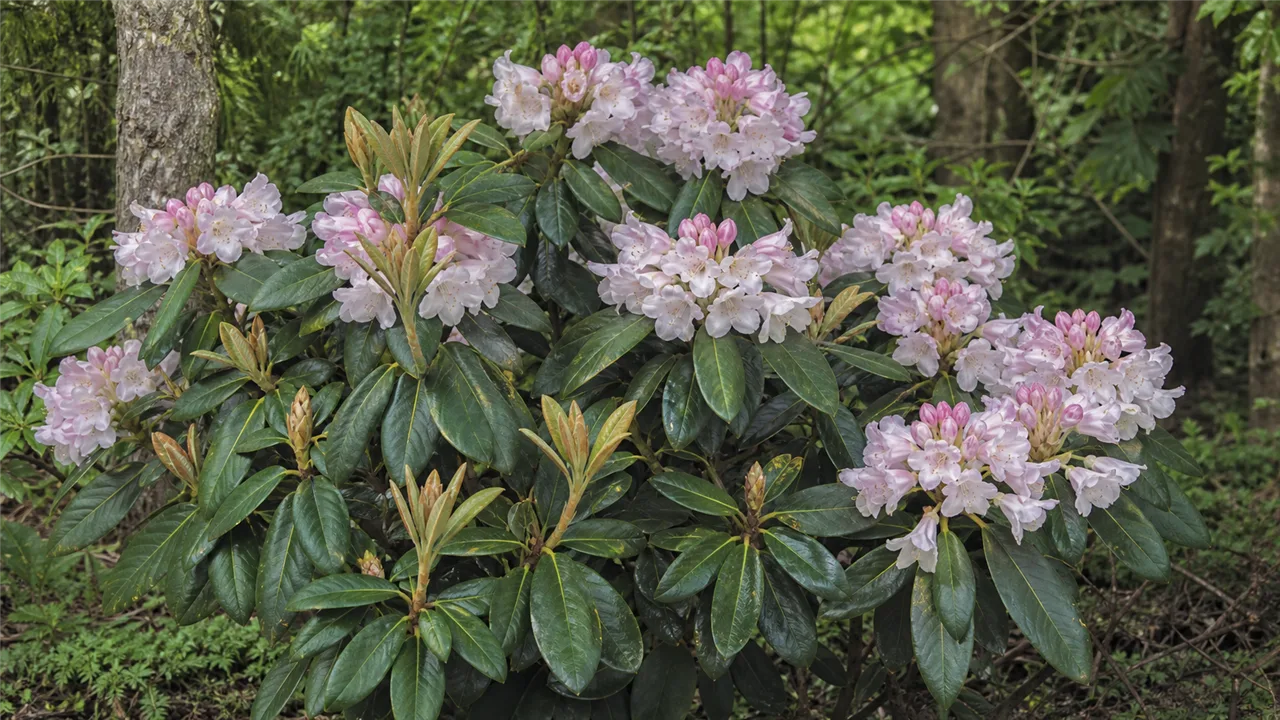
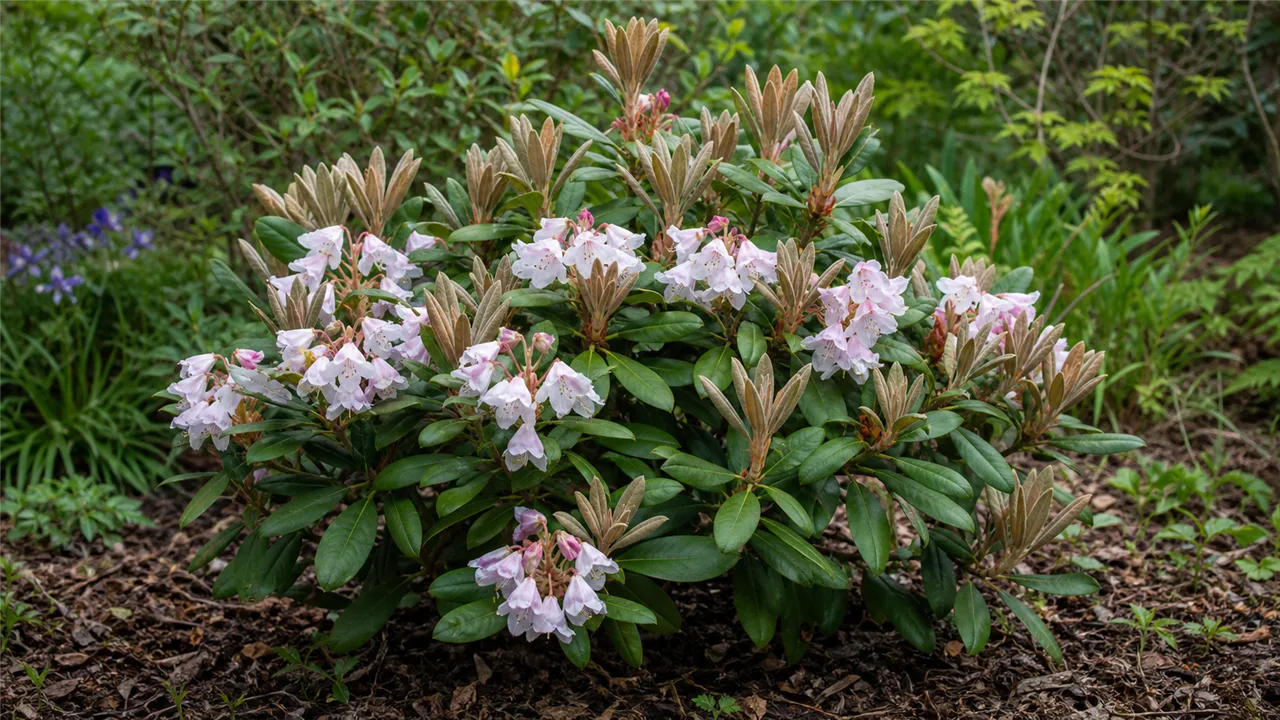
The single most distinctive feature of R. macabeanum is its foliage. Leaves are broadly elliptic to oblong, often reaching 25–30 cm long and 10–15 cm wide on vigorous specimens. The upper surface is a deep, glossy green with a slightly corrugated texture and deeply impressed veins; the underside carries a dense, pale buff or fawn indumentum — a felt-like covering of fine hairs — that gives the plant its characteristic two-tone look in a breeze.
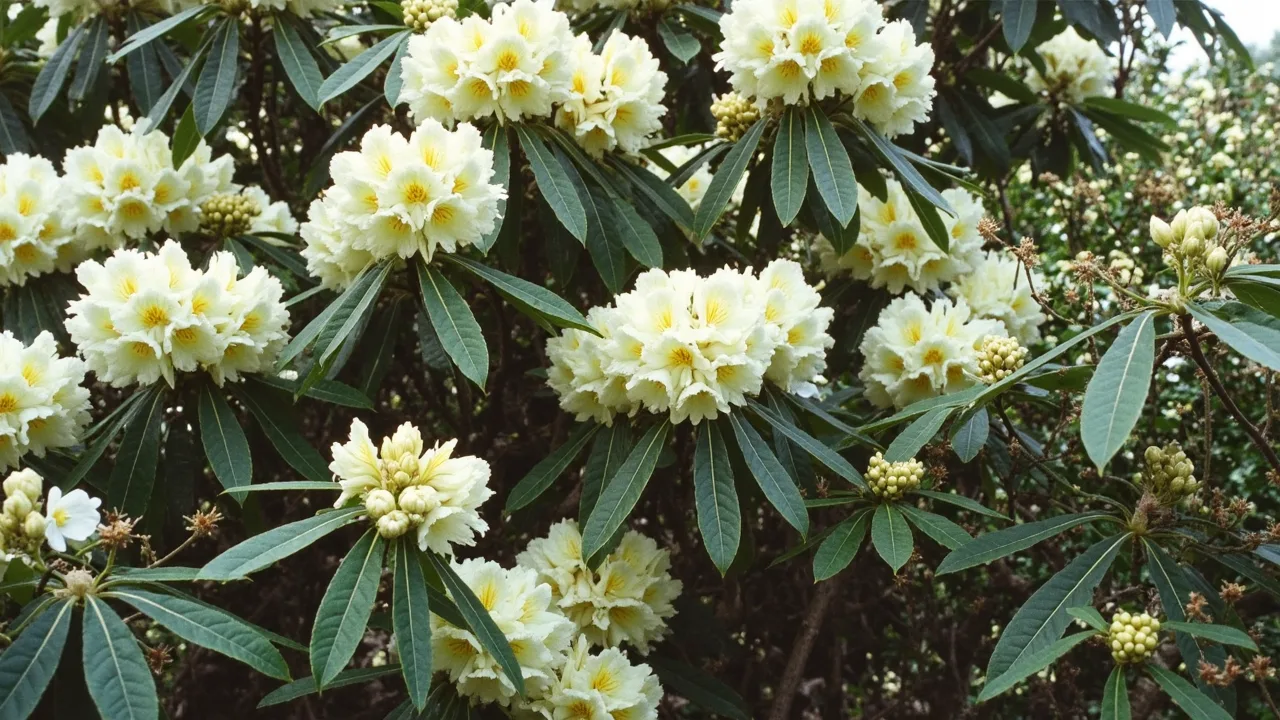
Flowers appear in mid- to late spring, typically from late April into June in the UK, depending on season and location. Each truss carries between ten and twenty bell- to funnel-shaped blooms, opening a clear sulphur yellow to soft primrose, often with a small purple or crimson blotch at the base of the upper petal on established plants. Individual flowers are roughly 5–7 cm across and sit above the foliage on stout stalks, making them conspicuous from a distance.
Mature plants develop a thick, often multiple-stemmed framework. The bark is pale grey-brown and becomes lightly fissured with age. New growth emerges as a tight bud that unfurls into a rosette of pale green leaves before hardening off to the characteristic dark green.
Growing Conditions
R. macabeanum needs an acidic, moisture-retentive but free-draining soil that is rich in organic matter. Aim for a pH in the range 4.5–6.0; chalk, limestone or alkaline ground will lead to chlorosis and decline. Where soil pH is unsuitable, container cultivation in ericaceous compost is a viable alternative for a young specimen, though the plant's eventual size means a permanent bed in the ground is preferable.
Light should be dappled to partial shade. The large leaves scorch in strong, direct afternoon sun, particularly on thin or sandy soils, and the flowers fade quickly in exposed positions. An open woodland edge, a north- or east-facing border, or a site shaded by taller deciduous trees for part of the day suits it well. Shelter from cold, drying easterly winds is important in inland gardens.
Atmospheric humidity and consistent soil moisture are the keys to success. The plant responds strongly to the damp, maritime climate of western Britain; in drier eastern counties, mulching and supplementary watering in summer become essential. The species holds an RHS hardiness rating (rendered by the badge) and is generally best treated as suited to milder UK regions, with protection or careful site selection in colder inland areas.
Planting and Care
Planting. The best planting times are autumn (September to November) and spring (March to April), avoiding frozen or waterlogged ground. Prepare a wide planting hole — at least twice the diameter of the root ball — and work in leaf mould, well-rotted pine bark or other acidic organic matter. Set the root ball so the soil surface sits level with the surrounding ground; rhododendrons are shallow rooted and suffer if buried too deep. Water thoroughly after planting and apply a 5–8 cm mulch of bark or leaf mould, keeping the mulch clear of the stem.
Watering. During the first two to three seasons water generously in dry spells, soaking the root area rather than sprinkling lightly. Once established, supplementary watering is only needed during prolonged drought, particularly on light soils and in the south-east.
Feeding. Apply an ericaceous or acid-loving plant fertiliser in early spring as growth begins. A second, lighter feed after flowering is acceptable but not essential. Avoid general-purpose or lime-based fertilisers, which raise pH and lock out micronutrients.
Pruning. Routine pruning is unnecessary. After flowering, deadhead spent trusses by snapping them off cleanly at the base — take care not to damage the new shoots just behind the truss. Remove dead, damaged or crossing wood in late spring. The plant regenerates poorly from hard pruning into old wood, so any shaping should be light and timely.
Propagation. Increase from semi-ripe cuttings taken in mid- to late summer and rooted in a humid propagator with bottom heat, or by layering a low flexible shoot in autumn. Seed can be sown on the surface of a moist, acidic seed compost and kept cool; named forms, however, do not come true from seed.
Seasonal care. In late winter, top up the mulch and clear any fallen leaves that might smother low branches. Watch for late frosts at flowering time — a sheet of horticultural fleece thrown over the plant on the coldest nights will protect opening buds. In summer, watch for drought stress and water deeply if the leaves start to curl or droop.
Common Problems
- Chlorosis. Yellowing between the leaf veins, especially on younger foliage, almost always indicates soil pH that is too high. Test the soil and treat with sequestered iron or sulphur chips; long term, mulch with acidic organic matter.
- Rhododendron petal blight (Ovulinia azaleae). Causes flowers to develop soft, brown spots that quickly turn into a slimy mess during wet springs. Remove and bin affected trusses; avoid overhead watering and improve air movement.
- Powdery mildew. A pale, dusty coating on the leaves in late summer. More common on plants under stress; address the underlying cause — drought, poor air flow or root restriction — before resorting to fungicide.
- Aphids. The rhododendron aphid and the azalea bark aphid can distort new growth and leave sticky honeydew. Check the undersides of leaves and the bark crevices in late spring.
- Vine weevil. Adult beetles notch the leaf edges; their grubs feed on roots and can quickly kill container-grown or stressed plants. Inspect pots regularly and use a biological nematode treatment where infestations are suspected.
- Phytophthora root rot. Causes sudden wilting and collapse in waterlogged soils. Prevention is the only reliable cure: improve drainage, avoid planting in frost pockets or heavy clay, and never bury the stem.
- Leaf spot. Various fungal leaf spots appear in damp seasons but rarely need treatment beyond removing affected foliage.
Popular Varieties
R. macabeanum is normally grown as the species itself. Named cultivar selection is limited and the genuine article — grown from traceable wild-origin seed — remains the form most often offered by specialist nurseries. A small number of named forms have appeared in specialist collections over the years, including selections noted for particularly strong yellow flower colour or for especially large leaves, but availability is inconsistent and many are sold simply as R. macabeanum without a clone name.
For gardeners wanting a broader palette of large-leaved rhododendrons, the related species R. sinogrande, R. protistum and R. grande offer a similar architectural presence with flowers in white or pale pink. These can be planted alongside R. macabeanum in larger woodland gardens to extend the season and the foliage display. If a named selection of R. macabeanum specifically is desired, sourcing from a specialist rhododendron nursery with a catalogue that lists propagation history is the safest route.
Pests and Diseases
| Problem | Symptoms | Management |
|---|---|---|
| Powdery mildew | White powdery fungal growth appears on leaves, buds, petals and shoots, potentially causing distortion. | Improve air circulation and avoid overhead watering; tolerate mild infections or apply fungicide if severe. |
| Bud blast | Flower buds turn brown, shrivel and fail to open, often due to fungal infection or environmental stress. | Remove and destroy infected buds promptly; ensure good drainage and avoid waterlogging. |
| Vine weevil | Notched edges on leaves above ground and root damage below, leading to wilting or plant collapse. | Apply nematode treatments in autumn or use biological controls; inspect potted plants regularly. |
| Silver leaf | Leaves develop a silvery sheen on the underside and stems may show fungal fruiting bodies at the base. | Prune out infected branches well below the visible symptoms and destroy them immediately. |
| Rhododendron leafhopper | Leaves become speckled with white or yellow spots and may curl or distort as sap is sucked. | Encourage natural predators like ladybirds; use insecticidal soap for heavy infestations. |
| Pieris lacebug | Small white lacy patches appear on the upper leaf surface with black specks of excrement underneath. | Remove heavily infested leaves; apply horticultural oil or insecticide if populations are high. |
For step-by-step help, read Treating Powdery Mildew. Or browse the full plant problem solver to diagnose an issue by symptom.
Recommended Products
GardenWizz earns a commission from qualifying purchases made through affiliate links on this page (including links within the article) — as an Amazon Associate, and from Thompson & Morgan via the Awin network. This does not affect the price you pay. See our disclaimer for details.