Nakahara's Rhododendron
Rhododendron nakaharae
The Gardening Year
Best months in UK gardens · full planting calendar →
🖨 Printable care card (PDF)At a Glance
| Botanical name | Rhododendron nakaharae |
|---|---|
| Common name(s) | Nakahara's Rhododendron |
| Family | Ericaceae |
| Plant type | shrub (evergreen) |
| Height × Spread | 60 cm × 1.5–2.5 m |
| Position | Partial shade |
| Soil | moist but well-drained, humus rich, acidic soil |
| Flowering | March–May |
| Toxicity | Harmful if eaten |
| Native range | northern Taiwan |
Overview
Rhododendron nakaharae is a dwarf, prostrate evergreen azalea native to the mountains of northern Taiwan, where it scrambles over rocky slopes and cliff ledges at elevations of roughly 600–1,800 metres. It was introduced to Western horticulture in the early twentieth century and has since become one of the most important parents of the modern sun-tolerant creeping azalea hybrids, particularly the well-known "North Tisbury" group bred on Martha's Vineyard and the late-flowering Exbury-Knap Hill hybrids aimed at extending the azalea season.
In UK gardens it earns its place by doing two things other evergreen azaleas often do poorly: it flowers late, usually opening in late June and carrying on into July, well after the main Kurume and Kaempferi types have finished; and it holds a low, ground-hugging habit that suits rock gardens, the front of an acidic border, or a container on a north-facing patio. It is fully hardy across most of the British Isles and carries an RHS Award of Garden Merit in its hybrid descendants.
Appearance
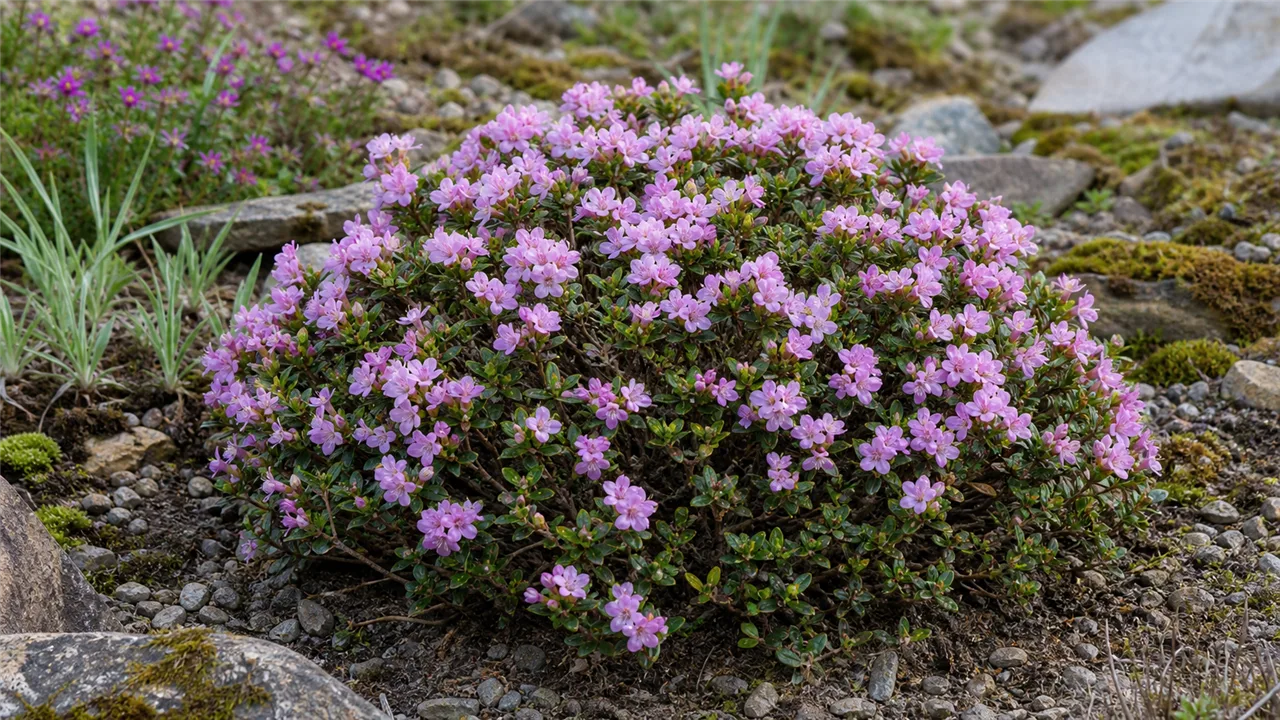
R. nakaharae is a creeping, mat-forming shrub that behaves more like a sprawling groundcover than a conventional bush. Mature plants reach about 20–60 cm in height but spread 60–120 cm or more, rooting where stems touch moist soil. The branching is dense and wiry, with new shoots clothed in bristly brown hairs that distinguish the species from most other evergreen azaleas.
Leaves are small, oblong-elliptic, 1–2.5 cm long and 5–10 mm wide, dark green above and paler beneath, often turning bronze or reddish in cold winter weather. They are semi-deciduous in severe winters but generally clinging year-round in British conditions.
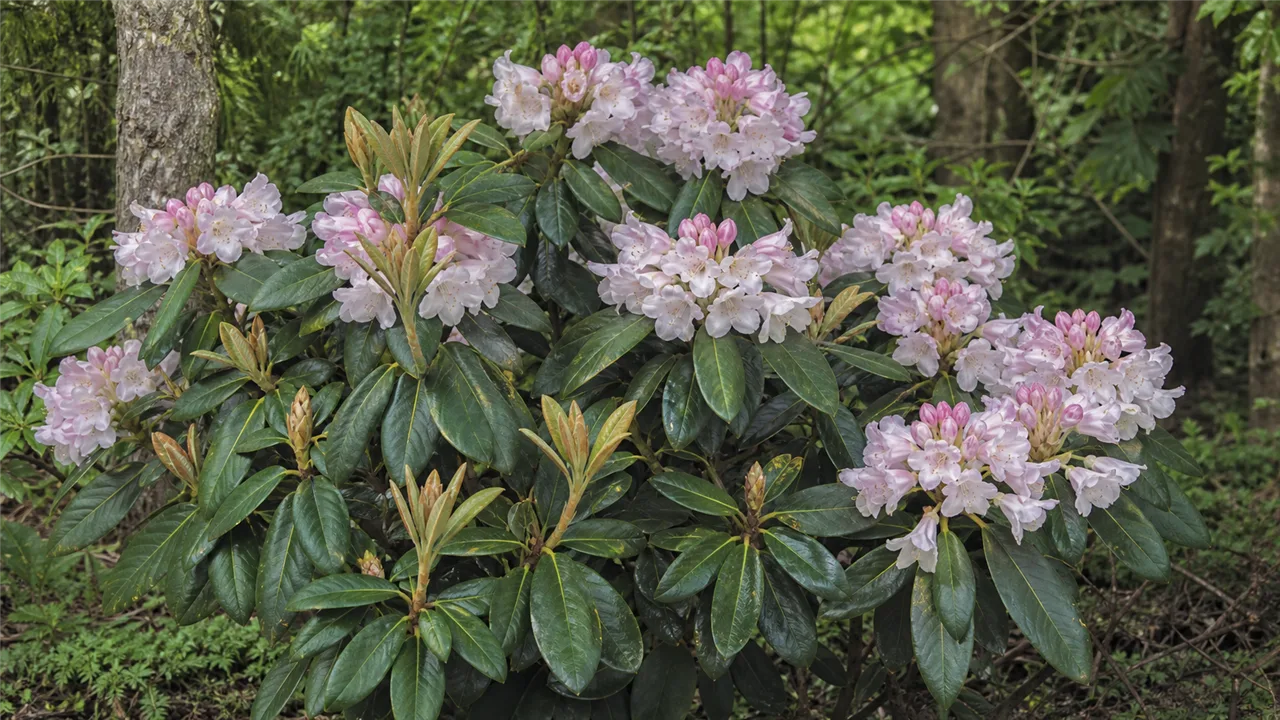
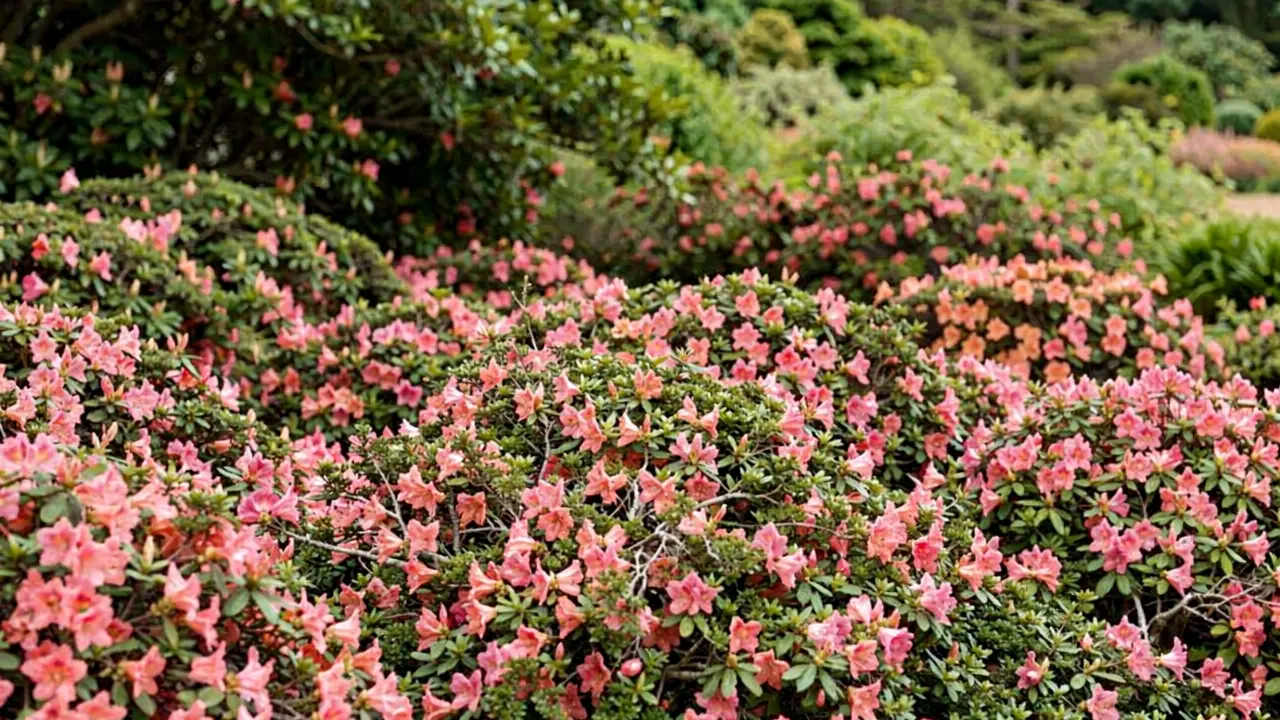
Flowers are the main attraction. Each truss carries one to three funnel-shaped blooms 3–4 cm across, in shades from brick-red and salmon through to deep rose-pink, occasionally almost white in some Taiwan populations. The flowers have a slight speckling on the upper lobe and open flat rather than funnel- form, giving the plant a distinctive "open-faced" look compared with the trumpet-shaped blooms of Kurume azaleas. Flowering runs from late June into July, with sporadic later flushes possible in mild summers.
Growing Conditions
Rhododendron nakaharae prefers the same acidic, humus-rich conditions as the rest of the genus but is noticeably more tolerant of sun and drier soil than its woodland relatives, reflecting its native cliff-edge habitat.
- Light: Full sun to light dappled shade. It flowers most freely with at
least half a day of direct sun; deep shade produces leggy plants with few buds.
- Soil: Lime-free, acidic (pH 4.5–6.0), humus-rich, moisture-retentive but
sharply drained. Loam-based ericaceous compost mixed with leafmould and coarse grit suits container culture.
- Moisture: Even moisture through the growing season is important; the
shallow root system dries out quickly in sandy soils, especially under glass.
- Shelter: A cool root run is essential — mulch with leafmould or bark,
and avoid the reflected heat of south-facing walls. Late spring frosts can damage opening buds, so an open but not exposed position is ideal.
UK suitability is excellent in all but the most alkaline districts. In chalky gardens, grow in raised beds filled with ericaceous loam, or in containers.
UK Seasonal Guidance
- March: New growth begins; apply ericaceous fertiliser and renew
mulch.
- April–May: Buds swell and break; protect new growth from late frost
with horticultural fleece on cold nights.
- Late June–July: Main flowering; deadhead promptly as each truss
fades.
- August: Post-flowering growth flush; take semi-ripe cuttings.
- September: Apply sulphate of potash; treat containers against vine
weevil.
- October–February: Plants are dormant; top-dress containers in late
winter and shelter pots from prolonged winter wet.
In Scotland, the Lake District and upland Wales the species performs particularly well thanks to cool summers and reliable rainfall. In the dry East Anglia and south-east England it needs shade, mulch and rainwater irrigation to thrive. Coastal gardens in Cornwall, Devon and the Channel Islands report excellent results in dappled shade.
Planting and Care
Watering. Water freely from late spring to early autumn whenever the top 2 cm of compost feels dry. Rainwater is strongly preferred; tap water in hard- water districts will gradually raise compost pH and lock out iron, causing classic lime-induced chlorosis. In dry summers, a deep soak once a week beats daily sprinkles.
Feeding. Apply a slow-release ericaceous fertiliser in late March or early April, then a liquid feed at half strength every fortnight during the flowering and post-flowering growth flush. Avoid lime or general-purpose fertilisers; sulphate of potash in late summer helps wood ripen.
Pruning. R. nakaharae is a deadhead-only shrub: routine annual pruning is neither required nor recommended. The single most useful job is to deadhead spent trusses promptly after flowering, snapping them off between finger and thumb just above the new growth buds. This diverts energy from seed-set into next year's flower buds and keeps the low mat tidy. Stray or damaged shoots can be shortened in late July; hard renovation is rarely needed and is best done in stages over two or three years rather than in a single cut. A well-grown plant in a Cornish or Welsh garden can be left largely untouched for thirty years and still flower reliably each July.
Propagation. Semi-ripe heel cuttings of 5–8 cm taken in July or early August root reliably under mist with bottom heat of 18–21 °C, using a 50:50 mix of peat-free ericaceous compost and perlite. Expect rooting in eight to twelve weeks; pot on individually into 9 cm pots of ericaceous compost and overwinter under glass at 5–10 °C. Pinch out the growing tip once rooted cuttings have put on 5 cm of new growth to encourage branching. Simple layering is also effective and is the traditional method: peg a low stem into the surrounding soil in spring, sever from the parent once rooted (usually the following spring), and pot on. Seed germination is straightforward but slow, and named cultivars will not come true. Surface-sow fresh seed on damp sphagnum at 15–18 °C; germination takes three to six weeks and seedlings are ready to prick out at the four-leaf stage.
Seasonal care. Mulch annually in March with 5–7 cm of leafmould or bark to keep roots cool and suppress weeds. Top-dress container plants each spring, replacing the top 3–4 cm of compost. Move pots into the rain shadow of a wall in winter to avoid waterlogging, and wrap in fleece only in prolonged severe cold. Container-grown specimens are best repotted every two to three years in early spring, into a pot only one size larger, as the species flowers better when its roots are slightly constrained.
Common Problems
- Powdery mildew: The single most common issue on R. nakaharae,
appearing as a grey-white bloom on the leaves in late summer during dry, humid spells. Improve air circulation, avoid overhead watering, and treat with a sulphur-based or myclobutanil fungicide at first sign.
- Rhododendron lacebug: Causes fine pale stippling on the upper leaf
surface and tar-spot frass on the undersides from midsummer onwards. Worse in sun-baked sites. Spray with a systemic insecticide in June when the first nymphs appear; encourage predatory capsid bugs by leaving a little rough habitat nearby.
- Vine weevil: A particular risk for container-grown plants. Adults
notch the leaf margins in summer; the more damaging cream-coloured grubs eat roots in autumn and winter. Use a nematode drench (Steinernema kraussei) in September when soil temperatures are above 12 °C, or treat containers with a licensed imidacloprid drench.
- Phytophthora root rot: Triggered by cold, wet, poorly drained soils.
Symptoms are wilting despite moist compost and blackened roots. There is no cure; lift and destroy affected plants and improve drainage before replanting.
- Honey fungus (Armillaria): Suspect if mature specimens die back
rapidly with white mycelial fans under the bark at the base. R. nakaharae is generally considered moderately susceptible. Remove and burn stumps; do not replant ericaceous subjects in infected ground.
- Chlorosis (yellowing between veins): Almost always a sign of
compost pH drifting above 6.5 due to hard tap water. Re-pot into fresh ericaceous compost and switch to rainwater.
- Bud blast (Pycnostysanus azaleae): Brown, scale-covered buds that
fail to open in spring. The fungus is spread by the rhododendron leaf hopper. Pick off and burn affected buds; spray against the leafhopper in late summer to break the cycle.
- Petiod blight (Pestalotiopsis): Causes leaves to wilt while still
green and hang down the stem. Usually a secondary problem following drought or root damage. Cut out affected stems, water consistently and improve mulch.
- Frost damage to flowers: A late May frost after buds have begun to
break will scorch open flowers and turn them brown. Plants in frost-pocketed valley bottoms are most at risk; relocating to a slope with cold-air drainage solves the problem permanently.
Popular Varieties
Most named forms of R. nakaharae available in the UK are hybrids rather than the species itself, but they retain its low, creeping habit and late flowering season.
- 'Mariko' — A selection of the species itself, forming a tight low
mound with bright salmon-orange flowers in early July. Widely grown in UK rock-garden collections and holder of an RHS Award of Garden Merit.
- 'Mount Seven Star' — A pale pink, almost white form with a deeper
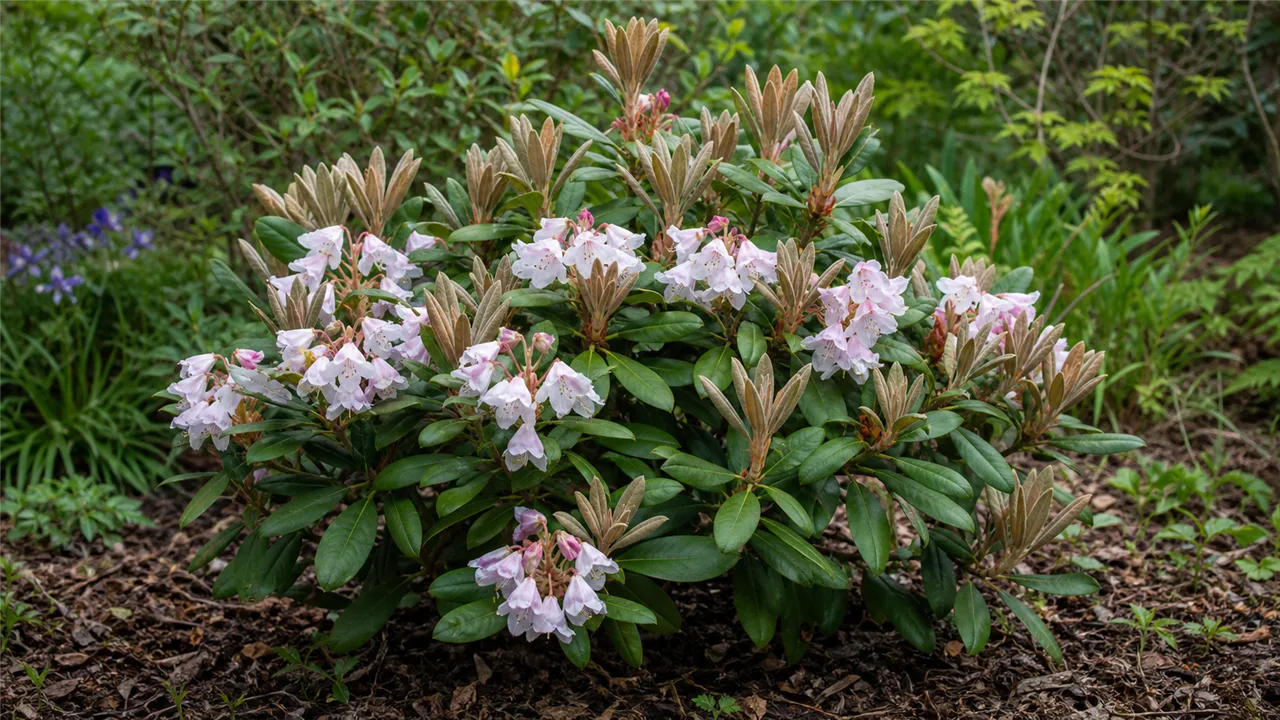
pink throat, raised from Taiwan seed and selected for its compact habit and profuse flowering.
- 'Pink Pancake' — A typical North Tisbury hybrid (R. nakaharae ×
kiusianum) growing barely 15 cm tall, covered in clear pink flowers from late June. Excellent for trough and alpine-pan culture.
- 'Wahroongah' — A vigorous Australian-bred hybrid with deep rose-
red flowers and bronze winter foliage, reaching 30 cm × 90 cm.
- 'Jodie Lynn' — A later-flowering North Tisbury selection with large,
bright pink blooms and good resistance to powdery mildew.
Cultivars and Varieties
| Cultivar | Height | Flower | Notes | AGM |
|---|---|---|---|---|
| 'Mount Seven Star' | — | — | RHS AGM (H5) | ✓ |
Pests and Diseases
| Problem | Symptoms | Management |
|---|---|---|
| Vine weevil | Notches on leaf margins and wilting or death of plants due to root damage. | Apply biological nematodes to the soil in autumn and spring, or use approved chemical controls. |
| Rhododendron bud blast | Flower buds turn black and fail to open, often with fungal bristles visible. | Remove and destroy infected buds promptly; improve air circulation and avoid wetting foliage. |
| Powdery mildew | White powdery fungal growth on leaves, buds, and shoots causing discoloration. | Improve air circulation and apply a suitable fungicide if infection is severe. |
| Pieris moth caterpillars | Large green caterpillars with yellow stripes skeletonize leaves, leaving only veins. | Hand-pick caterpillars or use biological controls like nematodes and parasitic wasps. |
| Rhododendron leafhopper | Small yellowish insects cause stippling on leaves and may transmit bud blast. | Monitor for damage and use insecticidal soap or horticultural oil if populations are high. |
For step-by-step help, read Treating Powdery Mildew. Or browse the full plant problem solver to diagnose an issue by symptom.
Recommended Products
GardenWizz earns a commission from qualifying purchases made through affiliate links on this page (including links within the article) — as an Amazon Associate, and from Thompson & Morgan via the Awin network. This does not affect the price you pay. See our disclaimer for details.