Purplish-Blue Rhododendron
Rhododendron russatum
The Gardening Year
Best months in UK gardens · full planting calendar →
🖨 Printable care card (PDF)At a Glance
| Botanical name | Rhododendron russatum |
|---|---|
| Common name(s) | Purplish-blue rhododendron |
| Family | Ericaceae |
| Plant type | shrub |
| Height × Spread | 100–150 cm × — |
| Position | Full sun, Partial shade |
| Soil | acid soils with a pH of roughly 4.5–5.5; well-drained soils high in organic material |
| Flowering | April–May |
| Toxicity | poisonous to grazing animals because of a toxin called grayanotoxin in their pollen and nectar; extremely toxic to horses |
| Native range | south-central China and Myanmar |
Rhododendron russatum brings unusually rich violet-blue spring flowers to a compact evergreen shrub, but it succeeds only where its shallow roots have acidic, humus-rich soil, reliable moisture and good drainage.
Overview
Rhododendron russatum is a compact species rhododendron from the mountains of south-western China, with its natural range centred on Yunnan and Sichuan and extending towards neighbouring Myanmar. It belongs to the heath family, Ericaceae, and to the small-leaved group traditionally known as subsection Lapponica. The species was introduced to British cultivation in the early twentieth century following collections associated with plant hunter George Forrest.
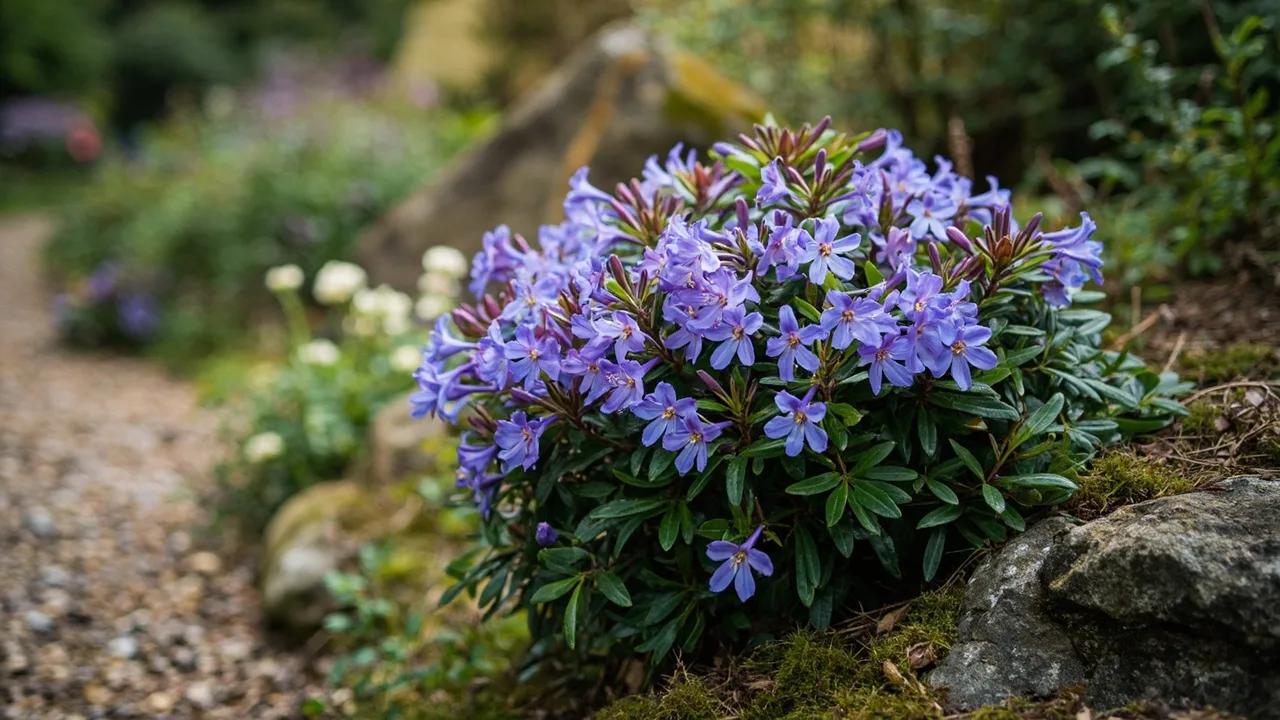
Its chief distinction is the depth of its flower colour. The blooms are commonly described as violet-blue or purplish-blue rather than a true clear blue, yet they are among the richest blue-purple shades found in dwarf rhododendrons. This colour, combined with year-round foliage and a restrained habit, makes the plant valuable in an acid border, at a woodland edge or among suitably moist rock-garden planting.
The shrub is well suited to much of the UK when its soil requirements are met. Winter cold is generally less troublesome than lime, drought, stagnant soil or an exposed position. In chalky districts, or where alkaline soil cannot be replaced on a practical scale, container cultivation in lime-free ericaceous compost is the dependable alternative. Its modest size also makes this a realistic option for patios and small gardens.
Although sometimes sold under a descriptive common name, it is most reliably identified and requested by its botanical name. Buyers should distinguish the species from the many blue-flowered hybrid rhododendrons that may have similar colouring but different parentage, stature and care requirements.
Appearance
This is a dense, twiggy evergreen shrub that usually forms a rounded or spreading mound. The RHS describes it as reaching about 1.2m, while botanical accounts record wild or mature plants from roughly 30cm to 1.5m tall. Growth is relatively slow, and garden plants remain compact for many years. The fine branching gives it a lighter texture than the large-leaved rhododendrons commonly used as substantial woodland shrubs.
The leaves are small, generally 1.6-4cm long, and elliptic to narrowly elliptic. Their upper surfaces are dark green, while the undersides carry dense brown, golden-brown or fawn-coloured scales. These scales are an important identifying feature, particularly when flowers are absent. The foliage is aromatic when crushed, but unnecessary handling should be avoided because the leaves are part of the plant's ornamental effect throughout winter.
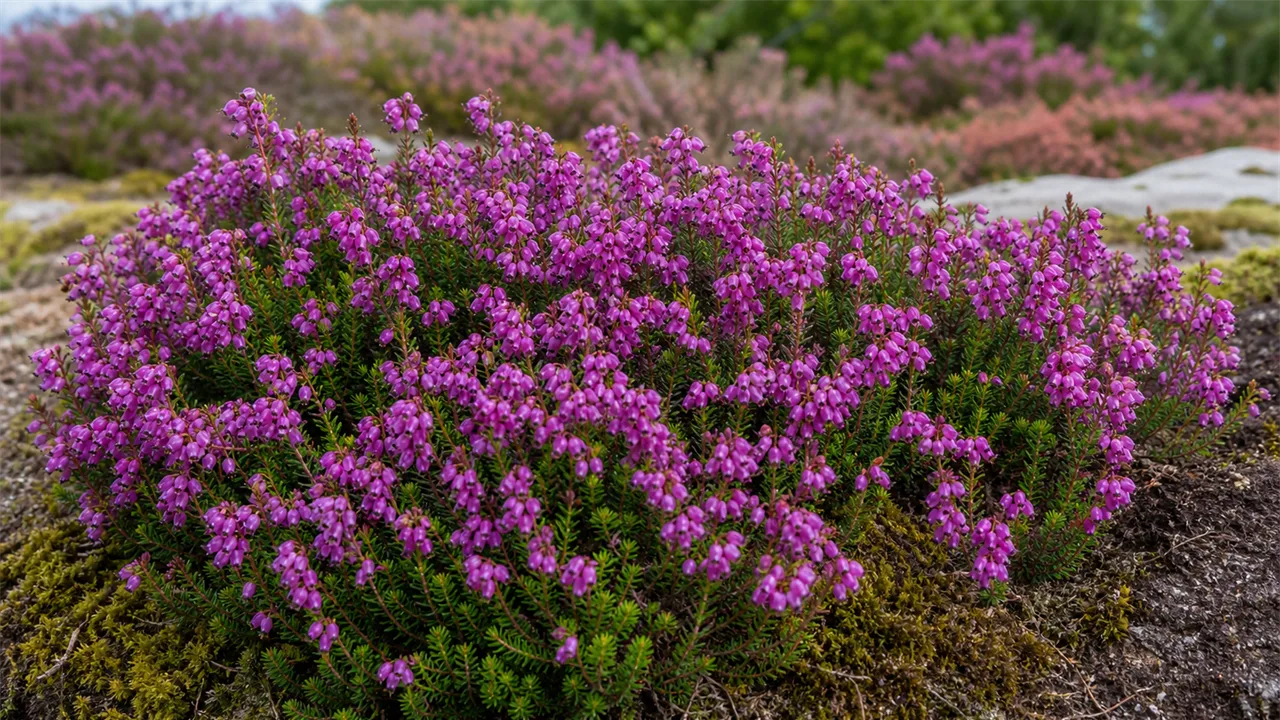
Flowers are borne at the tips of shoots in compact clusters, with up to six blooms in an inflorescence. Individual flowers are broadly funnel-shaped and about 2-3cm long. Colour varies between individual plants, ranging through violet, deep purple-blue and shades that appear especially blue in cool or overcast light. Flowering normally falls in April and May in UK gardens. A cold inland site may delay the display, while a mild sheltered garden may see buds opening earlier.
The combination of tiny scaled leaves and saturated flower colour gives R. russatum a particularly refined appearance. It works best where it can be seen at fairly close range: beside a path, near the front of a border, on a raised acid bed or in a container. Pale-flowered woodland perennials can provide contrast, provided they enjoy the same moisture and acidity rather than competing aggressively with its surface roots.
Growing Conditions
Acid soil is essential. Aim for a lime-free, humus-rich root run that remains evenly moist but never waterlogged. The species is not adapted to chalk or strongly alkaline conditions, and simply adding a small pocket of ericaceous compost to alkaline ground is rarely a lasting solution. Surrounding soil and irrigation water gradually influence that pocket. A generous raised bed designed for acid-loving plants, or a large container, is more reliable.
Loam or sandy loam enriched with leaf mould, composted bark or other low-lime organic matter provides a suitable balance of moisture retention and drainage. Heavy clay needs structural improvement and careful siting, because prolonged winter saturation encourages root disease. Avoid burying the planting area beneath mushroom compost, fresh manure, builders' rubble or wood ash, all of which may create unsuitable chemical or nutritional conditions.
Partial shade or dappled light is usually ideal. A position with gentle morning or late-afternoon sun can support sturdy growth and generous flowering, whereas deep shade may reduce bud formation. At the other extreme, hot reflected sun and dry air can scorch foliage and rapidly dehydrate the shallow roots. Shelter from persistent cold, drying winds is useful, particularly in eastern and exposed northern gardens.
Moisture management matters throughout the year. Established plants tolerate brief fluctuations better than newly planted specimens, but they should not be allowed to dry severely in spring or summer. Water deeply during dry weather so moisture reaches the whole rootball. Rainwater is preferable in hard-water districts because repeated use of alkaline tap water can raise compost pH and restrict iron uptake.
An annual 5-8cm mulch of leaf mould, composted bark or conifer bark helps to conserve water, suppress weeds and protect surface roots. Keep the mulch away from the main stems and never dig it into the root zone. Hoeing and deep cultivation can damage the fine roots. Hand weed carefully instead.
Container plants need a broad, stable pot with unobstructed drainage holes and fresh peat-free ericaceous compost. Stand the pot where it receives bright filtered light, and raise it slightly on feet if drainage is slow. Repot when roots have filled the container or the compost has broken down; otherwise replace the loose surface layer in spring without disturbing the root system.
Planting and Care
Plant in early autumn while the soil is still warm, or in March and April once frozen or saturated conditions have passed. Spring is often safer in cold, wet gardens because the root system then has a full growing season to establish. Soak a dry rootball thoroughly before planting. Dig a wide, shallow hole, loosen compacted sides and set the top of the rootball level with, or very slightly above, the surrounding soil. Rhododendrons are surface-rooting shrubs and decline when planted deeply.
Backfill with the excavated acidic soil improved, where necessary, with suitable organic matter. Do not pack rich feed into the planting hole. Firm gently, water thoroughly and mulch the surrounding ground. During the first two growing seasons, inspect moisture beneath the mulch rather than assuming light rain has soaked the rootball. Water in prolonged dry spells, especially while flower buds and new shoots are developing.
Feeding should be restrained. On reasonably fertile soil, a spring mulch may be sufficient. Where growth is weak or the plant is container-grown, apply a measured ericaceous fertiliser in spring, following the product rate rather than adding extra. Excess nitrogen can encourage soft growth at the expense of flowers and may increase vulnerability to weather damage. Stop feeding by midsummer so new shoots can mature before winter.
Routine pruning is unnecessary. Remove dead, damaged or crossing shoots after flowering, cutting back to a healthy branch junction. Spent flower clusters may be carefully snapped out before seeds develop, but avoid injuring the new shoots emerging immediately below them. Old rhododendron wood does not always regenerate evenly, so hard renovation should be approached cautiously and staged over more than one season if it is unavoidable.
Propagation preserves either the species or a selected clone, depending on the method. Semi-ripe cuttings can be taken in late summer from healthy non-flowering shoots and rooted in a free-draining, lime-free propagation medium under humid conditions. Layering is slower but often simpler: in spring, bend a low flexible shoot to the ground, lightly wound the underside, pin it into acidic compost and leave the tip exposed. Detach it only after a sound independent root system has formed. Seed is principally useful for species propagation, but seedlings vary and take years to flower.
Seasonal care is uncomplicated but regular. In spring, renew mulch, feed only if needed and check developing buds. After flowering, deadhead and make any light corrective cuts. Through summer, maintain even moisture and watch container plants closely. In autumn, plant or repot while conditions are mild, clear fallen diseased material and confirm that drainage is open. In winter, protect pots from prolonged saturation and drying winds rather than moving a healthy outdoor shrub into heated shelter.
Common Problems
Yellow leaves with green veins usually indicate chlorosis: the roots cannot obtain iron efficiently because soil or compost is insufficiently acidic. Check growing conditions before reaching for fertiliser. Replace unsuitable container compost, use rainwater where practical and avoid lime-containing materials. A specialist sequestered-iron treatment may provide short-term relief, but correcting the root environment is the lasting remedy.
Phytophthora root rot is a serious risk in poorly drained ground. Affected plants may wilt despite wet soil, lose foliage or suffer branch dieback, and roots can become dark and unhealthy. Prevention is more effective than treatment: avoid waterlogged sites, plant at the correct shallow depth and ensure containers drain freely. Severely affected shrubs should be removed with as much contaminated root material as practical; avoid immediately replanting another susceptible rhododendron in the same position.
Powdery mildew may cause pale patches or a powdery coating on leaves. Stress, stagnant air and unsuitable moisture conditions can worsen symptoms. Improve spacing and air movement without exposing the plant to harsh drying conditions, water the root zone rather than repeatedly wetting foliage, and remove badly affected fallen material. Chemical control is seldom the first requirement in a well-sited small shrub.
Bud blast causes flower buds to turn brown, die and remain attached; they may later develop a silvery-grey appearance with black fungal structures. Pick off and dispose of affected buds. Rhododendron leafhopper has been associated with spread of the fungus, although the relationship is not absolute. Monitoring the undersides of leaves and maintaining general plant health are sensible precautions.
Rhododendron lace bug can cause pale stippling on the upper leaf surface, with dark deposits and insects beneath. Damage is often worse in warm, sunny, dry positions. Check leaf undersides before choosing a response, improve shade and moisture where the site is too exposed, and preserve natural predators by avoiding unnecessary broad-spectrum insecticides.
Vine-weevil larvae are particularly troublesome in containers, where they feed on roots and can cause sudden collapse. Adult feeding leaves characteristic notches around leaf margins. Inspect pots and roots when unexplained wilting occurs, use biological controls at the temperatures and times stated on the product, and replace badly degraded compost. Slugs and snails may occasionally mark tender new growth, but established woody plants normally tolerate minor feeding.
Popular Varieties
Named cultivars attributable specifically to Rhododendron russatum are not consistently documented or offered by UK nurseries. For that reason, cultivar names should not be inferred from colour alone. The species itself is the most dependable choice for gardeners seeking its characteristic scaled foliage, compact habit and deep violet-blue flowers.
UK gardeners may encounter Rhododendron 'Blue Diamond', a genuine compact blue-purple hybrid sold by specialist nurseries and listed separately by the RHS. It is not a cultivar of R. russatum and should be labelled by its accepted hybrid name rather than presented as the species.
Rhododendron 'Blue Tit' is another established small, blue-lilac hybrid found in UK cultivation. Its parentage and appearance differ from R. russatum, but it can fill a similar role in a small acid border. Rhododendron 'Ramapo' is a compact purple-blue hybrid valued for fine evergreen foliage and a low, spreading outline. Again, it is an alternative rather than a variety of R. russatum.
Where botanical accuracy is the priority, buy from a specialist rhododendron nursery and check the full label. Seed-raised R. russatum can vary in flower intensity, while named hybrids sold as 'blue rhododendrons' may differ substantially in eventual size. Confirm mature dimensions before planting and retain the nursery label so that future pruning, propagation and garden records remain tied to the correct plant.
Sources and further reading:
- Royal Horticultural Society, Rhododendron russatum plant profile: https://www.rhs.org.uk/plants/15607/rhododendron-russatum/details (accessed 2026-07-22)
- Royal Horticultural Society, rhododendron growing guide: https://www.rhs.org.uk/plants/rhododendron/growing-guide (accessed 2026-07-22)
- Royal Horticultural Society, rhododendron diseases: https://www.rhs.org.uk/disease/rhododendron-diseases (accessed 2026-07-22)
- Royal Horticultural Society, rhododendron leafhopper and bud blast: https://www.rhs.org.uk/biodiversity/rhododendron-leafhopper-and-bud-blast (accessed 2026-07-22)
- Trees and Shrubs Online, Rhododendron russatum: https://www.treesandshrubsonline.org/articles/rhododendron/rhododendron-russatum/ (accessed 2026-07-22)
Pests and Diseases
| Problem | Symptoms | Management |
|---|---|---|
| Vine weevil | Notched edges on leaves during the day and root damage causing wilting at night. | Apply biological nematodes to the soil in spring and autumn or use approved chemical controls. |
| Powdery mildew | White powdery fungal growth on leaves, buds, and shoots, potentially causing distortion. | Improve air circulation and apply a fungicide if infection is severe; avoid wetting foliage. |
| Bud blast | Flower buds turn brown and die before opening, often caused by fungal infection. | Remove and destroy infected buds promptly to prevent spread; improve site drainage. |
| Pieris lacebug | Small white speckles on the upper leaf surface with black tar-like spots underneath. | Encourage natural predators or apply a systemic insecticide if infestations are heavy. |
| Rhododendron leafhopper | Leaves become speckled and may turn bronze or brown, often with white frass underneath. | Monitor for nymphs in spring and treat with appropriate insecticides if necessary. |
For step-by-step help, read Treating Powdery Mildew. Or browse the full plant problem solver to diagnose an issue by symptom.
Recommended Products
GardenWizz earns a commission from qualifying purchases made through affiliate links on this page (including links within the article) — as an Amazon Associate, and from Thompson & Morgan via the Awin network. This does not affect the price you pay. See our disclaimer for details.