Nordmann Fir
Abies nordmanniana
The Gardening Year
Best months in UK gardens · full planting calendar →
🖨 Printable care card (PDF)At a Glance
| Botanical name | Abies nordmanniana |
|---|---|
| Common name(s) | Nordmann Fir |
| Family | Pinaceae |
| Plant type | tree (Evergreen coniferous tree) |
| Height × Spread | 30–85 m × 8 m |
| Position | Full sun, Partial shade |
| Soil | Moist but well-drained, slightly acidic to neutral; rich, free-draining, light, sandy or clay/loam |
| Flowering | May–June |
| Toxicity | No reported toxicity |
| Native range | Mountains south and east of the Black Sea, in Turkey, Georgia and the Russian Caucasus; NE Turkey, N Iran, Caucasus |
The Nordmann Fir is a large, symmetrical evergreen conifer prized in the United Kingdom both as an ornamental specimen tree and as the country's favourite cut Christmas tree. Native to the Caucasus and parts of Asia Minor, it combines a stately conical habit with unusually soft, glossy needles that retain well indoors — qualities that have made it a fixture of British gardens, parklands and Christmas-tree plantations for over a century.
Overview
Abies nordmanniana belongs to the family Pinaceae and is one of the most widely planted firs in British horticulture. It was introduced to European cultivation in the mid-19th century following collections from the western Caucasus — chiefly the mountains around Georgia and the Pontic ranges of north-eastern Turkey — and quickly established a reputation for its graceful, densely furnished outline. In large gardens and arboreta it serves as a focal specimen, while in commercial forestry it underpins much of the UK's cut Christmas-tree trade, particularly in Scotland, Wales, Devon and Cornwall.
The species is hardy across the whole of the British Isles and tolerates a wide range of soils provided drainage is reliable. It is slower to establish than many broadleaved trees but exceptionally long-lived once settled, with specimens in mature British parklands regularly exceeding 20 metres. Its combination of soft, blunt-tipped needles, strong branch architecture and excellent needle retention after cutting explains why it has displaced traditional Norway Spruce as the most popular indoor Christmas tree in the UK over the last forty years.
Appearance
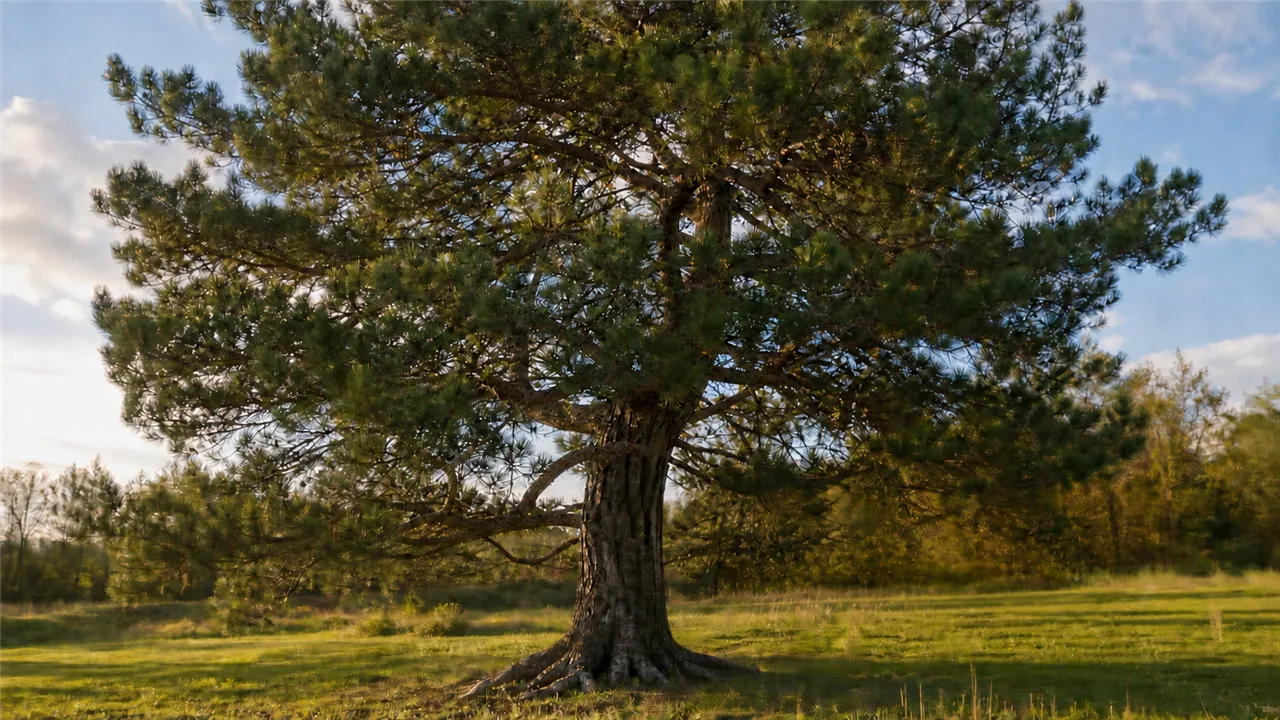
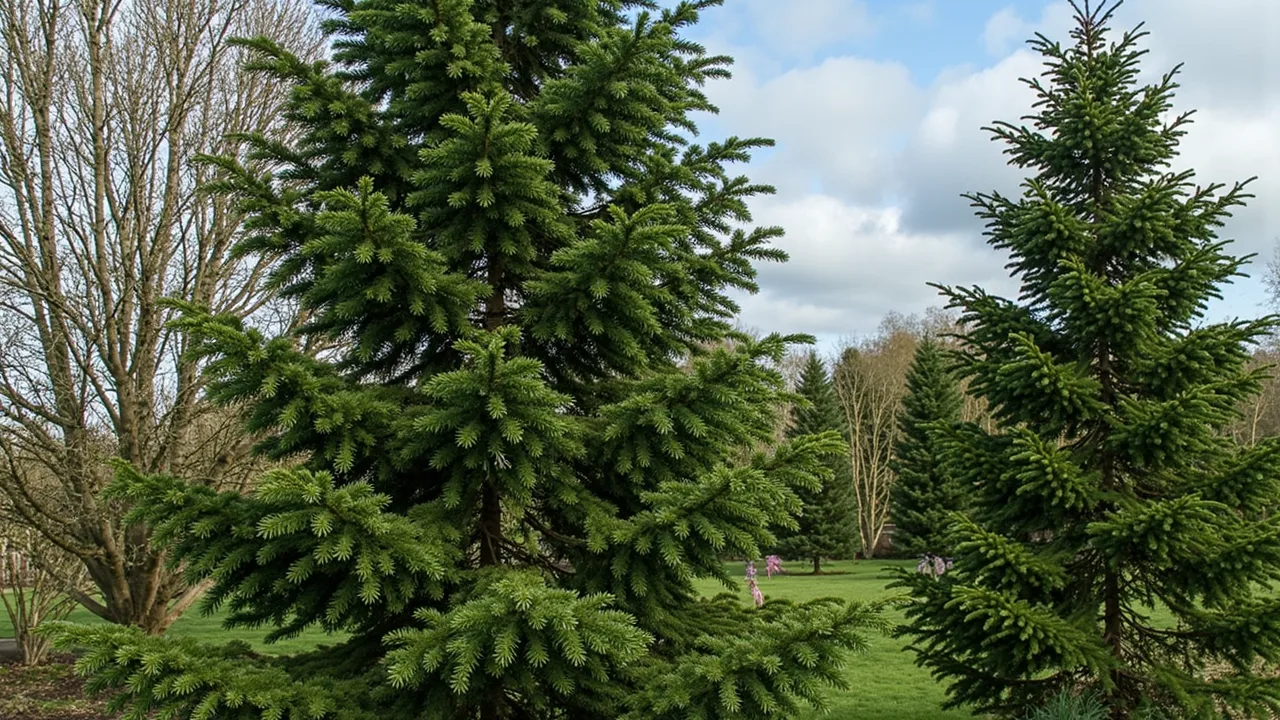
A mature Nordmann Fir develops the classic "Christmas-tree" silhouette: a single, straight central leader flanked by horizontal to slightly drooping branches arranged in regular whorls, producing a dense, narrowly conical crown that broadens modestly with age. Young trees are particularly symmetrical and tightly furnished; older specimens become more open and slightly broader at the base, with the lowest branches sweeping close to the ground in parkland settings. In UK conditions, expect a mature height of 15–25 metres and a spread of 5–8 metres after several decades, though very old specimens in sheltered Cornish or Argyll gardens can grow taller.
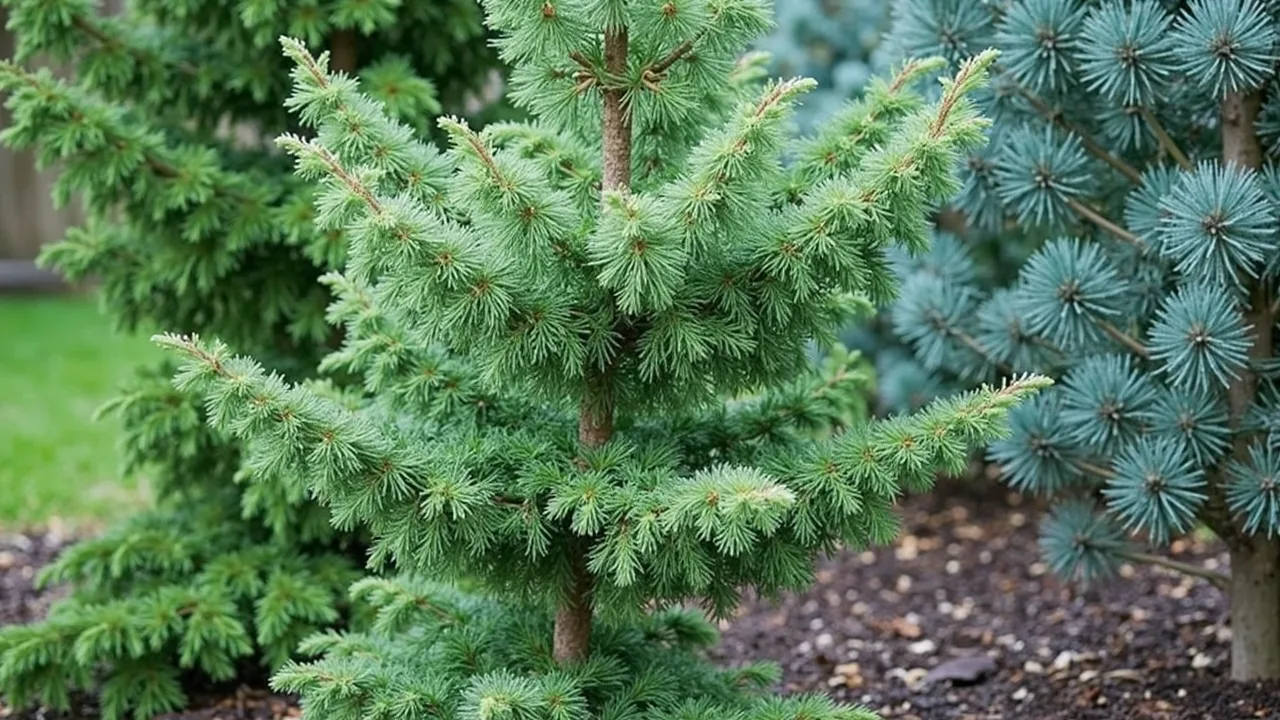
The bark is smooth and grey-brown on young trees, gradually becoming finely fissured and slightly darker on the lower trunk as the tree ages. Shoots are pale brown and slightly grooved. The needles are one of the species' most recognisable features: flattened, 2–3.5 cm long, dark glossy green on the upper surface with two prominent white stomatal bands beneath. They are arranged in two comb-like rows (a pectinate arrangement) either side of each shoot, leaving the upper surface of the twig visible. The needles are blunt-tipped and notably soft to the touch — an important practical advantage over spruce for both gardeners and Christmas-tree buyers.
Winter buds are small, ovoid and resinous, often coated in a pale waxy bloom. Cones are held upright on the branches (a defining trait of the genus Abies), cylindrical, 10–16 cm long and 4–5 cm wide. They ripen from green to a violet- or chestnut-brown in autumn and, unlike spruce cones, do not fall whole: at maturity the scales drop away to release winged seeds, leaving the bare central spike standing on the branch for several years.
Growing Conditions
The Nordmann fir has an RHS hardiness rating of H7, indicating tolerance of temperatures below −20 °C and suitability for exposed northern and upland sites. It performs best in deep, moist but well-drained loams or sandy loams with a slightly acidic to neutral pH. It will tolerate mildly alkaline conditions, particularly where clay content is moderate, but prolonged exposure to shallow chalk or waterlogged ground will check growth or kill young plants. Improve heavy, compacted soils before planting with well-rotted organic matter and, where drainage is suspect, plant on a low mound.
Position the tree in full sun or very light dappled shade. Crucially, choose a site sheltered from persistent cold winds: although the species is hardy, the long, heavy branches of young trees are vulnerable to wind-rock and leader damage in exposed gardens, which can ruin the symmetrical outline for years. Coastal exposure is tolerated in milder parts of the south-west, Wales and western Scotland, but east-coast gales will scorch foliage and distort form.
Growth is slow for the first three to five years while the root system establishes, after which annual extension increases markedly. The species is exceptionally long-lived; treated well, a Nordmann Fir will remain an attractive garden feature for well over a century, and several British heritage specimens exceed 30 metres.
Planting and Care
Plant container-grown or root-balled stock between November and March, during the dormant season, when soil is workable and not waterlogged. Bare-rooted firs establish poorly and should be avoided. Dig a planting hole one-and-a-half to twice the width of the root ball and no deeper — firs are prone to settling too deep, which invites collar rot. On heavy or alkaline ground, mix the backfill with leafmould or ericaceous compost and, where possible, add a surface mulch of pine bark or similar acidic organic matter. Stake young trees for the first two to three years, using a low stake that allows the trunk to flex; a tall, rigid stake encourages weak caliper growth. In exposed sites, also protect the leader with a short cane tie for the first winter.
Water thoroughly at planting and continue to water deeply once a week through any dry spells during the first two growing seasons. After establishment, Nordmann Firs are reasonably drought-tolerant and will not normally need supplementary watering except in prolonged summer droughts. Mulch annually in early spring with pine bark, leafmould or well-rotted conifer compost to conserve moisture, suppress weeds and maintain soil acidity around the root zone.
Feeding is rarely necessary in open ground, but on thin or sandy soils an annual spring application of a slow-release ericaceous fertiliser will improve foliage colour and extension growth. Avoid high-nitrogen lawn feeds near the rooting area.
Pruning is minimal. The species naturally produces a strong central leader and balanced branch whorls, so routine shaping is unnecessary. Remove any damaged, crossing or dead branches in late summer, cutting back to the branch collar without leaving stubs. Avoid pruning into old wood: firs do not regenerate readily from bare branches. Christmas-tree growers shear the new growth in early summer to maintain density, but this is only appropriate in plantation settings, not ornamental gardens.
Propagation is by seed for the species. Sow ripe seeds in autumn after a period of cold stratification, either outdoors in a cold frame or in a refrigerated compost for eight to twelve weeks before spring sowing. Named cultivars are propagated by grafting onto seedling understock in late winter, a technique usually restricted to specialist nurseries. Semi-ripe cuttings are generally unsuccessful.
Seasonal care is light: in spring, check the leader and topmost branches for wind or frost damage and tie in a replacement leader if needed; in summer, monitor young trees for aphid colonies and water during droughts; in autumn, clear fallen needles from beneath the canopy to reduce the carry-over of needle-cast pathogens; in winter, brush heavy snow off lower branches to prevent snapping, and guard the trunk against rabbit or deer damage in rural settings.
Common Problems
Phytophthora root rot is the most serious threat, particularly on heavy or poorly drained soils. Symptoms include poor extension growth, wilting during mild weather, dark lesions at the collar and reddish-brown discolouration beneath the bark at the root crown. There is no effective cure; affected trees should be removed and the soil avoided for future susceptible plantings. Improving drainage before planting is the only reliable prevention.
Honey fungus (Armillaria spp.) can attack older or stressed specimens, producing pale fan-like mycelium beneath the bark and black rhizomorphs ("bootlaces") on roots and in surrounding soil. Again, there is no cure; prompt removal of infected stumps and roots is advised to limit spread.
Conifer aphids of the genus Cinara frequently colonise the base of new shoots during late spring and summer, excreting honeydew and occasionally sooty mould. Colonies are usually kept in check by natural predators (ladybirds, lacewings, hoverflies) and rarely require treatment; a strong jet of water or, in persistent cases, a winter wash of horticultural oil will reduce overwintering eggs.
Needle cast, caused by Lophodermium and related fungi, leads to premature browning and shedding of older needles, particularly in damp, shaded plantations. Rake up and dispose of fallen needles each autumn to reduce inoculum, and improve air movement around the lower branches by careful pruning.
Wind damage to the leader and branch breakage is a recurring issue on exposed sites. The loss of the central leader produces a forked or lopsided crown that is difficult to correct, so prevention through good siting and temporary shelter is far better than remedial work.
Finally, the species is sensitive to transplant stress: always use container-grown or root-balled stock, water diligently through the first two summers, and avoid moving established specimens.
Popular Varieties
The species itself remains the dominant choice for British gardens and Christmas-tree plantations, but a small number of distinct cultivars are worth seeking out from specialist conifer nurseries.
'Golden Spreader' is a slow-growing, dwarf form reaching perhaps 1.5–2 metres after many years. Its needles are a clear golden-yellow in summer, deepening to bronze in winter, and its low, broadly spreading habit makes it suited to the front of a shrub border, a large rock garden or a container. It tolerates light shade better than many golden conifers, which scorch in strong sun.
'Pendula' is a strongly weeping selection, producing a slender leader that arcs sideways unless staked upright, with long, drooping side branches clothed in typical dark green needles. Trained vertically it forms an elegant narrow specimen 4–6 metres tall; allowed to spread horizontally it works as an unusual groundcover-like feature in larger gardens.
'Barabits' Compact' (sometimes sold simply as Abies nordmanniana 'Compacta') is a denser, narrower form with shorter internodes and a tighter conical outline than the species, typically reaching 4–6 metres. It is valued where the full-size tree would be too large, and it transplants slightly more reliably than the species on heavier soils.
Other selections occasionally offered by specialist nurseries include dwarf witches'-broom grafts — small, congested forms usually sold as named clonal selections — though these are largely collector's plants and rarely suit mainstream garden use. Gardeners wanting a Christmas-tree shape but lacking space for a 20-metre specimen should consider a containerised young plant of the species, kept for five to seven years and replaced, rather than relying on permanently dwarf cultivars whose form is quite different from the classic tree outline.
Cultivars and Varieties
| Cultivar | Height | Flower | Notes | AGM |
|---|---|---|---|---|
| 'Golden Spreader' | — | — | RHS AGM (H7) | ✓ |
Pests and Diseases
| Problem | Symptoms | Management |
|---|---|---|
| Honey fungus | Trees decline with yellowing needles and may show white fungal growth or black fruiting bodies at the base. | Improve drainage and avoid planting in infected soil; remove affected trees to prevent spread. |
| Aphids | Clusters of small soft-bodied insects on new shoots causing sticky honeydew and distorted growth. | Wash off with a strong jet of water or treat with insecticidal soap if infestations are heavy. |
| Adelgids | Cottony white masses on stems and needles resembling mealybugs, often causing needle drop. | Apply horticultural oil during dormancy or use systemic insecticides for severe infestations. |
| Needle cast | Older needles turn brown and fall prematurely, leaving the tree looking thin from the inside out. | Ensure good air circulation and avoid overhead watering to keep foliage dry. |
| Root rot | Wilting, stunted growth, and browning needles despite adequate moisture in waterlogged soil. | Plant in well-drained soil and ensure pots have adequate drainage holes to prevent waterlogging. |
For step-by-step help, read Controlling Aphids Naturally. Or browse the full plant problem solver to diagnose an issue by symptom.
Recommended Products
GardenWizz earns a commission from qualifying purchases made through affiliate links on this page (including links within the article) — as an Amazon Associate, and from Thompson & Morgan via the Awin network. This does not affect the price you pay. See our disclaimer for details.