Hardy Begonia
Begonia grandis
The Gardening Year
Best months in UK gardens · full planting calendar →
🖨 Printable care card (PDF)At a Glance
| Botanical name | Begonia grandis |
|---|---|
| Common name(s) | Hardy begonia |
| Family | Begoniaceae |
| Plant type | perennial |
| Height × Spread | 15–50 cm × 15–50 cm |
| Position | Partial shade |
| Soil | fertile, humus-rich, well-drained neutral to acid soil |
| Flowering | June–November |
| Toxicity | — |
| Native range | E Asia |
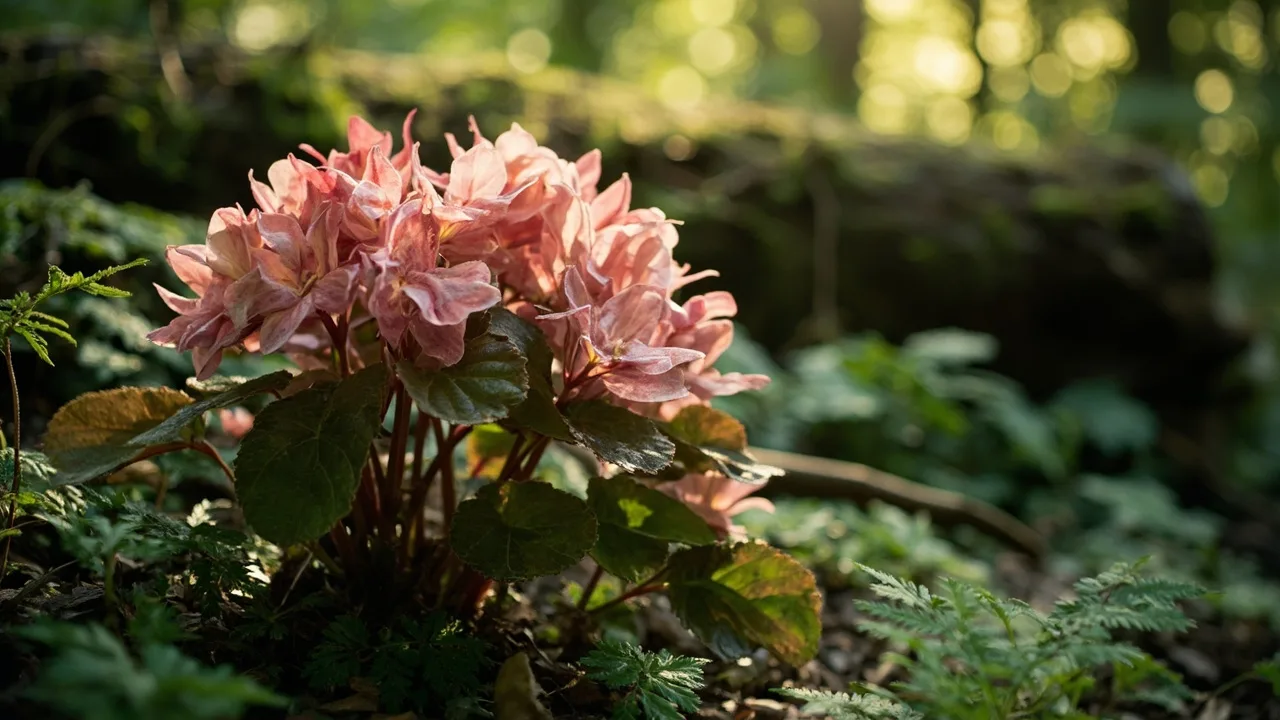
A splash of pink beneath shrubs in late summer is often Begonia grandis, the hardy begonia: a tuberous perennial grown for its red-backed foliage, airy flowers and ability to enliven sheltered shade. It suits many UK gardens, but its common name should not be taken as a promise that every plant will tolerate every winter; good drainage, mulch and a protected position matter.
Overview
Begonia grandis is unusual within a genus best known to British gardeners for tender bedding and conservatory plants. Kew records the species as native to central and southern China, where it grows in a temperate biome, and classifies it as a tuberous geophyte. In cultivation, the top growth collapses after the first significant frosts while the underground tuber rests until the soil warms in late spring.
This seasonal rhythm makes the plant particularly useful in a woodland-style border. Spring bulbs and early shade perennials can occupy the space first; the begonia then emerges comparatively late, fills out through summer and carries colour into autumn. It combines well visually with ferns, epimediums, hostas and other plants that appreciate humus-rich shade, although companions should not be so vigorous that they overwhelm its late shoots.
The plant is sometimes listed under Begonia grandis subsp. evansiana. Taxonomic treatments and nursery labels are not always consistent, so retaining the exact name supplied with a plant is sensible. Whatever the label, the cultivated hardy begonias share a preference for shelter, an even supply of moisture during active growth and freedom from stagnant winter wet.
Its common name needs context in the UK. The plant is more cold-tolerant than the familiar bedding begonias, yet survival varies with the clone, soil, exposure and length of winter. A south-facing wall is not essential, but a protected courtyard, woodland edge or border beneath deciduous shrubs gives the tuber a better chance than an open, windswept plot. Gardeners in colder districts can grow it in a container and move the pot under cover, or protect the crown with a generous dry mulch.
Appearance
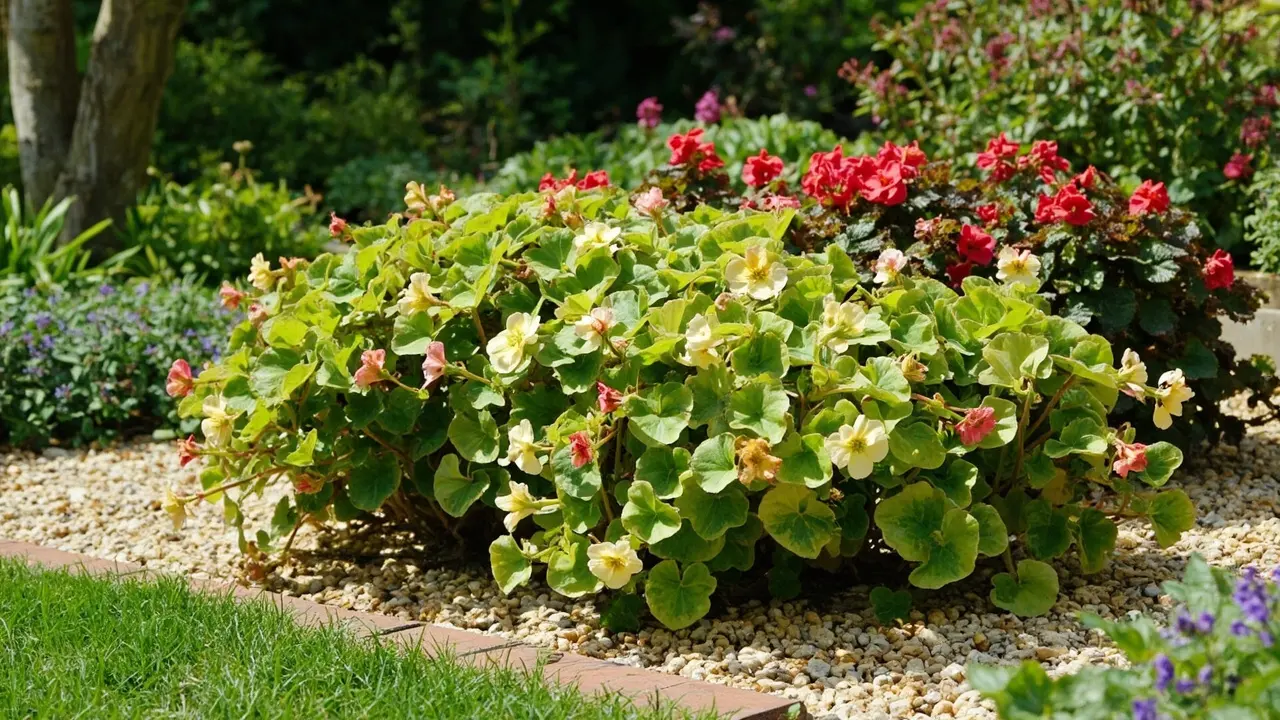
The plant forms a softly rounded, bushy clump from fleshy, branching stems. Most forms settle at roughly 45-50cm tall, with a similar spread once established, while the vigorous cultivar 'Sapporo' can reach around 80cm. The stems are not woody and should be protected from strong wind or accidental damage, especially when laden with flowers.
The foliage supplies much of the ornamental value. Each leaf is distinctly asymmetric, with an oblique, almost wing-like outline, toothed margins and a pointed tip. The upper surface ranges from olive to deep green; turn a leaf over and the underside may be pale, red-flushed or richly dark red. This contrast is especially effective where low evening light catches the leaves or where a plant is raised in a pot near a path.
Loose, branched sprays of small pink flowers rise above the foliage from July into October in favourable UK conditions. The individual flowers have the light, open character typical of begonias rather than the dense display of modern bedding hybrids. White-flowered selections are also available. Flowering is strongest where the plant receives bright, filtered light rather than deep, unbroken shade.
A further identifying feature appears late in the season. Small bulbils can develop in the leaf axils, where leaf stalks meet the stem. These detach and may establish around the parent plant, allowing a colony to form in receptive soil. Seedlings and bulbil-grown plants may vary, so named cultivars are best propagated vegetatively if their particular flower colour, foliage or habit is to be preserved.
The whole clump is deciduous. Leaves yellow or blacken after frost, stems collapse and the site may look empty until late spring. Marking the crown prevents accidental digging while it is dormant and helps distinguish normal late emergence from genuine loss.
Growing Conditions
Dappled shade is the most reliable position. Light beneath high-canopied deciduous trees or shrubs gives enough brightness for sturdy growth while protecting the broad leaves from scorching midday sun. Afternoon shade is particularly valuable in southern and eastern England, where a hot spell can dry the root zone quickly. In northern and western districts, a brighter sheltered position may help flowering, provided the soil stays moist.
Aim for fertile soil with plenty of organic matter. Leaf mould, well-rotted garden compost or composted bark improves both moisture retention and structure, which is useful because Begonia grandis dislikes two opposite extremes: drought while in full leaf and waterlogging around the dormant tuber. Heavy clay should be opened with organic matter and planted on a slight mound if winter drainage is doubtful. Very sandy soil needs regular additions of humus and more attentive watering.
RHS cultivation information recommends well-drained neutral to acid soil. Avoid strongly alkaline, thin ground and pockets where rain collects for days. A woodland border often provides the right balance naturally, but roots from established trees can create severe summer competition. Plant near the outer canopy rather than tight against a trunk, and replenish the surface mulch annually.
Shelter is as important as shade. Drying easterly winds in spring can check emerging shoots, and exposed stems can be snapped later in the year. A fence, hedge or group of shrubs can reduce wind without enclosing the plant so closely that air becomes stagnant. Good air circulation helps foliage dry after rain and reduces conditions favourable to grey mould.
Container culture is useful where garden soil is unsuitable. Choose a substantial pot with unobstructed drainage holes and use a free-draining, peat-free multipurpose compost improved with leaf mould. Keep the pot shaded from fierce afternoon sun and do not stand it permanently in water. Containers expose tubers to sharper fluctuations than open ground, so move them to a cool, sheltered, frost-protected place for winter in vulnerable districts.
Planting and Care
Plant pot-grown specimens in April or May, after severe frost is unlikely, at the same depth as they grew in the nursery pot. Bare tubers can be set 5-7.5cm deep in reasonably fertile soil. Leave roughly 40-50cm between plants, or more for a vigorous selection, so that mature foliage has room and air can circulate. Water thoroughly after planting and mark the position because new growth may be slow to appear.
Maintain even moisture from emergence until the foliage begins to decline. Water deeply during dry spells, directing water onto the soil rather than repeatedly wetting leaves late in the day. A 5cm surface mulch of leaf mould or garden compost helps conserve moisture, suppress weeds and buffer the tuber against abrupt temperature changes. Keep mulch just clear of soft emerging stems.
Feeding should be restrained in fertile ground. An annual spring mulch normally provides sufficient nutrients; excessively nitrogen-rich feeding can encourage lush, soft growth at the expense of resilience. Container plants exhaust compost more quickly and can receive a balanced liquid feed at the manufacturer's recommended interval while actively growing. Stop feeding as growth winds down in autumn.
No formative pruning is required. Remove damaged or diseased leaves when noticed, using clean secateurs, then allow healthy top growth to decline naturally so reserves can return to the tuber. Cut back collapsed stems in November or December and clear debris that could shelter pests or retain excessive damp. Do not prune living stems merely to reduce height.
Apply a protective mulch after cutback, especially during the plant's first winters or in colder and exposed UK gardens. Leaf mould, composted bark or another loose insulating material is preferable to a dense, wet cap. Where loss would be unacceptable, grow a duplicate in a pot under cool cover. Do not keep dormant tubers warm and actively watered: cool, ventilated protection and barely moist compost are safer than soggy conditions.
Divide established clumps in April or May as growth resumes. Lift carefully, separate portions with a sound tuber and at least one viable growing point, then replant promptly at their former depth. Water them in and protect young shoots from late frost. Division is the surest way to retain a named selection.
Bulbils offer another simple method. Collect them as they loosen in autumn and place them shallowly in pots of free-draining compost. Keep the pots sheltered and only lightly moist through winter, then grow the young plants on before planting out once substantial. Seed can also be used when available, but it is extremely fine and seedlings may not match a cultivar. Unwanted bulbils should be removed before they drop if self-seeding around the parent would be inconvenient.
Common Problems
Slugs and snails can damage tender shoots as they emerge, sometimes before the gardener realises growth has begun. Check marked crowns regularly in late spring, remove hiding places such as boards and dense debris, and use barriers or an approved control where necessary. Protecting the first shoots is often enough; larger plants usually tolerate limited feeding better.
Aphids may cluster on soft tips and young flower stems, causing distorted growth and leaving sticky honeydew. Small colonies can be rubbed off or dislodged with water. Encourage predators such as ladybirds and hoverflies, and inspect neighbouring plants rather than treating a single stem in isolation. Caterpillars, mites, mealybugs and glasshouse thrips are other recognised begonia pests, particularly under cover.
Vine weevil deserves attention in container-grown plants. Adults notch leaf margins, but the pale larvae feeding below the compost surface cause the serious damage: a plant may wilt or detach from damaged roots. Examine the root ball if unexplained collapse occurs, remove larvae and replace infested compost. Biological controls are available for use when compost temperatures suit the particular product; follow current instructions carefully.
Grey mould, or Botrytis, produces brown, collapsing tissue followed by fuzzy grey growth in damp, still conditions. Remove affected leaves and stems promptly, space plants adequately and improve ventilation. Water the soil early enough for splashed foliage to dry before night. Crowding soft growth under dense shrubs or leaving dead stems over winter increases risk.
Powdery mildew appears as a pale, floury coating and is encouraged when roots are dry while air around the foliage is humid. Improve air movement, water the root zone during drought and remove badly affected material. Avoid heavy feeding that creates masses of soft growth. Dispose of diseased debris rather than leaving it beneath the plant.
Leaf scorch generally indicates too much direct sun, drying wind or insufficient water rather than infection. Move a container to afternoon shade, mulch open-ground plants and water deeply. Conversely, a tuber that fails after winter is commonly associated with cold exposure or saturated soil. Improve drainage before replanting and choose a more protected position rather than repeatedly replacing plants in the same unsuitable pocket.
Popular Varieties
The selection sold simply as Begonia grandis subsp. evansiana remains the standard pink-flowered hardy begonia. It carries green, asymmetric leaves, often with red-toned undersides, and loose pink flowers. Nursery stock can vary, so buy from a specialist if a particular height or flower shade matters.
Begonia grandis 'Sapporo' is a verified vigorous cultivar listed by the RHS and sold by UK nurseries. It reaches up to about 80cm, with deep green, finely toothed leaves, dark red undersides and deep pink flowers. Its stronger scale suits the back of a shaded border, provided it has shelter and moisture.
Begonia grandis subsp. sinensis 'Snowpop' is a compact white-flowered selection, generally described by UK specialist nurseries as reaching about 40cm. Its mossy or mid-green leaves show red veining beneath. The lighter flowers are effective in dappled shade and its shorter habit is useful near a path or in a sheltered container.
Begonia grandis subsp. evansiana 'Alba' is another white-flowered form available from UK perennial nurseries. Naming in commerce can overlap with other white selections, so check the supplier's label and description rather than assuming that all white-flowered plants are identical. No hardiness value should be inferred from flower colour or cultivar name; site and winter protection remain important.
Sources & Further Reading
- Royal Horticultural Society, Begonia grandis subsp. evansiana: https://www.rhs.org.uk/plants/95775/begonia-grandis-subsp-evansiana/details (accessed 22 July 2026).
- Royal Horticultural Society, begonias outdoors: https://www.rhs.org.uk/advice/profile?pid=815 (accessed 22 July 2026).
- Royal Horticultural Society, Begonia grandis 'Sapporo': https://www.rhs.org.uk/plants/170935/begonia-grandis-sapporo/details (accessed 22 July 2026).
- Royal Botanic Gardens, Kew, Plants of the World Online, Begonia grandis: https://powo.science.kew.org/taxon/urn:lsid:ipni.org:names:60458941-2 (accessed 22 July 2026).
- Plant Pref, Begonia grandis subsp. sinensis 'Snowpop': https://www.plantpref.co.uk/all-perennials/begonia-grandis-ssp-sinensis-snowpop.html (accessed 22 July 2026).
- Farmyard Nurseries, Begonia grandis 'Sapporo': https://www.farmyardnurseries.co.uk/product/begonia-grandis-sapporo/ (accessed 22 July 2026).
Pests and Diseases
| Problem | Symptoms | Management |
|---|---|---|
| Slugs and snails | Irregular holes chewed in leaves and stems, often accompanied by slimy trails. | Use copper tape barriers, iron phosphate pellets, or hand-pick at night. |
| Powdery mildew | White, powdery fungal growth on leaf surfaces and stems. | Improve air circulation and spray with a sulphur-based fungicide if severe. |
| Root rot | Yellowing, wilting leaves despite moist soil; mushy, blackened roots. | Ensure well-draining compost and avoid overwatering; repot in fresh mix if affected. |
| Aphids | Clusters of small green or black insects on new growth causing distorted leaves. | Spray off with water or treat with insecticidal soap or natural predators like ladybirds. |
| Vine weevil | Notched leaf margins and larvae feeding on roots in the pot. | Apply nematodes to soil in autumn/spring or use systemic insecticides. |
For step-by-step help, read Controlling Aphids Naturally, Dealing with Slugs and Snails and Treating Powdery Mildew. Or browse the full plant problem solver to diagnose an issue by symptom.
Recommended Products
GardenWizz earns a commission from qualifying purchases made through affiliate links on this page (including links within the article) — as an Amazon Associate, and from Thompson & Morgan via the Awin network. This does not affect the price you pay. See our disclaimer for details.