Birch-Leaved Bellflower
Campanula betulifolia
The Gardening Year
Best months in UK gardens · full planting calendar →
🖨 Printable care card (PDF)At a Glance
| Botanical name | Campanula betulifolia |
|---|---|
| Common name(s) | Birch-leaved bellflower |
| Family | Campanulaceae |
| Plant type | perennial |
| Height × Spread | 10 cm × 10–50 cm |
| Position | Full sun, Partial shade |
| Soil | Moist but well-drained or Well-drained; Chalk, Loam, Sand; Acid, Alkaline, or Neutral pH |
| Flowering | May–June |
| Toxicity | — |
| Native range | Turkey |
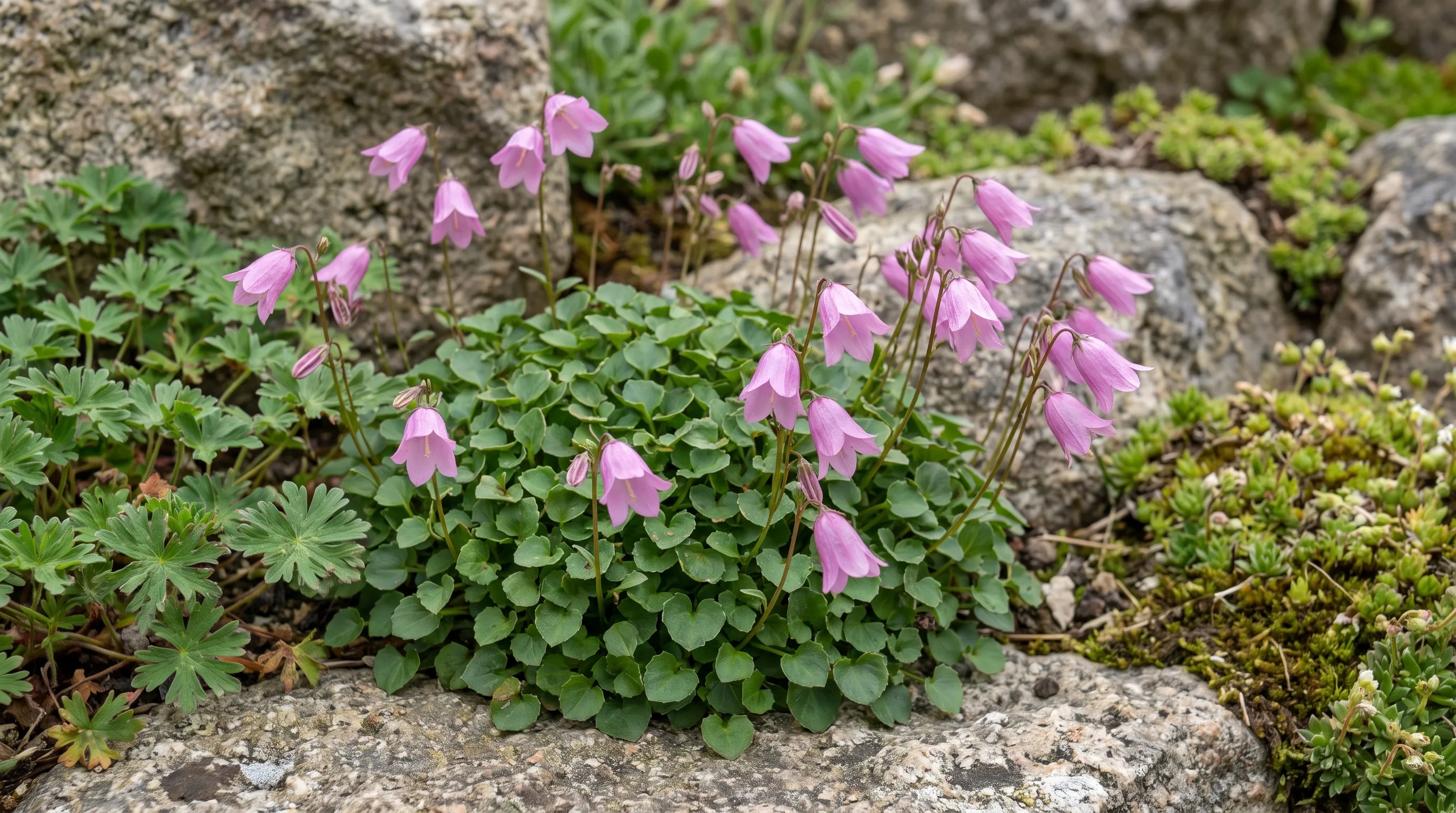
Birch-leaved bellflower is a compact alpine perennial grown for its fresh green foliage and generous display of white, open bells, often emerging from pink-flushed buds. Native to rocky habitats in Turkey, it is particularly effective in UK rock gardens, troughs, crevices and raised beds where its crown can remain sharply drained.
Overview
Campanula betulifolia belongs to the bellflower family, Campanulaceae. Its specific name means birch-leaved, referring to the rounded or broadly ovate leaves with toothed margins. Although the plant is small, its flowers are conspicuous in proportion to the foliage. This contrast gives it much of its value as a choice alpine for close viewing.
In cultivation it forms a low mound or spreading mat from a perennial rootstock. It suits the front of a sunny border only when drainage is excellent and stronger neighbours will not smother it. A raised alpine bed, stone trough, crevice garden, rock garden or wall top is often better, allowing growth to spill slightly over an edge while keeping the crown away from stagnant winter moisture.
UK gardeners should regard drainage as the central requirement. The plant can cope with short dry spells once established, but persistent wetness around the roots and crown is much more damaging. A ventilated alpine house can be useful in very rainy districts; elsewhere, an open outdoor position with gritty soil is normally appropriate. Its hardiness information is presented separately in the structured plant record.
Appearance
The foliage develops as a compact cluster of small, fresh-green leaves on slender stalks. Individual leaves are broadly ovate to almost rounded, with a toothed edge and a shape reminiscent of a birch leaf. Their soft-looking outline offsets the hard stone and gravel commonly used in alpine planting. Growth can spread into a neat mat, but it is not a coarse ground-cover plant and should be protected from vigorous companions.
Short flowering stems rise above the leaves in late spring and early summer. They carry numerous outward-facing, open bell-shaped flowers, typically white. The buds are often flushed pink, and some flowers retain a delicate pink tint on the outside after opening. Seen from above or planted at eye level in a wall or raised trough, the broad bells create a bright display without hiding the foliage completely.
Its naturally low habit lets it soften the rim of a container or raised bed. Position it where the small details are visible rather than lost at the back of a border.
Growing Conditions
Choose full sun or light partial shade. Strong light promotes compact growth and good flowering, while a little afternoon shade may help where a south-facing wall becomes very hot and dry. Dense shade is unsuitable because it can encourage looser growth, reduce flowering and leave the foliage damp for longer.
The soil must drain freely in every season. A gritty, stony or sandy loam with modest fertility is preferable to rich, moisture-retentive ground. On heavy clay, create a genuinely raised planting pocket or use a container rather than relying on a shallow layer of grit over wet soil. The root zone should be cool enough not to bake completely, but water must pass away quickly after rain.
For a trough or pot, use a free-draining loam-based compost amended generously with horticultural grit. Keep drainage holes open and raise the container if it otherwise sits on a wet surface. A gravel mulch around the crown reduces soil splash, but must not bury the crown.
In wetter western and northern parts of the UK, protection from prolonged winter rain may be more important than extra warmth. An open-sided cover can reduce saturation, but air must still circulate. In drier eastern areas, check containers during warm spells because their small volume dries quickly.
Planting and Care
Plant in spring or early autumn, when the soil is workable and neither frozen nor saturated. Set the crown level with the surrounding surface; planting deeply increases the risk of rot. Firm gently, water to settle the roots, and add grit around the crown if the site is suitable but locally prone to splashing. Leave enough open space for the mound to spread without immediate competition.
Water newly planted specimens whenever the upper layer of soil begins to dry, while always allowing surplus water to escape. Established plants in the ground usually need additional water only during extended dry periods. Pots and troughs require closer attention from spring through summer, especially in warm, windy weather, but should never stand in a saucer of water. Direct water towards the compost rather than repeatedly wetting the leaves and crown.
Feed sparingly. In poor open ground, a modest spring top-dressing of well-rotted organic matter placed away from the crown is generally enough. Container plants may receive a weak, balanced liquid feed during active growth, but frequent high-nitrogen feeding encourages lax foliage. Stop feeding if growth becomes soft or stretched.
This herbaceous perennial does not require woody pruning. Remove spent flowers if a tidy appearance or a prolonged display is wanted, taking care not to pull at the shallow crown. Dead top growth may be cut back after it has died down naturally. Exact cutback months have not been established for this plant record, so the condition of the growth, rather than an invented calendar date, should guide the task.
Propagation is possible by careful division, basal cuttings or seed. Divide only a healthy, established clump, lifting it with as much root as possible and separating rooted pieces with a clean knife or by hand. Replant promptly into gritty compost and keep just moist while roots recover. Spring or early autumn are suitable seasonal windows, but exact division months are not established in the structured record. Young basal shoots can be taken as cuttings and rooted in a sharply drained medium. Seed may also be sown under controlled conditions; seedlings can vary slightly from the parent and should not be assumed to be a named selection.
During spring, inspect emerging shoots for mollusc damage and remove damp debris. Through flowering, deadhead if desired and check container moisture. In autumn, reduce watering as growth slows and clear drainage holes before prolonged rain. During winter, prioritise preventing saturation around the crown.
Common Problems
Crown and root rot are the most serious preventable problems. Symptoms include wilting despite wet soil, soft discoloured crown tissue or sudden collapse. Improve drainage before replacing a lost plant; extra water can worsen the problem. Remove badly affected material and discard sour, compacted compost.
Slugs and snails may chew young shoots and leaves, particularly during damp spring weather. Inspect beneath pot rims and nearby stones, reduce unnecessary shelter immediately around the plant and use an appropriate control method where damage is persistent. Aphids can cluster on tender shoots and flower stems; small colonies can often be removed with a gentle jet of water without soaking the crown repeatedly.
Vine-weevil larvae are a particular risk in containers, where they feed on roots and can cause otherwise unexplained wilting or looseness at the crown. Check the rootball when repotting and follow an appropriate biological or approved control programme if larvae are found. Good container hygiene and examination of new plants help limit introductions.
Bellflower rust, powdery mildew and leaf spots may occur when plants are crowded or foliage stays wet. Provide air movement, water at compost level and remove badly marked leaves. Avoid excessive feeding, which produces soft growth. A few old or weather-marked leaves do not necessarily indicate an outbreak.
Popular Varieties
Few named cultivars of Campanula betulifolia are reliably established in the available governed sources. Cultivar names should therefore not be invented or attached to ordinary seed-raised plants. The species itself is the form most likely to be encountered: compact, white-flowered and often showing pink-flushed buds.
Plants offered simply as Campanula betulifolia may show modest natural variation in flower tint, leaf size or growth habit, especially when raised from seed. Such differences do not make them named varieties. When buying, check that the label gives the full botanical name and compare the plant with the characteristic birch-like toothed foliage and open white bells.
Campanula troegerae is a separate accepted species, not a hybrid name or a cultivar of birch-leaved bellflower. A documented hybrid cross, C. betulifolia × C. troegerae, may appear in specialist collections, but it should be recorded as a hybrid rather than substituted silently for either parent species. For gardeners seeking authentic C. betulifolia, a reputable alpine nursery or specialist plant society is the best source, with the plant retained under its botanical name until any selection has a documented cultivar identity.
Pests and Diseases
| Problem | Symptoms | Management |
|---|---|---|
| Slugs and snails | Irregular holes chewed in leaves and stems, often accompanied by silky slime trails. | Use physical barriers like copper tape or apply iron phosphate pellets around the base. |
| Powdery mildew | White, dusty fungal growth appears on leaves and stems, potentially causing distortion. | Ensure good air circulation and spray with a fungicide if infection is severe. |
| Root rot | Plant wilts and collapses despite moist soil due to waterlogged conditions in winter. | Plant in gritty, well-drained compost and avoid overwatering during the dormant season. |
| Leaf spot | Small, dark or brown spots develop on foliage, sometimes leading to yellowing leaves. | Remove affected leaves and avoid wetting foliage when watering to reduce humidity. |
For step-by-step help, read Dealing with Slugs and Snails and Treating Powdery Mildew. Or browse the full plant problem solver to diagnose an issue by symptom.
Recommended Products
GardenWizz earns a commission from qualifying purchases made through affiliate links on this page (including links within the article) — as an Amazon Associate, and from Thompson & Morgan via the Awin network. This does not affect the price you pay. See our disclaimer for details.