Tussock Bellflower
Campanula carpatica
The Gardening Year
Best months in UK gardens · full planting calendar →
🖨 Printable care card (PDF)At a Glance
| Botanical name | Campanula carpatica |
|---|---|
| Common name(s) | tussock bellflower |
| Family | Campanulaceae |
| Plant type | perennial |
| Height × Spread | 10–45 cm × 10–50 cm |
| Position | Full sun, Partial shade |
| Soil | well-drained gritty soil; chalky, loamy, or sandy soils; moist but well-drained or well-drained; acid, alkaline, or neutral pH |
| Flowering | June–August |
| Toxicity | non-toxic |
| Native range | parts of Europe including the Czech Republic, Romania, Slovakia, Ukraine, Poland and Western Russia; Carpathian Mountains of Central Europe |
A low dome of violet-blue bells can turn the front of a sunny border into a long-flowering summer feature without hiding neighbouring plants. Tussock bellflower is a compact, clump-forming perennial suited to UK rock gardens, path edges, troughs and well-drained borders.
Overview
Campanula carpatica belongs to the bellflower family, Campanulaceae, and is native to the Carpathian Mountains. Its natural association with rocky ground helps explain why it performs especially well in free-draining positions, including raised beds, alpine gardens and the tops or crevices of low walls. The species is perennial and forms a widening tussock rather than producing the tall stems found in border bellflowers such as Campanula persicifolia.
In UK gardens it is valued for occupying the useful lowest layer of a planting. A mature clump can soften paving, spill gently over an edge or fill a gap between rocks while remaining compact enough for a small garden. It combines readily with hardy geraniums, sedums, lamb's ear and other sun-loving perennials, although sufficient space and airflow should be retained around each plant.
The open flowers are accessible to visiting insects, so the plant can contribute summer nectar within a varied pollinator planting. It is not, however, a substitute for a broad range of flower shapes and seasons. Use several clumps as part of a longer display rather than relying on one species alone. Established plants are normally dependable in the UK provided that their crowns are not left in persistently wet soil, particularly during winter.
Appearance
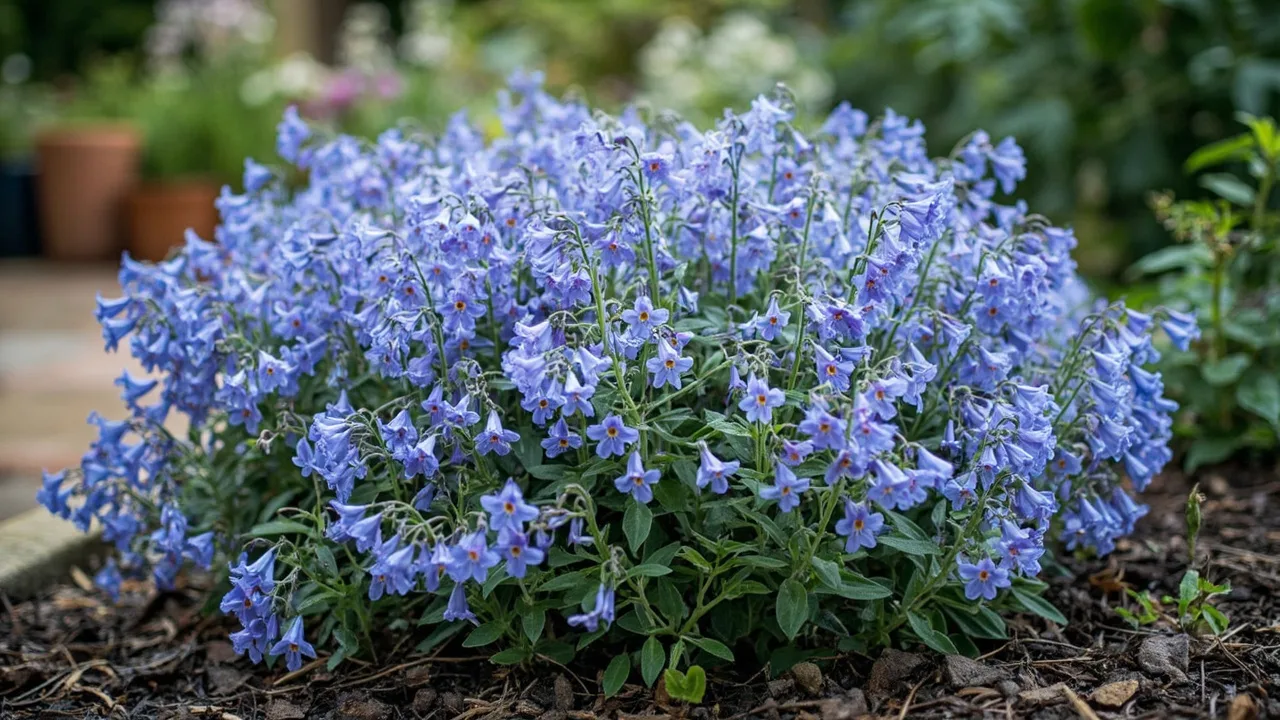
Tussock bellflower develops a neat mound of bright to mid-green leaves. Most foliage sits close to the ground, with rounded or heart-shaped blades borne on slender stalks and edged by small teeth. The dense basal growth creates the tussock described by its common name, while fine flowering stems rise just above it. Some foliage may persist through a mild winter, but damaged or tired leaves can be removed when growth resumes.
The flowers are wider and more open than a narrow hanging bell. Each is broadly bell- or cup-shaped, usually held upwards or outwards, making the colour conspicuous from above. The species commonly carries violet-blue flowers, while white-flowered forms and named cultivars extend the choice. Individual blooms are around 3 cm across, though size, colour intensity and exact habit vary among cultivars.
Plants commonly reach 15-30 cm in flower and may spread to 30-60 cm as the clump matures. That low profile suits the front of a perennial border, an alpine trough or a path edge where taller plants would obstruct the view. In a container, the rounded mound provides structure before flowering and lets the bells sit clearly above the rim.
The main UK display falls between June and August. Removing faded stems can prolong a tidy appearance and may encourage further flowers later in summer. Flowering is generally heaviest in good light; excessive shade can produce looser growth and fewer blooms. Avoid crowding the plant beneath vigorous neighbours, which can both reduce light and trap damp air around its foliage.
Growing Conditions
Choose full sun for the most generous flowering, or light shade where summers are warmer and the soil remains reasonably bright. Deep shade is unsuitable. An open east-, west- or south-facing position works well in many UK gardens, but drainage matters more than aspect alone. Plants beside a wall may need extra water while establishing because masonry and roof overhangs can create a rain shadow.
The ideal soil is moist but well drained. Tussock bellflower tolerates acidic, neutral and alkaline conditions and can grow in sandy or loamy ground, provided water does not stagnate around the crown. Heavy clay should be improved across a broad planting area with organic matter and, where appropriate, horticultural grit. Do not create a small gravel-filled planting hole in compacted clay, as this can behave like a sump.
Winter wet is a more important risk than ordinary winter cold. A raised bed, sloping site, wall top or alpine trough allows surplus rain to escape. In containers, use a free-draining loam-based compost with added grit and ensure that drainage holes remain open. Raise pots slightly above paving in winter so water can leave freely, and avoid leaving them in saucers.
During spring and summer, soil should not become repeatedly dust-dry while plants are establishing or forming buds. A sunny rock garden can dry quickly even after rain, so check the root zone rather than judging by the surface. Once established in open ground, the plant generally needs supplementary watering only during prolonged dry spells. Container-grown clumps require more regular checks because their limited compost dries faster.
UK conditions suit this perennial well across a wide range of regions. In wetter western districts, prioritise air movement and sharp drainage. In drier eastern and south-eastern gardens, retain moderate moisture through spring and early summer with a thin organic mulch kept clear of the crown. Consult the profile's structured hardiness badge for the verified rating rather than relying on unsourced temperature claims.
Planting and Care
Plant pot-grown tussock bellflowers in spring or early autumn when soil is workable and neither frozen nor waterlogged. Spring planting gives roots a full growing season before the wettest weather. Early autumn planting can also succeed in free-draining soil, but avoid placing small plants into cold saturated ground late in the year. Space plants about 30-40 cm apart, adjusting for the expected spread of the chosen cultivar.
Prepare the whole root area by removing perennial weeds and loosening compacted soil. Set the crown level with the surrounding surface: burying it deeply encourages dampness, while leaving the root ball proud makes it dry too quickly. Firm gently, water thoroughly and continue watering during dry periods through the first growing season. For containers, select a pot with generous drainage holes and leave room for the clump to widen.
Water established border plants when a prolonged dry spell leaves the soil dry at root depth. Apply water to the soil rather than routinely wetting the foliage, particularly in muggy weather. Pots may require frequent watering in summer, but excess must drain away. Reduce watering as growth slows; compost should not remain saturated through winter.
This is not a hungry plant. In ordinary garden soil, an annual spring mulch of well-rotted compost is usually adequate. Keep rich mulch away from the crown and avoid high-nitrogen feeding, which can encourage soft leaves at the expense of flowers. Container plants can receive a restrained application of balanced feed during active growth, following the product label rather than adding repeated strong doses.
Remove spent flowers and their stems during summer to maintain the mound and support repeat flowering. This is deadheading, not structural pruning. As a herbaceous perennial, tussock bellflower should be recorded under the GardenWizz Cut back calendar event, never Prune. Cut back old or damaged foliage in late autumn or early spring according to local conditions; in mild areas, leave sound basal leaves until spring. Never add a Sow event to this herbaceous-perennial calendar.
Divide congested clumps every three or four years in spring or early autumn. Lift the plant, separate healthy outer pieces with roots attached, discard any exhausted centre and replant promptly at the original depth. Record this work under the Divide event. Division is the most reliable way to retain a named cultivar. Basal cuttings taken in spring are another vegetative method, while species plants can be raised from seed, although seedlings may vary and should not be assumed to match a cultivar.
Seasonal care is simple: clear debris and inspect drainage in early spring; water and deadhead through dry summer weather; divide where needed in spring or early autumn; then remove deteriorating foliage without smothering the crown. For month-by-month reminders, use the gardening calendar alongside observations from the local garden.
Common Problems
Slugs and snails can damage fresh foliage and flower stems, especially in damp, sheltered places. Look for irregular holes, slime trails and growth disappearing overnight. Reduce hiding places, check pots and wall crevices after dark, and use wildlife-conscious controls appropriate to the garden. Improving airflow and avoiding unnecessarily lush growth makes clumps less sheltered.
Rust may appear as orange or brown pustules, often most evident beneath leaves, followed by yellowing or premature leaf loss. Remove affected leaves promptly and dispose of them rather than composting heavily infected material. Keep plants appropriately spaced, water at soil level and clean up old foliage. Persistent or severe outbreaks may justify replacing a badly affected plant and avoiding crowded conditions in the same position.
Powdery mildew produces a pale, flour-like coating on leaves. It often becomes conspicuous when roots are dry but air around the foliage is humid. Water the root zone during drought, thin encroaching neighbours and remove badly affected material. Avoid compensating with excessive feed, as soft growth is not a cure and may worsen the plant's balance.
Leaf spot can cause discrete brown or dark lesions and general deterioration. Remove affected foliage, improve circulation and avoid splashing water repeatedly across leaves. Sterilise cutting tools after working on visibly diseased material. Because several disorders can look similar, avoid making a diagnosis from one damaged leaf alone; consider recent watering, drainage and weather as well as the pattern across the clump.
Crown or root decay is usually associated with persistently wet, poorly aerated soil. Affected plants may collapse, yellow or detach from softened tissue near soil level. There is no useful routine treatment for a badly rotted crown. Remove it, correct the drainage problem and replant only when the position no longer holds water. In pots, check blocked holes and replace compacted compost before introducing a healthy division.
Few problems are serious where plants receive light, space and drainage. Regular inspection catches mollusc damage and diseased leaves before they spoil the whole mound. The GardenWizz problem solver can help compare symptoms, but uncertain or widespread disease should be identified before any treatment is chosen.
Popular Varieties
Named forms differ chiefly in flower colour, earliness and compactness. Availability changes between seasons, so verify current stock with UK nurseries and buy plants with a complete botanical label. The following cultivars have established RHS plant records and are genuine selections rather than invented trade names.
- 'Blaue Clips' forms low mounds with purple-blue, upward-facing flowers. Its compact habit suits rock gardens, edging and containers where a clear blue display is wanted.
- 'Weisse Clips' is a compact white-flowered form, botanically listed as Campanula carpatica f. alba 'Weisse Clips'. It can brighten a trough or contrast with blue-flowered selections.
- 'Rapido Blue' is noted by the RHS as an early-flowering cultivar with numerous vivid violet-blue bells on short stalks. It is useful where a low, concentrated display is preferred.
- 'Isabel' belongs to C. carpatica var. turbinata and forms a compact mound with light violet-blue, upward-facing bowl-shaped flowers.
- 'White Star' is another recognised white-flowered cultivar. Check mature dimensions on the nursery label before combining it with slower-growing alpines.
- 'Chewton Joy' and 'Blue Moonlight' are additional RHS-recorded blue selections that may be encountered through specialist growers.
Cultivar choice should follow the site rather than colour alone. A compact selection is best for a small alpine container, while a broader plant can make a more effective edging clump. Whatever the name, provide the same essential conditions: good light, moisture during active growth and free drainage around the crown in winter.
Sources and further reading
- RHS: Campanula carpatica plant profile, accessed 2026-07-21.
- RHS: how to grow specialist campanulas, accessed 2026-07-21.
- RHS: Campanula carpatica 'Rapido Blue', accessed 2026-07-21.
- RHS: Campanula carpatica var. turbinata 'Isabel', accessed 2026-07-21.
- Kew Plants of the World Online: Campanula carpatica, accessed 2026-07-21.
Pests and Diseases
| Problem | Symptoms | Management |
|---|---|---|
| Slugs and snails | Irregular holes chewed in leaves and stems, often accompanied by slimy trails. | Use physical barriers like copper tape or apply iron phosphate pellets around the base. |
| Powdery mildew | White, dusty fungal growth on leaves and stems, potentially causing distortion. | Ensure good air circulation and spray with a sulphur-based fungicide if severe. |
| Rust | Orange or brown pustules on the undersides of leaves, leading to yellowing foliage. | Remove affected leaves immediately and avoid wetting foliage when watering. |
| Leaf spot | Distinct circular or irregular dark spots on leaves that may turn brown and die. | Improve air circulation and remove infected debris to prevent spread. |
| Root rot | Wilting, yellowing foliage and stunted growth despite adequate moisture. | Plant in well-drained soil and avoid waterlogging, especially during winter. |
For step-by-step help, read Dealing with Slugs and Snails and Treating Powdery Mildew. Or browse the full plant problem solver to diagnose an issue by symptom.
Recommended Products
GardenWizz earns a commission from qualifying purchases made through affiliate links on this page (including links within the article) — as an Amazon Associate, and from Thompson & Morgan via the Awin network. This does not affect the price you pay. See our disclaimer for details.