I. Fulvala
Iris fulvala
The Gardening Year
Best months in UK gardens · full planting calendar →
🖨 Printable care card (PDF)At a Glance
| Botanical name | Iris fulvala |
|---|---|
| Common name(s) | I. fulvala |
| Family | Iridaceae |
| Plant type | perennial |
| Height × Spread | 50–100 cm × 50–100 cm |
| Position | Full sun, Partial shade |
| Soil | wet, deep, acid, humus-rich soil |
| Flowering | June–August |
| Toxicity | Harmful if eaten |
| Native range | — |
Iris fulvala, sometimes called the Japanese iris or the fulvous iris, is a beardless, rhizomatous perennial grown for its flat, golden-bronze flowers and its tolerance of damp ground. Native to Japan, it earns its place along pond margins, in bog gardens and at the front of moist borders where many other irises refuse to settle. The plant carries an RHS hardiness rating (shown in the badge below) and is well suited to UK cultivation when given consistent summer moisture and good winter drainage.
Overview
Iris fulvala belongs to the family Iridaceae and is part of the beardless iris group, section Limniris. In its native Japan it grows in damp meadowland and along streamsides, and it expects a similar regime in cultivation. Its horticultural role in UK gardening is unusual: rather than competing with the bearded irises for the dry, sunny border, it fills the damp margins and bog garden where other irises fail.
The species has featured in Royal Horticultural Society trials at Wisley as part of the wider Japanese iris group, and it surfaces occasionally in specialist British nursery lists. It has two main appeals. Its flowering season bridges the gap between the late bearded irises and the early summer perennials, and it tolerates conditions that defeat fussier plants, making it useful in damp corners that are otherwise difficult to plant. In mild and sheltered southern or urban gardens it settles quickly and develops into sizeable clumps over several years. In colder northern or high-altitude districts it needs winter protection and a freely draining site to come through reliably.
Appearance
Iris fulvala forms an upright, clumping perennial with a narrow, grass-like silhouette. Mature clumps reach 45–75 cm in height, with a spread of 30–45 cm, increasing slowly as the rhizomes extend outwards. The effect is of a tidy vertical clump, narrower than many border perennials, well suited to the edge of a pond or the front of a moist border where the leaves can stand clear of neighbours.
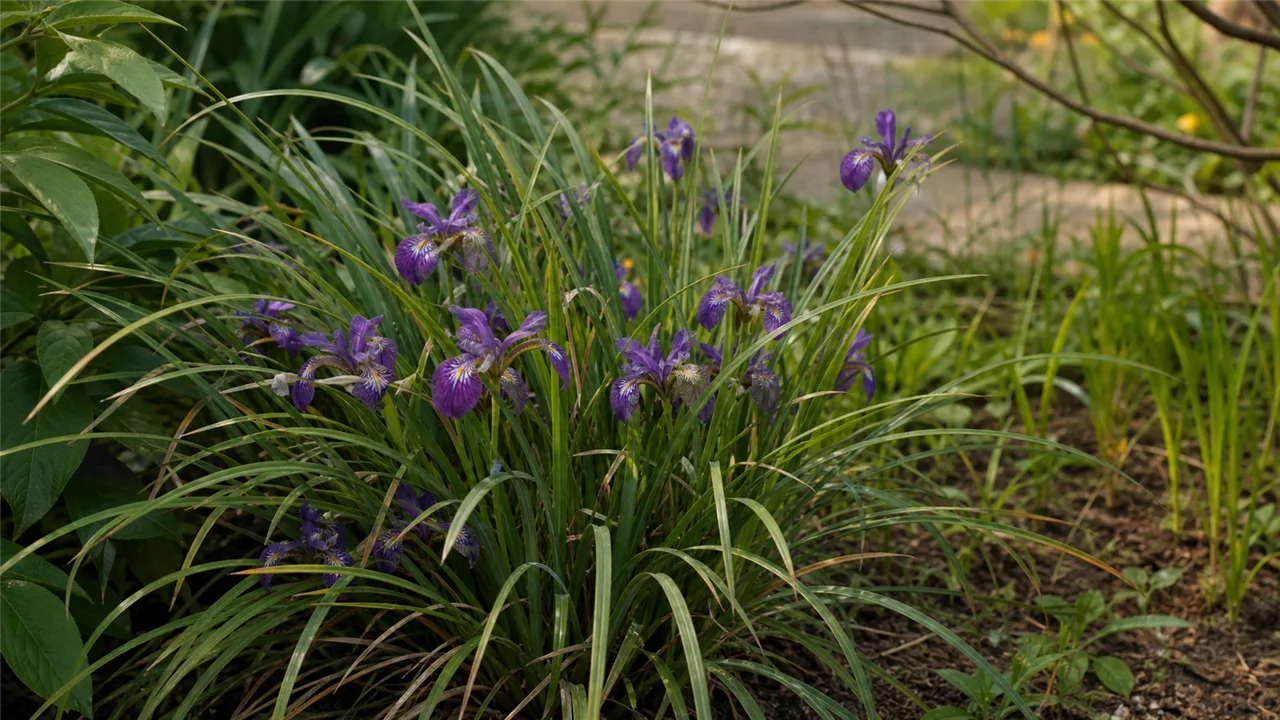
The foliage is one of the plant's most useful features. Each leaf is narrow, sword-shaped and bright green, emerging from the rhizome in a stiff upright fan that resembles the growth of a deciduous grass. The leaves appear in early spring and persist in good condition well into autumn, only collapsing once hard frosts arrive, and they remain greener for longer than the foliage of many bearded irises.
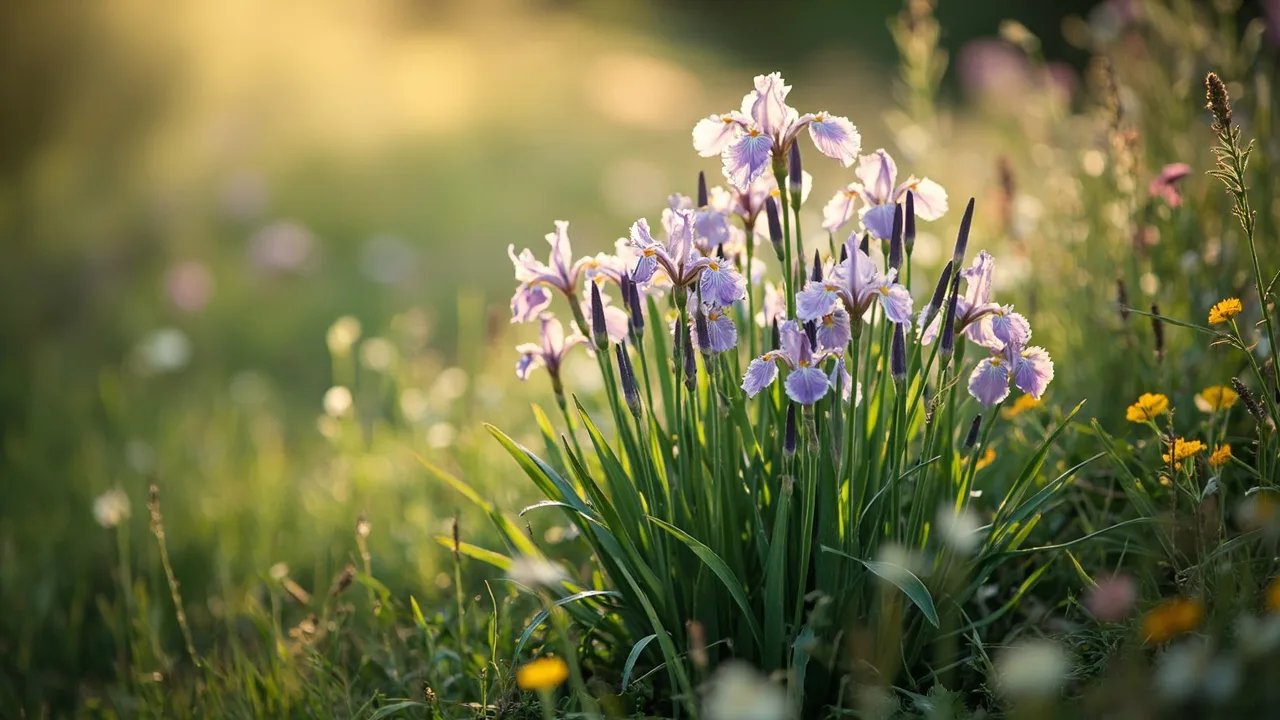
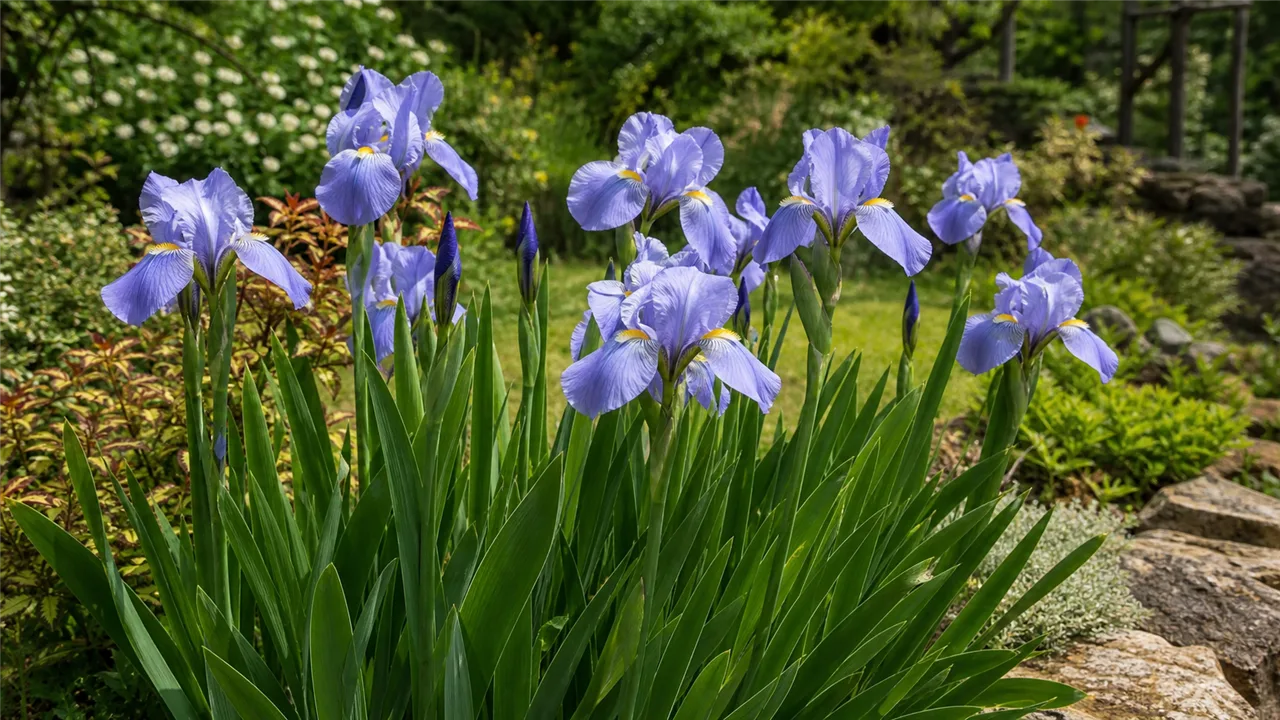
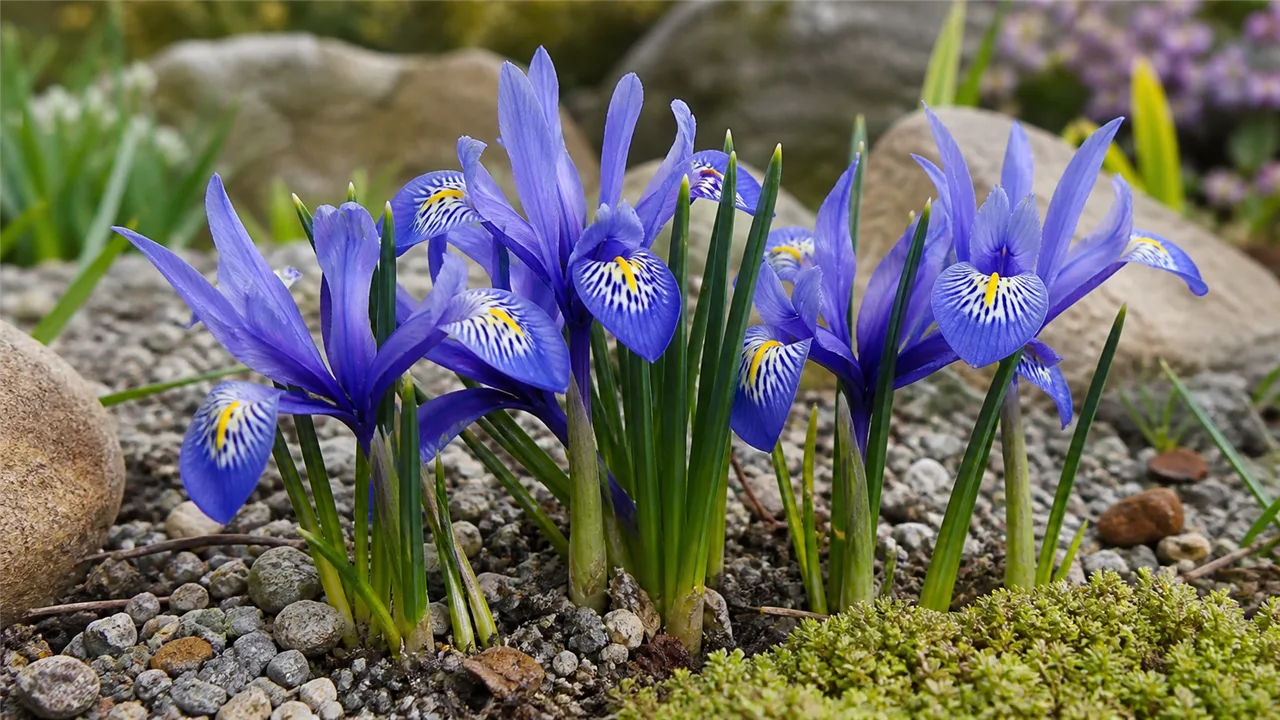
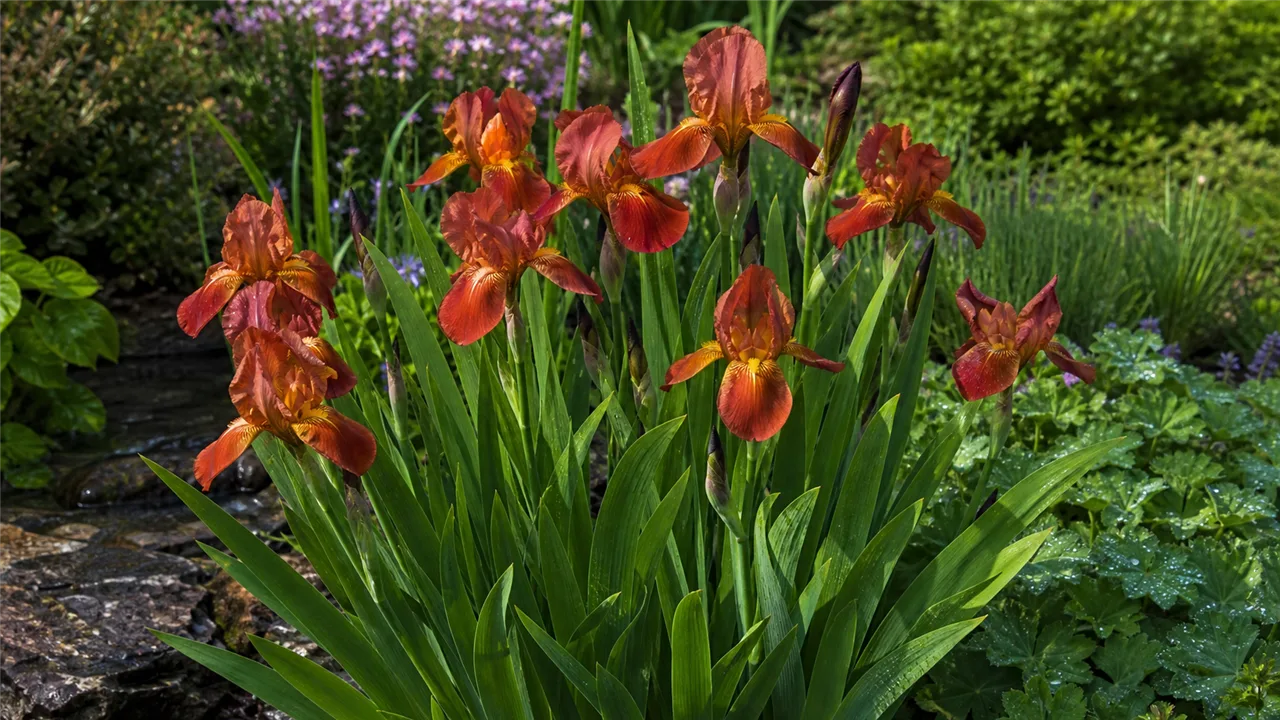
Flowers are borne singly on slender, erect stems that rise just clear of the leaf mass. Each bloom is 8–12 cm across when fully open and has the classic iris structure of three outer petals (falls) and three inner petals (standards). The standards are small and held close to the centre. The falls dominate: large, broadly spreading and coloured a rich golden-yellow suffused with fulvous, an old botanical term for a tawny, brownish-orange tone. The base of each fall is typically veined or flecked with darker brown or bronze, drawing the eye into the throat. In most parts of the UK the display runs from June into July, occasionally starting in late May in a sheltered southern garden and stretching into August in cool, damp conditions.
Growing Conditions
Iris fulvala grows best in full sun or very light dappled shade, ideally with some shelter from strong winds that can snap the flower stems when they are at full height. A south- or west-facing aspect suits it well in most parts of Britain, particularly when sited so that the rhizomes catch lower-angled morning and evening sun. Deep shade reduces flowering and tends to encourage softer, more pest-prone growth.
The most important requirement is moisture. The soil should be moisture-retentive throughout the growing season but still freely draining through the colder months. Iris fulvala resents waterlogged ground in winter and is far more often lost to winter rot than to cold alone. A rich, humus-laden loam in the pH range of 6.0–7.0 suits it well, and the plant will also tolerate slightly heavier ground provided the surface drains freely after heavy rain. It is most at home in bog garden conditions from late spring to early autumn, where its roots can stay damp without ever sitting in standing water for long.
In milder southern or urban gardens the plant will usually grow without winter protection once established. In colder parts of northern England, the Midlands or Scotland a deep, dry mulch applied over the rhizome area in late autumn is wise, using bracken, straw or leaf mould to insulate the crown from penetrating frost and from the freeze-thaw cycles that damage exposed rhizomes. Container-grown specimens should be moved to a sheltered corner and the pot wrapped with bubble insulation or hessian in cold districts.
UK suitability is therefore best summarised as excellent in mild and sheltered southern and urban gardens, good in moist borders and bog gardens across most of central and eastern England when mulched in winter, and unreliable in exposed northern or high-altitude sites unless given meaningful protection.
Planting and Care
Planting is best carried out in autumn or in early spring, when the soil is workable and the rhizomes have time to establish before either summer heat or the worst of winter wet arrives. Set rhizomes just below the surface, roughly 2–3 cm deep, with the roots spread out beneath and the growth point facing upwards. Space plants 30–45 cm apart to allow for the gradual spread of the clump. Unlike bearded irises, which prefer their rhizomes on or near the soil surface, Iris fulvala is happy to be planted slightly below the surrounding soil, where the rhizome benefits from a little extra insulation and moisture.
Watering is the single most important routine task. From spring until early autumn the soil should be kept consistently moist. Drought stress during this period is the most common reason for a complete absence of flowering the following year, even when the plant itself looks healthy. Irrigate deeply during dry spells rather than relying on light, frequent sprinklings, and consider mulching the surrounding soil with composted bark or leaf mould to slow evaporation. In winter, watering should be reduced; in heavy ground the aim is simply to prevent the rhizome from sitting in saturated soil for long periods.
Feeding is straightforward. Apply a balanced general fertiliser, such as blood, fish and bone, in early spring as new growth begins, and top-dress the surrounding soil with a thin layer of well-rotted garden compost or leaf mould each autumn. Avoid high-nitrogen feeds, which encourage soft leaf growth at the expense of flowers and increase susceptibility to rot.
Routine maintenance is light. The leaves collapse after the first hard frost, and the old foliage should be cut back to within a few centimetres of the ground. This is the season's main tidy-up and is best done before the new spring growth emerges so that the old leaves do not shade it. Avoid cutting back in summer, however attractive the temptation: the leaves feed the rhizome and are needed for the following year's display.
Propagation is by division, which doubles as the remedy for overcrowded clumps. Lift established clumps every three to four years, just after flowering in midsummer or in early autumn, tease the rhizomes apart and discard the oldest, woodiest sections from the centre. Replant the vigorous outer portions at the same depth, water in well and treat them as new specimens. Division also offers a chance to inspect the rhizomes for any sign of soft rot, which should be cut away cleanly with a sharp knife before replanting.
Seasonal care in the UK runs as follows. Apply fertiliser and top-dress in March and April. Begin the watering routine in May and watch for emerging flower stems. Enjoy the main display in June and July. Leave the foliage in place in August to feed the rhizome. Cut back the spent leaves and apply mulch in cold districts in October. From November to February, leave the plant undisturbed and ensure that the ground does not waterlog around the rhizomes.
Common Problems
Iris fulvala is generally healthy when its basic requirements of moisture in summer and drainage in winter are met, but a small number of pests and diseases can affect it.
The most serious disease in damp British conditions is rhizome rot, caused by Erwinia carotovora or by various Pythium species. Affected rhizomes turn soft, dark and unpleasant-smelling, often without any above-ground warning until the leaf fans begin to collapse. The remedy is prevention: site the plant in freely draining soil, avoid overwatering in winter, and lift and destroy badly affected plants. Replant only in fresh ground, or replace the soil around the planting hole with a coarse, gritty mix.
Leaf spot, caused by the fungus Mycosphaerella macrospora, produces brown or tan elliptical marks on the leaves in damp summers. It is rarely fatal but can disfigure the clump. Improve air circulation by avoiding overcrowding, remove and destroy affected foliage, and water at ground level rather than overhead to keep the foliage dry.
Snails and slugs target the emerging spring foliage and can chew the tips of flower buds before they open. Damage is most obvious early in the season; control methods include organic pellets, hand-picking on damp evenings and the use of biological nematodes in larger plantings.
Iris borer (Macronoctua onusta) is a caterpillar pest that tunnels into rhizomes, causing them to soften and smell unpleasant, with symptoms similar to those of bacterial rot. The pest is not yet widespread in the UK but is a recognised risk with imported rhizome stock. Affected rhizomes should be destroyed and any remaining clumps inspected carefully before replanting.
Poor or absent flowering is the most common complaint and is almost always traceable to one of three causes: insufficient sun, drought stress through the previous growing season, or overcrowding as the clump matures. Address each in turn by relocating the plant to a brighter position, watering more consistently in dry summers, and lifting, dividing and replanting the clump if it has become congested.
Popular Varieties
Genuine named cultivars of Iris fulvala are uncommon in British nursery listings, and the species is more often sold simply under its botanical name. Where named forms do appear, they tend to be selections from the broader Japanese iris group rather than distinct Iris fulvala cultivars, and availability varies from year to year. Gardeners seeking variety are sometimes better served by exploring the wider han-shōbu group, which includes selections from closely related species and hybrids with overlapping traits, all sharing the preference for damp, humus-rich soil.
Among the limited number of named forms that surface in specialist collections, one is offered as a particularly vigorous golden-yellow selection with larger flowers and stronger bronze veining at the throat. Another has broader falls and a deeper fulvous flush, sometimes listed under informal colour names rather than registered cultivar names. A third is a compact, earlier-flowering form suited to the front of a bog garden border where the type species would be too tall. Because none is widely established in the UK trade, they should be sourced from specialist nurseries and verified on receipt.
Where a wider colour range is wanted, the most reliable path is hybrids between Japanese iris species, which share the same cultural requirements as straight Iris fulvala but add shades from white through pale lavender to deep violet. They will not come true from home-saved seed and may differ in vigour and drought tolerance, so confirm the cultural needs with the supplier at purchase. The most recent edition of the RHS Plant Finder is the best starting point for tracking down a specific clone, since stocks change frequently. Buyers should always confirm that the plant on offer is genuinely Iris fulvala rather than a hybrid raised from the same parent species.
Pests and Diseases
| Problem | Symptoms | Management |
|---|---|---|
| Slugs and snails | Irregular holes chewed in leaves and flowers, often accompanied by slimy trails. | Use physical barriers like copper tape or apply iron phosphate pellets around the base. |
| Thrips | Silvering or bronzing of flower petals and leaves with small black specks of frass. | Apply a systemic insecticide or use blue sticky traps to monitor and reduce populations. |
| Grey mould (Botrytis) | Fuzzy grey fungal growth on dying flowers, stems, or leaves in damp conditions. | Improve air circulation and remove affected plant material immediately to prevent spread. |
| Bacterial soft rot | Rhizomes become mushy, dark, and emit a foul odor, causing the plant to collapse. | Ensure well-drained soil and remove infected rhizomes promptly to save healthy plants. |
| Aphid-borne viruses | Distorted growth, mottled leaves, or stunted flowers with no cure once established. | Control aphids early in the season and remove severely infected plants to prevent spread. |
For step-by-step help, read Controlling Aphids Naturally and Dealing with Slugs and Snails. Or browse the full plant problem solver to diagnose an issue by symptom.
Recommended Products
GardenWizz earns a commission from qualifying purchases made through affiliate links on this page (including links within the article) — as an Amazon Associate, and from Thompson & Morgan via the Awin network. This does not affect the price you pay. See our disclaimer for details.