Fringed Iris
Iris japonica
The Gardening Year
Best months in UK gardens · full planting calendar →
🖨 Printable care card (PDF)At a Glance
| Botanical name | Iris japonica |
|---|---|
| Common name(s) | Fringed Iris |
| Family | Iridaceae |
| Plant type | perennial |
| Height × Spread | 25–80 cm × 10–50 cm |
| Position | Full sun, Partial shade |
| Soil | moist, humus-rich soil |
| Flowering | March–May |
| Toxicity | Harmful if eaten |
| Native range | China and Japan |
Iris japonica, the fringed iris, is a spreading rhizomatous perennial valued for pale, intricately marked spring flowers and glossy foliage. It suits sheltered UK borders where the soil remains moist and rich in organic matter, bringing light colour to woodland edges, courtyard beds and other positions with partial shade.
Overview
Iris japonica belongs to the Iridaceae and is native to China and Japan. Its creeping, shallow rhizomes produce fans of leaves, then extend sideways to make a colony. This habit distinguishes it from many familiar bearded irises, which generally favour more open, sunny and sharply drained ground. It is also unrelated in garden use to the so-called Japanese water iris, Iris ensata, despite the similarity of their common names.
In Britain, fringed iris is most dependable in a sheltered garden with moderate winter conditions. A warm wall, protected courtyard, woodland edge or border beneath an open canopy can provide the combination of shelter and filtered light it needs. In colder, exposed districts, choose the warmest suitable microclimate and avoid frost pockets, waterlogged ground and drying winds. Its hardiness information is displayed separately in the structured plant badge rather than repeated in the article.
The species works well as spring ground cover at the base of shrubs or in a shady border. Ferns, hostas and epimediums make compatible neighbours if they do not overwhelm its shallow rhizomes. Allow room for expansion, or grow it in a broad container where its spread can be controlled.
Appearance
The foliage grows in flattened fans of narrow, sword-shaped leaves. These are glossy to gently lustrous and mid-green, creating a neat architectural texture even when the plant is not flowering. Leaves may persist through winter in mild, protected places, while exposed plants can become semi-evergreen and carry some weather-damaged foliage. Individual clumps remain fairly low, although their rhizomes can spread laterally over time.
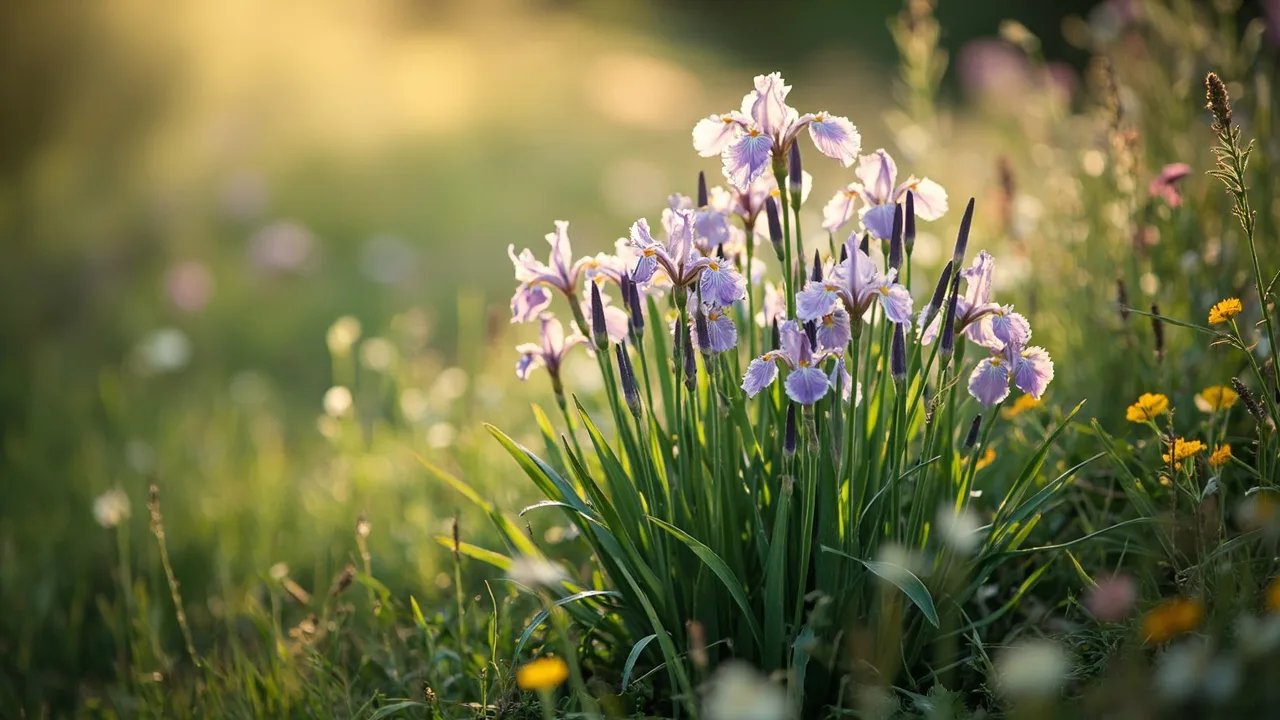
From March to May, branched flower stems commonly reach about 45cm. Each carries several buds, extending the display although individual blooms are short-lived. The flowers, about 4–5cm across, have a flattened, airy form unlike the upright outline of tall bearded irises.
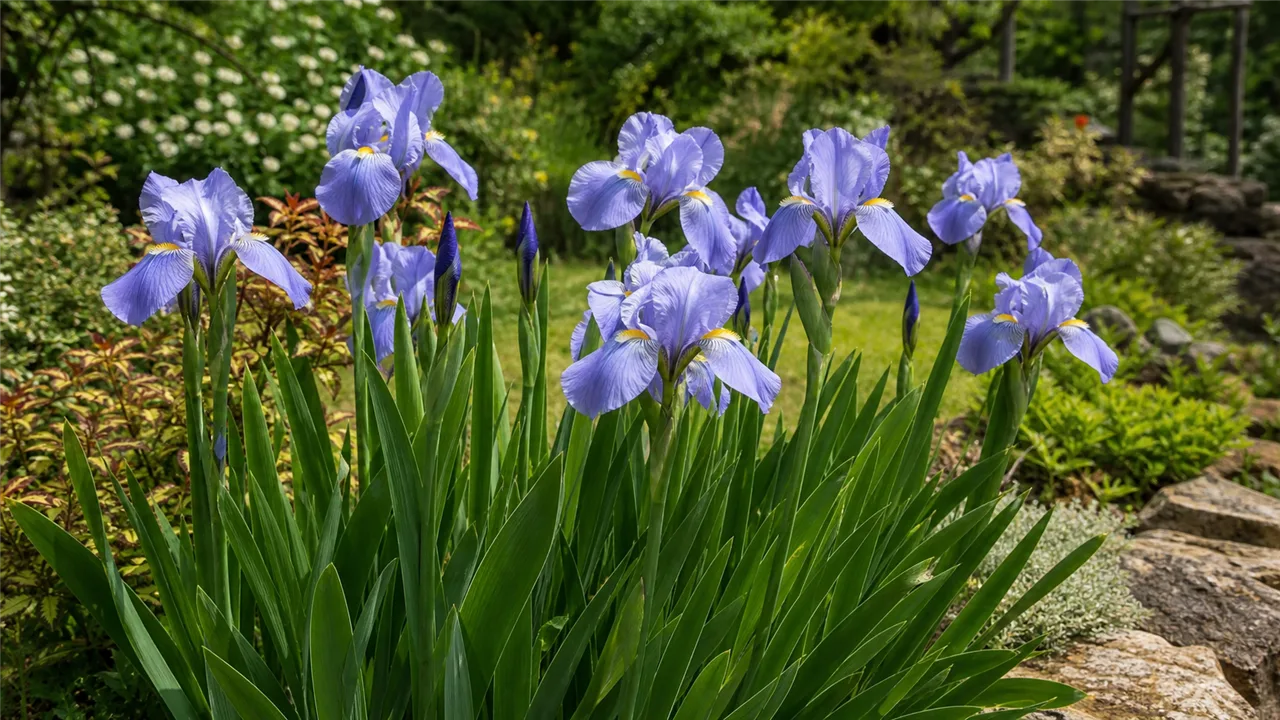
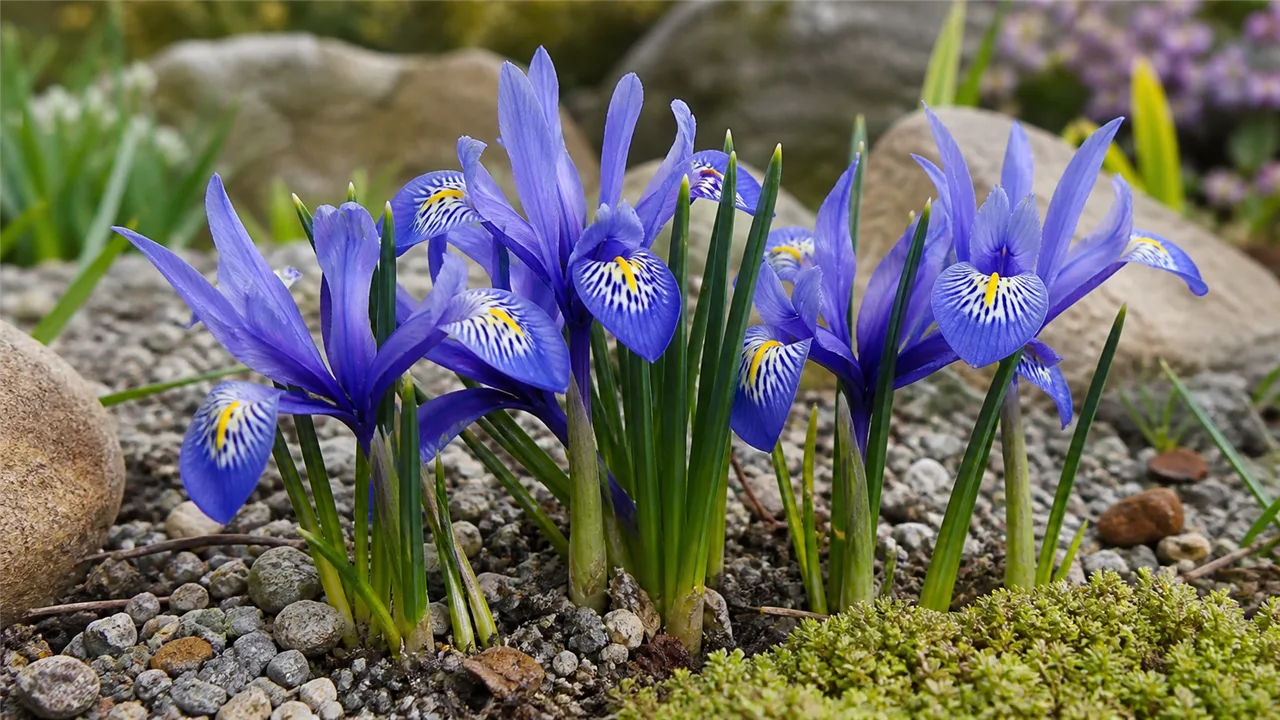
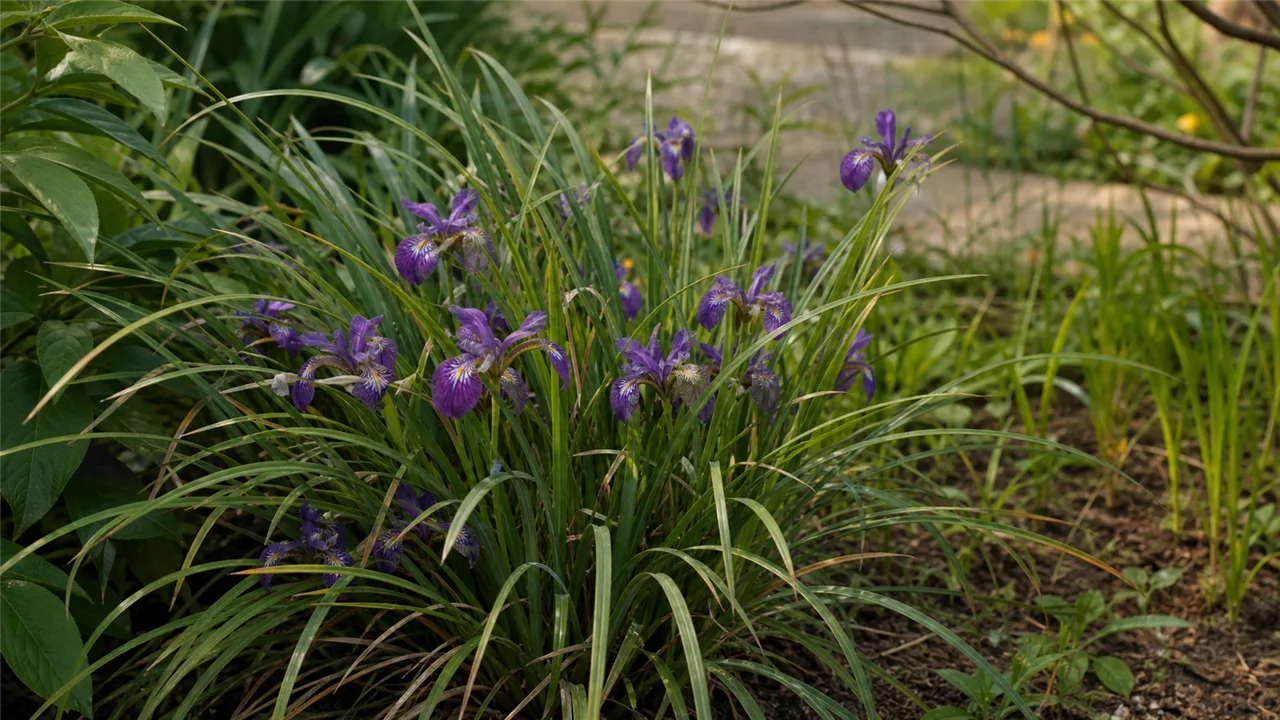
Flower colour ranges from almost white to very pale lavender-blue. The falls have conspicuously fringed or finely toothed edges and are patterned with deeper lilac or purple markings around orange-yellow crests. These small details are best appreciated beside a path or near a seating area. The pale petals also show clearly against dark evergreen shrubs and fresh fern fronds. Removing spent stems after flowering restores the emphasis to the foliage.
Growing Conditions
Partial or dappled shade is usually the safest choice in a UK garden. Gentle morning or late-afternoon sun can encourage sturdy growth and flowering, but intense midday sun may scorch or bleach foliage if the soil becomes dry. Deep, permanent shade is also unsuitable because it can reduce flower production and leave growth soft. A site beneath lightly branched shrubs or on the east or west side of a wall often provides a useful balance.
The ideal soil is fertile, humus-rich and consistently moist without stagnating around the rhizomes. Loam and moisture-retentive clay both suit it when excess water can move away. Improve compacted ground with leaf mould or well-rotted organic matter across a broad area. The species tolerates a broad pH range, so texture, moisture and shelter matter more than altering acidity.
Good air movement helps foliage dry after rain, but avoid strong, desiccating wind. Apply an open organic mulch away from the crowns and upper rhizomes. In containers, use moisture-retentive, free-draining compost and generous drainage holes. Potted plants need closer attention to watering and winter exposure.
Planting and Care
Set divisions or nursery plants at their previous shallow depth, leaving the upper rhizome close to the surface; deep burial encourages poor growth and decay. Space them to allow a colony to form, water thoroughly and maintain even moisture during establishment.
Watering: Water new plants whenever rainfall is insufficient. Established clumps tolerate brief dry periods, but prolonged drought can brown leaf tips and reduce flowering. Water the soil rather than the foliage. Check pots frequently from spring through early autumn and do not leave them standing in water.
Feeding: Each spring, apply leaf mould or well-rotted compost without covering the crowns. On fertile soil this is usually enough. If growth is weak, use a modest balanced fertiliser at the stated rate as growth begins. Avoid nitrogen-rich feeding, which favours leaves over flowers.
Cutback and seasonal care: Routine woody pruning is unnecessary. Cut spent flower stems down after the display, taking care not to damage emerging fans. From September to November, remove only yellow, collapsed or diseased leaves; healthy evergreen foliage should remain. Keep thick autumn mulch off the rhizomes, check that drainage channels and pot holes are clear, and give exposed plants shelter from cold wind. In spring, clear decayed debris before new shoots lengthen.
Propagation: Division is the most reliable way to reproduce a named form and rejuvenate an overcrowded colony. Divide from June to September, after flowering and before cold, wet weather. Lift part of the clump carefully, separate sound outer rhizomes with healthy leaves and roots, and discard soft or badly damaged tissue. Shorten only ragged leaves if necessary, then replant divisions promptly at their original shallow depth and water them in. Division every few years also limits unwanted spread and restores flowering where congestion has developed.
Common Problems
Slugs and snails chew young leaves and emerging flower shoots, leaving ragged edges and holes. Check sheltered hiding places around pots and dense mulch, remove debris that provides cover, and protect vulnerable new growth with an appropriate integrated control. Thrips may mark or distort foliage and flowers; inspect affected tissue closely because their damage can resemble general weathering.
Aphid-borne viruses can cause irregular streaking, mottling, distortion and declining vigour. Remove persistently affected plants because there is no practical cure, manage aphids where possible, and clean tools before cutting healthy clumps. Do not confuse stable cultivar variegation with patchy symptoms on previously green growth.
Bacterial soft rot is associated with damaged rhizomes, deep planting and wet, airless soil. Affected tissue becomes soft, discoloured and may smell unpleasant. Lift the clump, discard diseased portions rather than composting them, and improve drainage before replanting clean material. Grey mould can develop on ageing flowers and foliage during cool, humid conditions; remove infected debris and thin congested growth to improve air circulation.
Poor flowering is usually cultural rather than infectious. Deep shade, drought, excessive feeding and long-undivided colonies can all suppress blooms. Review the amount of light, maintain moisture through dry spells and divide congested plants. Browned foliage after winter exposure does not necessarily mean the rhizomes are dead; remove damaged material in spring and wait for fresh fans before deciding whether to replace the plant.
Popular Varieties
The plain species remains the most widely recognised form, with glossy green leaves and pale lavender-white, purple-marked flowers. Named selections exist, but published descriptions and UK availability are uneven, so labels should be checked carefully when buying.
- Iris japonica 'Variegata' has green leaves striped with white and pale flowers marked blue around an orange crest. The bright foliage makes it especially effective in partial shade, though any wholly green reverted fans should be removed to preserve the variegated display.
- Iris japonica 'Ledger' is an accepted named cultivar also encountered under older names such as 'Ledger's Variety' or 'Ledger's Form'. Detailed distinguishing characters are not consistently stated in authoritative plant records, so plants are best obtained from a specialist nursery with accurate stock provenance.
- Iris japonica 'Aphrodite' is another accepted cultivar name. It is sometimes marked as a variegated selection in plant records, but gardeners should confirm the actual foliage and flower characteristics with the supplier rather than relying on the name alone.
- Iris japonica 'Snowflake' and 'Purple Heart' are additional recorded cultivar names. Reliable comparative descriptions are limited, and neither should be assumed to have particular colouring merely from its name.
Whatever form is chosen, the same essentials apply: shallow planting, humus-rich soil, steady moisture, shelter and enough filtered light to support flowering. Named cultivars should be propagated by division so their characteristics remain true.
Cultivars and Varieties
| Cultivar | Height | Flower | Notes | AGM |
|---|---|---|---|---|
| 'Variegata' | — | — | RHS AGM (H4) | ✓ |
Pests and Diseases
| Problem | Symptoms | Management |
|---|---|---|
| Slugs and snails | Irregular holes chewed in leaves and flowers, often accompanied by silky trails. | Use beer traps, copper tape barriers, or hand-pick at night to reduce populations. |
| Grey mould (Botrytis) | Fuzzy grey fungal growth on dying foliage and flower stems, especially in damp conditions. | Improve air circulation and remove dead or decaying plant material promptly. |
| Bacterial soft rot | Rhizomes become mushy, dark, and emit a foul odour, leading to rapid plant collapse. | Ensure well-drained soil and discard infected rhizomes immediately to prevent spread. |
| Thrips | Small insects causing silvering or bronzing of leaves and distortion of new growth. | Monitor regularly and use blue sticky traps or insecticidal soap for severe infestations. |
| Aphid-borne viruses | Mottled, distorted leaves and reduced flowering caused by aphid feeding. | Control aphids early in the season and remove severely infected plants to prevent spread. |
For step-by-step help, read Controlling Aphids Naturally and Dealing with Slugs and Snails. Or browse the full plant problem solver to diagnose an issue by symptom.
Recommended Products
GardenWizz earns a commission from qualifying purchases made through affiliate links on this page (including links within the article) — as an Amazon Associate, and from Thompson & Morgan via the Awin network. This does not affect the price you pay. See our disclaimer for details.