Crimean Iris
Iris lutescens
The Gardening Year
Best months in UK gardens · full planting calendar →
🖨 Printable care card (PDF)At a Glance
| Botanical name | Iris lutescens |
|---|---|
| Common name(s) | Crimean iris |
| Family | Iridaceae |
| Plant type | perennial (rhizomatous flowering plant) |
| Height × Spread | 30 cm × — |
| Position | Full sun |
| Soil | slightly acid soil |
| Flowering | March–April |
| Toxicity | — |
| Native range | North East Spain, Southern France and Italy |
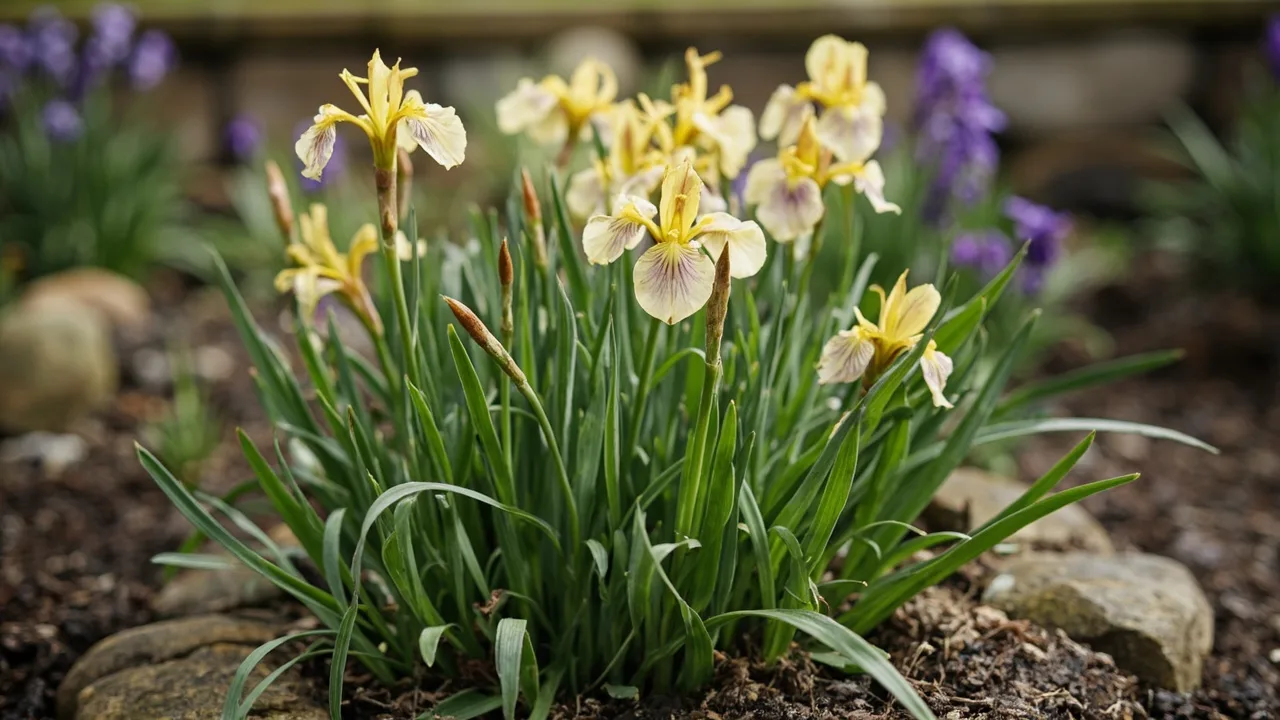
Iris lutescens brings a brief flush of yellow, purple or bicoloured flowers to a sunny, sharply drained spot in spring. This small bearded iris suits gravel gardens, rockeries, raised beds and containers, and is one of the better irises for a dry, lean site in much of the UK.
Overview
Iris lutescens is a compact bearded iris from southern Europe, including parts of France, Italy and the western Balkans. It grows from short, creeping rhizomes and makes low fans of sword-shaped leaves, followed by relatively large flowers on short stems. In British gardens, the main requirement is not warmth but drainage: winter-wet soil is far more dangerous than an exposed, sunny position.
The species is useful where a tall border iris would look out of scale. Plant it at the front of a sunny border, between paving stones, on a bank or in a trough with plenty of grit. It flowers early enough to start the iris season, then settles into a restrained clump for the rest of the year.
Appearance
The narrow, blue-green leaves form flattened fans close to the ground, generally remaining shorter than those of the familiar tall bearded irises. Flower stems rise only a little above the foliage, but each bloom has the recognisable bearded-iris structure: three upright standards, three spreading or hanging falls, and a fuzzy beard along the falls.
Flowers vary across the species and its cultivated selections. Yellow is important to the common name, but flowers may also be violet, lilac, cream, or combinations of these colours, sometimes with darker veining on the falls. The flowers are showy in proportion to the plant and may attract early-season insects when the weather is mild.
A mature clump gradually spreads sideways rather than becoming tall. The rhizomes sit near the soil surface and can be seen at the centre of an established plant. That habit is helpful when dividing, but it also makes deep planting a common cause of poor flowering and rot.
Growing Conditions
Full sun gives the best flowering and keeps the leaves dry after rain. A position receiving at least six hours of direct light is preferable; a little light shade is acceptable in the hottest part of the day, but heavy shade produces weak foliage and few flowers. A south-facing gravel bed, raised border or sunny container is often ideal in the UK.
Drainage is the decisive factor. Choose gritty, stony or sandy soil that does not remain saturated from autumn to spring. On heavy clay, improve the planting area substantially with coarse grit and organic matter, or grow the iris in a raised bed where excess water can escape. Do not place the rhizome in a hollow that collects rainwater.
The plant tolerates lean soil and does not need a rich, heavily manured border. A neutral to alkaline soil suits it well, although a healthy plant can grow in other soils if the drainage is right. Test the site before adding lime rather than changing pH without evidence. Avoid fresh manure, which encourages soft growth and can contribute to rhizome problems.
Air movement helps the foliage dry and reduces the chance of fungal spotting. Leave enough room around the clump for sunlight to reach the leaves, and avoid crowding it beneath vigorous perennials. It is suitable for exposed gardens provided the rhizome is firmly anchored and the site is not waterlogged.
Planting and Care
Plant container-grown specimens in spring or from late summer into early autumn, while the soil is workable and drainage can be checked. Set the rhizome horizontally with its upper surface at, or just above, soil level. Spread the roots beneath it, firm the gritty soil around them, and water once to settle the planting. Allow roughly 20–30 cm between plants, depending on the desired speed of cover.
Water new plants during their first growing season whenever the soil becomes dry several centimetres below the surface. Once established, Iris lutescens usually needs little supplementary water in the UK. Water deeply during an unusually prolonged dry spell in spring, but avoid frequent light watering and never keep a container sitting in a saucer of rainwater.
Feed sparingly. In early spring, apply a thin layer of a balanced, low-nitrogen fertiliser around the plant, keeping it away from the rhizome, or use a small amount of well-rotted compost as a surface mulch. Excess nitrogen produces leaves at the expense of flowers and creates soft growth. Do not bury the rhizome under a thick organic mulch.
After flowering, remove spent flowers before they form seed if you want the plant to put energy into its rhizome. Cut the flower stem down to its base, but leave healthy leaves in place. Allow the foliage to grow through summer so it can replenish the rhizome; remove only yellow or diseased leaves. In autumn, clear fallen debris from around the crown and check that the rhizome has not been covered by soil or shifting gravel.
Divide established clumps in late summer, usually from August into September, after flowering has finished and the foliage has begun to mature. Lift the plant carefully with a fork, separate healthy rhizome sections with a clean knife, and retain a fan of leaves with each piece. Trim damaged or rotten portions, replant immediately at shallow depth, and water them in. Division is the most reliable propagation method for retaining a named selection. Seed can be sown, but seedlings may differ from the parent and take longer to flower.
Container-grown plants need particular attention to winter wet. Use a pot with generous drainage holes and a gritty mix, raise it on pot feet, and position it where rain can run away freely. Repot or divide when the clump becomes congested, preferably in late summer. In cold or persistently wet districts, moving a container under a rain shelter can prevent rhizome loss without keeping the plant indoors.
Common Problems
Rhizome rot is the most serious problem. The plant may wilt, turn yellow or collapse despite damp soil, while the rhizome becomes soft and foul-smelling. Saturated soil, deep planting or a thick mulch is usually responsible. Lift the plant, cut back to firm tissue with a clean knife, discard badly affected sections and replant only in improved, sharply drained soil.
Poor flowering often follows insufficient sunlight, excessive feeding, overcrowding or a buried rhizome. Check the site before adding fertiliser: move the plant if nearby shrubs or perennials now cast shade, expose the top of the rhizome, and divide a congested clump in late summer. Young divisions may need time to establish before flowering strongly.
Iris leaf spot can produce brown or grey marks on the leaves, particularly during damp periods. Remove affected leaves as they yellow, clear debris in autumn and improve air circulation by thinning crowded growth. Water at soil level rather than wetting the foliage. Severe or recurring infection is a reason to move the plant to a more open, drier position.
Slugs and snails may rasp young leaves and flower stems in spring, especially in mild, wet weather. Inspect plants after dusk, remove hiding places and use non-chemical barriers or biological controls where appropriate. Keeping the area open and free of dense, wet mulch makes the plant less attractive to these pests.
Vine weevil larvae can damage container-grown roots and rhizomes, with wilting or unexplained decline appearing after a period of apparently good growth. Check the compost when repotting for creamy, legless grubs and treat affected containers with an approved biological control at the season recommended on its label. Good drainage alone will not prevent an infestation, so inspect mature pots during division.
Popular Varieties
The species is variable in flower colour, but reliable information about named selections is not always consistent between nurseries. Buy from a specialist iris nursery or established UK supplier, check that the plant is correctly labelled, and treat a seller’s description as a description rather than evidence of an official rating.
- Iris lutescens ‘Lutescens’ is a commonly encountered yellow-flowered form associated with the species name and is valued for its compact habit.
- Iris lutescens ‘Variegata’ is a name used for a variegated-leaved selection in specialist plant listings; confirm availability and identity before purchase.
- Iris lutescens ‘Aurea’ is a name encountered for a yellow-flowered selection, but catalogue descriptions can differ, so buy from a reputable nursery with a clear plant guarantee.
Named material may be scarce compared with more widely sold dwarf bearded hybrids. Where a catalogue does not provide a clear provenance, the species itself is often the safer choice: its spring flowers, low habit and tolerance of dry, gritty ground are the qualities that make it valuable in a UK garden.
Pests and Diseases
| Problem | Symptoms | Management |
|---|---|---|
| Soft rot | Bulbs become mushy, discoloured and emit a foul odour, often following waterlogging. | Ensure excellent drainage in sandy soil and avoid overwatering; remove infected bulbs immediately. |
| Slugs and snails | Irregular holes chewed into leaves and flowers, with slimy trails visible on foliage. | Use slug pellets, beer traps, or hand-pick at night to protect emerging shoots. |
| Vine weevil | Notched edges on leaves above ground and root damage causing wilting below ground. | Apply nematode treatments in autumn or use systemic insecticides for potted plants. |
| Powdery mildew | White, powdery fungal growth appears on leaves and stems, potentially causing distortion. | Improve air circulation and apply a fungicide if severe; avoid wetting foliage when watering. |
| Iris leaf spot | Small, yellowish spots with purple borders develop on leaves, eventually turning brown. | Remove affected leaves and improve air circulation; apply fungicide if infection persists. |
For step-by-step help, read Dealing with Slugs and Snails and Treating Powdery Mildew. Or browse the full plant problem solver to diagnose an issue by symptom.
Recommended Products
GardenWizz earns a commission from qualifying purchases made through affiliate links on this page (including links within the article) — as an Amazon Associate, and from Thompson & Morgan via the Awin network. This does not affect the price you pay. See our disclaimer for details.