Bristle-Pointed Iris
Iris setosa
The Gardening Year
Best months in UK gardens · full planting calendar →
🖨 Printable care card (PDF)At a Glance
| Botanical name | Iris setosa |
|---|---|
| Common name(s) | Bristle-pointed Iris |
| Family | Iridaceae |
| Plant type | perennial |
| Height × Spread | 10–90 cm × 10–50 cm |
| Position | Full sun, Partial shade |
| Soil | well-drained, neutral to slightly acid loam |
| Flowering | June–July |
| Toxicity | Harmful if eaten |
| Native range | Alaska, Maine, Canada (including British Columbia, Newfoundland, Quebec and Yukon), Russia (including Siberia), China, Korea, and Japan |
Overview
Bristle-pointed iris, Iris setosa, is a hardy rhizomatous herbaceous perennial from the Iridaceae family, widely distributed across the northern latitudes of North America and Asia. Its native range stretches from Alaska and northern Canada through to Siberia, the Russian Far East, Korea, northern China and Japan, with outlying populations in Maine and the Maritime provinces. Across this enormous range the species tolerates a remarkable spread of conditions — from cold maritime cliffs and sub-arctic meadows to bog margins and damp woodland edges — which makes it one of the more accommodating beardless irises for cooler, wetter UK gardens.
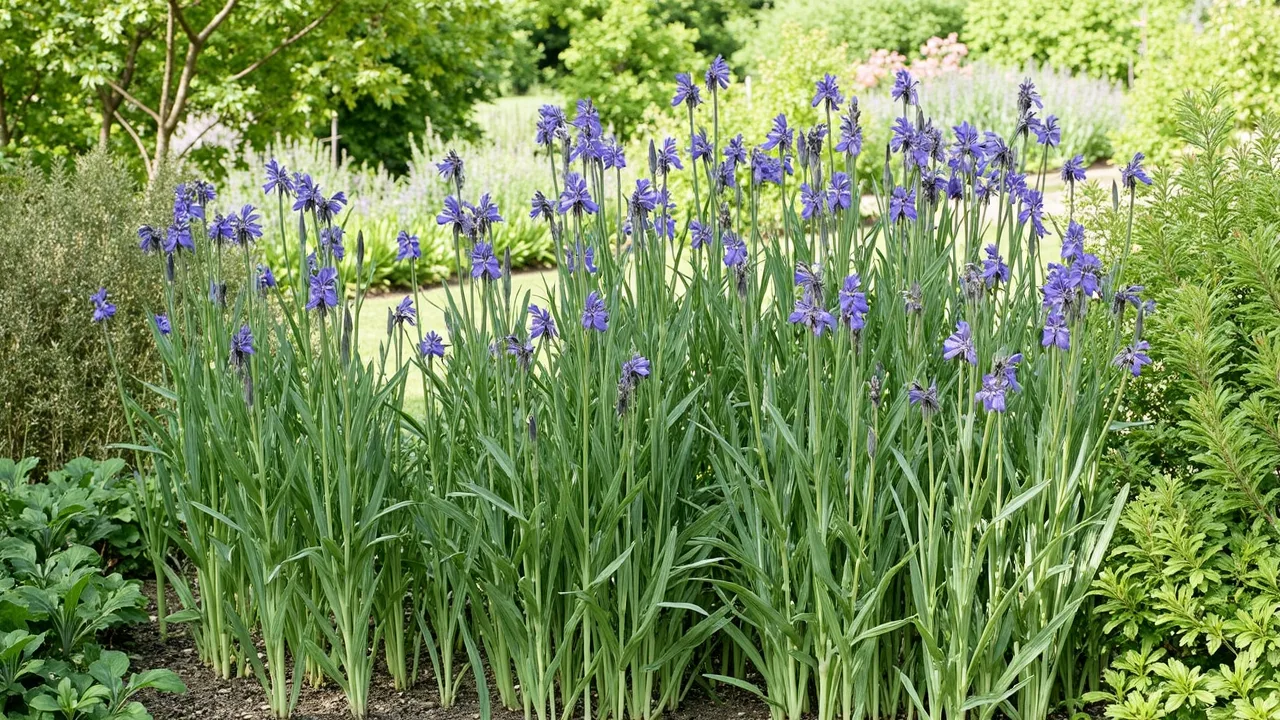
In cultivation it forms a vigorous, slowly spreading clump of upright, sword-shaped foliage and produces, in early summer, distinctly shaped flowers whose three broad outer segments (the falls) carry a small bristle at the tip. This bristle is the defining feature of the species and the source of its common name. Gardeners value it for damp borders, pond margins, bog gardens and naturalised plantings in moist meadow grass. It holds the Royal Horticultural Society's Award of Garden Merit (AGM), confirming its garden worthiness in British conditions, and the species carries a hardiness rating that places it firmly in the most cold-tolerant category for UK purposes (rendered by the site badge rather than quoted here).
A short note on names: the same plant is also sold or written about as beachhead iris, wild flag iris or Alaska iris. Bristle-pointed iris is the most common name in UK horticultural literature and is used throughout this article.
Quick-Care Table
Appearance
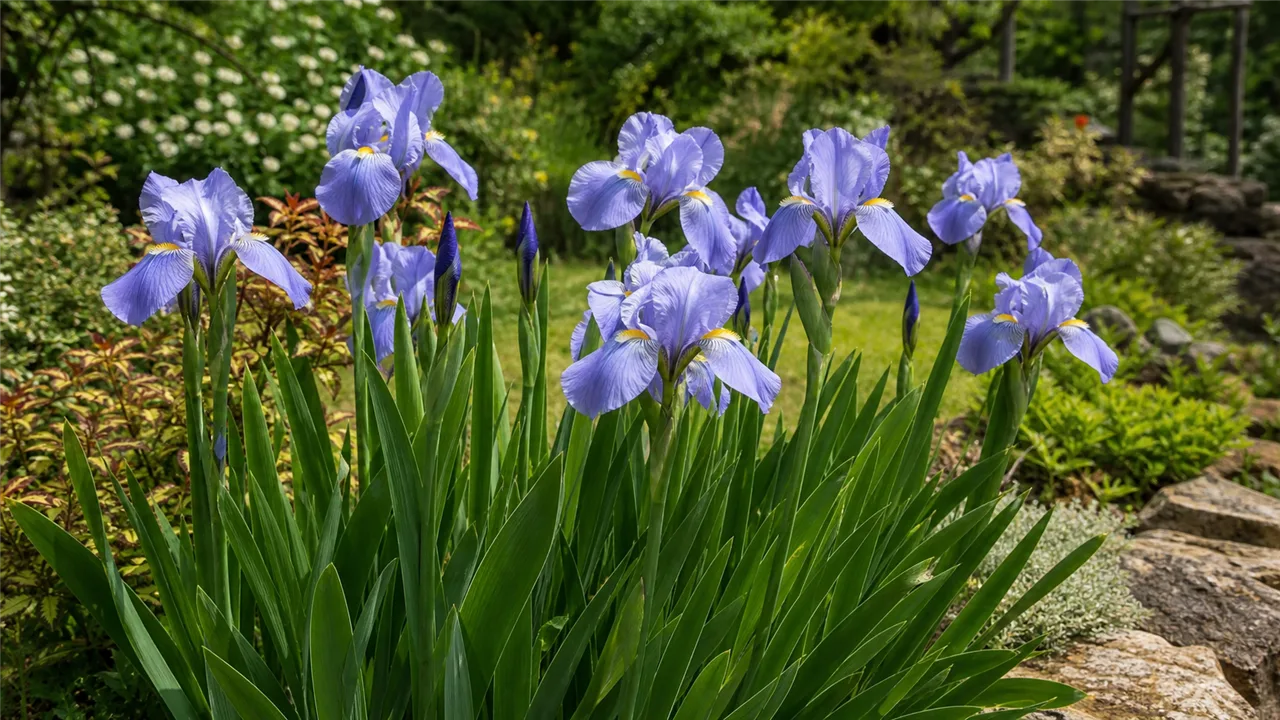
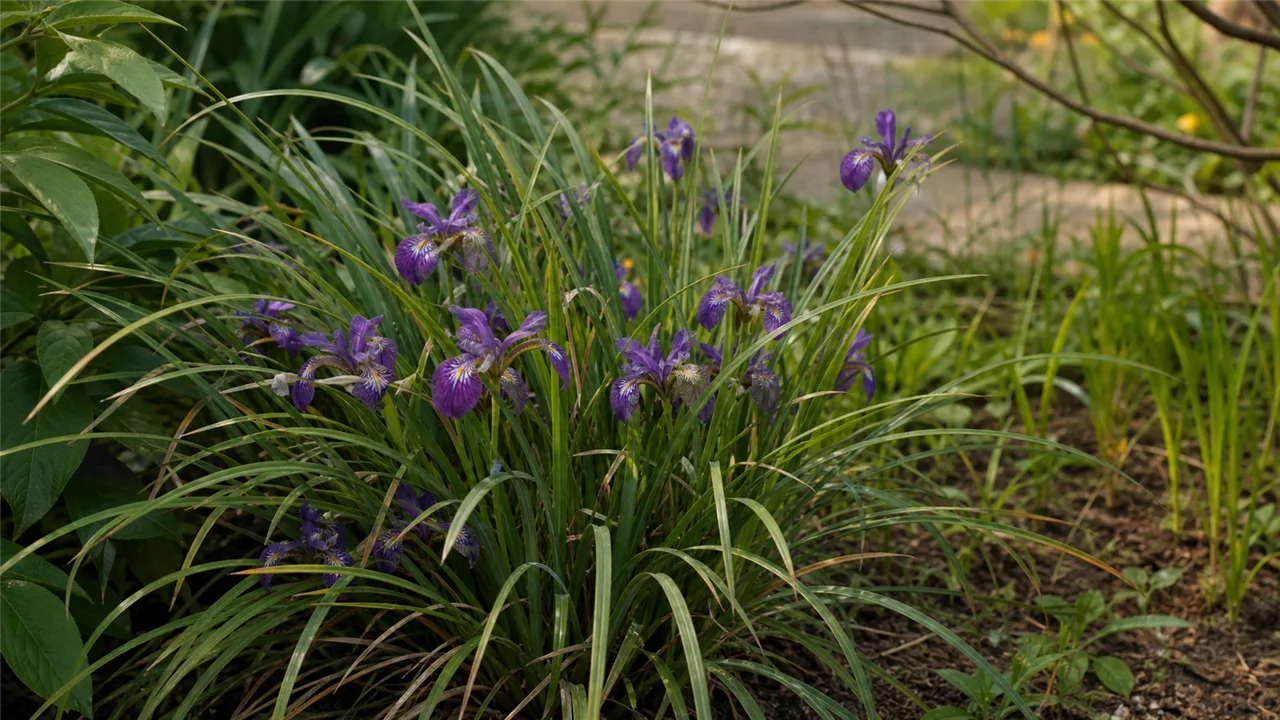
Iris setosa grows from a stout, creeping rhizome that sits at or just below the soil surface and throws up fans of bright green, slightly glaucous, sword-shaped leaves. The leaves are narrower than those of many border bearded irises — typically 1 – 2.5 cm wide — and they remain attractive through most of the growing season, holding their colour and upright habit well into autumn before dying back with the first hard frosts. A well-settled clump will reach 60 – 90 cm in flower, with the foliage itself around 30 – 60 cm tall when not in bloom.
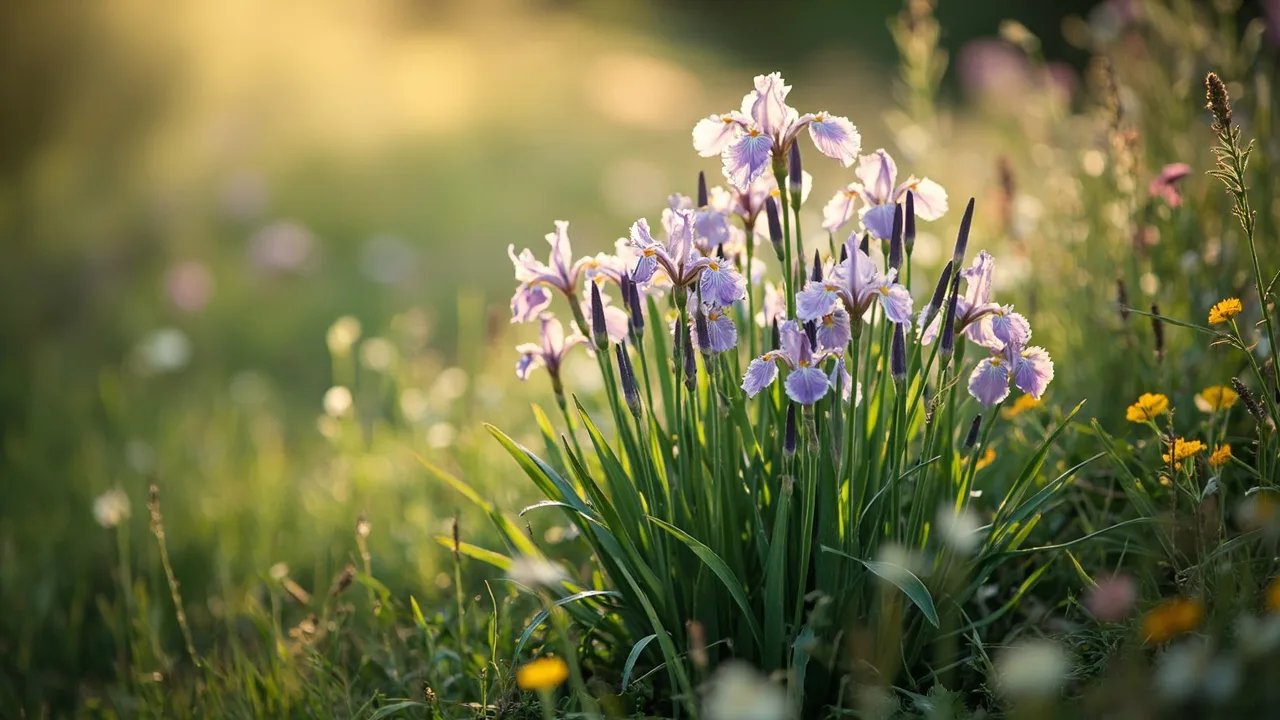
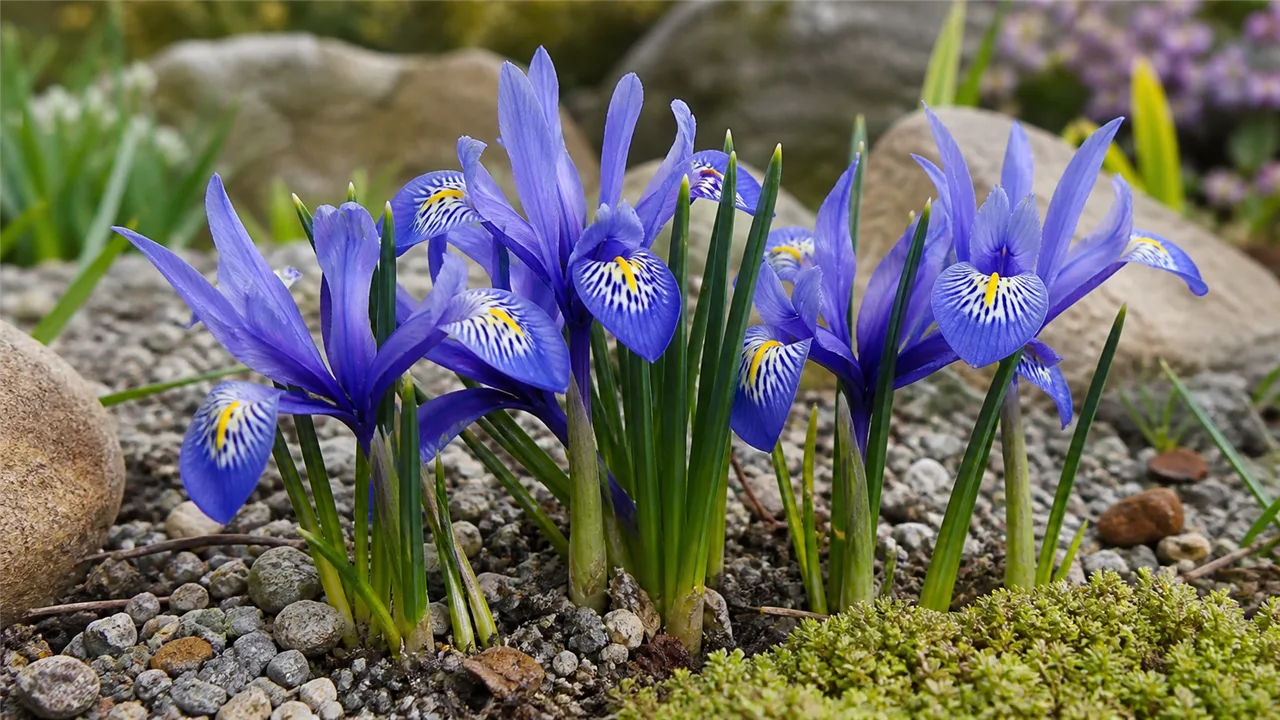
Flowering stems are stiff and usually branched, carrying two to four blooms apiece. The structure of the flower is the easiest way to confirm identification. Unlike bearded irises, in which all six segments are showy and elaborate, Iris setosa shows the opposite extreme: the three inner segments (the standards) are greatly reduced — often little more than small, pointed, upright bristles — while the three outer segments (the falls) are broad, rounded and conspicuously displayed. Each fall carries the bristly point at its tip that gives the plant its name; the falls are typically a rich violet-blue to purple, occasionally with white veining or a pale signal patch at the base. There is no true beard on the falls, placing the species firmly among the beardless irises.
The fruit is a stout, three-angled seed capsule that ripens in late summer. Each capsule contains numerous flattened, brown seeds. Clumps expand steadily from the rhizome but are not invasive: expect an annual increase of a few centimetres at the margins rather than rapid colonisation.
Growing Conditions
Iris setosa performs best in full sun, where the flowers open fully and the stems stay short and stocky. It tolerates light dappled shade, particularly in the afternoon, but in heavy shade flowering becomes sparse and the foliage leans. A position that catches morning sun is ideal.
The species has a strong preference for moist but well-drained soil during the growing season and will tolerate reliably damp conditions through spring and early summer — the period when it is in active growth and flowering. It does well at the margins of ornamental ponds, in bog gardens, along the edges of streams, and in moisture-retentive borders. Soil pH is not critical: the species tolerates acid to neutral conditions (roughly pH 5.0 – 7.0) and is indifferent to most UK garden soils provided drainage does not stagnate in winter. Sandy loam enriched with organic matter is ideal; heavy clay is workable if improved with coarse grit and organic matter, but permanently waterlogged ground should be avoided as winter wet will rot the rhizomes.
In the UK the plant is fully hardy across all regions, including upland Scotland and exposed northern and western sites. Cold winters are not a concern; summer drought and desiccating winds are the more likely limits on performance, which is why a moist, sheltered position is preferable in drier parts of the south and east. The species is also notably resistant to spring frost damage to its emerging foliage, unlike some bearded irises.
Planting and Care
When to plant. Bare rhizomes establish best when planted in early autumn (September – October), when the soil is still warm and reliably moist, or in early spring (March – April) before the active growth surge. Container-grown plants from nurseries can be put in at any time of year provided the ground is workable and you can water them in through the first summer.
Planting depth. Set the rhizome so its top sits at or just below the soil surface, with the leaf bases and any new white root growth clearly above ground. Planting too deeply is the single most common cause of failure: buried rhizomes rot before they establish. Space clumps roughly 30 – 45 cm apart to give each plant room to develop without immediate overcrowding.
Watering. Keep newly planted rhizomes consistently moist through their first growing season. Established plants tolerate short dry spells but perform noticeably better with reliable moisture in spring and early summer, when flowering is set up. In drier parts of the UK, a deep soak once a week in May and June will pay off in flower quality.
Feeding. A light dressing of a balanced organic fertiliser such as blood, fish and bone, applied in early spring as new growth emerges, is sufficient. Avoid high-nitrogen feeds and fresh manure, both of which promote lush leaf growth at the expense of flowers and can encourage soft, rot-prone rhizomes. A mulch of well-rotted leaf mould or garden compost in spring helps both moisture retention and slow nutrient release.
Cut back. Cut all foliage to ground level in late autumn (October – November), once the leaves have yellowed and died back naturally. Removing old foliage tidies the plant, prevents fungal spores from overwintering on dead tissue, and lets light and air reach the rhizomes. This is the only routine cutting the plant needs.
Deadheading. Snip off spent flower stems at the base once the last bloom has faded, unless you want to collect seed. Deadheading keeps the clump tidy and prevents the plant from wasting energy on seed it does not need.
Propagation. Lift and divide congested clumps in early autumn (September – October) every three to four years. Use two forks back-to-back to prise the clump apart, or wash the rhizomes clean and cut them with a sharp knife, retaining only healthy, firm sections with at least one fan of leaves and a good root system. Discard old, woody centres. Replant the divisions at the same depth as the parent and water in well. Seed propagation is straightforward but slow: sow ripe seed in autumn in a cold frame, expect germination the following spring, and allow a further two to three years before flowering-size plants are produced.
Seasonal care. Apart from the autumn cut back and the spring tidy of any winter-damaged leaves, the plant is largely self-sufficient. In dry summers, prioritise watering over feeding. In wet winters, check that surface drainage is adequate — particularly on heavier soils — and consider lifting and re-siting if a clump has been lost to rot.
Common Problems
Iris setosa is generally healthy in UK conditions. The most commonly encountered issues are:
- Slugs and snails. The most frequent nuisance. Damage appears as ragged holes in the leaves and slimy trails in spring. In damp conditions, where this species thrives, the problem is worst. Use biological control (Nematodes applied in spring), beer traps, or pet-safe slug pellets; thin out dense surrounding vegetation to reduce cover.
- Aphids. Greenfly and blackfly cluster on young flower stems and emerging leaves in late spring. They rarely cause lasting damage but can spread virus between plants. Spray with insecticidal soap or encourage natural predators (ladybirds, hoverflies, lacewings) by avoiding broad-spectrum insecticides.
- Bacterial soft rot (Erwinia carotovora and related species). The most damaging disease of rhizomatous irises. Rhizomes turn soft, slimy and foul-smelling, and the foliage collapses. It is almost always linked to waterlogged soil, deep planting, or fresh manure in contact with the rhizome. Lift and destroy affected plants, cut back to clean tissue if caught early, and replant only in better-drained soil.
- Leaf spot (Heteropatella umbilicata and similar fungi). Small brown or tan lesions on the leaves, particularly in damp, crowded plantings. Improve air circulation by dividing congested clumps, remove and destroy affected leaves, and clear the autumn cut back promptly so spores do not overwinter.
- Iris borer (Macronoctua onusta). A North American caterpillar that tunnels into leaves and rhizomes. Rarely reported in the UK but possible on imported stock. Signs include notched leaves, wet-looking staining, and collapsed fans. Remove and destroy affected foliage; cut out and destroy infected rhizomes.
- Viral diseases (aphid-borne). Mottling, streaking and reduced vigour. There is no cure; lift and destroy affected plants and control aphid vectors.
- Overcrowding. Not a pest so much as a consequence of neglect: a clump left undivided for many years produces fewer, smaller flowers. The remedy is division in early autumn — covered above.
Toxicity: all parts of Iris setosa are mildly toxic if eaten and the rhizome can cause skin irritation in sensitive individuals. Wear gloves when handling rhizomes and wash hands afterwards. Keep the plant out of reach of pets and children who might chew the foliage.
Popular Varieties
Named garden cultivars of Iris setosa are uncommon in UK commerce — most plants sold under this name are the species raised from seed or by division. Specialist alpine and water-garden nurseries are the most reliable sources. Where cultivar names appear, they tend to reflect selections for compact habit or unusual flower colour rather than a wide range of forms. The species itself has three well-documented botanical varieties, which is where most of the variation is to be found:
- Iris setosa var. setosa — the typical form, found across most of the range including Alaska, Canada, the Russian Far East and Japan. Tallest in growth, reaching the upper end of the 60 – 90 cm range, with broad violet-blue falls.
- Iris setosa var. arctica — a compact northern form from arctic and sub-arctic populations in Alaska, northern Canada and eastern Siberia. Generally 20 – 40 cm tall, with proportionally large flowers for its size. A good choice for smaller gardens, the front of a damp border, or a trough in a moisture-retentive mix.
- Iris setosa var. canadensis — the eastern North American form, found from Newfoundland and Quebec through Maine and the Maritime provinces. Intermediate in size and reliably hardy across the UK; often the form supplied as "the species" in older nursery listings.
For gardeners wanting something reliably distinct from typical seed-raised stock, the most practical approach is to buy var. arctica for compact form, or to seek named seed strains such as those offered by specialist societies (the Species Iris Group of North America, for instance, lists controlled seed exchanges that occasionally surface superior forms). It is worth noting that the AGM is awarded to the species as a whole rather than to any single cultivar.
Pests and Diseases
| Problem | Symptoms | Management |
|---|---|---|
| Slugs and snails | Irregular holes chewed in leaves and flowers, often accompanied by silky trails. | Use physical barriers like copper tape or crushed eggshells, and hand-pick at night. |
| Iris leaf spot | Small, circular brown spots with yellow halos appear on the foliage. | Remove affected leaves and clear all debris in autumn to reduce overwintering spores. |
| Bacterial soft rot | Rhizomes become mushy, discoloured, and emit a foul odour. | Discard infected plants immediately and ensure soil is well-drained to prevent recurrence. |
| Iris rust | Orange or brown powdery pustules develop on the undersides of leaves. | Pick off lightly infected leaves and improve air circulation around plants. |
For step-by-step help, read Dealing with Slugs and Snails. Or browse the full plant problem solver to diagnose an issue by symptom.
Recommended Products
GardenWizz earns a commission from qualifying purchases made through affiliate links on this page (including links within the article) — as an Amazon Associate, and from Thompson & Morgan via the Awin network. This does not affect the price you pay. See our disclaimer for details.