Gold Lace Cactus
Mammillaria elongata
The Gardening Year
Best months in UK gardens · full planting calendar →
🖨 Printable care card (PDF)At a Glance
| Botanical name | Mammillaria elongata |
|---|---|
| Common name(s) | Gold Lace Cactus |
| Family | Cactaceae |
| Plant type | succulent |
| Height × Spread | 6–20 cm × 15–50 cm |
| Position | Full sun |
| Soil | cactus compost |
| Flowering | March–August |
| Toxicity | — |
| Native range | central Mexico |
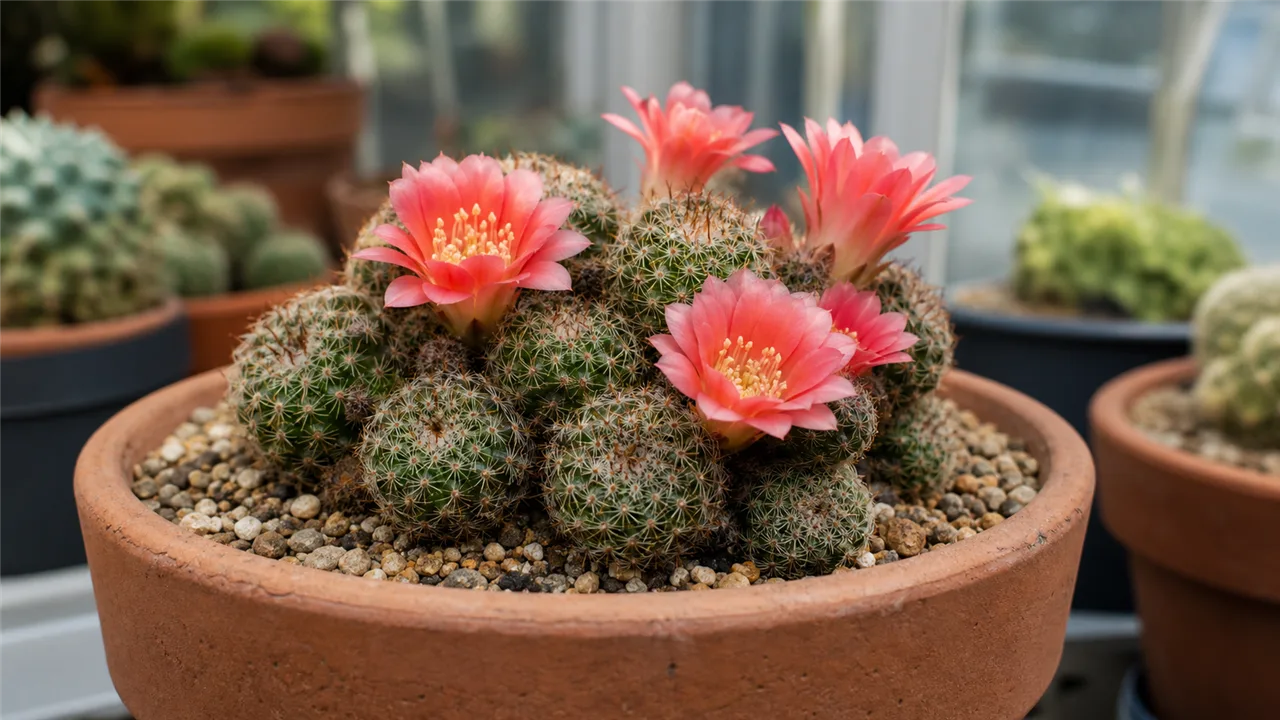
Mammillaria elongata is a small, clustering columnar cactus from central Mexico, one of the most widely grown members of the genus and a reliable first cactus for a UK indoor or under-glass collection. Its slender, upright-to-creeping stems form tight, spiny colonies that gradually colonise the surface of a pot; once mature, the stems carry a delicate ring of lemon-yellow flowers in late spring. Treated as a cool, dry, frost-free subject, it flowers annually, offsets freely, and asks for little attention beyond sharp drainage and restraint with the watering can.
Overview
Mammillaria elongata belongs to the family Cactaceae and is one of around 200 accepted species in Mammillaria. It is native to the semi-arid uplands of central Mexico, where it grows on rocky, free-draining slopes in the filter of light shade among taller scrub. In habitat it forms low, slowly expanding clusters of finger-sized stems; in cultivation it behaves in much the same way, eventually producing a dense dome of branching columns that can spread well beyond the original rosette.
The English common names "milk cactus" and "gold lace cactus" describe two features the species is picked out for: the milky overall effect of the dense pale spines, and the soft golden ring of flowers in a good year.
In the UK the plant is firmly a glasshouse or indoor subject. It must be kept under cover through a British winter, on a sunny windowsill, in a frost-free conservatory, or on a greenhouse bench. Given bright light, lean watering and a cool, dry winter rest, it is straightforward to grow and flowers reliably once a cluster reaches flowering size — typically within two to three years from offsets, three to five from seed. It tolerates the occasional cold night provided the compost is bone-dry and is widely available from UK mail-order succulent specialists.
Appearance
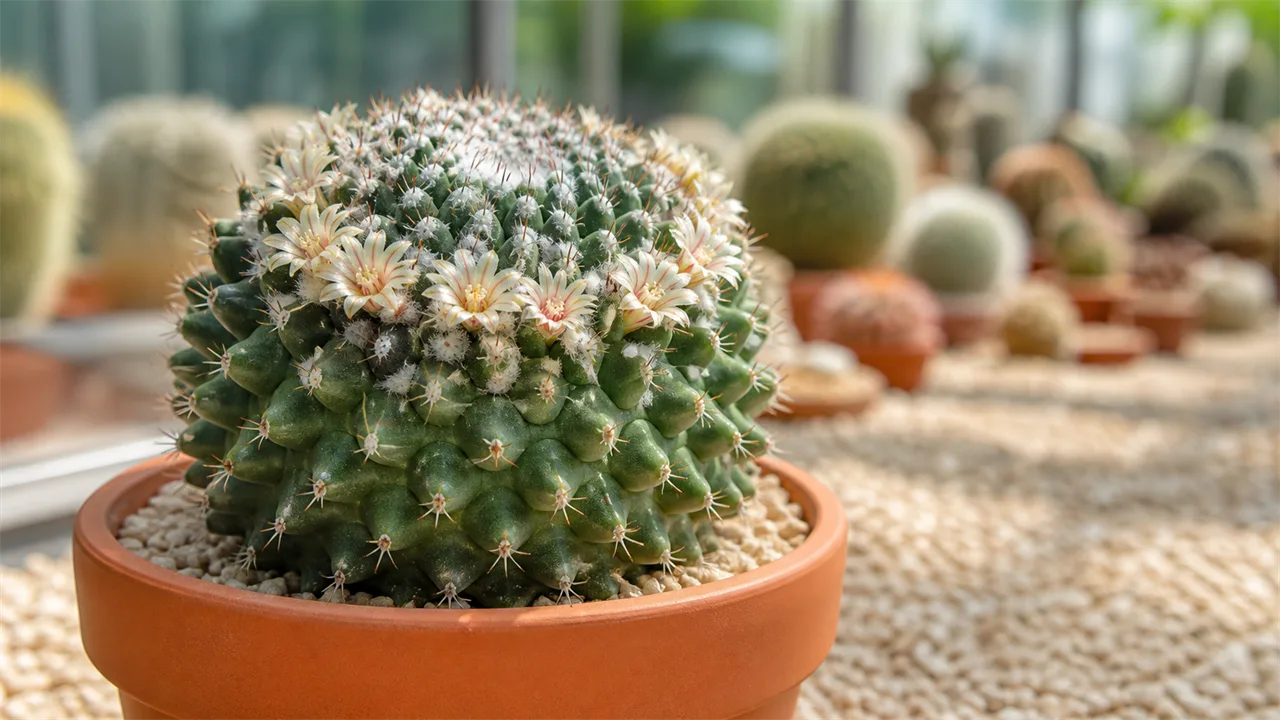
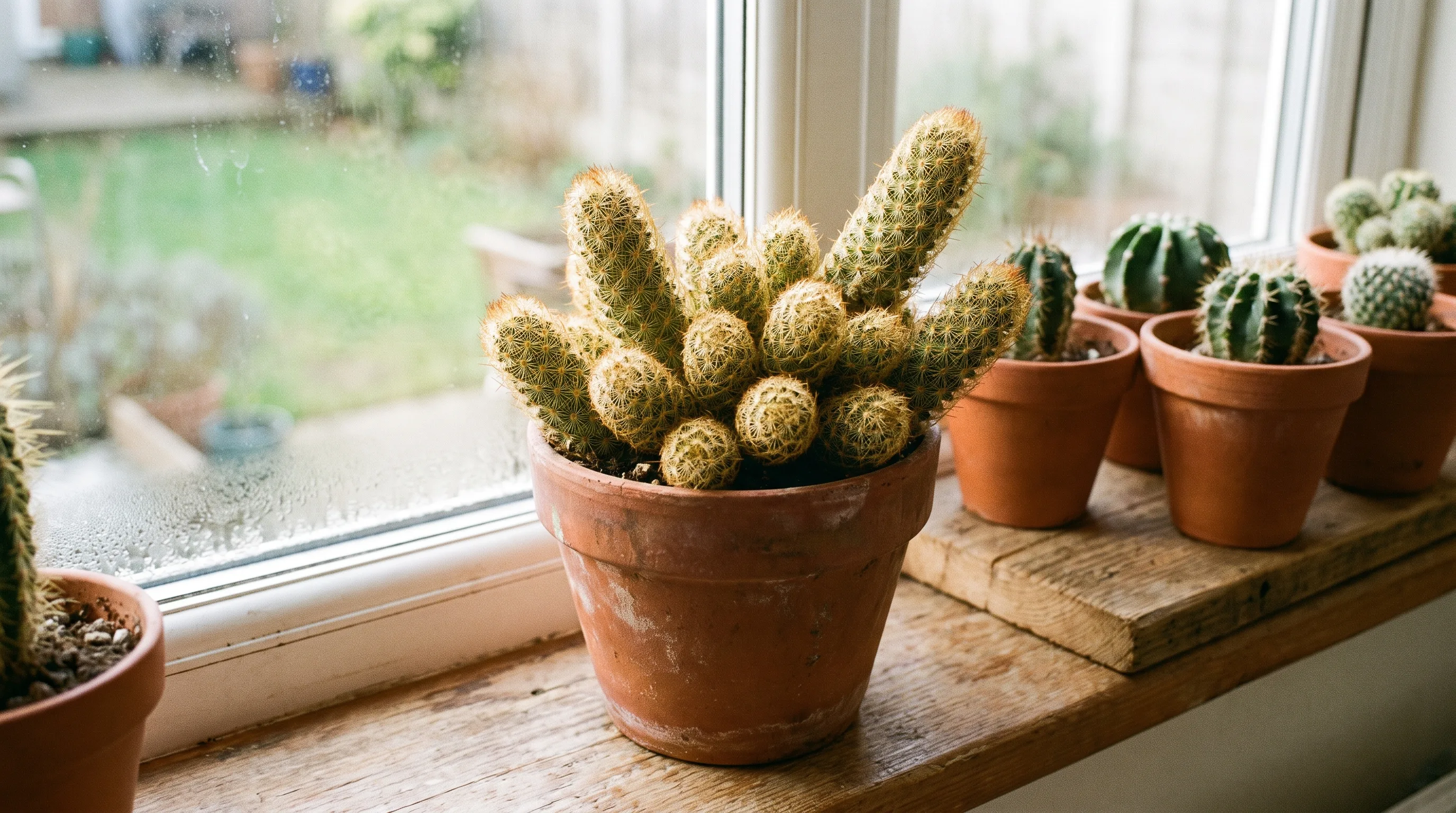
Mammillaria elongata develops slender, columnar stems that are upright when young and become creeping or semi-prostrate as the cluster matures. Individual stems typically reach 6–20 cm tall and 1.5–3 cm across, with the overall colony spreading 15–50 cm or more across depending on pot size and age. The stems are pale to mid-green, often tinted pinkish at the tips in strong light, and segment and branch from the base to form gradually expanding clumps.
The surface of each stem is covered in spirally arranged, cylindrical tubercles — the nipple-like projections that give Mammillaria its name. Each tubercle carries a small tuft of white wool in its axil and is tipped by an areole from which the spines emerge. The combination of woolly axils and pale spines gives the stems a soft, almost felted appearance that is the source of the "milk cactus" common name.
The spination is the main ornamental feature. Each areole typically produces 15 or more fine radial spines that are white to pale yellow, pressed against the surface of the stem and partly hiding the green beneath. The radials are usually paired with one to three short central spines that are stiffer and slightly darker, sometimes tipped reddish-brown when grown in bright light. Mature, well-grown colonies read at a distance as small pale mounds rather than as individual stems, especially in winter when the spines are at their brightest.
Flowers appear in late spring and early summer, after a cool, dry winter rest. They are small — roughly 10–15 mm across — broadly funnel-shaped, and a clean lemon-yellow that contrasts strongly with the pale spines. They open in a ring around the stem tips and last for several days each, with successive flushes over a few weeks. After pollination, small, club-shaped, bright-red berries develop along the upper part of the stem and persist for some weeks; they are ornamental rather than edible, and the plant is grown for their colour rather than for any yield.
The root system is fibrous and shallow, with relatively limited downward extension. This has practical implications for both pot choice and watering rhythm, and is covered in the planting section below.
Growing Conditions
Light. Mammillaria elongata wants the brightest position available without scorching. A south- or west-facing windowsill, a sunny conservatory, or a ventilated greenhouse bench is ideal in the UK. Outdoors it will take full sun in summer once hardened off, but a position in light, dappled shade during the hottest part of the day produces the densest, palest spination. Plants grown in poor light stretch, lose their compact form, and flower poorly or not at all.
Temperature. During the growing season, normal indoor temperatures of 18–27 °C are fine; the plant benefits from being moved outdoors from late May to early September once nights stay consistently above about 10 °C. In winter it must be kept cool and dry, ideally around 5–10 °C, and never exposed to frost. It will tolerate brief cooler nights in winter provided the compost is bone-dry, but sustained cold combined with any moisture is the route to rot.
Soil and drainage. Use a very free-draining cactus compost — roughly two parts loam-based compost to one part sharp sand and one part perlite, pumice, or crushed grit. Drainage is the single most important factor in keeping the plant alive through a British winter; the substrate should dry through to the base of the pot within a day of watering.
Water. Apply the soak-and-dry method. Water thoroughly so the entire rootball is wetted, then let the compost dry almost completely before watering again. During active growth in spring and summer, water roughly every ten to fourteen days depending on pot size, temperature, and air movement. In autumn reduce sharply; in winter withhold water almost entirely — a light monthly splash over the compost, never over the stem, is the most a rested plant should receive.
Feeding. A low-nitrogen, potassium-rich cactus fertiliser at half strength once a month during the growing season is sufficient. Do not feed during the winter rest, and do not overfeed at any point; Mammillaria elongata grows naturally on lean substrates, and rich, nitrogen-heavy feeding produces soft, elongated growth at the expense of spination and flowering.
Planting and Care
Pot choice. Use a shallow terracotta pot that comfortably accommodates the spread of the cluster. Terracotta is preferable to plastic because it allows the compost to dry more evenly and helps prevent the damp conditions at the base of the stem that lead to rot. Always use a pot with generous drainage holes, and consider placing a thin layer of coarse grit in the base before adding compost.
Repotting. Repot every two to three years in spring, just as new growth begins. Knock the plant out, tease away old compost, inspect the root collar and individual stem bases for mealybugs or any sign of rot, and replant into fresh gritty mix. Hold off watering for about a week so any disturbed roots can callus over before being wetted.
Summer placement. From late May to early September the plant can be moved outdoors to a sheltered south- or west-facing spot. A cold frame with the lid open, a sunny patio corner, or a bench against a warm wall all work well. Bring it back under glass before nights turn cold in autumn, and check the cluster carefully for slugs, snails, and woodlice before moving indoors.
Winter rest. The cool, dry winter rest is not optional — it both prevents winter rot and triggers reliable flowering the following spring. Keep the plant in a bright, cool, frost-free place and withhold water almost entirely. A heated greenhouse set to a minimum of about 5 °C, a bright unheated porch in milder parts of the UK, or the cool end of a conservatory is appropriate.
Propagation. Most easily raised from offsets, which the species produces freely. Detach individual stems or small clusters at the base with a clean, sharp knife, dust the cut with coarse sand or sulphur, and allow the wound to callus in a dry, shaded place for several days. Pot the cuttings into barely moist, very gritty compost and withhold water until roots have formed — typically three to six weeks. Seed is also viable and produces typical, even-sized plants, though offsets are quicker for the home grower.
Routine checks. At every watering and at each repotting, inspect the woolly stem crevices and the root collar for mealybugs, which favour the spaces between tubercles. Brush loose debris from the crown so that water does not sit against the stem, and remove any fallen flowers or fruits that might trap moisture against the tissue.
Common Problems
Overwatering and basal rot. The single most common cause of loss in UK collections. Symptoms include a soft, discoloured patch at the base of one or more stems, and stems that suddenly collapse. Prevention is far easier than cure: keep the compost gritty, water only when the pot is light and the compost dry to the base, and keep the plant dry through winter.
Mealybugs. Small, white, cottony insects that hide between tubercles and at the roots. They are the most persistent indoor pest on this species. Dab individual insects with a cotton bud dipped in methylated spirit, or apply a systemic insecticide labelled for use on cacti. At repotting, wash the roots to dislodge root mealybugs and replant into fresh compost.
Frost and cold damage. Brief exposure to freezing temperatures blackens the outer tissue of stems and may kill the growing point. In a cool UK winter this is most likely to occur during transit between greenhouse and house, or on an exposed windowsill behind a single layer of glass on a hard frost night. Protect promptly and reduce moisture in advance of any forecast cold snap.
Overcrowding and weak growth. An over-mature colony where individual stems have shaded each other for several seasons will produce thin, pale, weakly spined growth and flower poorly. Lift and divide the cluster every two to three years, keeping only healthy, well-furnished stems and discarding woody or etiolated material.
Fungal spotting in damp, still conditions. Small brown or black marks on shaded stem surfaces, especially in autumn when nights cool but the compost is still damp. Improve airflow, reduce watering sharply, and remove affected stems to prevent the rot from spreading.
Popular Varieties
Mammillaria elongata is one of the more variable Mammillaria species in cultivation, with several spine-colour and habit forms in trade. Named cultivar registration within the genus is patchy, so British growers tend to choose plants by descriptive form name rather than by formally registered cultivar name.
Plants sold simply as Mammillaria elongata show the classic pale, white-radialled, semi-creeping form and are the most widely available — the right choice for a first cluster. Longer-spined forms, marketed under phrases such as "long-spined" or "golden-spined", refer to intraspecific variation in spine length and warmth rather than registered cultivar names, and are worth seeking out for a brighter, more golden overall effect in winter light. Densely white forms, sometimes listed as M. elongata var. echinaria in older reference works, hold their white spination more reliably through poor summers and group well with the type form.
For collectors wishing to broaden a display, companion species that share this plant's cultivation regime include Mammillaria bombycina, Mammillaria bocasana, Mammillaria hahniana and Mammillaria plumosa. They offer an instructive comparison of spine form, body habit, and flower colour while sharing the same lean, dry, cool-winter regime that suits M. elongata so well.
Pests and Diseases
| Problem | Symptoms | Management |
|---|---|---|
| Mealybugs | White, cottony fluff appears in stem crevices and at the base of spines. | Isolate the plant and dab infested areas with a cotton bud soaked in methylated spirits. |
| Root rot | Stems become soft, shrivelled, and discoloured brown or black. | Ensure well-draining compost and allow soil to dry completely between waterings; repot if necessary. |
| Scale insects | Small, immobile, brown or white bumps adhere firmly to the stem surface. | Remove manually with a soft brush or treat with an appropriate horticultural oil spray. |
| Sunburn | Stems develop bleached, yellow, or scorched patches on the side facing direct light. | Acclimate plants gradually to brighter conditions and avoid intense midday sun in summer. |
Or browse the full plant problem solver to diagnose an issue by symptom.
Recommended Products
GardenWizz earns a commission from qualifying purchases made through affiliate links on this page (including links within the article) — as an Amazon Associate, and from Thompson & Morgan via the Awin network. This does not affect the price you pay. See our disclaimer for details.