Bear's Ear
Primula auricula
The Gardening Year
Best months in UK gardens · full planting calendar →
🖨 Printable care card (PDF)At a Glance
| Botanical name | Primula auricula |
|---|---|
| Common name(s) | Bear's Ear |
| Family | Primulaceae |
| Plant type | perennial (evergreen perennial) |
| Height × Spread | 20–50 cm × 25–50 cm |
| Position | Full sun, Partial shade |
| Soil | well-drained, humus-rich, neutral to alkaline (limey) |
| Flowering | March–May |
| Toxicity | Skin allergen. Wear gloves and other protective equipment when handling |
| Native range | central Europe, including the western Alps, Jura Mountains, the Vosges, the Black Forest and the Tatra Mountains |
Overview
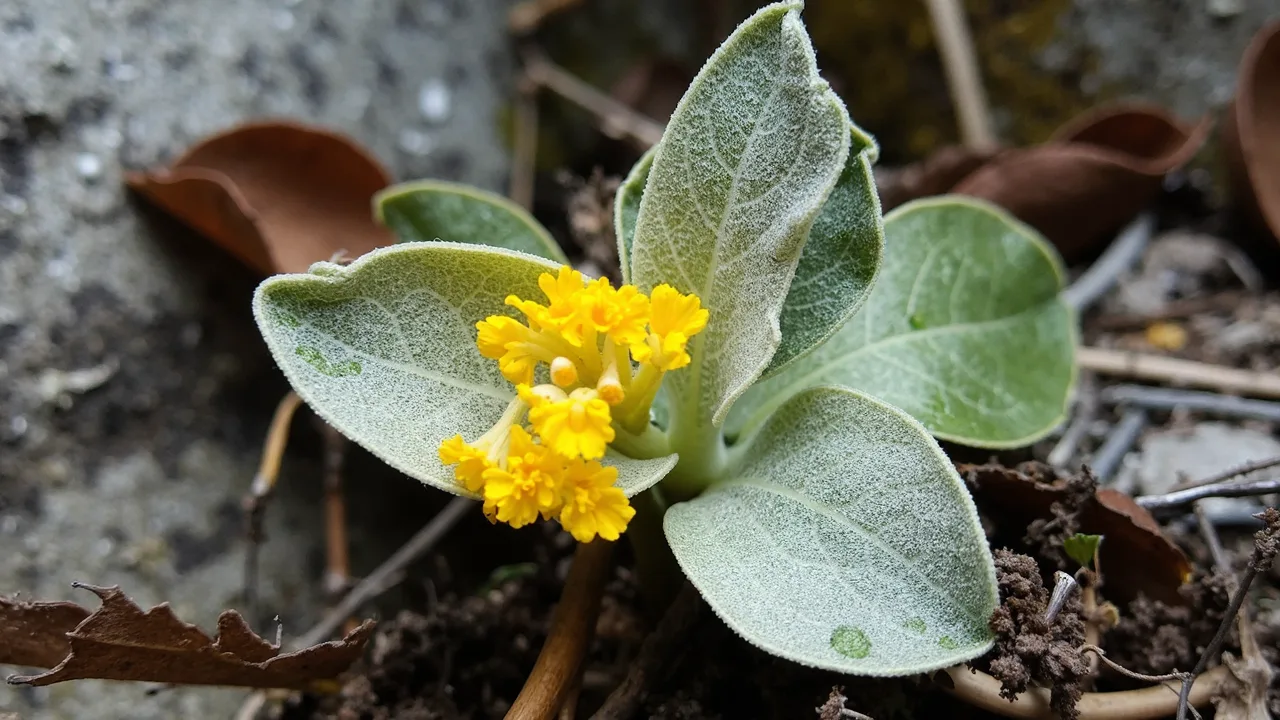
Primula auricula, commonly called auricula or mountain cowslip, is a small evergreen perennial from the family Primulaceae. The wild species grows on limestone rocks and scree in the Alps, the Apennines, the Carpathians and the Jura, where it forms tight rosettes of fleshy, farina-coated leaves and produces yellow, sweetly-scented flowers in late spring. It is one of the parents of a long line of show and garden hybrids prized in British horticulture for over three centuries, and it remains a mainstay of auricula theatres, cold alpine houses and south-facing rockeries across the UK. Its compact habit, unusual colour range and tolerance of dry, lean conditions make it one of the most distinctive spring-flowering perennials a UK gardener can grow.
The plant is well suited to most of the United Kingdom, performing particularly well in cool, dry regions such as the North, Scotland, Northern Ireland and upland Wales. It dislikes the combination of wet winters and warm, humid summers, so gardeners in the wetter West Country should take particular care with drainage and summer watering. Auriculas have a hardiness rating, displayed on GardenWizz as a structured badge; readers should consult that badge for the precise value, but in practice established clumps tolerate severe UK frosts provided the crown is kept dry in winter.
Appearance
Auriculas form a basal rosette of thick, obovate to spatula-shaped leaves, typically 5–12 cm long, which are pale to mid-green and distinctly mealy. The meal (botanically termed farina) is a powdery white or pale yellow coating that rubs off if handled, and it is one of the plant's most attractive — and most vulnerable — features. Some forms, called "green-edged" or "grey-edged" in the show auricula world, have leaves that are almost entirely free of farina; others, the "alpine" and "show" classes, carry dense, even farina that is highly prized.
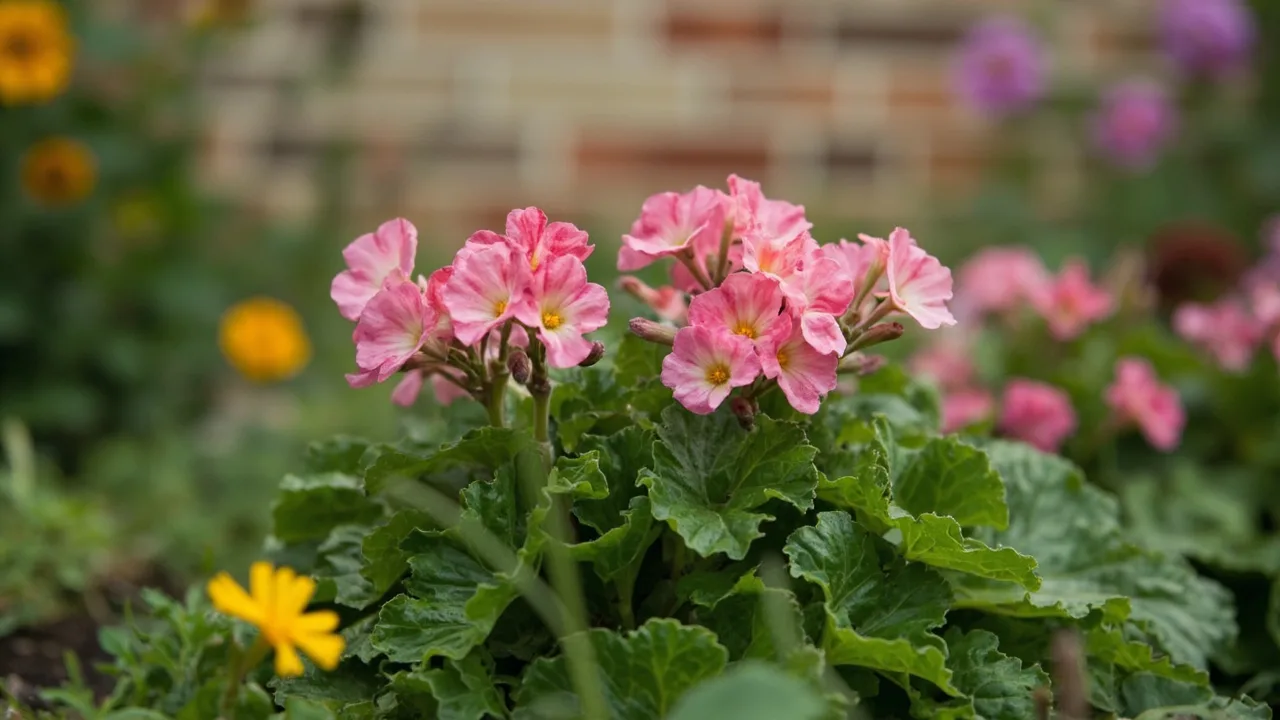
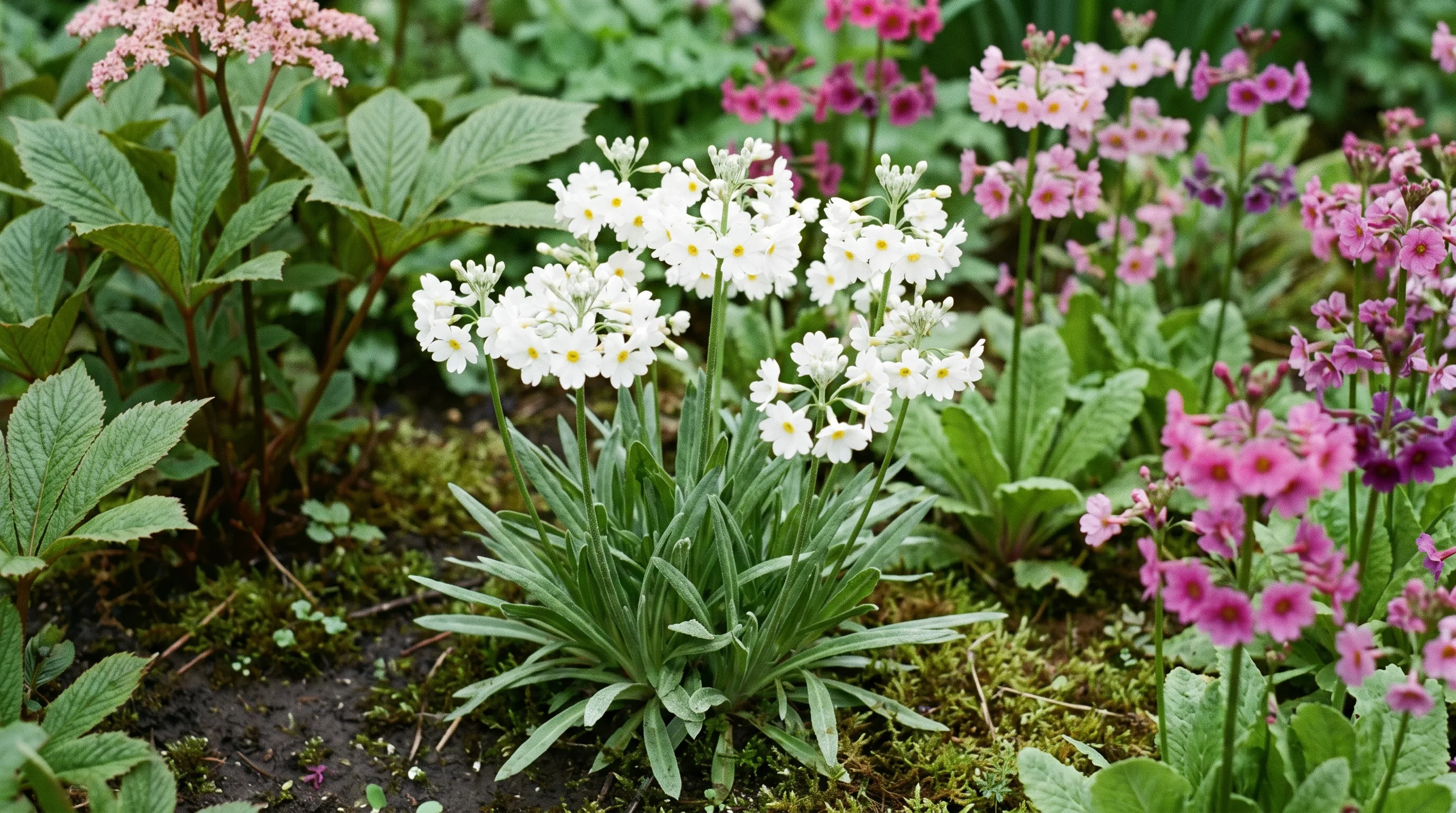
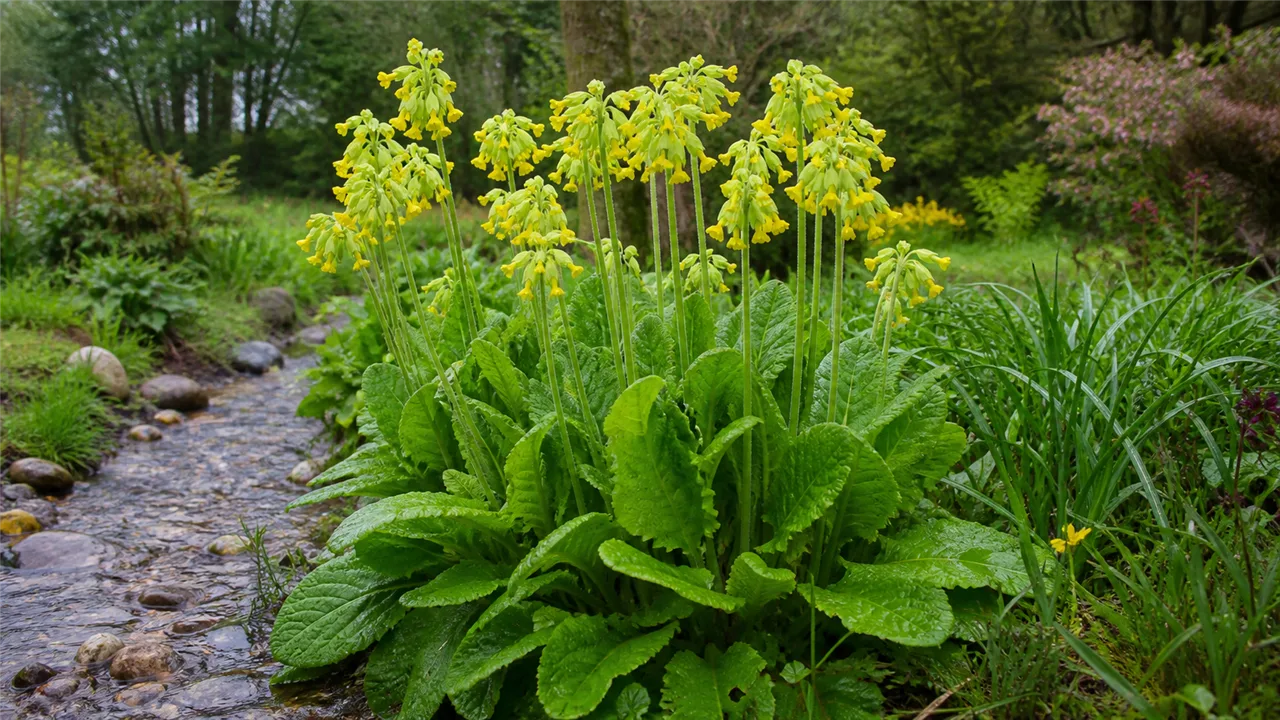
The flowers are borne in spring on stiff, upright stems 10–20 cm tall, well clear of the foliage. Each stem carries a small umbel of typically five to twelve flat, five-lobed, primrose-shaped flowers, each 2–3 cm across. Wild P. auricula is a soft, clear yellow with a darker yellow centre, but cultivated forms extend the palette through cream, white, pinks, purples, blues, browns, near-blacks, and bicolours, often with a contrasting white or pale "eye" (the central eye of the flower is called the "pip" by exhibitors). Flowers are sweetly and characteristically scented, with a powdery, primrose-like perfume that is most pronounced on still, cool mornings.
Growing Conditions
Auriculas want a cool root run, sharp drainage, and a position that catches the morning sun but dries off quickly after rain. In the open garden the classic spot is a raised bed, the top tier of a rock garden, a stone trough, or the gritty bed against a south- or east-facing wall. In all cases the soil should be freedraining: a loam-based mix with at least a third by volume of sharp grit, ideally 4–6 mm horticultural grit, suits them very well. They are also widely grown in 12–15 cm terracotta pots in an unheated alpine house, which protects the farina from winter wet and the flowers from spring mud splash.
Light should be bright but not scorching. A position in full sun for the first half of the day, with light shade from midday onwards in mid-summer, is ideal across most of the UK. Avoid the deep, dry shade of overhanging trees; auriculas will survive there but flower poorly and the rosettes will elongate. Soil pH is best kept near neutral to slightly alkaline, which suits the plant's native limestone scree; very acid peaty soils should be improved with the addition of crushed grit and a little garden lime.
Watering is the area where most beginners go wrong. From late autumn through to early spring the rosette wants to stay dry: overhead watering at this time of year is the single most common cause of crown rot. During the growing season, from March to September, water moderately, allowing the compost or soil to dry out between waterings. Feeding should be modest: a single low-nitrogen feed, such as a tomato fertiliser at half strength, given once as the buds begin to show, is plenty. Over-fed plants produce lush, farina-free leaves and few flowers.
Planting and Care
Plant bare-root or pot-grown auriculas in early spring (March to April) or in early autumn (September to early October), avoiding the heat of summer and the wet of midwinter. Set the crown just at soil level — neither buried nor perched up on a small mound — and work a trowelful of sharp grit into the planting hole if the surrounding soil is at all heavy. Space garden clumps 15–20 cm apart; they will fill in within a couple of seasons.
Watering: water in dry spells from spring through to early autumn, but always at the base of the rosette, never over the leaves. From October onwards, withhold water from outdoor plants except in prolonged drought, and from pot-grown plants give only enough to prevent the compost from completely drying out.
Feeding: auriculas are hungry for very little. A single diluted feed in early spring is ample for garden plants. Pot-grown specimens in the alpine house can be given a second, similarly weak feed immediately after flowering.
Propagation: lift and divide established clumps every three to four years, immediately after flowering in May or June. Tease the rosettes apart by hand, retaining a few roots on each piece, and pot each division singly into a gritty loam-based compost. Auriculas can also be raised from seed, sown fresh in late summer on the surface of a moist, gritty compost; seedlings are variable, so this is the method used for species and breeding lines rather than for named cultivars.
Cut back: remove old, tired outer leaves from the base of the rosette in late summer, working from the bottom up. This is a tidy-up rather than a hard prune — never cut into the central crown, which carries the following year's flowers.
Seasonal care: in late autumn, top-dress garden clumps with a thin layer of sharp grit to keep the crown dry through winter. In the alpine house, ventilate freely except in hard frosts, and shade lightly from late March onwards to protect the farina from bleaching.
Common Problems
Crown rot is the most frequent problem and is almost always a consequence of winter or summer wet sitting on the rosette. Symptoms are a soft, brown, mushy centre and a collapse of the youngest leaves. Improve drainage, remove affected plants, and start afresh with gritty compost and a drier winter position.
Grey mould (Botrytis cinerea) can colonise the mealy leaves in still, damp conditions, particularly in late autumn and in poorly ventilated alpine houses. It shows as a fuzzy grey bloom on the leaves and flower stalks. Remove infected material promptly, improve air movement, and avoid wetting the foliage.
Aphids, particularly the peach-potato aphid, colonise the flower buds in late spring; they can also carry cucumber mosaic virus, which expresses as distorted, mottled flowers and leaves. A careful squashing or a single application of a fatty-acid soap is usually sufficient.
Vine weevil grubs occasionally attack the roots of pot-grown plants in autumn and winter. Plants wilt for no obvious reason and lift cleanly from the pot. A biological control based on Steinernema kraussei nematodes, applied in late summer, is the standard treatment for container-grown auriculas in the UK.
Popular Varieties
'Blairside Yellow' is a vigorous, clear-yellow border auricula with good weather resistance and a strong scent; it is one of the most reliable garden forms for the open bed.
'Old Yellow Dusty Miller' is a traditional cottage-garden form with a heavy coating of pale farina and a warm yellow flower; it prefers the protection of a cold frame or alpine house.
'Rowena' is a mauve-pink alpine auricula with a paler eye, selected for its compact habit and repeat-flowering tendency in mild autumns.
'Kate Haywood' is a deeper, magenta-pink alpine auricula of modern introduction, carrying a clean white eye and excellent farina.
'Geldersome Greenfinch' is a green-edged show auricula of the type grown for exhibition, with a grey-white paste centre surrounded by a band of soft green on the outer petal. Show auriculas are best grown in a cold alpine house where the farina and paste can be kept pristine.
Pests and Diseases
| Problem | Symptoms | Management |
|---|---|---|
| Vine weevil | Notched leaf margins on adults and root damage or wilting caused by grubs, especially in containers. | Repot into fresh compost annually and use biological nematodes or systemic controls if infestation is severe. |
| Aphids | Clusters of small soft-bodied insects on new growth causing distorted leaves and sticky honeydew. | Squash by hand, blast off with water, or use insecticidal soap; encourage natural predators like ladybirds. |
| Grey mould (Botrytis) | Fuzzy grey fungal growth on leaves and flowers, particularly in poorly ventilated greenhouses. | Improve air circulation, avoid wetting foliage, and remove affected plant material promptly. |
| Primula leaf spot | Yellow or brown spots on leaves that may enlarge and cause tissue to drop out, leaving holes. | Remove infected leaves immediately and maintain good garden hygiene to prevent spread. |
| Primula rust | Clusters of tiny cup-like orange or brown spore structures on the undersides of leaves. | Remove and destroy infected leaves as soon as symptoms are seen to reduce inoculum. |
For step-by-step help, read Controlling Aphids Naturally. Or browse the full plant problem solver to diagnose an issue by symptom.
Recommended Products
GardenWizz earns a commission from qualifying purchases made through affiliate links on this page (including links within the article) — as an Amazon Associate, and from Thompson & Morgan via the Awin network. This does not affect the price you pay. See our disclaimer for details.