Chinese Primrose
Primula chionantha
The Gardening Year
Best months in UK gardens · full planting calendar →
🖨 Printable care card (PDF)At a Glance
| Botanical name | Primula chionantha |
|---|---|
| Common name(s) | Chinese primrose |
| Family | Primulaceae |
| Plant type | perennial (herbaceous or semi-evergreen perennials, forming a basal rosette of simple leaves) |
| Height × Spread | 50–100 cm × 50–100 cm |
| Position | Partial shade, Full sun |
| Soil | deep, humus-rich, moist, neutral to acid soil; Clay Loam; Moist but well–drained or Poorly–drained |
| Flowering | February–April |
| Toxicity | — |
| Native range | Tibet, Sichuan and Yunnan in China |
Overview
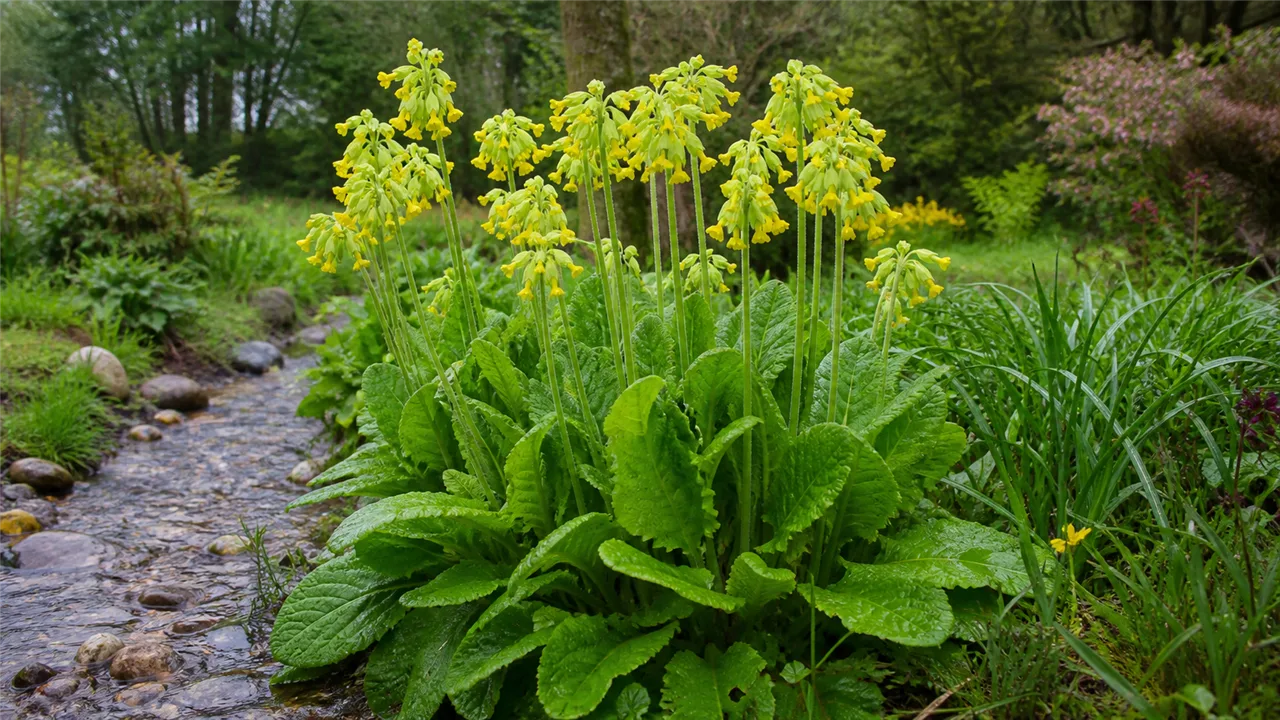
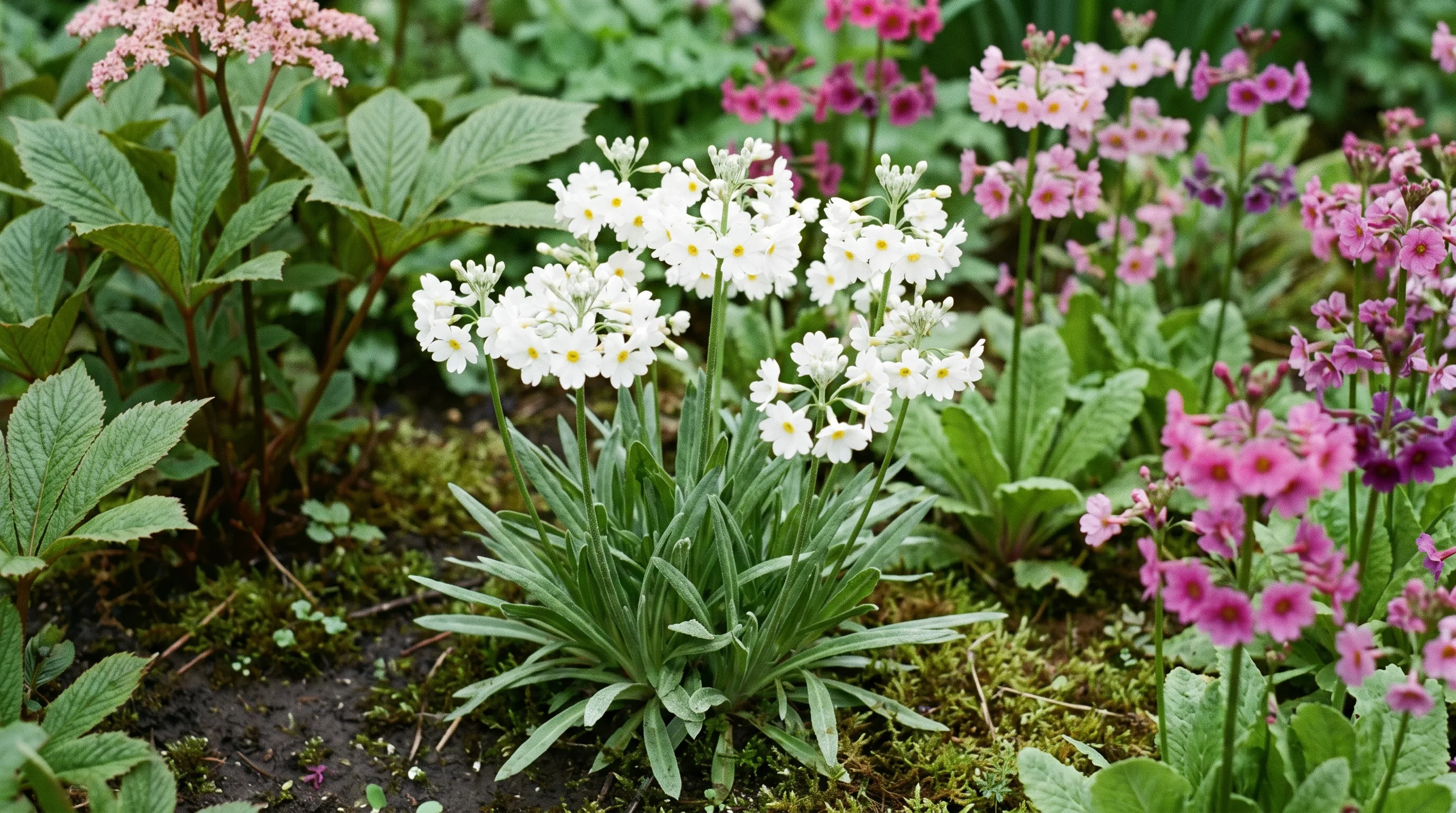
Primula chionantha, commonly known as the Chinese primrose, is a rosette-forming herbaceous perennial in the family Primulaceae. Native to alpine meadows, grasslands and rocky slopes in Sichuan and Yunnan in south-western China at altitudes of 2,000 to 4,000 m, it is one of the most elegant of the Asiatic candelabra-type primulas, distinguished by its pendulous, bell-shaped flowers with a silvery, farinose sheen.
Introduced to British cultivation in the early twentieth century, P. chionantha has remained a connoisseur's plant for damp, partially shaded situations where many other perennials struggle. The RHS places it in the Crystallophlomis horticultural group, whose primulas characteristically have long, narrow, upright leaves and flower stems carrying whorled blooms. Its pendent, farinose flowers give a restrained display suited to woodland edges, peat gardens and the damp margins of streams and ponds. In the UK it is generally easy to grow where soil and moisture can be kept consistent.
Appearance
Primula chionantha is a clump-forming, deciduous perennial with rosettes of soft, mid-green leaves. The leaves can reach about 25 cm long and are characteristically dusted with white farina, a mealy, wax-like coating that contributes to the plant's silvery appearance.
Flowering stems rise above the rosettes in late spring and early summer, bearing one to four clusters of small, pendent, scented flowers. Flower colour ranges from creamy white to white with purple eyes or lilac-purple. White farina on the foliage and flowers gives the plant a distinctly silvery, frosted appearance. This coating is one of the plant's principal decorative features and is best preserved by avoiding overhead watering and handling the foliage as little as possible.
After pollination, the flowers develop into small cylindrical seed capsules that ripen through midsummer. In good forms the display extends over four to six weeks; in less favourable conditions it may be compressed into a fortnight. The rosette persists through winter as a tight bud of immature leaves, often partly buried in the soil or its own leaf litter.
Growing Conditions
Primula chionantha performs best in dappled or partial shade, in a position that mimics the cool, moist, sheltered conditions of its native alpine meadows. Strong midday sun scorches the soft foliage and bleaches the flowers, while deep shade reduces flowering and encourages leggy growth. In most UK gardens an east- or north-facing border, a spot beneath deciduous trees where spring light filters through before the canopy closes, or the damp margin of a stream or pond will suit it well. A cool, open site in the lee of a hedge or wall provides additional shelter from drying winds.
The ideal soil is moist but well-drained, humus-rich and slightly acidic to neutral, with a pH of roughly 5.5 to 7.0. Heavy clay can be made suitable by working in generous amounts of well-rotted leafmould, garden compost and, where drainage is slow, coarse grit; very alkaline or strongly limed soils tend to produce pale, chlorotic foliage and are best avoided or corrected with ericaceous compost and an acidic mulch. The species is notably intolerant of summer drought: a thin, gravelly soil in full sun is one of the surest ways to lose it within a season. Equally, soil that lies waterlogged in winter will rot the resting crown, so although the plant likes moisture during growth, drainage through the dormant months must remain free.
Because the species comes from high altitudes where summers are cool and moist, it is well adapted to the damper parts of the UK — the north and west, upland gardens in the Pennines, the Lake District, Wales and Scotland, and any site with a cool, humid microclimate. In drier southern and eastern gardens it benefits from a thick organic mulch each spring and from being planted among taller neighbours that shade the soil without swamping the rosette. A top-dressing of leafmould or moss peat substitute around the crown helps to keep the roots cool and moist through the warmest part of the year.
Planting and Care
Container-grown plants can be put out at any time of year when the soil is workable and moist, but spring and early autumn are the most reliable windows because they allow the rosette to establish before either summer heat or winter wet becomes a stress. Space plants 20 to 25 cm apart in groups of three or five for the best visual effect, and set the crown so that the rosette sits flush with the soil surface. Water in well and keep the soil evenly moist for the first growing season.
Watering is the most important ongoing task. Throughout the growing season — roughly from March until the foliage begins to die back in October — the soil should be kept reliably damp. A weekly deep soak during dry spells is far better than frequent light sprinklings, which only wet the surface. A 5 to 7 cm mulch of leafmould, well-rotted compost or bark, applied in spring and topped up in early summer, dramatically reduces moisture loss and keeps the crown cool. Feeding should be modest: a single application of a balanced, slow-release fertiliser in early spring, or an annual top-dressing of garden compost, is sufficient. Overfeeding produces lush, soft foliage that is more vulnerable to rot and to attack by slugs.
Removing spent flower stems once the last blooms have faded keeps the rosette tidy and directs energy back into the crown. In late autumn, from October into November, old foliage can be cut back to ground level if desired, or simply tidied by hand; many growers leave the old leaves in place over winter as a protective thatch and remove them in early spring when new growth pushes up.
Propagation is straightforward by seed or division. Seed is best sown fresh in autumn, or in early spring after a short period of cold stratification, on the surface of a moist, gritty, peat-based compost; germination is often slow and irregular, and seedlings should be grown on in a cold frame for their first year before being lined out. Division is the surest method and is carried out in early spring, from March into April, just as new growth begins: lift established clumps, tease the rosettes apart with hand forks, replant immediately into prepared soil, and water in well.
In the UK the seasonal rhythm is straightforward: fresh growth appears in March, flowering runs from late May into July, seed ripens by August, foliage dies back through October and November, and the plant rests through the cooler months. A light dressing of leafmould each autumn and an annual tidy of old foliage are usually all that is needed to maintain a healthy clump for many years.
Common Problems
The most frequent problems with Primula chionantha in UK gardens are cultural rather than pest-based, and most can be avoided by matching the plant to its preferred conditions. Winter rot at the crown is the commonest cause of loss, occurring when plants sit in cold, waterlogged soil through the dormant months; it is best prevented by improving drainage at planting time and by avoiding deep mulches that hold moisture against the crown. Summer scorch, where the foliage turns yellow and the leaf margins crisp, indicates either too much direct sun or, more usually, drought stress at the roots.
Slugs and snails are strongly attracted to the soft new growth in spring and can quickly strip a young rosette down to the midrib. They are best controlled by hand-picking in the evening, by using wildlife-friendly iron-phosphate pellets, or by surrounding young plants with a coarse grit mulch that slugs find difficult to cross. Aphids may colonise the flower stems and the undersides of the leaves in late spring and early summer; a strong jet of water or a soft soap spray is usually enough to keep them in check without harming the farinose coating on the flowers.
Fungal problems are generally minor in well-sited plants but become significant in damp, crowded or poorly ventilated conditions. Botrytis (grey mould) can attack ageing flowers in cool, wet weather and should be managed by removing spent blooms promptly and improving air circulation around the clump. Primula leaf spot, a fungal disease that causes brown blotches ringed with yellow on the leaves, can be checked by clearing away infected foliage in autumn and by avoiding overhead watering. Vine weevil larvae can damage the roots of container-grown plants in particular; biological control with pathogenic nematodes is effective where they are known to be present.
Popular Varieties
Named cultivars of Primula chionantha are uncommon in general retail in the UK, and the species is most often grown and sold simply as Primula chionantha. The wild-collected form is variable, with plants ranging from pure white through cream to soft sulphur-yellow, all carrying the characteristic white farinose coating. Where named selections exist they tend to be distinguished by flower colour, by the intensity of the farinose sheen, or by the compactness of the rosette, rather than by radically different garden habits.
Current Kew taxonomy accepts three infraspecific taxa within P. chionantha: subsp. brevicula, subsp. chionantha and subsp. melanops. The name Primula sinopurpurea, and the later combination P. chionantha subsp. sinopurpurea, are treated by Kew as synonyms of the accepted nominal subspecies rather than as a separate related species. Gardeners seeking a particular flower colour are best served by buying the species in bloom from a specialist nursery, because seed-raised plants can vary and named cultivars are scarce.
Pests and Diseases
| Problem | Symptoms | Management |
|---|---|---|
| Vine weevil | Irregular notches on leaf margins and wilting plants due to root damage by larvae. | Apply nematodes in warm soil or use biological controls like Steinernema feltiae. |
| Slugs and snails | Irregular holes chewed in leaves and silvery slime trails on foliage and soil. | Use iron phosphate pellets, beer traps, or hand-pick at night to reduce populations. |
| Aphids | Clusters of small soft-bodied insects on new growth causing distorted leaves and sticky honeydew. | Squash by hand, spray with water, or use insecticidal soap for heavy infestations. |
| Caterpillars | Large irregular holes in leaves and visible frass (droppings) on foliage. | Hand-pick caterpillars or apply biological controls like Bacillus thuringiensis. |
| Powdery mildew | White powdery fungal growth on leaves and stems, often in humid conditions. | Improve air circulation, avoid overhead watering, and apply a fungicide if severe. |
For step-by-step help, read Controlling Aphids Naturally, Dealing with Slugs and Snails and Treating Powdery Mildew. Or browse the full plant problem solver to diagnose an issue by symptom.
Recommended Products
GardenWizz earns a commission from qualifying purchases made through affiliate links on this page (including links within the article) — as an Amazon Associate, and from Thompson & Morgan via the Awin network. This does not affect the price you pay. See our disclaimer for details.