Drumstick Primula
Primula denticulata
The Gardening Year
Best months in UK gardens · full planting calendar →
🖨 Printable care card (PDF)At a Glance
| Botanical name | Primula denticulata |
|---|---|
| Common name(s) | Drumstick primula |
| Family | Primulaceae |
| Plant type | perennial (This perennial dies back to below ground level each year in autumn, then fresh new growth appears again in spring.) |
| Height × Spread | 45 cm × 45 cm |
| Position | Full sun, Partial shade |
| Soil | moisture-retentive, damp, humus-rich, moderately fertile, well-drained soil; improve drainage in heavier soils by incorporating grit or sand |
| Flowering | May–June |
| Toxicity | contains contact allergens primin and other quinoid compounds |
| Native range | moist alpine regions of China (S Xizang), Afghanistan, Bhutan, India, N Myanmar, Nepal, and Pakistan |
Overview
Primula denticulata, commonly known as the drumstick primula, is one of the earliest and most arresting herbaceous perennials in the UK garden.
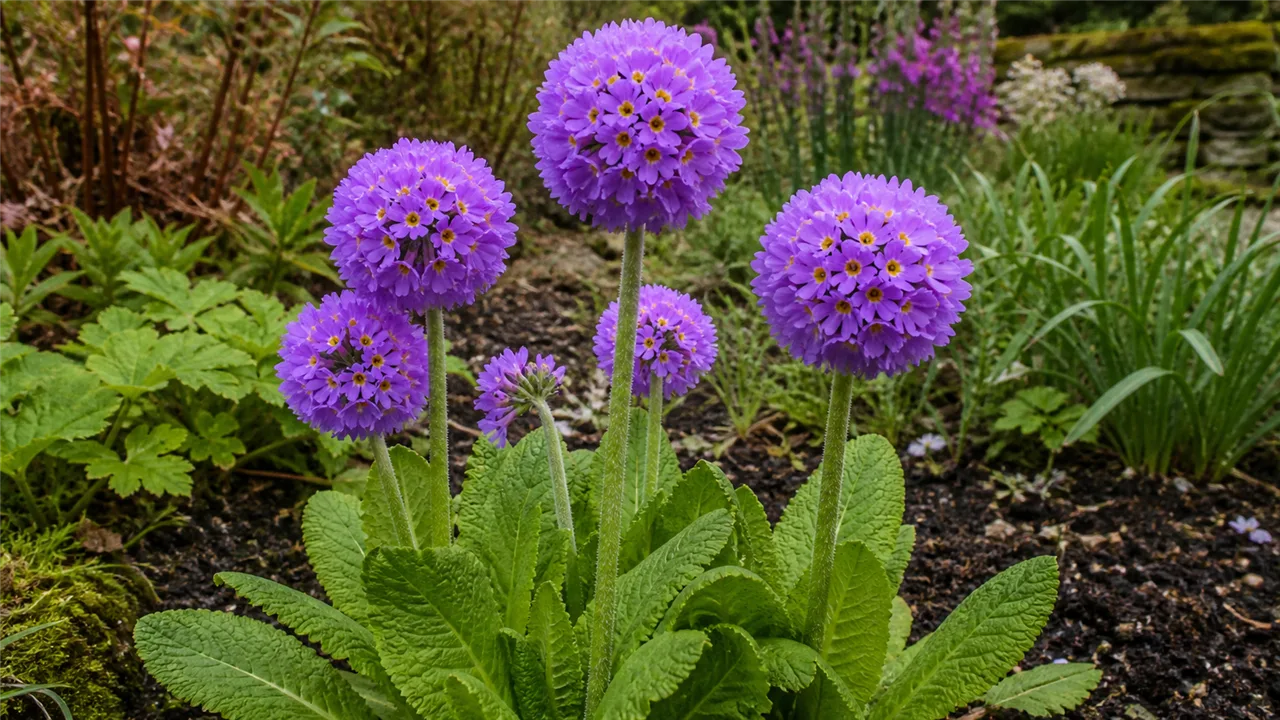
Its globe-shaped flower heads — tight balls of small, salverform blooms held on stout stems above a basal rosette of fresh green leaves — appear from late February into May, bridging the gap between late-winter hellebores and the main flush of spring bulbs. A native of the Himalayas, from Afghanistan and northern Pakistan through Kashmir, Nepal and into south-western China and Myanmar, it was introduced to British cultivation in the early nineteenth century and has remained a fixture of damp, partially shaded borders ever since.
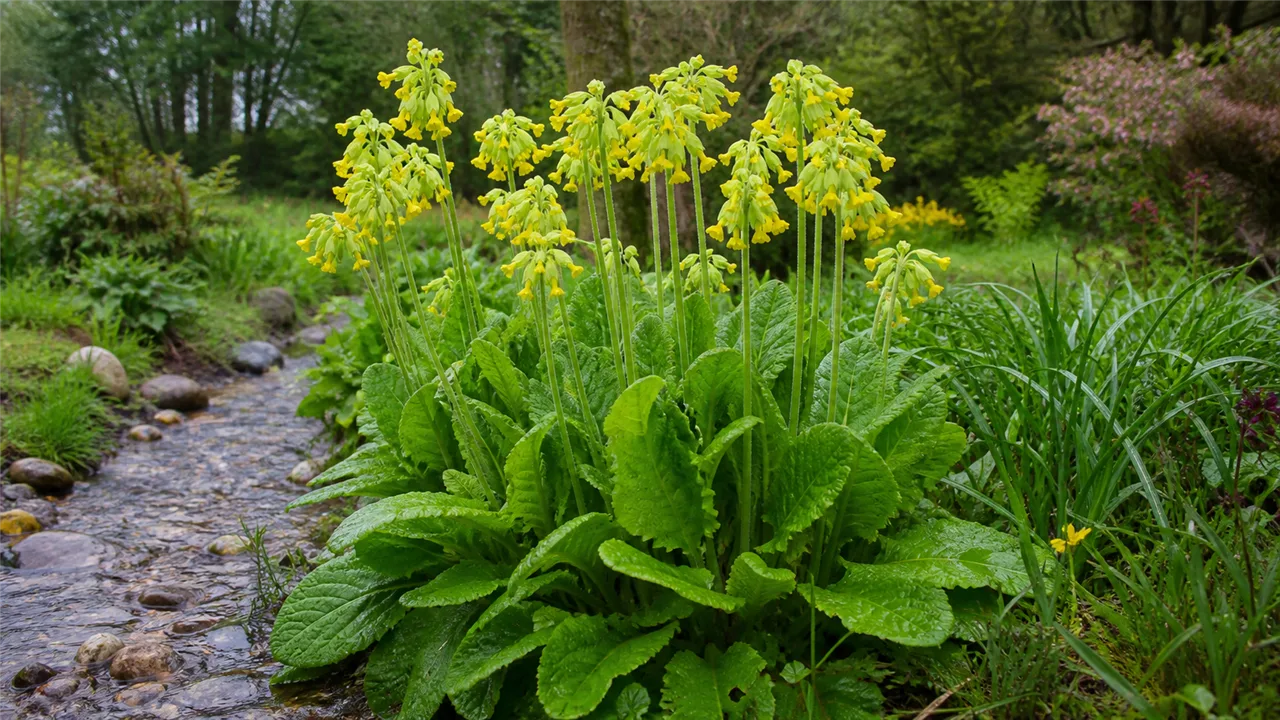
For British gardeners the drumstick primula offers something most spring flowers cannot: genuinely reliable colour in cold, wet ground where little else thrives. It settles happily into a north- or east-facing border, the dappled edge of a woodland garden, the margin of a pond or stream, or a permanently damp patch in clay soil. It is a robust, mostly trouble-free perennial that, once established, clumps up steadily and can be lifted and divided like any other border primula. Its early flowers are also a valuable resource for pollinators — bumblebee queens and early hoverflies visit them when little else is in bloom.
A short management regime suits it: moisture-retentive but drained soil, partial shade, an annual tidy in late autumn, and division every few years to keep clumps vigorous. The plant carries a hardiness rating appropriate to almost all UK sites; the exact rating is held in the structured badge and is not repeated here.
Appearance
Primula denticulata is a deciduous, rosette-forming herbaceous perennial. From a short, persistent rootstock it produces a basal rosette of broadly lanceolate to obovate leaves, typically 10–30 cm long. The leaves are finely and regularly toothed at the margin (hence denticulata, "finely toothed"), pale green and slightly mealy when young, maturing to a soft mid-green with a paler midrib. In winter the rosette dies back to the rootstock; new foliage emerges with the first spring warmth, often as early as January in mild southern counties.
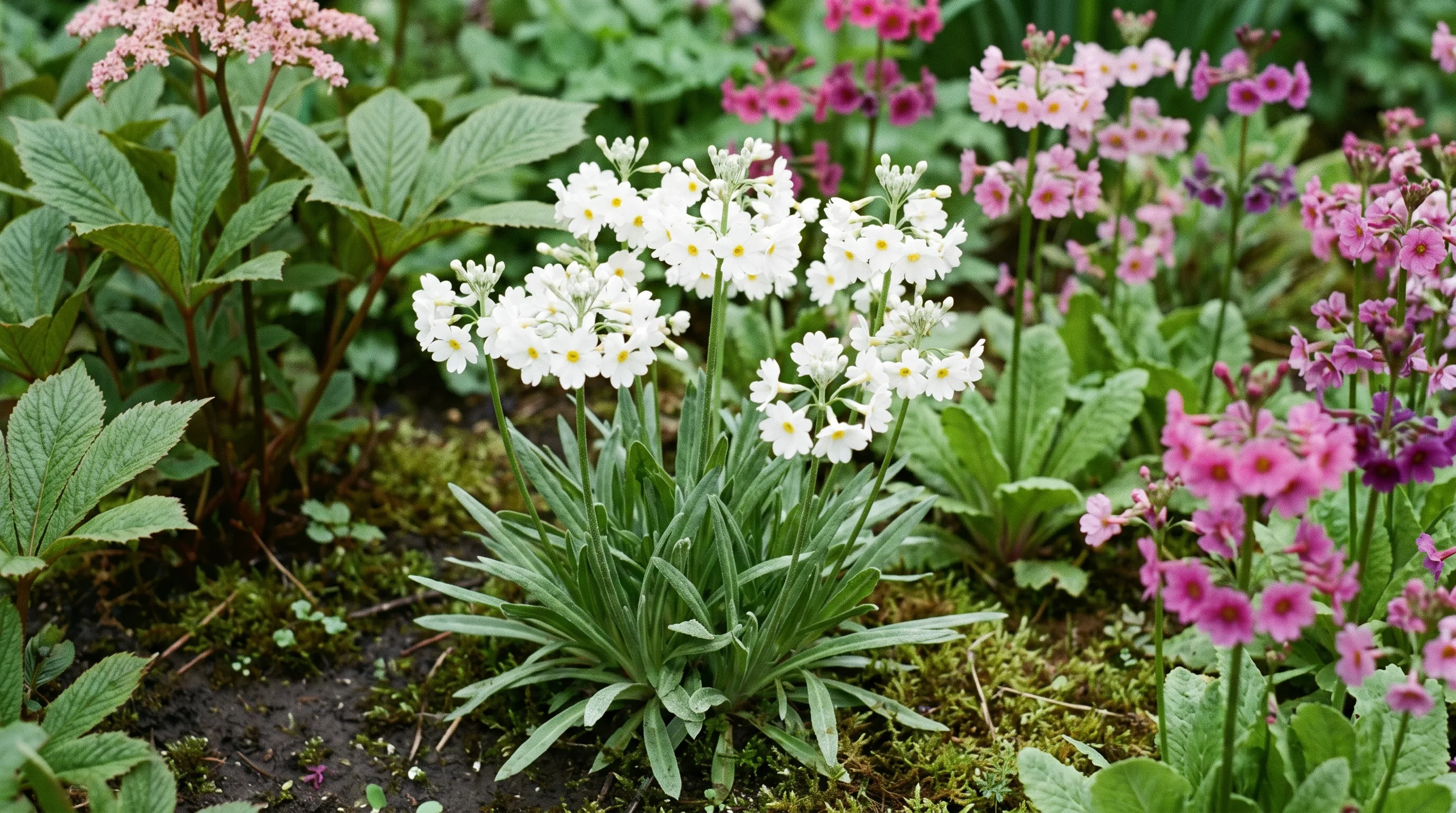
In early to mid spring a stout, fleshy flower stalk (a scape) rises from the centre of each rosette to a height of 20–60 cm, depending on soil moisture and cultivar vigour. At its tip the stalk carries a dense, perfectly spherical flower head 5–12 cm across — the "drumstick" of the common name. Each head is composed of many small individual flowers, each with a tubular calyx and a flat, notched (emarginate) corolla of five fused petals, arranged so tightly that the developing buds hide the calyces of their neighbours.
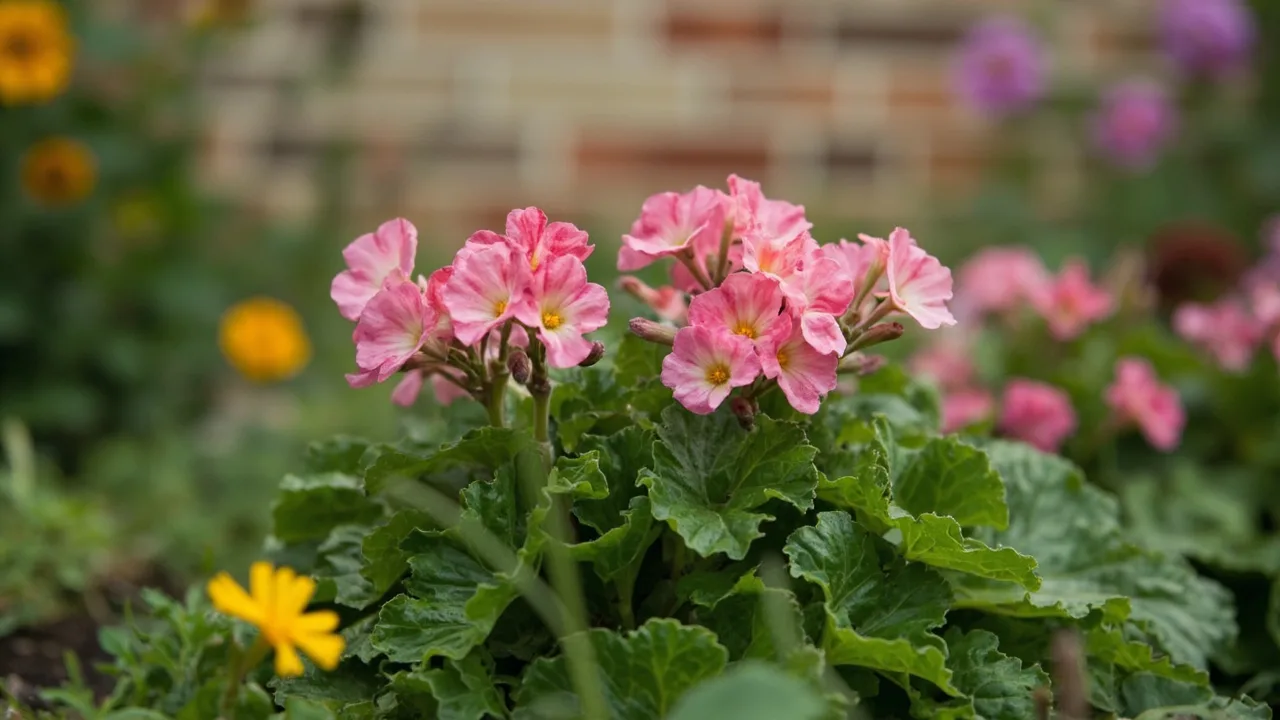
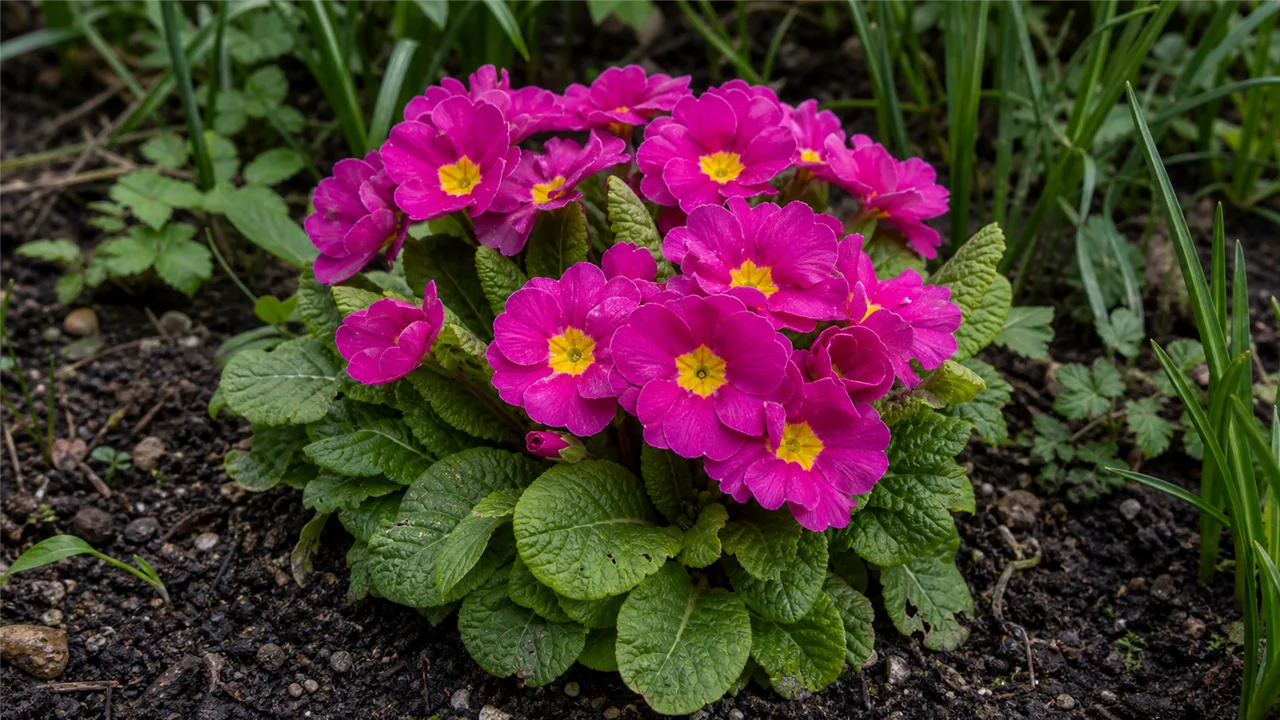
Wild-colour populations range from white and palest pink through lilac and lavender to deep magenta, almost always with a small, bright yellow eye at the centre of each flower. Most plants sold in British garden centres are seed-raised and so show some colour variation; named cultivars offer predictable, true-to-type colour. A healthy flowering clump will throw multiple scapes from a single rosette and, where clumps have grown together, can present dozens of drumsticks at once.
The overall spread of a mature rosette is 20–30 cm; in flower the plant reaches 30–60 cm in height. Plants are fully deciduous and overwinter as a dormant rootstock with no above-ground growth.
Growing Conditions
Light. The drumstick primula thrives in dappled shade or partial shade. The ideal UK site is an east- or north-facing border, the shaded side of a fence or wall, or a clearing in a light-canopied woodland garden. It will tolerate morning sun but sulks in hot, dry afternoon sun; on a south- or west-facing border the leaves scorch and the plants rapidly decline. Deep shade under evergreens is also unsuitable — the plants grow leggy and flower poorly without reasonable light in spring.
Soil. This species likes moisture-retentive, humus-rich soils that never dry out in summer but also never sit waterlogged in winter. A slightly acidic to neutral pH of around 5.5–7.0 is ideal. Most fertile garden soils — loam, improved clay, moisture-retentive sandy loam over clay — suit it well. On free-draining sandy or chalky soils it struggles in dry summers unless heavily mulched with leaf mould or garden compost and given supplementary watering. On heavy, wet clay it will grow, provided the crown is not buried and the surrounding soil is not stagnant; incorporating well-rotted organic matter before planting is the usual remedy.
Water. Consistent moisture through the growing season is the single most important cultural requirement. Soils that remain damp from February to June — naturally or with irrigation — produce the strongest plants. Once established, mature clumps tolerate brief dry spells better than most primulas, but prolonged summer drought will check growth and reduce flowering the following spring.
Position. Ideal settings in a UK garden include the damp edge of a woodland border, the margin of a pond or stream, a bog garden, or a partially shaded cottage-garden border. Plants look best grown in groups of three or more so that the spherical flower heads cluster together in spring. They associate well with hostas, ferns, astilbes, rodgersias, Brunnera, Pulmonaria and the taller Primula hybrids such as the candelabra types.
Climate. P. denticulata tolerates the full range of UK winters; a hardiness rating is shown in the plant badge. It requires a cold winter dormancy to flower well and is therefore not a candidate for forcing in warm indoor conditions. In the mildest parts of Cornwall and the Channel Islands it still performs reliably.
Planting and Care
When to plant. Plant in autumn (September to October) or in early spring (March to April). Autumn planting is preferred where soils are moist and warm enough to allow root establishment before winter; spring planting is better on cold, heavy or late-draining sites. Container-grown plants from garden centres can be planted at any time the soil is workable and the plant is in active growth, provided they are kept watered through their first summer.
How to plant. Space plants 20–30 cm apart to allow for the spread of mature rosettes. Dig a hole wider than the rootball, work a generous forkful of well-rotted leaf mould, garden compost or well-rotted manure into the base, and set the crown so that the soil just covers the topmost roots — never bury the crown deep, as this is the leading cause of crown rot. Backfill, firm gently, water in well and mulch with a 5 cm layer of leaf mould or composted bark.
Watering. Water regularly through the first growing season to keep the soil evenly moist. From the second year onwards, water deeply during prolonged dry spells in May, June and July; a bucketful per plant per week is a useful rule of thumb in drought. Avoid wetting the crown when watering.
Feeding. Drumstick primulas are modest feeders. A light top-dressing of balanced organic fertiliser — blood, fish and bone, or a slow-release general fertiliser — applied in early spring as new growth emerges is sufficient. Avoid high-nitrogen feeds, which produce luxuriant leaf at the expense of flowers and can leave the soft growth vulnerable to mildew and slug damage.
Cut back and seasonal tidy. Cut back is the main end-of-season task. As the foliage yellows and collapses in October and November, tidy the dead leaves away from the crown to reduce the carry-over of fungal leaf-spot spores and to expose the dormant rootstock to winter cold. The flower stems can be removed as soon as the last flowers fade in late spring if seed is not wanted; leaving them to set seed is acceptable and may even self-sow modestly in undisturbed soil.
Propagation. P. denticulata is easily raised from seed and easily propagated by division. Seed should be sown fresh in summer (the seed loses viability quickly in storage) or cold-stratified and sown in autumn; germination typically occurs the following spring, and seedlings reach flowering size in their second or third year. Division of established clumps is the surest way to maintain a named cultivar true to type. Lift the clump in early autumn (September) or just after flowering in late spring, tease the rosettes apart, and replant the strongest sections at once, watering them in well.
Dividing established clumps. Divide every three to four years in early autumn to maintain vigour; left longer, clumps become woody at the centre and flowering declines. A sharp spade driven through the lifted clump is usually sufficient — separate into fist-sized pieces, discard the tired central portion, and replant the outer rosettes into freshly amended soil.
Long-term care. Apart from the annual autumn cut-back, the periodic division and watering in dry summers, P. denticulata is a low-maintenance perennial. It does not require staking, pruning or training. Mulching every other year with leaf mould replenishes organic matter and keeps the soil surface cool and moist through summer.
Common Problems
Powdery mildew. A white, powdery coating on the leaves in mid to late summer is the most frequent complaint, especially in dry conditions or where plants are crowded with poor air movement. Improve spacing, water at the base of the plant rather than over the foliage, and waterlogged-wilted or mildew-infected leaves should be cleared away in autumn. Persistent cases can be treated with a sulphur-based or potassium-bicarbonate fungicide.
Aphids. Greenfly and blackfly may cluster on the youngest leaves and on the flower scapes in spring. A strong jet of water, insecticidal soap or a systemic insecticide will bring them under control; encourage ladybirds and hoverflies in the wider garden as the first line of defence.
Slugs and snails. Young spring foliage and the developing flower buds are attractive to slugs and snails. The standard organic controls — biodegradable slug pellets, copper rings around specimen plants, or nematode applications in warm, moist soil — are effective. Avoid thick ground-cover mulches directly over the crown, which provide shelter for slugs.
Leaf spot (Ramularia primulae). Brown or black spots on the leaves, sometimes ringed with a yellow halo, indicate this fungal disease. Remove and destroy affected leaves as soon as they are seen, avoid overhead watering, and clear all foliage at the cut-back in autumn. Severe outbreaks warrant a fungicide spray at the first sign.
Crown rot (Phytophthora). Sudden collapse of an otherwise healthy plant, with a blackened, soft crown at the soil line, is usually crown rot following waterlogged conditions. There is no cure; lift and destroy affected plants, improve drainage in the surrounding soil, and replant only after working in generous quantities of grit and organic matter.
Vine weevil. Notched leaf edges in summer, especially on adjacent container plants, point to adult vine weevil activity. The more serious damage is done by the larvae, which feed on roots underground and can kill container-grown primulas. A biological nematode treatment (Steinernema kraussei) applied in late summer or early autumn is the standard organic control for larvae; adults can be picked off by torchlight after dark.
Popular Varieties
Almost all commercially sold drumstick primulas in the UK are seed-raised and show some variation; if a precise colour is required, a vegetatively propagated named cultivar is the safest choice. The following are widely available from British nurseries and garden centres and reliably come true to type.
P. denticulata 'Alba' — pure white flower heads with a pale yellow eye. The most striking colour for a shaded spring border and a good partner for blue and purple varieties.
P. denticulata 'Cashmeriana' — sometimes sold under the synonym 'Ronsdorf', this is a popular UK selection with rich violet flower heads and slightly broader, more heavily mealy foliage. Particularly vigorous on damp soils.
P. denticulata 'Cormorant' — deep rose-pink flowers, slightly larger than the species, held on sturdier stems. A reliable performer in heavier clay soils.
P. denticulata 'Lavender' — soft lavender-blue flower heads; a good cool-colour companion for white-flowered forms and for planting alongside Pulmonaria and Brunnera.
P. denticulata 'Rubin' — deep ruby to magenta flowers, the darkest colour commonly available in the trade. Slower to bulk up than the paler forms and best in moist, leafy soils.
P. denticulata 'Silver' — silver-pink, an unusual intermediate shade between the white and lavender cultivars. Less widely stocked than the others but worth seeking out from specialist alpine and primula nurseries.
Beyond these named cultivars, mixed-colour "species" seed packs give a typical range from white through pink to deep magenta and are an inexpensive way to plant a sizeable drift of drumstick primulas in a new border.
Pests and Diseases
| Problem | Symptoms | Management |
|---|---|---|
| Slugs and snails | Irregular holes chewed in leaves and damage to young shoots or flower stems. | Use physical barriers like copper tape, hand-pick at night, or apply iron phosphate pellets. |
| Vine weevil | Notched leaf margins on the plant and wilting caused by larvae eating roots in pots. | Apply systemic insecticides to soil or use biological controls like nematodes in spring and autumn. |
| Aphids | Clusters of small soft-bodied insects on new growth causing distorted leaves and sticky honeydew. | Squash by hand, blast off with water, or use insecticidal soap for severe infestations. |
| Powdery mildew | White powdery fungal growth on leaves and stems, often in humid conditions. | Improve air circulation, avoid wetting foliage, and treat with a fungicide if necessary. |
| Crown rot | Plant wilts and collapses due to waterlogged soil causing the base of the plant to rot. | Ensure well-drained soil and avoid overwatering, especially in winter. |
For step-by-step help, read Controlling Aphids Naturally, Dealing with Slugs and Snails and Treating Powdery Mildew. Or browse the full plant problem solver to diagnose an issue by symptom.
Recommended Products
GardenWizz earns a commission from qualifying purchases made through affiliate links on this page (including links within the article) — as an Amazon Associate, and from Thompson & Morgan via the Awin network. This does not affect the price you pay. See our disclaimer for details.