Primroses
Primula
The Gardening Year
Best months in UK gardens · full planting calendar →
🖨 Printable care card (PDF)At a Glance
| Botanical name | Primula |
|---|---|
| Common name(s) | Primroses |
| Family | Primulaceae |
| Plant type | perennial |
| Height × Spread | 10–150 cm × — |
| Position | Partial shade, Full sun |
| Soil | moisture-retentive soil |
| Flowering | March–November |
| Toxicity | Toxic to cats, dogs, and horses |
| Native range | temperate Northern Hemisphere, south into tropical mountains in Ethiopia, Indonesia, and New Guinea, and in temperate southern South America |
The genus Primula brings some of the most reliable and varied spring colour to UK gardens, encompassing everything from the humble native primrose of woodland edges to the vivid, many-flowered polyanthus hybrids of cottage borders. With several hundred species distributed across the temperate Northern Hemisphere, primulas span a useful range of habitats — damp meadows, alpine rock crevices, woodland floors, and boggy streamsides — and most are easy to accommodate in British gardens given a cool, moist root run. The genus is particularly valued in the UK for its early flowering season, when few other perennials are performing, and for the breadth of forms available to suit almost any partially shaded spot.
Overview
Primulas are a mainstay of the UK spring garden, flowering from late winter into late spring depending on species. They are fully suited to British conditions and are grown as far north as the Scottish Highlands and as far west as damp Atlantic-coast gardens. Most species are long-lived perennials, forming spreading clumps that can be lifted and divided every few years to keep them vigorous.
Appearance
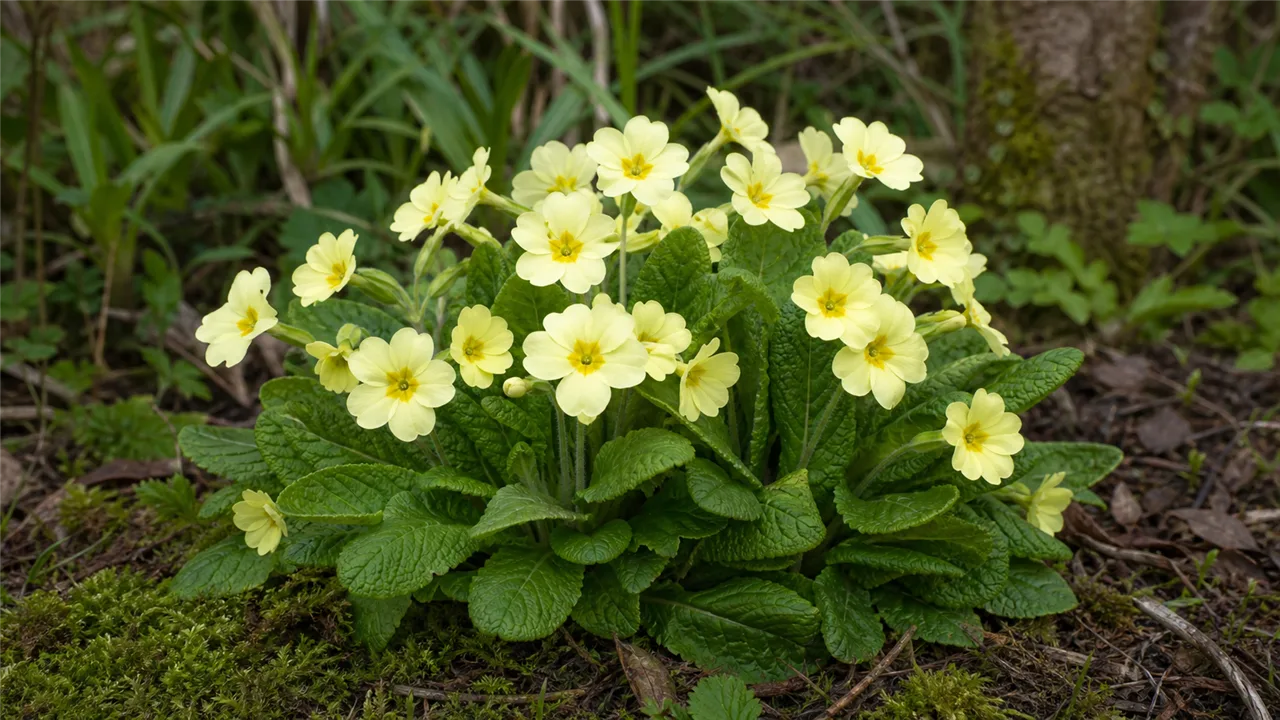
Primulas are rosette-forming perennials. The leaves arise in a tight cluster at ground level, with a wrinkled, often slightly textured surface, an obovate to lanceolate shape, and a softly toothed or crinkled margin. Foliage colour is typically a fresh mid-green, though some Asiatic species carry a pale mealy farina (a waxy, powdery coating) on both leaves and flower stems.
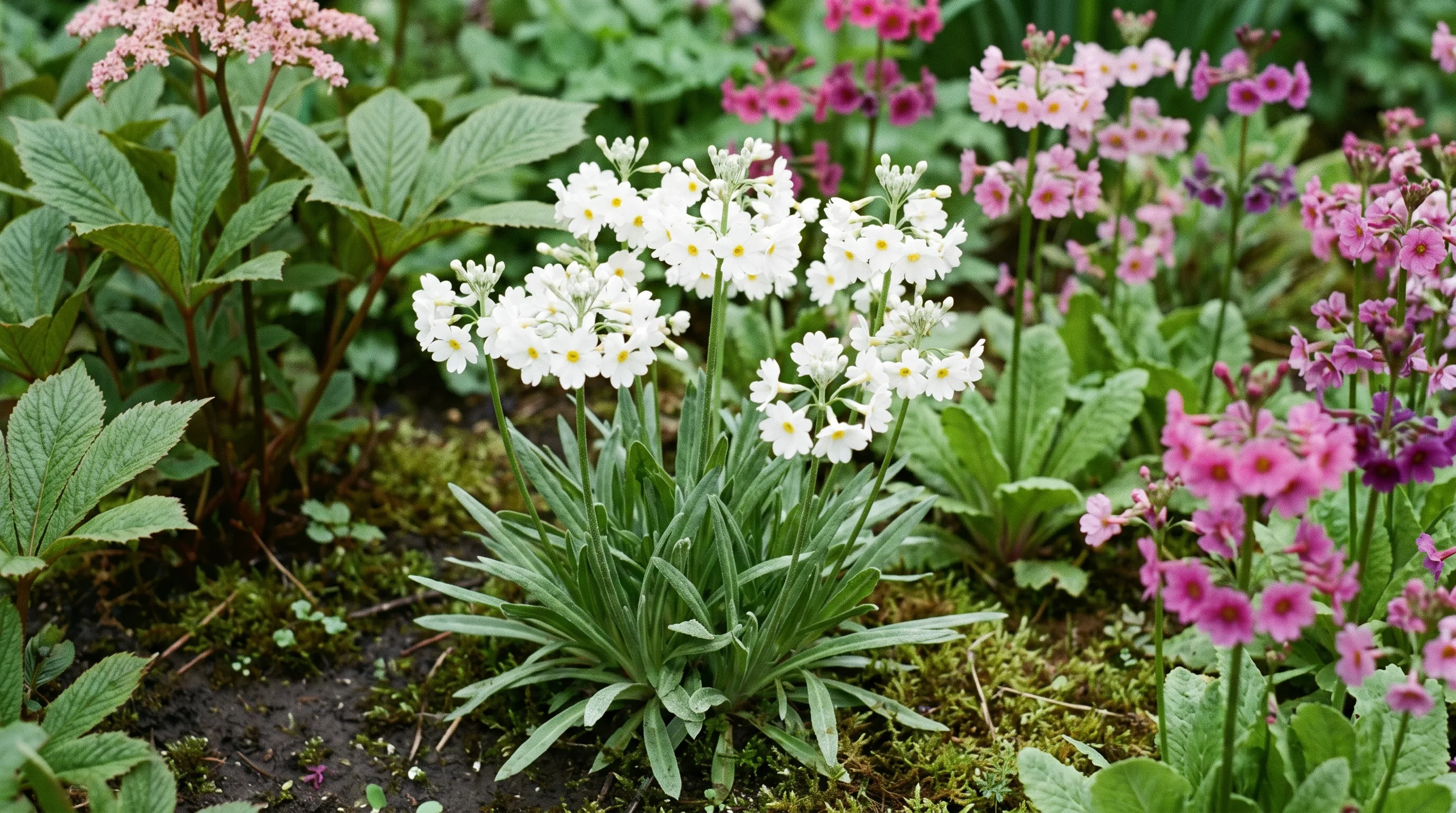
Flowers are carried singly or in clusters on leafless stalks (scapes) that rise from the rosette. In most cultivated species the inflorescence is an umbel, a flat or rounded head of several blooms at the top of a single stem. Each flower has five broad, notched petals fused at the base into a short tube, with a contrasting eye of yellow, white, or near-black at the throat depending on type. Colours span the spectrum: clear yellow, cream, white, pink, rose, red, salmon, violet, deep blue-purple, and near-black, with bicolours and picotee forms common among the hybrids.
Overall height depends on species and cultivar. The common primrose (P. vulgaris) hugs the ground at 10–15 cm tall, while drumstick primulas (P. denticulata) and candelabra primulas (P. japonica, P. pulverulenta) reach 30–40 cm. Many species are semi-evergreen, retaining a portion of their rosette through mild UK winters before producing fresh growth in early spring.
Growing Conditions
Primulas thrive in the cool, moist conditions typical of much of the UK, particularly the wetter west and north. They prefer a position in partial or dappled shade, mimicking the woodland-edge and meadow habitats of most wild species. The most commonly grown border and container types, such as polyanthus primroses and P. vulgaris forms, tolerate full sun provided the soil does not dry out, but flowering tends to be longer-lasting and foliage healthier where roots are kept cool.
Soil should be moist but well-drained, with a neutral to slightly acidic pH for most species. Woodland primulas, including P. vulgaris, P. sieboldii, and the Asiatic candelabra group, do best in humus-rich ground enriched with leaf mould or well-rotted garden compost. Bog-side and candelabra types will tolerate heavier, slightly acidic ground that stays damp even in summer, while European alpine species such as P. auricula need a grittier, free-draining mix and are traditionally grown in terracotta pots in a cold frame or against a north wall.
Siting is the single most important decision. A position that bakes in summer or that dries out at the roots will shorten the plant's life and reduce flowering. The classic placements in UK gardens are beneath deciduous shrubs, on the shaded side of a hedge, in a damp border near a downpipe, or at the edge of a wildlife pond.
Planting and Care
When to plant. Container-grown primulas can be set out at any time the soil is workable, with autumn (September–October) and early spring (March–April) the two best windows. Autumn-planted specimens establish well before the following spring and typically flower more strongly in their first season.
Soil preparation. Dig in well-rotted organic matter such as leaf mould, garden compost, or composted bark before planting, particularly on lighter or sandy soils. For woodland types, aim for a generous mulch of organic material 5–8 cm deep applied in late autumn to conserve moisture and feed the soil.
Watering. Keep the soil consistently moist through the growing season, from late winter when growth resumes until the foliage dies back in high summer. In dry springs and during the first summer after planting, water deeply once or twice a week rather than sprinkling lightly.
Feeding. A light application of a balanced slow-release fertiliser in early spring benefits hungry border and container types. For naturalised clumps in grass, additional feeding is rarely needed.
Cut back. After flowering, remove spent flower stems and tidy the rosette. A light cutback of any tired or scruffy foliage in mid to late summer encourages fresh growth and reduces overwintering disease.
Dividing. Established clumps benefit from division every two to three years, carried out in late spring to early summer, immediately after flowering. Lift the clump, tease it apart into smaller rosettes with their own roots, and replant promptly in prepared soil at the same depth. Regular division is the surest way to keep border primulas vigorous and to propagate stock.
Propagation. Division (above) is the easiest method. Seed is also viable for many species, scattered fresh in autumn or in early spring under cool glass; germination can be slow and the progeny of hybrids will not come true. A few species, such as P. vulgaris, can be increased by root cuttings in late winter.
Seasonal care. Apply a mulch in late autumn, top-dress containers with fresh compost each spring, and check for slug damage on young growth as the season opens. In wet summers, thin congested clumps to improve air flow and reduce fungal problems.
Common Problems
Aphids commonly colonise young foliage and flower stems in spring. They are usually easy to control with a strong jet of water, soft soap spray, or by encouraging natural predators such as hoverflies and ladybirds.
Vine weevil is a serious pest of container-grown primulas, particularly P. vulgaris and P. obconica. The grubs feed on roots and can quickly kill a plant. Inspect pots in late summer and autumn, and use a biological control based on Steinernema nematodes where the pest is known to be a problem.
Slugs and snails feed on the youngest leaves and can damage flowers. They are most damaging in damp, mild springs. Use approved slug pellets, copper tape around containers, or hand-picking on damp evenings.
Fungal leaf spot (Ramularia) produces brown spots with pale centres on leaves, often in late spring. Remove and destroy affected leaves, improve air circulation by thinning congested clumps, and avoid overhead watering.
Powdery mildew can affect primulas grown in dry, sheltered conditions. Symptoms are a white, dusty coating on the leaf surface. Improve air flow, water at the base of the plant rather than over the foliage, and consider a suitable fungicide for severe outbreaks.
Grey mould (Botrytis) occurs in damp, crowded conditions, especially after cold, wet winters. Cut back affected growth and remove plant debris to reduce the reservoir of spores.
Glasshouse red spider mite is an issue for primulas grown under glass, particularly indoor pot plants such as P. obconica. Increase humidity and consider biological control for serious infestations.
Popular Varieties
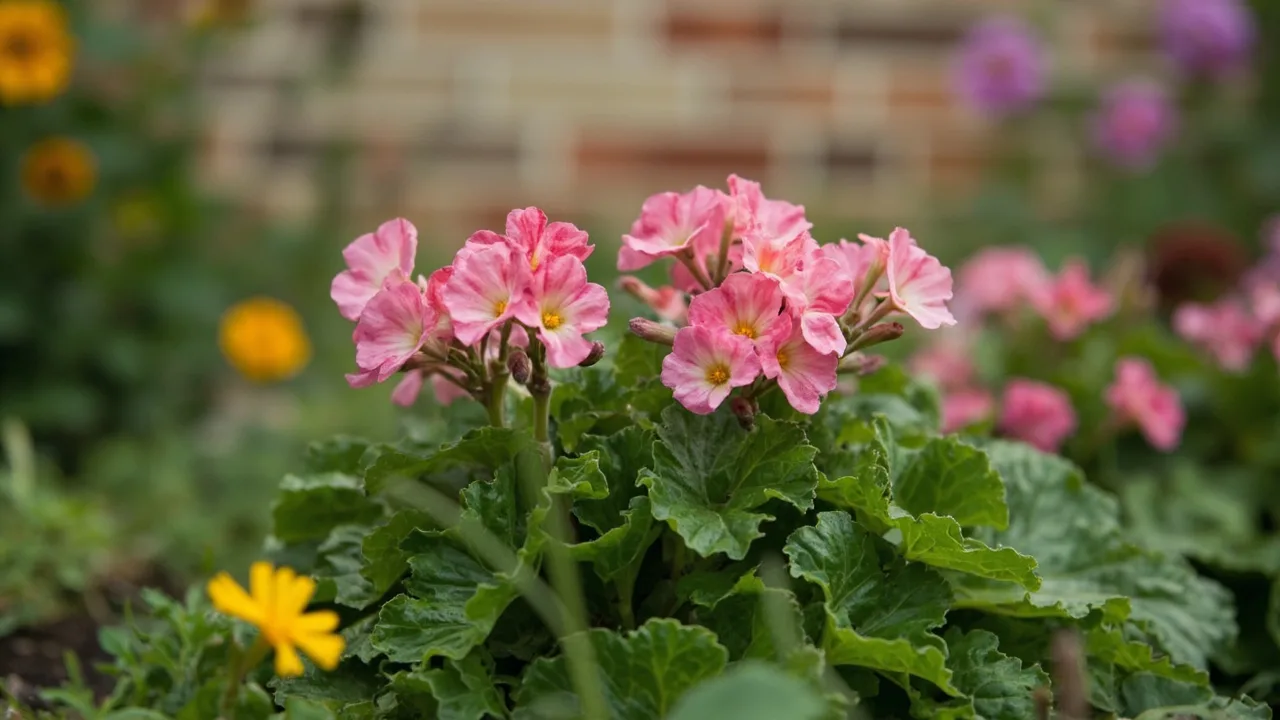
Primula vulgaris is the native common primrose, with pale yellow, sweetly scented flowers in earliest spring. It naturalises freely in woodland and hedge bottoms and is the parent of most of the colourful P. vulgaris hybrids sold for patio containers.
Primula 'Wanda' is a long-established hybrid of P. vulgaris × P. juliae, producing carpets of deep magenta-purple flowers over dark green foliage from late winter into spring. It is one of the most reliable and shade-tolerant of the cultivated forms.
Primula vulgaris subsp. sibthorpii (the Balkan primrose) is a closely related subspecies with pink, white, or lilac flowers and a long flowering period. It hybridises readily with the common primrose, producing a wide range of colour forms in spring.
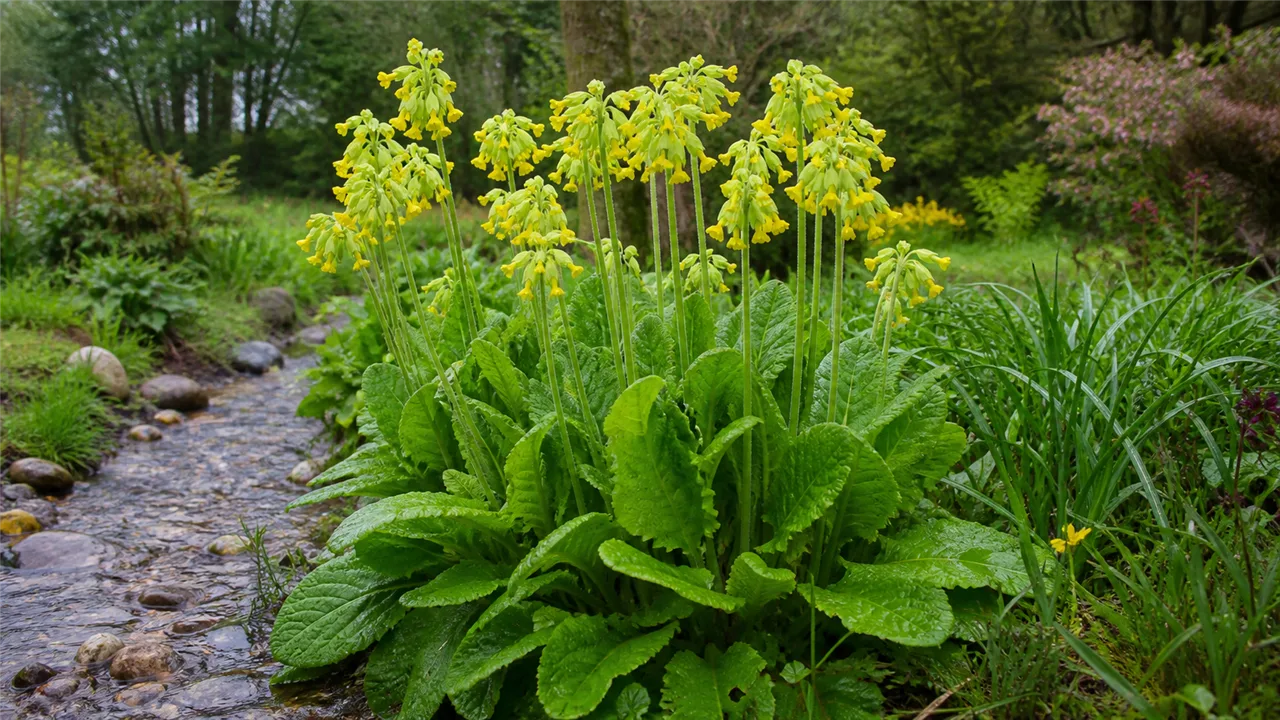
Primula veris (the cowslip) is a UK native of meadows and chalk grassland, with deep yellow, bell-shaped flowers in tighter clusters than the primrose, typically in April and May. It is a good choice for naturalising in wildflower lawns and unmown grass.
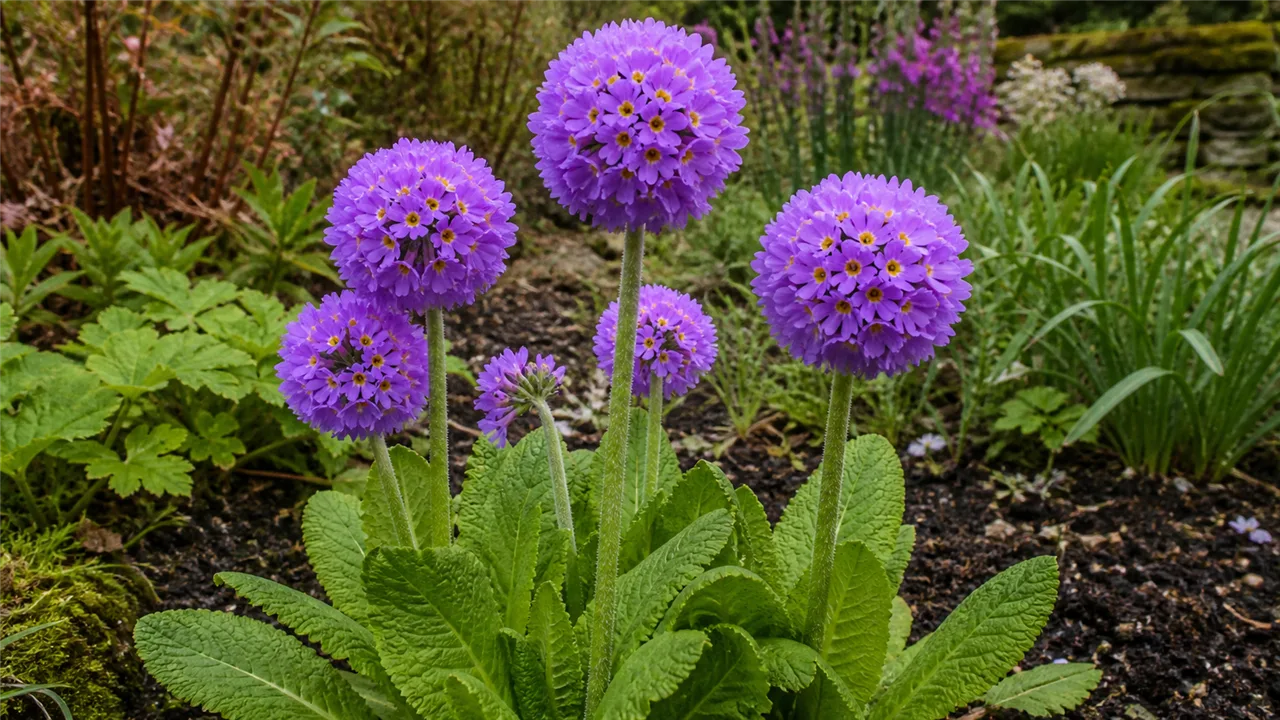
Primula denticulata (the drumstick primula) is a robust Asiatic species with rounded flower heads in shades of lilac, pink, white, or deep ruby, carried on stout stems 20–30 cm tall in spring. It prefers moist ground and tolerates heavier soils.
Primula japonica (the Japanese candelabra primula) is a striking bog-side plant, flowering in late spring with tiered whorls of pink, red, or white blooms on stems to 40 cm. It seeds freely in damp, humus-rich ground and is one of the best species for a damp border or streamside.
Primula auricula is a European alpine primula with thick, evergreen rosettes and flat, often bicoloured flowers in late spring. It is traditionally grown in terracotta pots in a shaded cold frame or alpine house, where the farina-coated blooms can be appreciated without weather damage.
Polyanthus primroses are complex hybrids derived from P. vulgaris, P. veris, and P. elatior, grown as annuals or short-lived perennials for their dense heads of large flowers in a very wide colour range. They are widely sold as pot plants and for spring bedding in containers and at the front of borders.
Cultivars and Varieties
| Cultivar | Height | Flower | Notes | AGM |
|---|---|---|---|---|
| 'Broadwell Milkmaid' | — | — | RHS AGM (H5) | ✓ |
| 'Broxbourne' | — | — | RHS AGM (H5) | ✓ |
| 'Clarence Elliott' | — | — | RHS AGM (H5) | ✓ |
| 'Crescendo Blue Shades' | — | — | RHS AGM (H5) | ✓ |
| 'Crescendo Bright Red' | — | — | RHS AGM (H5) | ✓ |
| 'Crescendo Pink and Rose Shades' | — | — | RHS AGM (H5) | ✓ |
| 'Danova Rose' | — | — | RHS AGM (H5) | ✓ |
| 'Francisca' | — | — | RHS AGM (H7) | ✓ |
| 'Guinevere' | — | — | RHS AGM (H6) | ✓ |
| 'Lady Greer' | — | — | RHS AGM (H5) | ✓ |
| 'Tony' | — | — | RHS AGM (H5) | ✓ |
| 'Wanda' | — | — | RHS AGM (H7) | ✓ |
Pests and Diseases
| Problem | Symptoms | Management |
|---|---|---|
| Primula rust | Clusters of tiny, cup-like orange or brown spore-producing structures appear on the undersides of leaves. | Remove and destroy infected leaves immediately to prevent spread; avoid fungicides to protect biodiversity. |
| Golden root mealybug | White, cottony wax masses are visible on roots or at the base of stems, causing stunted growth. | Inspect new plants thoroughly before planting and quarantine for several weeks to ensure they are pest-free. |
| Slugs and snails | Irregular holes chewed in leaves and flowers, often accompanied by silvery slime trails. | Use physical barriers like copper tape or beer traps, and hand-pick pests at night. |
| Powdery mildew | A white, dusty fungal growth covers the upper surfaces of leaves and stems. | Improve air circulation around plants and water at the base to keep foliage dry. |
| Root rot | Leaves turn yellow or brown and wilt despite adequate moisture, often due to waterlogged soil. | Ensure well-draining soil and avoid overwatering, particularly in heavy clay soils. |
For step-by-step help, read Dealing with Slugs and Snails and Treating Powdery Mildew. Or browse the full plant problem solver to diagnose an issue by symptom.
Recommended Products
GardenWizz earns a commission from qualifying purchases made through affiliate links on this page (including links within the article) — as an Amazon Associate, and from Thompson & Morgan via the Awin network. This does not affect the price you pay. See our disclaimer for details.