Cockburn's Primrose
Primula cockburniana
The Gardening Year
Best months in UK gardens · full planting calendar →
🖨 Printable care card (PDF)At a Glance
| Botanical name | Primula cockburniana |
|---|---|
| Common name(s) | Cockburn's primrose |
| Family | Primulaceae |
| Plant type | perennial (short-lived perennial) |
| Height × Spread | 10–50 cm × — |
| Position | Full sun, Partial shade |
| Soil | Deep, humus-rich loam that is moist or moist but well-drained; neutral to acidic |
| Flowering | May–June |
| Toxicity | — |
| Native range | south-central China |
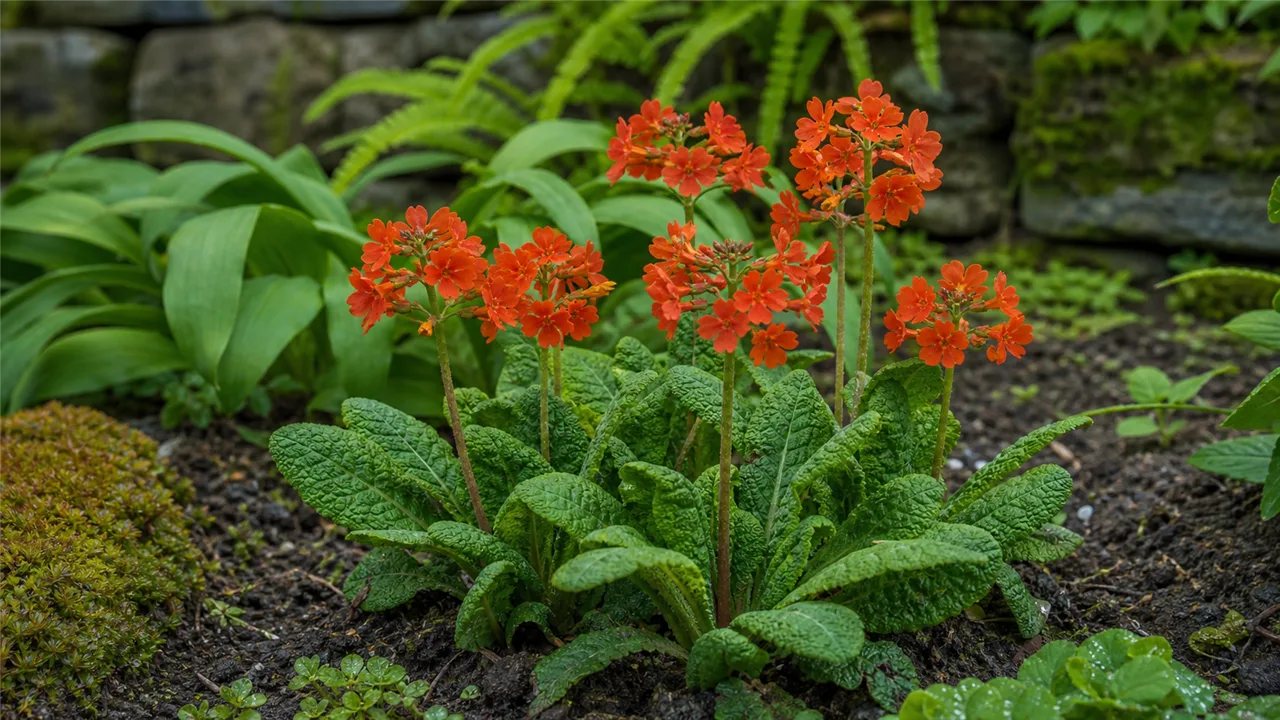
Cockburn's primrose is a clump-forming herbaceous perennial prized for its vivid orange-red flowers carried in tiered whorls above soft green rosettes. Native to alpine meadows and stream banks in western Sichuan, China, it brings a saturated colour into UK shaded borders at a time when most spring colour is pastel. It rewards gardeners who can keep its roots cool and soil moist with one of the most striking flower colours in the genus.
Overview
Primula cockburniana belongs to the family Primulaceae and the genus Primula. It was introduced to Western horticulture through twentieth-century plant-hunting expeditions to the mountains of western China, where it grows at altitude in moist, humus-rich soils. In UK gardens it is classed as a herbaceous perennial: it dies back to a resting rootstock in winter and pushes fresh growth each spring. It is a plant for the prepared gardener — reliably hardy across most of the UK, but intolerant of dry, sun-baked positions and of heavy waterlogged ground in winter.
It performs best in cool, sheltered gardens — particularly in the north and west of the UK and in Scotland — but will grow in any consistently damp shaded border. Where happy it self-seeds gently into neighbouring gaps, building small colonies over several years. Its colour and whorled flower form suit a dedicated primula border, a naturalistic woodland planting, or a damp pocket at the edge of a bog garden.
Appearance
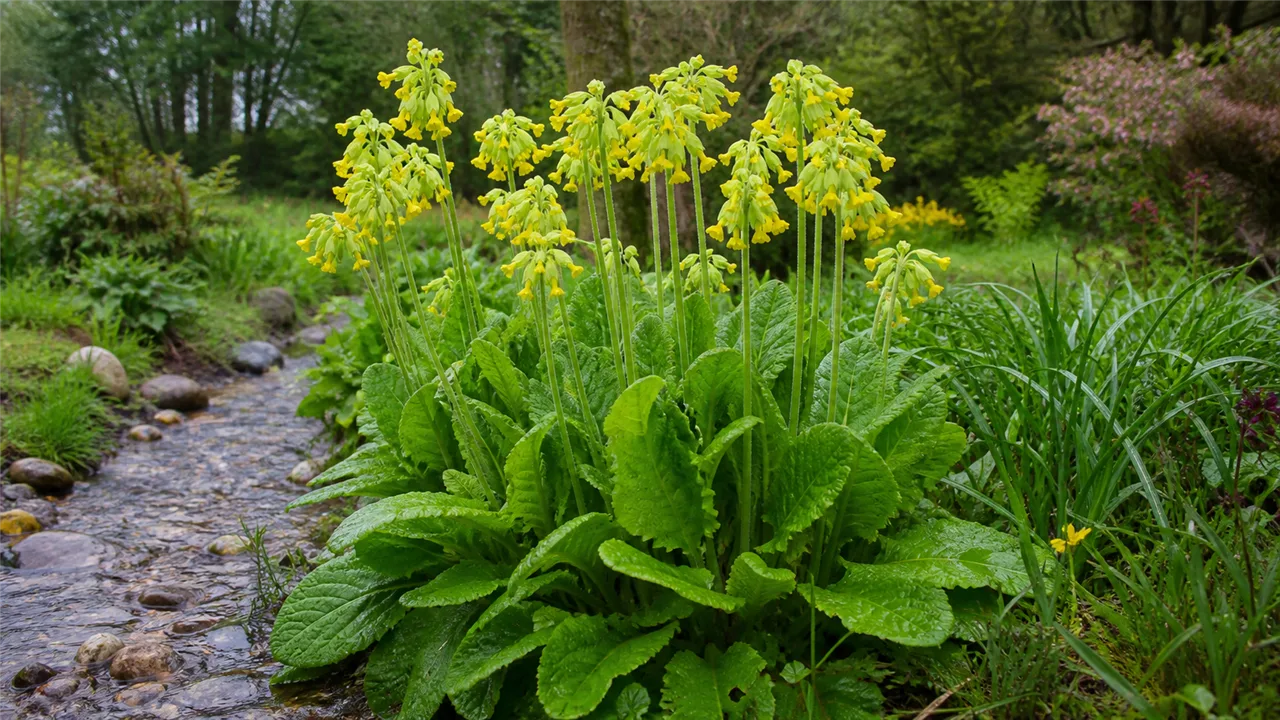
Cockburn's primrose forms a low rosette of oblong to lance-shaped, softly hairy, mid-green leaves, each rosette sending up one or more slender, erect flowering stems to around 30–45 cm, occasionally taller in rich, moist soil. The leaves reach roughly 10–20 cm long and form a loose clump at the base.
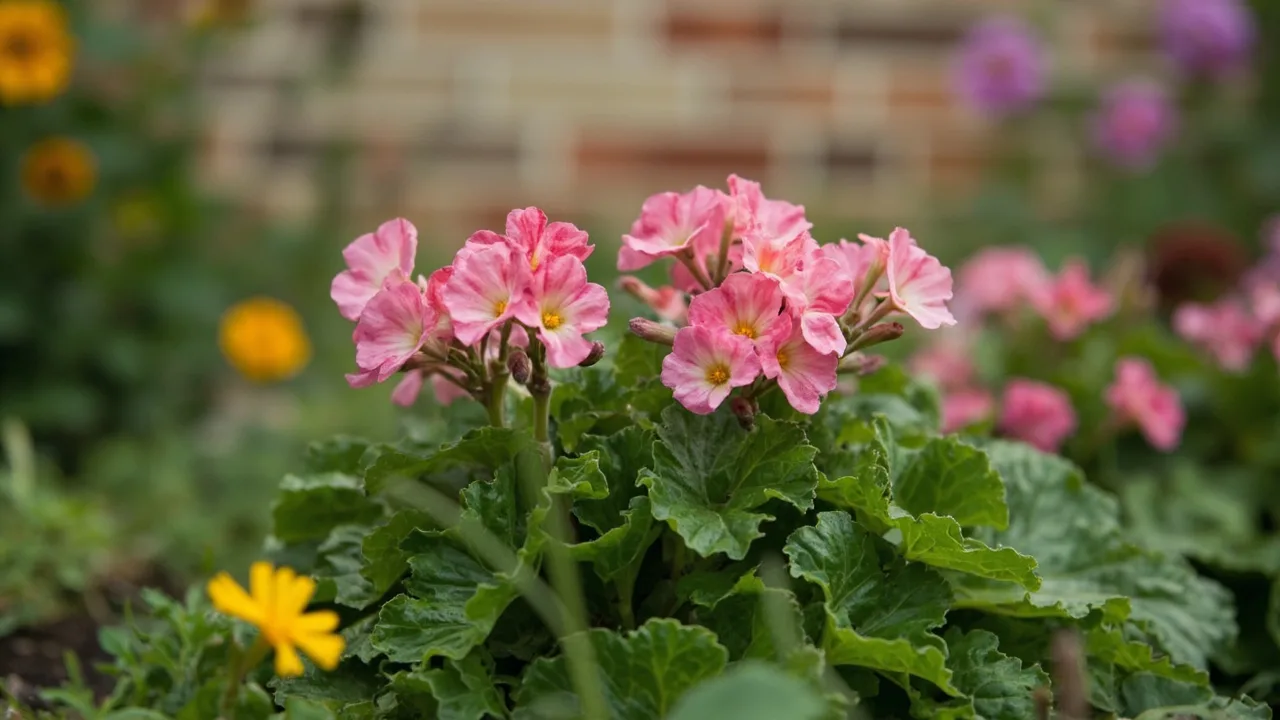
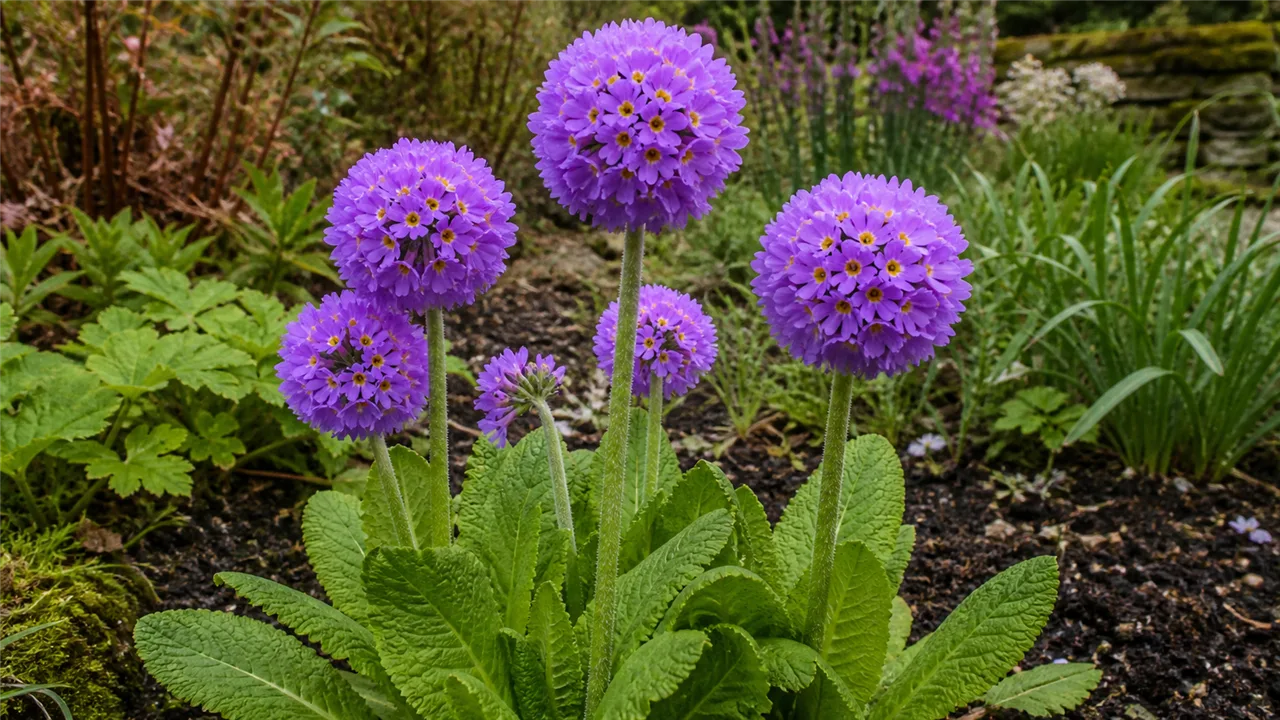
The flowers are the plant's signature feature. They are carried in distinct whorls — rings of bloom spaced along the upper portion of the stem — in the arrangement known as a verticillaster. This tiered form is shared with a small group of related Asiatic primulas and gives the inflorescence a pagoda-like silhouette. Individual flowers are small, cup-shaped, and roughly 1.5–2 cm across, opening from the lowest whorl upward. The colour is a clean, vivid orange, often described as orange-red or scarlet, without the pink or yellow undertones that mark many other primula species.
Flowering runs from late spring into early summer — roughly May to June in most UK gardens. After flowering the foliage persists through summer and then dies back to ground level in autumn as the plant enters dormancy; new leaves emerge the following spring.
Growing Conditions
Cockburn's primrose thrives in moist but well-drained, humus-rich soils. Heavy clay can be improved with well-rotted leaf mould and composted bark; thin, sandy soils benefit from similarly generous organic amendment to hold moisture through summer. It tolerates a pH range from slightly acidic through to near-neutral, and ericaceous compost is unnecessary except in very alkaline gardens.
The plant prefers partial shade or dappled shade, ideally beneath deciduous trees where it receives spring sunlight before the canopy closes. Full sun is tolerated only where the soil remains reliably cool and damp — in practice, north- or east-facing borders, shaded courtyards, or the north side of a wall. It is intolerant of dry shade under evergreens.
A sheltered position out of cold winds is helpful, particularly in upland and exposed northern gardens. Good air circulation is beneficial and reduces the risk of fungal problems on dense crowns. The plant is hardy across most of the UK; a hardiness rating is displayed with this article for reference.
In the wild it grows in alpine meadows, on stream banks, and on shaded rocky slopes in western Sichuan, typically in soils enriched by leaf litter and refreshed by meltwater and summer rainfall — conditions that translate well to a damp UK woodland-edge border or a shaded bed beside a pond or stream.
Planting and Care
Plant in autumn or early spring, when the soil is workable and moist. Container-grown plants establish readily; set the crown at the same depth as in the pot, firm the soil, and water in well. Space plants 20–30 cm apart for the best group display.
Watering is the most important ongoing task. The soil should remain consistently moist from spring growth through to dormancy in autumn. In dry spells, soak thoroughly rather than sprinkling lightly — a deep weekly watering beats daily misting. Mulching in spring with a 5–7 cm layer of leaf mould, composted bark, or well-rotted garden compost helps retain moisture, suppress weeds, and keep the crown cool.
Feeding needs are modest. A light top-dressing of a balanced fertiliser in early spring, or a scattering of well-rotted manure, is usually sufficient. Over-feeding produces lush foliage at the expense of flowers.
Deadhead spent flowering stems once the display is finished, cutting back to the base at the rosette. This keeps the crown tidy, prevents excessive self-seeding, and reduces overwintering sites for pests.
As a cutback perennial, the foliage should be cut to ground level in autumn once it has yellowed and died back, and the debris removed. Do not cut still-green growth, as the plant is still drawing energy back into the rootstock.
Propagation is straightforward by division every three to four years, in early autumn or just after flowering. Lift the clump with a fork, tease apart the rosettes, and replant divisions promptly at the same depth, watering them in. Discard the woody central portion and replant only vigorous outer rosettes. Seed can be sown fresh in autumn and overwintered outside, though named forms will not come true.
Seasonal care in the UK centres on three points: keep the soil moist from April through September, cut back the foliage once it has died down in October or November, and renew the mulch each spring.
Common Problems
Slugs and snails are the most persistent pests, attacking new spring growth and soft flower buds as they emerge. Controls include night-time hand-picking, copper tape around specimen plants, biological nematodes applied in warm moist conditions, and coarse grit or crushed-eggshell barriers.
Aphids occasionally colonise young flower stems and leaf undersides in late spring. A soft-soap spray, a strong jet of water, or encouragement of natural predators such as hoverflies and lacewings normally brings them under control.
Grey mould (Botrytis cinerea) can affect dense crowns in damp, stagnant conditions during wet summers, appearing as fuzzy grey-brown mould on damaged or ageing tissue. Improve air circulation, remove affected material promptly, and avoid overhead watering.
Powdery mildew is occasional rather than common, appearing as a white dusty coating on leaves in dry, still conditions. Prevent it by watering at soil level and avoiding drought stress.
Leaf spot, caused by fungi such as Septoria and Ramularia species, produces discoloured spotting on leaves in damp summers. Remove and destroy affected leaves rather than composting them, and clear all foliage at season's end to reduce overwintering spores.
The plant has no significant toxicity concerns for humans, pets, or livestock, though as with all garden primulas it is sensible to wash hands after handling and to discourage pets from chewing the foliage.
Popular Varieties
Named cultivars of Primula cockburniana are scarce in general UK nursery trade, and the species is most often sold simply as the botanical type. Where a colour or form is offered under a name, treat it with caution and buy only from a reputable primula specialist. The following are forms occasionally listed in specialist catalogues; availability varies year to year.
- Primula cockburniana — the standard species form, with vivid orange-scarlet flowers in whorled tiers on stems to around 30–45 cm. The default plant offered by most primula growers.
- Primula cockburniana orange form — sometimes listed as a particularly strong, deep-orange selection, raised from seed by specialist growers. Vigour and exact colour vary between seed batches.
- Primula cockburniana 'Apple Blossom' — a softer, paler selection occasionally offered in specialist lists, with pinkish rather than orange flowers. This is not a widely established cultivar and should be sourced from a reliable nursery.
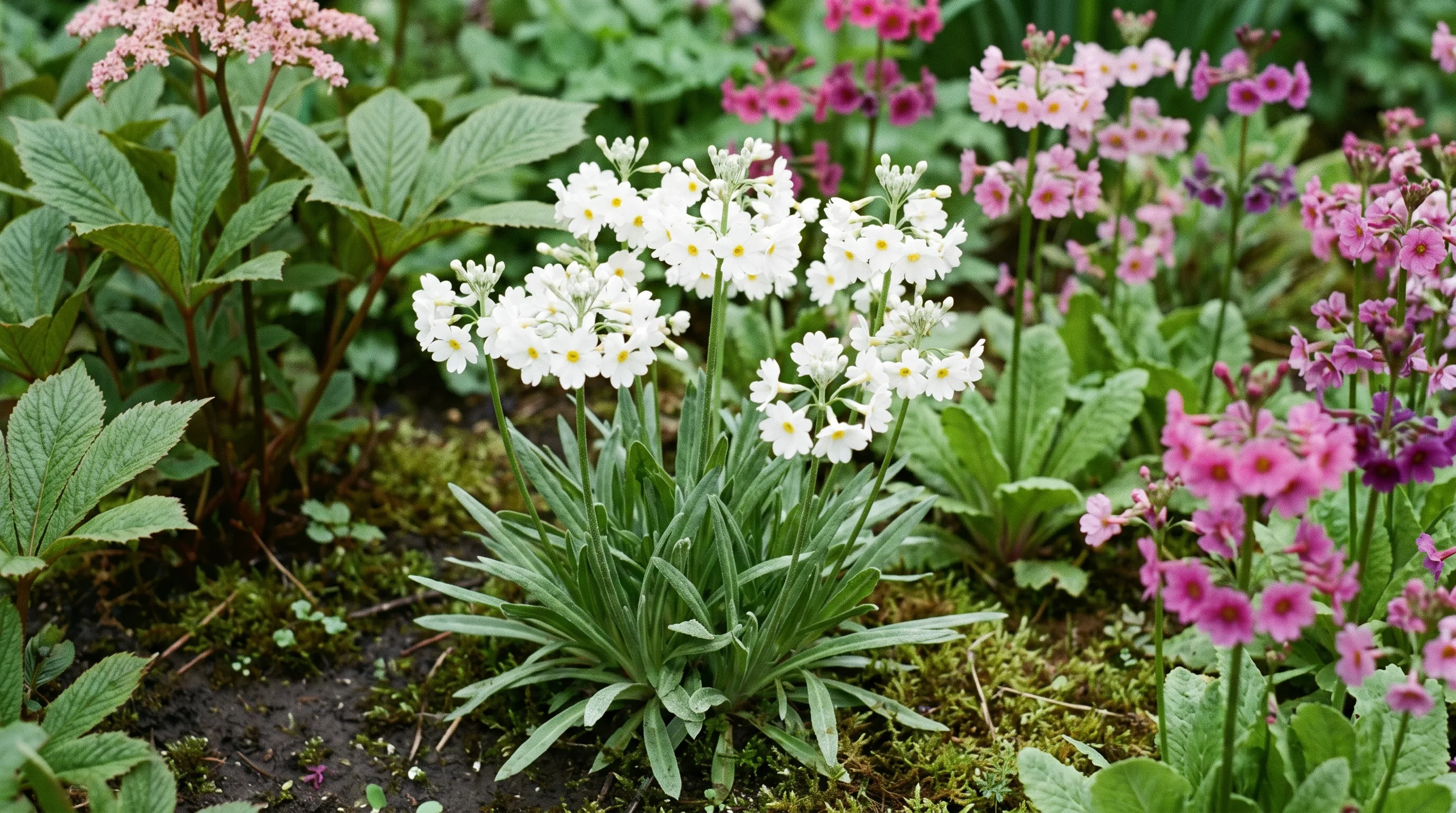
- Primula cockburniana hybrids — crosses between P. cockburniana and related candelabra primulas such as P. bulleyana and P. pulverulenta, sometimes grouped as candelabra primula seed mixes. These inherit the whorled flower form of P. cockburniana but in a wider colour range from cream through pink to deep red. They are often easier to grow than the species itself and are a sensible choice for gardeners new to the group.
No Royal Horticultural Society Award of Garden Merit (AGM) is currently held by Primula cockburniana; readers should treat any claimed AGM status with caution and verify it against the RHS website before purchase.
Pests and Diseases
| Problem | Symptoms | Management |
|---|---|---|
| Powdery mildew | White, powdery fungal growth appears on leaf surfaces. | Improve air circulation and spray with a fungicide if severe. |
| Aphids | Clusters of small green or black insects on new growth causing distortion. | Squash by hand or use insecticidal soap for heavy infestations. |
| Root rot | Leaves turn yellow and wilt while the crown becomes soft and mushy. | Ensure excellent drainage and avoid overwatering, especially in winter. |
| Slugs and snails | Irregular holes chewed into leaves and silvery trails on foliage. | Use slug pellets or beer traps around the base of the plant. |
For step-by-step help, read Controlling Aphids Naturally, Dealing with Slugs and Snails and Treating Powdery Mildew. Or browse the full plant problem solver to diagnose an issue by symptom.
Recommended Products
GardenWizz earns a commission from qualifying purchases made through affiliate links on this page (including links within the article) — as an Amazon Associate, and from Thompson & Morgan via the Awin network. This does not affect the price you pay. See our disclaimer for details.