Bees' Primrose
Primula beesiana
The Gardening Year
Best months in UK gardens · full planting calendar →
🖨 Printable care card (PDF)At a Glance
| Botanical name | Primula beesiana |
|---|---|
| Common name(s) | Bees' primrose |
| Family | Primulaceae |
| Plant type | perennial (semi-evergreen perennial) |
| Height × Spread | 50–60 cm × — |
| Position | Partial shade |
| Soil | moisture-retentive soil |
| Flowering | June–August |
| Toxicity | — |
| Native range | hillsides in China |
Overview
Bees Primrose (Primula beesiana) is a herbaceous perennial from the candelabra section of the genus, native to wet mountain meadows and stream margins in Sichuan and Yunnan, China, where it grows at altitudes of roughly 2,000–3,300 m. It was introduced to British cultivation in 1908 by the plant hunter George Forrest, working under the sponsorship of the firm Bees Ltd of Chester — hence both the common name and the specific epithet. Forrest collected seed from open, marshy ground near Lijiang, and the species has been a mainstay of British bog and waterside plantings ever since.
The plant is grown primarily for its tiered, candelabra-like flower spikes, which open in early to mid-summer, and for its ability to thrive in conditions that defeat most other showy perennials — permanently damp, humus-rich soil at the edge of a pond or in a bog garden, in sun or light shade. In the UK it is fully hardy across all but the most exposed upland and northern sites, where prolonged wet cold and late frost can damage emerging spring growth. It is a reliable, long-lived perennial where conditions suit it, forming expanding colonies by seed and short rhizomes over a few seasons.
Like all candelabra primulas, P. beesiana is a spring-emerging, summer-flowering plant that goes dormant in winter, retreating to a resting bud at soil level. It is not a demanding plant once its basic requirements of moisture, humus and a cool root run are met, and it hybridises freely with other candelabra species, producing intermediates that can be valuable in their own right in the wilder, naturalistic plantings for which the group is renowned.
Appearance
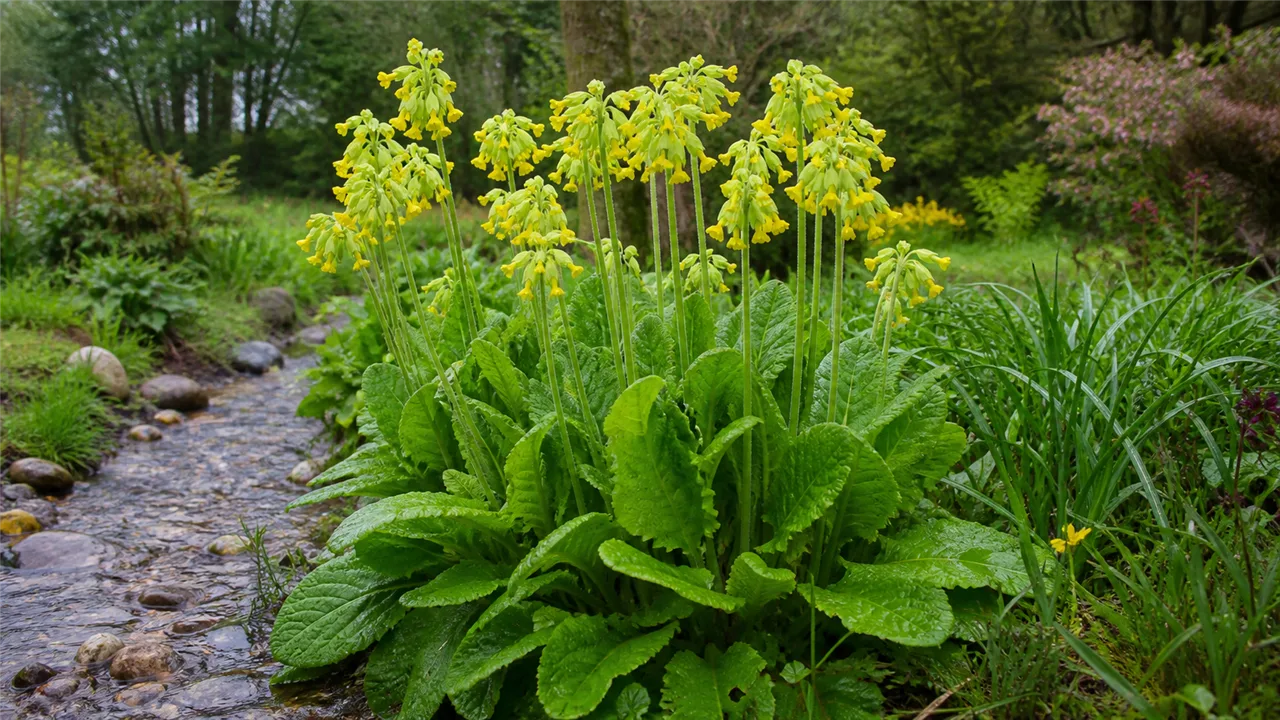
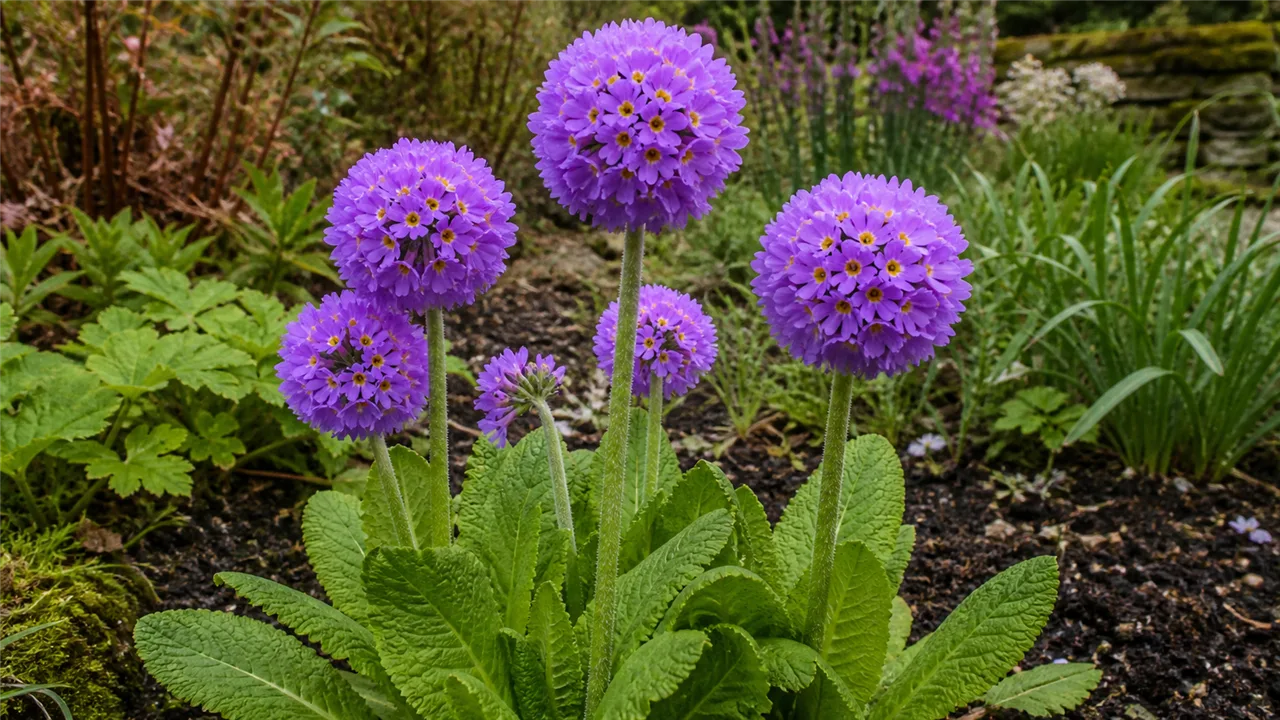
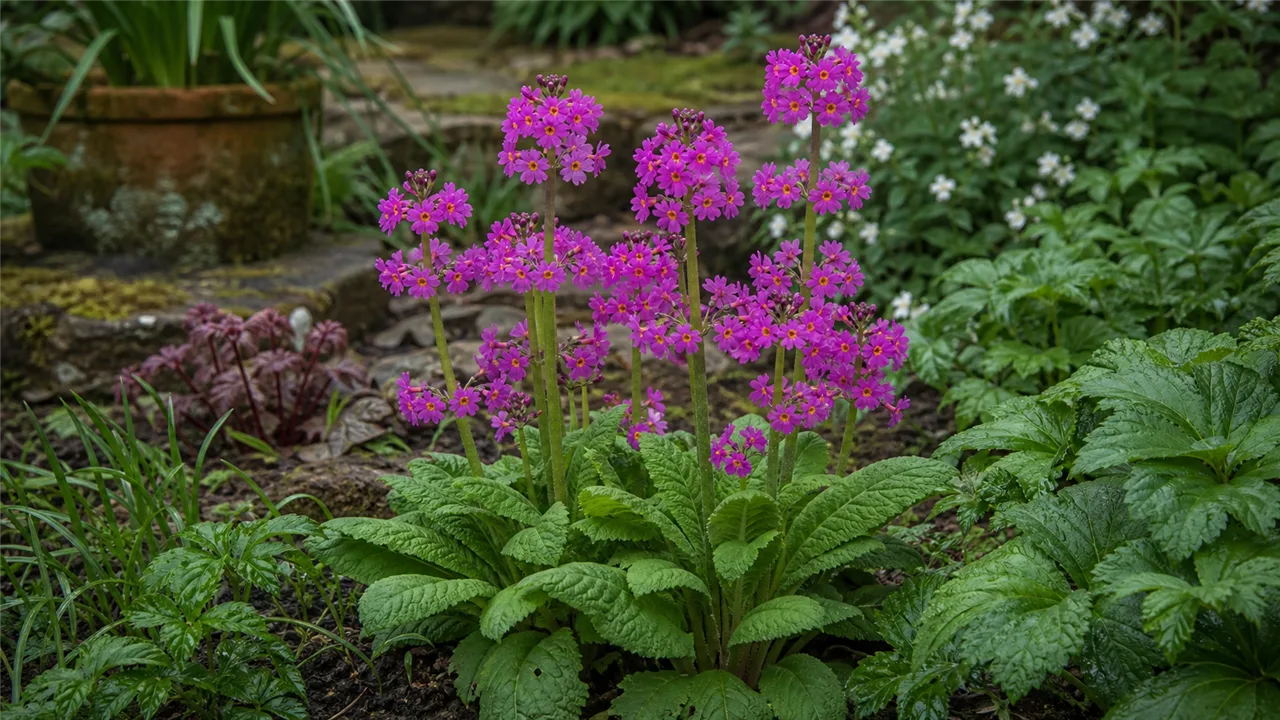
Primula beesiana forms a rosette of oblong to lance-shaped, slightly crinkled leaves, each typically 10–25 cm long and 3–6 cm wide, tapering to a winged stalk. The leaves are mid-green, sometimes with a faint reddish flush along the midrib, and have an irregularly toothed or finely scalloped margin. The rosette sits flat on the soil surface, and from its centre rises a single upright flower stem (occasionally two) of 30–60 cm, occasionally taller in rich, damp ground.
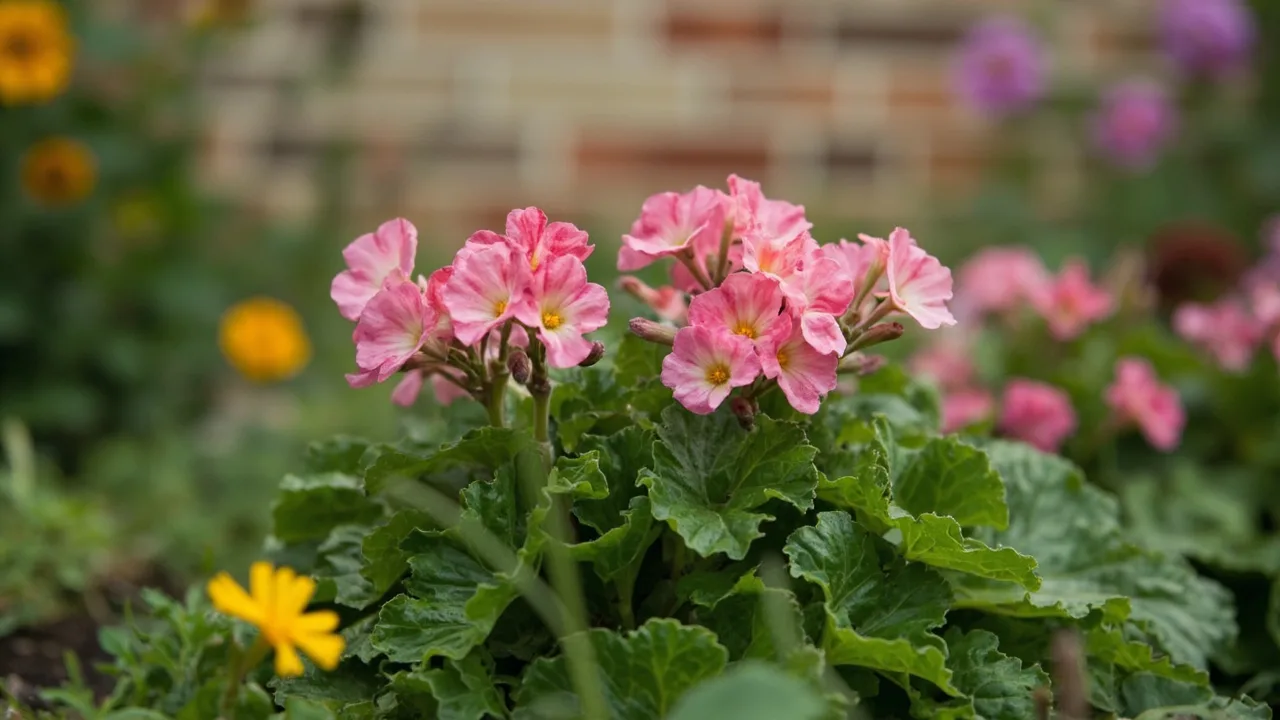
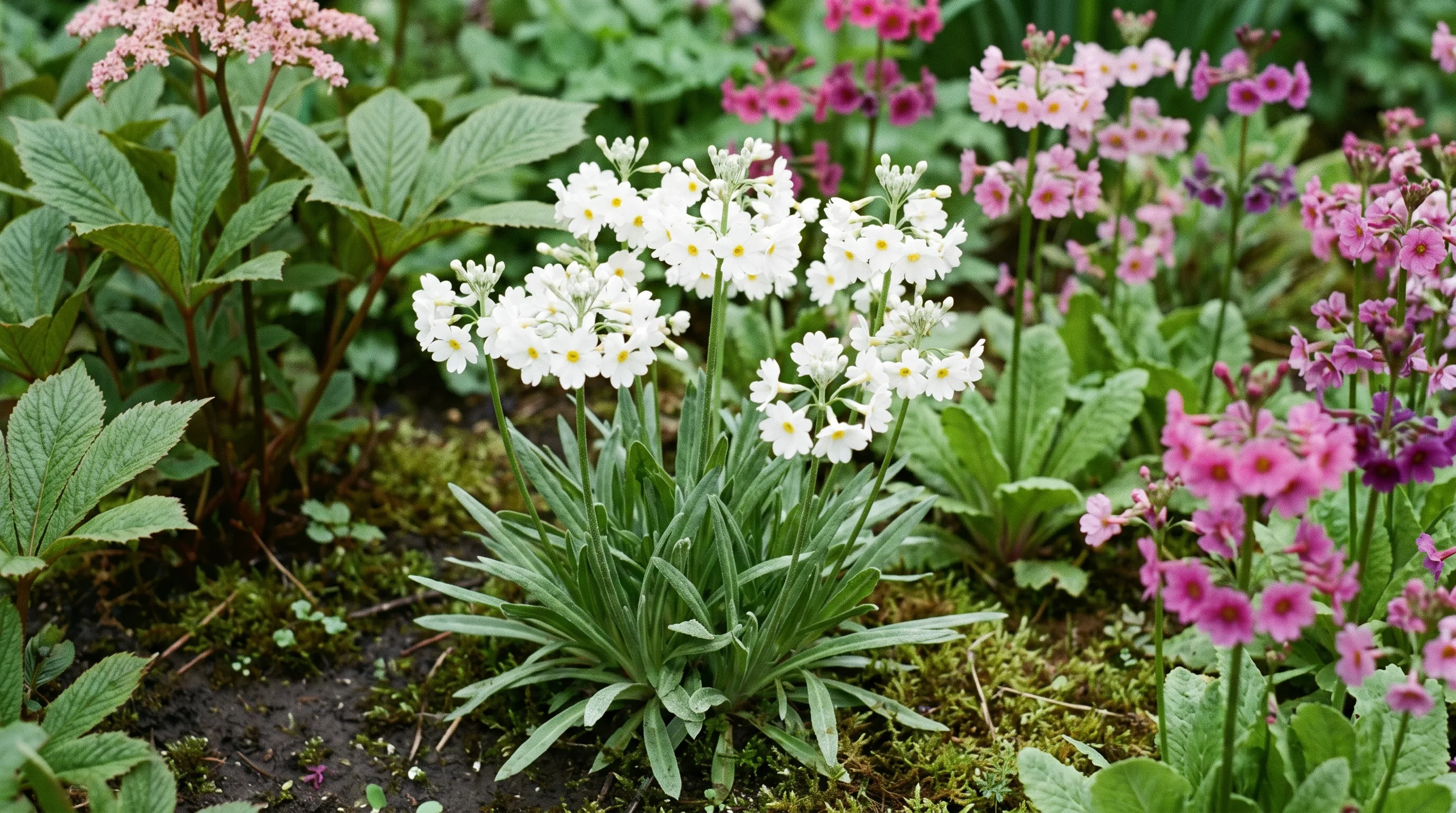
The flowers are carried in 2–6 well-spaced whorls, or tiers, up the stem, each tier comprising six to twelve individual blooms on short, slender stalks. A mature, well-grown spike may carry four to six tiers and forty or more individual flowers open in succession from the bottom upwards over three to four weeks in June and July. Each flower is tubular at the base, opening to a flat, slightly cupped face 1.5–2 cm across, with five rounded, notched lobes. The colour is a clear rose-pink to carmine, with a distinct yellow eye at the throat — a combination that distinguishes it from the otherwise similar Primula bulleyana (which is orange) and Primula pulverulenta (which is deeper pink to red and mealy on the stem).
The seed capsule is a small, cylindrical, five-valved pod, ripening to brown in late summer and releasing fine, dust-like seed. Established clumps broaden steadily into handsome colonies 40–60 cm across within three to four years, and the tiered flower spikes of a full colony, flowering in unison, are one of the most striking sights of the early-summer bog garden.
Growing Conditions
P. beesiana is a plant of permanently moist, humus-rich, slightly acid to neutral soil. In the garden it does best at the margin of a pond or stream, in a bog bed, or in any soil that does not dry out for any prolonged period between late spring and early autumn. Soil pH should ideally sit between 5.5 and 7.0; very alkaline conditions lead to chlorosis and weak growth. Heavy clay that stays damp is acceptable provided the surface does not cap and exclude air, but free-draining sandy soils are unsuitable unless heavily improved with leafmould or garden compost and kept irrigated.
The plant prefers full sun or light dappled shade. In the hotter, drier parts of southern and eastern England, light afternoon shade prevents stress during July and August and improves the colour saturation of the flowers. In the cooler, wetter north and west, full sun is preferable and produces stockier, more floriferous plants. Shelter from cold, drying east winds in spring reduces scorch on emerging foliage.
In common with other candelabra primulas, P. beesiana requires a cool, moist root run through the growing season. Mulching in late spring with a 3–5 cm layer of well-rotted leafmould or compost helps to conserve moisture, suppress weeds, and maintain the cool surface temperatures the roots prefer. The plant is hardy across the UK, with a published RHS hardiness rating displayed on its profile badge, and tolerates winter temperatures well below freezing provided the crown is not allowed to sit in waterlogged, frozen ground for prolonged periods — a concern on the heaviest clay soils in the worst winters of upland Britain.
Planting and Care
Planting. Container-grown plants from nurseries are best planted in spring (March to May) or in early autumn (September to early October), when the soil is warm and moist and the roots can establish quickly. Space plants 30–45 cm apart, or 20–25 cm if mass-planting in a single drift. Dig a hole wider than the rootball, tease out any congested roots, set the crown flush with the soil surface, water in well, and apply a mulch of leafmould.
Watering. From late spring to early autumn the ground around P. beesiana should never be allowed to dry out. In a true bog or pondside position little or no supplementary watering is needed. In drier parts of the garden, soak deeply once or twice a week during dry spells — overhead watering in the evening is acceptable, as the plant is not prone to foliage disease in still, damp air.
Feeding. A single application of a balanced, slow-release fertiliser in early spring, or a top-dressing of well-rotted manure or garden compost, is sufficient. High-nitrogen feeds should be avoided, as they produce lush foliage at the expense of flower.
Cut back and division. In late autumn, after flowering has finished and the foliage has begun to yellow, cut the old flower stems down to the rosette and remove any damaged outer leaves. Every three to four years, in early autumn or immediately after flowering, lift and divide established clumps, replanting the strongest outer sections into freshly improved soil and discarding the worn-out central core. Division is the easiest means of increase and keeps plants vigorous.
Propagation. Seed is the other main route. Collect ripe seed in late summer, sow fresh onto the surface of a moist, peat-based compost in a pot, cover with a thin layer of fine grit, and leave the pot outdoors in a cool, shaded place through winter. Germination occurs in spring. Prick out seedlings into individual pots and grow on for a year before planting out. P. beesiana crosses readily with other candelabra primulas growing nearby; if pure seed is required, isolate plants or hand-pollinate.
Seasonal care in the UK. The growing season runs from March to October. In March, watch for slug and snail damage on new leaves. By May the rosettes are well developed and the flower spikes are beginning to extend. Peak flowering is mid-June to mid-July across most of England and Wales, one to two weeks later in Scotland and the north. Seed ripens in August and September. Foliage dies back in October or November.
Common Problems
Vine weevil. Adult weevils notch the leaf margins, but the greater damage is done by the cream-coloured grubs feeding on roots in autumn and winter, often killing container-grown plants. In borders, control is rarely necessary; in pots, use a biological control based on Steinernema kraussei nematodes in late summer.
Slugs and snails. New spring growth is attractive to slugs, particularly in damp, sheltered sites. Damaged leaves are unsightly but rarely fatal. Use ferric phosphate pellets, beer traps, or hand-picking at dusk.
Root rot in winter. On the heaviest, slowest-draining soils, prolonged waterlogging in winter — particularly when the ground is also frozen — can rot the resting crown. Improve drainage with grit and organic matter, or relocate to a naturally drier part of the garden.
Botrytis (grey mould). In still, humid summers, spent flowers may develop a grey fungal bloom. Prompt deadheading and good air movement reduce the risk.
Virus. Mottled, distorted leaves and reduced flowering can indicate cucumber mosaic virus or primula mosaic virus. Affected plants should be lifted and destroyed; there is no cure. Control aphid vectors and wash tools and hands between plants.
Powdery mildew. Rare on P. beesiana in damp conditions, but occasionally seen in dry, shaded sites at the end of summer. Improve air circulation and water at the base of the plant.
Popular Varieties
Named cultivars of P. beesiana are few, and the species is most often grown in its typical form from wild-collected or nursery-raised seed. The following are the most reliable and widely available options in UK horticulture.
- Primula beesiana (species form) — clear rose-pink flowers with a yellow eye, the standard form and the most vigorous and easy to grow.
- `Beesiana Group` — a collective name covering vigorous, selected seedling strains, generally with slightly larger flowers in a uniform deep rose-pink.
- Primula × bulleesiana (sometimes sold as P. × beesleyana) — a hybrid between P. beesiana and P. bulleyana, with a graded colour range from cream through yellow, orange and pink on the same spike. A popular and forgiving garden plant where a mixed drift is wanted.
- White-flowered seedlings — occasionally offered by specialist primula nurseries; these are usually P. beesiana variants rather than a distinct cultivar, and seed-raised offspring are typically pink.
Pests and Diseases
| Problem | Symptoms | Management |
|---|---|---|
| Powdery mildew | A white, dusty fungal growth appears on leaves and flower stems. | Improve air circulation and spray with a fungicide or bicarbonate solution at first sign. |
| Slugs and snails | Irregular holes in leaves and silvery slime trails on foliage and soil. | Use iron phosphate pellets, beer traps, or hand-pick at night to control populations. |
| Root rot | Leaves turn yellow and wilt despite moist soil, often with a mushy base. | Ensure well-draining soil and avoid waterlogging, especially in heavy clay or winter. |
| Vine weevil | Notched leaf margins and wilting plants due to larvae feeding on roots. | Apply nematodes to the soil in autumn or use insecticidal drenches for potted plants. |
| Aphids | Clusters of small soft-bodied insects on new growth causing distorted leaves. | Squash by hand, blast with water, or apply insecticidal soap if infestations are heavy. |
For step-by-step help, read Controlling Aphids Naturally, Dealing with Slugs and Snails and Treating Powdery Mildew. Or browse the full plant problem solver to diagnose an issue by symptom.
Recommended Products
GardenWizz earns a commission from qualifying purchases made through affiliate links on this page (including links within the article) — as an Amazon Associate, and from Thompson & Morgan via the Awin network. This does not affect the price you pay. See our disclaimer for details.