Bulley's Primrose
Primula bulleyana
The Gardening Year
Best months in UK gardens · full planting calendar →
🖨 Printable care card (PDF)At a Glance
| Botanical name | Primula bulleyana |
|---|---|
| Common name(s) | Bulley's Primrose |
| Family | Primulaceae |
| Plant type | perennial (semi-evergreen perennial) |
| Height × Spread | 50–60 cm × 10–50 cm |
| Position | Full sun |
| Soil | moist |
| Flowering | June–August |
| Toxicity | — |
| Native range | hillsides in China |
Overview
Primula bulleyana is a vigorous herbaceous perennial from the candelabra primrose group, prized in British gardens for its tiered whorls of warm orange flowers held well above the foliage. It was named after Arthur Kilpin Bulley, the Liverpool cotton broker who funded plant-hunting expeditions to western China in the early twentieth century, and it has been cultivated in British gardens ever since. Plants seed around gently in moisture-retentive soil and bulk up into sizeable flowering clumps within three to five years, making it one of the most rewarding Asiatic primulas for UK conditions.
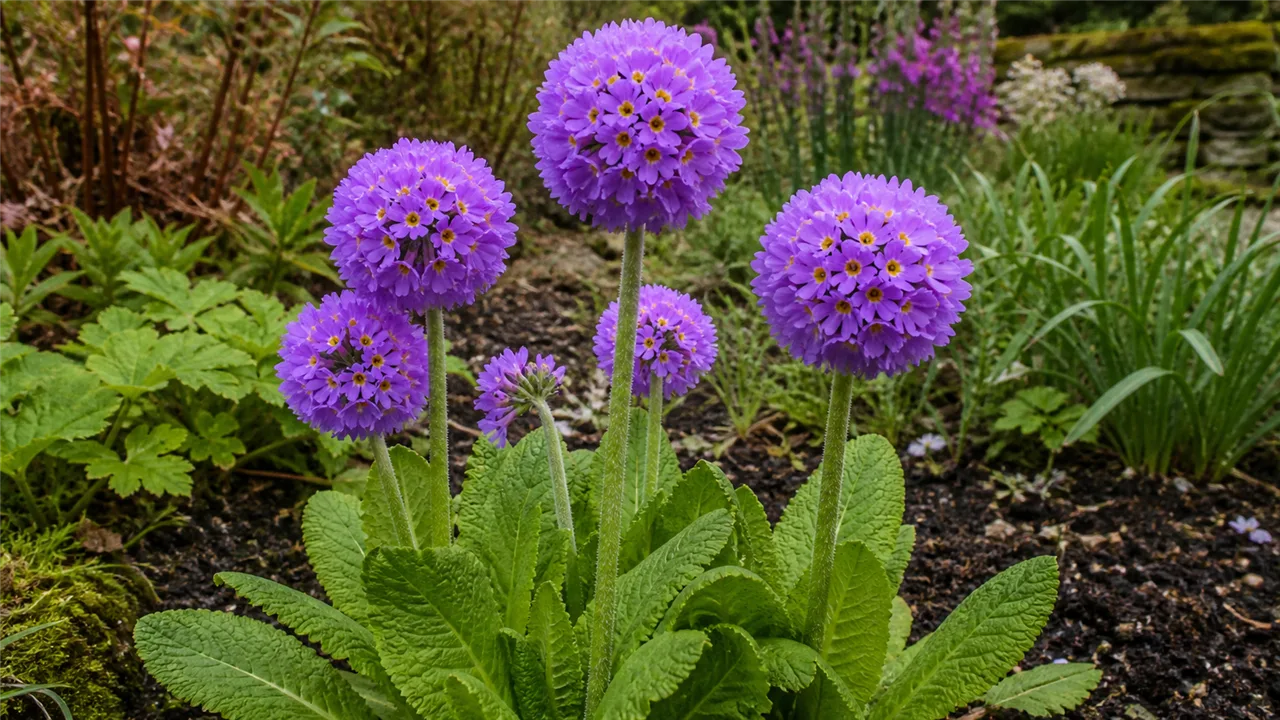
In UK gardens it sits comfortably in heavy clay that does not dry out, in bog gardens, along pond margins, and in the cool end of a herbaceous border. Like its relatives Primula japonica and Primula beesiana, it belongs to the section Proliferae and hybridises readily with them where they grow side by side, which is worth knowing if you collect seed for propagation.
Appearance
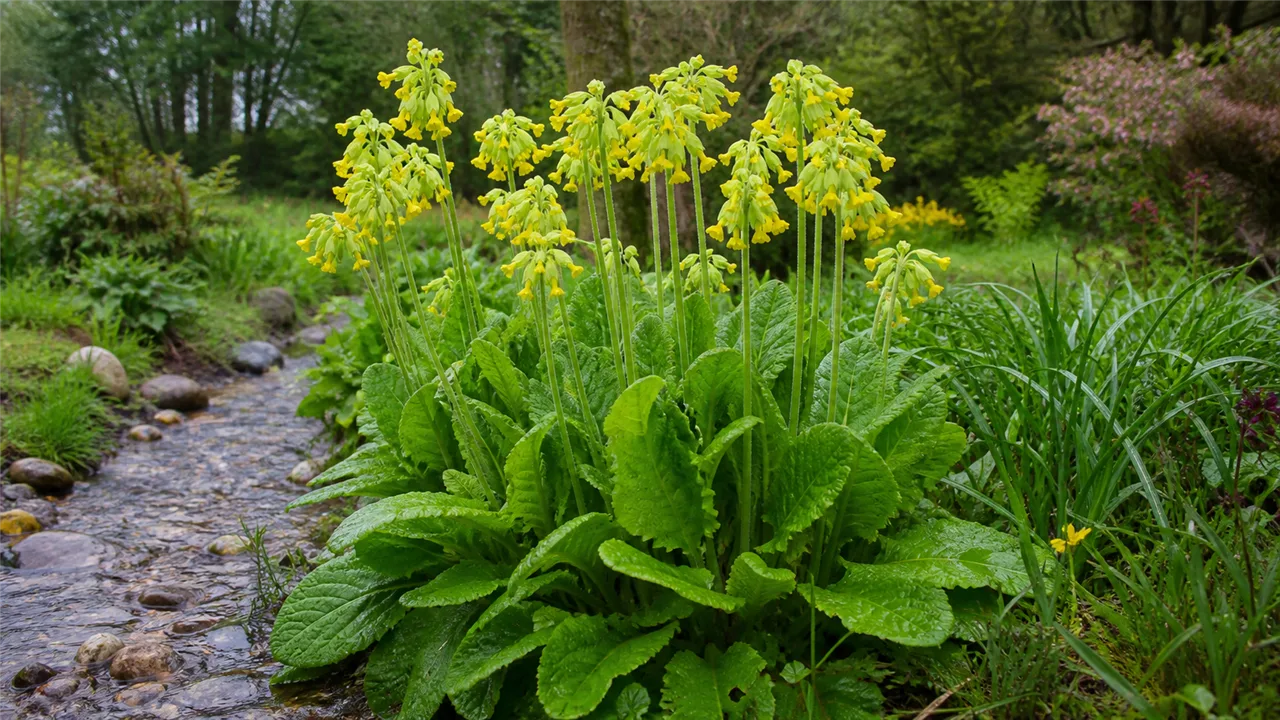
Primula bulleyana forms a basal rosette of oblong to lance-shaped leaves, mid-green and slightly crinkled, with finely toothed edges. The leaves are softly textured and can reach 20–40 cm long at maturity, with a prominent central midrib and a faintly reddish base where the petiole meets the crown. From the centre of each rosette a stout, erect flowering stem rises to 60–90 cm between June and August, depending on season and region.
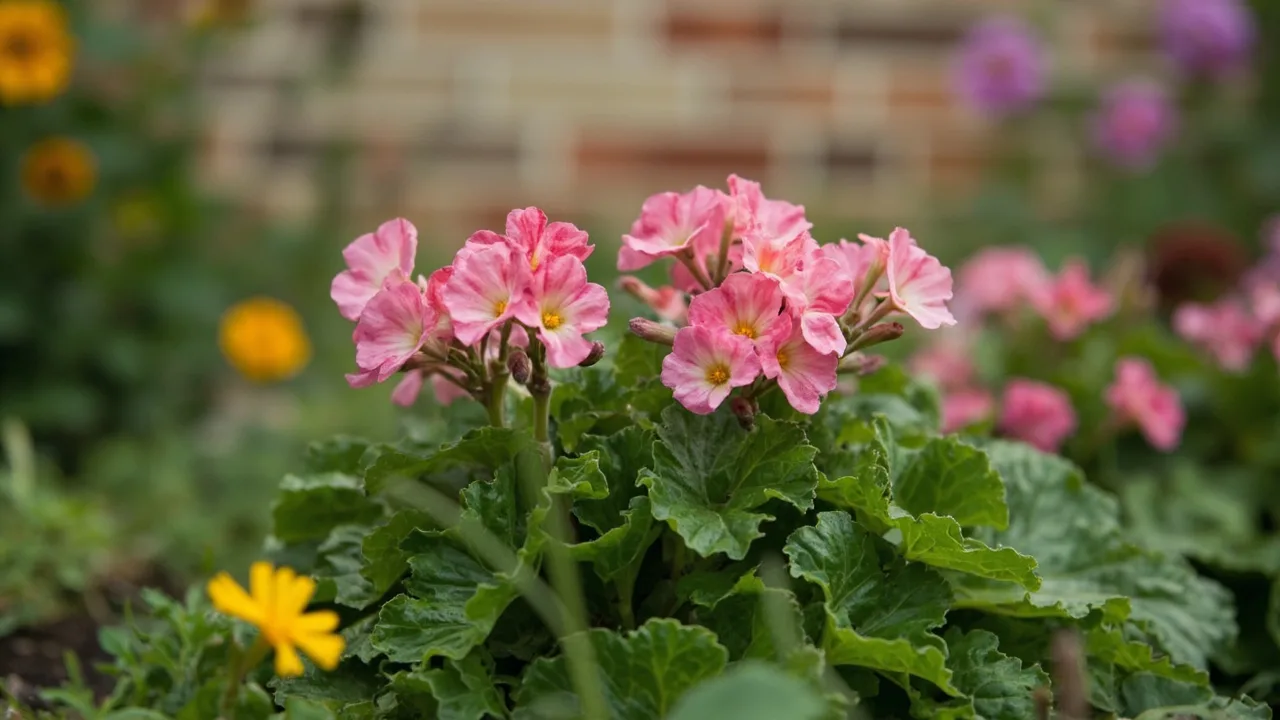
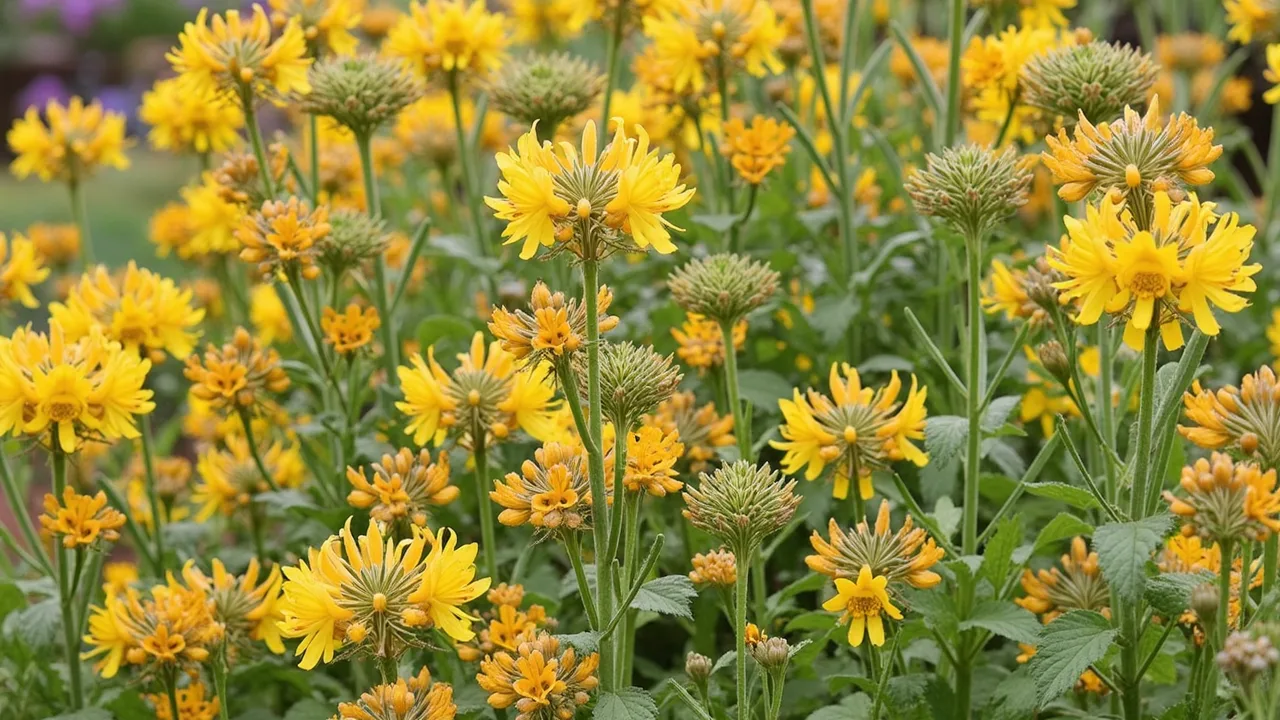
The inflorescence is the distinguishing feature. Each stem carries up to six or seven well-spaced whorls (tiers) of tubular, five-lobed flowers, the lower whorls opening first and the uppermost opening last. Individual blooms are 1.5–2.5 cm across and a uniform warm amber to soft orange, with a bright yellow eye at the centre. Unlike the closely related P. beesiana and P. japonica, the flowers of P. bulleyana are not bicoloured; the whole plant carries the same sunset palette, which makes it particularly striking in evening light.
A light honey scent is detectable on warm days and the flowers are popular with bees and hoverflies. Once flowering finishes, the bare stems persist into winter, providing vertical structure in the border; many gardeners leave them standing until late winter before cutting back.
Growing Conditions
Primula bulleyana thrives in moisture-retentive, humus-rich soil that stays damp through the growing season. It performs especially well in heavy or clay-based soils provided they do not dry out, and it tolerates slightly acidic to neutral pH (roughly pH 5.5–7.0). Soils that dry out in summer cause the plant to go dormant prematurely and reduce flowering.
The ideal position is in dappled shade or partial shade, mimicking the streamside meadows of its native Yunnan and Sichuan habitat. It will tolerate more sun where the soil is consistently wet, for example at the edge of a pond or in a bog garden, but it struggles in dry, sunny borders. Shelter from cold drying winds is beneficial but full shade from overhead evergreens tends to reduce flowering.
In the UK the plant is fully hardy across all but the coldest upland and exposed northern gardens. It carries a GardenWizz hardiness rating and is rated for general UK cultivation; consult the badge on this page for the precise rating. Plants establish most reliably in the cooler, wetter west and north, where summer moisture is dependable.
Planting and Care
When to plant. Plant container-grown specimens in autumn or early spring. Autumn planting is preferred because it allows the roots to establish through the cool, moist months before the stress of summer flowering. Avoid planting in mid-summer when dry conditions can check growth.
Spacing. Set plants 30–45 cm apart to allow each rosette room to develop. Established clumps spread to around 45–60 cm across after four or five years.
Watering. The single most important rule is never to let the soil dry out during the growing season. Water deeply in dry spells, particularly from late spring through midsummer when the flower stems are developing. Mulching with leaf mould or garden compost in spring helps to lock in moisture and feed the plant at the same time.
Feeding. Apply a balanced liquid fertiliser (such as a general-purpose seaweed or tomato feed at half strength) once a month from late spring until flowering finishes. A top-dressing of well-rotted leaf mould or garden compost in early spring is also beneficial and supports the moisture-retentive soil Primula bulleyana prefers.
Cut back. Cut the old flower stems back to the base in late winter or early spring, just as new growth begins to emerge from the crown. Leaving the stems through winter gives visual structure and provides some frost protection to the crown. Cut back months: February–March.
Division. Lift and divide established clumps every three to four years in early autumn, immediately after flowering has finished. Replant the strongest divisions promptly into freshly prepared, moist soil and water them in well. Division rejuvenates flowering and gives you new plants for free. Divide months: September–October.
Propagation. Sow seed fresh, as soon as it ripens in late summer, onto the surface of a moist, peat-free seed compost and keep cool and shaded. Germination can be slow and erratic; do not cover the seed, as it needs light. Division of established clumps is the more reliable method for the home gardener.
Seasonal care in the UK. Mulch in March or April, watch for slug damage on emerging growth in April and May, and top up watering through dry spells in June, July and August. Divide in September or October, and clear spent stems in February or March.
Common Problems
Powdery mildew. A grey-white fungal coating on the leaves in dry or stagnant air. Improve air circulation by thinning overcrowded clumps, water at the base rather than over the foliage, and mulch to keep root moisture steady. Affected leaves can be removed and destroyed.
Botrytis (grey mould). Grey, fuzzy fungal growth on damaged or ageing tissue, particularly in damp seasons or where drainage is poor. Avoid heavy mulches piled against the crown and remove any damaged or yellowing leaves promptly.
Slugs and snails. The young spring foliage is highly attractive to slugs and snails, which can shred new growth overnight in damp conditions. Use wildlife-friendly controls such as nematodes, beer traps, or barriers of wool pellets or crushed eggshell around the crown. Check plants at dusk in spring.
Vine weevil. Adult vine weevils notch the leaf margins and their cream, C-shaped grubs can chew the roots, particularly in container-grown specimens. Tip out and inspect the rootball of potted plants in autumn; biological control with Steinernema kraussei nematodes is effective and widely available.
Primula leaf spot. Brown circular spots caused by the fungus Ceuthospora primulana. Remove and destroy affected foliage, avoid overhead watering, and improve airflow around the plants by dividing congested clumps.
Virus. Yellow mottling or distortion of the leaves can indicate primula mosaic virus, which is spread by sap and by aphids. There is no cure; affected plants should be lifted and destroyed, and tools washed between plants.
Popular Varieties
True cultivars of Primula bulleyana are relatively few because the species breeds fairly true from seed and is most often grown as the straight species. The following names appear in UK nursery lists and specialist candelabra primula collections; availability varies year to year.
Primula bulleyana 'Cally Fire' is a selected form originating from Cally Gardens in Galloway, noted for particularly intense deep orange flowers and a robust habit. It tends to come reasonably true from saved seed.
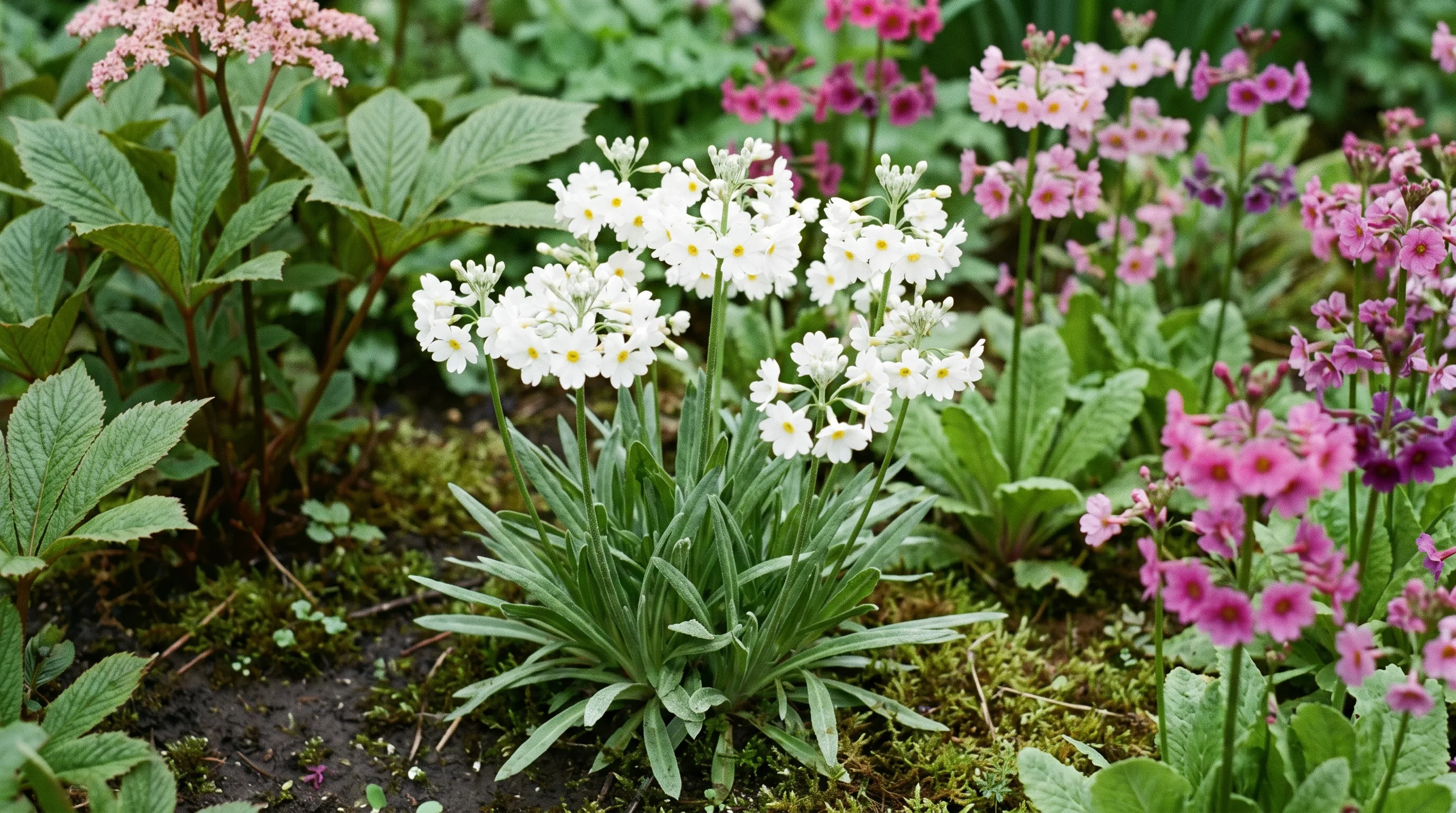
Primula bulleyana 'Alba' is a rare white or very pale cream variant that occasionally appears in specialist seed exchanges. It is sought after by collectors and is slower to bulk up than the orange form.
Primula bulleyana hybrids are very widely grown under informal names such as the Inshriach hybrids, Barnhaven hybrids, and the Candelabra mixed strains offered by many UK cottage-garden nurseries. These are predominantly crosses with P. japonica, P. beesiana and P. pulverulenta, and they yield a range of pinks, oranges, crimsons and salmons; P. bulleyana's amber-orange often dominates. They are excellent value in the bog garden.
If buying by name, expect straight P. bulleyana to come reasonably true from a reputable British nursery, while hybrid strains will be more variable. All are treated identically for cultivation purposes.
Pests and Diseases
| Problem | Symptoms | Management |
|---|---|---|
| Slugs and snails | Irregular holes chewed in leaves, often with silvery slime trails visible on foliage. | Use physical barriers like copper tape or hand-pick at night; avoid chemical slug pellets where possible. |
| Vine weevil | Notched edges on leaves above ground and root damage causing wilting or collapse below. | Apply nematodes to the soil in autumn and spring, or use biological controls for larvae. |
| Aphids | Clusters of small soft-bodied insects on new growth, stems, or undersides of leaves. | Squash by hand or blast off with water; encourage natural predators like ladybirds. |
| Primula rust | Clusters of tiny, cup-like orange or brown spore-producing structures on the leaf underside. | Remove and destroy infected leaves immediately to prevent spread; improve air circulation. |
| Glasshouse red spider mite | Fine webbing and stippled yellowing on leaves, particularly in dry, warm conditions. | Increase humidity around the plant and spray leaves with water to dislodge mites. |
For step-by-step help, read Controlling Aphids Naturally and Dealing with Slugs and Snails. Or browse the full plant problem solver to diagnose an issue by symptom.
Recommended Products
GardenWizz earns a commission from qualifying purchases made through affiliate links on this page (including links within the article) — as an Amazon Associate, and from Thompson & Morgan via the Awin network. This does not affect the price you pay. See our disclaimer for details.