Polyanthus Primrose 'Charisma'
Primula Charisma Series · Charisma Polyanthus · Primrose
The Gardening Year
Best months in UK gardens · full planting calendar →
🖨 Printable care card (PDF)At a Glance
| Botanical name | Primula Charisma Series |
|---|---|
| Common name(s) | Polyanthus Primrose 'Charisma', Charisma Polyanthus, Primrose |
| Family | Primulaceae |
| Plant type | perennial (RHS classifies the Charisma Series as a hardy H5 perennial (Primula vulgaris x Primula veris Polyanthus breeding-line complex); UK garden-centre practice and Mr Fothergill's sow timing treat it as a biennial bedding plant (summer sow, autumn plant-out, winter-spring flower, then compost). The two views co-exist in the approved body.) |
| Height × Spread | 10–50 cm × 10–50 cm |
| Position | Full sun, Partial shade |
| Soil | Loam or sandy, moist but well-drained |
| Flowering | January–May |
| Toxicity | Not stated by RHS Plant Finder; no claim made. |
| Native range | F1-hybrid complex of Primula vulgaris x Primula veris (and related Polyanthus breeding lines). Both parent species are native to GB/Ireland per RHS; the Charisma Series itself is a UK-developed horticultural series. |
Overview
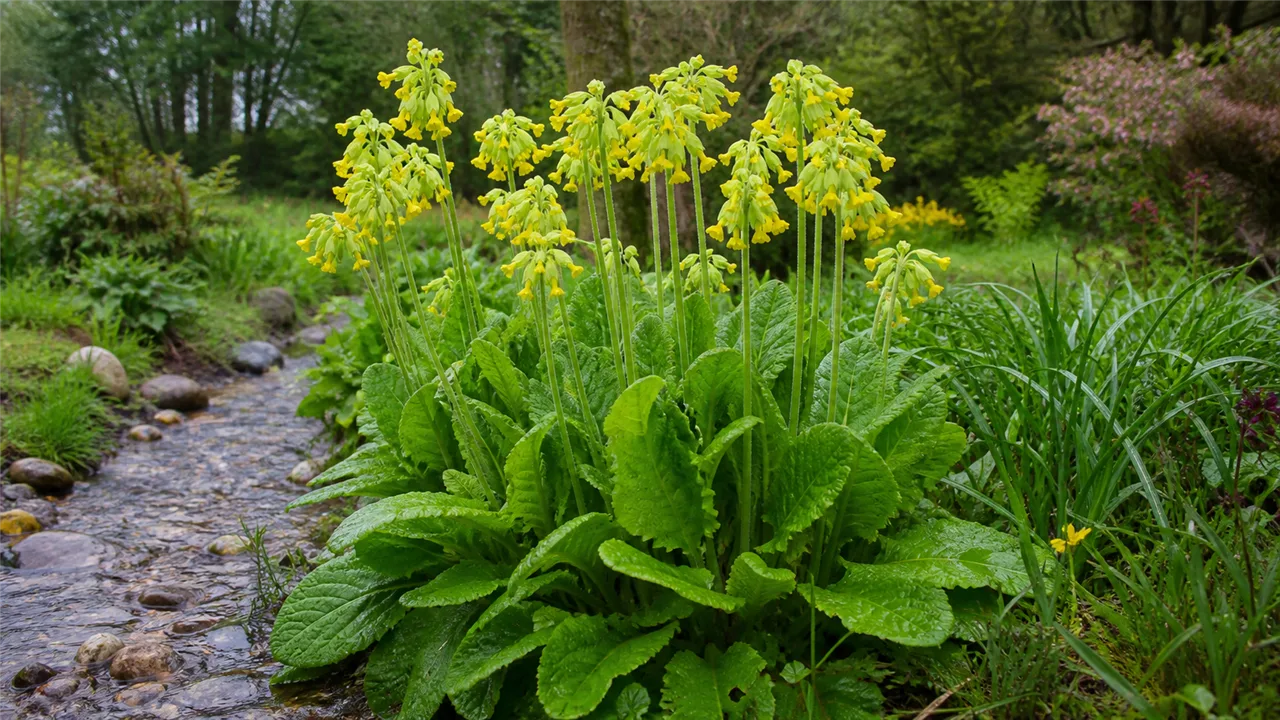
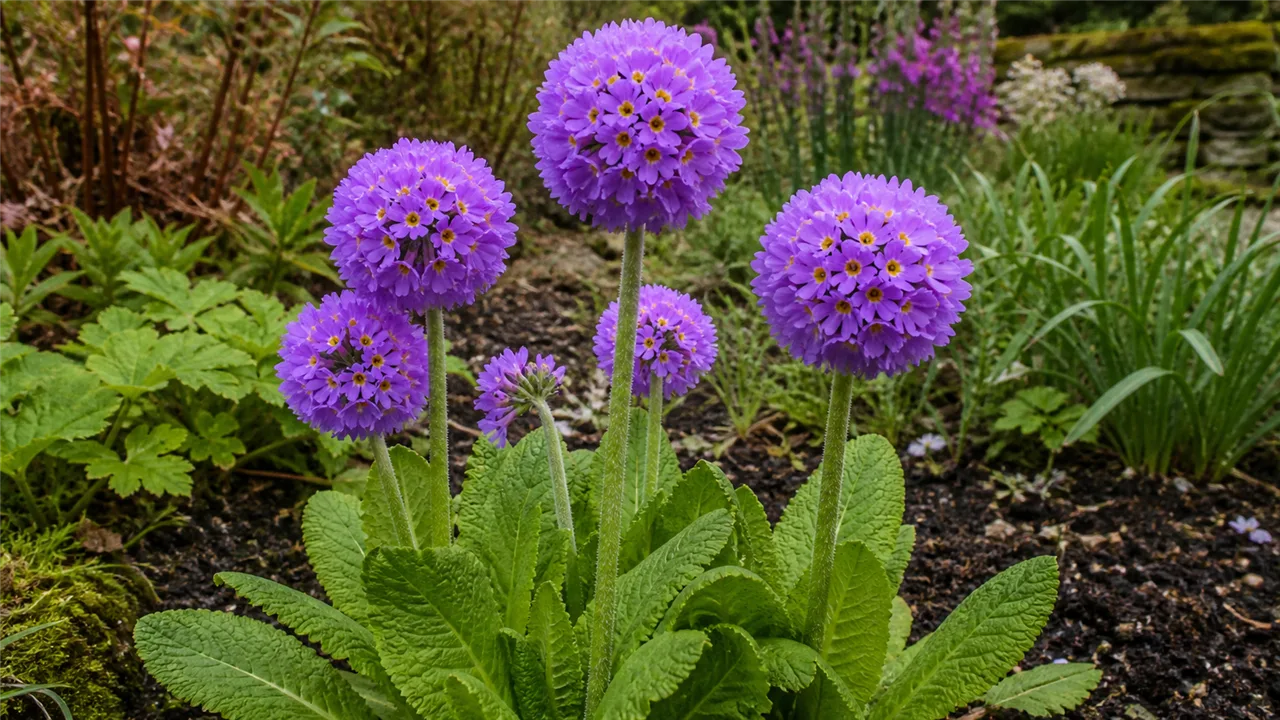
Primula Charisma is a Polyanthus Primrose F1-hybrid series widely sold across UK garden centres as a winter and early-spring bedding plant. It sits in the Royal Horticultural Society's Primrose (acaulis) group, recorded under the horticultural code PR/PRIM, rather than in the taller Polyanthus elatior group (PR/POLY) that includes series such as Crescendo. In plain terms, Charisma is the cluster-flowered rosette primrose that UK gardeners will recognise from late-winter plant benches — see the Primula (genus guide) for the wider family, and Primula malacoides (fairy primrose) for another winter / early-spring container primrose often confused with Polyanthus at the point of sale. Charisma is not a candelabra primula of damp streamside plantings and not a show auricula of alpine collections. The RHS lists the series as a hardy H5 perennial (tolerating roughly -15°C to -10°C), but most UK gardeners treat it as a biennial: sow in summer, plant out in autumn, enjoy a winter-and-spring display, then compost the plant. This entry focuses on what a UK gardener can realistically expect from Charisma in a British garden, how to plant and look after it, and which named strains and near-equivalents are worth knowing about on the same bench.
Appearance
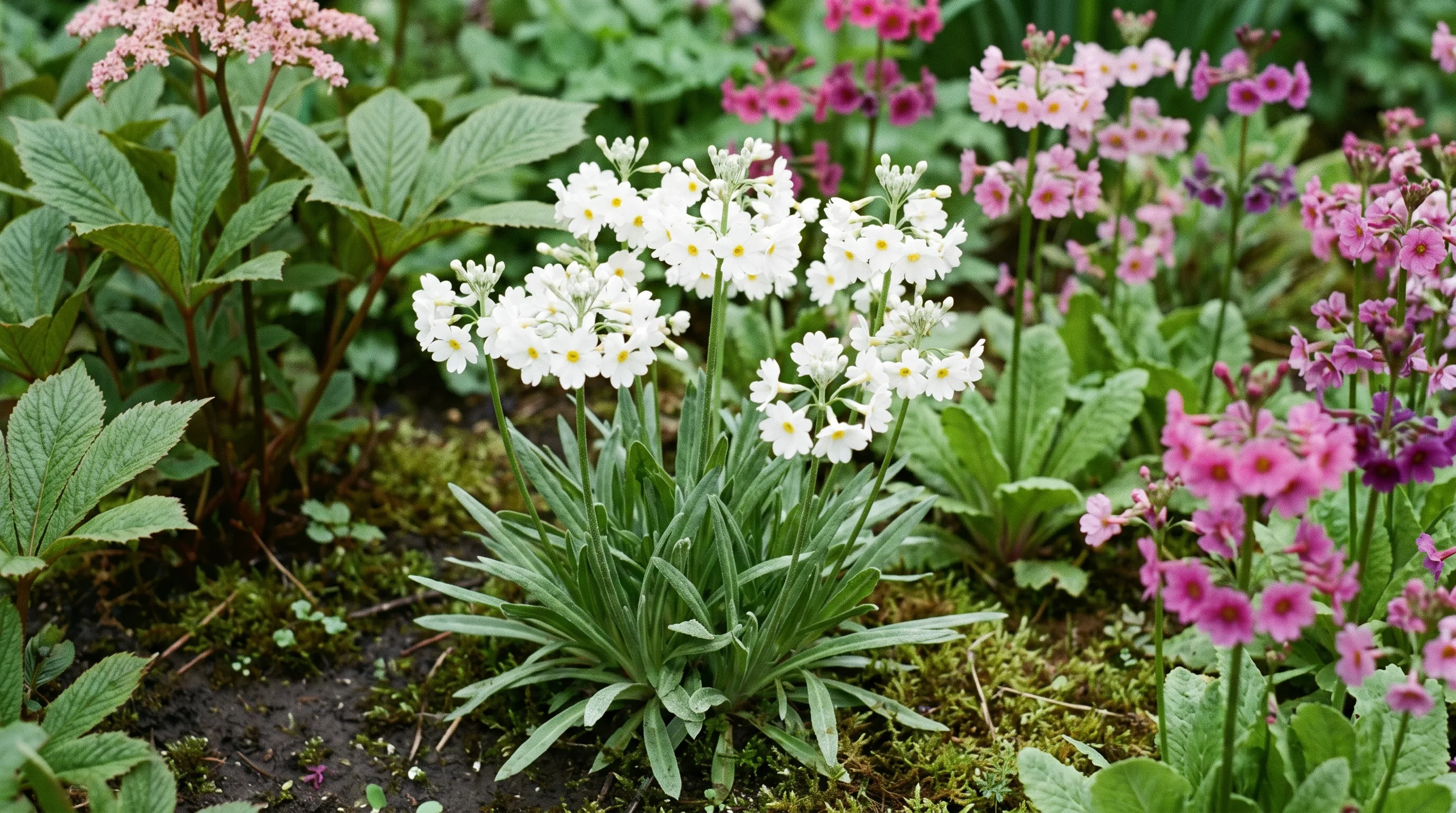
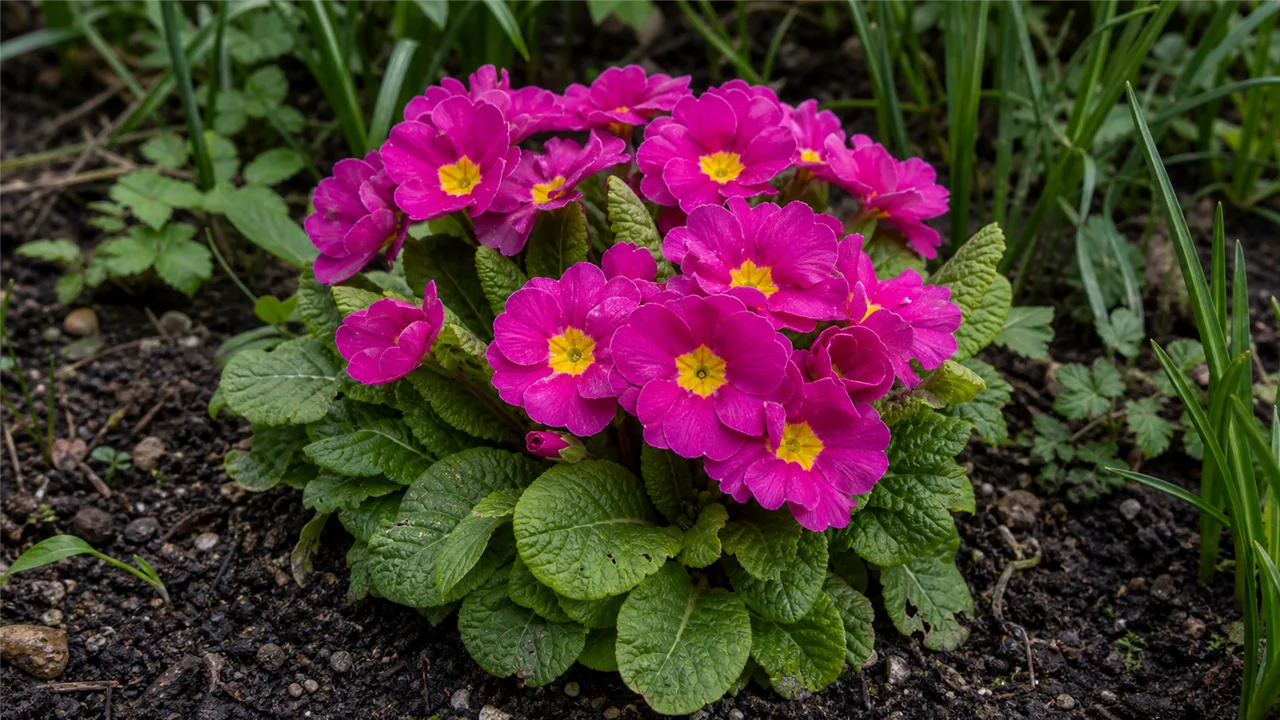
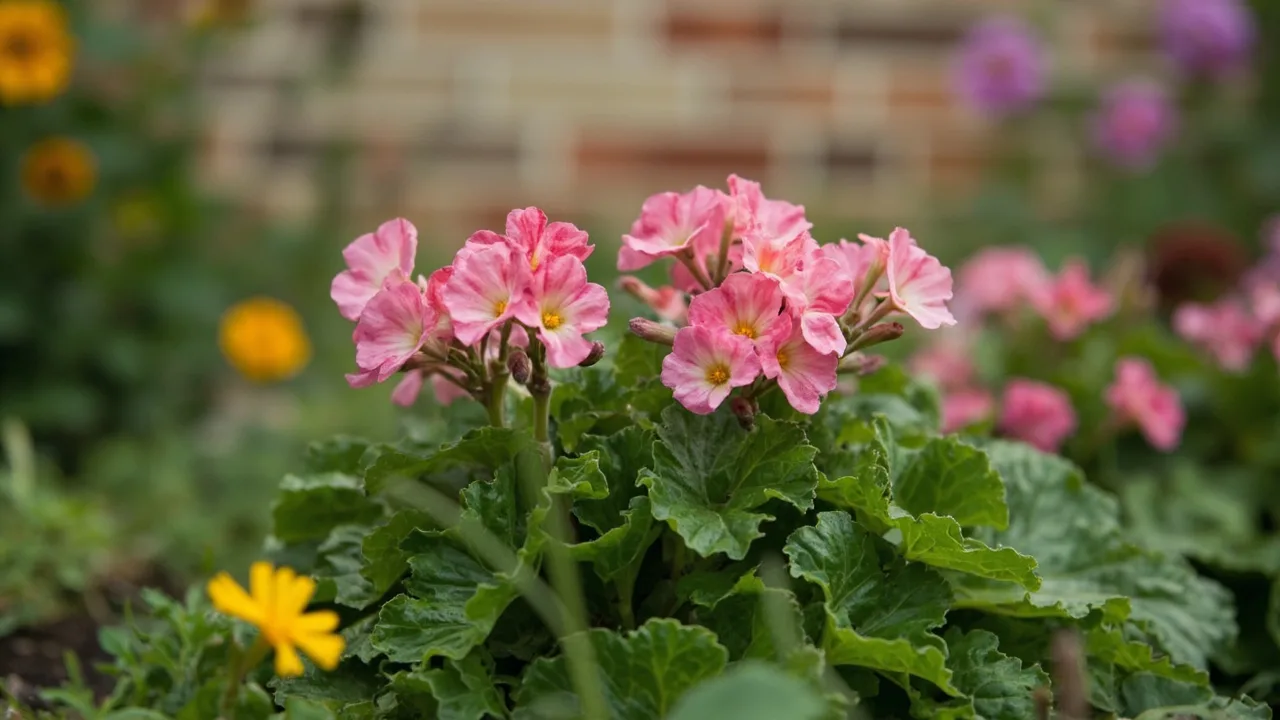
Charisma is a rosette-forming plant with a low clump of soft, slightly crinkled, mid-green leaves. From the centre of each rosette a short stem rises carrying an umbel (cluster) of salver-shaped flowers — the classic "Polyanthus" head of several flat-faced blooms held together at one point above the foliage. The Royal Horticultural Society records an ultimate height and spread of 0.1–0.5 m, so a mature plant stays compact and tidy in a patio pot or at the front of a border. Colours across the series span the Polyanthus Primrose range: clear pinks and rose shades, creamy yellows, deep blues and purples, white, orange, scarlet, and bicolours. The named strain Primula 'Charisma Pink' (Charisma Series) is the most distinct colour reference on the RHS Plant Finder, while the mixed-colour strain is sold in UK garden centres as "Polyanthus Charisma Mixed". Note that there is an unrelated Primula auricula 'Charisma' (RHS code AU/ST, a show-type auricula) on the same database; that is an entirely different plant and should not be confused with the Polyanthus Charisma that is the subject of this entry.
Growing Conditions
The RHS plant record for the Charisma Series gives a clear set of UK conditions: full sun or partial shade, on loam or sandy soil that is moist but well-drained, with acid-to-neutral pH, in an east- or south-facing aspect and either an exposed or a sheltered site. In a typical UK garden that translates to a cool position out of the hottest midday sun — in the south of England a lightly shaded east- or north-facing border suits it well, while further north a sunnier border is fine. The Polyanthus group's general growing advice on the RHS is humus-rich, moist but free-draining soil; in practice that means a border improved with leaf mould or well-rotted garden compost, or a 50:50 mix of John Innes No. 2 and coarse grit in a container. The plant carries an RHS hardiness rating of H5, which means it will survive typical British winters including the cold spells that reach -10°C to -15°C in many regions, though in exposed northerly and Scottish sites a sheltered position prevents root-ball freeze in containers and reduces wind scorch on the rosettes. Time to maturity is 1–2 years from sowing.
Planting and Care
In UK garden-centre practice, Charisma is treated as a biennial bedding plant. Plants are raised from a summer sowing (Mr Fothergill's lists February–April indoor sowings for bedding use), grown on through the summer, planted out in autumn, and brought into flower from late winter through spring — see the UK planting calendar for how this window fits the wider gardening year. Spacing depends on the planting style: in mass bedding or border drifts, allow 15–20 cm between plants to accommodate the 0.1–0.5 m ultimate spread recorded by the RHS; in a patio pot, tighter spacing of about 10 cm gives a quick, full-looking spring display. Feeding is straightforward — a single dose of slow-release general fertiliser at planting is enough for a border display, with an extra high-potash liquid feed every 10–14 days during flowering useful for container-grown plants to keep the blooms coming. Deadhead by pinching off the spent flower with its stem right down to the rosette; this keeps the display moving and reduces the risk of grey mould (Botrytis) settling on damp petals. After the spring display most UK gardeners simply compost the plant; if you want to keep it for a second year, lift the clump in autumn, divide it, and replant in fresh compost in a cooler part of the garden. Overwintering in containers is straightforward because of the H5 hardiness, but on a cold exposed site move pots to a sheltered cold frame or porch, raise them on pot feet so the drainage holes are not sitting in water, and keep the compost just moist rather than wet.
Common Problems
Several problems reliably affect Polyanthus primroses in UK gardens, and the RHS names Primula and Polyanthus specifically as hosts for each of them. For an at-a-glance diagnostic when something is wrong (yellowing leaves, no flowers, rot at the base), see the plant problem solver.
- Vine weevil in containers is the most damaging routine problem. The RHS notes that plants grown in containers are the most likely to be severely damaged, and lists "Primula, polyanthus" among the host plants in open ground too. Adult weevils notch leaf margins through the summer; the grubs eat roots from summer right through to the following spring. In the UK the standard RHS-recommended response for containers is biological control with Steinernema kraussei nematodes applied in late summer or early autumn, alongside pot hygiene and fresh compost each year.
- Grey mould (Botrytis cinerea) is a winter-and-spring risk. The RHS records that the fungus will "infect Chrysanthemum, Cyclamen, Pelargonium, Primula — in fact, most ornamental plants", and the cool damp conditions of a typical British winter are exactly the conditions Botrytis likes. The cultural response is to remove and bin infected material, space pots so air can circulate, and avoid overhead watering on the rosette.
- Powdery mildew tends to appear in a dry British spring when the air is still and humid around plants that are themselves dry at the leaf. The RHS advice is cultural: do not crowd plants, give them space, water at the base rather than overhead, and remove affected leaves promptly. Fungicide is not a first-line treatment in RHS guidance. For a deeper treatment walkthrough see Treating powdery mildew.
- Slugs and snails target Polyanthus flower stems, particularly in damp autumns and mild winters. The RHS pest list for the Polyanthus group includes slugs alongside aphids, vine weevil and eelworms. Standard UK controls work well: nematode Phasmarhabditis hermaphrodita in autumn, hand-picking at dusk, beer traps, and copper rings around patio pots — see Dealing with slugs and snails for a step-by-step.
- Root rot in heavy wet soil follows directly from the Polyanthus group's "moist but well-drained" requirement. In heavy clay, raise the bed by 10–15 cm or plant in pots; in containers use a 50:50 mix of John Innes No. 2 and coarse grit; in a wet British winter raise pots on pot feet so the drainage holes clear any standing water.
Popular Varieties
The Charisma Series itself comes in a parent mixed-colour form and in named colour strains. Three are confirmed on the RHS Plant Finder as of 2026-08-01:
- Primula Charisma Series (mixed) — the parent mixed-colour entry (RHS plant 176795, PR/PRIM), sold in UK garden centres as "Polyanthus Charisma Mixed".
- Primula 'Charisma Pink' (Charisma Series) — the named pink strain (RHS plant 101907, PR/PRIM), the most distinct colour reference in the series.
- Primula Charisma Series, mixed — the longer-named mixed-colour entry (RHS plant 118941, PR/PRIM) covering the same bench product under a fuller name.
UK seed trade catalogues confirm steady market presence for the series: Mr Fothergill's (four results for "primula charisma"), Suttons and Thompson & Morgan all list Polyanthus Charisma alongside related Polyanthus F1 strains.
Near-equivalent Polyanthus series commonly on the same UK bench are worth knowing about:
- Crescendo Series (PR/POLY) — a taller Polyanthus-elatior F1-hybrid series (RHS plant 61254) widely sold for winter-and-spring bedding; Thompson & Morgan markets it as "Polyanthus elatior Crescendo® Mixed F1".
- Danova Series (PR/PRIM) — a Primrose-group F1 series in the same horticultural code as Charisma, with named strains including Danova Cream, Danova Blue, Danova Orange and Danova Red.
Finally, an important distinction: Primula auricula 'Charisma' (RHS plant 359306, AU/ST) is a show-type auricula that happens to share the name; it is not part of the Polyanthus Charisma series and is grown as a pot plant in an alpine or auricula collection, not as a border or patio bedding primrose.
Cultivars and Varieties
| Cultivar | Height | Flower | Notes | AGM |
|---|---|---|---|---|
| 'Primula 'Charisma Pink' (Charisma Series)' | — | — | — | |
| 'Primula Charisma Series, mixed' | — | — | — |
Pests and Diseases
| Problem | Symptoms | Management |
|---|---|---|
| vine weevil in containers | Notched leaf margins through the summer; grubs eat roots from summer into the following spring; container-grown plants are the most severely damaged. | Biological control with Steinernema kraussei nematodes in late summer or early autumn; pot hygiene and fresh compost each year per RHS advice. |
| grey mould (Botrytis cinerea) in damp winters | Botrytis fungal infection on petals and leaves in cool, damp British winter conditions. | Remove and bin infected material; space pots so air can circulate; avoid overhead watering on the rosette per RHS. |
| powdery mildew in dry springs | White dusty fungal growth on leaves in dry, still air; the leaf itself is dry. | Do not crowd plants; water at the base rather than overhead; remove affected leaves promptly. Fungicide is not a first-line treatment in RHS guidance. |
| slugs and snails on flower stems | Slugs and snails target Polyanthus flower stems, particularly in damp autumns and mild winters. | Nematode Phasmarhabditis hermaphrodita in autumn; hand-picking at dusk; beer traps; copper rings around patio pots per RHS. |
| root rot in heavy wet soil | Root rot follows directly from the Polyanthus group's 'moist but well-drained' requirement; heavy clay or waterlogged compost kills roots. | Raise the bed by 10–15 cm, plant in pots, or use a 50:50 mix of John Innes No. 2 and coarse grit; raise pots on pot feet so drainage holes clear standing water. |
For step-by-step help, read Dealing with Slugs and Snails and Treating Powdery Mildew. Or browse the full plant problem solver to diagnose an issue by symptom.
Recommended Products
GardenWizz earns a commission from qualifying purchases made through affiliate links on this page (including links within the article) — as an Amazon Associate, and from Thompson & Morgan via the Awin network. This does not affect the price you pay. See our disclaimer for details.