Chrysanthemum
Chrysanthemum morifolium
The Gardening Year
Best months in UK gardens · full planting calendar →
🖨 Printable care card (PDF)At a Glance
| Botanical name | Chrysanthemum morifolium |
|---|---|
| Common name(s) | Chrysanthemum |
| Family | Asteraceae |
| Plant type | perennial |
| Height × Spread | 30–90 cm × 30–90 cm |
| Position | Full sun |
| Soil | fertile, well-drained soil |
| Flowering | June–November |
| Toxicity | — |
| Native range | China and Japan |
The florist chrysanthemum, Chrysanthemum × morifolium, is one of the most widely grown autumn-flowering perennials in British gardens. Cultivated in China and Japan for well over a thousand years, the modern plant is a complex hybrid of East Asian species, principally C. indicum and C. sinense. In the UK it is prized for its reliable late-season colour, its enormous range of flower forms, and its usefulness as both a border plant and a long-lasting cut flower.
Overview
Chrysanthemum × morifolium belongs to the daisy family, Asteraceae, and is the species from which the vast majority of garden and cut-flower chrysanthemums are derived. The plant is bushy and clump-forming, with deeply lobed, aromatic foliage and showy terminal flower heads that appear from late summer well into autumn, long after most other garden perennials have finished.
The chrysanthemum holds a particular place in UK horticulture because it bridges the gap between the last of the summer perennials and the early winter structure plants. It is also one of the most versatile ornamentals in cultivation: compact pompon types suit container planting on a patio, while tall exhibition incurves are still grown for showing and for cutting. GardenWizz treats it as a hardy ornamental for British conditions, although gardeners in colder districts should be prepared to give some winter protection.
Appearance
The plant forms a rounded, upright clump of branching stems clothed in deeply lobed, serrated leaves. The leaves are dark green, slightly downy, and typically 5–10 cm long. When bruised they release the pungent, slightly medicinal scent characteristic of the genus, which contributes to its mild resistance to grazing by rabbits and deer.
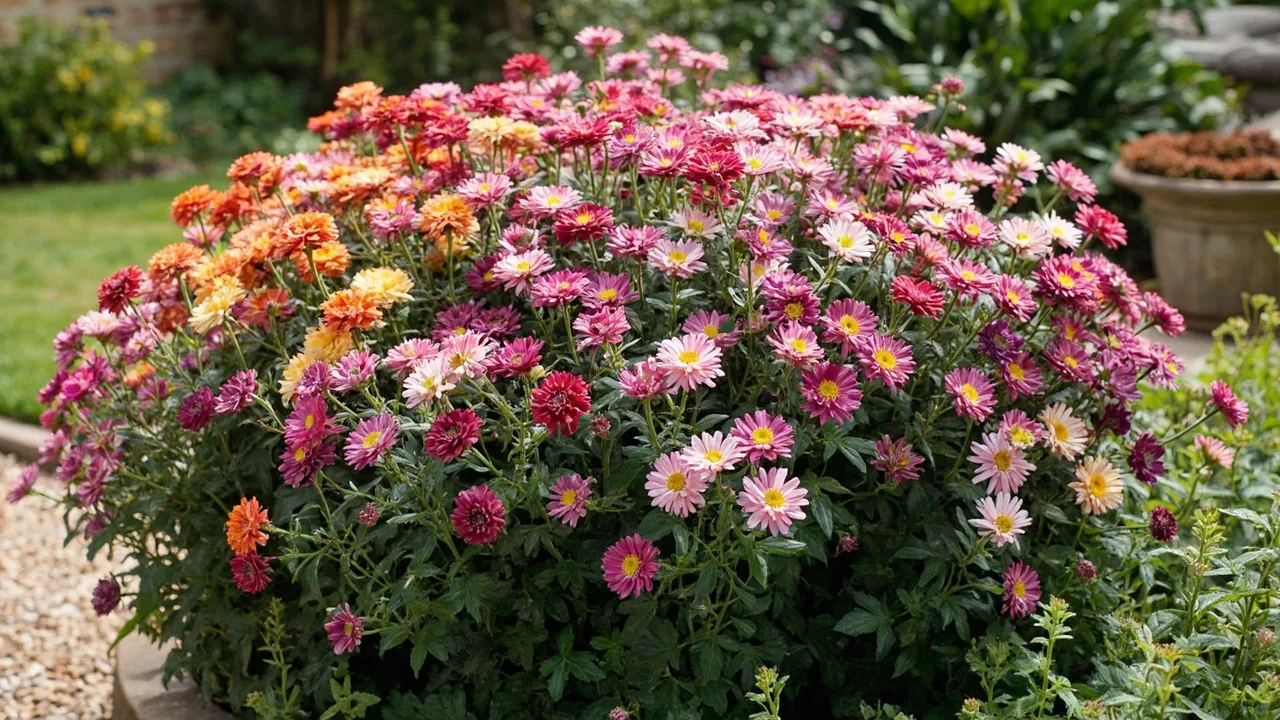
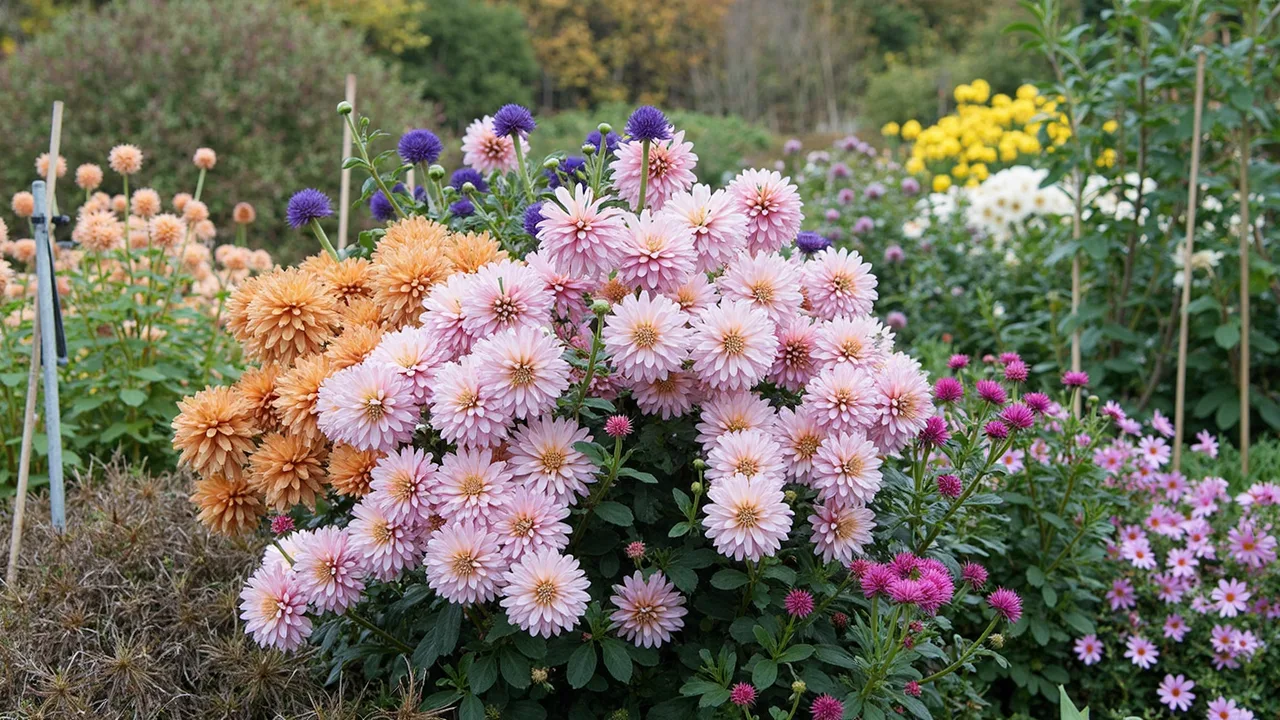
Flower form is extraordinarily varied. The Royal Horticultural Society classifies exhibition types into several groups, including single, anemone-centred, pompon, spray, reflexed, incurved, intermediate, and spider. In a typical garden selection you will find sprays with multiple smaller flower heads per stem, and disbudded large-flowered types carrying a single exhibition bloom. Colours span white, cream, yellow, gold, bronze, orange, salmon, pink, lilac, purple, red, and burgundy. Flower head diameter ranges from about 2 cm in small pompons to 15 cm or more in disbudded incurves.
Flowering begins in late July or August for early cultivars and continues through to November for late types. The fibrous root system is shallow to moderately deep, and established clumps lift easily for division every few years.
Growing Conditions
Chrysanthemums need a position in full sun. Anything less than six hours of direct light a day reduces flowering and encourages leggy, weak growth. A sheltered site is also important: the taller cultivars hold heavy flower heads on brittle stems and are easily snapped by autumn gales, so a position close to a wall, fence, or hedge is ideal.
The soil should be fertile, moisture-retentive, and free-draining. A medium loam at pH 6.0–7.0 suits them well. Heavy clay should be improved with coarse grit and well-rotted organic matter before planting; very sandy soils benefit from generous additions of garden compost to hold moisture through dry late-summer spells.
The UK temperate maritime climate suits chrysanthemums well in most regions, particularly the warmer south and east. In cold inland districts and in Scotland, late-flowering cultivars may be cut off by early hard frosts before they reach their best, and growers there tend to favour early or mid-season types. Air circulation is important: overcrowding produces humid conditions around the foliage that favour fungal disease.
The plant is rated H3 to H4 on the RHS hardiness scale, meaning it is generally hardy in mild and coastal areas of the UK down to about –5 °C, but borderline elsewhere. The RHS does not currently assign an Award of Garden Merit to the species as a whole; merit is given to individual cultivars instead.
Planting and Care
Planting. Plant out rooted cuttings or container-grown plants from late May to June, once all risk of hard frost has passed. Space them 40–60 cm apart according to the expected final size of the cultivar, and plant at the same depth as the nursery pot. Water in well and keep moist until established.
Watering. Water regularly through the growing season, particularly in containers, which can dry out within a day in warm weather. Reduce watering once flowering is well under way. Always water at the base of the plant rather than over the foliage: wet leaves invite powdery mildew and botrytis.
Feeding. Apply a high-potassium liquid feed (such as a tomato fertiliser) every 10–14 days from midsummer until the first flowers open. Withhold feed once the blooms are fully open.
Pinching and disbudding. Pinch out the growing tips of each stem when the plant is 15–20 cm tall to encourage a bushy habit with more flowering sideshoots. Stop pinching by early July so that flower buds have time to develop. For exhibition-quality large blooms, remove all but the central bud on each stem in late summer; for spray types, leave the cluster intact and only remove weak or malformed buds.
Staking. Insert discreet canes or use a support ring around taller cultivars by midsummer, before the stems begin to flop under the weight of the buds.
Overwintering. In mild areas and on free-draining soils, cut the stems down to about 15 cm after flowering and apply a thick, dry mulch of bark or straw over the crown. In cold or wet gardens, lift the crowns in autumn, box them in barely-damp compost, and store them in a frost-free frame or greenhouse over winter. Replant or restart from basal cuttings in spring.
Propagation. Take softwood cuttings of basal shoots in March or April, root them in a 50:50 mix of peat-free multipurpose compost and perlite, and pot on once rooted. Alternatively, lift and divide established clumps in spring every two to three years to maintain vigour.
Common Problems
Aphids colonise young shoots and buds from late spring onwards; treat heavy infestations with insecticidal soap or encourage natural predators such as ladybirds and hoverflies.
Chrysanthemum leaf miner (Chromatomyia syngenesia) produces characteristic serpentine white mines in the leaves. Pick off and destroy affected leaves and keep nearby groundsel and ragwort under control, as these are alternative hosts.
Chrysanthemum eelworm (Aphelenchoides ritzemabosi) is more serious, causing angular brown leaf blotches between the veins and progressive leaf death. Destroy affected plants and avoid replanting chrysanthemums in the same border for at least three years.
Powdery mildew appears as a white fungal coating on the leaves in still, humid weather. Improve air circulation by thinning congested growth, water at the base of the plant, and apply a suitable fungicide if the problem persists.
Botrytis (grey mould) can attack stems and flowers in damp autumns. Remove affected parts promptly and clear all plant debris at the end of the season.
Chrysanthemum rust (Puccinia chrysanthemi) produces orange-brown pustules on the undersides of leaves. Remove and bin affected foliage and avoid overhead watering.
Capsid bugs distort young leaves and petals in early summer; monitor plants and treat only if damage is severe.
Slugs and snails are particularly fond of the young shoots in spring and can ruin emerging growth overnight. Use biological controls, beer traps, or ferric phosphate-based baits.
Popular Varieties
The following are well-established cultivars widely available from UK nurseries; growers should check current availability with specialist chrysanthemum growers such as the National Chrysanthemum Society's recommended suppliers.
- 'Ruby Mound' — a compact, mound-forming hardy garden mum to about 45 cm, with fully double deep ruby-red flowers in September and October. AGM holder, reliable in borders and containers.
- 'Pennine Oriel' — a classic British-bred spray chrysanthemum, growing to around 90 cm, with soft apricot-bronze blooms that are excellent for cutting.
- 'Yvonne Arnaud' — a long-standing favourite among exhibitors, producing large incurved lavender-pink blooms on sturdy 1.2 m stems; best in the greenhouse border or a sheltered outdoor site.
- 'Lemon Madame' — a spray type with masses of small lemon-yellow flowers from late August, around 75 cm tall, and a good pollinator-friendly option.
- 'Apollo' — a vigorous decorative garden mum with bronze-orange single flowers and a conspicuous yellow eye; attracts late-flying bees and butterflies.
Most garden centres stock a small range of unnamed colour selections in late summer; for a wider choice of named cultivars, specialist chrysanthemum nurseries and the National Chrysanthemum Society plant sales remain the best source.
Pests and Diseases
| Problem | Symptoms | Management |
|---|---|---|
| Chrysanthemum leaf miner | Small pale spots on upper leaf surface with creamy white maggots tunneling inside. | Remove affected leaves or crush larvae; use biological control nematodes in greenhouses. |
| White rust | Spore pustules appear on the underside of leaves, causing significant damage. | Practice good garden hygiene and remove infected growth promptly to prevent spread. |
| Aphids | Clusters of small soft-bodied insects sucking sap from new growth and buds. | Check plants regularly and remove pests by hand or use targeted insecticidal soap. |
| Slugs and snails | Irregular holes in leaves and damage to young shoots, especially in damp conditions. | Protect young plants with barriers or traps and maintain good garden hygiene. |
| Powdery mildew | White powdery fungal growth on leaves and stems, often in humid conditions. | Ensure good air circulation and avoid overhead watering to reduce humidity around foliage. |
For step-by-step help, read Controlling Aphids Naturally, Dealing with Slugs and Snails and Treating Powdery Mildew. Or browse the full plant problem solver to diagnose an issue by symptom.
Recommended Products
GardenWizz earns a commission from qualifying purchases made through affiliate links on this page (including links within the article) — as an Amazon Associate, and from Thompson & Morgan via the Awin network. This does not affect the price you pay. See our disclaimer for details.