Oaks
Quercus
The Gardening Year
Best months in UK gardens · full planting calendar →
🖨 Printable care card (PDF)At a Glance
| Botanical name | Quercus |
|---|---|
| Common name(s) | oaks |
| Family | Fagaceae |
| Plant type | tree (deciduous or evergreen; hardwood (dicotyledonous)) |
| Height × Spread | 15–35 m × 10–20 m |
| Position | Full sun, Partial shade |
| Light (indoors) | full sun to partial shade |
| Humidity | tolerates UK ambient humidity |
| Soil | well-drained, fertile soil; moist but well-drained, acidic to neutral soil; tolerates heavier clays; dislikes waterlogged soil and poor drainage |
| Flowering | April–May |
| Toxicity | Oak leaves and acorns contain enough tannin to be toxic to cattle |
| Native range | Northern Hemisphere |
Overview
Quercus is the genus of the oaks, a large group of long-lived broadleaf trees belonging to the family Fagaceae. The genus contains several hundred species distributed across the temperate Northern Hemisphere, with two species native to the United Kingdom: Quercus robur (the pedunculate or English oak) and Quercus petraea (the sessile or Welsh oak). Oaks dominate the British landscape as the principal broadleaf of mature woodland, parkland and hedgerow, valued equally for their size, longevity and exceptional wildlife value.
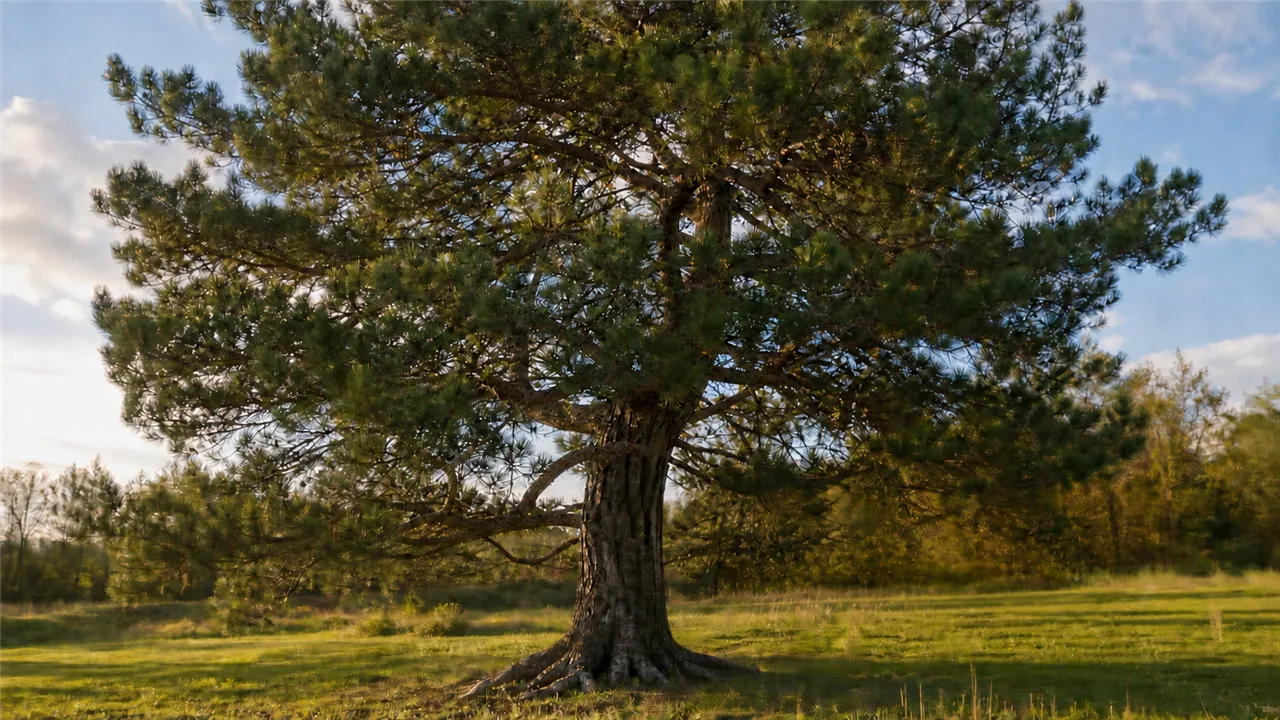
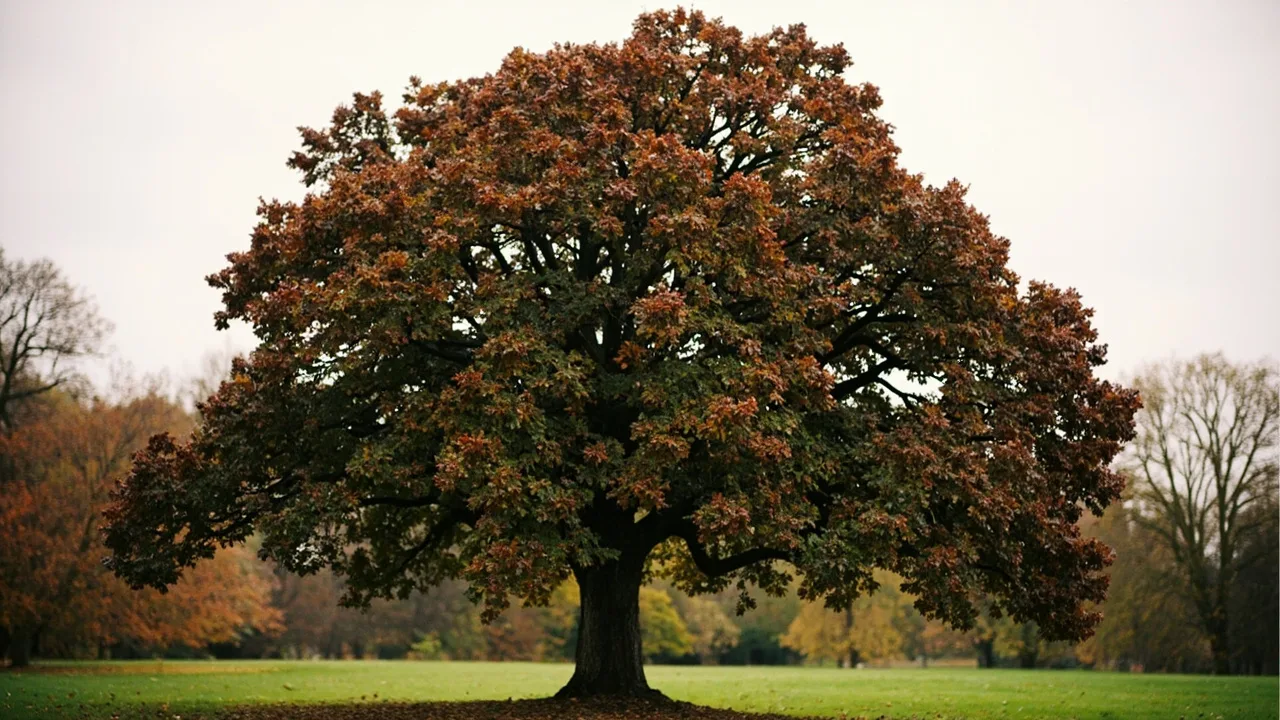
In gardens and designed landscapes oaks are grown principally as specimen or avenue trees. A mature oak in open ground develops the broad, domed crown familiar from the British countryside; in denser woodland it grows taller and narrower. Given suitable space and time, an oak is as close to a permanent garden feature as any temperate tree — many parkland specimens in the UK are several centuries old.
All parts of the oak, particularly the green acorns and young leaves, contain tannins and other phenolic compounds. These are documented as toxic to livestock (cattle, horses, sheep and goats) when eaten in quantity, and are considered toxic to pets such as dogs and cats for the same reason. Acorns are not safe for human consumption without extensive processing to leach out the tannins. The acorn crop of a mature oak can be very heavy in mast years and is best cleared from grazing paddocks and lawn areas used by animals.
Quick care
Appearance
Oaks are deciduous trees with a stout trunk and a broad, irregularly domed crown at maturity. Depending on species and site, mature trees reach 20 to 35 m in height, with canopy spreads of 10 to 20 m on open-grown specimens. Bark is grey-brown, smooth and slightly reflective on young trees, and becomes deeply fissured, rugged and vertically ridged with age, particularly on Q. robur.
Leaves are alternate, simple and arranged spirally along the twig. Most temperate oaks have lobed leaves: the classic Q. robur leaf is sinuate, with rounded lobes and very short leaf stalks, while Q. petraea has more deeply lobed leaves on noticeably longer stalks. Summer foliage is glossy dark green; autumn colour ranges from yellow-brown (often persistent into winter on Q. petraea) through russet to deep red in some North American species such as Q. coccinea and Q. rubra. A small number of species, including the Mediterranean Q. ilex (holm oak) and Q. suber (cork oak), are evergreen with small, leathery, often holly-like leaves.
Oaks are monoecious, with separate male and female flowers on the same tree. Male flowers appear in spring as drooping, pale yellow-green catkins that release pollen in April and May. Female flowers are tiny and inconspicuous, borne singly or in small clusters where new leaves join the twig.
The fruit is the acorn — a single nut set in a scaly cup (cupule). On Q. robur the acorn sits on a long stalk; on Q. petraea it is stalkless and clustered against the twig. Acorns ripen from late September into October and fall between September and November, providing a critical autumn food source for jays, wood pigeons, squirrels and deer.
Growing Conditions
Oaks grow best in full sun, where they develop the strongest trunk and the broadest, most symmetrical crown. Light partial shade is tolerated, particularly in youth, but heavy shade leads to thin, drawn-up growth. In woodland conditions oaks grow taller and narrower than open-grown specimens of the same age.
The ideal soil is a deep, fertile, moisture-retentive loam that is nevertheless free-draining. Oaks tolerate clay soils well and accept most garden soils from slightly acidic to neutral. Very shallow, compacted or waterlogged sites should be avoided, as the deep taproot system of an oak needs both depth and aeration. Established oaks are notably drought-tolerant, but young trees perform best where soil moisture is even through the growing season.
A hardiness rating is not established for the genus at the catalogue level and is therefore not stated here; the appropriate rating depends on the species chosen. The two UK natives are reliably hardy throughout Britain. Mediterranean evergreen oaks such as Q. ilex and Q. suber are more tender and best restricted to mild, coastal or urban gardens in the south and west. North American species such as Q. rubra, Q. palustris and Q. coccinea are hardy across most of the UK.
Planting and Care
Oaks establish best when planted in the dormant season, between November and March, while avoiding frozen ground and waterlogged soil. Container-grown and root-balled specimens are both suitable; bare-root transplants of small sizes also work in the same window. The site should be chosen with the mature tree in mind — oaks live for centuries and develop wide root systems and broad crowns. Allow 10 to 20 m of horizontal space depending on species, and keep oaks well clear of foundations, drains, walls and underground services.
Set the root flare at or just above the surrounding soil level; do not bury the collar. Backfill with the native soil, firm gently and water in well. Staking is only needed where the specimen is tall or the site exposed; ties should be checked regularly and the stake removed after one or two growing seasons, as a staked tree left in place develops a weaker trunk.
Water thoroughly through the first two or three growing seasons while the root system establishes. Once established, mature oaks rarely need supplemental watering except in extended drought, when deep soaking around the root area is preferable to frequent light watering.
Mulch annually in early spring with well-rotted garden compost or leafmould spread over the root area, taking care to keep the mulch clear of the trunk flare. A general-purpose slow-release fertiliser may be applied in spring for the first two or three years if growth is slow; mature oaks in garden soil rarely need feeding.
Oaks need only minimal pruning. The correct window is late winter (December to February), when the tree is fully dormant. Remove dead, diseased, crossing or weak branches, and work back to the branch collar. Do not prune in spring or early summer, when sap flow makes wounds more vulnerable to bark pathogens such as oak wilt. Avoid heavy crown reduction; oaks are slow to recover from major pruning and large wounds provide entry points for decay fungi.
Propagation is principally by seed. Acorns lose viability quickly on drying and should be sown fresh in autumn, either directly or after a cool, moist stratification over winter. Viable acorns sink in water; reject any that float. Named cultivars are propagated by grafting and not from seed, as seedlings will not come true.
Seasonal care is light. Collect fallen acorns in mast years if self-sown seedlings are a problem on bare ground or in lawns. Sweep up heavy autumn leaf falls where they would smother lawn beneath the canopy, otherwise leaves can be left to break down as mulch in borders.
Common Problems
Oak processionary moth (Thaumetopoea processionea) is a notifiable pest in the UK, recognised by silken webbing nests on the branches and dark caterpillars that move in nose-to-tail processions. The caterpillars' hairs are irritant to skin, eyes and airways; do not handle them. Suspected sightings should be reported to the Forestry Commission's TreeAlert service and removed professionally.
Acute oak decline appears as dark bleeding or oozing from bark fissures on the trunk, followed by rapid upper-crown dieback and tree death within a few years. The cause is not fully understood but is linked to drought stress and root damage. Affected trees should be monitored and widespread cases reported to Forest Research.
Chronic oak decline is a more gradual thinning of the canopy and progressive branch dieback over many seasons, often linked to waterlogging, soil compaction, drought or root disturbance. Improving site conditions — drainage, mulching and avoiding further root damage — supports gradual recovery, although older trees rarely fully recover once decline is established.
Oak bark beetles (Scolytus, Ernoporus, Agrilus) leave small round exit holes in the bark of trunk or major branches, sometimes with fine sawdust-like frass at the base. Boring beetles mainly attack already-stressed trees. Maintain tree vigour through mulching and watering during drought, and prune out and dispose of badly infested wood rather than chipping or composting it on site.
Honey fungus (Armillaria spp.) shows as white fan-shaped fungal sheeting under the bark at the base of the trunk, sometimes with honey-coloured toadstools in autumn around the root collar and a general decline of the crown. There is no chemical cure. Improving drainage, avoiding root wounding, removing dead stumps and consulting an arborist on mature specimens is the standard response; affected trees can become hazardous.
Other occasional issues include oak powdery mildew on young shoots in late summer (usually cosmetic), bleeding canker on Q. robur, and root or butt rot from Laetiporus and Ganoderma bracket fungi on older trees.
Popular Varieties
Quercus robur 'Fastigiata' (cypress oak) is a narrow, upright form of the common pedunculate oak that holds its columnar shape well into age and is the most useful cultivar where space is limited.
Quercus robur 'Concordia' (golden oak) is a slow-growing cultivar with bright golden-yellow young foliage that greens somewhat through the summer; it is a long-established golden-leaved oak for gardens, though its AGM status is not confirmed here.
Quercus petraea (sessile oak, Welsh oak) is the second UK native, with deeply lobed leaves on long stalks, acorns set against the twig, a more upright habit than Q. robur, and yellow-brown autumn leaves that are often retained on the tree into early winter.
Quercus palustris (pin oak) is a North American species widely planted in the UK for its deeply lobed, glossy leaves and brilliant red-to-russet autumn colour. It tolerates moist soils and develops a symmetrical broad-conical crown.
Quercus rubra (red oak, northern red oak) is a fast-growing North American species very widely planted in UK parks and large gardens. The large, deeply lobed leaves have pointed tips that distinguish it from the rounded-lobed native oak, and the autumn colour is a reliable orange to red.
Quercus ilex (holm oak) is an evergreen Mediterranean species with small, leathery dark-green leaves, widely used as a formal hedging or specimen tree in milder parts of the UK — the south, coastal regions and urban microclimates — where it will eventually become a large tree.
Quercus coccinea (scarlet oak) is another North American species, valued for vivid scarlet autumn colour and large lobed leaves with deeper sinuses and bristle tips.
Pests and Diseases
| Problem | Symptoms | Management |
|---|---|---|
| Oak processionary moth | Silken webbing nests on branches with dark caterpillars moving in processions. | Report to TreeAlert and avoid contact due to irritant hairs; professional removal is required. |
| Acute oak decline | Dark bleeding from bark fissures followed by rapid crown dieback and tree death. | Monitor affected trees and report widespread cases to Forest Research for investigation. |
| Chronic oak decline | Gradual thinning canopy, branch dieback, and overall deterioration of tree vigour. | Improve site conditions and soil health to support natural recovery and resilience. |
| Oak bark beetles | Small exit holes in the trunk or branches accompanied by sawdust-like frass. | Maintain tree health to prevent infestation and prune out severely affected wood. |
| Honey fungus | White fungal growth at the base of the trunk and general decline in foliage. | Improve drainage and avoid wounding roots; consult an arborist for severe cases. |
Or browse the full plant problem solver to diagnose an issue by symptom.
Recommended Products
GardenWizz earns a commission from qualifying purchases made through affiliate links on this page (including links within the article) — as an Amazon Associate, and from Thompson & Morgan via the Awin network. This does not affect the price you pay. See our disclaimer for details.