Silver-Leaved Rhododendron
Rhododendron argyrophyllum
The Gardening Year
Best months in UK gardens · full planting calendar →
🖨 Printable care card (PDF)At a Glance
| Botanical name | Rhododendron argyrophyllum |
|---|---|
| Common name(s) | Silver-leaved Rhododendron |
| Family | Ericaceae |
| Plant type | shrub (evergreen) |
| Height × Spread | 3–7 m × — |
| Position | Partial shade |
| Soil | moist but well-drained, acid soil enriched with leaf mould/humus-rich |
| Flowering | March–May |
| Toxicity | Harmful if eaten |
| Native range | E and NW Guizhou, S and W Sichuan, and NE Yunnan in China |
Rhododendron argyrophyllum, commonly known as the silver-leaf rhododendron, is an evergreen species native to the mountains of western Sichuan in China, prized in British horticulture for the distinctive silvery-white indumentum on the underside of its leaves. Introduced to UK gardens in the early twentieth century by the plant hunter Ernest Henry Wilson, it remains one of the most elegant foliage plants among the hardy rhododendrons, combining year-round structure with a delicate spring flowering display.
Overview
Rhododendron argyrophyllum belongs to the family Ericaceae and is a large, upright evergreen shrub that, in UK cultivation, typically reaches 2–4 m in height with a similar spread after many years. It is grown both for its ornamental foliage and for its pale, well-formed flower trusses in mid- to late spring.
The species is best suited to the milder, moister regions of the UK — western Scotland, western Wales, south-west England, Ireland and other maritime districts — where the atmospheric humidity suits rhododendrons generally. In drier, more continental parts of eastern England it can be grown reliably with careful siting and a moist, acidic root run, but it will never look quite as lush as it does in a Cornish woodland.
It is reliably hardy across most of lowland Britain given appropriate siting and acidic soil. Its principal horticultural virtue, beyond flower, is the silvery indumentum, which remains a feature throughout the year and is best appreciated where plants can be viewed from below against a dark background of yew, rhododendron ponticum or evergreen oak.
Appearance
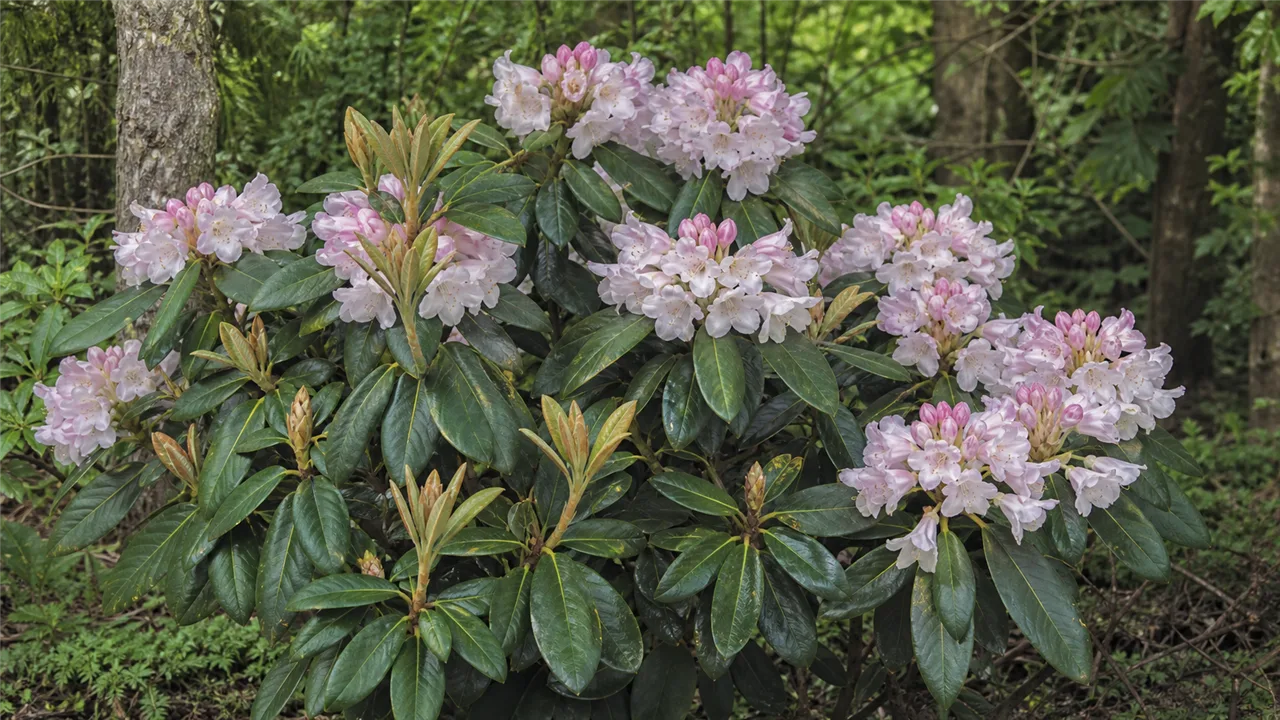
The leaves are the defining feature of this species. They are lance-shaped (lanceolate), up to about 10 cm long and 2–3 cm wide, glossy dark green on the upper surface, and covered beneath with a fine, dense silvery-white indumentum — a felt of tiny hairs that gives the plant its botanical name: argyrophyllum, from the Greek for "silver leaf". The contrast between the dark upper surface and the bright, almost metallic lower surface is particularly striking when the foliage is stirred by wind, and is at its most pronounced on plants growing in good light with adequate moisture.
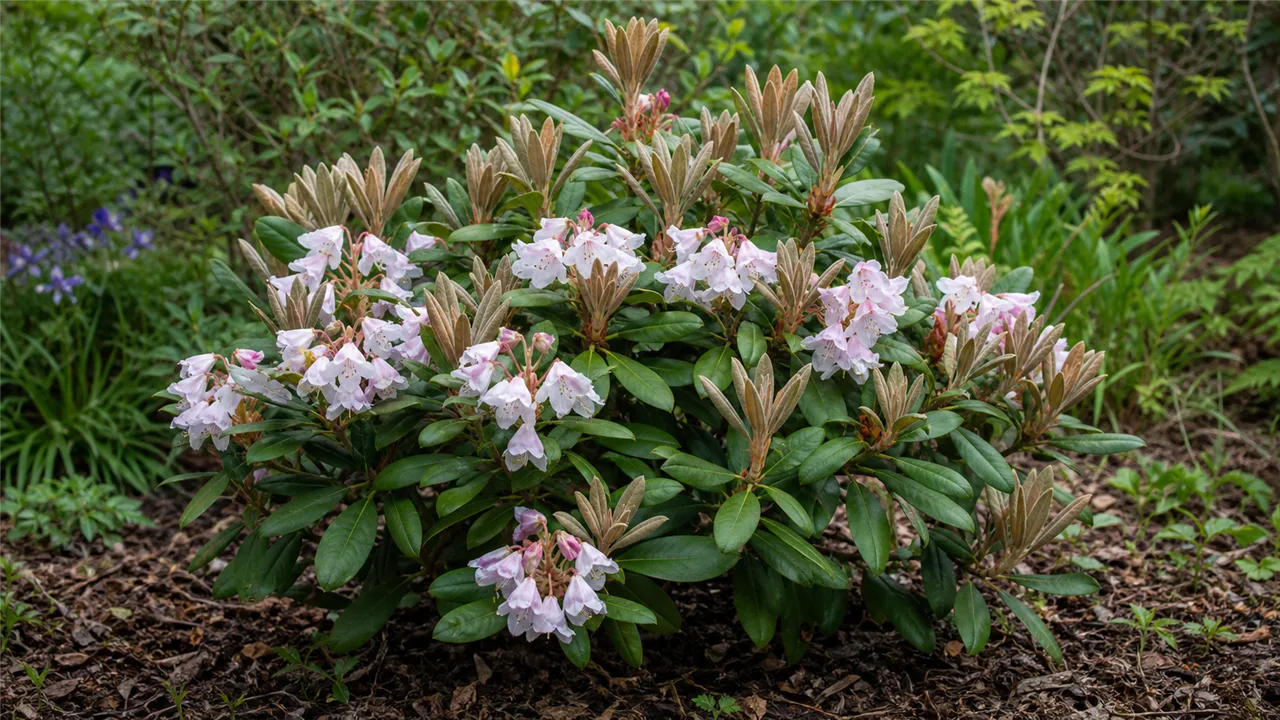
Growth is upright and somewhat open in youth, becoming denser and more rounded with age. Young stems are often lightly downy, and the vegetative buds are noticeably scaly through the winter — a useful identification feature when the plant is bare of snow but in full view. Mature specimens develop a robust framework of main branches close to the ground, with flowering carried on the upper and outer wood.
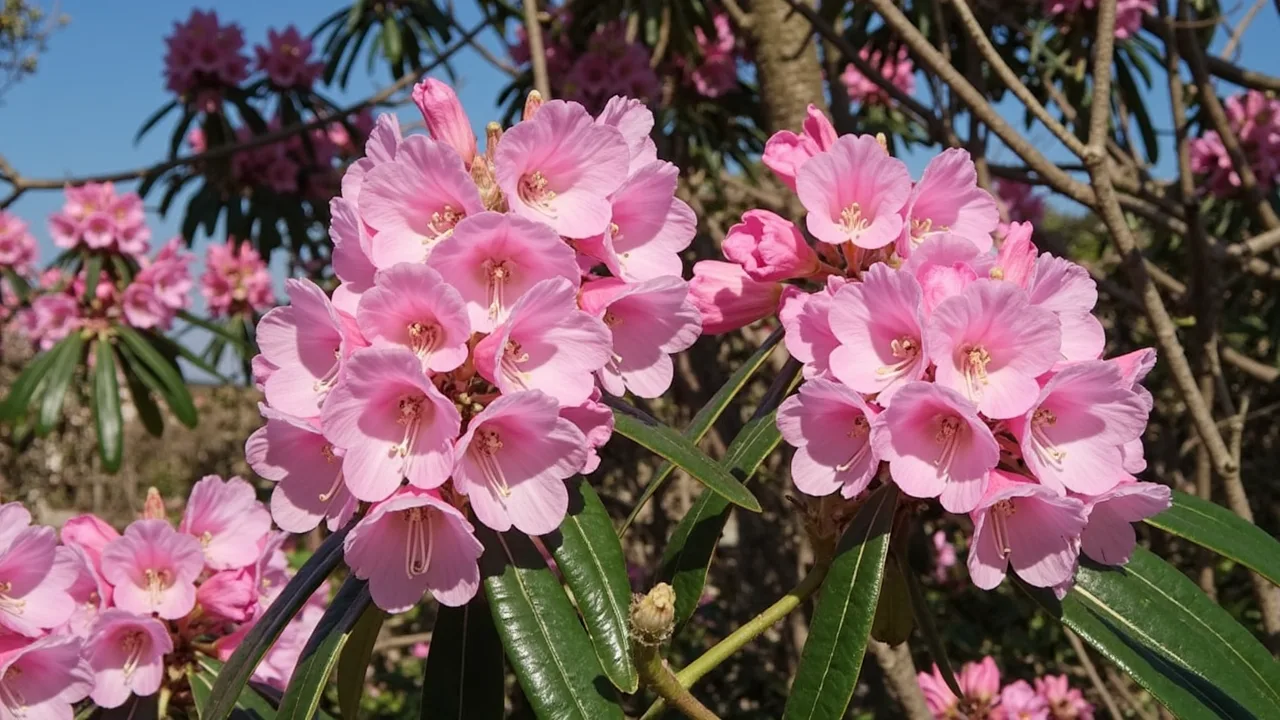
Flowering occurs in mid- to late spring, typically April to May in the south of England, slightly later further north and at higher altitude. The flowers are borne in rounded, slightly loose trusses of eight to fifteen funnel-shaped blooms, each 2.5–4 cm across, opening from pink-tinted buds. Open flowers are usually pale pink to nearly white, often with faint greenish or brownish spotting on the upper lobe. The overall effect is delicate rather than showy, and complements rather than competes with the foliage. Foliage remains attractive after flowering and into winter, with the silver undersides catching low sunlight.
Growing Conditions
Rhododendron argyrophyllum requires acidic, humus-rich, moisture-retentive but well-drained soil. A pH of roughly 4.5–6.0 is ideal. On neutral or alkaline substrates — including soils over chalk or limestone — the species will quickly develop chlorosis and fail to thrive, and these sites should be avoided unless planting into a large container of ericaceous compost.
The plant performs best in dappled shade or light filtered through taller trees, replicating the edge-of-woodland conditions of its native habitat. Deep shade reduces flowering; full sun, particularly in dry eastern districts, can scorch the foliage and dull the silver indumentum. Shelter from cold, drying winds is important: a north- or east-facing aspect in full exposure is unsuitable, while a west- or south-west-facing site with overhead canopy is often ideal.
The species is generally rated hardy across most of the UK, including typical RHS hardiness ratings of around H5 (hardy in most of the UK, tolerating roughly –10 to –5 °C). Late spring frosts can damage open blooms and young growth, so a site that avoids early-morning sun on frosted buds is preferable. Atmospheric humidity is beneficial, and the plant establishes most reliably in the wetter western and northern fringes of Britain, where mature specimens of three to four metres can be expected in favoured gardens.
Planting and Care
Plant in autumn or early spring, when the soil is moist and the roots can establish before the stresses of summer or winter. Prepare a generous planting hole at least twice the width and the same depth as the root ball, and backfill with a mix of the excavated soil, well-rotted leaf mould, and ericaceous compost if the existing soil is not sufficiently acidic. Plant at the same depth the shrub was previously growing — rhododendrons are shallow-rooted and resent deep planting, which encourages root rot. Water thoroughly after planting and during any dry spells for the first two to three years; thereafter established plants tolerate short droughts but perform best with consistent moisture.
Mulch annually in spring with acidic organic matter such as composted bark, pine needles, or leaf mould, applying a 5–8 cm layer over the root area but keeping it clear of the main stem. This conserves moisture, suppresses weeds, and gradually improves soil structure.
Watering should be generous in dry summers, particularly on lighter soils. Where tap water is hard, use rainwater collected from a butt, as calcium-laden water gradually raises soil pH and induces chlorosis. Where rainwater supplies are limited, the occasional drench with tap water is acceptable provided mulch and feeding keep the soil biology active.
Feeding should be modest. Apply a slow-release ericaceous or rhododendron fertiliser in spring as growth begins, or top-dress with leaf mould and a light scattering of hoof-and-horn. Avoid high-phosphate feeds, which can damage the fine surface roots, and avoid liming in any form.
Pruning is rarely necessary. The most important annual task is the careful removal of spent flower trusses: once the blooms have faded, hold the truss near its base and snap it off between finger and thumb, taking care not to damage the new shoots and embryo buds clustered immediately below. Any dead, frost-damaged, or crossing wood should be removed in late spring or early summer, after flowering, when regrowth will heal cuts quickly. Older plants that have grown leggy can be rejuvenated by harder pruning into old wood, though flowering will be lost for one or two seasons.
Propagation is straightforward by semi-ripe cuttings taken in late summer, using current-season shoots of 8–10 cm with a heel, rooted in a 50:50 mix of peat-free ericaceous compost and grit under mist or in a closed propagator. Layering of low, flexible branches in autumn is also reliable but slower. Seed germinates readily if surface-sown on damp ericaceous compost and kept cool, but seedlings are slow to reach flowering size and will not come true to a particularly fine parent.
Common Problems
Chlorosis, evident as yellowing between the veins of otherwise green leaves, is the most frequent complaint and almost always indicates soil that is too alkaline, leading to iron and manganese lockout. Long-term remedy lies in soil acidification with ericaceous compost, sequestered iron drenches in the short term, and switching to rainwater for irrigation where possible.
Bud blast causes flower buds to brown and fail to open in spring. It is associated with a fungal infection and can be exacerbated by physiological stress and, reputedly, by damage from grey squirrels browsing the buds in winter. There is no reliable chemical cure; affected buds should be picked off and disposed of, and plants kept in good growing condition to reduce recurrence.
Rhododendron lace bug (Stephanitis rhododendri) is a sap-sucking insect that produces a fine pale mottling on the upper surface of leaves, with dark tar-spot faecal deposits and the small insects themselves visible on the underside. It is most troublesome on plants in hot, dry, sunny sites; improving growing conditions and increasing humidity reduces populations, and insecticidal soaps or suitable systemic treatments can be applied if damage is severe.
Phytophthora root rot can occur on heavy, waterlogged soils, particularly after wet winters. Symptoms include wilting, pale foliage and dieback despite apparently moist soil. Prevention — free-draining, well-structured acidic soil — is far more effective than any cure.
Powdery mildew can mark the foliage in dry summers where airflow is poor; thinning surrounding vegetation and avoiding drought stress generally keeps it in check.
Frost damage to open blooms in a hard late spring is a regular risk in inland and northern gardens; covering with horticultural fleece when frost is forecast during the flowering period will usually save the display.
Grey squirrels occasionally ring-bark stems and damage flower buds in winter, particularly in wooded gardens. Inspect stems during the dormant season and protect vulnerable plants with wire mesh guards where damage is recurring.
Popular Varieties
In practice, named cultivars of Rhododendron argyrophyllum are few and uncommon in general cultivation; the species itself is what is usually grown.
The species itself is more commonly grown than named cultivars, but several selections and forms exist within UK specialist rhododendron nurseries. Rhododendron argyrophyllum subsp. argyrophyllum represents the typical form, with the silver indumentum well developed beneath lanceolate leaves. Rhododendron argyrophyllum subsp. nankingense has been listed in older references, sometimes treated as a distinct species, with somewhat narrower leaves and a more compact habit; nomenclature has varied over time, and availability is limited in current UK trade.
Hybrids have raised the profile of the silver indumentum beyond the species itself. The 'Loderi' grex, bred at Leonardslee in Sussex from crosses involving R. argyrophyllum and other large-leaved species, is widely grown for its scented, large white to pale pink flowers and handsome foliage, although the silver underside characteristic is less pronounced than in the pure species. Plants sold simply as Rhododendron 'Silver' or under similar trade names in some European catalogues should be checked carefully, as naming has not always been consistent over the decades.
Where named cultivars are difficult to obtain, seed-raised plants of the species, offered by specialist societies and a handful of UK nurseries, are an excellent and affordable way to establish the plant, with predictable appearance from a known wild provenance. Buyers should ask for a documented collection rather than generic open-pollinated seed.
Cultivars and Varieties
| Cultivar | Height | Flower | Notes | AGM |
|---|---|---|---|---|
| 'Chinese Silver' | — | — | RHS AGM (H5) | ✓ |
Pests and Diseases
| Problem | Symptoms | Management |
|---|---|---|
| Vine weevil | Notched leaf margins on young growth and wilting caused by root damage from grubs in the soil. | Check pots for grubs before planting and use biological nematodes or approved insecticides if infested. |
| Powdery mildew | White powdery fungal growth on leaves, buds, and shoots, potentially causing distortion and reduced vigour. | Improve air circulation and apply a fungicide if severe, though leaf removal is not recommended. |
| Silver leaf | Leaves develop a silvery sheen underneath and shoots may die back due to fungal infection. | Prune out infected branches well below the visible symptoms and destroy them immediately. |
| Bud blast | Flower buds turn brown, shrivel, and fail to open due to fungal infection during wet weather. | Remove and destroy infected buds promptly if practical to reduce spore spread. |
| Pieris lacebug | Small white speckling on the upper leaf surface with black varnish-like spots underneath. | Encourage natural predators or treat with a systemic insecticide if populations are high. |
| Rhododendron leafhopper | Leaves become speckled with white or yellow spots and may curl or drop prematurely. | Monitor for nymphs in spring and treat with appropriate insecticides if damage is significant. |
For step-by-step help, read Treating Powdery Mildew. Or browse the full plant problem solver to diagnose an issue by symptom.
Recommended Products
GardenWizz earns a commission from qualifying purchases made through affiliate links on this page (including links within the article) — as an Amazon Associate, and from Thompson & Morgan via the Awin network. This does not affect the price you pay. See our disclaimer for details.