Davidson's Rhododendron
Rhododendron davidsonianum
The Gardening Year
Best months in UK gardens · full planting calendar →
🖨 Printable care card (PDF)At a Glance
| Botanical name | Rhododendron davidsonianum |
|---|---|
| Common name(s) | Davidson's Rhododendron |
| Family | Ericaceae |
| Plant type | shrub |
| Height × Spread | 4 m × 1.5–2.5 m |
| Position | Full sun, Partial shade |
| Soil | moist but well-drained, leafy, humus-rich acid soil |
| Flowering | April–May |
| Toxicity | Harmful if eaten |
| Native range | Sichuan, China |
Rhododendron davidsonianum, commonly known as Davidson's rhododendron, is an evergreen to semi-evergreen flowering shrub belonging to the heather family Ericaceae. Native to the mountains of western Sichuan and northern Yunnan in China, it was introduced to British cultivation in the early twentieth century and has since become a valued specimen plant in woodland and acid-border plantings across the United Kingdom. The species was named in honour of the nineteenth-century plant collector Andrew Davidson, though the formal botanical description was made by Isaac Bayley Balfour in 1916 from material gathered by the plant hunters E. H. Wilson and George Forrest.
A medium-sized, rounded shrub, R. davidsonianum typically grows to between 1.5 and 3 metres in both height and spread when mature. It is grown primarily for its profuse spring display of bell-shaped flowers and its attractive, leathery foliage. While not as widely planted as some of the larger-flowered hybrid rhododendrons, it is well suited to the British climate and offers a more delicate, species-like charm that appeals to gardeners seeking botanical authenticity.
Overview
Rhododendron davidsonianum occupies a useful middle ground between the bold, blowsy hybrids derived from R. griffithianum and the smaller-leaved alpine species. Its elegant foliage and delicate flower trusses sit comfortably in naturalistic plantings, where heavier hybrid blooms can look out of place. It is one of the more easily grown species rhododendrons in UK conditions, tolerating a wide range of acid soils provided drainage is reliable, and it flowers reliably once established, often from a young age.
In gardens it is best treated as a specimen shrub, given space to develop its rounded, somewhat irregular habit to full effect. It associates particularly well with camellias, pieris, enkianthus, and other woodland-edge Ericaceae, and underplantings of bluebells, ferns, and hostas complement its late-spring display.
Appearance
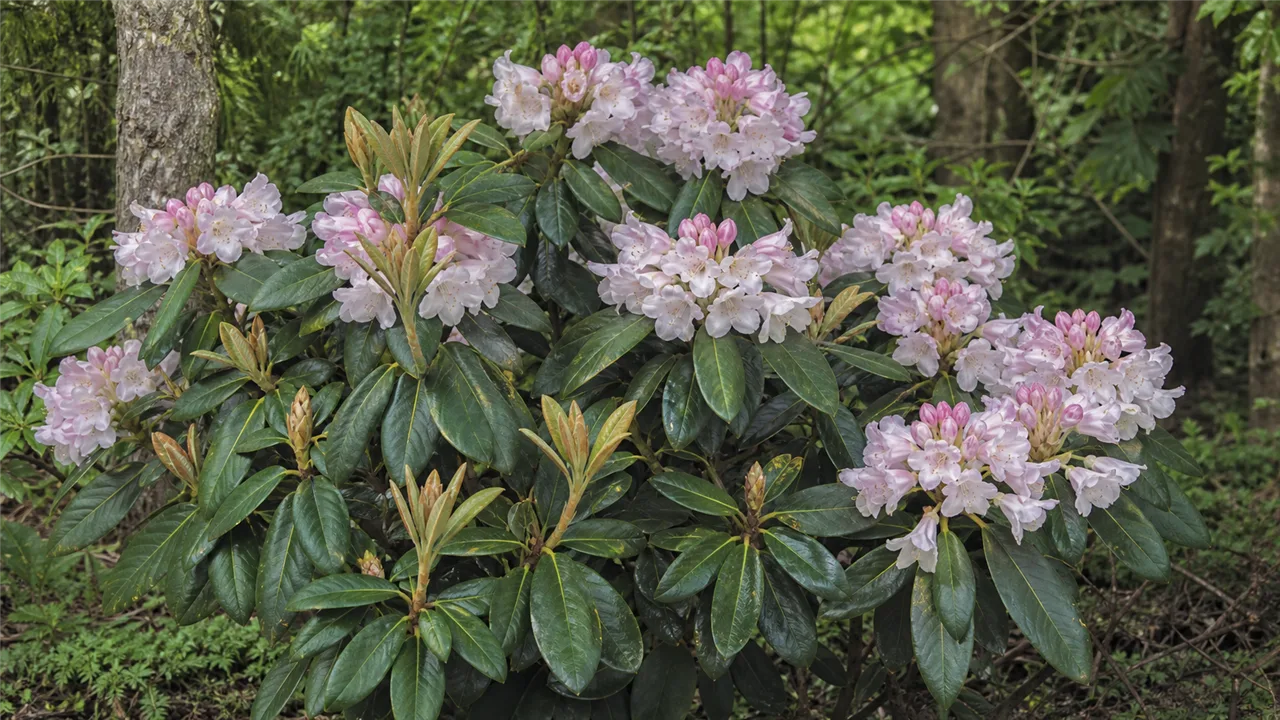
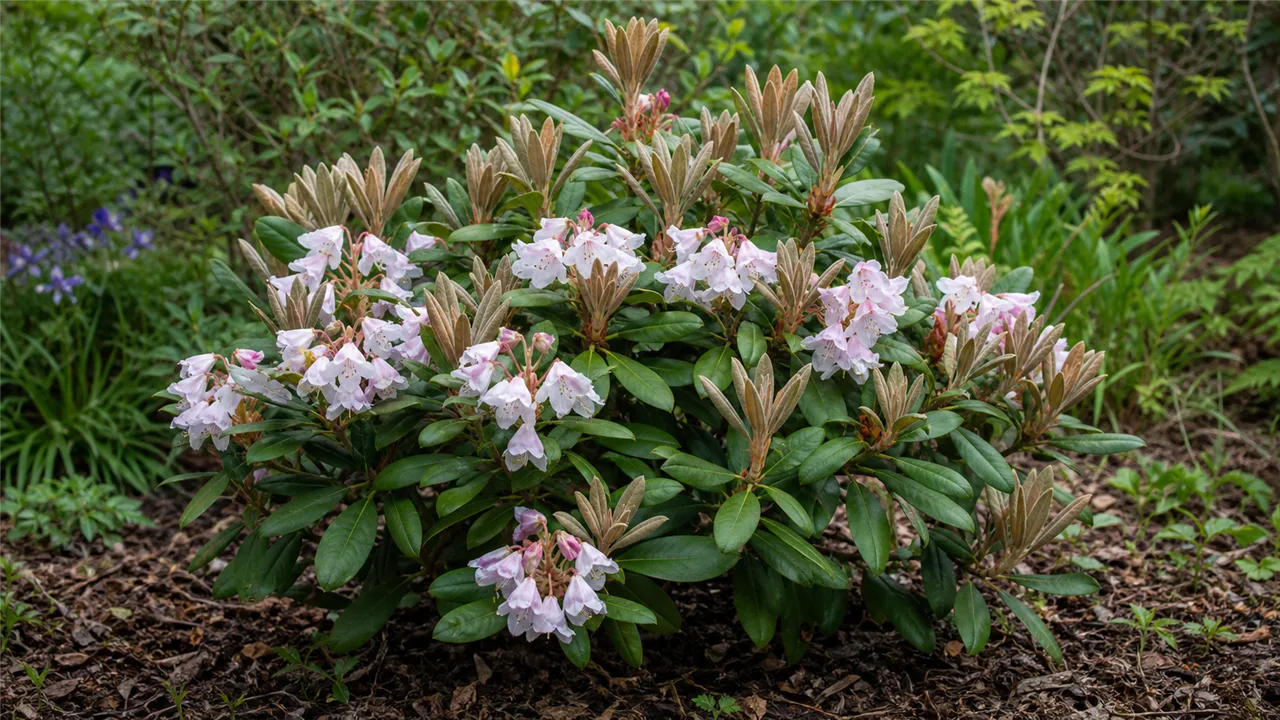
Rhododendron davidsonianum forms a rounded, often slightly open shrub with slender, gently angular young stems that mature to a smooth grey-brown bark. The leaves are elliptical to narrowly lance-shaped, leathery in texture, and typically up to 10 cm long and 3–4 cm wide. The upper surface is a deep, glossy green, while the underside is paler, often with a faint scaly or glaucous bloom and a distinct midrib.
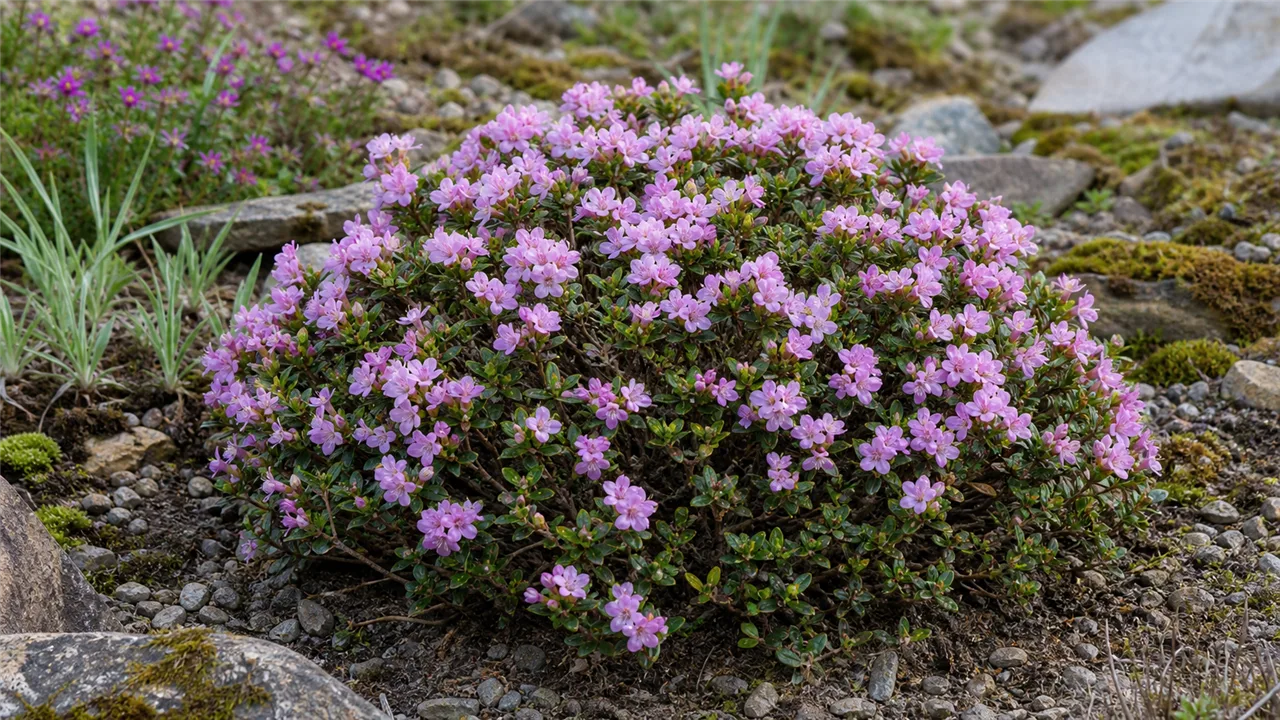
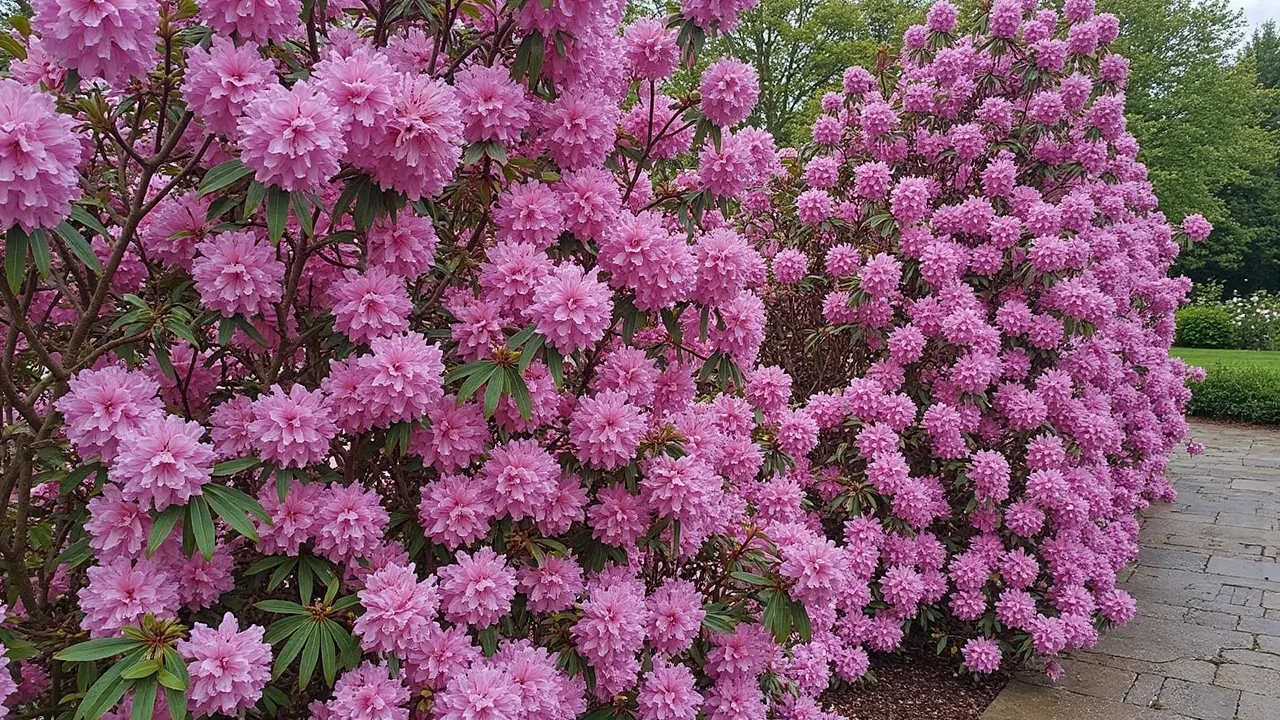
The flowers are the principal ornamental feature. They are widely funnel-shaped to bell-shaped, usually 3 to 4 cm across, and are borne in loose terminal trusses of six to twelve blooms during mid to late spring — May and June in the UK. Colour ranges from pale pink to a richer rose-mauve, frequently with deeper pink or crimson spotting within the throat of the corolla. Slight variations occur between individual seedlings, and named selections have been made to fix particularly fine colour forms. The flowers are held above the foliage in well-spaced trusses that give the plant an airy, graceful appearance distinct from the dense flower-clusters of many hybrid rhododendrons.
After flowering, small dry seed capsules develop and may persist on the plant into autumn, adding modest ornamental interest. The species is not grown for autumn colour; its appeal is concentrated in the late-spring floral display and the year-round structure provided by its evergreen leaves.
Growing Conditions
Rhododendron davidsonianum requires acidic, humus-rich soil with a pH between 4.5 and 6.0. Like all rhododendrons, it will not thrive in alkaline or chalky soils, where leaves quickly develop interveinal chlorosis (yellowing between the veins) due to iron and manganese lock-out. Where soil is unsuitable, container cultivation in ericaceous compost is a reliable alternative and is increasingly common in small urban gardens. Soil should be moist yet well-drained; the species detests waterlogged conditions, which can lead to root rot caused by Phytophthora, but equally dislikes prolonged drought.
The ideal site is in dappled or filtered light, such as the edge of a woodland garden or beneath the light canopy of deciduous trees such as silver birch, oak, or rowan. Deep shade results in sparse flowering, while full sun can scorch foliage and bleach flowers, particularly on lighter soils. Shelter from cold, drying winds is important, especially for younger plants; an east-facing aspect that catches early spring sun after frost should be avoided where possible.
Its RHS hardiness rating is H5, indicating tolerance of winter temperatures between approximately −15 °C and −10 °C. In colder inland or northerly locations, younger plants benefit from fleece protection during severe winter spells. The species prefers regions with reliable rainfall and cooler summers; in the warmer, drier south-east of England, supplementary watering during establishment and dry periods is advisable. Mulching helps moderate soil temperature and conserve moisture.
Planting and Care
Plant container-grown stock at any time of year when the ground is neither frozen nor waterlogged, with autumn (September to November) and spring (March to April) being optimal. Prepare a planting hole two to three times the width of the root ball but no deeper, so the plant sits at the same depth as in its container — rhododendrons are shallow-rooted and resent deep planting. Backfill with a mix of the excavated soil and ericaceous compost, leaf mould, or well-rotted pine bark. After planting, apply a 5–8 cm mulch of acidic organic matter, replenished annually in late winter or early spring.
Watering is most critical in the first two growing seasons. Keep the root zone moist but not saturated, particularly during the establishment phase. Once established, the plant tolerates short dry spells, but prolonged drought causes stress and reduced flowering the following spring. Where rainfall is unreliable, deep watering once a week during dry periods is preferable to frequent light sprinklings, which only wet the surface.
Feeding should be modest and specifically formulated for acid-loving plants. Apply an ericaceous liquid feed roughly monthly from late winter through to late summer, ceasing before autumn to allow growth to harden. Slow-release fertilisers formulated for rhododendrons and camellias are a low-effort alternative. Avoid general-purpose or phosphorus-heavy fertilisers, which can raise soil pH over time and damage the mycorrhizal associations rhododendrons depend upon for nutrient uptake.
Pruning is minimal. The most important task is deadheading spent trusses promptly after flowering: snap or cut them off cleanly at the abscission layer just above the new growth buds, taking care not to tear the bark, which can provide an entry point for disease. Remove any damaged, diseased, or crossing branches in late spring, immediately after flowering. Hard renovation pruning is generally poorly tolerated; if an old specimen requires reduction, do so in stages over two to three years rather than in a single severe cut, and expect recovery to be slow.
Propagation is straightforward by semi-ripe cuttings taken in late summer (July to August), rooted in a free-draining, ericaceous medium under gentle bottom heat and a mist tent or plastic cover. Layering of low branches in autumn is the simplest method for the home gardener: peg a flexible stem to the ground, wound it lightly with a sharp knife at the point of contact, bury the wound in acid compost, and leave undisturbed for twelve to eighteen months before severing from the parent. Seed propagation is possible but slow, and offspring will be variable.
Common Problems
Chlorosis (yellowing leaves with green veins) is the most frequent issue and almost always indicates either alkaline soil or a nutrient lock-out, often compounded by waterlogging. Treatment involves correcting soil pH where practical, applying chelated iron as a foliar feed or soil drench, and using ericaceous fertiliser.
Powdery mildew may appear as a white fungal coating on leaves in late summer, especially where air circulation is poor or plants are stressed. Improve siting by thinning surrounding vegetation and consider a suitable fungicide if severe.
Bud blast, caused by the fungus Pycnostysanus azaleae (often mistakenly attributed to frost or the rhododendron bud-moth), produces brown, blasted buds that remain on the plant through winter and bear small black bristle-like fruiting bodies. Remove and destroy affected buds; control of the leaf-hopper vector can reduce spread.
Leaf spot diseases, caused by various fungi, produce brown or purplish spots on foliage. Usually cosmetic, but severe cases warrant removal of affected leaves and improved drainage and airflow around the plant.
Root rot (Phytophthora) is the most serious disease, causing wilt and dieback, often on poorly drained or compacted sites. Prevention through good drainage and correct planting depth is the most effective control; affected plants rarely recover and should be removed.
Aphids may cluster on young spring growth, and vine weevil adults notch leaf edges during summer — vine weevil larvae feeding on roots are particularly damaging in containers. Monitor regularly and treat with biological controls (nematodes) or contact insecticides as needed. In gardens frequented by dogs, urine scorching of foliage is a common and preventable problem; physical barriers around specimens offer protection.
Toxicity is a notable consideration. All parts of Rhododendron contain grayanotoxins and are toxic if ingested, with honey derived from the flowers also a risk. The foliage may also cause skin irritation in sensitive individuals. Site with care where children or grazing animals are present, and wash hands after handling.
Popular Varieties
Rhododendron davidsonianum is most often encountered as the species itself, but a number of selected forms have been introduced. 'Ruth Lyons' is a particularly fine pink-flowered clone with darker markings, valued for its reliable habit and consistent colour, and remains one of the most widely available named clones. 'Serenade' produces soft rose-pink blooms with deeper spotting and has gained popularity among enthusiasts of species rhododendrons. White- and very pale pink-flowered seedlings occasionally appear in batches of open-pollinated seed-raised plants, and several specialist nurseries list unnamed but distinct colour forms under descriptive labels such as 'pale pink' or 'Exbury pink'.
For gardeners seeking a wider palette of reliable, larger-flowered rhododendrons, hybrid groups such as the Loderi crosses (R. fortunei × R. griffithianum) and Cornish Cross are well worth considering, though they are crosses of other species rather than forms of R. davidsonianum itself. When sourcing plants, specialist rhododendron nurseries — particularly those affiliated with the Rhododendron, Camellia and Magnolia Group — and the major horticultural shows such as the RHS Chelsea Flower Show remain the best route to obtaining true-to-name cultivars, as the species is variable from seed and trade material is often a mixed batch. Plants sold simply as R. davidsonianum without a clonal name should be regarded as variable seedlings rather than uniform stock.
Pests and Diseases
| Problem | Symptoms | Management |
|---|---|---|
| Powdery mildew | White powdery fungal growth appears on leaves, buds, and shoots, potentially causing distortion. | Improve air circulation and avoid overhead watering; tolerate mild infections or apply fungicide if severe. |
| Vine weevil | Notched edges on leaves above ground and root damage below, leading to wilting and plant collapse. | Use nematode treatments in autumn for larvae or apply systemic insecticides to prevent adult feeding. |
| Silver leaf | Leaves develop a silvery sheen on the underside, often accompanied by black fruiting bodies at the stem base. | Prune out and burn infected branches well below the visible symptoms to prevent spread. |
| Bud blast | Flower buds turn brown, shrivel, and fail to open, often due to fungal infection or frost damage. | Remove and destroy infected buds promptly; ensure good drainage and avoid late pruning that encourages new growth. |
| Rhododendron leafhopper | Leaves show white or yellow speckling and may curl or drop prematurely due to sap feeding. | Monitor for nymphs in spring; use horticultural oil or insecticidal soap if infestations are heavy. |
| Pieris lacebug | Upper leaf surfaces become stippled with white spots while black tar-like excrement appears underneath. | Encourage natural predators like ladybirds; apply insecticidal soap or neem oil if damage is significant. |
For step-by-step help, read Treating Powdery Mildew. Or browse the full plant problem solver to diagnose an issue by symptom.
Recommended Products
GardenWizz earns a commission from qualifying purchases made through affiliate links on this page (including links within the article) — as an Amazon Associate, and from Thompson & Morgan via the Awin network. This does not affect the price you pay. See our disclaimer for details.