Thick-Flowered Rhododendron
Rhododendron pachysanthum
The Gardening Year
Best months in UK gardens · full planting calendar →
🖨 Printable care card (PDF)At a Glance
| Botanical name | Rhododendron pachysanthum |
|---|---|
| Common name(s) | Thick-flowered Rhododendron |
| Family | Ericaceae |
| Plant type | shrub (evergreen) |
| Height × Spread | 1.5–2.5 m × 1.5–2.5 m |
| Position | Partial shade, Full shade |
| Soil | moist but well-drained, leafy, humus-rich acid soil |
| Flowering | March–May |
| Toxicity | Harmful if eaten |
| Native range | Taiwan |
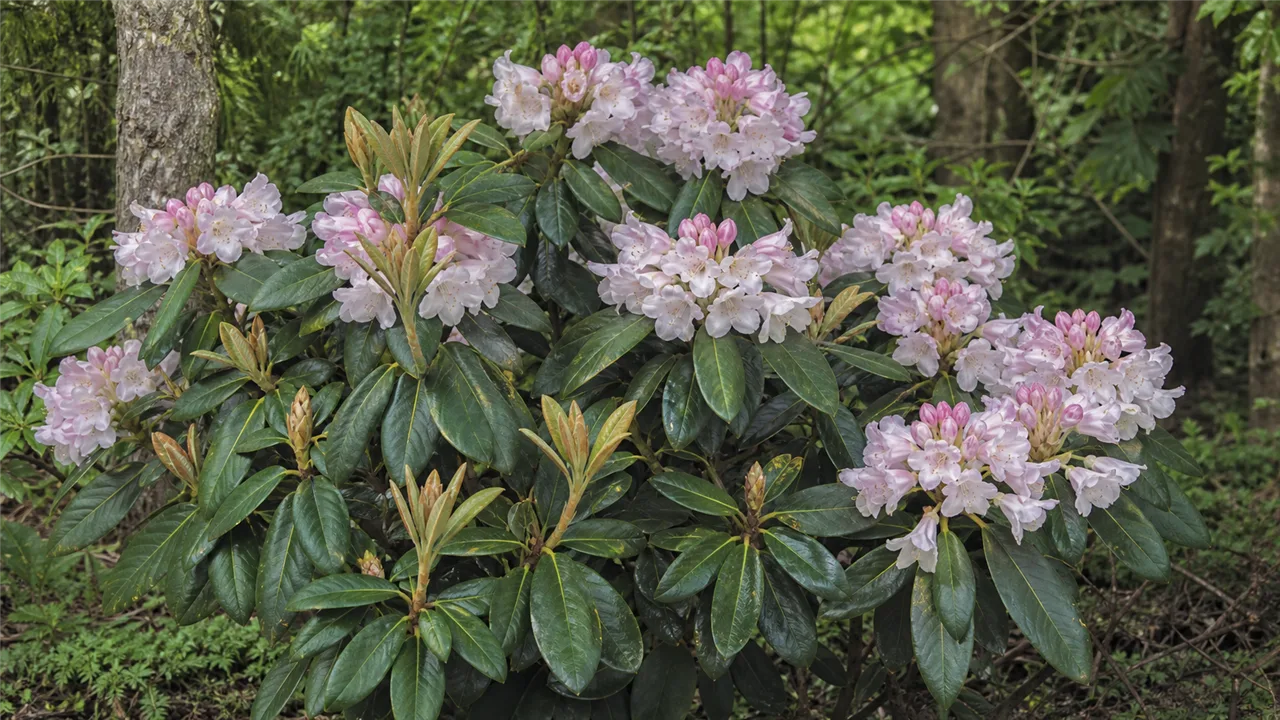
A compact, dome-shaped evergreen from the high mountains of Taiwan, Rhododendron pachysanthum is grown in British gardens chiefly for its handsome, year-round foliage rather than for any one spectacular season of bloom. Its new growth emerges cloaked in a thick, silvery-fawn felt, and its leathery dark-green leaves carry a soft pale underside that catches the light in shaded borders. It is one of the more refined foliage rhododendrons for UK cultivation, well suited to woodland edges, shaded courtyards and large ericaceous containers.
Overview
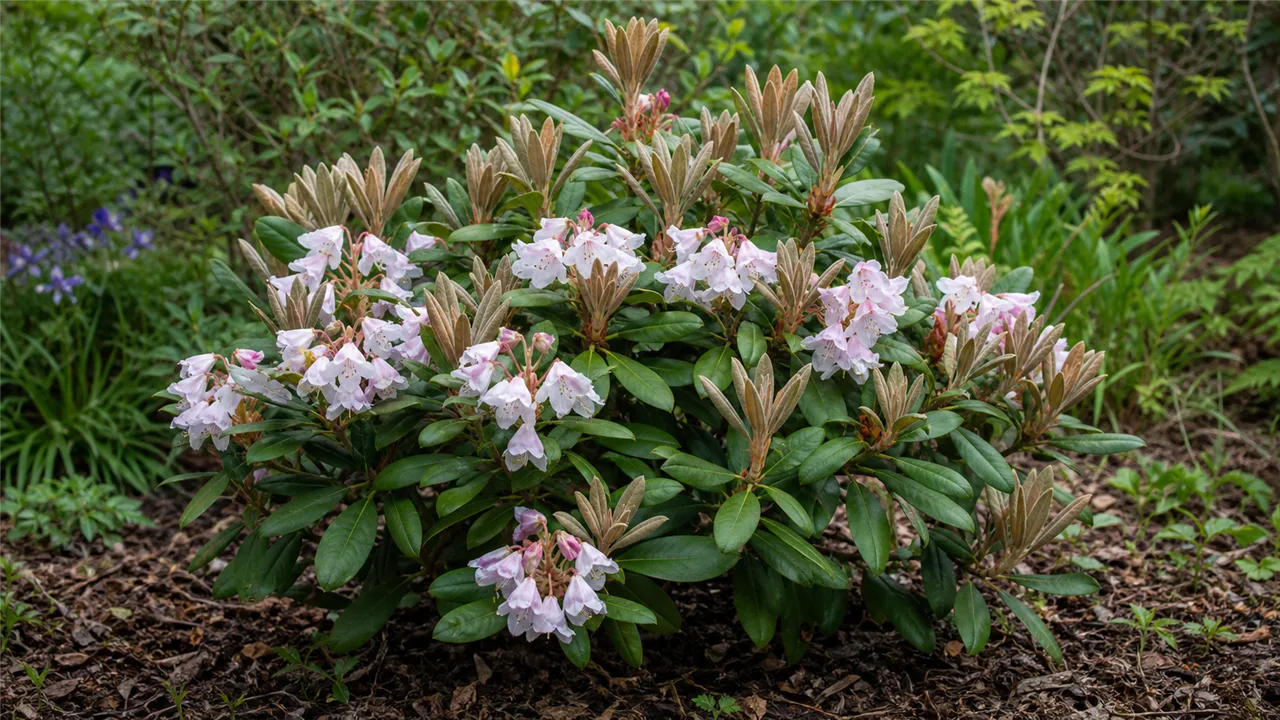
Rhododendron pachysanthum is a species rhododendron belonging to the family Ericaceae. It was described from the high-altitude forests of Taiwan, where it grows as an understorey shrub in acidic, leafy soils. In British cultivation it is prized primarily as a foliage plant: the broad, leathery, dark-green leaves are held on a dense, rounded framework, and the flush of new growth in spring is covered in a conspicuous silvery to fawn indumentum — a dense layer of fine hairs — that gives the plant an almost luminous quality in dappled woodland light.
The species has earned the Royal Horticultural Society's Award of Garden Merit (AGM), recognising its reliability and ornamental value in UK garden conditions. Mature plants typically reach 150–250 cm in both height and spread over many years, forming a tidy, broad dome rather than a leggy outline. It is hardy across most of the UK, though it appreciates the shelter of woodland or a shaded wall in colder inland districts, and it is one of the more amenable rhododendrons for cooler, wetter parts of northern England, Scotland and Wales.
Appearance
The plant makes a dense, rounded evergreen shrub with a slightly irregular but tidy outline. Mature specimens stand 150–250 cm tall with a similar spread, building outwards as much as upwards. The branches are stout and well furnished with foliage right down to ground level, which makes the plant useful as a low screen or as a structural anchor in a shaded border.
The leaves are the principal ornamental feature. They are leathery, broadly elliptical and a deep, glossy dark green on the upper surface, reaching 8–14 cm long. The underside is paler, often with a thin, fawn or silvery-grey felt. The specific epithet pachysanthum refers to the thick, furry flower buds and young shoots; when new growth breaks in spring it emerges tightly rolled and densely coated in a silvery to tawny indumentum, which persists on the leaf undersides as the shoot matures. The foliage thus changes subtly through the year, providing interest even outside the flowering season.
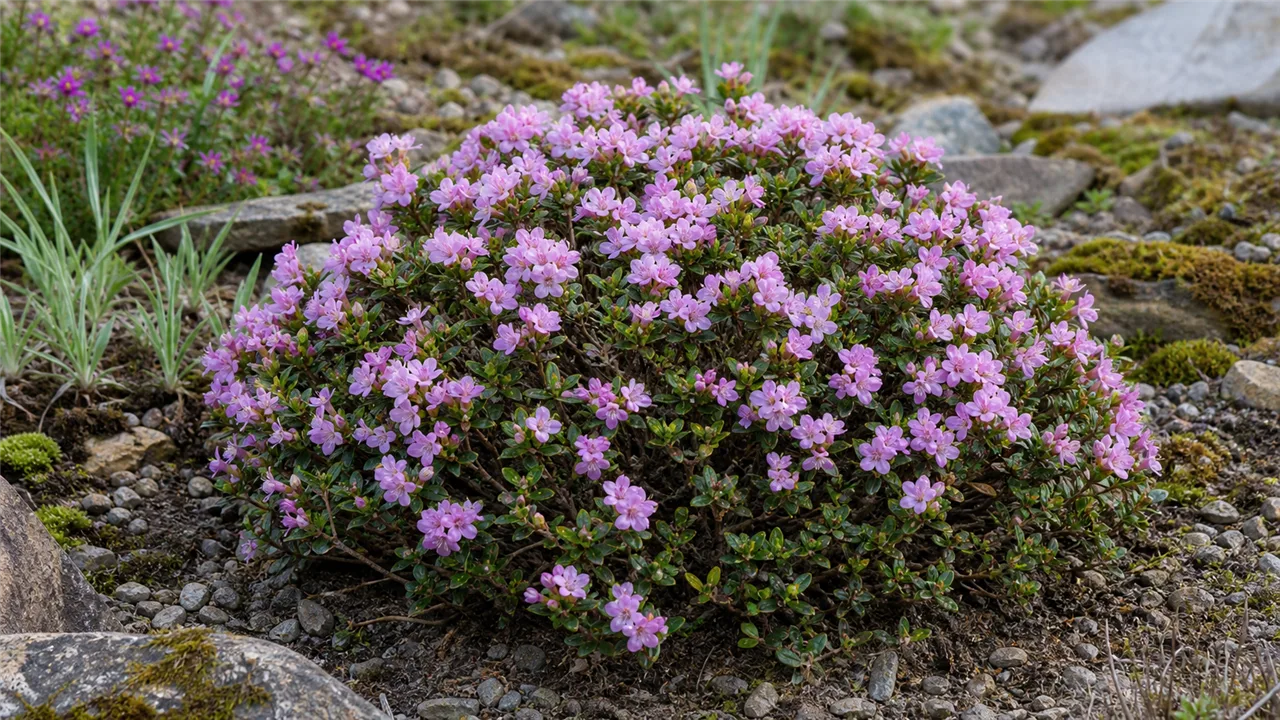
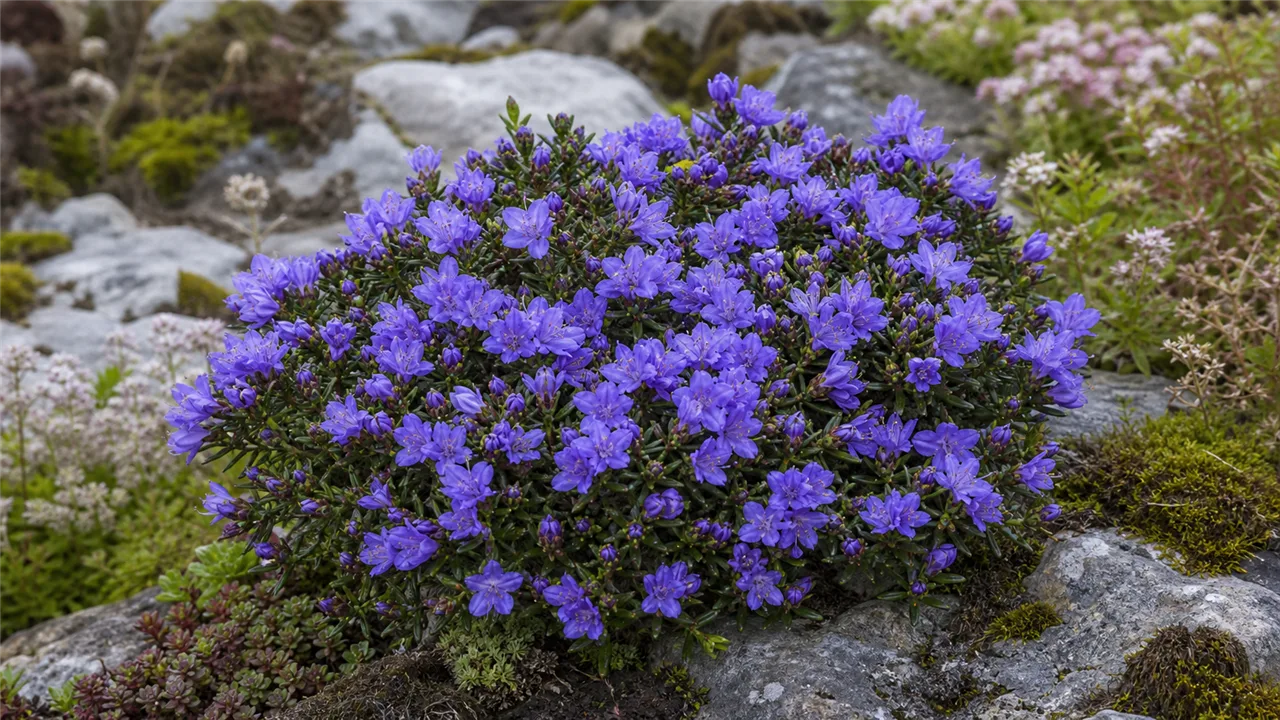
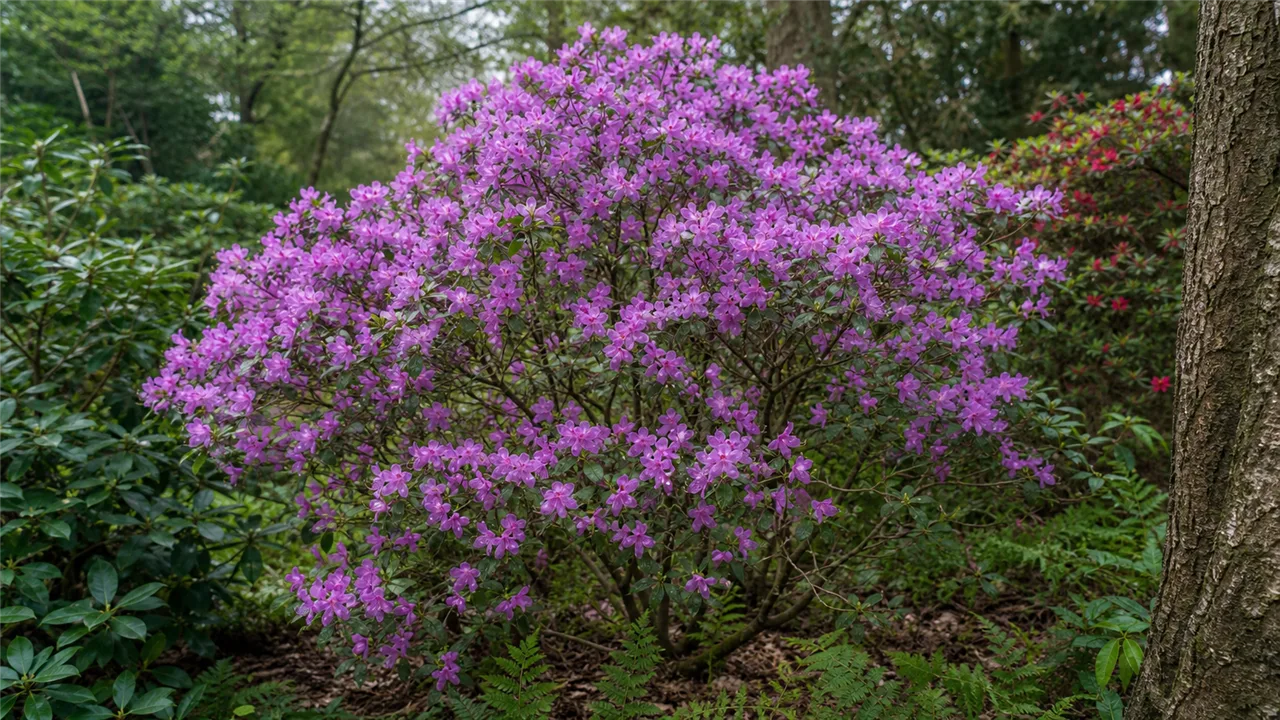
Flowers appear in mid-spring, typically from late March into May. They are carried in compact, rounded trusses (clusters) of bell-shaped blooms, each flower around 4–5 cm across. Colour varies from plant to plant: buds usually open white or palest pink and deepen as they age to a clear rose-pink before falling. Flowering is generally reliable but not as overwhelmingly profuse as in some larger-flowered hybrid rhododendrons; the species trades sheer flower power for the more lasting quality of its foliage.
Growing Conditions
Rhododendron pachysanthum shares the basic site requirements of the wider rhododendron genus. It performs best in partial shade, ideally the dappled light beneath deciduous trees or on the shaded side of a building, and it tolerates full shade reasonably well. It will not thrive in an exposed, sunny, windy site, where both foliage and flower buds scorch and dry out.
The single non-negotiable requirement is acid soil. The plant needs a pH below about 6.5, ideally in the 4.5–6.0 range, and a moist but well-drained, humus-rich substrate. Soils that are naturally acidic — peaty, sandy or loamy over chalk-free bedrock — are ideal. Where the garden soil is alkaline or chalky, the plant should either be grown in a container filled with ericaceous compost or planted into a raised bed built up with acidic loam, leaf mould and pine bark. On alkaline soil the leaves will quickly develop interveinal chlorosis (yellowing between the leaf veins) and the plant will decline.
Soil structure matters as much as pH. Rhododendrons are shallow-rooted and resent compaction or waterlogging; heavy clay should be opened up with copious organic matter and grit before planting. A leafy, moisture-retentive but free-draining tilth is the goal. Mulching each spring with acidic organic matter — leaf mould, composted bark or pine needles — keeps the roots cool, moist and slowly fed.
The species is hardy across most of the British Isles. In colder inland districts and exposed northerly gardens it benefits from a sheltered woodland position, where neighbouring trees take the worst off the wind. Container-grown plants are more vulnerable to root freeze and are best moved to a sheltered corner or against a wall during the coldest weeks.
Planting and Care
The two reliable planting windows are spring (March to May) and early autumn (September to November), when the soil is moist and warm enough for quick root establishment. Container-grown plants from garden centres can be planted at any time the soil is workable and the ground is not frozen, but these two windows give the best results.
Prepare a wide planting hole — considerably wider than deep — and work leaf mould, well-rotted pine bark or ericaceous compost into the backfill. The rootball should sit so that the top is just at or fractionally above the surrounding soil level; rhododendrons are easily buried too deep and sulk when the stem base is buried. Water thoroughly after planting and apply a 5–8 cm mulch of acidic organic matter over the whole root area, keeping the mulch clear of the stems.
For watering, the aim during the first two summers is consistently moist soil without saturation. Established plants are reasonably tolerant of short dry spells, but on thin or sandy soils summer drought causes bud abortion and poor flowering the following spring. Where rainfall is inadequate, soak the root zone deeply once a week rather than sprinkling lightly every day, and use rainwater in hard-water areas to avoid gradually raising the soil pH.
Feeding should be light and acid-appropriate. A slow-release ericaceous fertiliser applied in spring is usually enough; do not use general-purpose or lime-based feeds, which lock up iron and manganese and produce chlorosis. A top-dressing of leaf mould or composted bark each spring mimics the plant's natural nutrient cycling under woodland.
Pruning is minimal. The species falls into the deadhead-only category of shrubs: it does not require a scheduled annual woody prune. The main task each year is to snap or pinch out spent flower trusses as soon as the blooms fade, taking care not to damage the new shoot and next year's embryo buds just behind the truss. Old, leggy specimens can be rejuvenated over two or three seasons by cutting a proportion of the oldest stems back to a low framework after flowering, but routine shaping is not needed.
Propagation is straightforward from semi-ripe cuttings taken in mid- to late summer. Trim a 7–10 cm cutting just below a leaf joint, remove the lower leaves, wound the base lightly and insert into a 50:50 mix of peat-free ericaceous compost and sharp grit. Cover with a clear lid and keep in a shaded, humid place; rooting usually takes eight to twelve weeks. Layering of low branches in autumn is also reliable.
Seasonal care centres on three moments: a spring mulch and feed, prompt deadheading as flowers finish in May or early June, and an autumn check that the root zone is moist going into winter. Container plants should be stood on pot feet to keep drainage free and moved to a sheltered spot in prolonged hard frost.
Common Problems
The main pest of rhododendrons in the UK is vine weevil. Adults chew characteristic notches out of leaf margins in summer, while the cream, C-shaped grubs eat the roots in autumn and winter and can quickly kill a container-grown or stressed plant. Biological control with pathogenic nematodes applied in late summer or early autumn is the standard organic approach; systemic insecticide is available for severe infestations.
Rhododendron budworm is a smaller but locally serious pest. Affected flower buds fail to open, turn brown and shrivel, often with webbing between the bud scales and the shoot. The larvae are active in spring; cutting out and destroying affected trusses as soon as they are noticed reduces the population, and an appropriate insecticide can be applied when the larvae are visible.
Powdery mildew can coat the leaves and buds with a white, dusty fungal growth, particularly in dry, sheltered positions with poor air movement. It is rarely fatal but disfigures the foliage. Improving airflow, avoiding drought stress and, in persistent cases, a myclobutanil-based fungicide spray clears it.
Phytophthora root rot is the most damaging disease. Affected plants decline generally, with yellowing leaves, wilting in warm weather and a failure to flower, typically because the soil is waterlogged or poorly drained. There is no cure once a plant is badly affected; improving drainage and avoiding overwatering are the main preventions, and badly affected specimens should be removed.
Algal growth on leaves — a green or orange powdery coating — is a cosmetic problem that appears in humid, heavily shaded sites. Improve airflow and light if possible, and wash the leaves down with water during dry weather.
Popular Varieties
Named cultivars of Rhododendron pachysanthum are limited in commerce, and the species is most often sold simply on its own merits as straight species stock. Where named selections exist they tend to be foliage-focused, valued for the density and colour of the indumentum or for a particularly compact habit, and they are usually found only at specialist rhododendron nurseries and through the RHS plant finder.
The straight species remains the most widely planted form and the one most likely to be offered by general UK garden centres. The AGM is awarded to the species itself rather than to a particular clone, so a healthy, well-grown, unnamed R. pachysanthum from a reputable nursery is a perfectly good garden plant.
For gardeners wanting greater certainty over indumentum quality and flower colour, specialist rhododendron nurseries occasionally list selected forms under collector's numbers or clonal names. Gardeners interested in exploring the species more deeply should consult the RHS plant finder, the rhododendron section of the RHS Lily Group publications, or specialist growers such as those advertising in the Rhododendron, Camellia and Magnolia Group yearbook, rather than relying on general retail listings.
For most UK gardeners the practical question is simply sourcing a healthy, named, AGM-eligible species plant from a reputable nursery, growing it in genuinely acidic soil in shade, and deadheading annually — under those conditions the species rewards with good foliage year-round and a reliable, if understated, mid-spring display.
Pests and Diseases
| Problem | Symptoms | Management |
|---|---|---|
| Vine weevil | Notches on leaf margins and wilting or collapse of the plant due to root damage. | Apply biological nematodes in autumn or use systemic insecticides in early spring. |
| Rhododendron budworm | Flower buds fail to open, appear brown and shrivelled, often with webbing. | Prune out affected shoots or apply insecticide when larvae are active in spring. |
| Powdery mildew | White, dusty fungal growth on leaves and flower buds, causing distortion. | Improve air circulation and spray with a fungicide containing myclobutanil. |
| Phytophthora root rot | General decline, yellowing leaves, and failure to flower due to waterlogged soil. | Ensure well-drained acid soil and avoid overwatering; remove severely affected plants. |
| Algae on leaves | Green or orange powdery coating on leaf surfaces, making foliage look dull. | Improve air circulation and light levels; wash leaves with water if unsightly. |
For step-by-step help, read Treating Powdery Mildew. Or browse the full plant problem solver to diagnose an issue by symptom.
Recommended Products
GardenWizz earns a commission from qualifying purchases made through affiliate links on this page (including links within the article) — as an Amazon Associate, and from Thompson & Morgan via the Awin network. This does not affect the price you pay. See our disclaimer for details.