Mountain-Loving Rhododendron
Rhododendron oreotrephes
The Gardening Year
Best months in UK gardens · full planting calendar →
🖨 Printable care card (PDF)At a Glance
| Botanical name | Rhododendron oreotrephes |
|---|---|
| Common name(s) | Mountain-loving Rhododendron |
| Family | Ericaceae |
| Plant type | shrub |
| Height × Spread | 4–8 m × 4–8 m |
| Position | Full sun, Partial shade |
| Soil | moist but well-drained, leafy, humus-rich acid soil |
| Flowering | May–June |
| Toxicity | Harmful if eaten. Wear gloves and other protective equipment when handling. |
| Native range | Burma and south-west China |
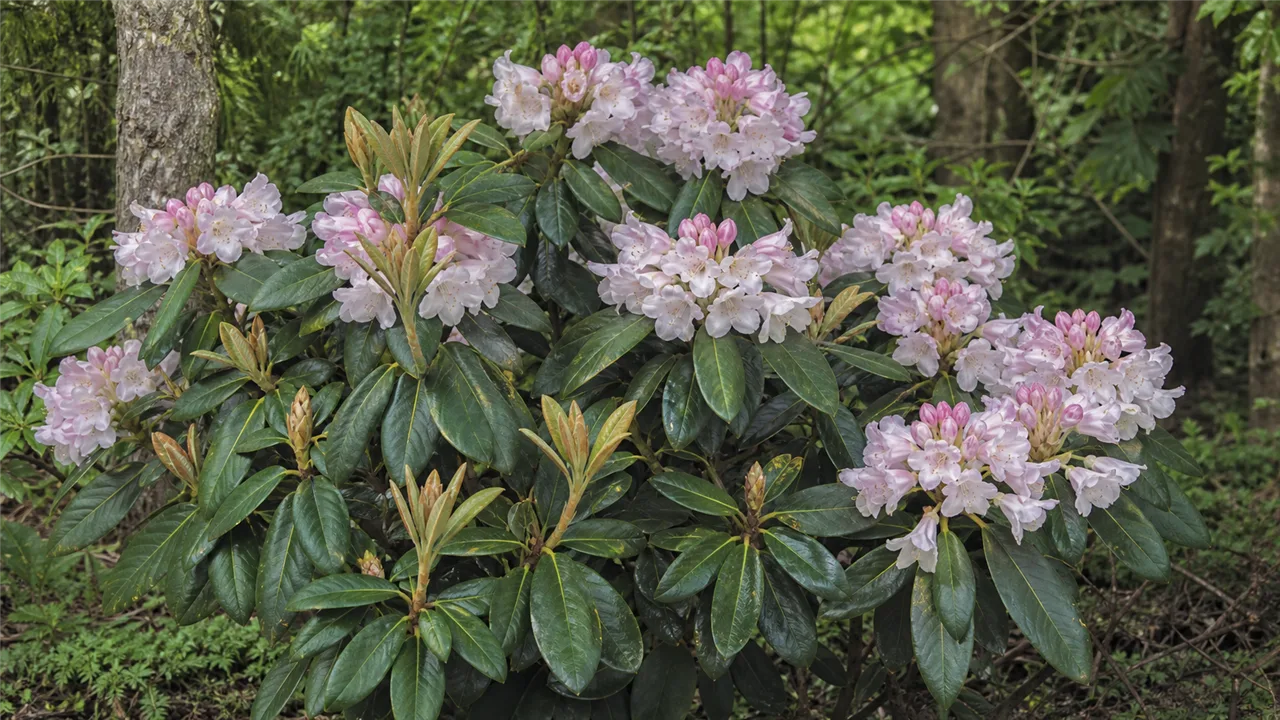
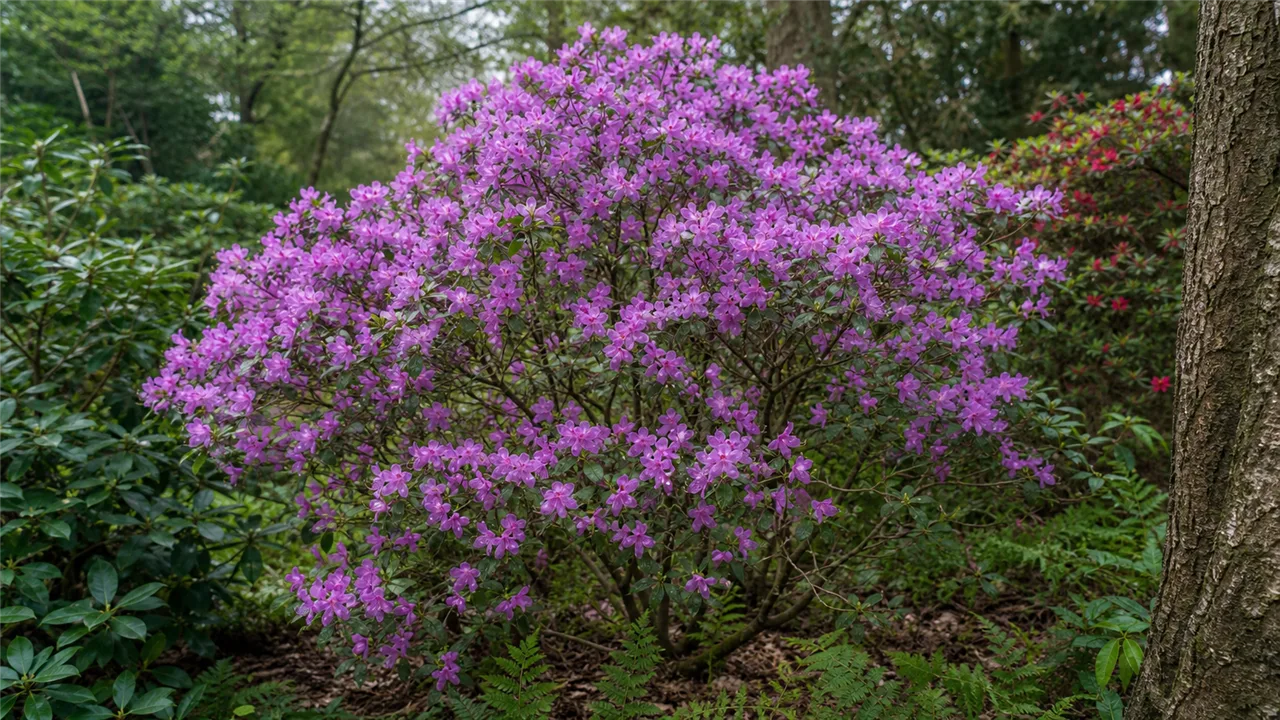
Rhododendron oreotrephes is a compact, evergreen flowering shrub from the high-altitude scrub of south-west China, prized among rhododendron enthusiasts for its delicate pink to purplish-pink flower trusses and quiet, undemanding habit once established. It is one of the more unusual species to reach British cultivation — uncommon in mainstream garden centres, but firmly rooted in the collections of rhododendron specialists, woodland gardens and a handful of the larger National Trust properties where acid-soil plantings thrive. For the UK gardener willing to source a plant by special order and meet its relatively narrow soil and aspect requirements, it is a genuinely rewarding species: hardy, slow-growing, and reliably floriferous in late spring.
Overview
Rhododendron oreotrephes was described from material collected in the alpine and subalpine zones of Yunnan, Sichuan and south-east Tibet, where it grows on open mountainsides, in rhododendron scrub and at the edges of coniferous woodland at elevations typically between 3,000 and 4,500 metres. It sits within the large Triflora subsection of rhododendrons, a group otherwise dominated by Chinese and Himalayan species noted for foliage that is often aromatic when crushed and for flower colours ranging from white through cream, pink and lavender. Within British cultivation it remains a connoisseur's plant: it has been grown in specialist collections since the early twentieth-century plant-hunting expeditions, but it has never broken into the mainstream trade in the way that the hybrid evergreen rhododendrons have.
Its appeal for the UK gardener is a combination of compact size, late-spring flower and the cool, slightly blue-green tone of its evergreen foliage. It is not a shrub for a hot, sunny border; it asks for the same conditions as a blueberry patch — acidic soil, moisture and dappled light — and rewards the gardener who can give it those with a quietly handsome display of pink trusses in early summer, at the tail end of the main rhododendron season.
Appearance
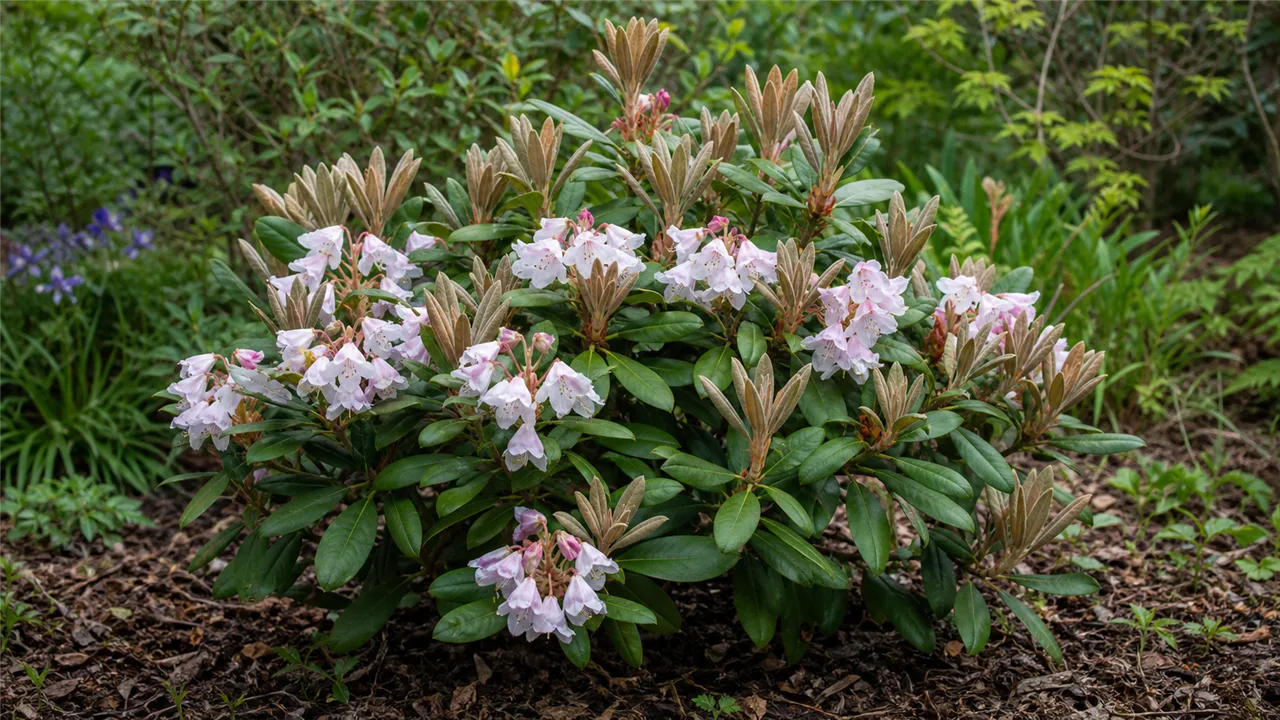
Rhododendron oreotrephes forms a dense, rounded, well-branched evergreen shrub, typically reaching 1–2 m in height after many years in cultivation and a similar spread. Growth is slow but steady, and well-sited plants develop a tight, slightly irregular outline that needs no regular shaping.
The leaves are elliptic to ovate, 3–7 cm long, with a leathery texture and a blue-green to mid-green upper surface that is often slightly paler beneath. The foliage is retained year-round, giving the shrub a permanent presence in the border.
Flowers are the main ornamental feature. They are funnel-shaped, 2–4 cm across, and produced in trusses of three to eight in May and June. Colour varies from clone to clone but falls within a range of soft pink to purplish-pink, occasionally with faint spotting on the upper lobe. The display is delicate rather than showy: the individual flowers are modest in size compared with the large-flowered hybrid rhododendrons that dominate garden-centre benches.
Growing Conditions
The species has very specific site requirements and tolerates no meaningful departure from them. Soil is the single most important factor. It needs moist but well-drained, humus-rich, acidic ground in the pH range 4.5–6.0, ideally with leaf mould and pine-needle litter worked into the upper profile. It will not thrive in chalky or limy soils, and in alkaline ground the foliage quickly yellows from iron and manganese lock-out (see chlorosis, below). On suitable acidic ground — the rhododendron belt of Cornwall, Devon, Wales, the Lake District, Scotland and much of Ireland, or anywhere in cultivated acid loam or peaty ground — it grows without fuss.
Position should be partial shade rather than full sun. The natural habitat is open subalpine scrub with light overhead canopy, and in British gardens the equivalent is dappled shade beneath high-canopied deciduous trees such as birch, oak or Scots pine, or the shaded side of a woodland border. East-, north- or west-facing aspects suit it well; avoid hot south-facing sites, especially where walls or paving add to the drying effect. Shelter from cold, drying winter wind is valuable — a slightly more enclosed site than the open garden helps.
Hardiness is rated by the Royal Horticultural Society and the rating is shown in the plant badge rather than stated in prose. In practical terms, the species is reliably hardy across most of the UK given the dappled-shade, sheltered conditions described above; it will struggle only in the most exposed, cold corners of upland Britain.
Planting and Care
Plant in autumn or spring, when the soil is moist and workable but not frozen or waterlogged. Container-grown plants from specialist nurseries establish readily; prepare a hole at least twice the width of the rootball and the same depth, and backfill with a mix of the existing topsoil and ericaceous compost or leaf mould — do not add ordinary garden compost or manure, both of which can be too rich or too alkaline. After planting, water thoroughly, mulch with an acidic material such as pine bark or leaf mould to a depth of 5–7 cm, and keep the mulch clear of the main stem to prevent collar rot.
Watering is critical in the first two to three years. The plant should never sit in waterlogged ground — established rhododendrons rot quickly where drainage fails — but the rootball must remain consistently moist through dry spells in late spring and summer. Once established, the shrub is largely self-sufficient in normal British summers, but in extended droughts, particularly on light soils, a soak every ten days or so keeps foliage turgid and supports flower-bud initiation for the following year.
Feeding uses an ericaceous liquid fertiliser applied monthly from April through August. Avoid general-purpose and phosphorus-heavy feeds: in already-acid soils high phosphorus locks out iron and manganese, producing the classic interveinal chlorosis that can take several seasons to correct. A light spring top-dress with a slow-release ericaceous fertiliser is also adequate.
Pruning consists almost entirely of deadheading. As each truss finishes in June, snap or cut off the spent flower head just above the new growth bud beneath it — this is tidying rather than pruning, and it is the only routine cutting the plant needs. No annual woody prune is required. If a branch is damaged, crossing, or rubbing, remove it cleanly in late spring after flowering; otherwise, leave the structure alone. Heavy cutting back into old wood is rarely successful.
Propagation is by semi-hardwood cuttings in late summer, taken from current-season growth and rooted under mist, or by simple layering in autumn — a low branch pegged into the ground and severed from the parent once rooted, typically twelve to eighteen months later. Seed is sown in autumn on a moist ericaceous seed-compost surface, but germination is variable.
Seasonal care centres on moisture consistency: water through dry spells in May, June and July while flower buds for the following year are forming; mulch annually in late autumn with pine bark or leaf mould to maintain soil acidity; shelter from late-spring frosts which damage expanding flower buds in colder districts.
Common Problems
Vine weevil (Otiorhynchus sulcatus) is the most damaging pest in containers, where the soil-dwelling larvae chew through roots and the basal stem. Adults notch leaf edges in an unmistakable pattern. Control is best done with a biological nematode treatment (Steinernema kraussei) applied in autumn when soil temperatures are above 12 °C.
Rhododendron leafhopper (Graphocephala fennahi) is a bright green and yellow striped leafhopper that lays eggs in bud scales in late summer. The insect itself does little direct damage, but it is the principal vector of Phytophthora ramorum, which causes sudden die-back on a wide range of host plants. Targeted spraying or fine net exclusion of the plants in July reduces populations.
Azalea lace bug (Stephanitis pyrioides) is a small insect that feeds on the underside of leaves, producing a pale, mottled appearance on the upper surface. It prefers hot, dry conditions and is most troublesome on sheltered, south-facing sites. Spraying with insecticidal soap, a systemic insecticide, or improving humidity around the plant (overhead watering in the evening during dry weather) all reduce damage.
Powdery mildew can coat leaves with a white, dusty fungal growth during humid, still weather. Improve air movement around the plant by selective thinning of overhanging canopy, and apply a suitable fungicide in persistent cases.
Chlorosis — yellowing leaves with green veins — is almost always a soil-pH problem rather than a disease. It indicates iron or manganese lock-out in soil that is too alkaline for healthy rhododendron growth. Foliar application of chelated iron gives quick green-up, but the long-term answer is to correct soil pH by working in sulphur chips and acidic organic matter, or to transplant the plant to a more suitable site.
Phytophthora root rot, caused by Phytophthora cinnamomi, is the most serious disease of cultivated rhododendrons. Symptoms include wilting, leaf drop and die-back that may not respond to watering; the plant eventually dies. There is no effective cure once the pathogen is established in the root zone. The affected plant should be removed and disposed of, and the soil not replanted with susceptible species — rhododendrons, azaleas, heathers or Pieris — for several seasons.
Popular Varieties
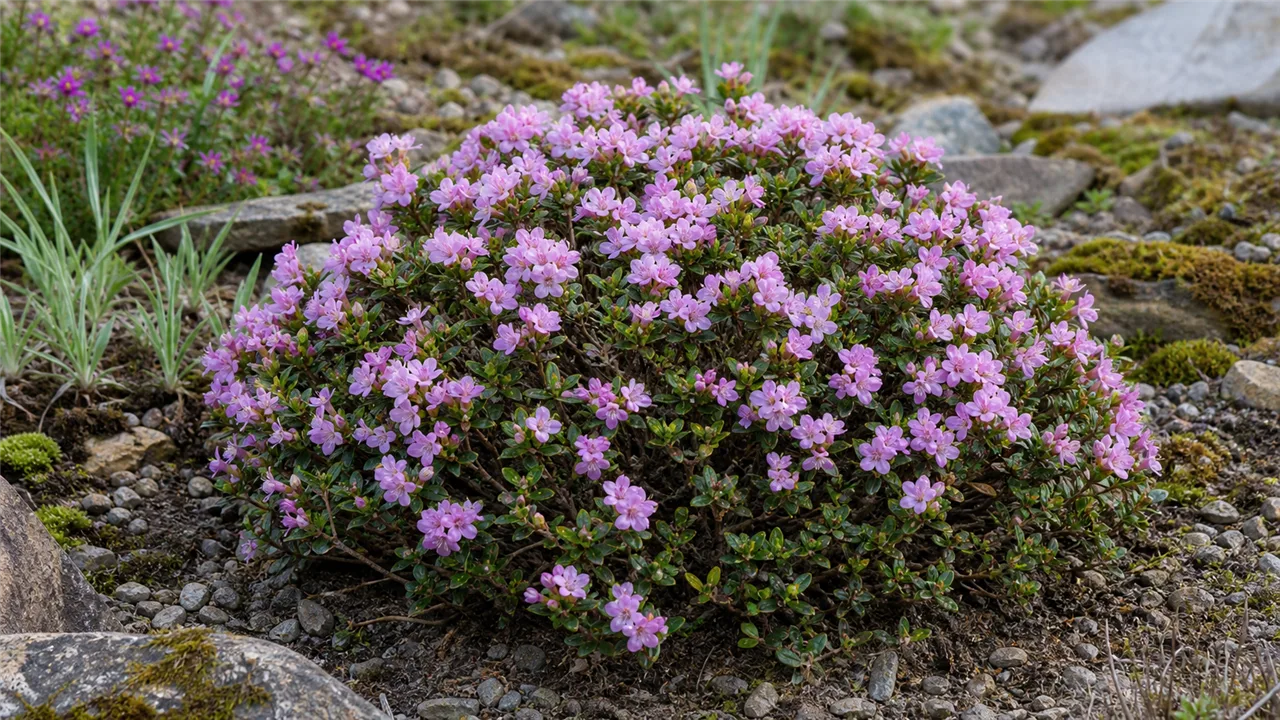
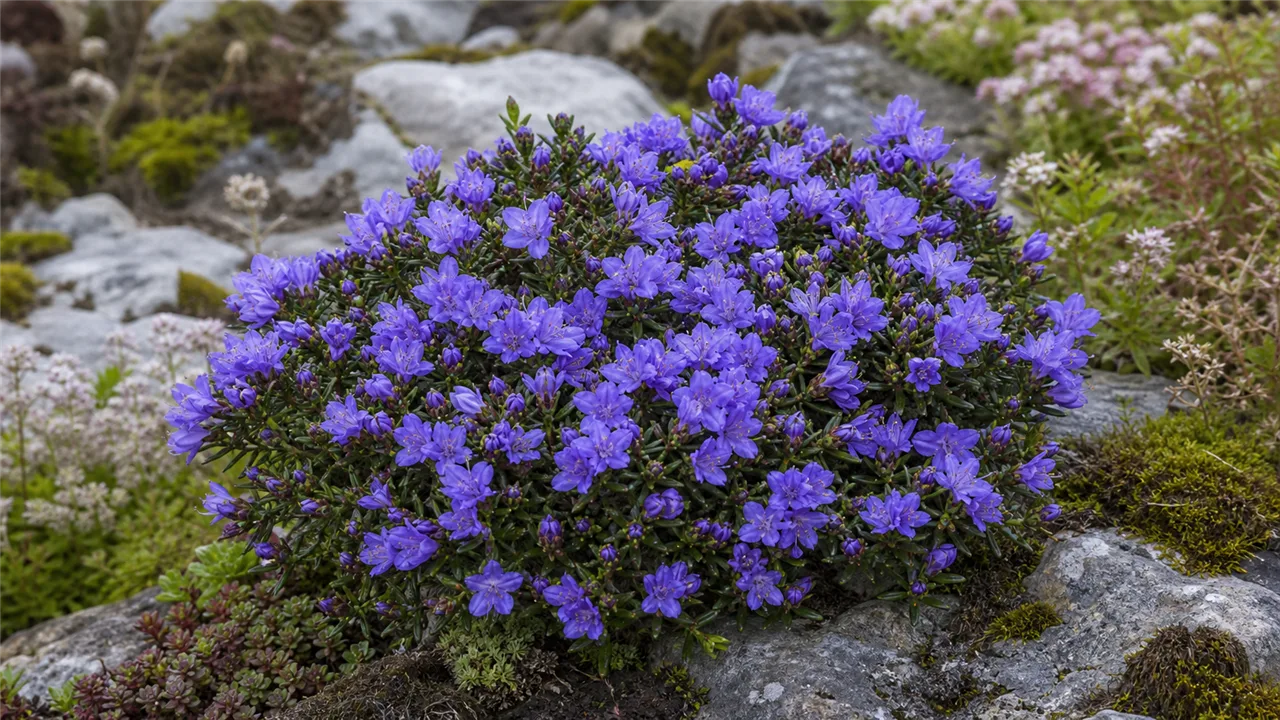
Rhododendron oreotrephes has few formally registered cultivars in British cultivation; the species is most often sold under collector seed or clonal selections rather than named garden varieties. For most gardeners the typical species is itself the plant of interest. Where the look is wanted but specialist supply is unavailable, three related species within the Triflora group make good substitutes with a similar late-spring pink truss at the same garden scale: R. yunnanense (white to pale pink, taller and more open); R. davidii (rose-pink, upright truss, larger shrub); and R. russatum (compact, deep violet-blue flowers). All three grow in the same acidic, dappled conditions as R. oreotrephes and are far more widely available. The broad evergreen hybrid rhododendrons sold in garden centres as `Ponticum`-type and yakushimanum crosses give a similar but more vigorous visual effect at much lower cost, and remain the realistic choice where specialist nursery supply is limited.
Pests and Diseases
| Problem | Symptoms | Management |
|---|---|---|
| Powdery mildew | White powdery fungal growth appears on leaves, buds, and shoots, potentially causing distortion. | Tolerate unless severe; avoid fungicides to protect biodiversity and soil health. |
| Bud blast | Flower buds turn brown and fail to open due to fungal infection spread by leafhoppers. | Remove and destroy infected buds promptly if practical for the plant size. |
| Vine weevil | Notches appear on leaf margins while larvae damage roots, causing wilting or collapse. | Use biological nematodes in soil or physical barriers to prevent adult laying eggs. |
| Silver leaf | Leaves develop a silvery sheen underneath and stems may show fungal fruiting bodies. | Remove affected branches well below the infection site and destroy them immediately. |
| Rhododendron leafhopper | Small insects feed on foliage, causing stippling and transmitting bud blast fungus. | Encourage natural predators like ladybirds; chemical control is difficult due to their mobility. |
For step-by-step help, read Treating Powdery Mildew. Or browse the full plant problem solver to diagnose an issue by symptom.
Recommended Products
GardenWizz earns a commission from qualifying purchases made through affiliate links on this page (including links within the article) — as an Amazon Associate, and from Thompson & Morgan via the Awin network. This does not affect the price you pay. See our disclaimer for details.