False-Gold-Flower Rhododendron
Rhododendron pseudochrysanthum
The Gardening Year
Best months in UK gardens · full planting calendar →
🖨 Printable care card (PDF)At a Glance
| Botanical name | Rhododendron pseudochrysanthum |
|---|---|
| Common name(s) | false-gold-flower rhododendron |
| Family | Ericaceae |
| Plant type | shrub |
| Height × Spread | 2.5 m × 2.5 m |
| Position | Partial shade |
| Soil | acid soil enriched with leaf mould |
| Flowering | March–May |
| Toxicity | — |
| Native range | Taiwan |
Rhododendron pseudochrysanthum is a slow-growing evergreen shrub from the high mountains of Taiwan. Its compact, spreading habit, leathery foliage and refined late-spring flowers make it an unusual choice for an acid border, woodland edge or large container in a UK garden. Although established specimens are impressive, young plants may take time to settle and flower well.
Overview
This member of the heath family, Ericaceae, is endemic to Taiwan. It occupies exposed, rocky mountain habitats, remaining low on the highest sites but growing taller in shelter. In British cultivation it is generally a restrained, broad shrub.
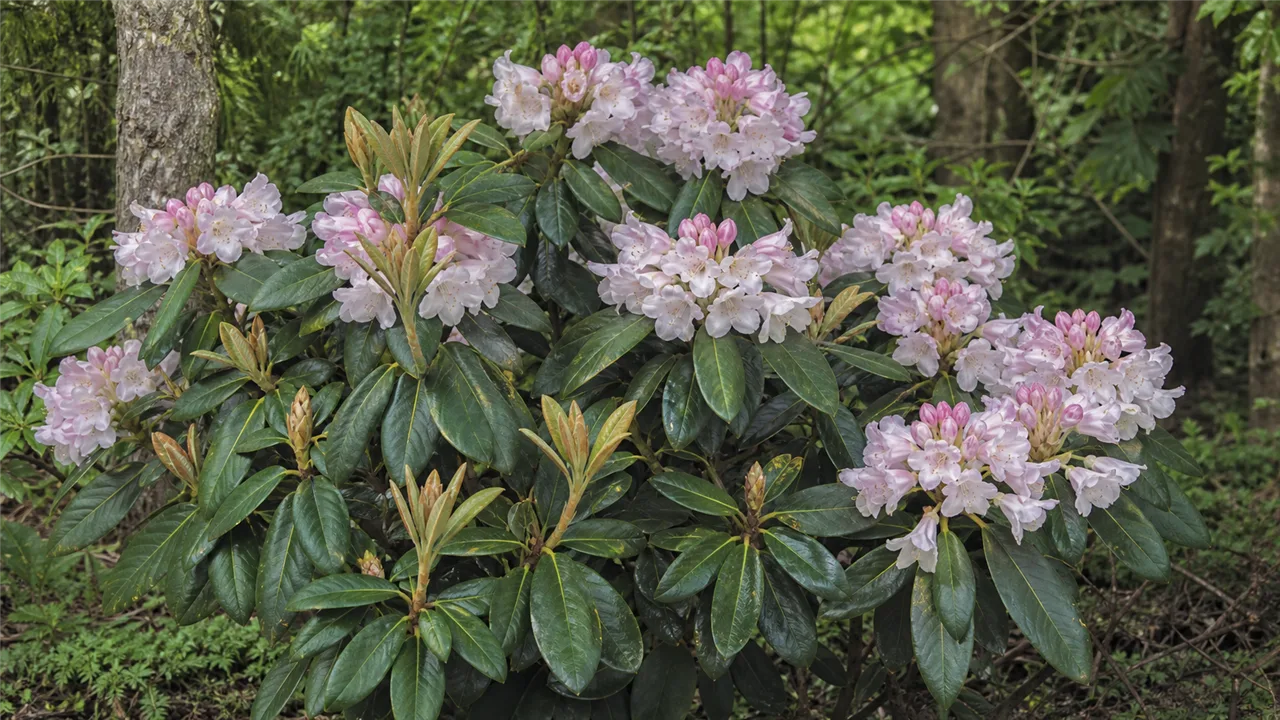
Despite the element chrysanthum, meaning golden-flowered, this is not a yellow rhododendron: the blooms are white or pale pink, usually with red or crimson markings. The common name Yushan rhododendron refers to one of its native mountain localities.
Its neat evergreen structure, attractive young growth and delicately marked flowers suit ericaceous collections and smaller gardens. Given acidic soil, steady moisture and shelter from drying winds, it can thrive in many UK districts. Drier eastern gardens demand more summer watering, while plants on chalk or alkaline soil are best grown in a substantial container.
Growth is slow and young plants may flower sparsely. Choose a permanent position and non-competitive companions such as small ferns and woodland perennials.
Appearance
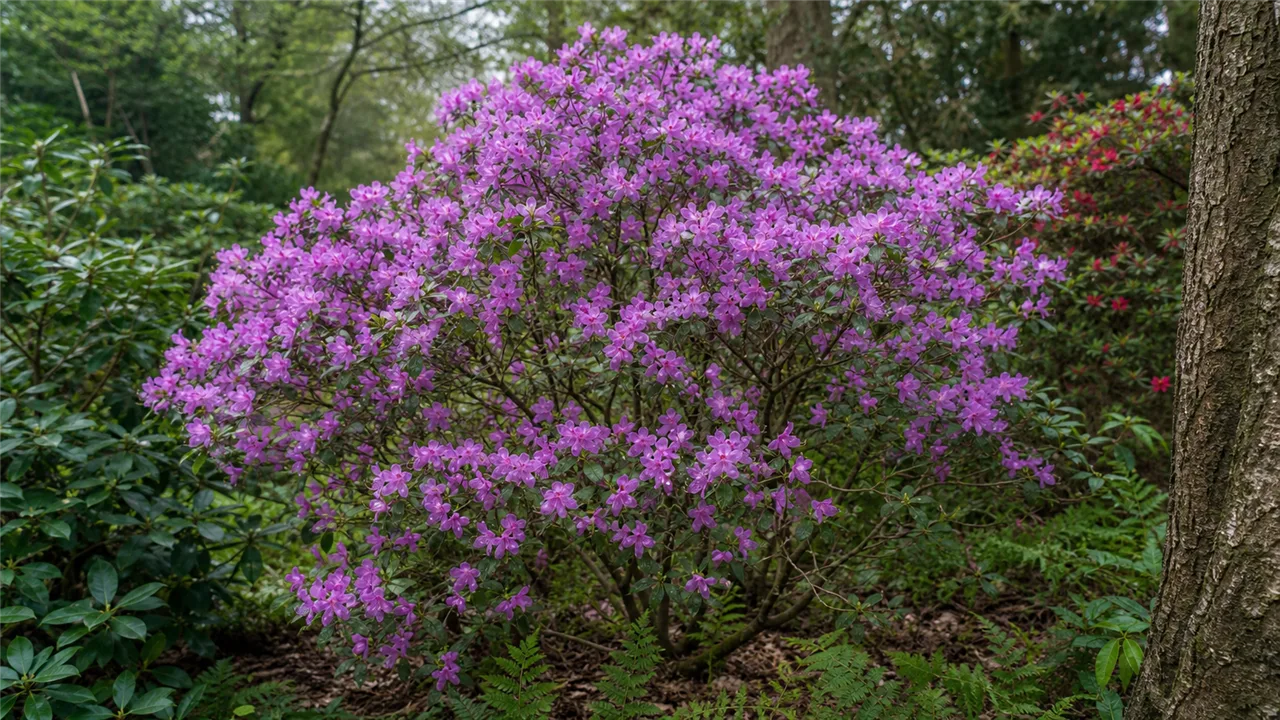
Rhododendron pseudochrysanthum forms a dense, rounded to spreading framework. Cultivated plants commonly stay below about 1.2 m for many years and may spread farther than they rise, although old specimens can exceed this. Its broad outline suits a woodland border or sheltered rock garden.
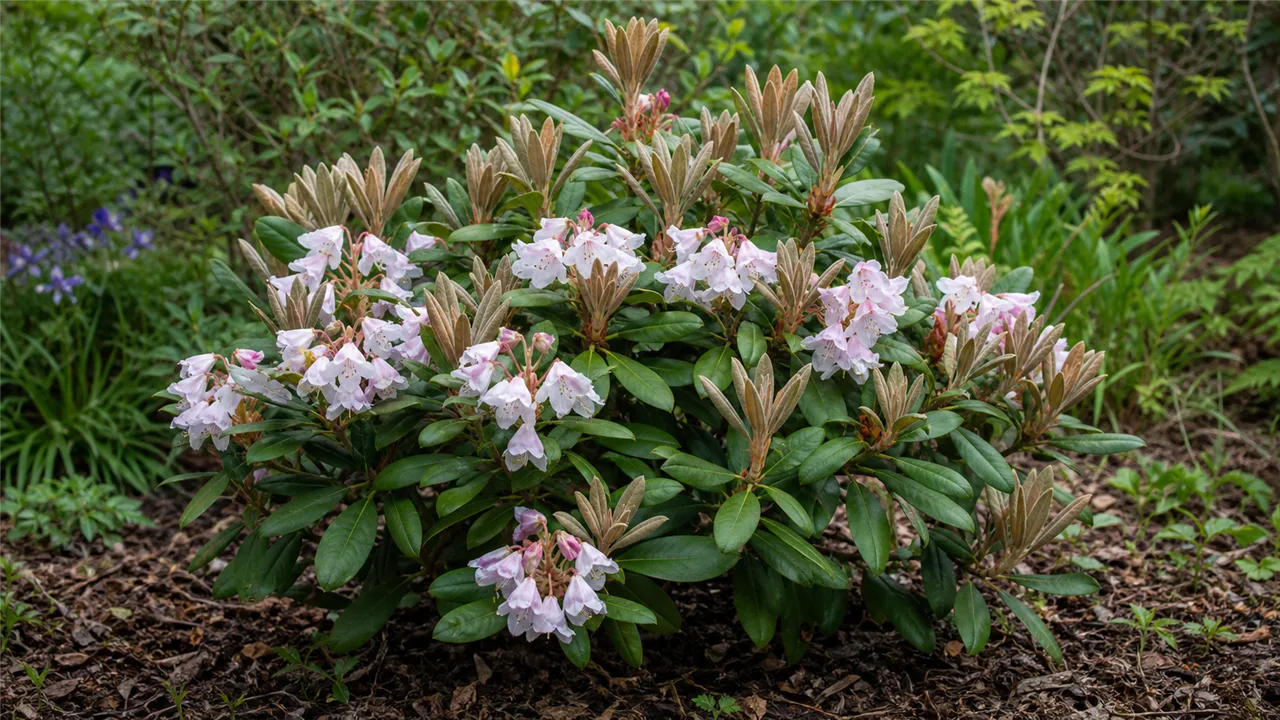
The evergreen leaves are crowded towards the shoot tips. Each is thick and leathery, usually elliptic, oblong or slightly lance-shaped, with a short pointed tip. Leaves are typically 3–8 cm long. Young shoots, leaf stalks and newly opened leaves can carry a grey, rusty or bronzy felted covering. Much of this soft indumentum wears away as the foliage matures, leaving a dark green upper surface and a paler underside, sometimes with traces of hairs along the midrib. This change gives the spring growth extra ornamental interest before the leaves settle to green.
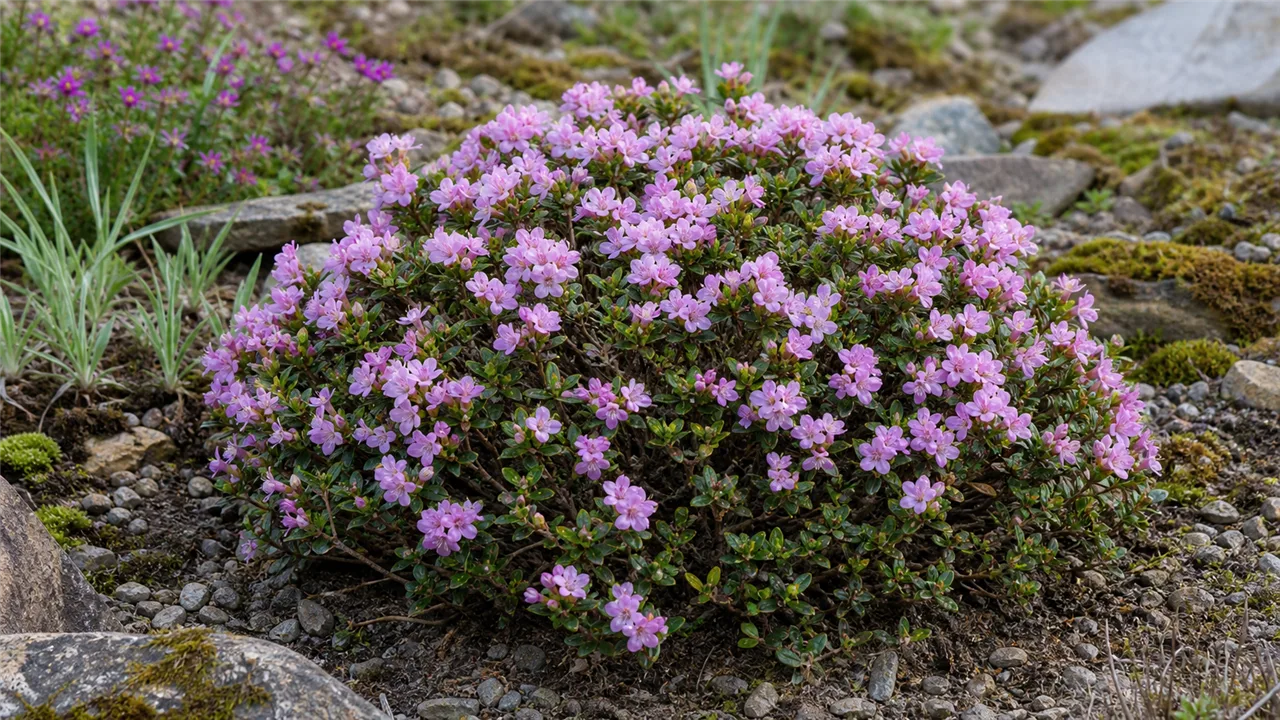
Flowers are held in compact trusses, often containing five to twelve broadly bell-shaped blooms, each approximately 3–5 cm across. White to pale-pink petals carry red flecks, a deeper basal blotch or coloured outer streaks. Flowering generally falls in April and May in the UK, with sheltered plants sometimes opening earlier.
Short cylindrical seed capsules may follow the flowers. Deadheading is optional, but spent trusses may be removed carefully where seed is not required.
Growing Conditions
The essential requirement is acidic, humus-rich soil that remains evenly moist yet drains freely. Leaf mould and well-decomposed organic matter help create a woodland-style root run. The fine, fibrous roots lie close to the surface, so avoid deep cultivation around established plants.
Light dappled shade is dependable, particularly in gardens prone to summer drought. This mountain species can also grow in brighter light than many large-leaved woodland rhododendrons, provided its roots remain cool and moist. Avoid a hot south-facing wall, a frost pocket, deep shade and sites exposed to persistent drying wind. Early morning sun after a cold night may damage frozen foliage and buds, while dense overhead shade can reduce flowering.
Test uncertain soil before planting. Chalky ground is unsuitable and difficult to correct permanently. Instead, use a wide, frost-resistant pot with drainage holes and peat-free ericaceous compost. Water with rainwater where possible, as hard mains water can gradually increase alkalinity.
Move container plants into larger pots in stages, provide bright filtered light and never leave a pot standing in water.
Planting and Care
Plant in March or April, or in October while the soil is moist and workable. Spring is the safer option in cold, exposed districts. Water the plant thoroughly before removing its pot and gently loosen tightly circling outer roots. Dig a broad, shallow hole and set the top of the rootball level with, or fractionally above, the surrounding soil. Deep planting deprives the surface roots of oxygen and is a common cause of decline.
Backfill with the excavated acidic soil, adding leaf mould if organic matter is low. Water in, then apply 5–7.5 cm of composted bark or leaf mould over the root area. Keep mulch away from the main stems and renew it between late autumn and late winter.
Water regularly through the first two growing seasons. Established plants still need a thorough soak during prolonged dry periods, especially from July onwards, when the following year's flower buds are developing. Water the soil rather than repeatedly wetting the foliage. Container plants require closer attention from spring to early autumn; check the compost with a finger and water before it becomes completely dry, allowing surplus water to escape.
Feed sparingly. An annual organic mulch may be sufficient; otherwise apply ericaceous fertiliser at the manufacturer's rate in spring. Heavy or late feeding can produce soft growth and disturb flower-bud formation.
Routine pruning is unnecessary and can spoil the naturally compact shape. Remove dead, damaged or crossing wood with clean secateurs when noticed. If desired, snap off faded flower trusses after flowering while protecting the new shoots immediately below them. Avoid cutting hard into old bare wood unless renovating a badly damaged plant, as recovery is slow.
Species plants may be raised from fresh seed sown on the surface of moist ericaceous compost in January. Maintain humidity, gentle warmth and good light; seedlings need careful watering and take years to flower. Semi-ripe heel cuttings can be taken in late summer or early autumn, though rooting may be slow. Low shoots may also be layered and separated once well rooted.
In autumn, check drainage and mulch. Through winter, shelter plants from drying winds and keep container compost neither sodden nor dry. Inspect buds in spring and prioritise moisture during summer.
Common Problems
Yellow tissue between greener leaf veins usually indicates lime-induced chlorosis. Alkaline soil or hard tap water can lock up nutrients. Correct the conditions rather than repeatedly feeding; container plants may need fresh ericaceous compost and rainwater.
Wilting combined with darkened roots or shoot dieback can indicate Phytophthora root rot. Waterlogged ground, deep planting and blocked container drainage increase the risk. There is no simple cultural cure for severely affected plants; improve drainage, discard contaminated potting compost and clean reused containers. Drought causes a different pattern: leaves may roll, scorch at the edges or drop, and flower buds formed in late summer may fail to open the following spring.
Vine-weevil adults notch leaf margins, while their larvae eat roots and may collapse container plants. Inspect unstable rootballs and use a suitable biological control according to its label. Scale insects may cluster on stems, while rhododendron lace bug causes pale stippling above and dark spotting beneath. Remove small infestations by hand and address heat or drought stress.
Brown, unopened buds may have bud blast, often associated with rhododendron leafhopper. Remove affected buds and improve airflow. Some older leaves naturally yellow and fall, so isolated loss on a vigorous plant is not necessarily disease.
All parts of rhododendrons should be treated as poisonous if eaten. Keep plant material away from grazing animals and do not use the flowers or leaves as food.
Popular Varieties
This uncommon species has few named selections. The following documented botanical varieties or cultivated forms may have limited UK availability:
- Rhododendron pseudochrysanthum var. pseudochrysanthum is the typical variety. Its white flowers are commonly flushed pink and spotted crimson, and it represents the form most often meant by the unqualified species name.
- Rhododendron pseudochrysanthum var. nankotaisanense is a documented Taiwanese variety distinguished botanically by details of the flower stalks and ovary. Its taxonomic status has been treated differently by some authorities, so labels may also use the older name Rhododendron nankotaisanense.
- Rhododendron pseudochrysanthum ‘Dwarf’ appears in cultivation as a selected compact form. Published descriptive information is limited, so plants should be bought from a specialist supplier able to confirm their identity and likely mature size.
Other Taiwanese rhododendron species, such as Rhododendron pachysanthum and Rhododendron morii, are related or superficially similar but are not varieties of R. pseudochrysanthum. Nursery labels should be checked carefully, particularly where older synonyms are used.
Pests and Diseases
| Problem | Symptoms | Management |
|---|---|---|
| Bud blast | Flower buds turn brown and die before opening, often following a late frost. | Site in a sheltered position away from cold winds and avoid late pruning. |
| Powdery mildew | White powdery fungal growth appears on leaves and flower buds. | Improve air circulation and apply a suitable fungicide if severe. |
| Slugs and snails | Irregular holes chewed in young leaves and damage to emerging shoots. | Use slug pellets, iron phosphate baits, or hand-pick at night. |
| Vine weevil | Notched leaf margins above ground and root damage causing wilting below. | Apply systemic insecticide drenches or use nematode treatments in soil. |
| Leaf spot | Small brown or black spots develop on leaves, sometimes with yellow halos. | Remove affected leaves and avoid wetting foliage when watering. |
For step-by-step help, read Dealing with Slugs and Snails, Treating Powdery Mildew and Tackling Black Spot on Roses. Or browse the full plant problem solver to diagnose an issue by symptom.
Recommended Products
GardenWizz earns a commission from qualifying purchases made through affiliate links on this page (including links within the article) — as an Amazon Associate, and from Thompson & Morgan via the Awin network. This does not affect the price you pay. See our disclaimer for details.