Gum Rock Rhododendron
Rhododendron calostrotum
The Gardening Year
Best months in UK gardens · full planting calendar →
🖨 Printable care card (PDF)At a Glance
| Botanical name | Rhododendron calostrotum |
|---|---|
| Common name(s) | Gum Rock Rhododendron |
| Family | Ericaceae |
| Plant type | shrub |
| Height × Spread | 10–50 cm × 50–100 cm |
| Position | Full sun, Partial shade |
| Soil | acid soils with a pH of roughly 4.5–5.5; well-drained soils high in organic material |
| Flowering | April–May |
| Toxicity | poisonous to grazing animals because of a toxin called grayanotoxin in their pollen and nectar; extremely toxic to horses |
| Native range | Tibet, south-central China, and Myanmar |
Rhododendron calostrotum is a dwarf evergreen rhododendron native to southwest China and adjacent parts of northeast Myanmar. It sits within the scaly-leaved dwarf rhododendrons (subsection Saluenensia), prized for compact habit and late-spring colour. At roughly 30–50 cm tall and wide it suits rock gardens, alpine beds, troughs and containers where larger rhododendrons would be out of scale.
In UK gardens it is grown for its mound of small dark leaves and its funnel-shaped flowers, which open in late May and June — slightly later than most hybrid rhododendrons. It is among the easier dwarf rhododendrons to keep, tolerating exposed positions and cold winters better than many relatives, and flowers reliably once established.
Overview
Rhododendron calostrotum belongs to the heather family (Ericaceae) and shares the lime-hating soil requirements of its relatives. It is well suited to UK conditions across England, Wales and most of Scotland, especially in the moister west and north. In colder inland or northern gardens a sheltered site near the house or a north-facing wall is helpful, as the species dislikes cold drying winds at the height of winter.
Like other rhododendrons it is toxic if eaten, and gardeners with pets or livestock should be aware of this. The leaves in particular contain grayanotoxins, which can cause vomiting and lethargy if consumed in quantity. There is no widely accepted common English name for the species, and it is normally sold and listed under its botanical name to avoid confusion with the many hybrid dwarf rhododendrons on the market.
Appearance
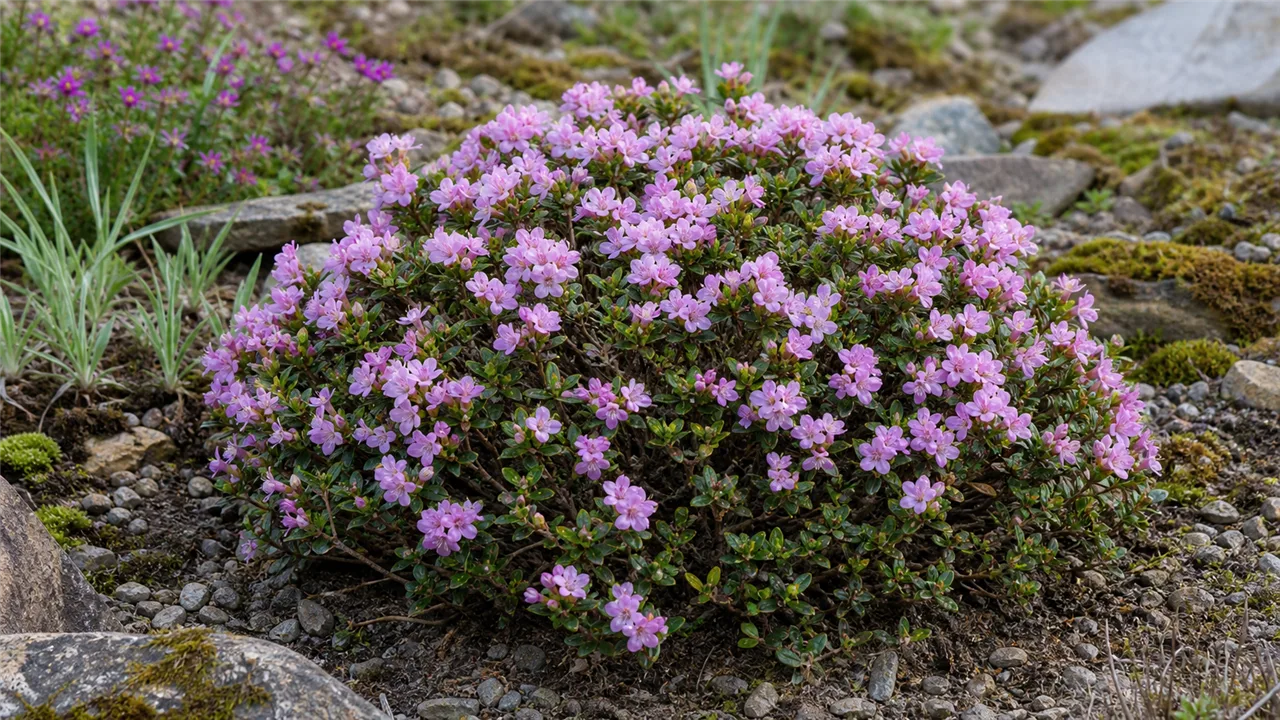
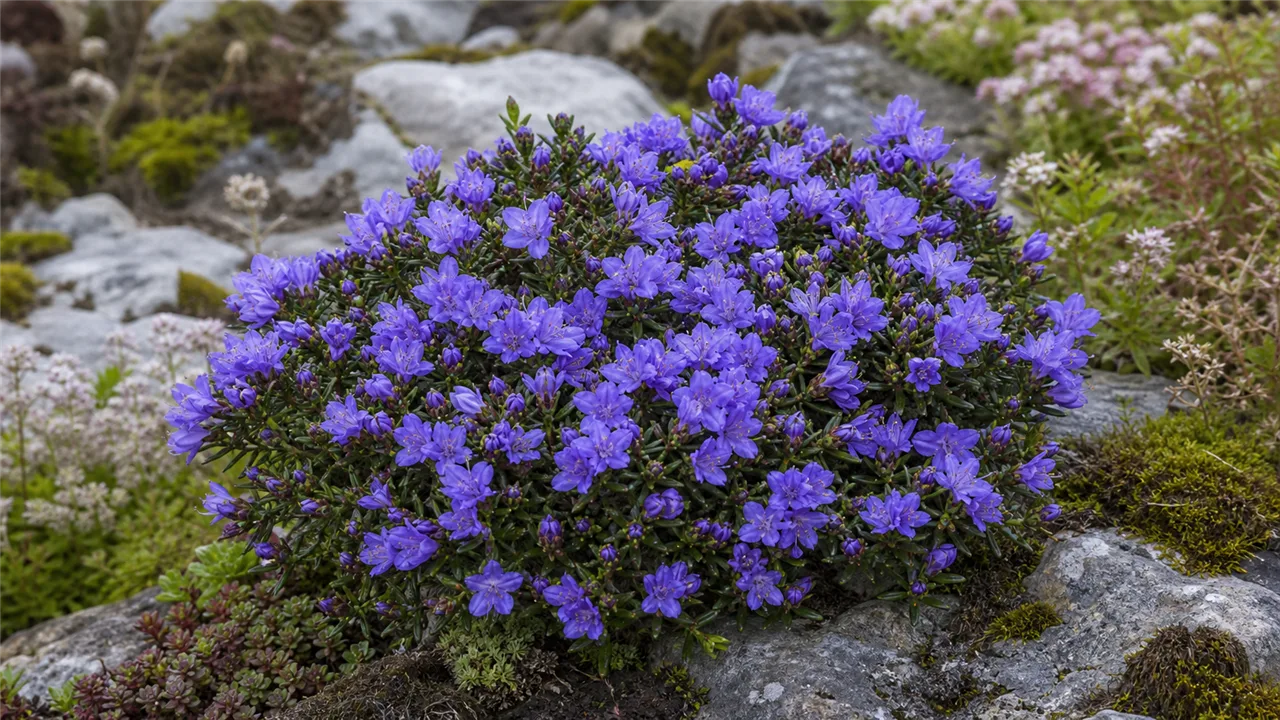
Rhododendron calostrotum forms a low, spreading mound of slender shoots that build slowly into a dense, twiggy shrub. Mature plants reach about 30–50 cm tall and a similar spread, often slightly wider than tall. The impression is of a tidy hummock rather than an upright shrub, with branches arching gently outward.
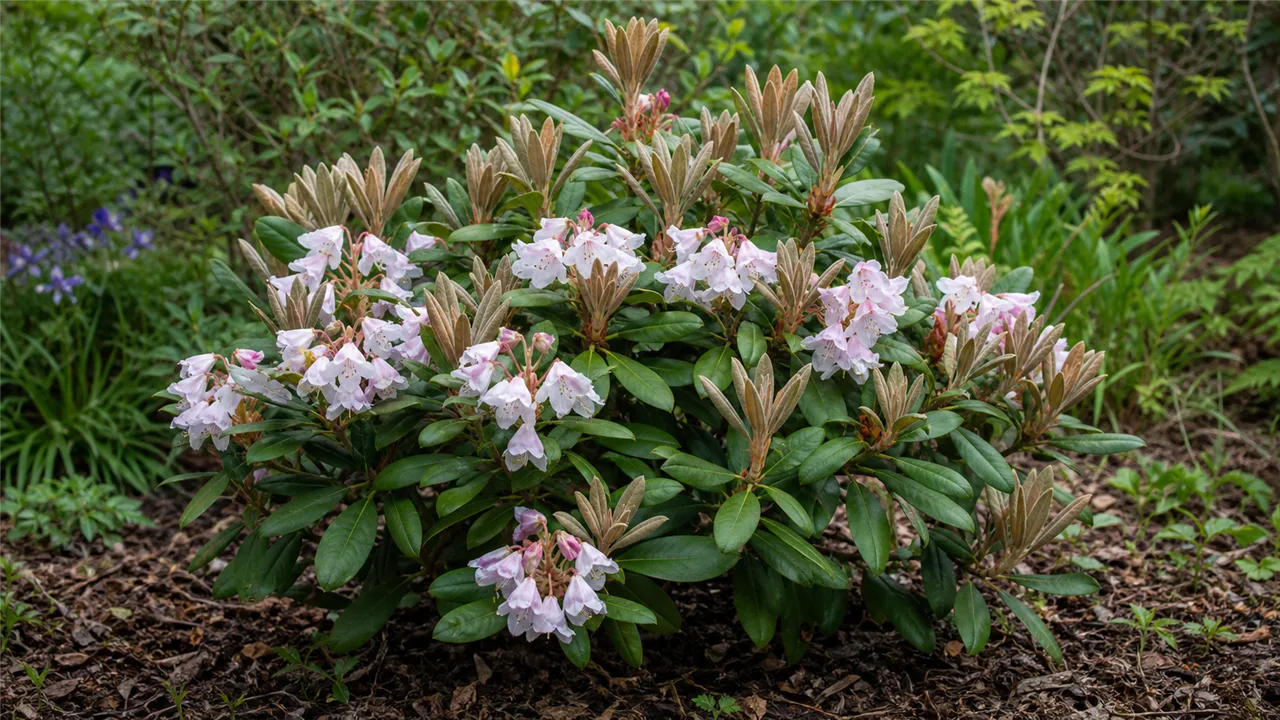
The leaves are small for a rhododendron, typically 1.5–3 cm long, oval to oblong, and a dull dark green above. They are leathery in texture, and on close inspection the underside often carries pale brown scales — diagnostic of subsection Saluenensia. New growth in spring is often flushed bronze or pale green before settling.
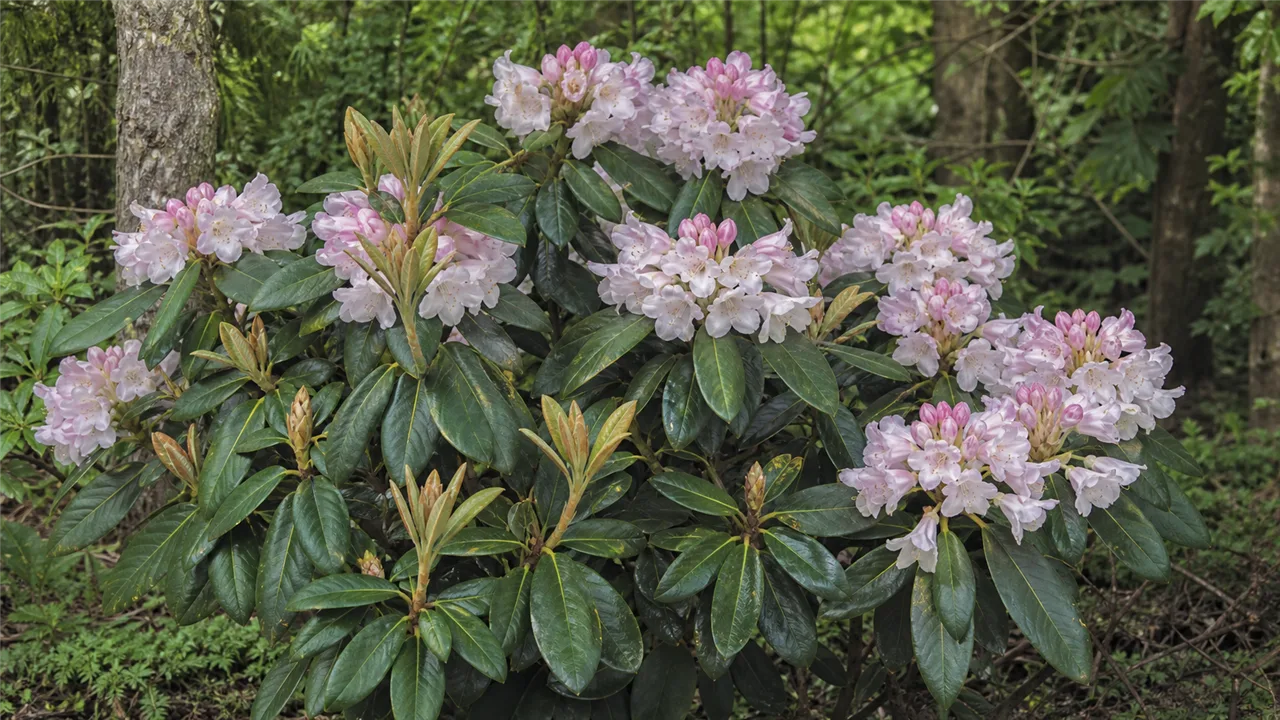
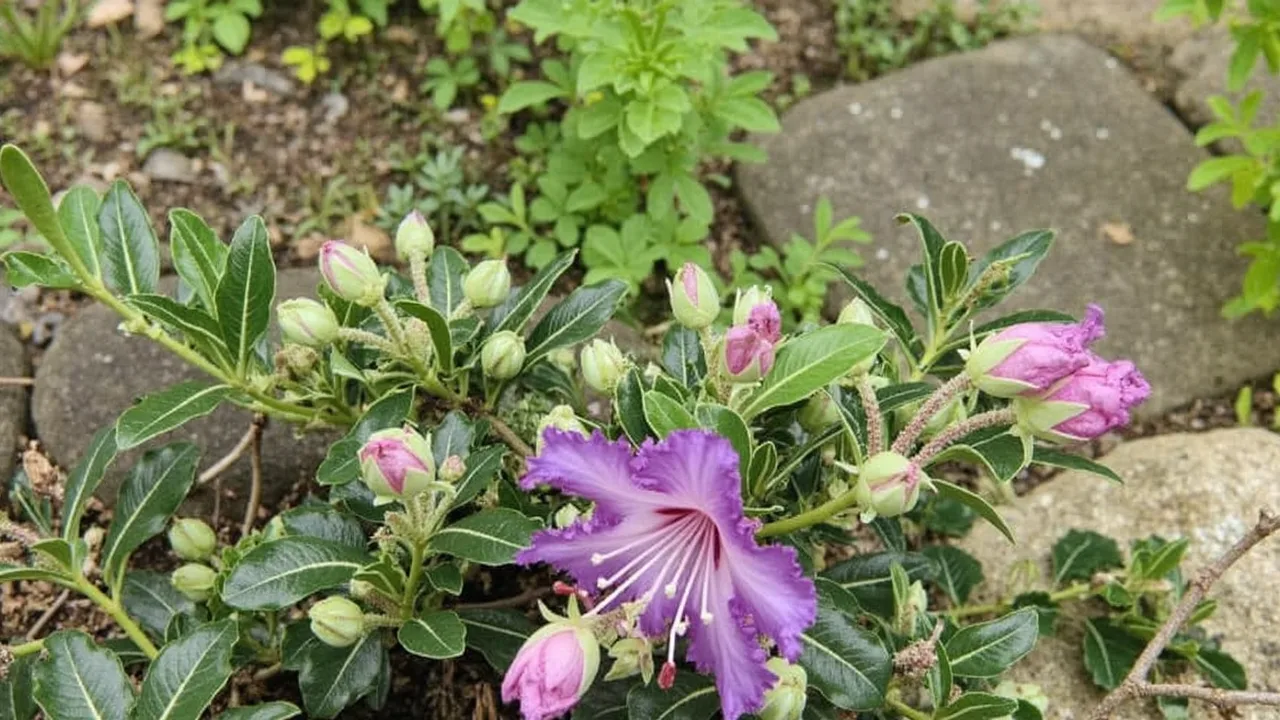
The flowers appear in late May and into June, usually after the main flush of hybrid rhododendrons. They are carried in loose trusses of two to five blooms at the tips of the previous year's shoots. Each flower is funnel-shaped with five spreading lobes, roughly 2–3 cm across, varying from clear rose-pink to a deeper rose-purple. Many forms show darker spots on the upper lobes, and the throat is often paler. Because the plant is small, the flowers sit close to the foliage, producing a dense sheet of colour across the top of the mound in a good year.
The fruits are small woody capsules that follow the spent trusses. In a garden setting these are best removed with the old flower stalks once blooms have faded, both for tidiness and to redirect energy into shoot growth rather than seed.
Growing Conditions
Rhododendron calostrotum wants the same general conditions as other rhododendrons: acidic, humus-rich, moisture-retentive but well-drained soil; dappled or partial shade; and shelter from cold drying winds. Within those constraints it is more tolerant of exposure than many dwarf rhododendrons, which makes it useful for rock gardens and raised beds where wind whips across open ground.
Soil pH is the single most important factor. The species performs best between pH 4.5 and 6.0. On neutral or alkaline ground the leaves turn pale and chlorotic, growth becomes stunted, and the plant slowly declines. In chalk or limestone areas it is best grown in containers of ericaceous compost, or in raised beds built up with acidic topsoil and leaf mould. A simple home pH test will confirm conditions before planting.
Light should be filtered rather than direct. A position receiving morning sun and afternoon shade, or the broken shade cast by deciduous shrubs and trees, is ideal. Full sun on a south-facing border scorches the leaves in summer and bleaches the flowers; deep shade reduces flowering and encourages leggy growth. North- and east-facing sites are usually good.
The species is hardy across the UK to about –15 °C once established, corresponding to an RHS hardiness rating of H6. In colder pockets of inland Scotland and exposed northern England some winter protection — a temporary fleece cover during severe spells — helps newly planted specimens.
Good air movement is valuable, as still, humid corners encourage fungal problems. A rock garden or open woodland edge gives the right balance of light, shelter and air. In containers, use a peat-free ericaceous mix where available, and lift pots onto pot feet so excess water drains freely in winter.
Planting and Care
Planting is best done in autumn or early spring, when the soil is moist and the plant is not under heat stress. Dig a hole two to three times the width of the root ball and no deeper than the root ball itself; rhododendrons are shallow rooted and dislike being buried too deep. Backfill with a 50:50 mix of the existing soil and ericaceous compost, leaf mould or well-rotted pine bark, and water in well to settle the soil around the roots. A 5–8 cm mulch of bark or leaf mould applied immediately after planting will help conserve moisture and keep the surface roots cool.
Watering is important in the first two or three seasons. Water deeply during dry spells rather than little and often, and aim to keep the soil just moist rather than saturated. Established plants in the ground are reasonably drought tolerant but will flower better with supplemental water in prolonged dry weather. Container-grown plants need regular checking through the summer, as ericaceous compost dries out faster than garden soil.
Feeding should be modest. Apply a slow-release fertiliser formulated for rhododendrons, azaleas and camellias in early spring, just as growth begins. Avoid general-purpose and phosphate-heavy fertilisers, which can lock up iron and magnesium in acidic conditions and damage the shallow roots. A light top-dressing of leaf mould or pine bark each autumn will do most of the work of feeding over time.
Pruning is minimal. Deadhead spent trusses carefully as soon as the flowers fade, snapping them off just above the new growth without damaging the emerging shoots. Remove any dead, diseased or crossing wood in mid-summer, and shorten any wayward shoots to keep the mound tidy. Hard pruning into old wood is generally not recommended; rhododendrons do not regrow well from bare stems, and severe cutting often kills the plant.
Propagation is straightforward from semi-ripe cuttings taken in mid- to late summer. Choose healthy non-flowering shoots of about 8–10 cm, wound the base lightly, dip in a rooting hormone, and set them in a free-draining ericaceous mix under a covered propagator. Bottom heat of around 18–20 °C speeds rooting. Layering is even easier: a low branch pegged into the surrounding soil and left for a year will usually root and can then be severed and potted on. Seed germinates freely but does not come true, so it is only worth attempting for the species itself rather than for selected forms.
Seasonal care in the UK is straightforward. In late winter, clear fallen leaves and debris from around the base to reduce overwintering fungal spores. In early spring, refresh the mulch and apply fertiliser. During summer, watch for drought stress and treat any pest or disease outbreaks early. In autumn, top-dress with leaf mould and reduce watering as growth slows.
Common Problems
The most common problem on the wrong soil is chlorosis — the leaves yellow between the veins while the veins themselves stay green. This is almost always a sign that the soil is too alkaline and the plant cannot take up iron. The remedy is to repot into ericaceous compost or to apply an iron chelate (iron sequestrene) as a foliar feed and soil drench. Long term, chlorosis will only be cured by changing the soil or growing in a container.
Powdery mildew can affect plants in crowded, poorly ventilated positions, coating the leaves in a pale dusty film and disfiguring new growth. Improve air circulation by thinning surrounding plants, avoid overhead watering, and remove badly affected leaves. Fungicides based on potassium bicarbonate or sulphur can be used if the problem persists.
Bud blast is a fungal condition in which flower buds turn brown and remain closed. The classic cause is the rhododendron lace bug, which lays eggs in the buds and allows the fungus to enter. Prompt removal and destruction of affected buds, combined with lace bug control in late spring, usually breaks the cycle.
Leaf spots of various kinds may appear in damp summers. Rake up and dispose of fallen leaves in autumn to reduce the reservoir of spores, and avoid overhead watering late in the day. Most leaf spots are unsightly rather than fatal.
Root rot caused by Phytophthora is the most serious disease and is usually triggered by waterlogged soil. Affected plants wilt despite moist soil, the bark at the base darkens, and the plant may die within a season. There is no effective chemical cure once symptoms are advanced; prevention through good drainage and careful watering is the only reliable approach.
Among pests, vine weevil is the most damaging in containers. The adult beetles notch the leaves, but the real harm is done by the grubs, which eat the roots and can kill a plant in a few weeks. Biological control using nematodes (Steinernema kraussei) applied in late summer is the standard organic treatment. Aphids occasionally colonise young shoots in spring; a strong spray of water or a soap-based insecticide is usually enough to keep them in check.
Popular Varieties
True cultivar names within Rhododendron calostrotum are few, and many plants sold under this name are seed-raised and therefore variable. The following forms are reliably distinct and widely available in the UK trade.
Rhododendron calostrotum subsp. keleticum is the most often encountered plant in gardens under this name. It is slightly more compact than the type, with smaller, more glossy leaves and a creeping habit. The flowers are a clear rose-pink to lilac-pink, carried freely in late spring. It is sometimes listed as Rhododendron keleticum or as R. calostrotum 'Keleticum'.
Rhododendron calostrotum 'Rock's form' (sometimes sold as R. calostrotum 'Rock') is a selected seedling raised from material collected by the American plant hunter Joseph Rock. It is particularly free-flowering, with relatively large, deep rose-purple blooms. It has a good reputation for garden performance in the UK.
Rhododendron calostrotum 'Gigha' is a hardy clone selected on the island of Gigha off the west coast of Scotland, where it has been grown for many years. It forms a tight, low mound with bright pink flowers and is regarded as one of the most weather-tolerant forms in cultivation, suited to exposed coastal and northern gardens.
A number of hybrids have also been raised using R. calostrotum as a parent, including crosses within subsection Saluenensia that combine its dwarf habit with other colours and flower shapes. These are normally sold under a hybrid grex name rather than as cultivars of the species itself.
Cultivars and Varieties
| Cultivar | Height | Flower | Notes | AGM |
|---|---|---|---|---|
| 'Gigha' | — | — | RHS AGM (H6) | ✓ |
Pests and Diseases
| Problem | Symptoms | Management |
|---|---|---|
| Powdery mildew | White powdery fungal growth appears on leaves, buds, and shoots, potentially causing distortion. | Improve air circulation and avoid overhead watering; tolerate mild infections or apply fungicide if severe. |
| Phytophthora root rot | Foliage turns brown and shrivels, often with black lesions on stems, due to waterlogged soil. | Ensure well-drained acidic soil and avoid planting in heavy clay or frost pockets. |
| Vine weevil | Notches appear on leaf margins while larvae damage roots underground, causing wilting. | Use nematode treatments in autumn or apply systemic insecticides to prevent root damage. |
| Bud blast | Flower buds turn brown and die before opening, often caused by fungal infection or frost. | Remove and destroy infected buds promptly; ensure good ventilation and avoid late frosts. |
| Silver leaf | Leaves develop a silvery sheen on the underside and stems may show black fruiting bodies. | Prune out affected branches well below the infection site and burn debris to prevent spread. |
| Rhododendron leafhopper | Leaves become speckled with white or yellow spots and may curl or distort. | Encourage natural predators like ladybirds; use insecticidal soap for heavy infestations. |
For step-by-step help, read Treating Powdery Mildew. Or browse the full plant problem solver to diagnose an issue by symptom.
Recommended Products
GardenWizz earns a commission from qualifying purchases made through affiliate links on this page (including links within the article) — as an Amazon Associate, and from Thompson & Morgan via the Awin network. This does not affect the price you pay. See our disclaimer for details.