Fortune's Rhododendron
Rhododendron fortunei
The Gardening Year
Best months in UK gardens · full planting calendar →
🖨 Printable care card (PDF)At a Glance
| Botanical name | Rhododendron fortunei |
|---|---|
| Common name(s) | Fortune's Rhododendron |
| Family | Ericaceae |
| Plant type | shrub (evergreen) |
| Height × Spread | 3–12 m × 4–8 m |
| Position | Partial shade |
| Soil | moist but well-drained, acid soil |
| Flowering | April–May |
| Toxicity | Harmful if eaten |
| Native range | China |
Overview
Rhododendron fortunei is an evergreen flowering shrub in the family Ericaceae, native to eastern China and introduced to western cultivation by the plant hunter Robert Fortune in the mid-nineteenth century. It is one of the most important species in rhododendron breeding history, prized for its unusually strong fragrance — a trait it has passed on to many hybrid cultivars — and for its tolerance of warmer, damper summers than many of its relatives. In UK gardens it is grown both as a specimen shrub and as a parent of hybrids in the so-called Fortunei group.
Well-suited to the cool, moist conditions of much of Britain, R. fortunei performs reliably in sheltered woodland gardens, along the milder western seaboard, and across much of southern and central England. It is less reliable in cold inland gardens and on alkaline soils, where chlorosis and winter damage can become limiting. Given an acid, humus-rich soil and dappled shade, it forms a handsome, long-lived shrub with a dependable May or June display of large, scented blooms.
Appearance
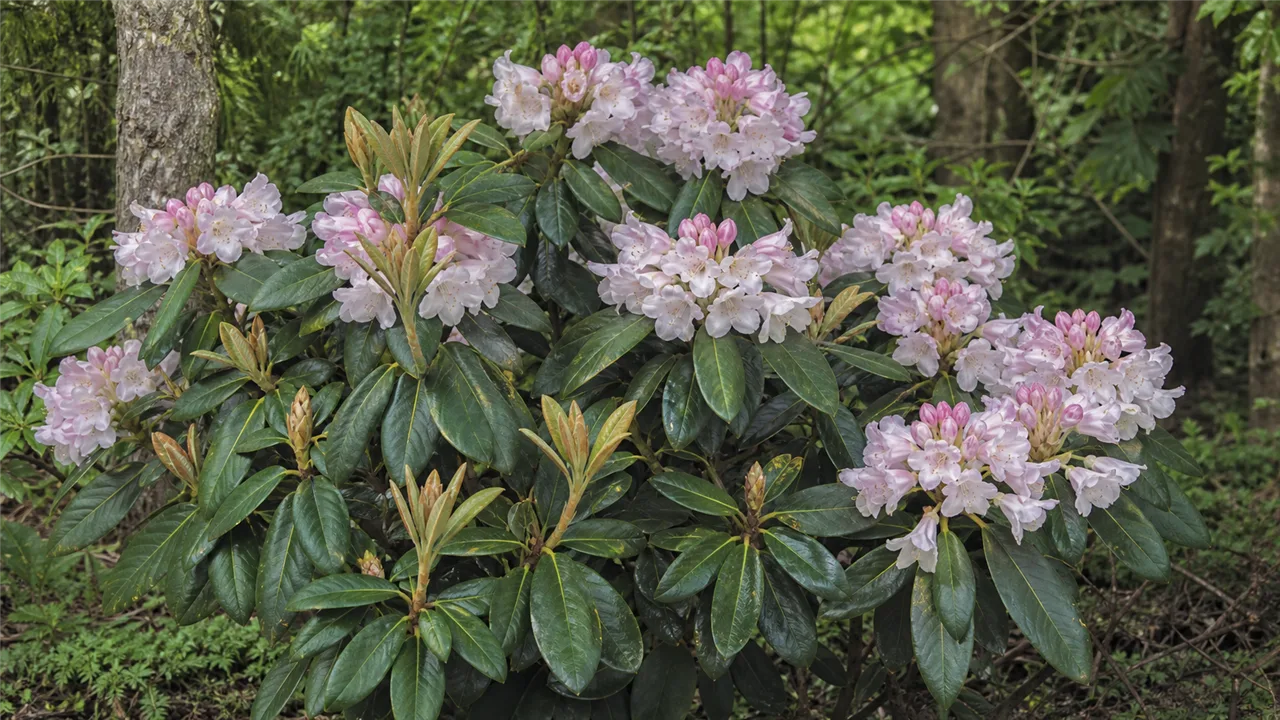
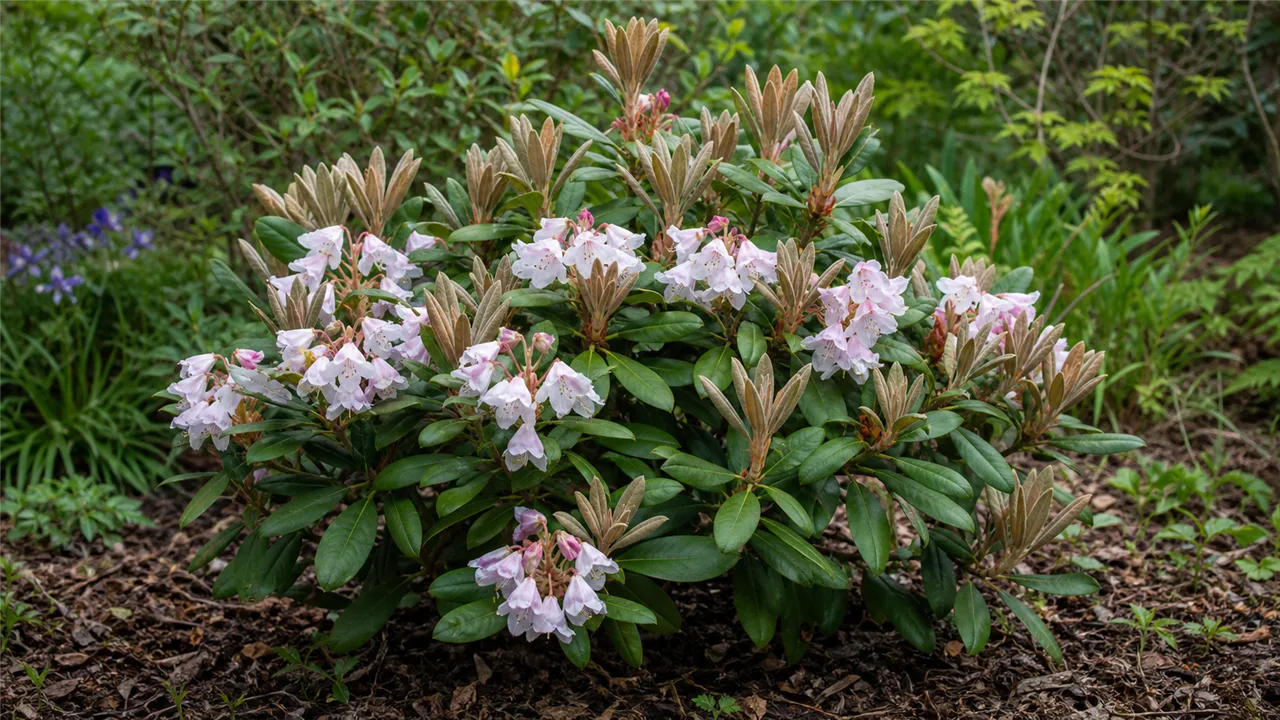
Rhododendron fortunei is a robust, medium to large shrub, typically reaching 3–5 m in height and a similar spread over many years. Its growth habit is rounded and rather open, with stout branches and smooth, pale grey-brown bark that becomes lightly fissured on older specimens. The plant develops a thick, woody framework and rarely needs staking or support.
The leaves are leathery, oblong to oval, and up to about 15 cm long. They are glossy dark green above with a paler, often slightly glaucous underside, and they are held on the plant for two to three seasons, giving it a dense, evergreen presence in the border throughout the year.
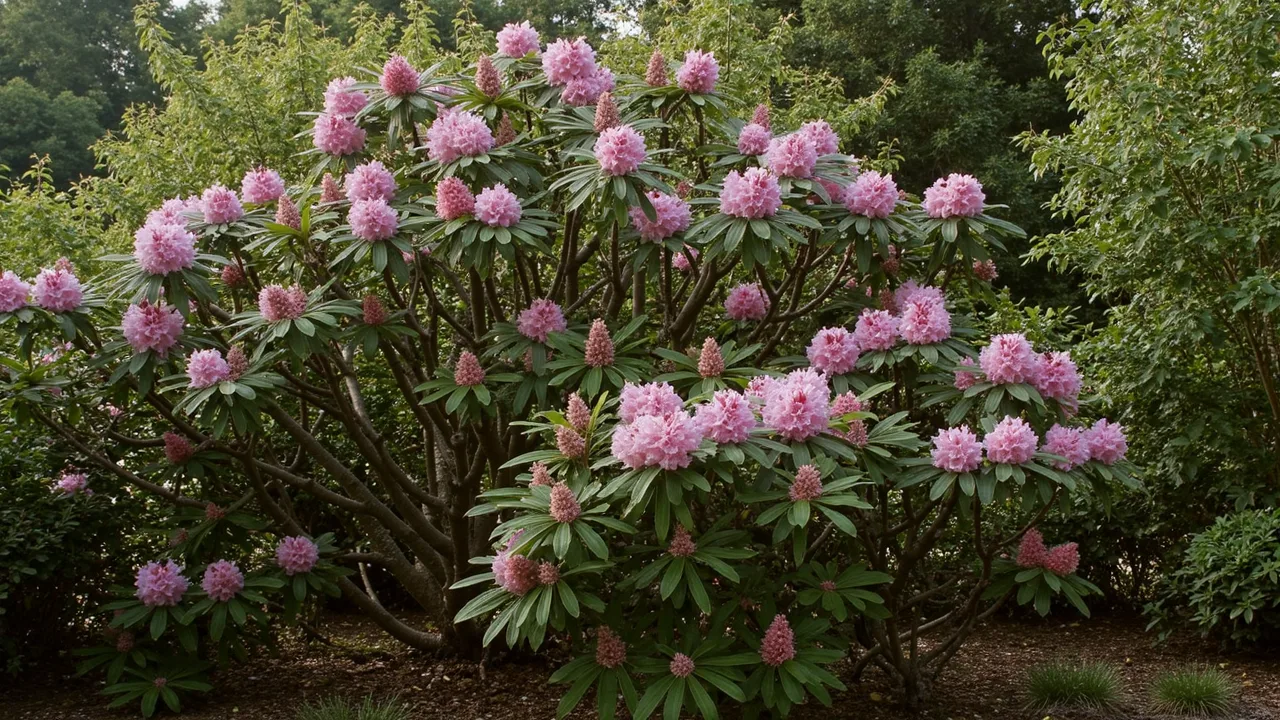
The flowers are the chief ornamental feature. Each bloom is funnel-shaped and up to 8 cm across, carried in loose, rounded trusses of six to twelve flowers at the shoot tips in late spring or early summer — typically May to June across most of the UK. Colour ranges from pure white through pale pink, sometimes with a faint greenish or yellowish throat. Most distinctively, the flowers carry a strong, sweet, lily-like fragrance, which is uncommon among larger-flowered rhododendrons and is the principal reason the species has been so widely used in hybridisation.
Growing Conditions
Light: R. fortunei flowers most freely in dappled or partial shade. Deep shade reduces bud-set, while full sun on poor or dry soils can scorch the foliage and bleach the flowers.
Soil: An acid, humus-rich, moist but well-drained soil is essential — aim for pH 4.5–6.0. The species is intolerant of chalk or any alkaline substrate, and will quickly develop interveinal chlorosis on unsuitable ground. Incorporate generous quantities of leaf mould, well-rotted pine bark, or ericaceous compost when planting, and avoid mushroom compost or other alkaline dressings.
Moisture: Even moisture through the growing season is important; drought stress at the bud-initiation stage in summer reduces flowering the following spring. At the same time, the soil must not sit waterlogged in winter, or root rots become a serious risk.
Shelter: Choose a position sheltered from cold, drying winds and from strong morning sun after frost — both of which can damage the large, soft leaves and any early-developing buds. A site under high-canopied deciduous trees or against a west- or north-facing wall typically suits it well.
Climate: R. fortunei is reliably hardy across most of lowland and southern Britain once established, though young growth can be nipped by late spring frosts in colder inland districts. The species holds an RHS hardiness rating, displayed in the hardiness badge above.
Planting and Care
Planting: Plant in autumn or early spring, when the soil is workable and moisture levels are naturally high. Dig a hole at least twice the width of the rootball and the same depth, then work ericaceous compost or leaf mould into the backfill. Tease out any circling roots on container-grown stock, set the plant so the top of the rootball sits level with the surrounding soil, and water thoroughly. A 5–8 cm mulch of bark or leaf mould applied immediately after planting will conserve moisture and keep roots cool.
Watering: Water freely during the first two growing seasons, especially through any dry summer spells, to establish a deep, resilient root system. Established plants benefit from supplementary watering during prolonged drought, ideally with rainwater rather than tap water where the mains supply is hard.
Feeding: Apply an ericaceous fertiliser in late March or early April each year, scattering it over the root area and watering it in. Avoid general-purpose or lime-containing feeds, which raise soil pH and induce chlorosis. A light top-dressing of leaf mould or pine bark every spring maintains organic matter and slightly acidifies the surface layer.
Pruning: Routine pruning is rarely required. Remove dead, diseased, or damaged wood immediately after flowering, cutting back to healthy growth. If a specimen becomes leggy or outgrows its space, it can be rejuvenated by harder pruning immediately after flowering — R. fortunei responds well to cutting into old wood provided enough foliage remains below the cuts to support regrowth.
Deadheading: Snap off spent flower trusses carefully as soon as the blooms fade, taking care not to damage the dormant buds immediately behind them. Deadheading directs the plant's energy into growth and bud-set rather than seed production, and it also removes potential sites for petal-blight infection.
Propagation: Propagate from semi-ripe cuttings taken in mid- to late summer, using a free-draining ericaceous cuttings compost and bottom heat. Layering of low branches in autumn is a reliable alternative for home gardeners and produces a sizeable plant within two to three years. Seed can be sown in autumn on the surface of a damp, peaty compost, but seedlings are slow to reach flowering size and will not come true to a chosen form.
Seasonal care: Top-dress and mulch each spring; check soil moisture during summer droughts; firm any plants lifted by autumn frosts; and brush heavy snow off the branches in winter to prevent splitting of the framework.
Common Problems
Rhododendron petal blight (Ciborinia): Wilted, brown flowers that cling to the plant rather than dropping cleanly are the classic symptom. Remove and destroy affected trusses immediately and clear all fallen blooms from beneath the plant — do not add them to the compost heap. Mulch renewal in spring helps bury resting sclerotia.
Phytophthora root rot: Sudden wilting, pale foliage, and dieback on an otherwise healthy plant suggest poor drainage. Improve drainage where possible, avoid replanting into the same spot with susceptible species, and use only healthy, free-draining stock.
Chlorosis: Yellowing leaves with green veins indicate alkaline soil or hard tap water. Apply chelated iron as a short-term correction and mulch annually with acidic organic matter; over time, switch irrigation to rainwater where feasible.
Vine weevil: Notched leaf margins are caused by adult feeding, while the more serious damage comes from grubs attacking the roots in autumn and winter. Inspect container-grown plants carefully, use biological control (nematodes) on infected stock, and consider preventative treatment where weevils are known to be a problem.
Aphids: Colonies on young shoots and developing buds in late spring distort growth and may transmit virus. Hose off early infestations or treat with insecticidal soap; encourage natural predators by avoiding broad-spectrum insecticides.
Leaf spots: Various fungi cause cosmetic spotting on the leaves, particularly in damp summers. Improve air circulation by careful thinning of surrounding vegetation and remove badly affected leaves; the problem is rarely serious enough to warrant fungicide treatment.
Frost damage: Late spring frosts can scorch young growth and ruin that season's flowers. Choose a sheltered site from the outset, and where this is not possible, drape horticultural fleece over plants on cold nights in May.
Popular Varieties
Rhododendron fortunei itself is less commonly sold than its hybrids, but the species is widely grown in specialist collections and is the parent of several important groups. Named cultivars and selections to look for include:
- R. fortunei 'Mrs Charles E. Pearson' — a large, vigorous form with clear, soft pink, highly fragrant flowers in loose trusses.
- R. fortunei 'Sir Charles Butler' — pale pink in bud, opening to near-white flowers with a faint greenish throat and a powerful scent.
- R. × loderi hybrids — the Loderi group derives from crosses between R. fortunei and R. griffithianum, producing very large, strongly scented flowers in white and pink shades on tall, shelter-demanding plants.
- R. 'Loderi King George' — perhaps the best-known Loderi, with huge white, richly fragrant trusses on a big shrub suited to woodland gardens in the milder west.
- R. 'Cornubia' — an early-flowering, blood-red hybrid in the broader Fortunei lineage, useful for extending the rhododendron season into April.
- R. 'Penjerrick' — a soft-pink to cream, exceptionally fragrant hybrid of R. fortunei parentage, much prized by collectors where space allows.
Availability varies widely between nurseries, and many of the finest named forms are only offered by specialist rhododendron growers. The species itself is normally supplied as grafted or cutting-raised stock on acid-loving rootstocks; always check that the form offered suits both your soil and your climate before planting.
Pests and Diseases
| Problem | Symptoms | Management |
|---|---|---|
| Vine weevil | Notches on leaf margins during the day and root damage causing wilting at night. | Apply nematodes to moist soil in autumn or use biological controls like Steinernema carpocapsae. |
| Powdery mildew | White, powdery fungal growth on leaves and shoots, potentially causing distortion. | Improve air circulation and apply a suitable fungicide if infection is severe. |
| Rhododendron bud blight | Flower buds turn brown, shrivel, and fail to open or drop prematurely. | Remove affected buds and avoid wetting foliage when watering to reduce fungal spread. |
| Pieris lacebug | Silvering or stippling on the upper leaf surface with black specks underneath. | Encourage natural predators like ladybirds or use insecticidal soap for heavy infestations. |
| Scale insects | Small, immobile bumps on stems and leaves, often accompanied by sticky honeydew. | Scrape off scales manually or treat with horticultural oil during the dormant season. |
For step-by-step help, read Treating Powdery Mildew. Or browse the full plant problem solver to diagnose an issue by symptom.
Recommended Products
GardenWizz earns a commission from qualifying purchases made through affiliate links on this page (including links within the article) — as an Amazon Associate, and from Thompson & Morgan via the Awin network. This does not affect the price you pay. See our disclaimer for details.