Hippophae-Like Rhododendron
Rhododendron hippophaeoides
The Gardening Year
Best months in UK gardens · full planting calendar →
🖨 Printable care card (PDF)At a Glance
| Botanical name | Rhododendron hippophaeoides |
|---|---|
| Common name(s) | Hippophae-like Rhododendron |
| Family | Ericaceae |
| Plant type | shrub |
| Height × Spread | 120 cm × — |
| Position | Partial shade |
| Soil | moist but well-drained, leafy, humus-rich acid soil |
| Flowering | March–April |
| Toxicity | Harmful if eaten. Wear gloves and other protective equipment when handling. |
| Native range | southwest Sichuan and many parts of Yunnan, China |
Rhododendron hippophaeoides is a dwarf evergreen rhododendron native to high-altitude regions of the Himalayas and south-west China, where it grows on open, well-drained slopes at 2,000–4,500 m. Its combination of compact habit, pale spring flowers and tolerance of cool, damp conditions has made it a reliable choice for British rock gardens, scree beds and small courtyard plantings. Among dwarf rhododendrons it is one of the more easily accommodated species, reaching a metre or less in cultivation and flowering at a useful time between the early daffodils and the main flush of May perennials.
Overview
Rhododendron hippophaeoides belongs to the Ericaceae family and sits within the scaly-leaved rhododendrons (subsection Lapponica), a group of small-leaved, twiggy species from cold, exposed habitats in central and eastern Asia. The species name refers to a resemblance, in foliage, to sea buckthorn (Hippophae), with similarly narrow, pale-backed leaves. In the UK it is grown primarily as a specimen plant in rock gardens or in the front of acidic borders, where its mound-forming habit and softly coloured flowers can be appreciated at close quarters.
It is fully hardy across most of the British Isles, performing best in regions with mild summers, cool winters and reliable rainfall — the west and north, the Scottish Highlands, coastal Wales and Cumbria. Gardeners in hotter, drier southern and eastern counties will need to pay closer attention to soil moisture and shade. The species has no toxic hazards commonly associated with rhododendrons above the level found in the wider genus (all rhododendrons contain grayanotoxins and should not be eaten), but it is not grown for any culinary or medicinal purpose.
Appearance
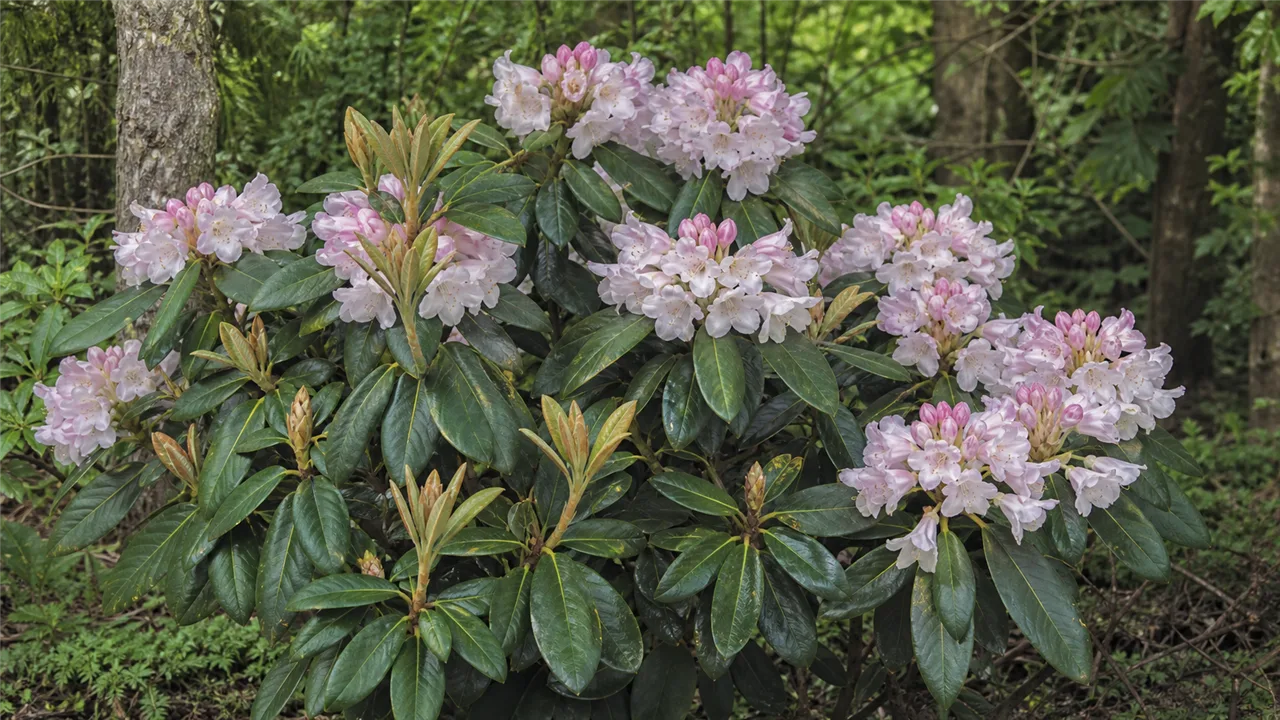
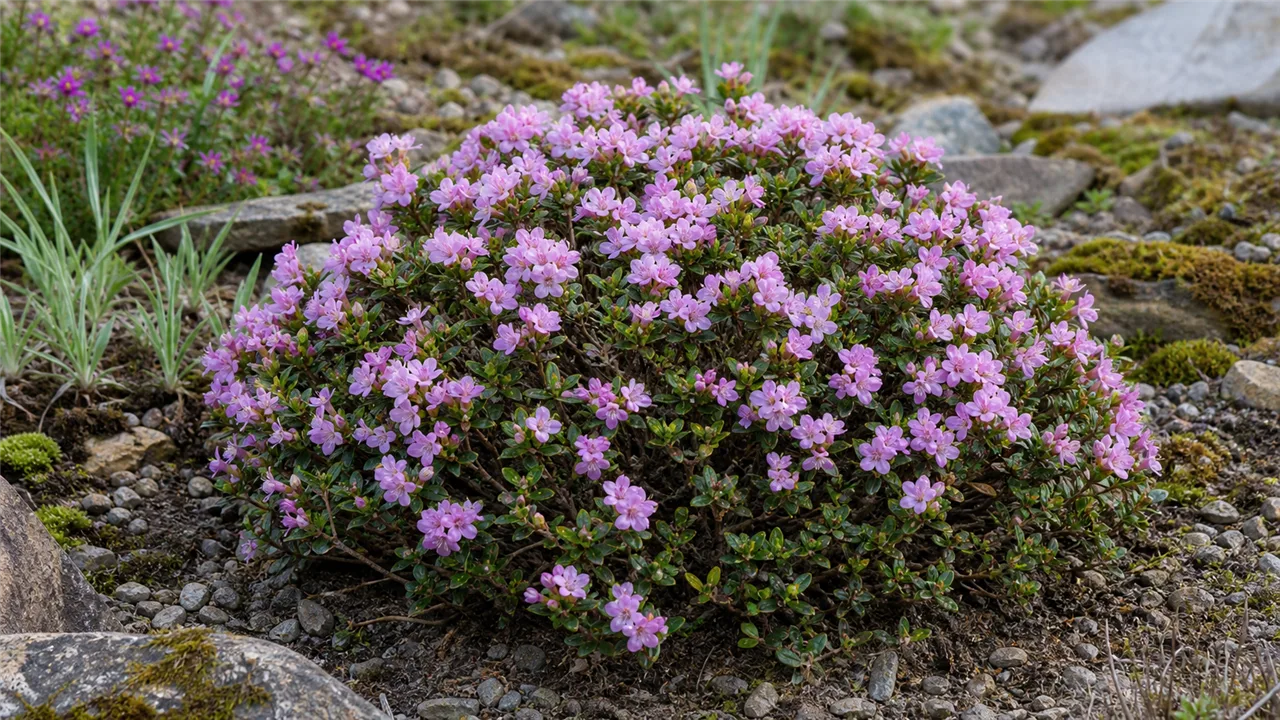
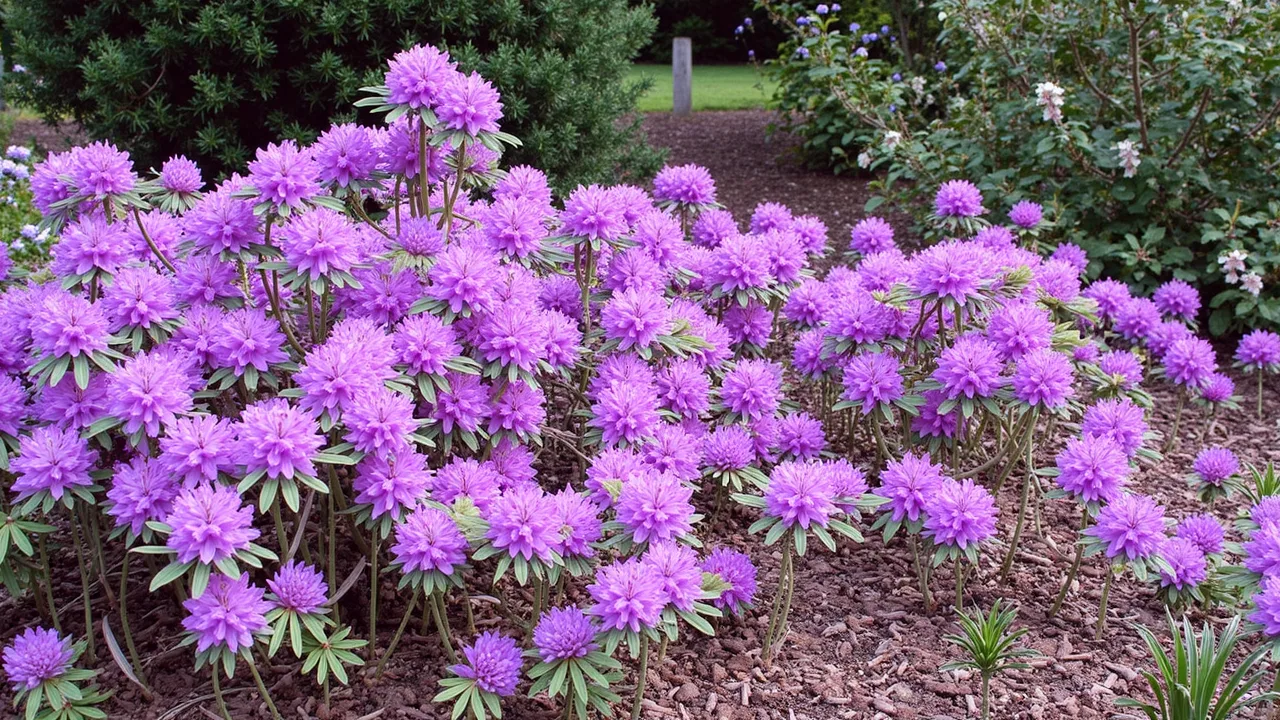
A compact, slow-growing shrub of rounded, mound-forming habit, R. hippophaeoides typically reaches 0.3–1 m in height and a similar spread after many years. The branching is dense and twiggy, with shoots that arch gently under the weight of flowers in spring.
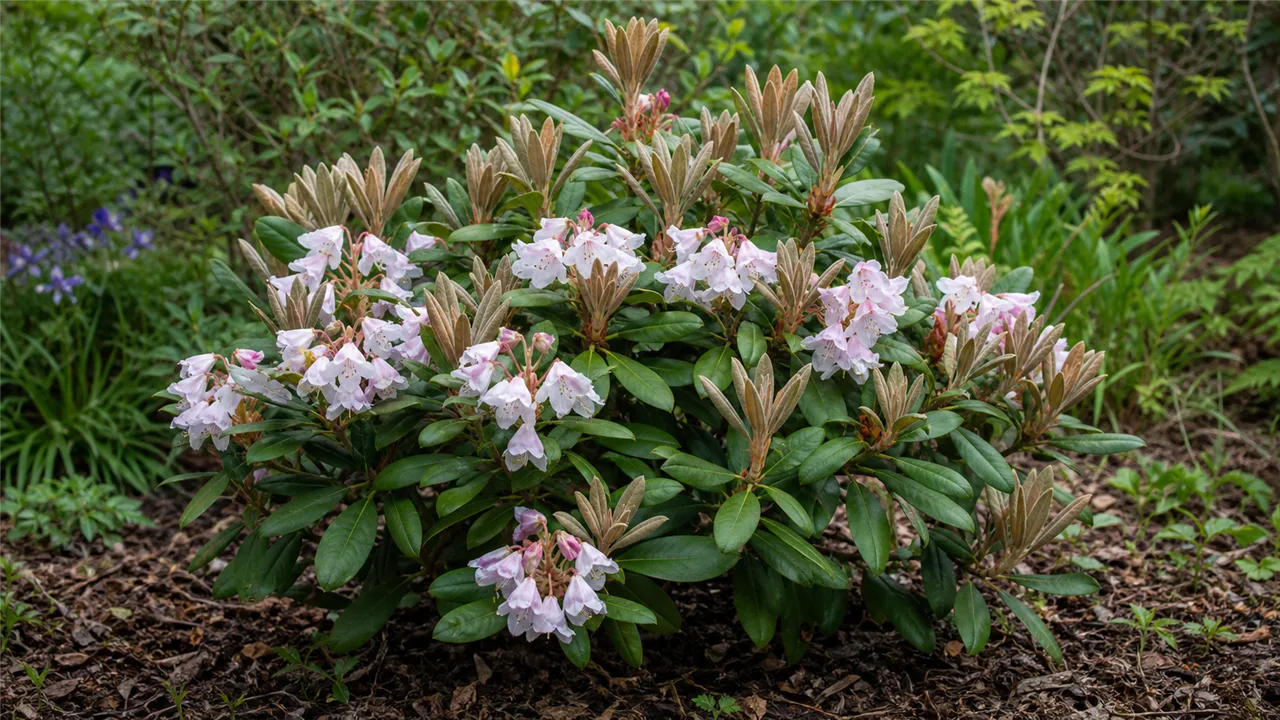
The leaves are small, leathery and elliptic to oblong, generally 1–3 cm long, dark green and slightly glossy above. The underside carries a distinctive pale buff to tawny indumentum — a fine scaly coating that gives the foliage its silvery-bronze reverse and is one of the better field characters for distinguishing this species from other small-leaved rhododendrons. New growth emerges in late spring after flowering and is often bronze-tinted before settling to green.
Flowers appear in mid to late spring (April–May in the UK), carried in small, rounded trusses of three to eight blooms. Each flower is broadly funnel-shaped and 1.5–2.5 cm across, opening a pale, milky yellow that fades to creamy white as it ages; faint pink flushing is occasionally seen. The calyx is small and inconspicuous, and both calyx and corolla carry fine scales. After a successful flowering year, the spent trusses should be snapped off by hand to keep the plant tidy and to direct energy into growth rather than seed.
Growing Conditions
R. hippophaeoides shares the standard rhododendron requirement for acidic soil, ideally in the pH 4.5–6.0 range, and will not tolerate chalk or lime. In ground that is naturally neutral or alkaline it should be grown in containers of ericaceous compost rather than amended beds — the surrounding soil reverts over time and the plant slowly declines. Soil should be humus-rich, moisture-retentive yet freely drained; heavy clay that holds winter water rots the fine roots, while thin, sandy soils dry out too quickly in summer.
The plant prefers partial shade. A position with dappled light through deciduous canopy or with morning sun and afternoon shade suits it well. Shelter from cold, desiccating east winds and from late spring frosts protects both the emerging flower buds and the new foliage flush. Open, exposed sites shorten the life of the flowers and may scorch the leaves.
Across most of the UK this species performs reliably without winter protection. Its Himalayan origins at high altitude mean it is accustomed to cold, dry winters and cool, moist summers — conditions broadly matched by upland and western Britain. In warmer lowland regions of southern and eastern England it appreciates a cooler, north- or east-facing aspect and a thick organic mulch.
Planting and Care
Planting is best done in autumn (October–November) or early spring (March–April), when the soil is workable and naturally moist. Prepare a hole at least twice the width of the root ball and the same depth — rhododendrons are surface-rooting and should not be buried deeper than they were in the pot. Fork the base and sides lightly, then incorporate generous amounts of ericaceous compost, leaf mould or well-rotted pine bark into the backfill. Water in thoroughly with rainwater, particularly in hard-water districts, and apply a 5–8 cm mulch of acidic organic matter (pine bark, composted pine needles or bracken) over the root area, keeping it clear of the stems.
Watering through the first two summers is the single most important task. The plant has a small, fibrous root system that dries quickly, and stressed specimens take several seasons to recover. Water deeply once or twice a week in dry weather, always with rainwater where possible. Established plants in open ground seldom need supplementary watering except in prolonged drought.
Feeding is light. A single application of an ericaceous liquid fertiliser in spring, as new growth begins, is sufficient where the soil is reasonably good. Yellowing between the veins on otherwise green leaves indicates lime-induced iron chlorosis and should be treated with sequestered iron applied as a drench to the root zone.
Pruning is minimal. R. hippophaeoides has a naturally neat habit and resents hard cutting into old wood. The only routine work is deadheading — pinching out spent flower trusses just behind the swelling bud beneath — carried out as flowering finishes in late May or June. Any dead, damaged or crossing stems can be removed at the same time. Hard renovation pruning is not recommended.
Propagation is straightforward from semi-ripe cuttings taken in mid to late summer. Cuttings of 8–10 cm, trimmed below a node and with the lower leaves removed, root readily in a 50:50 mix of peat-free ericaceous compost and sharp grit under a propagator lid with bottom heat. Layering of low, flexible shoots in autumn is reliable but slow.
Common Problems
The most common disorder in unsuitable soil is lime-induced chlorosis — leaves yellow while the veins remain green, and growth becomes stunted. Long-term correction means replacing the soil or moving the plant; short-term treatment is sequestered iron and a thick acidic mulch.
Bud blast, caused by the fungus Pycnostysanus azaleae, produces brown buds that fail to open and become covered in black bristle-like spore masses. It is usually associated with stressed plants, particularly those suffering root drought or waterlogging. Improving cultural conditions and removing affected buds reduces its incidence.
Powdery mildew appears as a white fungal film on the leaves in late summer, encouraged by dry roots and stagnant air. Mulching, watering in dry spells and ensuring good airflow prevent most outbreaks; severe cases respond to a sulphur-based or potassium bicarbonate spray.
Aphids, particularly the rhododendron aphid, can colonise new growth in spring. Vine weevil grubs are a particular threat to container-grown plants, eating the fine roots and causing sudden wilting; biological control with Steinernema nematodes is effective in pots. In waterlogged soils, root rots caused by Phytophthora species are the most serious threat and are best prevented by improving drainage before planting.
Popular Varieties
The species itself is the most widely grown form and is the plant most UK nurseries offer under name. Several selected clones and named cultivars are available, primarily distinguished by flower colour and habit.
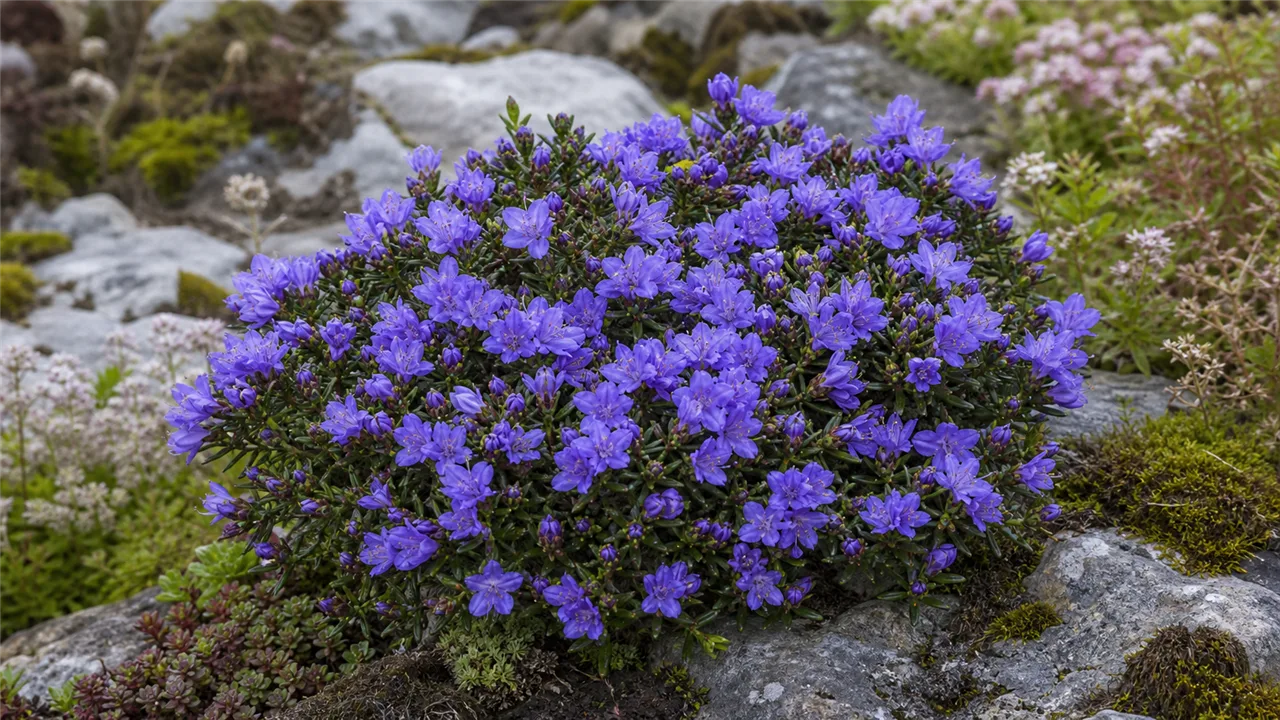
- 'Blue Tit' — a hybrid involving R. hippophaeoides in its parentage, with lavender-blue flowers in dense trusses and a low, spreading habit to around 60 cm.
- 'Curlew' — another hybrid in the same group, valued for its large, pale yellow, slightly fragrant flowers on a compact, mound-forming plant of similar stature.
- 'Gristede' — a low, spreading form with violet-blue flowers, often cited as one of the easiest of the small-leaved blues for UK gardens.
- 'Ramapo' — a hybrid of R. hippophaeoides and R. fastigiatum, with mauve buds opening to pale violet-blue flowers and blue-green foliage; tolerant of a wider range of soils than the pure species.
- R. hippophaeoides var. hippophaeoides (wild-collected form) — the typical plant from south-west China, with the broadest, most reliably white flowers of any clone in cultivation.
Where named cultivars of the pure species are hard to source, the Lapponica hybrids ('Blue Tit', 'Curlew', 'Gristede', 'Ramapo' and others) carry similar small leaves and a comparable dwarf habit, and perform the same role in a rock garden or small border.
Cultivars and Varieties
| Cultivar | Height | Flower | Notes | AGM |
|---|---|---|---|---|
| 'Haba Shan' | — | — | RHS AGM (H6) | ✓ |
Pests and Diseases
| Problem | Symptoms | Management |
|---|---|---|
| Vine weevil | Notched leaf margins on seedlings and wilting plants caused by root-feeding grubs in the soil. | Apply a systemic insecticide drench or use nematodes to control larvae in the growing medium. |
| Rhododendron bud blast | Flower buds turn brown, shrivel, and fail to open due to fungal infection during wet weather. | Remove and destroy infected buds promptly; improve air circulation and avoid overhead watering. |
| Powdery mildew | White powdery fungal growth on leaves, buds, and shoots, potentially causing distortion and reduced vigour. | Tolerate mild infections; apply a fungicide if severe, ensuring good air circulation around the plant. |
| Lime-induced chlorosis | Yellowing of new leaf tissue between green veins due to iron deficiency in alkaline soils. | Plant in ericaceous compost or raised beds with lime-free soil; apply chelated iron if necessary. |
| Rhododendron whitefly | Small white flies swarm when disturbed, leaving sticky honeydew and weakening the plant. | Use yellow sticky traps to monitor adults and apply appropriate insecticidal sprays if populations are high. |
For step-by-step help, read Treating Powdery Mildew. Or browse the full plant problem solver to diagnose an issue by symptom.
Recommended Products
GardenWizz earns a commission from qualifying purchases made through affiliate links on this page (including links within the article) — as an Amazon Associate, and from Thompson & Morgan via the Awin network. This does not affect the price you pay. See our disclaimer for details.