Makino's Rhododendron
Rhododendron makinoi
The Gardening Year
Best months in UK gardens · full planting calendar →
🖨 Printable care card (PDF)At a Glance
| Botanical name | Rhododendron makinoi |
|---|---|
| Common name(s) | Makino's Rhododendron |
| Family | Ericaceae |
| Plant type | shrub |
| Height × Spread | 1.5–2.5 m × 1.5–2.5 m |
| Position | Partial shade |
| Soil | moist but well-drained, leafy, humus-rich acid soil |
| Flowering | March–May |
| Toxicity | Harmful if eaten |
| Native range | Japan |
Rhododendron makinoi, commonly known as Makino's rhododendron, is a compact, evergreen shrub from the heather family (Ericaceae). Native to subalpine slopes and open woodland on the Japanese island of Honshu, it has earned a quiet but devoted following among British gardeners who value its tidy habit, narrow dark green foliage and reliably elegant late-spring flower trusses. It is well suited to acidic beds, smaller gardens and container cultivation, and it slots easily into woodland planting schemes alongside other ericaceous companions such as Pieris, Kalmia and Camellia.
Overview
Rhododendron makinoi is a slow-growing, densely branched evergreen shrub that, in British cultivation, typically reaches 1–2 m in both height and spread over many years. It is grown primarily for two qualities: a naturally compact, dome-shaped habit that requires almost no formative pruning, and narrowly lance-shaped leaves whose pale, felty undersides give the plant a softly silvery cast when the wind lifts the foliage. The species is closely allied to Rhododendron makinoi and the wider subsection Maculifera, a group prized in Japan for the same combination of refined foliage and delicate, late-spring flower colour.
In UK gardens the species earns its place at the front of a shrub border, in a woodland glade or in a large container of ericaceous compost. It is fully evergreen, so it carries weight through the winter months when many ericaceous neighbours are at their dullest. Like all rhododendrons, it demands acidic soil and a steady supply of moisture; in return it asks for very little routine attention.
Appearance
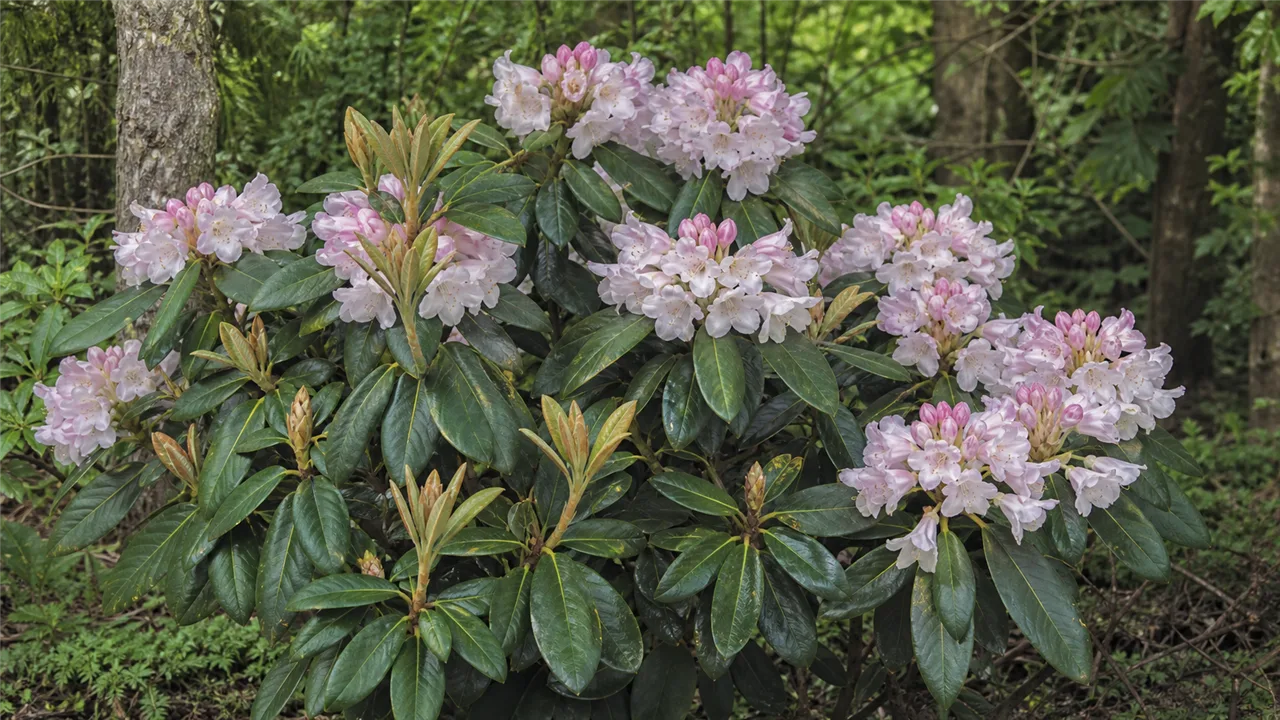
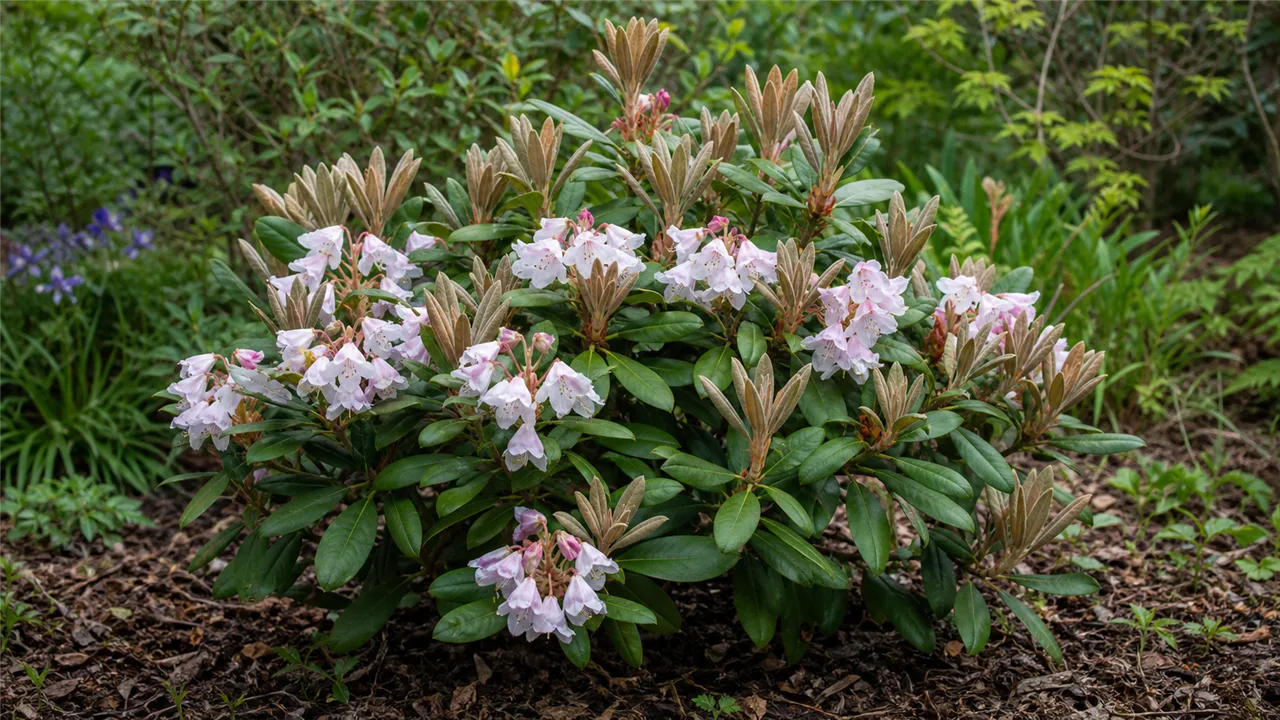
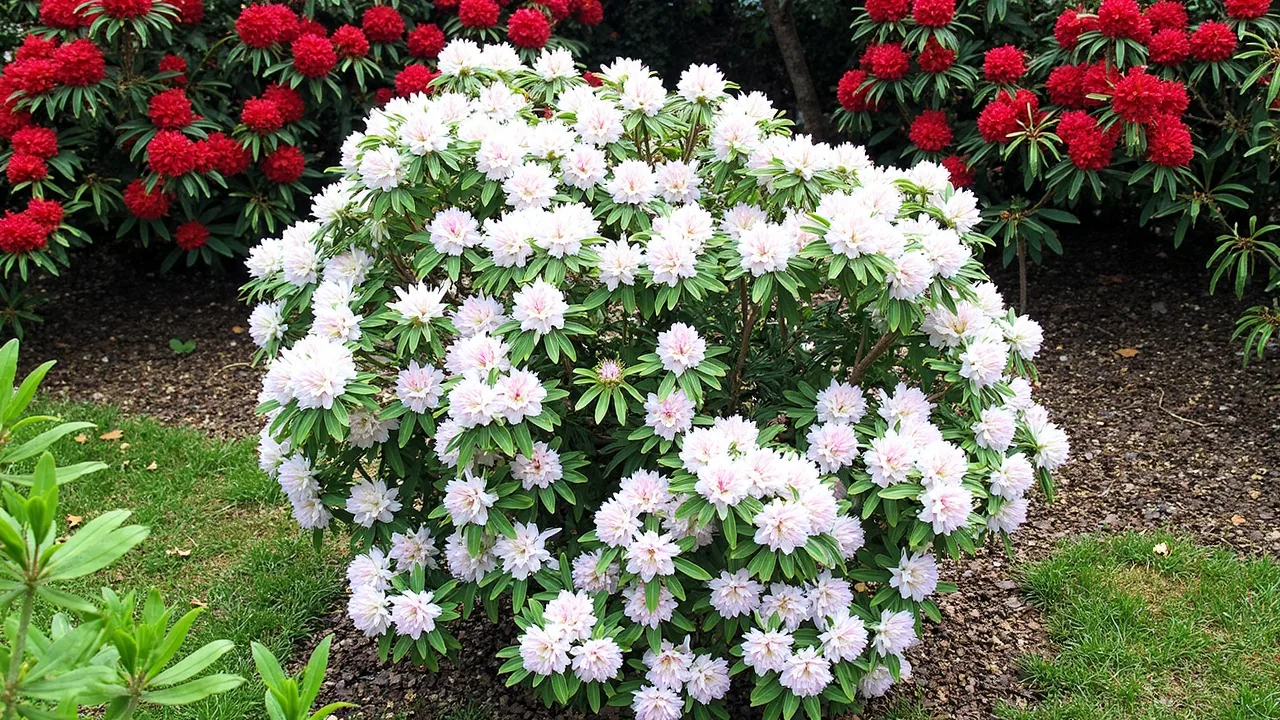
Rhododendron makinoi forms a rounded, densely furnished shrub with branches that arch gently outwards under the weight of foliage. The young shoots are cloaked in a fine, buff-coloured tomentum — a soft, felt-like covering that brushes off as the wood matures — while the bark on older stems is dark grey-brown and smooth, becoming only slightly rougher with age.
The leaves are narrowly lanceolate to elliptic, between 8 and 15 cm long, tapering to a fine point. The upper surface is dark green and glossy and becomes glabrous (hairless) with age, giving the shrub a polished, almost leathery look. The underside is the species' most reliable diagnostic feature: it is densely and persistently clothed in a whitish to pale fawn tomentum, which gives the whole plant a pale, two-toned appearance in a breeze or under low evening sun. This white reverse is far more pronounced than in many common hybrid rhododendrons, and it is one of the easiest ways to tell R. makinoi apart from its close relatives at a glance.
Flowers are carried in rounded trusses of eight to fourteen narrow, funnel-shaped blooms, typically opening in late May and carrying on into June. The colour ranges from pale pink, almost white, through to a soft blush; the inside of the corolla is often faintly tinged with yellow. Individual flowers are smaller and more refined than those of many large-flowered hybrid rhododendrons, and they sit well above the foliage in a loose, slightly upward-facing dome.
Growing Conditions
Rhododendron makinoi wants the same conditions that suit most ericaceous shrubs: a moist but freely drained, humus-rich soil that is reliably acidic. The target pH is roughly 4.5 to 6.0; on neutral or alkaline ground the plant will rapidly develop the yellowed leaves of chlorosis and will decline within a few seasons. If garden soil is unsuitable, the species grows very well in a container filled with ericaceous (lime-free) compost, which removes the soil-pH problem entirely as long as rainwater is used for irrigation.
Light should be dappled shade or, at most, gentle morning sun. Deep shade will noticeably reduce the flower display, while a position exposed to strong midday sun or to cold, drying winds will scorch the leaf margins and desiccate the buds in winter. Shelter from the east is particularly valuable: a cold, bright morning in late winter can badly damage frozen buds and young foliage.
The plant is generally considered reliably hardy across most of the UK, although its performance in the coldest, most exposed inland gardens can be marginal. In common with all rhododendrons it dislikes waterlogged ground, so on heavy clay it pays to plant on a shallow, raised mound of ericaceous loam to keep the root collar clear of standing water.
In the UK, the practical timings to remember are: plant in autumn (September–November) or early spring (March–April); expect the main flush of flowers in late May and into June; and on the rare occasions the plant needs any attention, carry it out immediately after flowering so that the next year's buds are not disturbed.
Planting and Care
Dig a hole at least twice the width of the rootball and the same depth, then work leafmould, well-rotted pine bark or composted bracken into the back-fill to build a moisture-retentive but free-draining acidic rooting zone. Soak the rootball in a bucket of rainwater before planting, set the shrub so that the top of the rootball sits flush with the surrounding soil — rhododendrons are shallow rooters and must never be buried deeper than they were in the pot — and water in thoroughly with rainwater.
After planting, mulch annually in spring with a 5–7 cm layer of acidic organic matter such as leafmould, pine bark or composted bark. Keep the mulch a hand's breadth clear of the stem collar so that it does not sit against the bark. The mulch will conserve moisture, suppress weeds and slowly acidify the surface layer of soil.
Watering is the most important routine task during the first two to three years. Soak the root zone deeply during any dry spell, always using rainwater rather than tap water if the local supply is hard. Established plants are more tolerant of short droughts but still appreciate an occasional soak in prolonged dry weather, particularly on the lighter, sandier acidic soils where their fine roots sit close to the surface.
Feeding is seldom necessary on a well-mulched, organic-rich soil, but on thin or starved ground a single application of a balanced ericaceous fertiliser in early spring will steady growth. Avoid high-nitrogen lawn or general-purpose feeds, which can produce soft, late growth that is vulnerable to winter damage.
Pruning should be kept to a minimum. The species has a naturally tidy habit and rarely needs shaping. The one routine job is deadheading: as each truss fades, snap the spent flower stem off cleanly at its base, taking care not to bruise or tear out the small new growth bud immediately behind it. This tidies the plant, diverts energy into growth rather than seed, and helps the next year's buds to develop strongly. Beyond deadheading, only remove the occasional misplaced or damaged shoot, ideally in summer straight after flowering.
Propagation is straightforward from semi-ripe cuttings taken in mid- to late summer. Use short, healthy, non-flowering shoots, wound one side lightly, dip in a rooting hormone and root in a 50:50 mix of peat-free ericaceous compost and perlite under a covered propagator with gentle bottom heat. Layering of a low, flexible shoot in autumn is also reliable: nick the underside of the stem lightly, peg it into a shallow trench of acidic compost and sever it from the parent once rooted, usually after one full growing season.
Seasonal care is light. In autumn, top up the mulch and check that the root zone is moist going into winter. In late winter, watch for any frost damage to the bud tips and resist the temptation to prune. In late spring, deadhead carefully as the last flowers fade and apply a feed if growth has been weak.
Common Problems
Chlorosis is the most frequently encountered issue: the leaf blade turns yellow while the veins stay green, indicating iron or manganese lock-out, almost always caused by alkaline soil or by repeated watering with hard tap water. Treat with chelated iron applied as a foliar spray and a soil drench, switch irrigation to rainwater, and mulch annually with acidic organic matter to gradually lower surface pH.
Bud blast, caused by the fungus Pycnostysanus azaleae, produces brown, bristly buds that fail to open in spring. The fungus is spread by the rhododendron leafhopper, so control hinges on managing both. Pick off and destroy affected buds, and consider spraying against the leafhopper if populations are high. Improving airflow around the plant helps to reduce humidity around the buds.
Powdery mildew can appear as a white, dusty coating on the leaf surface in dry summers, particularly on plants stressed by drought. The remedy is straightforward: water deeply and mulch to keep the root run cool, and thin lightly any congested growth to improve air movement. Fungicide is rarely needed.
Root rots caused by Phytophthora species are the most damaging problem. They thrive in cold, waterlogged soil and typically appear first as wilting and poor recovery from rain, followed by collapse. Prevention is far easier than cure: plant only in well-drained, aerated acidic soil, avoid sites where rhododendrons or other ericaceous shrubs have previously died, and never plant deeper than the original pot level.
Aphids can colonise young shoots in spring and, in warm summers, vine weevil grubs can attack the roots of container-grown plants. Inspect regularly; knock aphids off with a strong jet of water or treat with a soft soap, and use a biological nematode drench for vine weevil larvae in containers.
Popular Varieties
Rhododendron makinoi is most often grown as the species, and the straight form is widely considered the best of its type. A small number of named selections and related clones are available in British nurseries, mostly within specialist ericaceous-plant collections.
- Rhododendron makinoi 'Jens Jørgen Sørensen' — a selected form with particularly large trusses and a notably long flowering period in late spring. Compact in habit and well suited to the front of a shrub border.
- Rhododendron makinoi 'Sneezy' — a low-growing selection forming a dense, slightly wider mound than the species, with the same characteristic white-tomentose leaf undersides and pale pink flowers.
- Rhododendron makinoi AGM clones — several vegetative selections have received the Royal Horticultural Society's Award of Garden Merit in the past, recognising the species' consistent garden performance; named selections from this group are the most reliable choice for UK gardens. (Specific cultivar names currently circulating under this designation are limited; gardeners seeking a guaranteed form should source from an established specialist nursery.)
Where the species is unavailable, the closest garden substitutes in habit and foliage are other members of subsection Maculifera, including forms of Rhododendron longesquamatum and some selections of Rhododendron pachysanthum, both of which share the felted leaf undersides that make R. makinoi so distinctive.
Pests and Diseases
| Problem | Symptoms | Management |
|---|---|---|
| Vine weevil | Notched leaf margins and wilting or collapse of the plant due to root damage. | Apply nematodes in autumn or use systemic insecticides on young plants. |
| Powdery mildew | White, dusty fungal growth on leaves and shoots, potentially causing distortion. | Improve air circulation and apply a suitable fungicide if severe. |
| Rhododendron bud blast | Flower buds turn brown and die before opening, often in wet springs. | Ensure well-drained soil and avoid waterlogging to reduce fungal risk. |
| Pieris lacebug | Silver or white stippling on the upper leaf surface with black specks underneath. | Prune out heavily infested shoots and apply horticultural oil in spring. |
| Scale insects | Small, immobile bumps on stems and leaves causing yellowing and sooty mould. | Scrape off small infestations or use systemic insecticides for larger outbreaks. |
For step-by-step help, read Treating Powdery Mildew. Or browse the full plant problem solver to diagnose an issue by symptom.
Recommended Products
GardenWizz earns a commission from qualifying purchases made through affiliate links on this page (including links within the article) — as an Amazon Associate, and from Thompson & Morgan via the Awin network. This does not affect the price you pay. See our disclaimer for details.