Round-Leaved Rhododendron
Rhododendron orbiculare
The Gardening Year
Best months in UK gardens · full planting calendar →
🖨 Printable care card (PDF)At a Glance
| Botanical name | Rhododendron orbiculare |
|---|---|
| Common name(s) | Round-leaved Rhododendron |
| Family | Ericaceae |
| Plant type | shrub |
| Height × Spread | 3 m × 1.5–2.5 m |
| Position | Full sun, Partial shade |
| Soil | moist but well-drained, acid soil enriched with leaf mould |
| Flowering | March–May |
| Toxicity | Harmful if eaten |
| Native range | northeastern Guangxi and southwestern Sichuan, China |
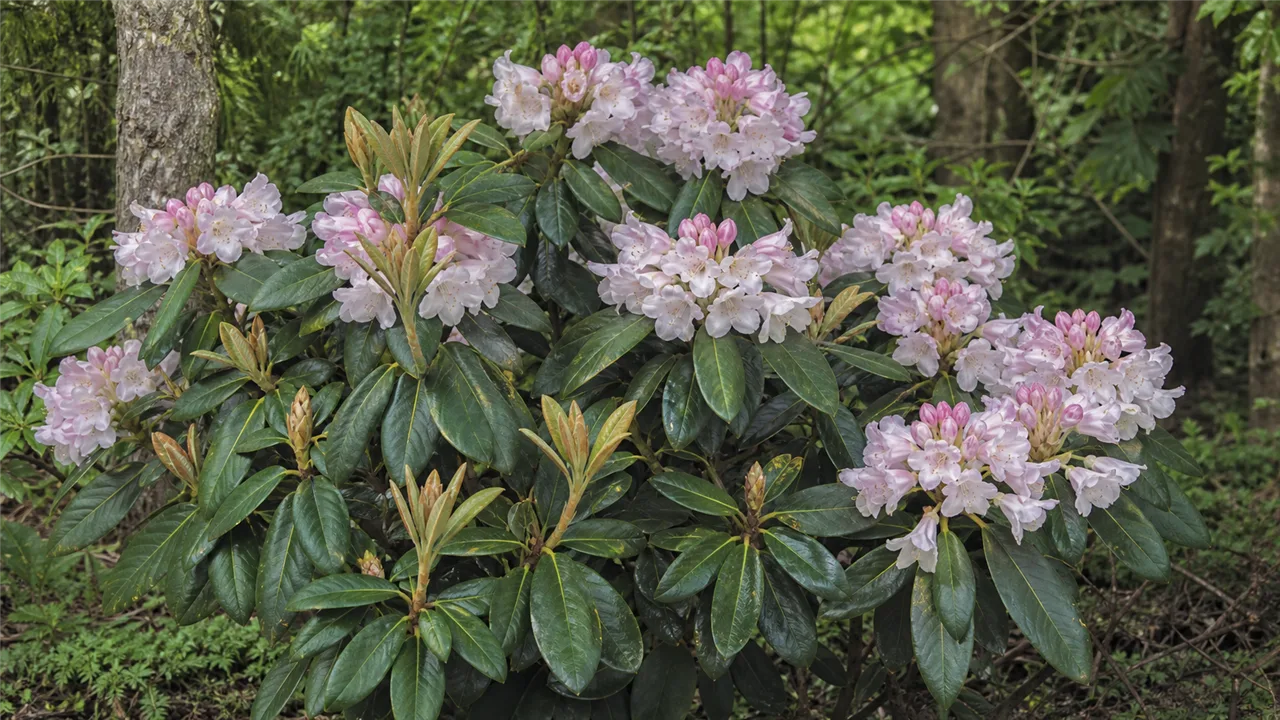
Rhododendron orbiculare is a compact evergreen rhododendron from western China, prized for its almost perfectly round leaves and pink, late-spring flower trusses. It is a useful specimen shrub for UK acid borders, woodland gardens, and large containers, given cool, moist, lime-free soil and dappled shade. The plant sits within subsection Thomsonia of the genus Rhododendron and is fully hardy across most British gardens.
Overview
Rhododendron orbiculare is an evergreen shrub in the family Ericaceae, first described from western Sichuan, China, by the French missionary-botanist Paul Guillaume Farges in the 1890s and later introduced to British gardens by Ernest Wilson in 1904. It belongs to subsection Thomsonia, a group of Asiatic rhododendrons noted for showy, often bell- or funnel-shaped flowers and decorative foliage. In cultivation it is uncommon outside specialist collections and woodland gardens, but it is well regarded for two features that set it apart from most other rhododendrons: its almost perfectly rounded leaves, and a compact, dome-shaped habit that suits smaller gardens.
The species is fully hardy across most of the UK and is grown primarily as an ornamental specimen shrub for acid borders, woodland edges, and large containers. Its year-round structure, late-spring flower display, and tolerance of dappled shade make it a useful choice for gardeners wanting a refined alternative to the larger, more vigorous hybrids of subsection Pontica.
Appearance
Rhododendron orbiculare forms a medium-sized, rounded evergreen shrub, typically reaching 2–4 m in height with a similar spread over many years, although grafted specimens in favourable sites can exceed this. The branching is open and slightly arching, and the plant tends to develop a broader-than-tall silhouette as it matures.
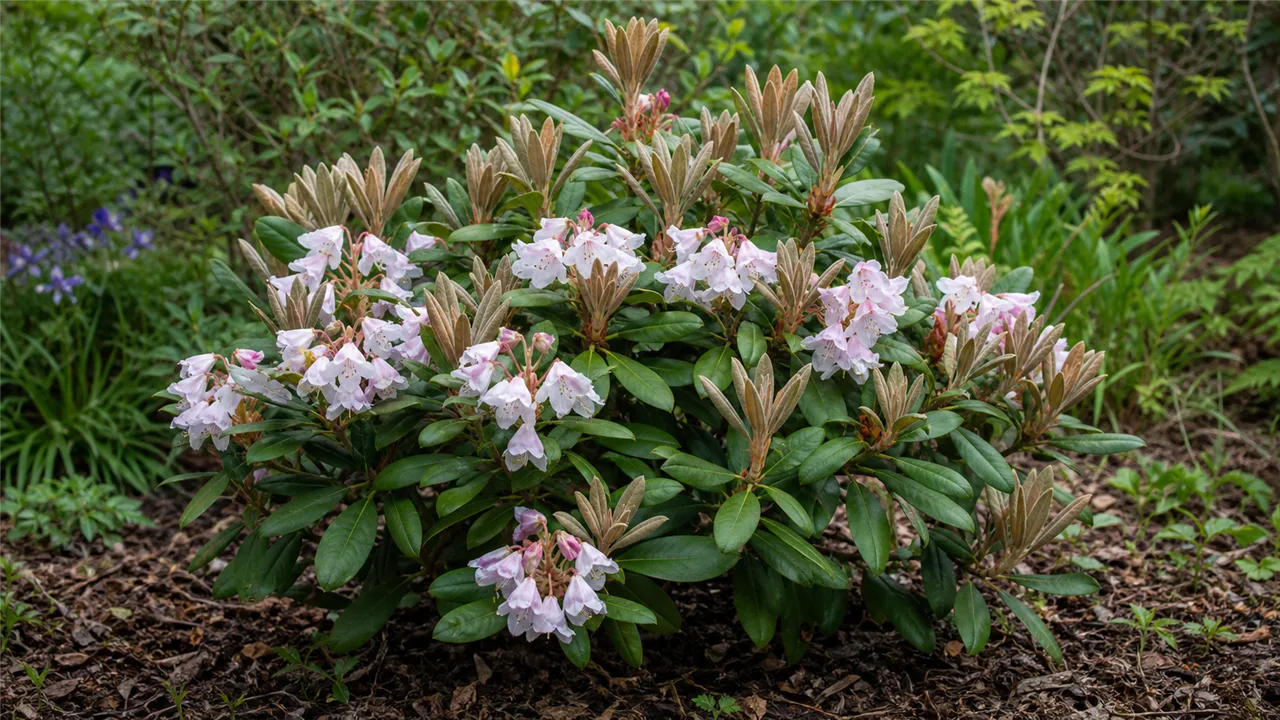
The leaves are the defining ornamental feature. They are orbicular — almost circular in outline — measuring roughly 7–12 cm across, leathery in texture, and a deep, glossy green above with a paler, slightly glaucous underside. New growth emerges in spring flushed with bronze before hardening off to dark green. The petioles are stout and often tinted reddish.
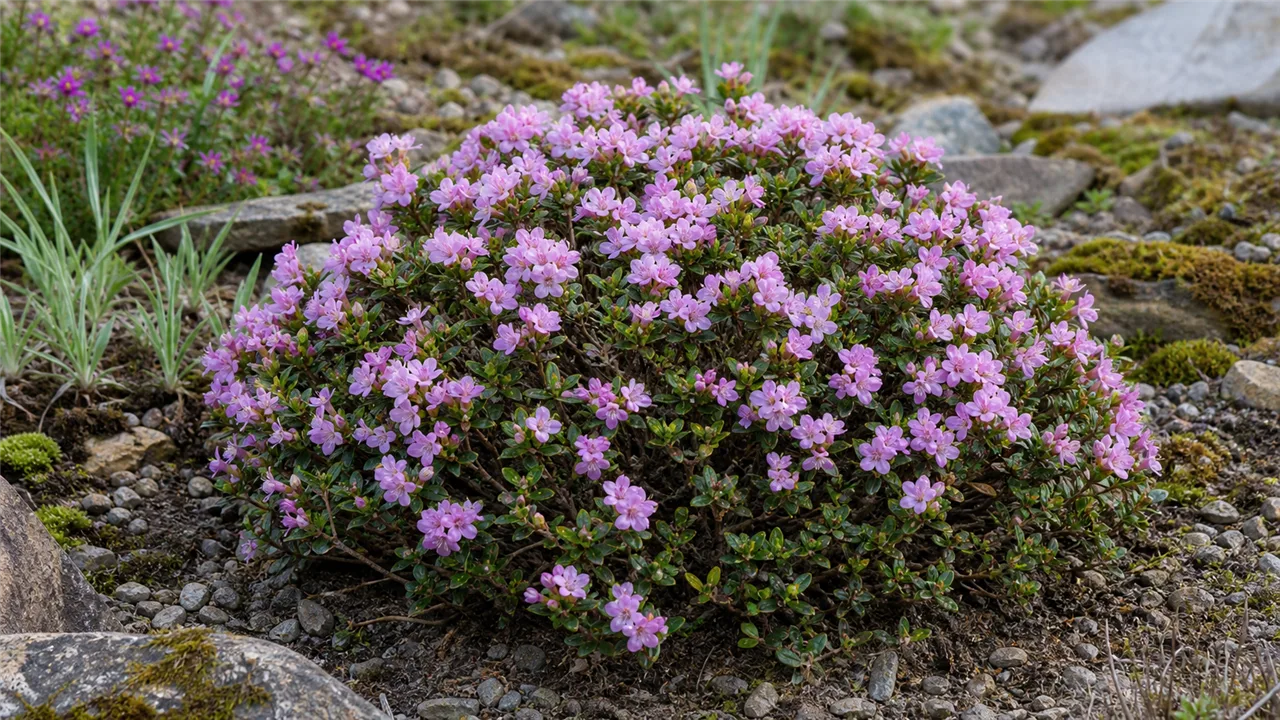
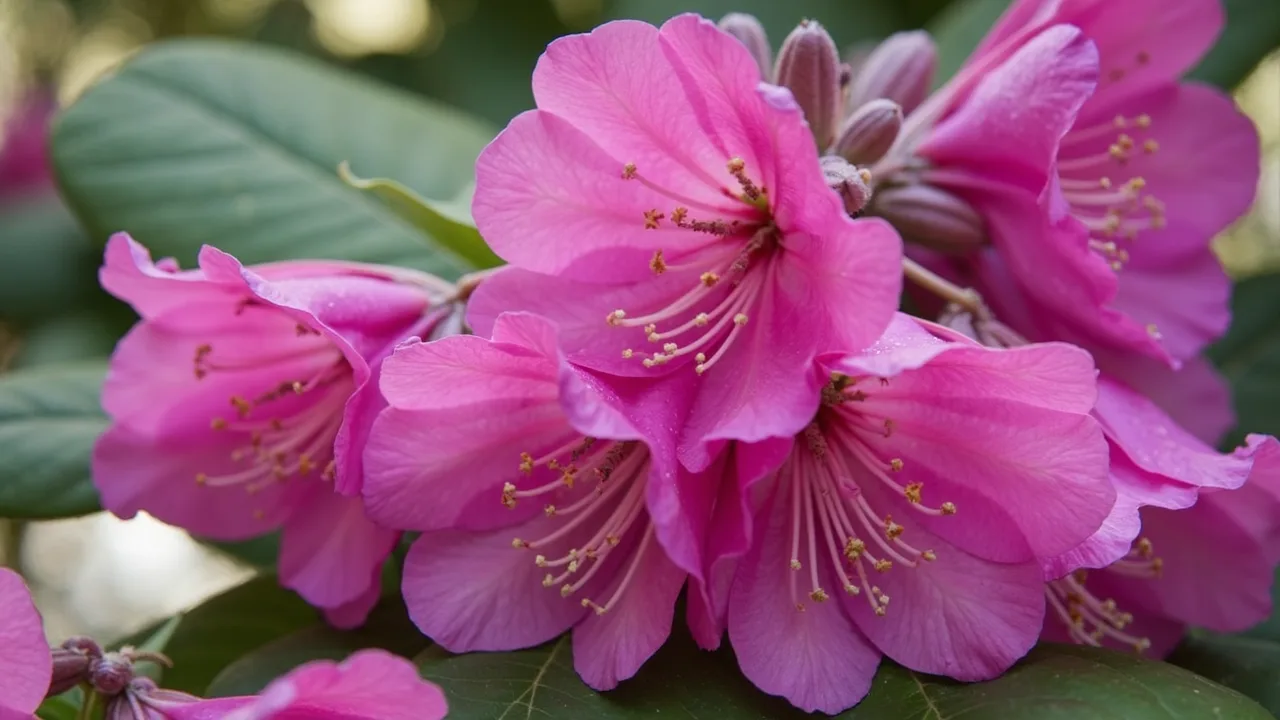
Flowers are borne in loose terminal trusses of 3–12 blooms in late spring to early summer, generally May to early June in southern England and a week or two later in cooler districts. Each flower is funnel-campanulate, 3–5 cm long, ranging from rose-pink to pale pink, frequently with a deeper rose blotch on the upper lobe and faint spotting. The calyx is small and the pedicels are glandular. Flowering lasts two to three weeks in cool weather.
The fruit is a woody, persistent capsule, 2–3 cm long, that ripens through autumn. Old flower trusses remain on the plant well into winter and are best removed by hand after flowering to keep the shrub tidy and to channel energy into new growth.
Growing Conditions
Rhododendron orbiculare requires acidic, humus-rich, moisture-retentive but sharply drained soil. It will not tolerate chalk, limestone, or other alkaline substrates, and growth in such conditions is usually marked by interveinal chlorosis and a steady decline in vigour. Where garden soil is unsuitable, container cultivation in peat-free ericaceous compost is reliable and lets the plant be sited on a lime-stone patio without harm.
Ideal soil pH lies between 4.5 and 6.0. Incorporating well-rotted leaf mould, pine bark, or composted bracken at planting and as a top-dressing each spring helps maintain acidity and a friable structure. Heavy clay can be improved by mounding or by planting on a slight ridge so that the root collar sits above the surrounding level.
The plant prefers dappled shade or a position with morning sun and afternoon shade. Deep shade reduces flower bud set, while exposure to strong midday sun in summer can scorch the foliage. Shelter from cold, drying east and north-east winds is important, particularly in early spring when the new growth is soft; a woodland edge, north-facing wall with overhead canopy, or a sheltered courtyard all work well. Late spring frosts can damage opening buds, so avoid frost pockets at the foot of slopes.
The species holds an RHS hardiness rating, displayed in the plant badge; it is generally treated as suitable for gardens across the UK apart from the coldest upland sites. Specific ratings and temperature thresholds are not repeated in this article.
Planting and Care
Planting is best done in autumn or early spring, when soil is moist and the plant is not under heat stress. Container-grown stock can be planted at any time of year provided watering is kept up during dry spells. Dig a hole two to three times the width of the rootball but no deeper, set the plant so the top of the rootball sits level with the surrounding soil, and backfill with a mix of the excavated soil and ericaceous compost. Water in thoroughly and apply a 5–8 cm mulch of pine bark or leaf mould, keeping the mulch clear of the stems.
Watering is the single most important task during the first two to three seasons. The substrate should be kept consistently moist but not waterlogged. Where mains water is alkaline, use harvested rainwater or deionised water to avoid a steady rise in soil pH. Wilting foliage, leaf-rolling along the midrib, and dull leaf colour are early signs of drought stress.
Feeding should be light and targeted. Apply a specialist ericaceous fertiliser in late March or early April as new growth begins, following the manufacturer's rate. Avoid general-purpose rose or tomato feeds, which are typically high in phosphorus and can lock out iron and manganese in acid soils, leading to chlorosis. A second, smaller dose in June after flowering is acceptable for container-grown plants.
Pruning is minimal. The single routine task is deadheading — pinching out spent flower trusses as soon as the petals fade, taking care not to damage the embryonic shoots just below the truss. Renovation pruning is rarely needed; if a leggy specimen requires reshaping, it can be cut back hard immediately after flowering, though recovery is slow and flowering may be skipped the following year.
Propagation is most reliably carried out by semi-hardwood cuttings taken in late summer and rooted under mist with bottom heat, using a 50:50 mix of peat and perlite, or peat-free equivalent. Layering of low branches in spring is a slow but dependable alternative. Seed can be sown fresh in autumn on a moist, acidic seed compost; germination is slow and variable, and seedlings take five to seven years to reach flowering size.
Seasonal care in the UK centres on three points: an annual ericaceous mulch each spring, removal of dead flower heads in June, and consistent watering through any extended dry period from June to September.
Common Problems
Chlorosis, the yellowing of leaves between green veins, is the most frequently seen disorder and almost always indicates that soil or water is becoming too alkaline. Treat with chelated iron sequestered in spring and switch irrigation to rainwater.
Powdery mildew can affect foliage in dry summers, particularly on plants in exposed positions. Improve airflow around the shrub by selective pruning of neighbouring vegetation, avoid overhead watering, and remove affected leaves. Sulphur-based fungicides are effective where damage persists.
Aphids, particularly the rhododendron aphid, colonise young shoots and flower buds in April and May. Heavy infestations cause leaf distortion and sooty mould from honeydew. Insecticidal soap, fatty-acid sprays, or encouragement of natural predators such as ladybirds and hoverflies are normally sufficient.
Flower bud blast, where buds fail to open and turn brown, has three common causes: drought stress during the previous summer, infection by Botrytis cinerea in damp weather, or late frost damage. Mulching, careful watering, and removal of affected trusses reduce recurrence.
Root rot caused by Phytophthora species is the most serious threat. It occurs in waterlogged or compacted soils and presents as wilting foliage on an otherwise well-watered plant, often with dark staining at the base of the stem. Prevention, by ensuring free drainage and avoiding planting too deep, is far more effective than any treatment once symptoms are advanced.
Popular Varieties
Named cultivars of Rhododendron orbiculare are scarce in general horticulture, and the species is most often sold as seedling stock or as the type itself. Plants propagated from the original Wilson introduction are sometimes offered under the clone name Rhododendron orbiculare 'Wilson 1904' or as a selected form, reflecting the historical importance of that gathering.
The species has been used as a parent in hybridising, and crosses with Rhododendron thompsonii (sometimes spelled thomsonii) have produced plants informally grouped under the name R. × shilsonii. These hybrids resemble R. orbiculare in foliage but tend to carry larger, more open trusses. Reliable, widely available named clones in this group are limited, and gardeners wanting a specific selection should source from a specialist rhododendron nursery.
Where named cultivars of R. orbiculare itself cannot be obtained, the species remains an attractive garden plant in its own right and is best chosen on the basis of healthy foliage, well-rooted container stock, and known provenance from a reputable nursery. Specialist plant-hunters and collectors sometimes offer wild-collected or hand-pollinated seedling lines, but these are not widely listed and availability varies year to year.
Pests and Diseases
| Problem | Symptoms | Management |
|---|---|---|
| Powdery mildew | White powdery fungal growth appears on leaves, buds, petals and shoots, potentially causing distortion. | Improve air circulation and avoid overhead watering; severe cases may require fungicide treatment. |
| Bud blast | Flower buds turn brown, shrivel and fail to open, often following wet weather or frost. | Remove and destroy infected buds promptly if practical to prevent spread. |
| Vine weevil | Notches appear on leaf margins while larvae damage roots in the soil, causing wilting. | Apply nematodes or systemic insecticides to the soil in late summer and autumn. |
| Silver leaf fungus | Leaves develop a silvery sheen on the underside and stems may show fungal fruiting bodies. | Cut out and burn affected branches well below the infection site to prevent spread. |
| Pieris caterpillars | Large green caterpillars with yellow stripes skeletonise leaves, leaving only veins. | Hand-pick caterpillars or use biological controls like nematodes in spring. |
| Rhododendron leafhopper | Leaves show silvery-white speckling and may curl or distort due to sap feeding. | Encourage natural predators or use insecticidal soap for heavy infestations. |
For step-by-step help, read Treating Powdery Mildew. Or browse the full plant problem solver to diagnose an issue by symptom.
Recommended Products
GardenWizz earns a commission from qualifying purchases made through affiliate links on this page (including links within the article) — as an Amazon Associate, and from Thompson & Morgan via the Awin network. This does not affect the price you pay. See our disclaimer for details.