Racemose Rhododendron
Rhododendron racemosum
The Gardening Year
Best months in UK gardens · full planting calendar →
🖨 Printable care card (PDF)At a Glance
| Botanical name | Rhododendron racemosum |
|---|---|
| Common name(s) | Racemose rhododendron |
| Family | Ericaceae |
| Plant type | shrub |
| Height × Spread | 1.5–2.5 m × 100–150 cm |
| Position | Partial shade |
| Pet safety | Harmful if eaten |
| Soil | moist but well-drained, leafy, humus-rich acid soil |
| Flowering | March–May |
| Toxicity | Harmful if eaten. Wear gloves and other protective equipment when handling. Harmful to pets (dogs, cats, rabbits and tortoises) if eaten. |
| Native range | northwestern Guizhou, southwestern Sichuan, and Yunnan, China |
Racemose rhododendron is a compact, small-leaved evergreen shrub valued for its profusion of pink or white flowers in early spring. Native to south-western China, it suits sheltered UK woodland gardens, ericaceous borders and large containers where acidic soil and steady moisture can be provided.
Overview
Rhododendron racemosum belongs to the heath family, Ericaceae, and comes from Yunnan and south-western Sichuan in China. In the wild it occurs on slopes, among scrub and at woodland margins. These origins help explain its preference in gardens for an open, humus-rich soil, cool roots and protection from drying weather. It is a species rhododendron rather than one of the many large-flowered garden hybrids.
Its modest leaves, fine branching and unusual flower placement distinguish it from broad-leaved rhododendrons. The shrub develops a compact, upright to bushy framework and can ultimately reach 1.5–2.5 m in height, with a narrower spread of about 1–1.5 m. It may take five to ten years to approach mature size. Evergreen foliage provides year-round structure, while the early flowers are useful in a woodland border, sheltered courtyard or informal garden.
UK gardens with naturally acidic soil provide the easiest conditions. Where the ground is neutral, alkaline or chalky, a substantial container filled with peat-free ericaceous compost is more dependable than attempting to alter an entire border. The shallow roots dislike both stagnant winter wet and prolonged summer drought, so careful siting is more effective than trying to correct unsuitable conditions later.
All parts should be treated as harmful if eaten, including by pets. Wear gloves and other suitable protective equipment when handling the plant, keep prunings away from children and animals, and do not add material where it could be eaten.
Appearance
The shrub has a compact, upright to rounded outline with slender shoots. Young stems bear conspicuous scales, also found beneath the leaves, and branching becomes increasingly twiggy with age. Plants raised from seed vary in height and habit, but selected forms are generally neater and more predictable.
Leaves are small, leathery and elliptic to oblong. Their upper surfaces are mid- to dark green, while the undersides are paler, often glaucous, and scaly. This fine-textured foliage helps the plant fit comfortably into a mixed shrub border. Individual leaves persist through winter, although exposed foliage may scorch if roots are dry or cold winds draw moisture from the plant faster than it can be replaced.
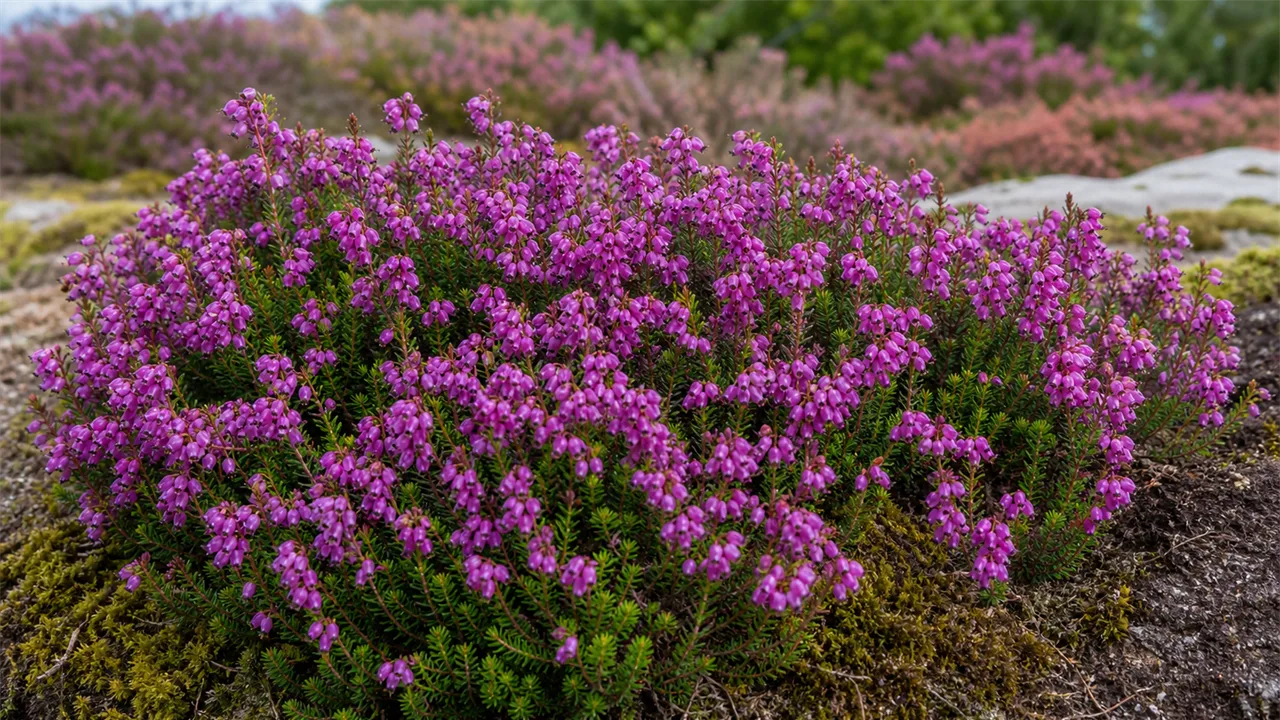
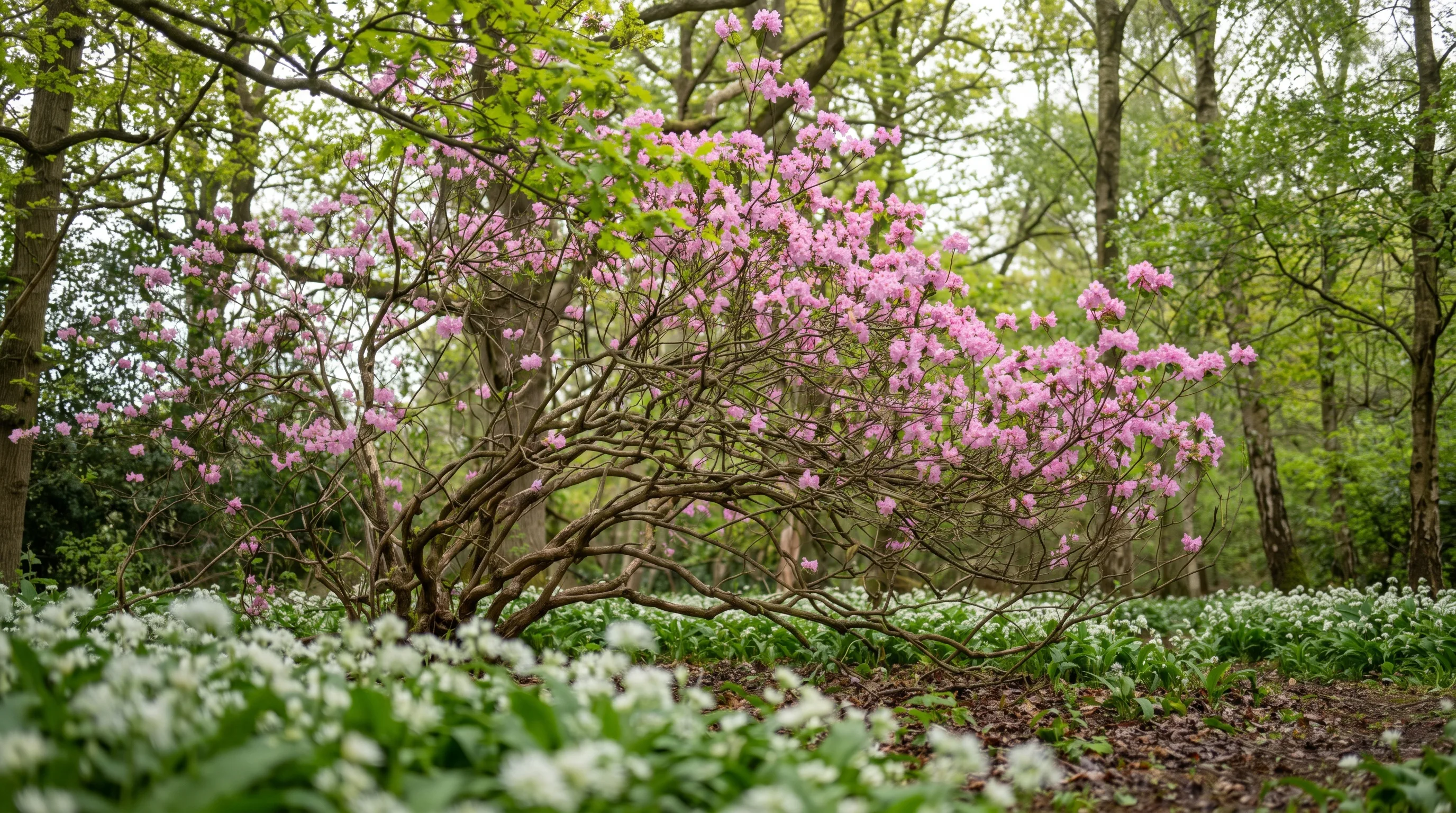
The flowers arise in axillary clusters from buds on the previous year's shoots. Clusters may be spaced well along those shoots rather than being confined to their tips, creating the racemose effect that gives the species its name. Each bloom is small, funnel-shaped and up to about 3 cm across. Flower colour varies naturally from white and light pink to deeper pink.
Flowering occurs in early spring. March and April are the most useful general guide for UK gardens, although plants may begin earlier in mild districts or continue into May in cooler sites and late seasons. The combination of numerous axillary clusters and small evergreen leaves can make the flowering shoots appear densely lined with colour.
Growing Conditions
An acidic root environment is essential. Aim for a loose, leafy, humus-rich soil that holds moisture while allowing surplus water to drain. Leaf mould, composted bark and other lime-free organic materials improve both sandy and heavier acidic soils. Do not add garden lime, spent mushroom compost or rubble that may raise the pH. On unsuitable ground, use peat-free ericaceous compost in a wide, stable container with unobstructed drainage holes.
Partial shade is the safest general position, particularly in southern and eastern Britain where summer soil can dry quickly. Morning sun followed by light afternoon shade is often effective. The shrub can flower well in a sunnier place if its roots remain cool and evenly moist, but a hot south-facing wall or an exposed, wind-scoured position increases stress. Very dense shade may produce thin growth and fewer flowers.
Moisture should be consistent rather than excessive. Waterlogging excludes air from the fine roots and raises the risk of root and collar rots. Conversely, drought during summer can cause brown leaf margins, poor bud development and a reduced display the following spring. An organic mulch helps moderate moisture and soil temperature; keep it clear of the main stems.
Choose a sheltered place away from drying winds and severe frost pockets. Early flowers and soft new growth are more vulnerable than the established woody framework. Taller shrubs, a porous fence or open-canopied trees provide useful protection without creating dense shade. Containers need closer attention because their compost changes temperature and moisture more quickly than open ground.
Planting and Care
Plant in March or April, or during September or October, while soil is workable and naturally moist. Water the pot first, prepare a hole wider but no deeper than the root ball, and loosen congested outer roots gently. Set the root ball level with, or fractionally above, the soil surface; deep planting deprives the shallow roots of air and encourages decline.
Backfill with the excavated acidic soil, improved where necessary with leaf mould or composted bark. Firm lightly, water thoroughly and apply a lime-free mulch. A small pocket of ericaceous compost will not overcome alkaline ground because roots eventually grow beyond it; use a container instead.
Water new plants whenever the upper soil begins to dry, especially during their first two growing seasons. Established shrubs still benefit from a thorough watering during prolonged dry periods from May to August, when new shoots and future flower buds are developing. Rainwater is preferable in hard-water districts because repeated use of alkaline tap water can gradually raise compost pH. Water containers slowly until excess drains from the base and never leave them standing permanently in water.
Feeding should be restrained. In poor soil or containers, apply an ericaceous fertiliser at the manufacturer's rate in spring as growth begins. Excess fertiliser can damage fine roots and promote soft growth at the expense of flower buds. Refresh the surface compost each spring and repot a root-bound plant after flowering or in early autumn, maintaining the original planting depth.
Little routine pruning is needed. After flowering, remove dead, damaged or crossing stems with clean secateurs and, if practical, snap off spent flower heads without harming the new buds immediately below. Avoid shearing, which destroys the natural twiggy habit and may remove the previous-year wood that carries the next display. Renovate an old, congested specimen gradually by removing only a limited number of older branches after flowering over several seasons.
Semi-ripe cuttings preserve the characteristics of a named selection. Take healthy, non-flowering shoots in late summer, place them in a free-draining acidic propagation medium and maintain humid, lightly shaded conditions without waterlogging. Layering in autumn is slower but often simpler: bend a low branch to the soil, lightly wound its underside, pin it into acidic compost and separate it only after a sound root system has formed. Seed can be sown when ripe to raise the species, but seedlings vary and must not be sold under a cultivar name.
Seasonal care centres on water and root protection. Renew mulch in spring while the ground is moist, feed only if needed, and check early flowers for weather damage. Deadhead and carry out essential pruning after flowering. Monitor watering through summer as future buds form. In autumn, check drainage and remove material that mats densely around the collar. During winter, shelter pots from desiccating winds, water during dry spells when compost is not frozen, and keep drainage holes open.
Common Problems
Yellow leaves with greener veins usually indicate chlorosis caused by insufficient acidity rather than infection. Check soil, compost and irrigation water before adding more feed. Refresh container compost if necessary, use rainwater where possible and avoid lime-bearing mulches. General yellowing can also follow waterlogging or root damage.
Brown tips or margins commonly result from drought, wind scorch or impaired roots. Check moisture below the mulch rather than judging only the surface. Limp growth in wet soil, darkened stem bases or progressive dieback may indicate Phytophthora root or collar rot. Improve drainage promptly and remove badly affected material; a severely diseased plant may need to be discarded rather than replaced with another rhododendron in the same poorly drained spot.
Vine weevil is especially troublesome in containers. Adults notch leaf margins, while cream-coloured larvae feed on roots and may cause sudden wilting. Inspect the root ball of a declining pot plant and use an appropriate biological control as directed. Rhododendron and azalea whitefly, pieris lacebug, scale insects, aphids and caterpillars may also occur; identify the pest before choosing a control.
Rhododendron leafhopper is associated with bud blast, in which flower buds turn brown and develop dark fungal bristles instead of opening. Remove and dispose of affected buds. Powdery mildew, leaf spots and petal blight can develop where conditions favour infection. Clear fallen flowers and badly affected leaves, avoid wetting foliage unnecessarily, and maintain space for air movement. Silver leaf and honey fungus are less common but serious causes of dieback. Frost injury may blacken newly opened flowers or shoots; wait until the extent of damage is clear before cutting.
Popular Varieties
Named selections give more predictable flower colour and habit than variable seed-raised plants. Availability is often limited to specialist rhododendron nurseries, and labels should include the full species and selection name.
- 'Rock Rose' is a compact, upright evergreen selection with abundant bright rose-pink, funnel-shaped flowers clustered along the shoots in early spring. It retains the species' small, leathery leaves and can ultimately reach about 1.5–2.5 m tall and 1–1.5 m wide.
- 'White Lace' is a white-flowered selection raised by Glendoick Gardens. Its pure white, five-lobed flowers are held in axillary clusters of three or four, while the small elliptic leaves are dark green above and glaucous and scaly beneath.
- Glendoick ('Gle021') is the documented trade designation for the named selection also recorded as R. racemosum 'Gle021'. The public RHS record confirms its identity and trade-name status but does not publish distinctive flower colour, size or habit, so those details should not be inferred from the name; buy from a specialist source with the complete label.
These names are not interchangeable. 'White Lace' is a recognised cultivar originating at Glendoick Gardens, whereas Glendoick ('Gle021') is a separate trade designation. The straight species and unnamed collector forms can be worthwhile plants, but they are not substitutes for named selections when predictable characteristics are required.
Pests and Diseases
| Problem | Symptoms | Management |
|---|---|---|
| Vine weevil | Irregular notches on leaf margins and wilting plants caused by larvae feeding on roots. | Apply nematodes to moist soil in autumn or use a systemic insecticide for severe infestations. |
| Rhododendron budworm | New shoots are webbed together and eaten, leaving bare stems with frass. | Prune out affected shoots or apply a biological insecticide like spinosad when larvae emerge. |
| Powdery mildew | White, dusty fungal growth on leaves and buds, potentially causing distortion. | Improve air circulation and spray with a fungicide containing myclobutanil if severe. |
| Phytophthora root rot | General decline, yellowing leaves, and failure to thrive due to waterlogged soil. | Ensure well-drained acid soil and avoid overwatering; remove severely infected plants. |
| Pieris lacebug | Silver or bleached patches on the upper leaf surface with black specks underneath. | Spray with a horticultural oil or insecticidal soap during early summer outbreaks. |
For step-by-step help, read Treating Powdery Mildew. Or browse the full plant problem solver to diagnose an issue by symptom.
Recommended Products
GardenWizz earns a commission from qualifying purchases made through affiliate links on this page (including links within the article) — as an Amazon Associate, and from Thompson & Morgan via the Awin network. This does not affect the price you pay. See our disclaimer for details.