Banksia Rose
Rosa banksiae
The Gardening Year
Best months in UK gardens · full planting calendar →
🖨 Printable care card (PDF)At a Glance
| Botanical name | Rosa banksiae |
|---|---|
| Common name(s) | Banksia rose |
| Family | Rosaceae |
| Plant type | climber (Semi-evergreen scrambling shrubby vine) |
| Height × Spread | 4–7.5 m × 2.5–4 m |
| Position | Full sun |
| Soil | Chalk, Clay, Loam, Sand; Moist but well-drained or Well-drained; Acid, Alkaline, or Neutral pH |
| Flowering | May |
| Toxicity | Fruit are ornamental - not to be eaten. Potentially harmful. |
| Native range | Central and western China (Gansu, Guizhou, Henan, Hubei, Jiangsu, Sichuan, Yunnan) |
Overview
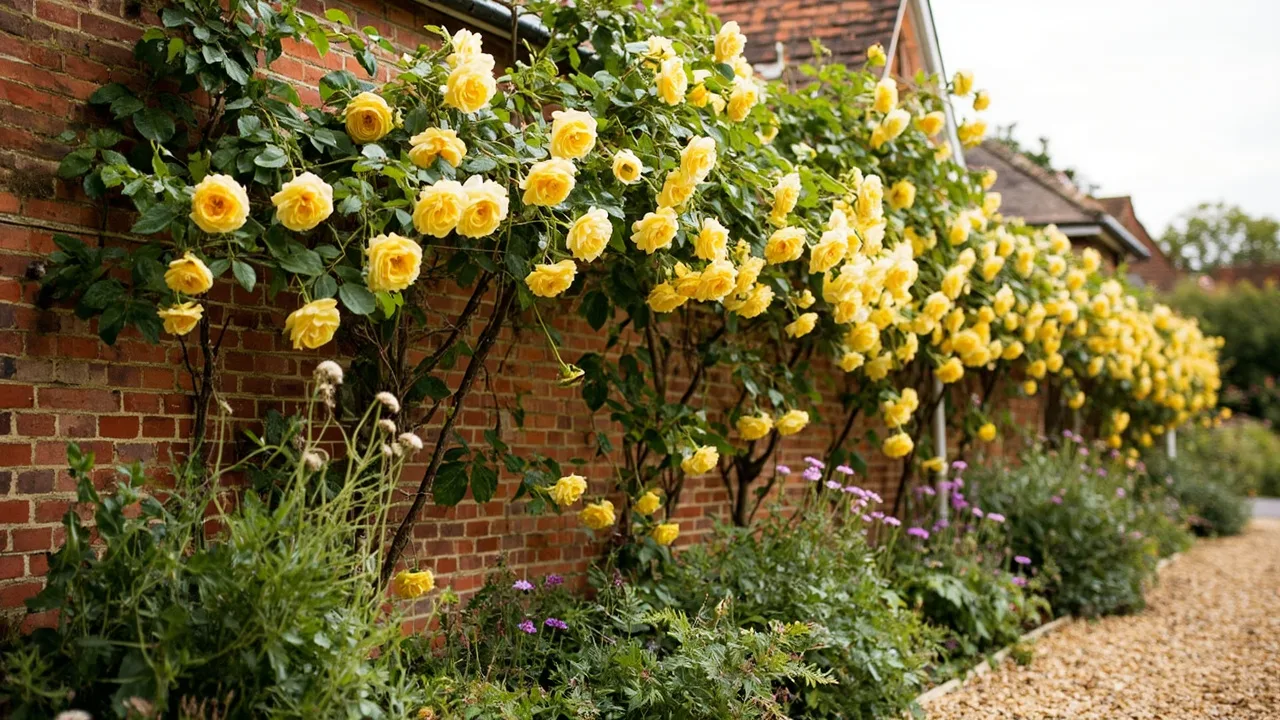
Rosa banksiae, or Lady Banks' rose, is a vigorous, almost thornless rambler from China. In the UK it is primarily a rose for a warm, sunny and sheltered wall, especially in southern, western and coastal gardens. It flowers once, but does so with exceptional abundance: established plants can cover metres of masonry with small white or yellow blooms in late spring. The flexible stems are easier to handle than heavily armed ramblers, although their eventual weight demands substantial support.
The species belongs to the rose family, Rosaceae, and was introduced to Western cultivation from China in the early nineteenth century. It is named for Lady Dorothea Banks, wife of the botanist Sir Joseph Banks. Unlike many repeat-flowering climbing roses, it makes its display on growth formed in the previous season. That feature controls both its siting and pruning: the old framework must survive winter intact, and routine pruning must wait until flowering has finished.
Appearance
Long, slender canes arch, scramble and eventually form a broad woody framework. Young stems are green, pliable and nearly thornless, a useful quality when they must be fanned across wires or guided over a pergola. A mature specimen may exceed 7 m in a favourable site, with a comparable spread if allowed to run horizontally. Although the stems are light individually, a decades-old plant becomes very heavy and can pull down weak trellis, guttering or fence panels.
The foliage is finer than that of many garden roses. Each pinnate leaf normally carries three to seven narrow, smooth-edged leaflets. They are bright to mid-green and slightly glossy, giving the plant an airy texture even outside the flowering season. Foliage often persists through mild British winters, so the plant is usually described as semi-evergreen. Exposed plants may shed more leaves, while frost-damaged shoot tips can remain bare when growth resumes.
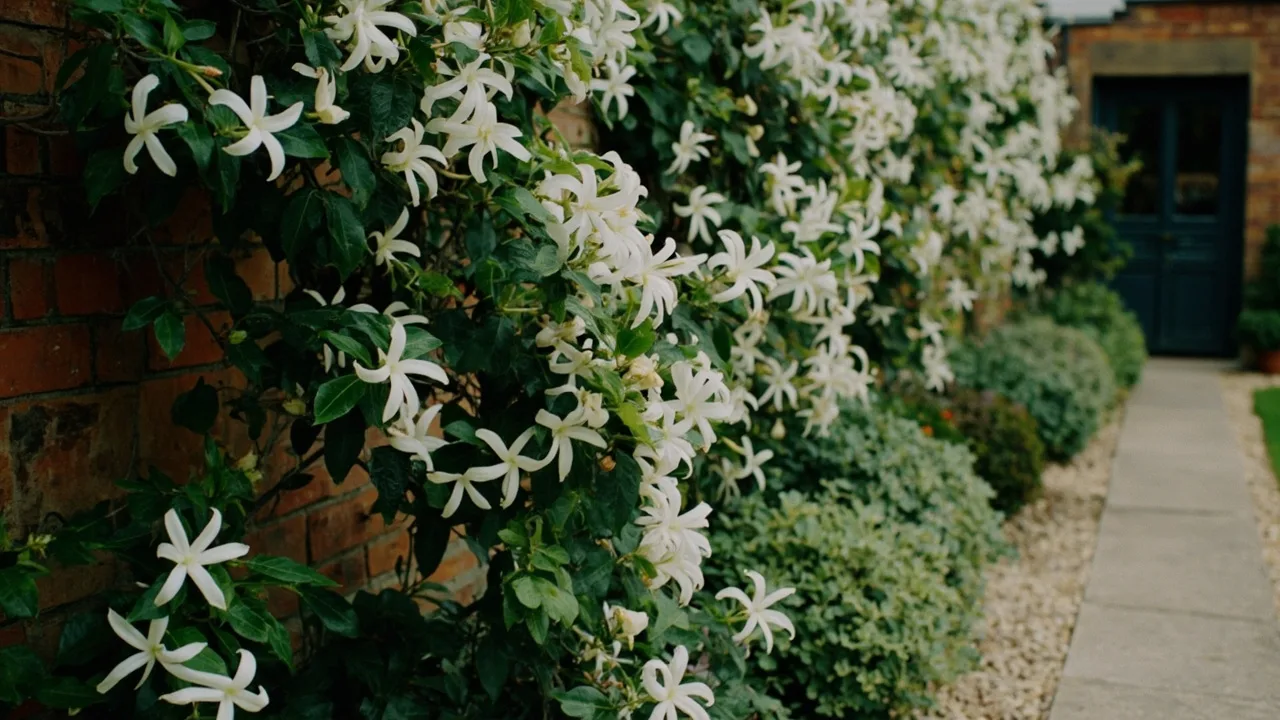
Flowers are small, generally around 2 cm across, but produced in dense clusters along the previous year's growth. Their scale is part of the effect: instead of a few large blooms, the plant creates sheets and cascades of colour. Flowering may begin in April against a warm wall in a mild district, more commonly peaks in May, and can continue into June in cooler gardens. The main flush lasts several weeks and is not normally repeated later in summer.
Colour and flower form depend on the selection. The commonly grown 'Lutea' bears double, soft yellow rosettes. 'Alba Plena' has double white flowers, while var. normalis carries open, single white flowers with visible yellow stamens. 'Lutescens' is single and yellow. Fragrance is usually light rather than powerful and varies between forms. Small hips may occasionally follow single flowers, but the spring blossom and graceful foliage are the principal ornamental features.
Growing Conditions
Success depends more on microclimate than on routine maintenance. Choose a south- or west-facing wall where masonry stores daytime warmth and shields the framework from cold easterly and northerly winds. A sunny courtyard or sheltered coastal garden may also suit it. In colder inland, northern and upland districts, the same rose in an open position may suffer shoot dieback or damaged flower buds, resulting in an unreliable display. A protected wall does not guarantee flowering after every severe spring, but it considerably improves the odds.
Full sun encourages dense flower production and helps new wood ripen before winter. Light partial shade is tolerated, particularly where the upper growth reaches sunlight, but persistent shade produces long leafy shoots and sparse flowers. Avoid frost pockets and sites where cold air settles. Buds can develop early in a mild spring, so an exposed east-facing position risks rapid thawing after a frosty night as well as damage from cold wind.
The ideal soil is fertile, humus-rich and moisture-retentive without becoming waterlogged. Loam is excellent, but clay, chalky or sandy ground can be made suitable if drainage and organic matter are corrected. On heavy clay, broaden the cultivated area rather than creating a small planting hole that holds water. On free-draining sand or thin chalk, incorporate well-rotted garden compost and maintain an annual mulch to reduce summer drought stress.
Wall-side soil often presents a hidden problem. Roof overhangs and masonry create a dry rain shadow, yet the wall itself may conceal rubble, compacted subsoil or old foundations. Place the root system at least 30-45 cm away from the wall and angle the stems back towards it. Check drainage before planting by observing whether water remains in a test hole after heavy rain. Rosa banksiae dislikes prolonged winter saturation, but a newly planted specimen also fails if its rootball repeatedly dries out.
Allow generous room. This is not the best rose for a narrow panel beside a doorway, a light arch or a short suburban fence unless regular containment is acceptable. It is well suited to a high house wall, substantial outbuilding, large pergola or robust freestanding frame. It may be guided into a mature tree, but competition for water and nutrients makes establishment harder and future pruning less practical. Keep air moving through the framework without exposing it to persistent wind; this balance reduces mildew and leaf disease.
Planting and Care
Plant bare-root stock between November and March when the soil is workable, avoiding frozen or waterlogged conditions. Container-grown plants can be set out throughout the year, but autumn and early spring reduce the watering burden. Before planting, install horizontal galvanised wires or another permanent support. Space wires roughly 40-50 cm apart and fix them with wall eyes that hold growth away from masonry, allowing air circulation and room for tying.
Water the pot or soak bare roots before planting. Dig a hole wider than the root spread, loosen compacted sides and remove perennial weeds. Mix excavated soil with well-rotted compost or leafmould, but do not surround the roots with an isolated pocket of rich material. Set a container-grown plant at its existing depth, firm gently and water thoroughly. Direct the first stems towards the support without sharply bending them.
Water deeply during dry spells for the first two growing seasons. A weekly soak is usually more useful than frequent surface sprinkling, although frequency must reflect soil and rainfall. Pay particular attention to plants beneath eaves, where apparently wet weather may not reach the roots. Established specimens are more drought-tolerant, but prolonged dryness during bud formation and summer shoot extension can reduce growth. Apply a 5-8 cm mulch of composted organic matter in late winter or early spring, leaving a clear collar around the stems.
Feed once in early spring with a proprietary rose fertiliser or balanced general fertiliser at the labelled rate. A second light application after flowering can support the new shoots that will flower the following year. Avoid repeated high-nitrogen feeding: it produces soft, crowded growth, delays ripening and can encourage mildew. Where the rose grows strongly and flowers well, annual mulch and modest feeding are preferable to an intensive regime.
Train stems as they lengthen. Fan the main canes across the available wall and tie some as close to horizontal as their flexibility permits; this encourages numerous short flowering laterals. Use soft, adjustable ties and inspect them in spring and autumn so they do not constrict swelling stems. Keep canes clear of windows, roof tiles, gutters and cables. Work from a stable platform and arrange professional help where an established framework is beyond safe ladder reach.
Prune immediately after flowering, generally from late May to July according to locality and season. Do not perform the main prune in winter or early spring, because that removes the previous year's flower-bearing wood. Start by cutting out dead, damaged or diseased material. On a congested mature plant, remove one or two of the oldest canes at the base, provided replacement growth is available. Shorten spent flowering laterals to a healthy bud or suitable sideshoot, retain vigorous new canes, and tie them into gaps in the framework.
Renovate an overgrown specimen gradually over two or three years rather than removing most of its structure at once. Severe cutting may stimulate strong basal growth but sacrifices flowers and can leave an awkward void. If frost has browned shoot tips, wait until growth makes the boundary between living and dead wood clear, then tidy damaged portions while preserving sound flower-bearing stems.
Propagation is possible from softwood cuttings in spring or more mature cuttings from late summer into autumn. Take healthy non-flowering shoots, prepare them promptly and maintain steady moisture without waterlogging. Chip budding is a specialist alternative. Seed is unsuitable for reproducing a named selection because offspring may differ from the parent and germination can be slow. Buying a correctly labelled plant from a reputable UK rose nursery is the dependable route when a particular flower form is required.
Seasonal care is straightforward once the framework is established. In late winter, renew mulch, inspect anchors and remove fallen diseased leaves without carrying out the main prune. Feed and check ties in early spring. During flowering, monitor water at the wall base. Prune and retrain immediately after the display, then allow summer shoots to mature undisturbed. In autumn, secure loose canes before gales and avoid late feeding that promotes soft new growth.
Common Problems
Failure to flower is the most frequent complaint. A plant may make metres of foliage yet carry few buds because it is shaded, has been fed heavily with nitrogen, suffered frost damage or was pruned during winter. Confirm that the upper framework receives direct sun, reduce excessive feeding and retain the previous summer's sound growth. Moveable fleece can protect accessible young growth during a short late-frost forecast, but remove it promptly afterwards. A permanently cold, exposed site is better addressed by improving shelter than by repeated wrapping.
Bare lower stems develop as an old framework becomes crowded and the most vigorous shoots race towards light. After flowering, remove one or two exhausted canes and fan replacement stems horizontally across the lower wires. Do not strip the entire plant in one season. Regular, selective renewal maintains flowers from lower down while preserving enough mature growth for the next spring display.
Powdery mildew appears as a white coating on young leaves and shoot tips, especially when roots are dry but the air around crowded foliage is humid. Water deeply at soil level, maintain mulch and thin congested growth after flowering. Avoid forcing soft growth with excess fertiliser. Badly affected shoot tips can be removed, while the support should hold foliage away from the wall sufficiently for air to circulate.
Rose black spot causes dark leaf lesions, yellowing and premature leaf fall. Remove and dispose of affected fallen leaves, water the root zone rather than wetting foliage, and encourage steady growth without drought stress. Rose rust may produce orange pustules, while shoot dieback can follow frost, physical damage or disease. Cut dieback to healthy tissue using clean tools and investigate poor drainage or rubbing ties if the problem recurs.
Aphids can cluster on soft shoot tips and buds in spring. Small colonies may be rubbed off or dislodged with water, while ladybirds, hoverfly larvae and other predators often provide control. Sawfly larvae can skeletonise leaves, and leaf-rolling sawfly may roll leaflets around developing larvae. Inspect regularly and remove limited infestations by hand where practical. Scale insects and red spider mites are less common outdoors but may occur on plants in very warm, dry, sheltered positions.
Wind damage is a practical rather than infectious problem. Long canes act as levers, and old ties or weak trellis can fail during autumn and winter gales. Inspect fixings twice yearly, replace tight or brittle ties and distribute weight across multiple anchors. If stems rub against metal or masonry, pad or reposition them before wounds develop. Any current plant-protection product must be checked against its UK label and authorised use; cultural and physical measures should come first.
Popular Varieties
- Rosa banksiae 'Lutea' - the best-known UK form, with masses of small double yellow flowers. It needs a warm, sunny, sheltered position and is listed by the RHS as an Award of Garden Merit plant.
- Rosa banksiae 'Alba Plena' - a vigorous double white form with clustered rosette flowers and almost thornless stems. It suits the same large, protected wall situations as 'Lutea'.
- Rosa banksiae var. normalis - the single white form, with open flowers and prominent stamens. Its simpler blooms provide a distinctly different effect from the double cultivars.
- Rosa banksiae 'Lutescens' - a single yellow form recognised by the RHS and available from specialist rose collections. Its open flowers are lighter in appearance than the densely double 'Lutea'.
Sources & Further Reading
- Source: https://www.rhs.org.uk/plants/40391/rosa-banksiae-ra/details, accessed 2026-07-23
- Source: https://www.rhs.org.uk/plants/67581/rosa-banksiae-lutea-rad/details, accessed 2026-07-23
- Source: https://www.rhs.org.uk/plants/80805/rosa-banksiae-lutescens-(ra)/details, accessed 2026-07-23
- Source: https://www.rhs.org.uk/plants/77408/rosa-banksiae-var-normalis-ra/details, accessed 2026-07-23
- Source: https://www.rhs.org.uk/plants/roses/rambler, accessed 2026-07-23
- Source: https://www.gardenersworld.com/plants/rosa-banksiae-lutea/, accessed 2026-07-23
Pests and Diseases
| Problem | Symptoms | Management |
|---|---|---|
| Aphids | Clusters of small green or black insects on new shoots causing leaf curling and sticky honeydew. | Squash by hand, spray with a strong jet of water, or apply insecticidal soap if infestations are severe. |
| Rose black spot | Distinctive black spots with fringed edges on leaves leading to yellowing and premature leaf drop. | Remove fallen leaves in autumn and apply a fungicide spray during wet summers to prevent spread. |
| Powdery mildew | A white, dusty fungal growth covering young leaves, shoots, and flower buds. | Ensure good air circulation and treat with a sulphur-based or systemic fungicide at first sign. |
| Rose rust | Orange or yellow pustules on the undersides of leaves with corresponding brown spots on top. | Prune out affected growth and apply a recommended fungicide to control severe outbreaks. |
| Red spider mite | Fine webbing on stems and stippled, yellowing leaves during hot, dry weather. | Water the plant thoroughly and spray with horticultural oil or a miticide if damage is extensive. |
| Rose dieback | Dark brown lesions on stems causing canes to shrivel and die back from the tips. | Cut out affected wood well below the lesion into healthy tissue and disinfect tools between cuts. |
For step-by-step help, read Controlling Aphids Naturally, Treating Powdery Mildew and Tackling Black Spot on Roses. Or browse the full plant problem solver to diagnose an issue by symptom.
Recommended Products
GardenWizz earns a commission from qualifying purchases made through affiliate links on this page (including links within the article) — as an Amazon Associate, and from Thompson & Morgan via the Awin network. This does not affect the price you pay. See our disclaimer for details.