Viburnums
Viburnum
The Gardening Year
Best months in UK gardens · full planting calendar →
🖨 Printable care card (PDF)At a Glance
| Botanical name | Viburnum |
|---|---|
| Common name(s) | viburnums |
| Family | Viburnaceae |
| Plant type | shrub |
| Height × Spread | 0.6–9.1 m × 0.6–3.7 m |
| Position | Full sun, Partial shade |
| Soil | reasonably fertile soil; tolerant of chalky soils; dislikes poor, dry soils and very wet conditions |
| Flowering | January, February, March, April, May, June, July, August, December |
| Toxicity | Some fruits are mildly poisonous/toxic and can cause vomiting if eaten in quantity. |
| Native range | temperate Northern Hemisphere, with a few species extending into tropical montane regions in South America and southeast Asia; in Africa, confined to the Atlas Mountains |
Viburnum is a genus of around 150–175 deciduous and evergreen flowering shrubs and small trees in the family Adoxaceae, distributed widely across the temperate Northern Hemisphere. Several species are native to the British Isles, and a handful of Asian and Mediterranean species have become staples of UK gardens thanks to their generous flowering, often fragrant flowers, and long-lasting berries. Across the genus the unifying visual cue is opposite, simple leaves — an unusual trait among garden shrubs that makes a Viburnum relatively easy to recognise even out of flower.
Overview
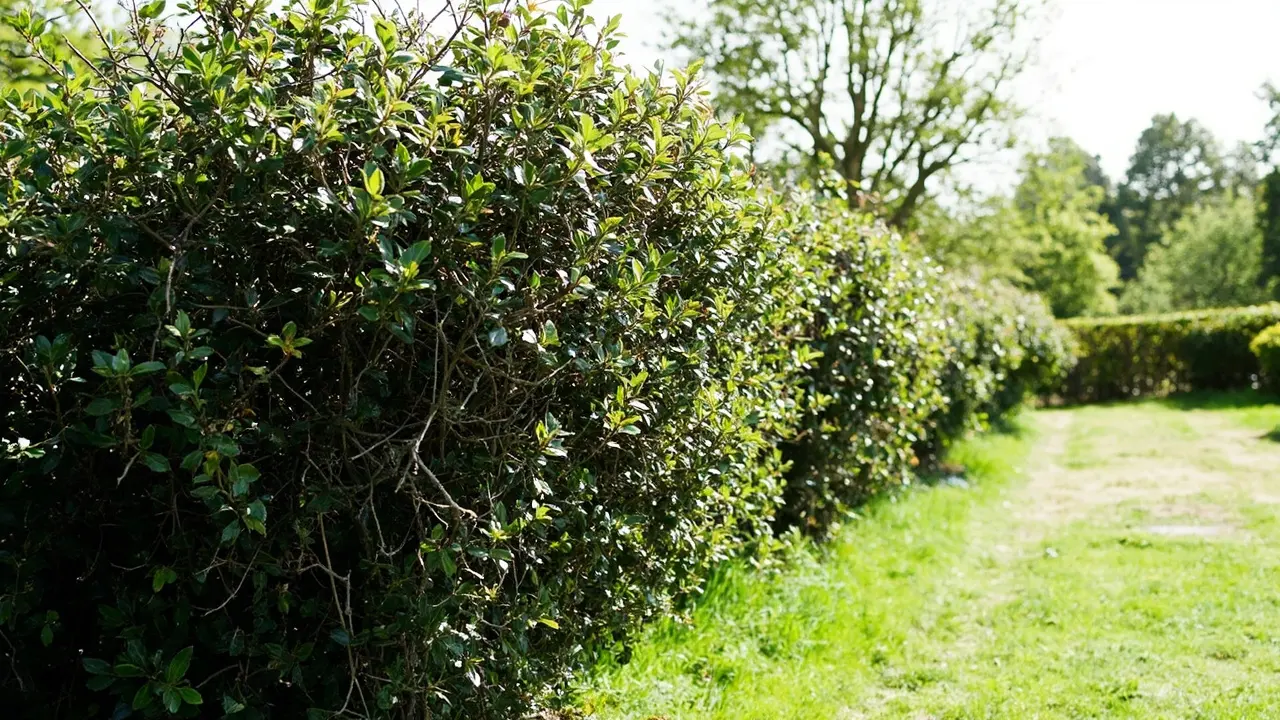
Viburnums cover almost every garden role a shrub can play. Some, such as Viburnum tinus (Laurustinus), carry flowers through the darkest months of the year; others, such as V. × bodnantense, open fragrant pink blooms on bare winter stems when little else is in flower. Spring-flowering species such as V. × carlcephalum and Viburnum carlesii fill the garden with scent from April into May, while Viburnum plicatum delivers a tiered summer display of white "snowball" flowers along its horizontal branches. Two native species — Viburnum opulus (Guelder-rose) and Viburnum lantana (Wayfaring tree) — anchor mixed wildlife hedges and provide berries for thrushes, blackbirds and, in cold winters, waxwings.
Although widely tolerant of UK conditions, viburnums are shallow-rooted and dislike both drought and waterlogging. They repay a cool, moisture-retentive root run with mulch, and most establish readily from container-grown stock. Once planted they are largely self-sufficient, with the main horticultural challenge being the viburnum beetle on susceptible species.
Appearance
Habit varies considerably across the genus, but UK-grown viburnums share the genus-defining trait of opposite, simple leaves — a useful identification cue against most garden shrubs, which carry alternate leaves.
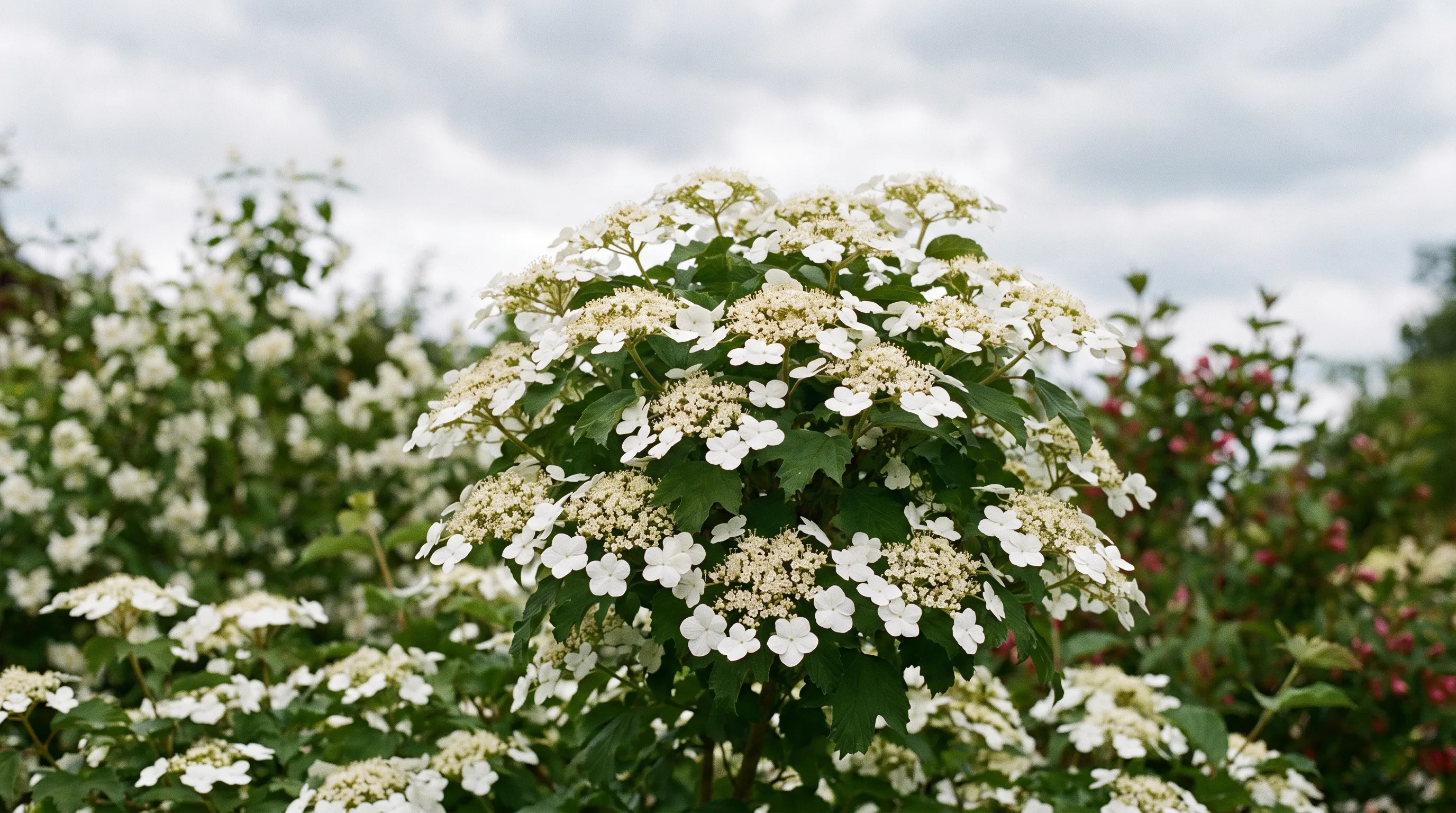
- Viburnum opulus (Guelder-rose) is a UK native deciduous shrub growing 3–5 m tall, with three-lobed, maple-like leaves that redden in autumn. Its flat lacecap flowers open in May and June: a ring of showy sterile white florets surrounds a centre of small fertile flowers. Bright translucent red berries follow, often persisting into winter and much favoured by birds.
- Viburnum lantana (Wayfaring tree) is another UK native, deciduous, 4–5 m tall, with broadly oval, corrugated leaves. Dense, flat-topped creamy-white flowerheads open in May and June, and the berries ripen red before turning black as winter approaches.
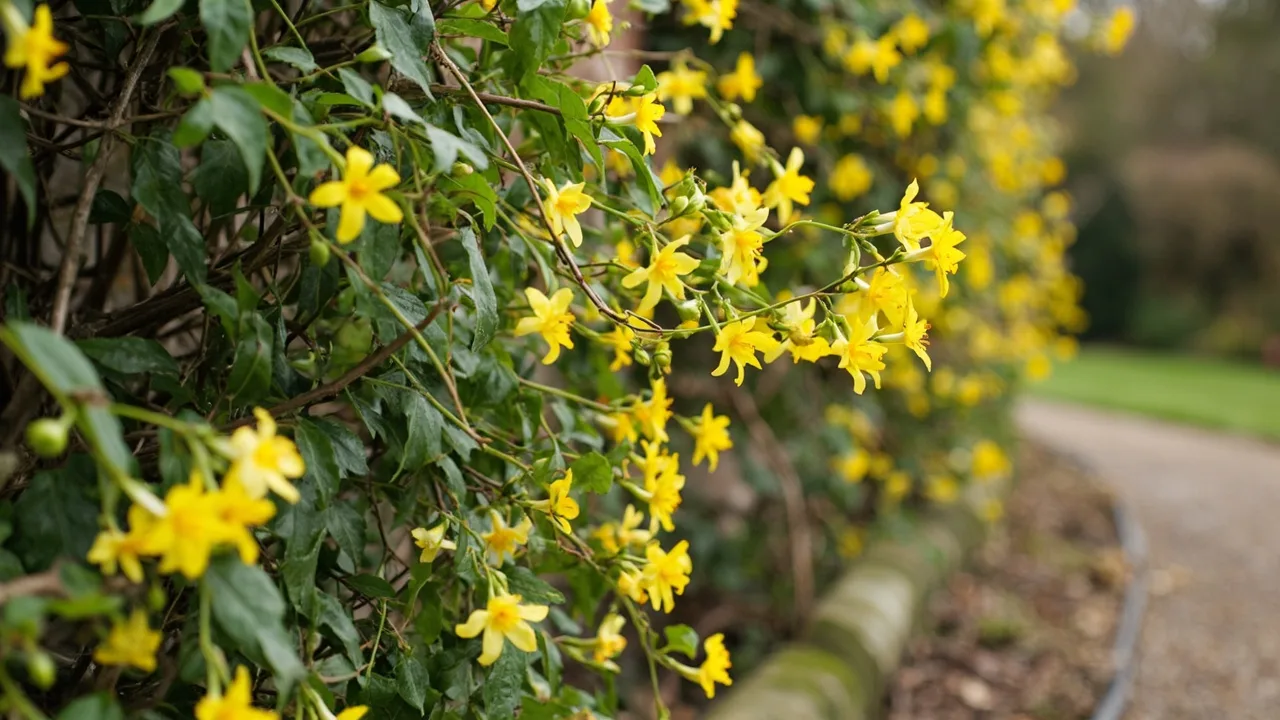
- Viburnum tinus (Laurustinus) is a Mediterranean evergreen widely grown in UK gardens at 2–3 m, with dark green elliptical leaves and flat clusters of pink-budded white flowers that open from late autumn through to early spring — one of the most valuable winter-flowering shrubs available. Metallic blue-black berries follow the flowers.
- V. × bodnantense is a deciduous hybrid reaching about 2.5–3 m, prized for its strongly fragrant pink tubular flowers carried on bare stems from October through March.
- V. × carlcephalum and Viburnum carlesii are deciduous shrubs of 1.5–2.5 m, with intensely fragrant pink-in-bud, opening-white snowball flower clusters in April and May.
- Viburnum plicatum (Japanese snowball) carries tiered horizontal branching with showy sterile white "snowball" flowers along the upper side of each branch in early summer.
- Viburnum davidii is a compact evergreen reaching about 1 m, with leathery dark leaves bearing three prominent parallel veins. White flowers open in June; female plants produce metallic turquoise-blue berries, though both a male and a female plant are needed for reliable fruiting.
- Viburnum rhytidophyllum is a large evergreen of up to 4 m, with deeply veined, leathery, elongated leaves. Creamy-white flowers in May and June are followed by red berries ripening to black.
Across all of these the leaf arrangement remains the same: opposite, simple, sometimes toothed, sometimes lobed. Flower form divides into three broad groups — flat lacecap heads (as in V. opulus), flat-topped fertile clusters (as in V. lantana and V. tinus), and rounded "snowball" clusters of either fertile or sterile flowers (as in V. carlesii, V. × carlcephalum and V. plicatum).
Growing Conditions
Most viburnums grow well across the UK in full sun or light dappled shade. Viburnum tinus and Viburnum davidii tolerate deeper shade than Viburnum plicatum, which flowers most freely in sun. Soil should be moist but well drained, and reasonably fertile; viburnums dislike very dry ground and dislike sitting in winter water. V. tinus copes with chalky soils better than most of the genus; V. opulus prefers neutral to slightly acidic, moisture-retentive ground. Most species sit comfortably within the neutral-to-mildly-acidic pH range. Evergreens benefit from a sheltered spot away from cold east winds, while deciduous species generally tolerate exposed positions.
The genus's overall hardiness is well-established for the UK, but a specific RHS rating is shown elsewhere on this page via the badge rather than stated in the article text.
Planting and Care
Container-grown stock establishes best when planted in autumn or spring. Water the rootball thoroughly before and after planting, mulch generously with well-rotted organic matter, and keep watering during dry spells through the first growing season until the shrub is established.
Once flowering has finished, remove one or two of the oldest stems at the base on established shrubs to encourage vigorous new growth from low down. This renewal pruning is sufficient for most viburnums and avoids the risks of hard cutting back. Evergreens struggle to regrow from old wood, so avoid cutting into thick stems; Viburnum tinus can be lightly trimmed after flowering to keep it compact. Viburnum plicatum resents hard pruning altogether — its tiered shape is built slowly and is ruined by cutting into thick stems.
Apply a balanced general fertiliser in spring if growth has been weak, though mature shrubs in reasonable soil rarely need routine feeding. An annual mulch in spring keeps roots cool and moist and is the single most useful routine for these shallow-rooted shrubs, which resent competition and dryness at the root.
Propagation is straightforward but slow. Semi-ripe heel cuttings taken in summer root reasonably well for evergreens; softwood cuttings in early summer work for deciduous species. Seed requires double stratification — a warm period followed by a cold one — and is slow to germinate, so commercial stock is largely cutting-raised or grafted.
Seasonal care is light. Mulch thickly in late winter after a hard frost if blackfly or viburnum beetle has been a problem, to reduce overwintering egg pressure near the base of the plant. Water newly planted stock through any dry summer, and leave spent berry clusters on the shrubs over winter for birds to take.
Common Problems
- Viburnum beetle (Pyrrhalta viburni): the most damaging UK pest on this genus. Grey-brown adult beetles of about 4–5 mm chew elongate holes in the leaves from late spring, while yellow-brown larvae feed gregariously on new foliage in late spring and early summer and can skeletonise a shrub. Damage is heaviest on Viburnum tinus and Viburnum opulus. Inspect the underside of leaves from April onwards; hand-remove larvae on small shrubs; treat severe infestations with a contact insecticide approved for ornamental use, or use a systemic drench where available.
- Aphids, particularly on Viburnum opulus: heavy spring infestations distort the new growth, often followed by black sooty mould growing on the honeydew. Encourage natural predators such as ladybirds, hoverflies and lacewings, tolerate light infestations, and treat severe cases with a soap-based or approved insecticide.
- Powdery mildew: V. tinus and V. opulus can be affected in dry summers with poor air circulation. Symptoms include a white powdery coating on the upper leaf surface and premature leaf drop. Improve airflow around the plant, avoid overhead watering and water at the base instead.
- Leaf spot, caused by various fungal pathogens including Cercospora and Phyllosticta, produces brown spots with defined margins, sometimes with yellow halos, leading to premature defoliation. Rake up and dispose of affected leaves rather than composting them, and avoid overhead watering.
- Honey fungus (Armillaria): a background risk on older established shrubs. Look for white mycelial fans beneath the bark at the base, black "bootlace" rhizomorphs in the surrounding soil, dieback of stems and clusters of honey-coloured toadstools in autumn. There is no cure; lift and burn infected plants, including stumps and major roots.
- Viburnum scale: occasionally seen on evergreen species, producing sticky honeydew and sooty mould. Treat with a winter wash of horticultural oil where it is practical to do so.
Popular Varieties
- Viburnum opulus 'Roseum' — the sterile "snowball tree" or " Guelder-rose snowball", a deciduous shrub of 3–4 m whose round, apple-blossom flowerheads open green and mature to pure white in late spring and early summer. No berries are produced.
- Viburnum opulus 'Compactum' — a dwarf form reaching about 1.5 m, useful for smaller gardens and good autumn colour and berry production, given a pollinating plant nearby.
- Viburnum lantana 'Aureum' — a Wayfaring tree with soft golden young foliage in spring that greens up as the season progresses, kept compact by light trimming after flowering.
- Viburnum tinus 'Eve Price' — a compact Laurustinus of around 1.5–2 m, with dense pink buds opening to white flowers from late autumn into early spring and a tidy rounded habit.
- Viburnum tinus 'Gwenllian' — a slightly more compact, heavily flowering form with pink-budded clusters and reliable metallic blue-black berries following a mild winter.
- Viburnum × bodnantense 'Charles Lamont' — a deciduous hybrid raised at Bodnant Garden, valued for its particularly large, fragrant pink flowers on bare stems from late autumn into spring.
- Viburnum × bodnantense 'Dawn' — the most widely grown bodnantense hybrid, flowering on bare stems from October through to March with a strong, sweet scent.
- Viburnum carlesii 'Aurora' — a Korean-derived, deciduous, highly fragrant shrub reaching about 1.5–2 m with pink-budded, opening-white snowball clusters in April and May.
- Viburnum plicatum 'Mariesii' — a tiered, deciduous Japanese snowball with horizontal branches carrying rows of showy white lacecap flowers in early summer; turns plum-purple in autumn.
- Viburnum plicatum 'Grandiflorum' — a large-flowered Japanese snowball with rounded, sterile white flower clusters in early summer.
Across the genus the choice for UK gardens usually comes down to purpose: V. tinus for winter flower, V. × bodnantense for winter scent, V. carlesii and its hybrids for spring scent, V. plicatum for summer tiered display, and V. opulus or V. lantana for native hedging with autumn berries.
Pests and Diseases
| Problem | Symptoms | Management |
|---|---|---|
| Viburnum scale | White fluffy egg masses on stems in spring, followed by honeydew and black sooty mould on leaves. | Tolerate light infestations to encourage natural predators; manually remove severe colonies or replace heavily infested plants. |
| Aphids | Curled, yellowed, or distorted new growth with sticky honeydew secretions on leaves. | Encourage natural predators like ladybirds and lacewings, or treat with insecticidal soap if populations are high. |
| Powdery mildew | A white, dusty fungal coating appears on leaves and sometimes flower buds. | Improve air circulation by pruning, water at the base to keep foliage dry, and apply a fungicide if necessary. |
| Viburnum beetle | Irregular holes chewed in leaves by metallic blue-green beetles. | Hand-pick adult beetles into soapy water; severe cases may require insecticidal control. |
| Weather damage | Brown leaf margins, dieback of shoots, or wilting caused by frost, drought, or waterlogging. | Ensure well-drained soil, mulch to retain moisture in dry spells, and protect young plants from harsh frosts. |
For step-by-step help, read Controlling Aphids Naturally and Treating Powdery Mildew. Or browse the full plant problem solver to diagnose an issue by symptom.
Recommended Products
GardenWizz earns a commission from qualifying purchases made through affiliate links on this page (including links within the article) — as an Amazon Associate, and from Thompson & Morgan via the Awin network. This does not affect the price you pay. See our disclaimer for details.