
How to Grow Sweet Peas: Sowing to Cutting in the UK
Sow sweet peas in October or November for the earliest, strongest plants, or January to March if you missed the autumn window — they climb 1.8-2.4 m, need a tall support, and flower from June to…
At a Glance
| Sow | October-November (autumn) or March-April (spring) |
|---|---|
| Sun | Full sun |
| Soil | Fertile, well-drained, pH 6.5-7.5 |
| Spacing | 15 cm apart in 60 cm rows |
| Hardiness | H5 — most UK gardens |
| Difficulty | Easy |
| Time to harvest | Flowers from June to September |
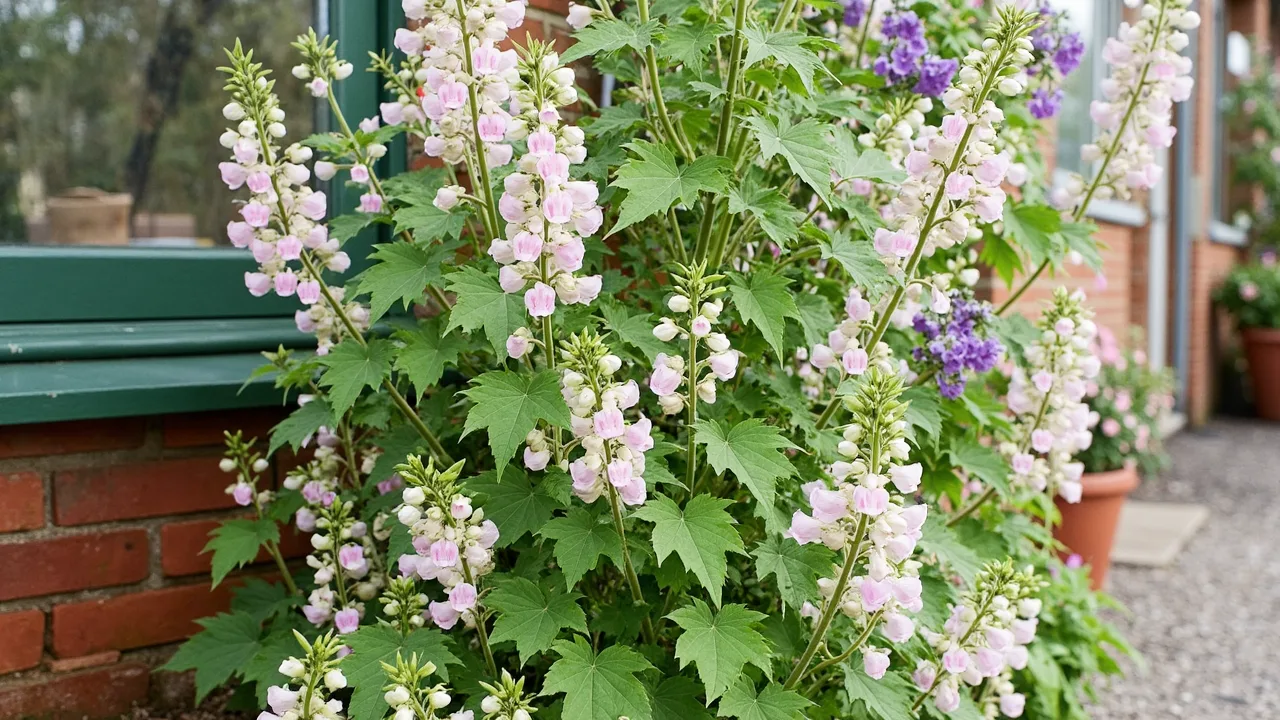
Sow sweet peas in October or November for the earliest, strongest plants, or January to March if you missed the autumn window — they climb 1.8-2.4 m, need a tall support, and flower from June to September with regular picking.
| Difficulty | Easy |
| Time to harvest | 12-14 weeks from sowing |
| Spacing | 20 cm apart |
| Sun | Full sun |
| Soil | Fertile, well-drained, slightly alkaline |
| Hardiness | H5 — hardy annual, survives UK winter |
| Sow | October-November (overwintered) or January-March (spring) |
| Harvest | June-September |
Overview
Sweet peas (Lathyrus odoratus) are the classic UK cottage garden climber — vigorous annuals that scramble up a tall support and fill the house with scent from June to September. This guide covers the traditional autumn-sow-and-overwinter technique that produces the earliest, strongest plants, plus the spring-sow fallback, the support and feeding routine that keeps them flowering, and the picking habit that makes the difference between a single flush and four months of cut flowers. If you are sorting out your soil before planting, sweet peas benefit from the same preparation you'd give a hungry bean row.
When to Start in the UK
Sweet peas are sown in two windows. The traditional route gives earlier, stronger plants; the spring route is the easier rescue if you missed it.
Autumn sowing (best results)
- South UK (Midlands, South, coastal): mid-October to mid-November. Sowing in the second week of October in a cold frame has worked well in my south-facing garden — the seedlings put on root growth through winter and are ready to plant out as soon as the soil warms.
- North UK (Scotland, North England): late October to early November. Slightly later, so the seedlings are small and tougher going into the coldest months.
- Soil temperature trigger: the seed germinates from about 10°C, so wait for a cool spell — you don't want seedlings bolting in a warm October.
Spring sowing (the rescue window)
- South UK: January to mid-March.
- North UK: mid-March to early April, once the worst frosts are past.
- Spring-sown plants flower about three weeks later and finish earlier; they're easier for beginners who don't have a cold frame.
For an extended flowering season, do both: a batch in October, another in February. The autumn batch flowers first; the spring batch carries you into late September.
What You'll Need
For sowing
- Deep root trainer pots or tall 9 cm pots (sweet peas have a long taproot and sulk if restricted)
- Peat-free multi-purpose compost mixed 50:50 with perlite or horticultural grit for drainage
- Quality seed from a UK supplier (Mr Fothergill's, Suttons, Higgledee Garden, or any of the seed-swap networks)
- Sharp knife or nail clippers for chipping the seed coat
- A cold frame, unheated greenhouse, or sheltered porch for overwintering
- Wire mesh or a piece of hardware cloth to cover autumn-sown pots (mice love sweet pea seed)
For planting out
- A tall support — 1.8 to 2.4 m is right. Hazel poles, an obelisk, a teepee of bamboo canes, or a horizontal cordon wire at 1.5 m and 2 m are all standard UK kit.
- A spade and a bucket of well-rotted garden compost or manure
- Mulch (strulch or homemade garden compost) for moisture retention
- Soft twine or sweet pea rings for tying in
For feeding and cutting
- Tomato feed (or comfrey liquid) once flowering starts
- A deep bucket and sharp secateurs or a florist's snip for cutting
- Tall vases — sweet pea stems are 30-45 cm long once conditioned
Step-by-Step Guide
- Chip the seed coat if germination has been patchy before — a small nick on the seed coat opposite the eye with a sharp knife opens it up. Many gardeners skip this and it's fine.
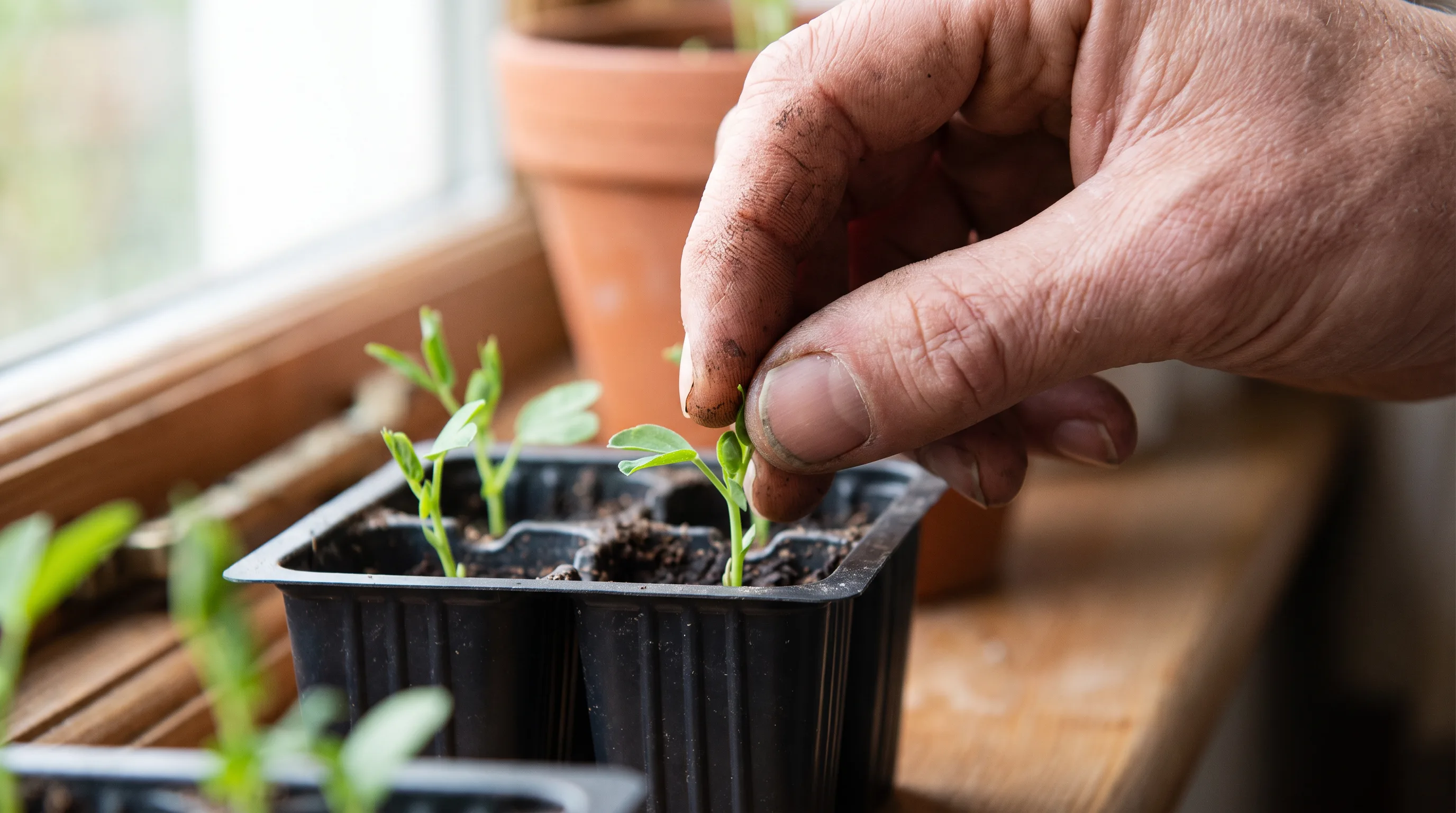
- Sow into deep pots. Fill a root trainer or tall 9 cm pot with the 50:50 compost-grit mix. Push two seeds per cell 2 cm deep, water, label.
- Cover autumn-sown pots with wire. Mice will empty a cold frame of sweet pea seed overnight. Chicken wire over the top fixes it.
- Germinate in a cool place at 12-15°C — a cold frame, an unheated greenhouse, or a north-facing windowsill. Germination takes 7-14 days.
- Pinch out the growing tip at four true leaves, cutting back to two leaves above a node. This doubles the base branches.
- Overwinter autumn-sown plants in the cold frame, pots tucked close together. Vent on mild days; water sparingly — compost just damp.
- Hard off for a week in March, sliding pots out by day and back under cover by night.
- Prepare the planting site with a bucket of well-rotted compost or manure forked into the top 20 cm per plant. Sweet peas are hungry.
- Plant out in late March to mid-April once the soil has warmed. In my Hampshire garden, the last week of March is reliable; in Scotland, wait until late April or early May.
- Set up the support before you plant. Drive in canes, hazel poles, or an obelisk, then plant one seedling at each cane, 20 cm apart in a row.
- Water in and mulch. A 5 cm mulch keeps roots cool and moist — sweet peas resent drought at the root and a dry July shuts down flowering.
- Tie in the new growth with soft twine every 20 cm. Tendrils find the support, but a loose tie keeps heavy stems from snapping in July storms.
- Feed weekly with tomato feed at first bud in late May or early June. High potash prolongs flowering; nitrogen grows leaf at the expense of bloom.
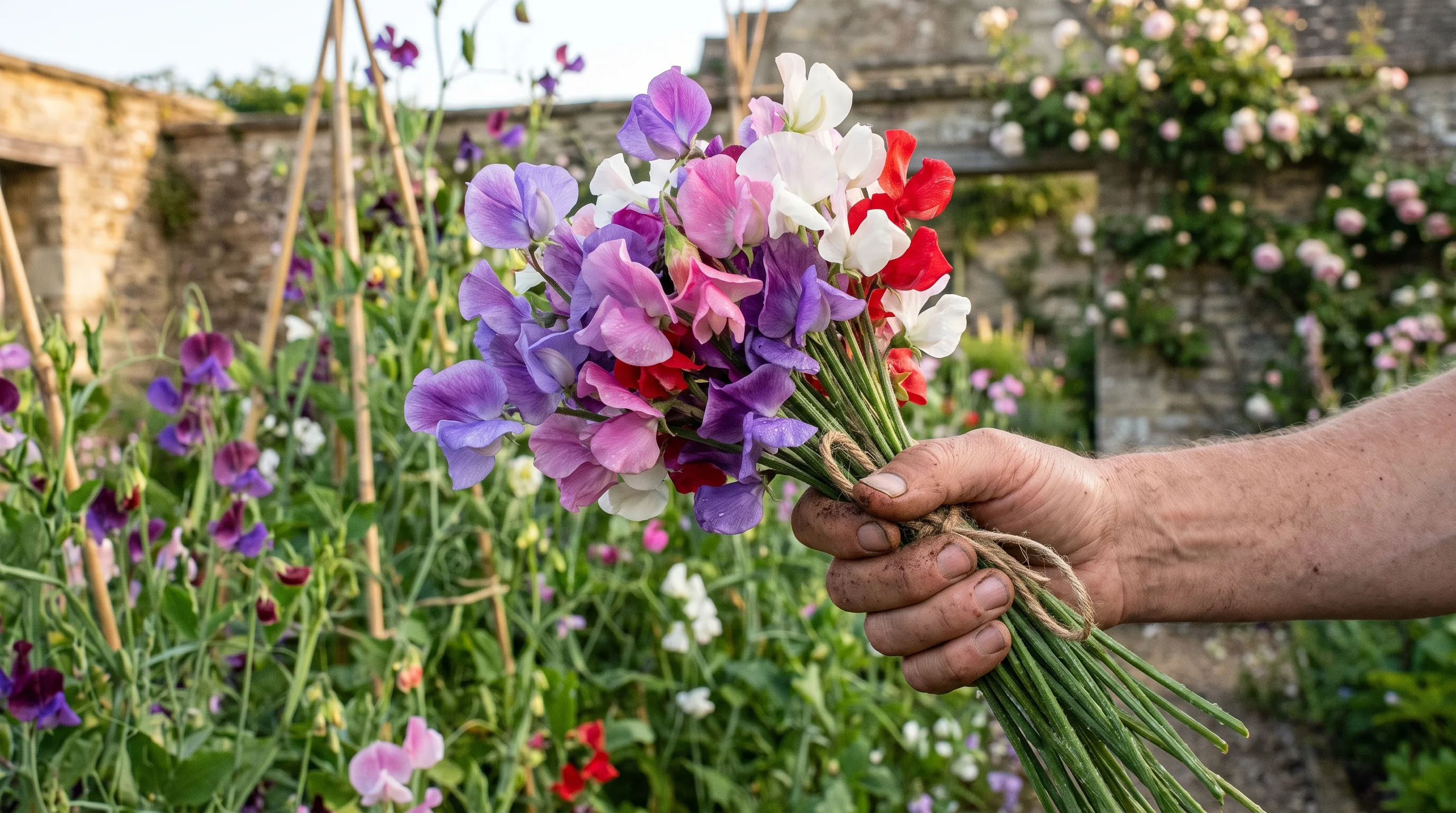
- Pick every 3-4 days. Cut every stem with at least one open flower. The more you cut, the more they flower. If pods are left on, the plant "finishes" by mid-August. Condition stems in a bucket of water for a few hours before arranging.
- Let one or two plants set seed at the end of August if you want to save your own seed for next year — one plant gives enough for a whole row.
Common Problems
Greenfly / Blackfly on Growing Tips
- Symptom: clusters of green or black aphids on the soft new growth at the shoot tips in late spring and early summer; sticky honeydew on the leaves below.
- Cause: aphids colonise the nitrogen-rich new growth that sweet peas push out in May and June.
- Fix: rub off with your fingers, or spray with a dilute washing-up-liquid solution (a few drops in a litre of water) and rinse off after an hour. Ladybirds usually arrive within a fortnight and clear them naturally — most UK gardeners I know leave them alone once the ladybirds show up. See our aphids on roses page for a wider treatment guide that applies to sweet peas as well.
Mice Eating Autumn-Sown Seeds
- Symptom: small holes in the compost surface, seeds gone, pots emptied overnight.
- Cause: wood mice and house mice treat autumn-sown sweet pea seeds as a winter banquet.
- Fix: cover pots with chicken wire or hardware cloth until germination. Once the seedlings have their first true leaves, the mice lose interest.
Powdery Mildew in Late Summer
- Symptom: white powdery coating on the leaves from mid-August onwards; leaves yellow and drop.
- Cause: hot dry days followed by cold dewy nights — a typical UK August pattern.
- Fix: water at the base, not over the foliage; keep plants well mulched; cut off badly affected stems. Many gardeners simply pick more heavily — by September, the mildew often finishes off the season whether you intervene or not.
Slugs on Young Seedlings
- Symptom: tender shoots nipped off at the base overnight; slime trails on the rim of the pot.
- Cause: slugs in the cold frame or greenhouse find autumn and early-spring seedlings irresistible.
- Fix: use ferric phosphate slug pellets (the pet- and wildlife-safe kind sold everywhere in the UK), or stand pots on a sharp gravel tray. Check pots at dusk with a torch.
Buds Dropping Before Opening
- Symptom: flower buds form, swell, and drop without opening. Often blamed on "balling" in wet weather.
- Cause: usually a sudden dry spell at the root when the buds are forming — sweet peas resent drought stress and will drop buds rather than open them.
- Fix: a deep soak once a week is better than a dribble every day. Mulch in May to keep moisture in. Some modern Spencer varieties are more prone to balling than the old-fashioned Heritage types.
Expert Tips
- Autumn sowing wins every time: if you've only got one shot at sweet peas, do it in October. The plants are stronger, flower earlier, and keep going longer. In my experience, overwintered plants flower a full three weeks ahead of spring-sown ones.
- Pinch hard at four leaves, not later: leaving the tip beyond four leaves gives a tall, leggy plant with one flowering stem. Pinching at the right stage doubles the base branches and doubles the flower count.
- Feed with tomato food, not general feed: balanced fertilisers grow leaves. Tomato feed (high potash) feeds the flowers. Start at first bud and run through to early September.
- Cut in the early morning or late evening, when the stems are full of water. Take a bucket of water to the row with you, drop the stems straight in, and leave them to condition for a few hours before arranging. The full conditioning routine is in our cut flowers for the house guide.
- Cut when the lowest floret is just opening, not when the bud is fully coloured. Sweet peas picked too tight don't open in the vase; sweet peas picked fully open only last three days. The first-flower stage gives 5-7 days in a vase.
FAQ
When should I sow sweet peas in the UK? Sow in October or November for overwintering in a cold frame, or January to March for direct spring sowing. October-sown plants flower from early June and keep going until September.
How long do sweet peas take to germinate? 7-14 days at 12-15°C. They germinate well in a cold frame or unheated greenhouse — too much warmth makes them leggy and weak.
Why won't my sweet peas flower? The three usual reasons: too much nitrogen feed (lots of leaf, no flower), not enough water at the root, or you're not picking hard enough — let a few pods set and the plant thinks its job is done.
Can I grow sweet peas in pots? Yes. Use a deep pot — at least 30 cm — with a sturdy obelisk, and feed weekly with tomato feed once flowering starts. One plant per 30 cm pot is the rule; more than that and they sulk.
Are sweet peas poisonous? The seeds are mildly toxic if eaten in quantity, and the plant is toxic to pets — keep them away from dogs and cats. The flowers themselves are not eaten. Sweet peas are ornamentals — they are Lathyrus odoratus, not the edible pea Pisum sativum.
Do sweet peas come back every year? No. Sweet peas are hardy annuals — they grow, flower, set seed, and die in one season. Save seed from a few pods at the end of August and resow in October; or buy fresh seed each spring.
Varieties to Try
- 'Matucana' (heirloom, AGM) — the most fragrant sweet pea; small bicolour flowers in deep purple and violet-blue. Scent is exceptional. Available from Higgledee Garden and most heritage seed suppliers.
- 'Cupani' — the original sweet pea, introduced to Britain in 1699 by Father Cupani. Bicolour crimson and lilac, very fragrant, and reliably tough. Widely available in the UK and a good first variety if you're nervous.
- 'Wiltshire Ripple' (Spencer type, AGM) — modern Spencer variety with bold claret-and-cream bicolour flowers, strong stems for cutting, and a good scent. From Suttons and Mr Fothergill's.
- 'Mrs Collier' (Spencer, AGM) — large, cream flowers on long stems; a classic cut-flower variety for the vase. Scent is good rather than exceptional. Available from all the major UK seed suppliers.
- 'King Edward VII' — heritage crimson, very strong colour and a reliable old garden favourite. Sold widely in UK catalogues.
- 'Nimbus' — modern striped variety (purple stripes on white), bred for cutting. Good stem length. Available from Mr Fothergill's and many specialist sweet pea nurseries.
- 'Almost Black' — deep maroon flowers that read as nearly black in shade. Striking in a vase; more restrained scent. From specialist sweet pea growers like Owl's Acre and Higgledee Garden.
Sources & Further Reading
- Royal Horticultural Society — Sweet peas: growing guide
- Royal Horticultural Society — Lathyrus odoratus profile
- Gardeners' World — How to grow sweet peas
- Garden Organic — Sweet peas (organic growing notes)
- Suttons Seeds — Sweet pea variety selector
- Mr Fothergill's UK — Sweet pea varieties
- The National Sweet Pea Society (UK)
GardenWizz earns a commission from qualifying purchases made through affiliate links on this page (including links within the article) — as an Amazon Associate, and from Thompson & Morgan via the Awin network. This does not affect the price you pay. See our disclaimer for details.