
How to Grow Courgettes: Sowing to Harvest
Yes — a single courgette plant will keep a family fed through July and August, often producing four to six fruits a week once it gets going. Sow indoors in late April or early May, plant out after…
At a Glance
| Sow | Late April (pots) or May (direct) |
|---|---|
| Sun | Full sun |
| Soil | Fertile, moisture-retentive |
| Spacing | 90 cm apart in 90 cm rows |
| Hardiness | H2 — tender, killed by frost |
| Difficulty | Easy |
| Time to harvest | 8-12 weeks from sowing; crops July-October |
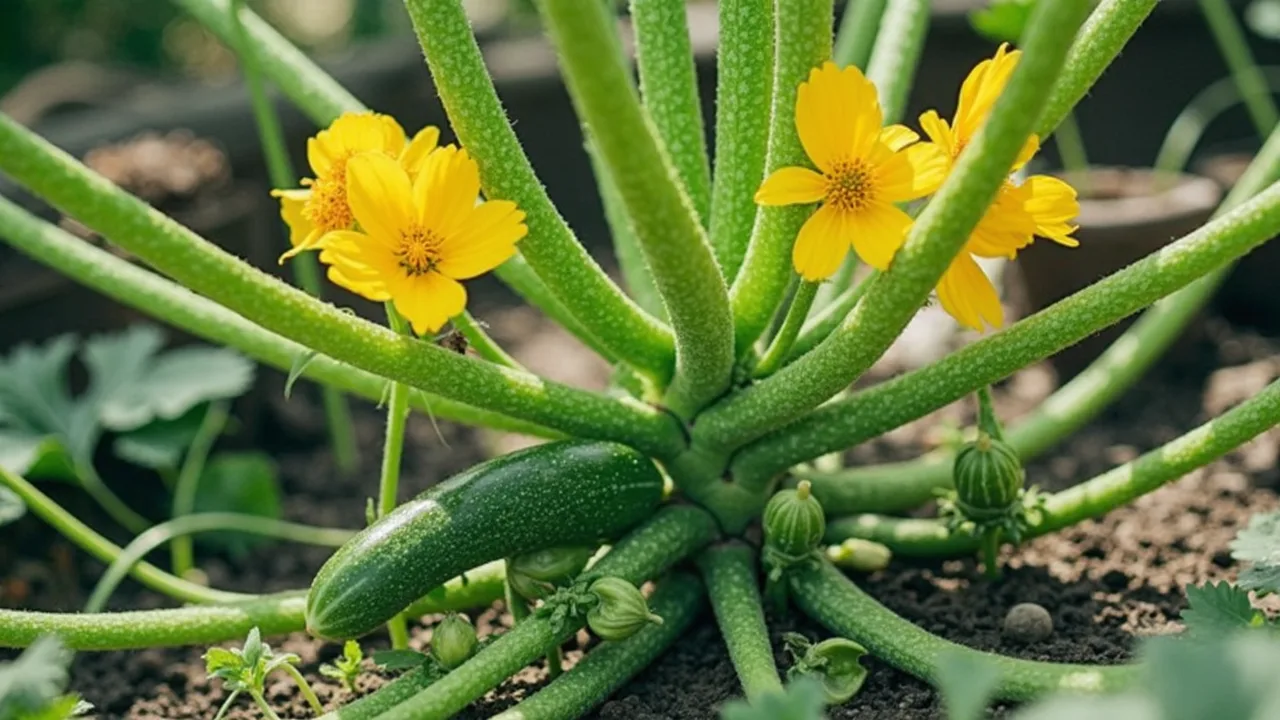
Yes — a single courgette plant will keep a family fed through July and August, often producing four to six fruits a week once it gets going. Sow indoors in late April or early May, plant out after the last frost, and you'll be picking your first courgettes by mid-July.
Overview
Most gardeners I know plant one courgette and end up with too many by August — a single healthy plant will give you 4–6 fruits a week through July and August, more than most households can eat. This guide is for UK gardeners who want a reliable courgette harvest from a single raised bed, an allotment, or a large container on a sunny patio. Courgettes (Cucurbita pepo) are also genuinely frost-tender and sulk badly in cold soil. The trick to UK success is getting the timing right: don't be tempted to plant out before the soil warms.
When to Start in the UK
Courgettes hate cold soil more than they hate cold air. The most common UK failure is putting plants out in late April because the sun is shining — but the soil is still 8°C and the plant simply sits there or rots at the stem.
South UK (Midlands, South, coastal): - Sow indoors: mid-April to early May, in pots on a warm windowsill or heated propagator at 18–21°C. - Sow direct outdoors: late May to mid-June, once soil temperature is reliably above 15°C. - Plant out indoor-raised plants: late May to early June, after the last frost has passed.
North UK (Scotland, North England, uplands): - Sow indoors: late April to mid-May. - Sow direct outdoors: early to late June. - Plant out: early to mid-June. In exposed Scottish plots wait until the first week of June.
A simple soil thermometer helps — push it 5 cm into the ground at 9am for a few consecutive days. If it reads 15°C or above by mid-morning, you're safe to plant out or sow direct. For the broader UK sowing calendar see our month-by-month sowing guide and May jobs.
What You'll Need
- Packet of F1 or heritage courgette seed (one packet is plenty — even 4–6 plants is enough for most households)
- 9 cm pots or root-trainers for sowing indoors
- Multipurpose compost for sowing; John Innes No. 3 for final containers
- A heated propagator or warm windowsill (18–21°C for germination)
- A dibber or blunt pencil for transplanting seedlings
- Well-rotted manure or garden compost — a full bucket per planting station
- Horticultural fleece for the first 2–3 weeks after planting out
- A watering can with a rose, or a seep hose
- A 10 cm mulch of straw or grass clippings in June (optional but useful)
- Slug pellets (ferric phosphate) or nematodes for the early weeks
Step-by-Step Guide
-
Sow indoors in late April or May. Push one seed on its edge, 2 cm deep, into a 9 cm pot of moist multipurpose compost. Water lightly and cover with a clear lid or cling film until germination.
-
Keep warm until germinated. Most courgette seeds come up in 7–14 days at 18–21°C. I've had trays fail on a cold north-facing sill in spring — if yours doesn't have bottom heat, move the pots to the warmest spot you have, or wait a week and try again when the weather is milder.
-
Pot on if needed. If you sowed in small modules, move each seedling into a 9 cm pot once the first true leaf is fully open. Handle by the leaf, not the stem — the stem snaps easily.
-
Harden off for 7–10 days before planting out. Put plants outside by day and bring them in at night, gradually leaving them out for longer. Fleece over the top on cold nights gives extra insurance.
-
Prepare the planting station. Courgettes are hungry. Dig a hole the size of a spade, fill it with a bucket of well-rotted manure or garden compost, then backfill with soil to form a slight mound. Space stations 90 cm apart in each direction — they really do need the room.
-
Plant out after the last frost. In the South, that's usually the last week of May; in the North, the first or second week of June. Plant the rootball so the soil surface of the pot is level with the bed. Water in well.
-
Cover with fleece for two to three weeks. A single layer of horticultural fleece on hoops keeps the wind off and stops the leaves going purple with cold. Remove it once the plant is clearly growing away and the weather has settled.
-
Water deeply twice a week. A light daily sprinkle encourages shallow roots. Instead, give each plant a full can (about 9 litres) at the base, twice a week in dry weather, and you'll get stronger growth.
-
Feed once fruit starts to set. A liquid tomato feed (high potash) every 10–14 days from late June onwards keeps the plant fruiting through August. In my experience, fed plants keep cropping two or three weeks longer than unfed ones.
-
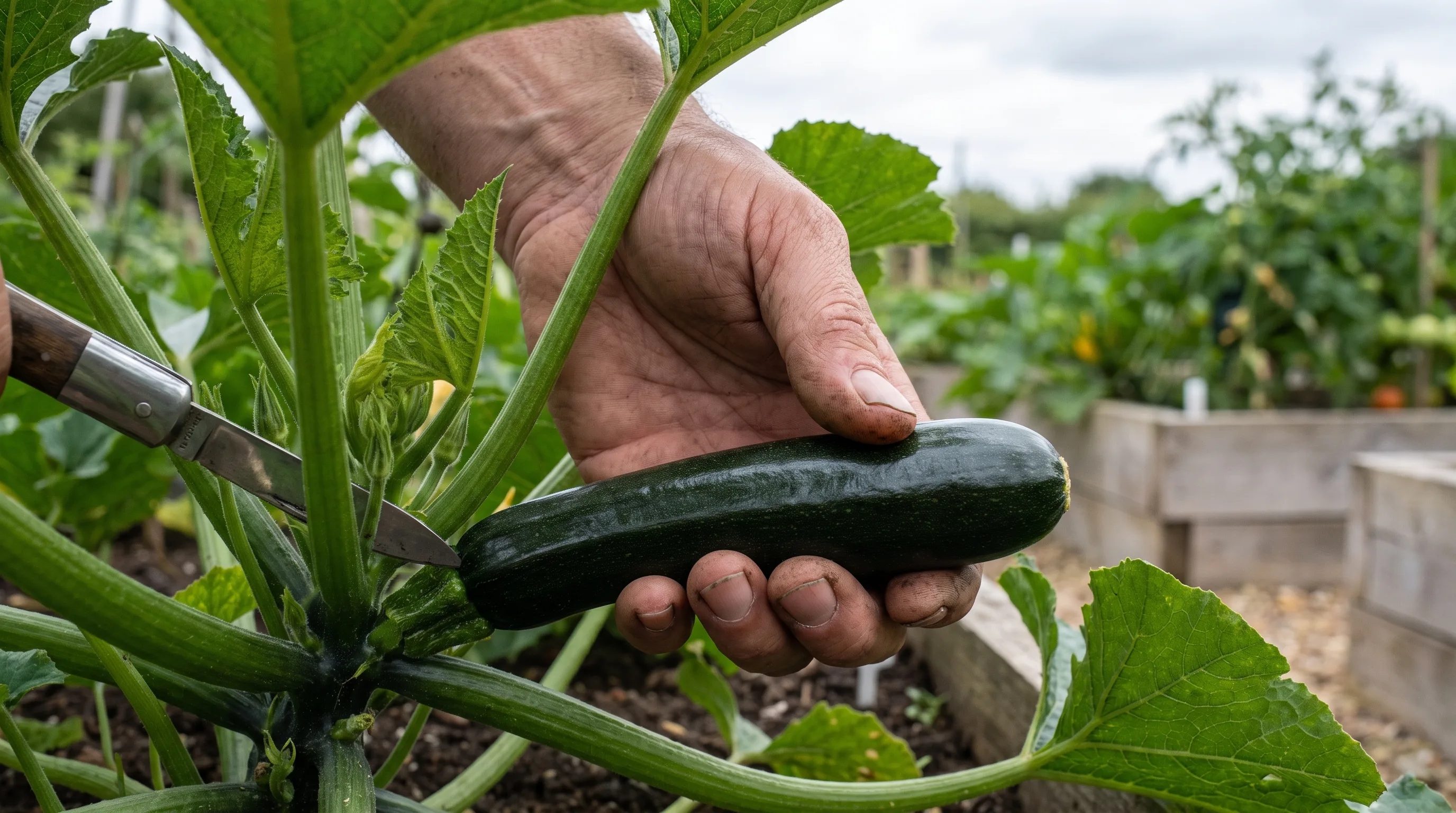
Harvest every two to three days. Pick fruits at 15–20 cm long with the stalk still soft. If you go away for a week in July, come back to marrows — the plant thinks it's finished its job.
-
Remove old leaves in August. Powdery mildew is inevitable by late summer (more on that below). Snip off the worst-affected leaves to keep air flowing and let light into the centre of the plant.
-
Clear the plant after the first hard frost. In most UK gardens that's October. Cut the stem at the base and add the top growth (unaffected by disease) to the compost heap.
Common Problems
Most UK gardeners I know lose a plant or two a year — usually to cold soil in May, slugs on the seedlings, or powdery mildew by August. Here are the five problems you're most likely to meet on a British plot, and what to do about them.
Powdery Mildew
- Symptom: White powdery patches on the upper surface of the leaves from late July onwards, spreading until the whole plant looks ghostly by August.
- Cause: A fungal infection that thrives in warm, dry days and damp nights — basically standard British August weather. It's airborne, so almost every courgette plant in the UK gets it eventually.
- Fix: Don't panic — the plant usually keeps cropping for another three or four weeks after the mildew arrives. Cut off the worst leaves to slow it down, water at the base rather than over the foliage, and start liquid feeds a little earlier next year on stressed plants.
No Fruit Set
- Symptom: Plenty of flowers, but the baby fruits turn yellow, wither, and drop off without developing.
- Cause: Early in the season the plant produces mostly male flowers; later, cold nights below 15°C stop pollinating insects from working. Uneven watering also contributes.
- Fix: Be patient with the first flush — usually a few warm days fixes it. Avoid overhead watering in the evening. If the problem persists into July, hand-pollinate: pick a male flower (on a plain stem), peel back the petals, and dab it into the centre of a female flower (the one with a tiny fruit behind it).
Slug Damage on Seedlings
- Symptom: Young plants disappearing overnight or having their stems chewed at soil level.
- Cause: UK gardens have populations of common garden slugs that find a tender young courgette irresistible, especially in damp weather.
- Fix: Use ferric phosphate slug pellets (safe for wildlife and pets) around the planting station for the first three weeks, or apply nematodes (Phasmarhabditis hermaphrodita) in early May. A copper ring around the stem helps in containers.
Blossom End Rot
- Symptom: The flower end of the fruit turns brown, sunken, and leathery while the rest looks healthy.
- Cause: Calcium deficiency triggered by irregular watering — the plant can't move calcium up to the developing fruit when the roots swing between dry and wet.
- Fix: Mulch with straw or grass clippings in June to keep moisture steady. Water deeply twice a week rather than little and often. The next fruits on the same plant usually grow fine once watering is consistent.
Rotting Stem at the Base
- Symptom: The stem goes soft and mushy at soil level, often after a wet spell, and the whole plant collapses.
- Cause: Usually cold, wet soil in early summer — the plant was put out too early, or the drainage is poor. Sometimes a soil-borne fungus (Pythium) follows.
- Fix: Prevention is the only cure. Don't plant out before the soil is 15°C. On heavy clay, grow courgettes on raised mounds 15 cm high to improve drainage. Affected plants must be removed and the site rotated — don't grow courgettes, pumpkins or marrows in the same bed for three years.
Expert Tips
- Sow two batches, three weeks apart. A first sowing in late April and a second in mid-May gives you a succession: the first batch peaks in July, the second carries you into September.
- Pick fruits small. A 15 cm courgette has thinner skin, fewer seeds, and better flavour than a 30 cm one. The plant also produces more fruits when it's not putting energy into giants.
- Grow one climbing variety up a frame. 'Tromboncino d'Albenga' will climb 2 m up a sturdy obelisk or arch, freeing ground space and giving cleaner fruit. The fruits stay slender and pale green even at 40 cm.
- Plant nasturtiums 60 cm from the patch. They draw in pollinators and are reputed to deter squash bugs — they're also edible and look cheerful among the big leaves.
- Don't grow courgettes next to potatoes. Both are hungry and the spuds steal water and nitrogen just when the courgettes need it most in July. Beans, sweetcorn, and onions are much better neighbours.
FAQ
When should I sow courgettes in the UK? Sow indoors from mid-April to mid-May, depending on whether you're in the North or South of the UK. Direct sowing outdoors only works from late May in the South or early June in the North, once soil temperature is above 15°C.
How long do courgettes take to grow from seed to harvest? About 8–10 weeks from sowing. An indoor sowing in mid-May typically gives a first picking in mid to late July.
Why are my courgette flowers falling off without producing fruit? Early in the season the plant produces mostly male flowers, which drop off after a day. Cold nights below 15°C also stop pollinators working. Both usually resolve themselves by early July.
Can I grow courgettes in pots? Yes — one plant per 40-litre container filled with John Innes No. 3, kept in a sunny sheltered spot and watered daily in summer. Bush varieties like 'Defender' and 'Black Beauty' do best in pots.
What can I plant next to courgettes as a companion? Nasturtiums, sweetcorn, beans, and onions all work well. Avoid potatoes, which compete for the same water and nutrients. Marigolds also help bring in pollinators.
Varieties to Try
- 'Defender' F1 — The UK garden favourite for good reason. Resistant to cucumber mosaic virus and powdery mildew, heavy-cropping, with smooth dark green fruit. Widely available from Suttons, Marshalls, and most garden centres.
- 'Black Beauty' — A heritage American variety that became a UK classic. Open-pollinated (so you can save seed), with deep green glossy fruit and a bushy habit. Available from Kings Seeds and Real Seeds.
- 'Gold Rush' F1 — A bright yellow F1 with the same cropping habit as 'Defender'. Adds colour to the patch and to the plate. Sold by Thompson & Morgan and Mr Fothergill's.
- 'All Green Bush' — A reliable heritage bush variety, early to crop and well suited to cooler UK summers. Available from Seed Co-operative and Tuckers Seeds.
- 'Tromboncino d'Albenga' — Italian climbing variety, pale green, with long curved fruit that stays tender at 40 cm. Needs a 2 m frame but earns its keep on small plots. Real Seeds and Seeds of Italy stock it. For more climbing options see our vertical veg guide.
Sources & Further Reading
I've used the six UK sources below for sowing dates, varieties, and pest identification — they're the authorities worth bookmarking for any courgette question.
- Royal Horticultural Society — Courgette growing guide
- Garden Organic — Courgette cultivation advice
- BBC Gardeners' World — How to grow courgettes
- Suttons — Courgette sowing and growing guide
- Kings Seeds — Courgette variety information
- Allotment & Gardens — Courgette troubleshooting
GardenWizz earns a commission from qualifying purchases made through affiliate links on this page (including links within the article) — as an Amazon Associate, and from Thompson & Morgan via the Awin network. This does not affect the price you pay. See our disclaimer for details.