
Courgette
Cucurbita pepo
The Gardening Year
Best months in UK gardens · full planting calendar →
🖨 Printable care card (PDF)At a Glance
| Botanical name | Cucurbita pepo |
|---|---|
| Common name(s) | Courgette |
| Family | Cucurbitaceae |
| Plant type | annual |
| Height × Spread | 30–76 cm × 61–91 cm |
| Position | Full sun |
| Soil | Rich soil |
| Flowering | June–August |
| Toxicity | If crop is bitter, don't eat or feed to pets. |
| Native range | southern Mexico in Oaxaca and Ocampo, Tamaulipas |
Overview
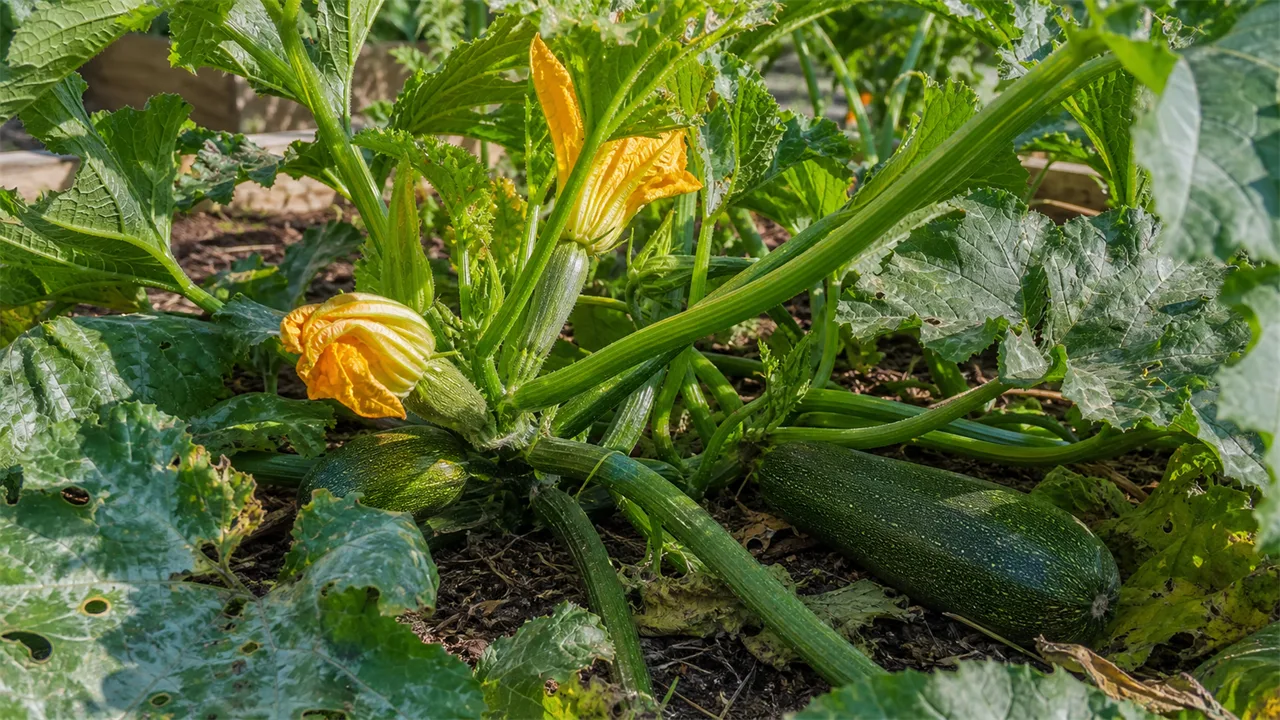
The courgette (Cucurbita pepo) is a bush-habit summer squash, grown as a cultivated annual across the UK for its tender, immature fruits. Botanically the same species as pumpkins, marrows and patty pan squash, the courgette has been bred specifically to be picked young — typically at 15–20 cm — when the skin is still soft, the seeds undeveloped and the flesh at its sweetest. A single plant in a decent UK summer will produce six to ten fruits over a six-to-eight-week cropping window, and a small bed of three plants is more than enough for a family of four.
Why grow courgettes at home? Because supermarket fruit is almost always picked slightly under-ripe to survive transport, and the difference between a shop-bought courgette and one cut an hour before dinner is the difference between a cucumber and a cucumber-flavoured water bomb. They are also one of the most productive crops per square metre a UK gardener can grow: a 1.2 m × 1.2 m patch will out-yield a 6 m row of carrots, and the large hand-shaped leaves suppress weeds between plants.
Courgettes need warm soil, a sunny sheltered spot and steady moisture. They are not frost-hardy and they sulk below about 12 °C, which is why UK growers traditionally start them under cover in April and plant out after the last frost. Choose a cultivar suited to the British climate — early-cropping, mildew-tolerant types such as 'Defender', 'Sultan' and 'Ambassador' are widely available and reliable; yellow and round-fruited varieties ('Yellow Burst', 'One Ball', 'Tondo di Nizza') add variety without complicating the routine.
Sowing
Courgettes are sown indoors in the UK because the growing season is not long enough to direct-sow reliably north of the Midlands. Sow from mid-April through to early June — earlier sowings in unheated propagators risk damping off, later ones still crop well but the harvest window is shortened.
UK region-aware windows for sowing under cover (heated propagator or warm windowsill at 18–21 °C):
- Mild south-west, south coast, London, East Anglia: mid-April indoors; planting out from mid-May after the last frost.
- South-east, Midlands, Wales: late April indoors; planting out late May to early June.
- Northern England, Yorkshire, north Wales: late April to early May indoors; planting out early to mid-June, once nights are reliably above 8 °C.
- Scotland, Northumberland, exposed northern sites: sow early to mid-May indoors; planting out mid- to late June. Earlier sowings simply stop growing in cold frames and never recover.
Direct sowing outdoors is possible in the south of England in late May to early June under a cloche, but is rarely worth the gamble — a cold June sets plants back by three weeks and the harvest is correspondingly late.
Sow one seed per 7–9 cm pot, on edge, 2 cm deep, in peat-free multi-purpose or sieved garden compost. Courgettes hate root disturbance, so use coir pots, Jiffy 7s, or any pot that can be planted whole. Keep at 18–21 °C; germination takes 5–10 days. Pot on once into a 12–15 cm pot before the seedling becomes root-bound.
Harden off for 7–10 days before planting out — a coldframe is ideal, but a sheltered corner with a layer of horticultural fleece during cold nights works well.
Plant spacing: 90 cm between plants in each direction for bush types; closer at 60 cm is possible on very fertile soil but airflow is reduced and mildew risk rises. One or two plants per square metre is the practical ceiling.
Growing
Courgettes are greedy feeders and thirsty drinkers. Pick a site with full sun, shelter from wind (the large leaves snap in gusts), and soil improved in autumn with a 5–7 cm mulch of well-rotted manure or garden compost. Just before planting, fork in a handful of blood, fish and bone per square metre, or a slow-release organic vegetable fertiliser at the maker's rate.
Once planted out:
- Watering: the single biggest determinant of yield. Water deeply — 10–15 litres per plant — twice a week in dry weather rather than a daily sprinkle. A 5 cm mulch of straw or composted bark between plants locks in moisture and keeps the fruit off bare soil. Irregular watering causes blossom end rot and misshapen fruits.
- Feeding: once the first fruits set, switch to a high-potash liquid feed (tomato feed is fine) every 10–14 days. Without this the first three or four fruits form, then the plant stalls.
- Pollination: courgettes have separate male and female flowers on the same plant. Early in the season male flowers often appear a week or two before females — this is normal and not a problem. In cool wet weather bees are scarce and fruits fail to set; hand-pollinate by picking a freshly opened male flower (thin stem, no swelling behind the petals), peeling back the petals and dabbing the central stamen into the centre of a female flower (you can see the tiny courgette behind the petals).
- Weeding: keep the bed weed-free for the first six weeks; after that the canopy closes and the plant looks after itself.
- Pests and disease: the two real problems are slug damage on young plants (use nematodes, wool pellets or nightly patrols) and powdery mildew in late summer (the leaves go white, then die). Mildew is partly weather-driven but choosing resistant cultivars and watering at the base rather than overhead both help. Remove badly mildewed leaves to slow spread; don't compost them.
- Support: bush types do not need staking. Trailing marrow-types do — see Supporting below.
The first flowers appear six to eight weeks after sowing; the first harvestable fruit follows about a week after successful pollination.
Harvesting
Pick courgettes young — 15 cm long is the standard, though round varieties are picked at tennis-ball size. Cut (don't twist) with a sharp knife or secateurs, leaving about 2 cm of stem on the fruit. Check plants every two to three days in mid-summer: a fruit you missed on Monday will be a marrow by Friday.
UK harvesting windows:
- Mild south, south-west, London: first fruits from mid-June off an April sowing; main harvest July to mid-September.
- South-east, Midlands: first fruits late June to early July; main harvest mid-July to early September.
- Northern England, Wales: first fruits mid-July; main harvest late July through August, tailing off in September.
- Scotland and far north: first fruits late July; main harvest August, often finishing in early to mid-September with the first cold nights.
A healthy plant produces for eight to ten weeks, sometimes longer in a mild autumn. When the plant slows down — usually late August or September — leave one or two fruits to grow on as marrows if you want them; they store for months in a cool dry shed and make excellent stuffed marrow. Otherwise, once powdery mildew has taken most of the leaves, cut the plant down and compost it.
Eating
Courgettes are 95% water and almost no calories, which makes them easy to over-cook into a tasteless mush. The trick is high heat, brief cooking and plenty of fat.
The classic French preparation is courgettes à la Provençale — sliced 5 mm thick, sautéed hard in olive oil with crushed garlic for four to five minutes, finished with chopped flat-leaf parsley and a squeeze of lemon. The Italian equivalent is frittata di zucchine: shallow-fry sliced courgettes with onion, bind with beaten eggs and grated Parmigiano, finish under the grill. Both work from the moment the first fruit is ready.
Other reliable uses:
- Grated raw into salads or coleslaw; salt and drain for 20 minutes first to stop the dish going watery.
- Stuffed: large courgettes can be hollowed and stuffed with mince, rice, feta and herbs, then baked.
- On the BBQ: cut lengthways into 1 cm planks, brush with oil, cook two minutes a side. The natural sugars caramelise fast.
- Soup: older, larger fruits (over 25 cm) are best here — use them with onion, garlic, stock and a swirl of crème fraîche.
- In baking: chocolate courgette cake is a long-standing British allotment-club favourite; the moisture replaces the egg and you genuinely cannot taste the vegetable.
The flowers are also edible — stuff with ricotta and herbs, dip in a thin batter and deep-fry for two minutes. Pick them on the morning they open, before they close and wilt.
A single plant at peak production yields two to three courgettes a week. For most households two to three well-tended plants is the right number; four or more and you will be leaving carrier bags on neighbours' doorsteps by August, which is part of the tradition.
Supporting
Bush courgette cultivars — which is most of them — do not need any support. The leaves spread flat on the ground and the short stems are self-supporting.
The exceptions are trailing marrow-types (sometimes sold as " courgette / marrow intermediates", such as 'Tromboncino d'Albenga' or 'Long Green Trailing') which will run 2–3 m along the ground and crop heavily later in the season. These benefit from being tied up onto a sturdy trellis, an arch, or even a chain-link fence; the fruits hang clean, the leaves get better airflow and slug damage on the underside of fruit drops sharply. Tie main stems to the support with soft twine every 40 cm.
For bush types, an old 30 cm flowerpot slipped under each developing fruit keeps it off wet soil and away from slugs — a small but worthwhile intervention in a damp August.
Storing
Courgettes are not a storage crop in the traditional UK sense. Picked in July and August they keep for five to seven days in a fridge salad drawer at 4–7 °C; after that the skin shrivels and the flesh goes spongy. Do not wash before storing — surface moisture encourages rot.
For longer keeping, the options are:
- Freezing: slice 1 cm thick, blanch for two minutes in boiling water, drain, cool, open-freeze on a tray, then bag. Texture softens on thawing so frozen courgettes are best used in soup, stew, curry or cake rather than fried.
- Pickling: young courgettes pickle well in a standard vinegar brine with mustard seed, peppercorns and dill; treat them like gherkins.
- Chutney: grated courgette makes a respectable green-tomato-style chutney — useful for using up the inevitable glut in August.
- Drying: not traditional, but courgette ribbons dry well in a dehydrator at 55 °C and rehydrate in pasta sauces.
Mature marrows left on the plant in late September, cured for two weeks in a dry shed, will store at 10–15 °C until well after Christmas. They are not a true storage crop but they buy you a couple of months of roasted marrow with garlic without further effort.
Pests and Diseases
| Problem | Symptoms | Management |
|---|---|---|
| Powdery mildew | — | Prune out and destroy affected leaves immediately. |
| Grey mould (botrytis) | Grey, fluffy growth on plants. | Cut out any affected areas and remove any dead growth on the ground. Avoid splashing the leaves when watering. |
For step-by-step help, read Treating Powdery Mildew. Or browse the full plant problem solver to diagnose an issue by symptom.
Companion planting
✔ Grows well with: Borage, marigolds, Pea, Pot Marigold, runner bean, Sunflower.
✘ Keep apart from: potato.
Full companion planting chart →
Courgette in our guides
- Container Gardening for Beginners
- Drip Irrigation Systems: Save Time and Water
- Growing Vegetables from Seed
- Gardening Jobs for October in the UK
- Summer Vegetable Garden: What to Grow and When
- Treating Powdery Mildew
GardenWizz earns a commission from qualifying purchases made through affiliate links on this page (including links within the article) — as an Amazon Associate, and from Thompson & Morgan via the Awin network. This does not affect the price you pay. See our disclaimer for details.