Pumpkin
Cucurbita maxima
The Gardening Year
Best months in UK gardens · full planting calendar →
🖨 Printable care card (PDF)At a Glance
| Botanical name | Cucurbita maxima |
|---|---|
| Common name(s) | Pumpkin |
| Family | Cucurbitaceae |
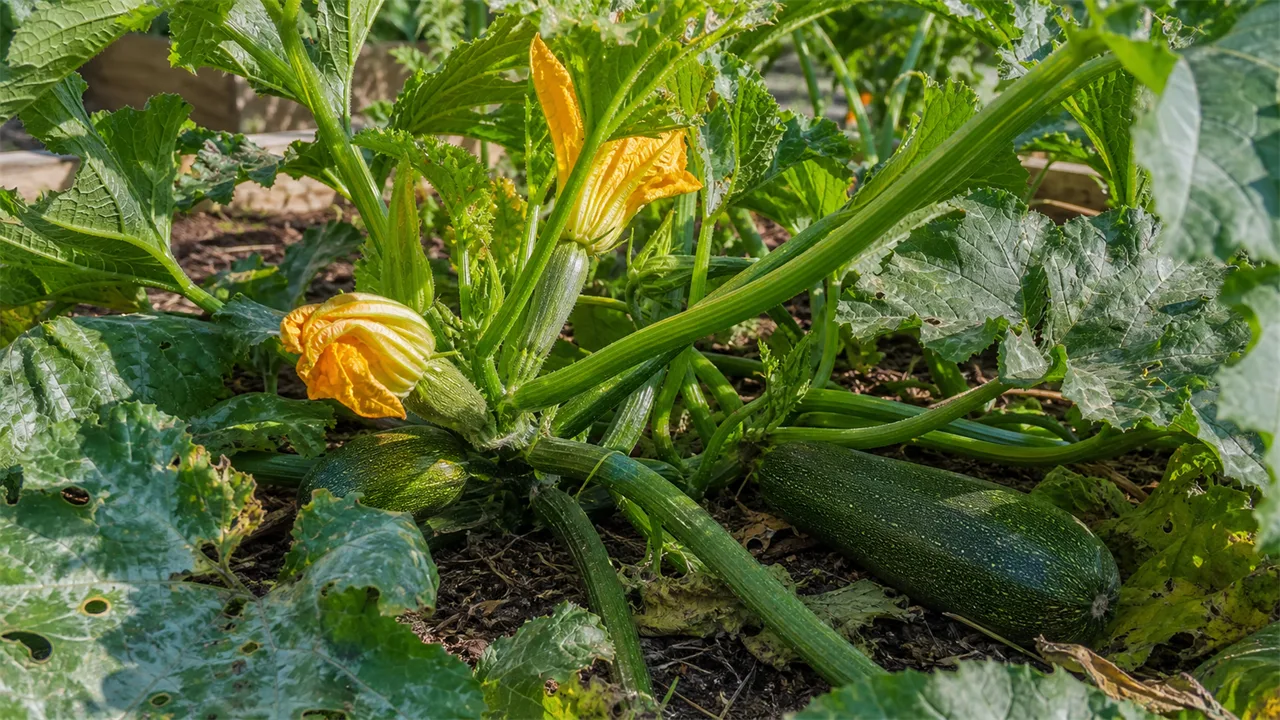
| Plant type | shrub (Annual herbaceous fruits. Solitary, star-shaped flowers are usually golden-yellow. Leaves are palmately lobed, covered with tiny, prickly hairs.) |
| Height × Spread | 10–50 cm × 2.5–4 m |
| Position | Full sun |
| Soil | Rich, fertile, well drained soil. Moist but well-drained. pH Acid, Neutral. |
| Flowering | June–August |
| Toxicity | If crop is bitter, don't eat or feed to pets. Wear gloves and other protective equipment when handling. |
| Native range | South America (Argentina and Uruguay), India, Bangladesh, Myanmar, southern Appalachians |
Overview
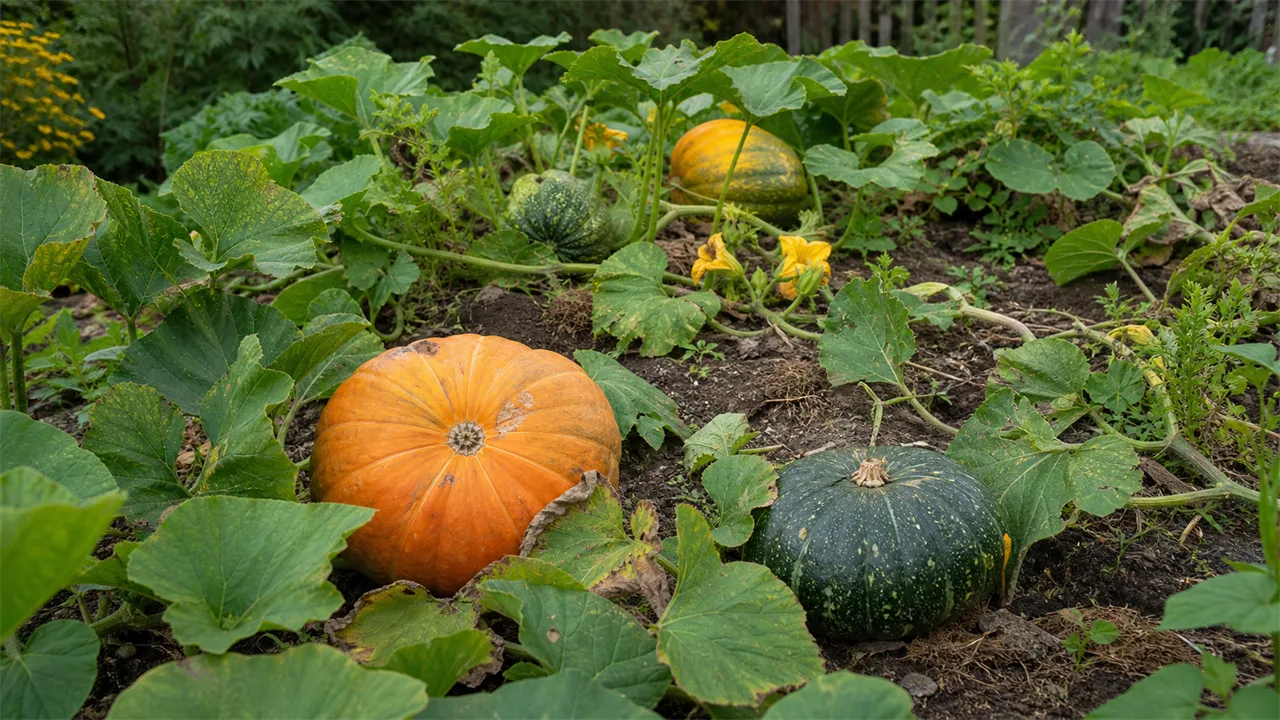
The pumpkin is a sprawling, annual vine in the gourd family (Cucurbitaceae), grown in the UK for its large, fleshy fruit harvested in autumn. The cultivated pumpkin, Cucurbita maxima, is one of several domesticated Cucurbita species — alongside C. pepo (which gives us marrows, courgettes and most Halloween jack-o'-lantern types) and C. moschata (butternut) — and produces the biggest fruits of the three. C. maxima types are typically rounded with orange, sometimes grey-green or blue-grey skin, soft skin that is easily marked, and dense, sweet, deep-orange flesh. They are the species behind 'Atlantic Giant' record-breakers, the orange 'Mammoth' type used for carving, the chestnut-flavoured 'Crown Prince', and the small, sweet 'Baby Bear'.
Pumpkins are a genuinely rewarding UK grow-your-own crop for the patient gardener with space. A single plant on a well-fed heap will swamp a corner of the allotment and return 2–4 good fruits from August onwards, often more on a long, warm season. They are not difficult once the seedlings are past the slug-and-snail stage — they want sun, water, rich soil and a long growing season. They are also a child-friendly crop: a seed in May becomes a sizeable plant by August, and the harvest coincides with the school half-term and Halloween, when a home-grown pumpkin earns its keep on the doorstep. Pumpkins fit into rotation after early potatoes or legumes, and the spent foliage goes cleanly onto the compost heap at season end.
British names: pumpkin (the generic term, also used for the larger C. maxima types), winter squash (used for many C. maxima cultivars stored through winter), and on older allotments, "pumpkin" sometimes loosely covers all large gourds. For the avoidance of doubt, this page is about true Cucurbita maxima pumpkins.
Sowing
Pumpkins are frost-tender and need a long growing season — typically 120–160 days from sowing to harvest, depending on cultivar. In most UK years, that window is tight if you sow direct, so most growers start seed under cover in April and plant out after the last frost.
Indoor sowing. Sow in 7–9 cm pots of multipurpose compost from mid-April in the south to early May in the north. Push the seed on its edge (not flat) about 2 cm deep — flat-sown seeds often rot. Keep at 18–21 °C; germination takes 5–10 days. Grow on in a bright, frost-free place (greenhouse, porch or windowsill) until the root system fills the pot and the first true leaf is well developed. Harden off for 7–10 days before planting out.
Planting out. Move plants to their final position only when all risk of frost has passed and the soil has warmed:
- Mild south-west and south coast (Cornwall, Devon, Dorset, Hampshire, Channel Islands): plant out from mid-May.
- South-east, East Anglia, Midlands, lowland Wales: late May.
- Northern England, Yorkshire, North Wales, lowland Scotland: late May to early June.
- Upland Scotland, the Pennines, the Lake District: early to mid-June.
If a late frost is forecast, cover with horticultural fleece or a cloche. Cold, wet soil is the main reason pumpkin seedlings sulk or rot off in a UK June.
Direct sowing. Possible in mild districts on warm, free-draining soils — south-west and the south coast from mid- to late May once the soil is at least 15 °C. Sow two seeds per station 2 cm deep, thin to the strongest seedling. Direct-sown plants usually catch up with module-raised ones by midsummer but the harvest is correspondingly later and riskier in a poor year.
Spacing. Pumpkins are big plants. Allow 90 cm–1.2 m between plants in the row and 1.5–2 m between rows, or one plant per station on a heap. Vining cultivars trained over a fence or arch can be planted at 90 cm. Bush types are tighter at 90 cm × 90 cm.
Soil preparation. Dig a planting pit or station in early spring: a spade's depth of soil removed and replaced with a barrow-load of well-rotted manure or garden compost, mounded 10–15 cm above the surrounding soil. Pumpkins are greedy and respond dramatically to a pocket of rich organic matter. Alternatively, plant directly onto an old compost heap — they will love it.
First-hand sowing note for UK growers: sow under cover from mid-April (south) to early May (north); plant out only after the last frost, from mid-May in mild districts to mid-June in upland Scotland. Sowing months for this guide: April, May, June (with indoor start in April; planting out May/June).
Growing
Pumpkins want an open, sunny site, regular moisture, and rich, free-draining soil. They are surface-rooted and dislike their roots being disturbed once they are established.
Watering. Critical from flowering onwards. Apply 20–25 litres per square metre per week in dry spells, soaking the root area rather than sprinkling the foliage. Inconsistent watering during fruit set causes misshapen fruits and blossom-end problems. A mulch of straw or grass clippings (kept clear of the stem) reduces evaporation and keeps developing fruits clean.
Feeding. Pumpkins are hungry. A monthly drench of comfrey liquid or a balanced liquid feed (e.g. tomato feed) from flowering through to fruit sizing produces noticeably bigger, better-coloured fruits. Avoid high-nitrogen feed late in the season — it promotes leaves at the expense of the ripening fruits.
Training and pollination. Vines can be left to sprawl (the traditional method, gives the biggest fruits) or trained onto a sturdy trellis, arch or fence to save space — restrict to 1–2 fruits per plant if trellised, and sling developing fruits in netting tied to the support. Pumpkins rely on bees for pollination; if fruit set is poor in cool weather, hand-pollinate by transferring pollen from a freshly opened male flower (on a long, thin stem) to a female flower (with a swelling at the base) using a soft brush in the morning.
Pruning. Once a vine has set the desired number of fruits — usually 2–4 for a large C. maxima, 4–6 for smaller cultivars — pinch out the growing tip two leaves beyond the last fruit. This concentrates the plant's energy into ripening rather than further vine extension. Remove any yellowing or mildewed leaves promptly to slow the spread of disease.
Pests. Slugs and snails are the main enemy of young plants — protect with wool pellets, copper tape or nightly hand-picking until the stems toughen up. Aphids colonise shoot tips in summer; a jet of water or a fatty-acid spray keeps them in check. Powdery mildew is the commonest disease from late summer onwards — see Storing.
Recommended UK cultivars. 'Mammoth' (also sold as 'Big Max') for traditional large orange carving pumpkins; 'Atlantic Giant' for competitive giants (typically 25–50 kg on a well-fed plant in a good year); 'Crown Prince' for the kitchen — grey-blue skin, dense orange flesh, stores six months or more; 'Baby Bear' for small (500 g–1 kg), sweet Halloween fruits on a more compact vine; 'Rouge Vif d'Etampes' — the classic French flat orange "Cinderella" pumpkin; 'Marina di Chioggia' — Italian sea-pumpkin with warty green skin and excellent eating. For smaller UK plots, bush cultivars such as 'Wee-B-Little' keep the plant compact without sacrificing the harvest.
Harvesting
Pumpkins are ready from late August in a good year in the south, typically September through October across most of the UK, and into early November in mild autumns. The signs of readiness:
- The fruit has reached full colour (deep orange for most, blue-grey for 'Crown Prince') and the skin is hard enough that a fingernail does not puncture it easily.
- The nearest stem to the fruit has begun to dry and slightly crack.
- The vine is starting to die back, particularly from the tip.
- The fruit sounds hollow when tapped.
Harvesting method. Cut the fruit from the vine with a sharp knife or secateurs, leaving 5–10 cm of stem attached — a missing or torn stem dramatically shortens storage life. Handle the fruits carefully: although the skin looks tough, it marks and bruises easily and any wound is an entry point for rot. Lift, do not drag, into a wheelbarrow or directly onto straw.
UK timing by region:
- Mild south-west and south coast: late August through October, with the main pick in late September.
- South-east, Midlands, East Anglia: September through October, finishing before the first hard frost.
- Northern England, lowland Scotland: late September through late October.
- Upland Scotland, the Pennines: early to mid-October — these areas must pick before the first hard frost, even if the fruit is slightly under-coloured.
A light frost (−1 to −2 °C) on a ripe fruit will damage the skin and shorten storage; a hard frost ruins it. If a hard frost is forecast before fruits are ripe, cover the plants with horticultural fleece overnight — or pick the fruits and bring them into a frost-free shed to finish ripening for 2–3 weeks.
Curing. For storing winter squash types, cure the harvested fruit in the sun for 10–14 days (or in a sunny greenhouse or conservatory in poor weather) so the skin hardens fully. Cover with fleece at night if temperatures drop. After curing, the fruit will store for months — see Storing.
Eating
Pumpkin is one of the most versatile vegetables the UK gardener can grow. The flesh is sweet, soft and deep-orange when cooked, with a chestnut-like depth of flavour in the better cultivars. It pairs with warming spices (cinnamon, nutmeg, chilli, ginger), with cream and cheese in savoury dishes, and with stock as the base of a soup.
In the kitchen. Peel a hard-skinned C. maxima fruit with a heavy knife or vegetable peeler, cut in half, scoop out the seeds and stringy pulp, and cut the flesh into chunks. Roast at 200 °C (180 °C fan) for 30–40 minutes until tender and caramelising at the edges — this is the simplest preparation and the one that shows off the flavour. The roasted flesh goes into risotto, pasta sauce, curry, pie, or is mashed as a side dish in place of potato or squash. Pumpkin soup — flesh sweated with onion and garlic, simmered in stock, blitzed with cream — is the classic British autumn starter from late September through to Christmas.
The seeds. Do not throw them away. Rinse the stringy pulp off the seeds, dry them on kitchen paper, toss with a little oil and salt, and roast at 180 °C for 12–15 minutes until golden and popping. They keep for a fortnight in a jar and are one of the best snacks a UK garden produces.
Carving pumpkins vs eating pumpkins. The giant carving types ('Mammoth', 'Atlantic Giant') are edible but watery and bland — fine for a Halloween display, less rewarding in the kitchen. For cooking, grow 'Crown Prince', 'Rouge Vif d'Etampes', 'Baby Bear' or one of the smaller C. maxima cultivars, where the flesh is denser, sweeter and less fibrous.
Storing
Pumpkins are one of the best-storing crops from a UK garden. A properly cured C. maxima will keep for 3–6 months in good conditions, and the best cultivars — 'Crown Prince' in particular — store 6 months or more.
Conditions. Store in a cool, dry, frost-free, well-ventilated place at 10–15 °C. A spare room, an unheated spare bedroom, a dry garage, or a shed with a steady temperature all work. Lay the fruits on straw, cardboard or newspaper — not directly on a cold concrete floor — and turn them every few weeks so they do not flat-spot. Keep them out of direct sunlight, which bleaches the skin and shortens storage.
Checking. Inspect stored fruits weekly and use any that show soft spots or surface mould promptly. A small surface blemish can be cut away and the rest of the fruit used; a deep soft patch usually means the flesh is spoiling and the fruit is best consigned to the compost heap.
Beyond storage. Cooked pumpkin flesh freezes well: roast as above, mash, cool and freeze in labelled bags for winter curries, soups and pies. Pumpkin puree (blitzed cooked flesh) keeps in the fridge for 5 days or in the freezer for 6 months. Chunks of raw pumpkin can be blanched for 2 minutes and frozen, though roasting first gives a better result on defrosting.
Supporting
Pumpkins do not strictly need support — they are sprawling vines that naturally run along the ground — but there are two reasons a UK grower might choose to train them upwards. The first is space: a vine trained over a sturdy arch, trellis or fence uses vertical space and frees up the soil beneath for a catch crop of lettuce or radish. The second is fruit quality: fruits held off the ground ripen more evenly and stay cleaner, with less risk of slug damage and rotting on damp soil. If trellising, restrict each plant to 1–2 fruits and sling each developing fruit in a net (an old onion bag or piece of netting) tied to the support, as the weight of a ripe C. maxima will pull a vine off its trellis. Sprawled-on-the-ground cultivation needs no support but benefits from a bed of straw under each developing fruit to keep it clean and dry.
Cultivars and Varieties
| Cultivar | Height | Flower | Notes | AGM |
|---|---|---|---|---|
| 'Arikara squash' | — | — | Teardrop or round shape with a mottled orange and green color pattern. Used for eating qualities and decoration. | |
| 'Banana squash' | — | — | Elongated shape, light blue, pink, or orange skin with bright orange flesh. | |
| 'Boston marrow' | — | — | Sweet, narrow at one end, bulbous at the other. | |
| 'Buttercup squash' | — | — | Turban shape with dark green skin and dense, yellow-orange flesh. Not to be confused with butternut squash. | |
| 'Candy roaster squash' | — | — | Variable in size and shape with fine-textured orange flesh, ranging from 10 lbs to more than 250 lbs; shape (round, cylindrical, teardrop, blocky); color (pink, tan, green, blue, gray, orange). | |
| 'Hubbard squash' | — | — | Tear-drop shape often used as a replacement for pumpkins in cooking. | |
| 'JAP (or Kent) Pumpkin' | — | — | Mottled/stripy dark green and cream skin with bright orange flesh. Vines can grow up to 15 fruit on them of at least 2 kg each. | |
| 'Jarrahdale pumpkin' | — | — | Gray skin nearly identical to Queensland Blue, with more water content when roasted. Bright orange flesh; vines can grow up to 15 fruit on them of at least 2 kg each. |
Pests and Diseases
| Problem | Symptoms | Management |
|---|---|---|
| Powdery mildew | White, dusty fungal growth appears on leaves and stems, eventually causing yellowing and premature leaf drop. | Improve air circulation, avoid wetting foliage when watering, and apply a copper-based fungicide or biological control if severe. |
| Slugs and snails | Irregular holes chewed in leaves and young shoots, often accompanied by silvery slime trails on the soil. | Use physical barriers like copper tape or crushed eggshells, and set out beer traps or iron phosphate baits at night. |
| Grey mould (Botrytis) | Soft, watery rot covered in fuzzy grey-brown spores develops on stems, leaves, and developing fruits. | Ensure good ventilation, remove affected plant parts immediately, and avoid overcrowding to reduce humidity. |
| Poor fruit set | Young fruitlets swell slightly at the stalk end then shrivel, turn brown, and drop off before maturing. | Hand-pollinate female flowers using a male flower or cotton bud, especially during cool, wet weather or low pollinator activity. |
| Vine weevil | Notched edges on leaves at night and wilting plants due to larvae feeding on roots in the soil. | Apply nematode-based biological controls to the soil in autumn and spring, or use insecticidal drenches. |
For step-by-step help, read Dealing with Slugs and Snails and Treating Powdery Mildew. Or browse the full plant problem solver to diagnose an issue by symptom.
Companion planting
✔ Grows well with: Borage, marigolds, Pea, Sunflower.
✘ Keep apart from: potato.
Full companion planting chart →
Pumpkin in our guides
Recommended Products
GardenWizz earns a commission from qualifying purchases made through affiliate links on this page (including links within the article) — as an Amazon Associate, and from Thompson & Morgan via the Awin network. This does not affect the price you pay. See our disclaimer for details.