
How to Grow Garlic in the UK: Planting to Harvest
Yes — garlic grows reliably in UK gardens. Plant individual cloves in October-November for the best-sized bulbs the following July; February-March planting is possible but generally less reliable. At…
At a Glance
| Sun | Full sun |
|---|---|
| Soil | Fertile, well-drained |
| Plant | October-November (autumn); February-March (spring, less reliable) |
| Spacing | 15 cm apart in 25 cm rows |
| Hardiness | H5 — most UK gardens |
| Difficulty | Easy |
| Time to harvest | 36+ weeks; harvest July the following year |
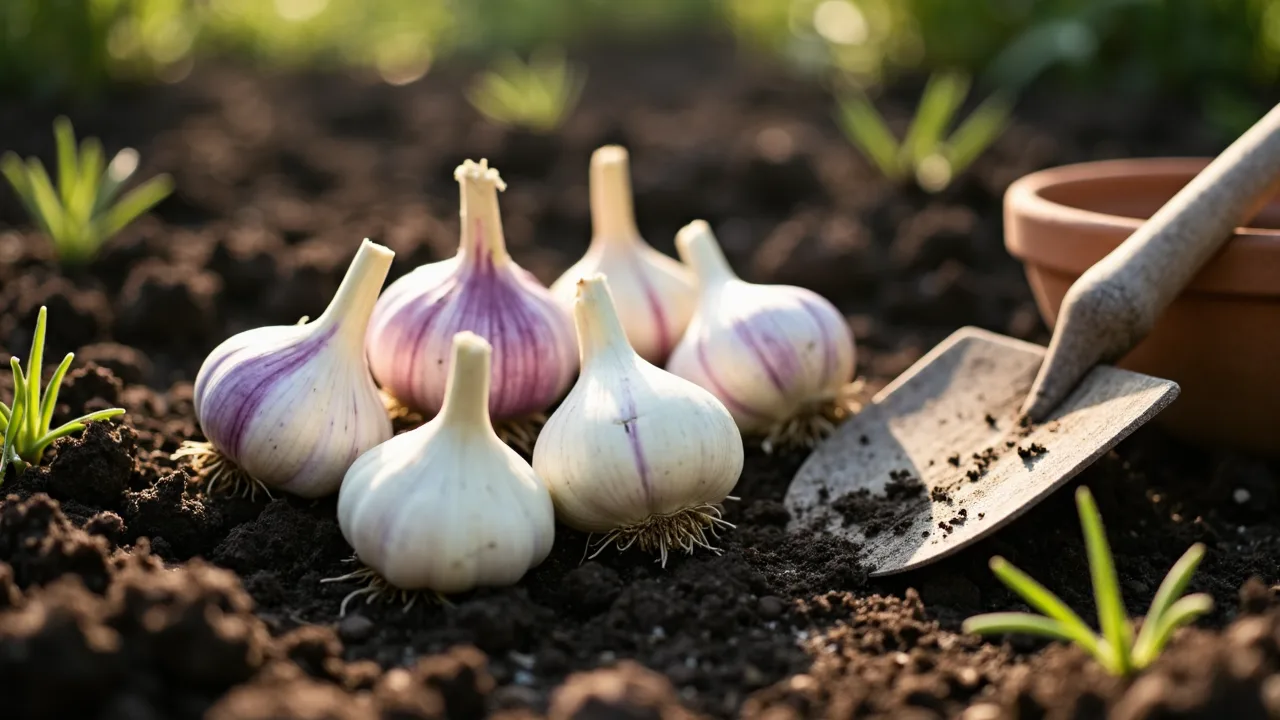
Yes — garlic grows reliably in UK gardens. Plant individual cloves in October-November for the best-sized bulbs the following July; February-March planting is possible but generally less reliable.
| At a Glance | Details |
|---|---|
| Difficulty | Easy |
| Time to harvest | 36+ weeks; harvest July the following year |
| Spacing | 15 cm apart in 25 cm rows |
| Sun | Full sun |
| Soil | Fertile, well-drained |
| Hardiness | H5 — most UK gardens |
| Sow | October-November (autumn); February-March (spring, less reliable) |
| Harvest | July |
# climate:
#   hardiness_code: H5
#   hardiness_label: Most UK gardens
#   hardiness_temp: down to about -15°C in a typical UK winter
#   best_month: 10
#   uk_zones: England, Wales, Scotland & Northern Ireland
#   last_reviewed: 2026-07-20
Overview
Plant garlic before winter and it uses the cold months to establish roots and divide into a full bulb. This guide explains how to grow garlic in the UK from planting to curing, including choosing hardneck or softneck garlic, preventing garlic rust and recognising destructive white rot. I find a sunny raised bed or open border gives more dependable bulbs than a damp corner of an allotment.
When to Start in the UK
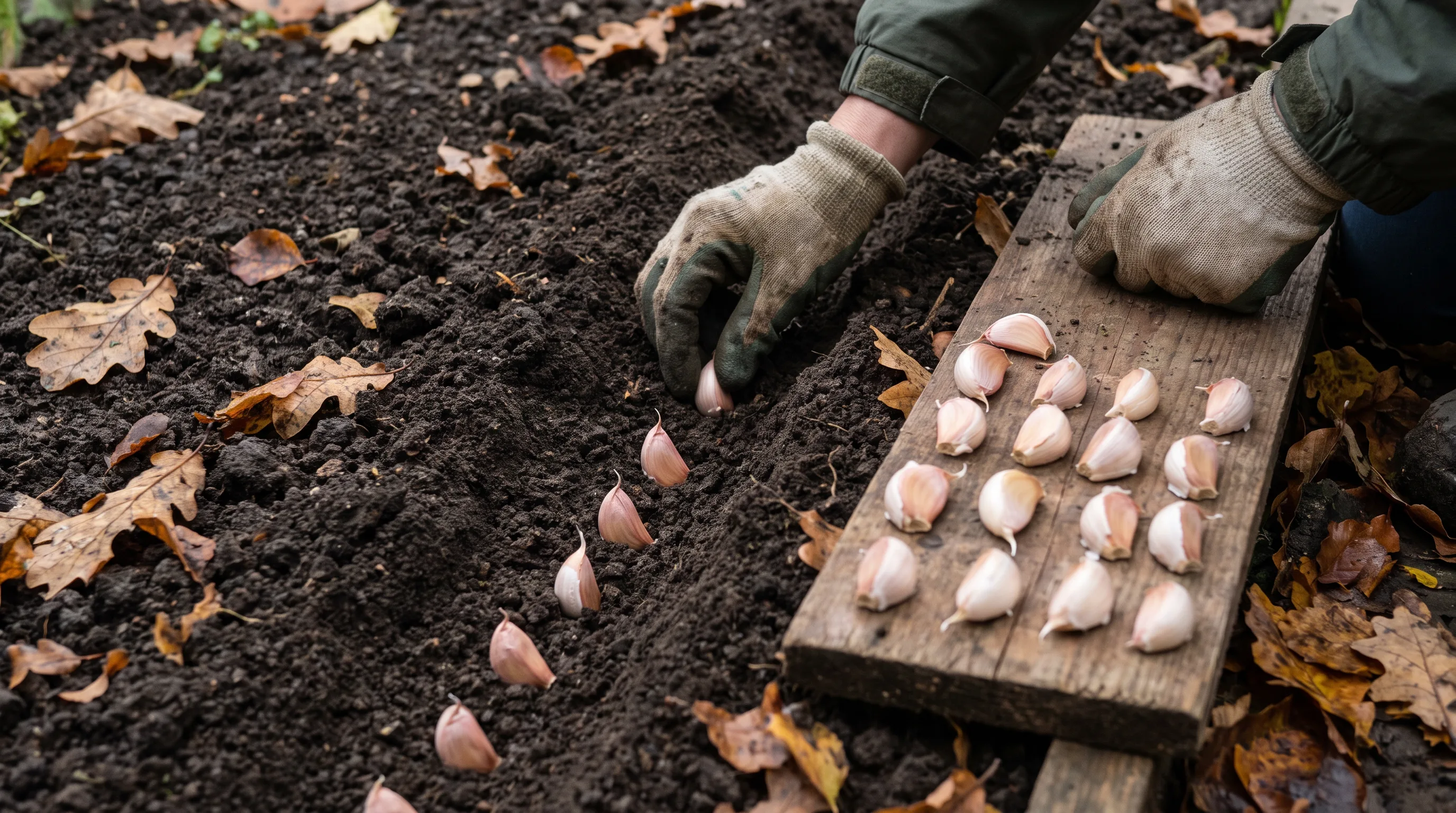
October-November is the main planting window across the UK. In southern England, the Midlands, Wales and mild coastal districts, plant from the first week of October to the final week of November, while the ground is workable but cooling. In Scotland and northern England, aim for early October to mid-November so cloves can root before prolonged wet or frozen conditions.
Garlic needs a period of winter cold to divide properly, but there is no useful minimum soil-temperature trigger for autumn planting: soil condition matters more. Wait after heavy rain if the bed smears or sticks to your boots. A handful squeezed in your palm should crumble when touched rather than form a glossy lump. Check the October gardening calendar, November gardening calendar and our autumn planting guide when choosing a dry planting day.
If autumn passes you by, plant from early February to mid-March in southern and central districts, or from late February to late March farther north. Spring-planted bulbs are commonly 30-40% smaller because they have less growing time and may receive too little cold. A useful trick is to refrigerate unopened planting bulbs for 4-6 weeks before a late spring planting, although autumn planting remains more reliable.
Do not split bought bulbs weeks beforehand. Keep them whole, cool and dry, then separate the cloves immediately before planting so their basal plates do not dehydrate.
What You'll Need
For a 1 m by 2 m bed, gather:
- 35-45 certified planting cloves from a UK nursery or garden centre, rather than supermarket garlic of uncertain suitability
- A garden fork for loosening compacted ground
- A rake for making a level, fine surface
- A hand trowel or dibber marked at 5 cm
- A line and two pegs for straight rows 25 cm apart
- One bucket of mature garden compost, if the bed needs organic matter
- Horticultural grit for the planting holes only where drainage needs local improvement
- A watering can with a rose
- Bird netting or horticultural fleece with secure pegs
- Plant labels, especially if comparing hardneck and softneck varieties
- A fork for lifting the finished bulbs without bruising them
I use labels at both ends of each row because winter weather can dislodge a single marker. Avoid fresh manure and high-nitrogen feeds: they encourage lush leaves, delay ripening and can leave bulbs soft. For broader soil preparation, see the GardenWizz soil problem solver.
Step-by-Step Guide
-
Choose a sunny bed. Give garlic full sun and avoid ground where onions, leeks, shallots or garlic have grown recently. A 4-year rotation reduces the build-up of onion-family diseases.
-
Improve the drainage. Fork the ground to about 20 cm, remove perennial weeds and incorporate mature compost only if the soil is poor. On heavy clay, use a raised bed or ridge rather than burying each clove in a pocket of rich compost that may stay wet.
-
Mark the rows. Stretch a line and make rows 25 cm apart. Measure rather than judging by eye: correct garlic spacing improves airflow and leaves enough room for each bulb to swell.
-
Separate the bulbs. Break each planting bulb into cloves immediately before planting. Keep the largest, firm, undamaged cloves and use tiny inner cloves in the kitchen, because clove size influences the eventual bulb size.
-
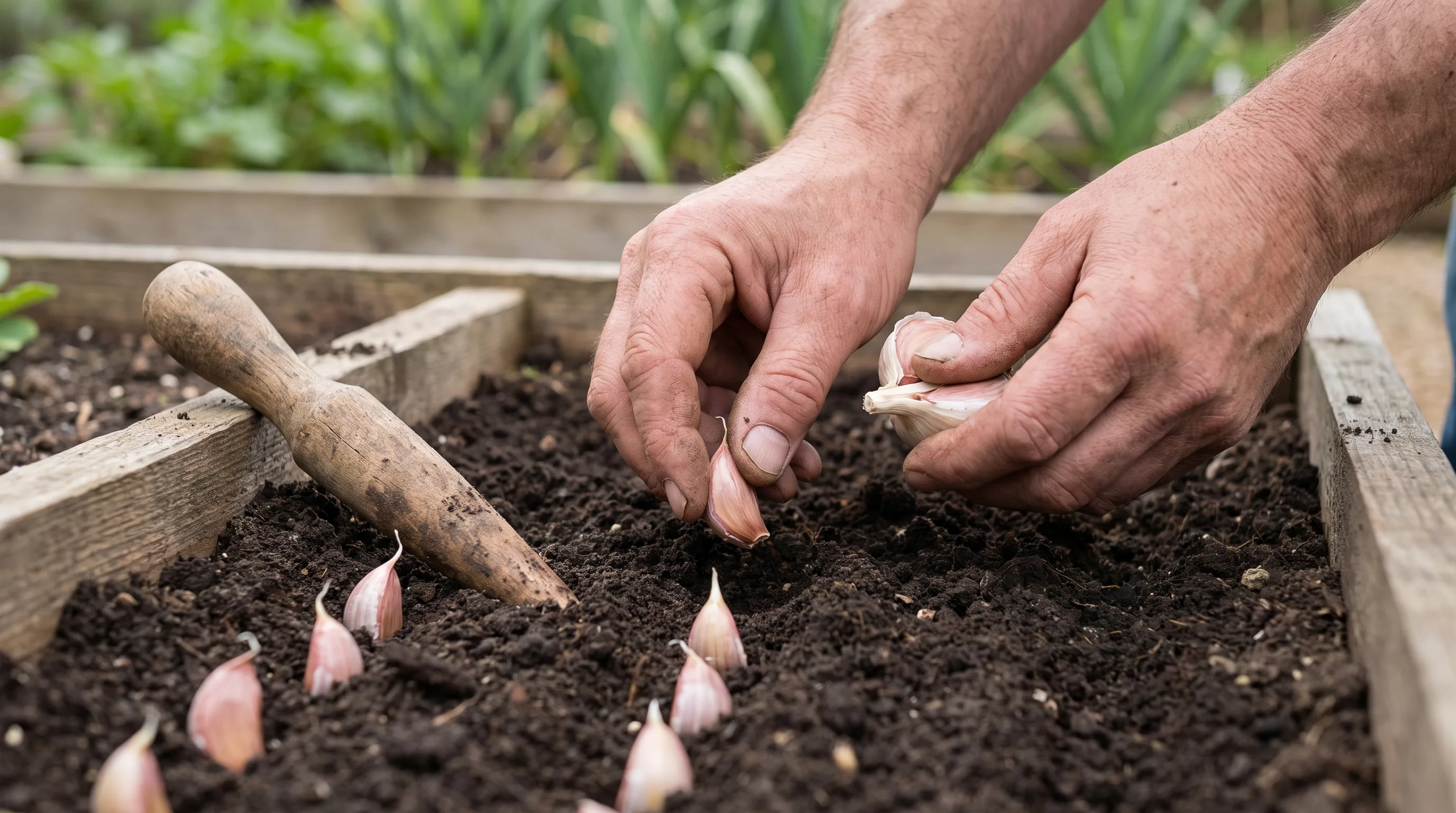
Set each clove upright. Place the flat basal plate down and pointed tip up, 15 cm from its neighbour. In ordinary soil, cover the tip with roughly 2.5 cm of soil; on very free-draining ground, plant so the clove base sits about 5 cm deep.
-
Firm the surface gently. Close air pockets around each clove without compacting wet ground. One common mistake is pushing cloves into hard soil with a narrow dibber, which can leave an open sump beneath them; widen the hole and backfill around the clove instead.
-
Protect the new planting. Secure bird netting or fleece immediately, because pigeons and other birds may pull newly emerging cloves from loose ground. Remove the cover once roots hold the plants firmly, usually after several weeks.
-
Water only when needed. Autumn rain normally supplies enough moisture. From March onward, water during prolonged dry spells so the top 15 cm of soil becomes evenly moist, but never leave the bed waterlogged.
-
Weed by hand. Garlic foliage casts little shade and competes poorly with weeds. Hoe very shallowly, keeping the blade away from the swelling bulbs and roots, or hand-weed after rain.
-
Feed lightly in spring. If growth is weak on poor soil, apply a balanced general fertiliser at the label rate in February or March. Stop nitrogen-rich feeding after April so the crop can mature cleanly.
-
Remove hardneck scapes. Cut the curling flower stalk just above the top leaf when it forms in June. The edible scape can go into stir-fries or pesto; removing it directs the plant's energy towards the bulb rather than bulbils.
-
Stop routine watering. Withhold water for about 2 weeks before the expected garlic harvest, unless the soil is exceptionally dry and plants are wilting. Drier ground makes lifting and curing easier.
-
Judge readiness by the leaves. Lift when 3-4 lower leaves have yellowed but 5-6 upper leaves remain green, usually from late June to mid-July. Do not wait for every leaf to die, because the wrappers may split and reduce storage life.
-
Lift with a fork. Insert it well away from the row, loosen the soil and raise each bulb by supporting it from below. Never wrench bulbs out by their leaves or knock them together to remove soil.
-
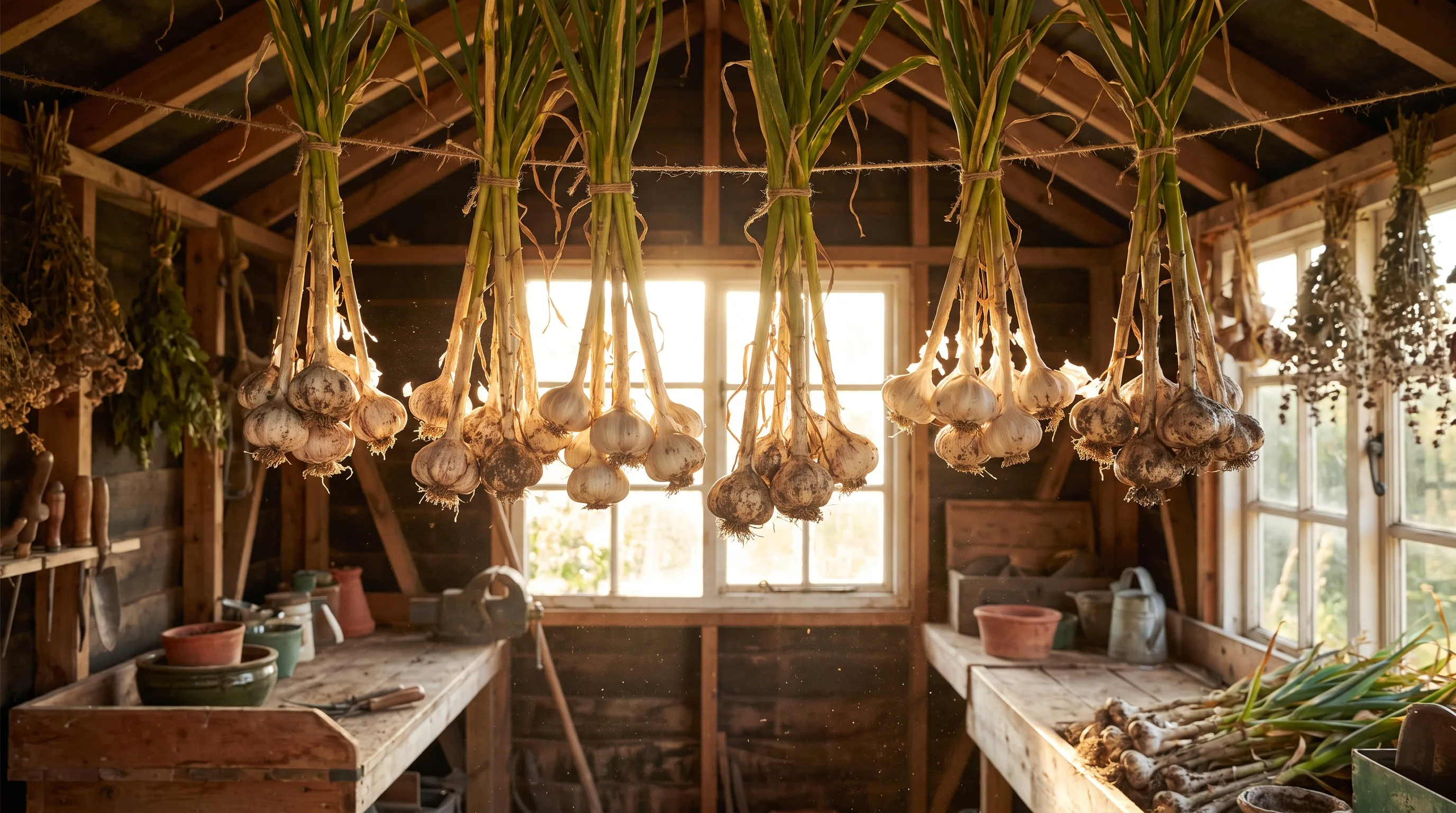
Cure under cover. Lay bulbs in a single layer or tie small bundles in a dry, airy, shaded place for 2-3 weeks. A shed, garage or open-sided shelter works if air circulates and rain cannot reach the crop.
-
Prepare for storage. When wrappers and necks are fully dry, brush off loose soil, trim hardneck stems to about 3 cm and cut roots short. Plait flexible softneck stems if you wish, then store bulbs in mesh bags or slatted trays somewhere cool, dry and ventilated. See our guide to storing home-grown crops for general storage principles.
Common Problems
Garlic rust
- Symptom: Orange, powdery spots appear on leaves, often in May-June; severe attacks make foliage yellow early.
- Cause: The fungal disease thrives during damp, mild weather and spreads more readily through crowded crops with poor airflow.
- Fix: Remove badly affected leaves, bin rather than compost them, avoid watering foliage and keep the crop weed-free. There is no dependable home-garden cure, but lightly affected bulbs are usually edible; harvest on time and do not save infected bulbs for planting. May and June outbreaks are weather-driven, so use the problem solver before blaming your feeding regime.
Onion white rot
- Symptom: Leaves yellow and collapse; roots rot and a white fluffy growth with tiny black bodies appears around the bulb base.
- Cause: A soil-borne fungus attacks garlic and other alliums. Its resting bodies can survive in the ground for 8 years or longer.
- Fix: Lift and bin affected plants with the surrounding soil; do not compost them. Stop growing onions, leeks, shallots and garlic in that ground for at least 8 years, clean tools and avoid moving contaminated soil. White rot is fatal, so prevention and a long rotation matter more than any attempted treatment.
Birds pulling up cloves
- Symptom: Cloves or young shoots lie on the surface even though there are no bite marks.
- Cause: Birds investigate loose soil and tug at the new growth, particularly soon after autumn planting.
- Fix: Replant promptly and cover the bed with securely pegged netting or fleece until roots anchor the crop. A 2-3 week-old planting may still need protection if the soil remains loose after rain or frost.
Bulbs form one round instead of cloves
- Symptom: The plant produces a single solid bulb, called a round, rather than a segmented head.
- Cause: Late spring planting, insufficient winter cold or a very small planting clove can prevent division.
- Fix: Plant certified stock in October-November next season and use the largest healthy cloves. Rounds are edible, or you can replant sound ones in autumn for a second chance at a divided bulb.
Bulbs rot or fail to store
- Symptom: Cloves soften, wrappers mould or bulbs decay soon after harvest.
- Cause: Waterlogged soil, damaged bulbs, lifting too late or inadequate curing traps moisture around the cloves.
- Fix: Improve drainage before the next crop, lift while 5-6 leaves remain green and cure for the full 2-3 weeks. Discard damaged bulbs first rather than putting them into long-term storage.
Expert Tips
- Plant the largest cloves 15 cm apart and reserve undersized cloves for cooking; large sound cloves usually produce the strongest plants.
- Grow one early softneck such as ‘Early Purple Wight’ and one later keeper such as ‘Solent Wight’ to spread harvest and storage.
- Cut hardneck scapes in June once they form a curl, before bulbils develop and divert energy from the main bulb.
- Keep 25 cm between rows even in a small bed; the extra airflow helps foliage dry after wet May-June weather.
- Cure for 2-3 weeks out of direct sun, then use any split, bruised or thin-skinned bulbs before intact ones.
FAQ
Can I grow garlic in pots in the UK? Yes. Use a container at least 20 cm deep with drainage holes and a free-draining peat-free compost, spacing cloves about 10-15 cm apart. Keep it outside in full sun and prevent the compost from becoming waterlogged.
Should I plant supermarket garlic? It may grow, but it can be an unsuitable warm-climate variety, may have been treated to discourage sprouting and carries a greater disease risk. Certified UK planting stock is the safer choice.
When is garlic ready to harvest in the UK? Usually from late June to mid-July, when 3-4 lower leaves are yellow but 5-6 remain green. Lift one test bulb before taking the whole row.
What is the difference between hardneck and softneck garlic? Hardneck types tolerate colder sites well, make fewer but larger cloves and produce a scape in June. Softneck types do not normally make scapes, have more cloves and generally store for longer.
What can I plant after harvesting garlic? In July, use the cleared bed for quick crops such as lettuce, radish, spinach or spring cabbage transplants. Avoid following it immediately with another allium, and consult the July gardening calendar for timely choices.
Varieties to Try
- ‘Solent Wight’ — A mild softneck, widely sold by UK seed merchants and garden centres, valued for dependable storage.
- ‘Early Purple Wight’ — An early softneck with purple-streaked skins, available from specialist UK garlic suppliers and useful for an earlier harvest.
- ‘Red Duke’ — A spicy hardneck producing substantial cloves; sold by specialist UK bulb suppliers and suitable for colder gardens.
- ‘Lautrec Wight’ — A hardneck of French origin that is widely offered in the UK, with large cloves and a rich flavour.
- ‘Germidour’ — A purple-skinned softneck frequently stocked by UK nurseries, suited to autumn planting and useful storage.
- ‘Albigensian Wight’ — A robust autumn-planted variety available through UK specialist suppliers, with pink-purple cloves.
Sources & Further Reading
- Royal Horticultural Society: How to grow garlic
- Garden Organic: Garlic growing guidance
- BBC Gardeners’ World: How to grow garlic
- The Garlic Farm: Garlic growing tips
GardenWizz earns a commission from qualifying purchases made through affiliate links on this page (including links within the article) — as an Amazon Associate, and from Thompson & Morgan via the Awin network. This does not affect the price you pay. See our disclaimer for details.