Lindavicum Cranesbill
Geranium × lindavicum
The Gardening Year
Best months in UK gardens · full planting calendar →
🖨 Printable care card (PDF)At a Glance
| Botanical name | Geranium × lindavicum |
|---|---|
| Common name(s) | Lindavicum cranesbill |
| Family | Geraniaceae |
| Plant type | perennial |
| Height × Spread | 10–50 cm × 10–50 cm |
| Position | Full sun, Partial shade |
| Soil | Moist but well-drained or Well-drained; Chalk, Loam, Sand; Acid or Alkaline or Neutral pH |
| Flowering | June–August |
| Toxicity | — |
| Native range | — |
Lindavicum cranesbill is a compact hybrid hardy geranium valued for its finely divided, silver-toned foliage and pink flowers. Its small scale and need for sharp drainage make it particularly suited to sunny rock gardens, gravel beds, raised beds and alpine containers in the UK.
Overview
Geranium × lindavicum is a garden hybrid between Geranium argenteum and Geranium cinereum. The multiplication sign in the botanical name identifies its hybrid origin and should be retained. Like its parents, it belongs to the Geraniaceae family. It is a true hardy geranium, or cranesbill, and should not be confused with the tender bedding plants commonly called geraniums, which belong to the genus Pelargonium.
This is one of the smaller cranesbills, developing a low alpine-scale cushion rather than the broad clumps of many border geraniums. Its foliage remains ornamental after the main late-spring to early-summer flowering flush, provided persistent wet does not damage it.
In UK gardens, lindavicum cranesbill needs a deliberately free-draining rock garden, gravel bed, raised bed, trough or alpine container. It can also grow along a sunny border edge where vigorous neighbours will not shade or engulf it.
Named selections occur within the hybrid group. They should be regarded as distinct cultivars rather than evidence that every Geranium × lindavicum has the same flower colour, markings or garden performance. Buying a labelled plant is therefore preferable when a particular selection is wanted.
Appearance
The foliage forms a compact, low mound. Each leaf is deeply cut into narrow lobes, giving the plant a fine texture and preventing the cushion from looking heavy. Colour usually falls between grey-green and silvery green, reflecting the influence of both parent species. The pale foliage is an important ornamental feature in its own right and provides a cool-toned contrast to darker green alpines.
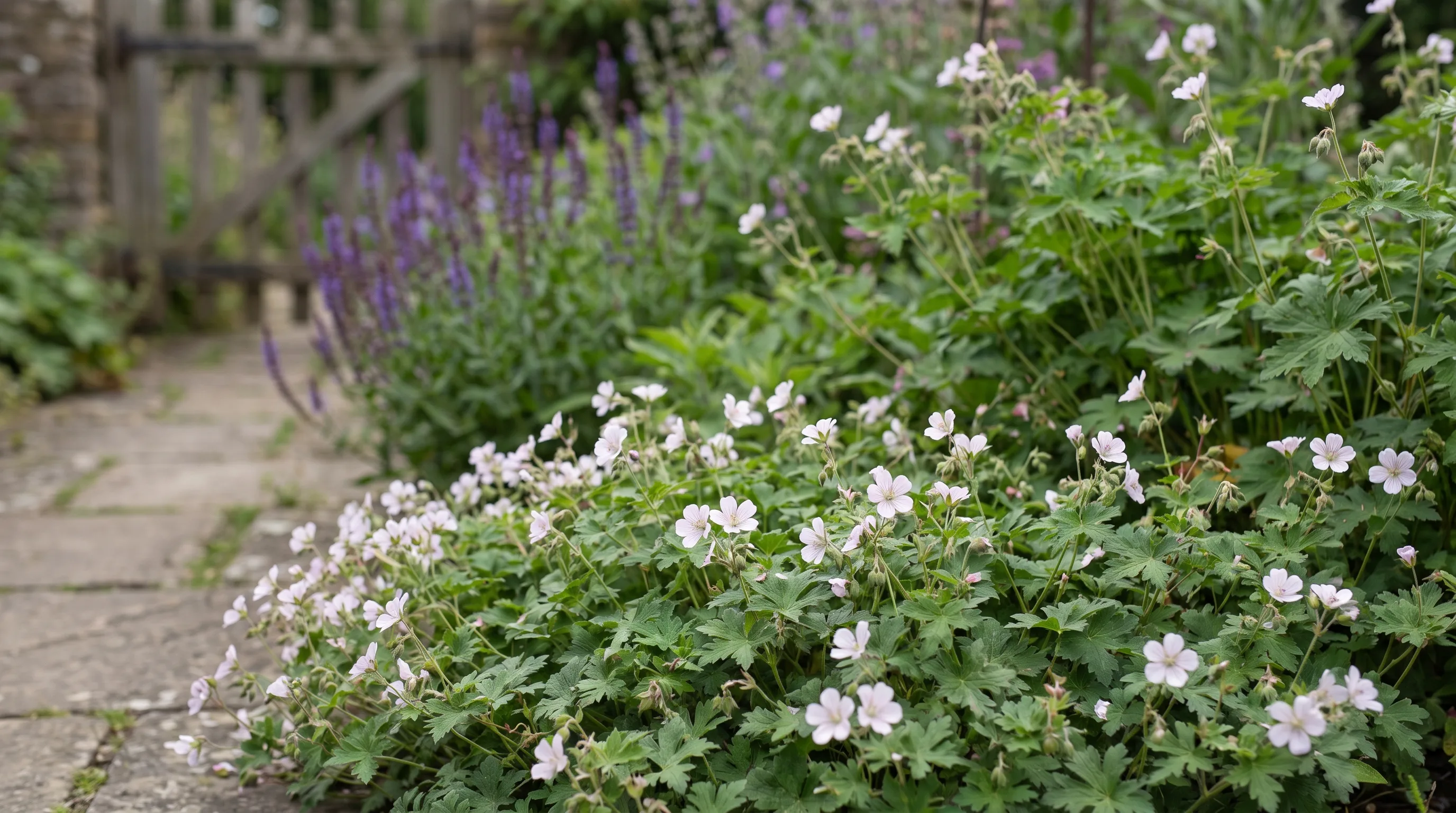
Slender flower stems rise above the leaves without greatly increasing the plant's overall height. The flowers are saucer-shaped and composed of five petals, the familiar form of a hardy geranium. Across the hybrid group, flowers are generally pink to purplish pink. Darker veins, a contrasting eye or a paler zone close to the centre may be present, but the precise combination varies between named selections and individual plants.
Most garden forms remain about 10–20 cm high. They spread gradually into a cushion wider than it is tall, yet do not have the vigorous, ground-covering habit of some larger cranesbills. This restrained growth makes the plant easy to place in a trough or among small rock-garden subjects. It also means that coarse mulch, rank weeds and fast-growing neighbours can quickly spoil its shape or obscure it.
The main display occurs around May and June in many UK gardens, although local climate, aspect and weather affect timing. Removing spent stems afterwards exposes the foliage and restores a tidy outline.
Growing Conditions
Full sun gives the best compact growth, foliage colour and flowering. Choose an open position where the plant will not be shaded by taller perennials. In a very warm, dry garden it can benefit from having its roots among stones that moderate soil temperatures, but overhead shade and damp, stagnant air are poor substitutes for a sunny, exposed site.
Drainage is the decisive soil requirement. A gritty loam or sandy soil is suitable, as is a purpose-made alpine bed containing abundant mineral material. The aim is not an infertile pocket of pure gravel, but a rooting medium that holds some moisture after watering while allowing surplus water to leave quickly. On heavy clay, adding a little grit to the planting hole alone can create a sump. A raised position, broad soil improvement or a container is safer.
UK winter rainfall is a major challenge. Water must not collect around the crown when growth has slowed. In wetter districts, use a sloping rock-garden pocket, raised bed or trough, and clear fallen leaves that could trap moisture.
In containers, use free-draining compost with a generous mineral component and ample drainage holes. Terracotta helps compost dry between wet periods but increases summer watering needs. Avoid roof run-off and raise the pot if water cannot escape freely.
It suits sunny border fronts, gravel gardens, alpine troughs and spaces between well-set stones. Near paving, provide usable soil and enough moisture for establishment rather than squeezing it into a compacted crack. Allow the cushion room to broaden.
Planting and Care
Plant container-grown specimens in spring, when the soil is workable and the plant has a growing season in which to establish. Prepare a wider area of free-draining ground rather than an isolated pocket in impermeable soil. Set the crown at the same level as it stood in the nursery pot; burying it can hold moisture against the shoots. Firm gently, water once to settle the roots and finish with a thin gravel mulch that does not cover the crown.
Water during the first growing season whenever the soil begins to dry, particularly in a raised bed or trough. Once rooted, plants tolerate short dry spells better than waterlogging, but pots still need checking in warm weather. Soak the compost, let excess drain, then wait until its surface starts to dry. Reduce watering in cool, wet conditions.
Feed modestly. On poor open ground, a small spring dressing of balanced fertiliser is sufficient. Rich feeding produces soft growth and spoils the compact habit. Give pot plants a weak balanced liquid feed during active growth only if their compost is exhausted; avoid repeated high-nitrogen applications.
Woody pruning is neither suitable nor needed. Deadhead individual faded flowers for a neat appearance and to prevent spent stems masking the foliage. After the main display, cut back tired flower stems and ragged foliage in June or July. Use clean shears and avoid cutting into the crown. This treatment can encourage a fresh, compact mound. Remove remaining dead foliage at the end of the growing season, while leaving healthy basal growth intact.
Propagation requires some care because named cultivars must be reproduced vegetatively if their identity is to be preserved. Established clumps of many hardy geraniums can be lifted and divided in spring, replanting healthy outer pieces promptly. However, some Geranium × lindavicum selections divide poorly. Basal cuttings taken from fresh shoots, or suitable stem cuttings, may be more reliable. Root cuttings in a gritty medium with gentle moisture, good light and protection from scorching sun until established.
Seasonal care centres on moisture and cleanliness. In spring, clear debris, check that frost and rain have not exposed or buried the crown, and renew a sparse gravel mulch if needed. Through summer, water newly planted or pot-grown specimens and remove weeds before they overtop the mound. Cut back after flowering where growth looks tired. In autumn, stop feeding and clear fallen leaves. During winter, keep drainage holes open and move vulnerable pots out of persistent rain while retaining bright, cool conditions.
Common Problems
Crown and root rots are the principal risks. A plant that collapses or develops dark, soft tissue after prolonged rain is likely to have remained too wet. Prevention is more reliable than rescue: use an open mineral soil, keep the crown at surface level and prevent debris accumulating around it. If only part of a clump is affected, remove decayed tissue with a clean tool and replant sound material in fresh, sharply drained compost.
Powdery mildew may appear as a pale coating on foliage during dry, stressful conditions, while rust can cause discoloured spots and pustules. Maintain air movement, water the root zone rather than repeatedly wetting foliage, and remove badly affected leaves. Clean up discarded material instead of leaving it around the crown. Balanced watering and restrained feeding help the replacement growth remain sturdy.
Slugs and snails may chew emerging shoots, especially where stones, pots or dense vegetation provide daytime shelter. Inspect plants during damp weather, remove nearby hiding places where practical and use the garden's preferred control method. Damage is most serious on a small newly planted specimen; a well-established mound can usually replace a limited amount of foliage.
Vine-weevil larvae are a particular concern in containers. They feed on roots and can cause an apparently healthy plant to wilt or detach from the compost. Check unexplained decline by gently examining the root ball for creamy, curved larvae with brown heads. Replace infested compost, remove larvae and use an appropriate biological or approved control according to its current label directions.
Popular Varieties
Several named selections of Geranium × lindavicum are recorded in cultivation, including:
- 'Alanah'
- 'Apple Blossom'
- 'Gypsy'
- 'Lissadell'
Reliable comparative information about the individual selections is limited, and flower details or awards attached to one cultivar should not be applied to the hybrid as a whole. Availability also varies between specialist alpine nurseries. Check the full label and current nursery description when choosing for a particular colour or marking, and retain the cultivar name when propagating vegetatively.
Unlabelled plants sold simply as Geranium × lindavicum can still provide the characteristic low cushion, divided silver-green foliage and pink-toned flowers of the hybrid group. Where exact cultivar identity matters, purchase from a specialist source rather than assigning a name from appearance alone.
Pests and Diseases
| Problem | Symptoms | Management |
|---|---|---|
| Vine weevil | Notched leaf margins and wilting caused by larvae feeding on roots in the compost. | Apply a systemic insecticide drench or use biological nematodes to control larvae. |
| Slugs and snails | Irregular holes chewed in leaves and stems, often accompanied by slimy trails. | Use iron phosphate pellets or copper tape barriers to deter feeding. |
| Powdery mildew | White, dusty fungal growth appearing on the upper surfaces of leaves and stems. | Improve air circulation and treat with a sulphur-based fungicide if severe. |
| Geranium sawfly | Skeletalised leaves where larvae have eaten the tissue between veins. | Hand-pick visible larvae or apply an insecticidal soap spray. |
| Root rot | Yellowing lower leaves and wilting despite moist compost due to waterlogged roots. | Ensure sharp drainage and avoid overwatering, especially in heavy soils. |
For step-by-step help, read Dealing with Slugs and Snails and Treating Powdery Mildew. Or browse the full plant problem solver to diagnose an issue by symptom.
Recommended Products
GardenWizz earns a commission from qualifying purchases made through affiliate links on this page (including links within the article) — as an Amazon Associate, and from Thompson & Morgan via the Awin network. This does not affect the price you pay. See our disclaimer for details.